


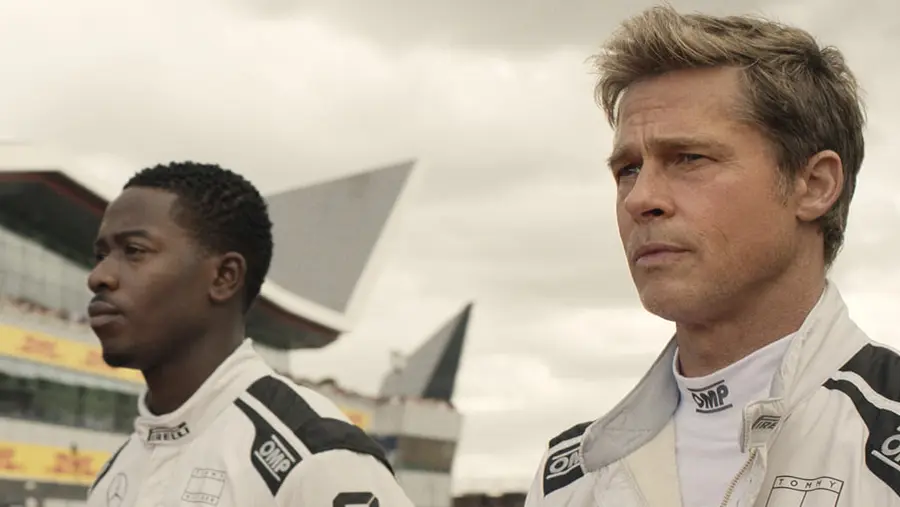
I am not a fan of watching F1. However, while watching scenes from 〈F1: The Movie〉 filmed with cameras mounted on sports cars on the giant screen, I felt like, "This is thrilling, as if I am sitting next to Brad Pitt." At least during the runtime of the movie, I became a fan in the audience cheering for the last-place APXGP team. Despite the considerable runtime of 155 minutes, the experience of fully concentrating during that time was a long-awaited one. It was thrilling, exhilarating, and electrifying. The pleasure of the seemingly realistic filming was, in today's terms, a 'dopamine-releasing' experience.
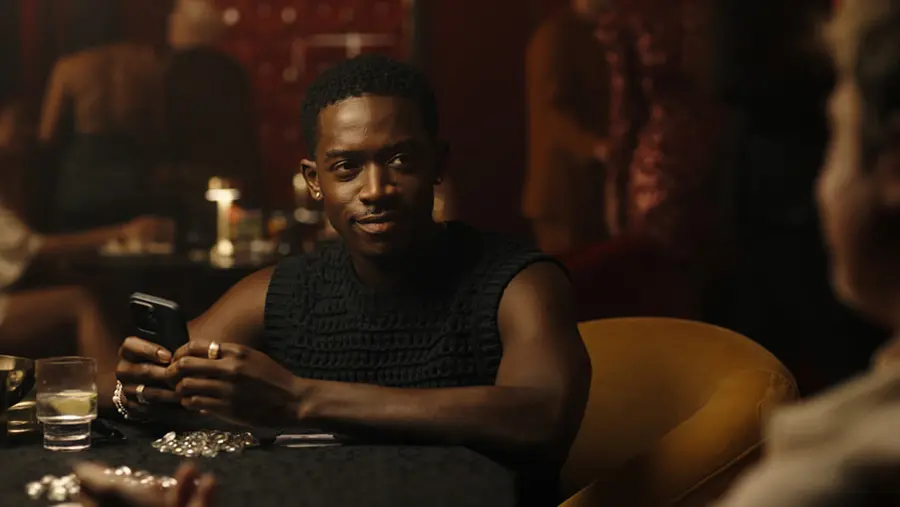
This is cinema! A meeting with a blockbuster that offers the maximum level of realism that movies can achieve. Perhaps many of the 5.21 million viewers who watched 〈F1: The Movie〉 felt a similar satisfaction to mine. Once a star, but never having won an F1 championship, the driver 'Sonny Hayes' (Brad Pitt) fell from grace in an instant. The film follows his journey as he joins the lowest-ranked team and leads them to victory. The extremely predictable 'underdog' narrative adds familiarity, while the conflict with the rookie genius driver Joshua Pearce (Damson Idris) adds tension. It is a story that is both familiar and a new variation.
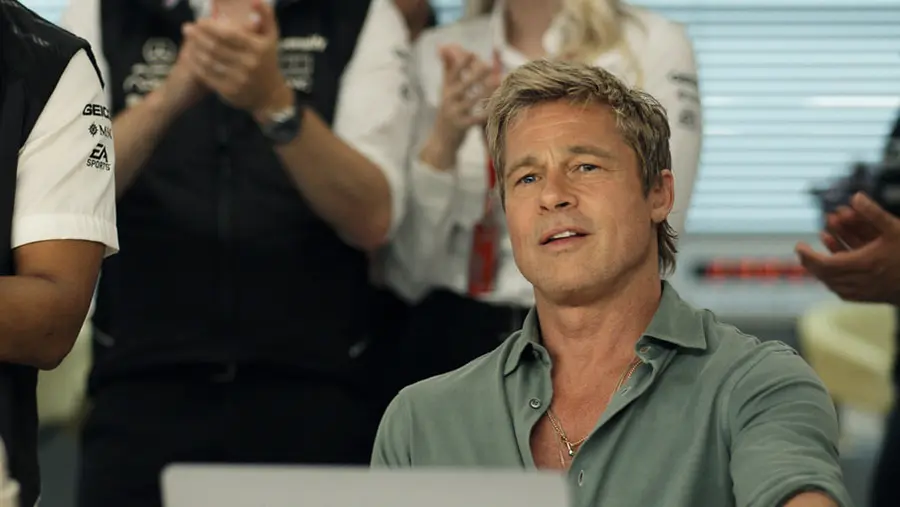
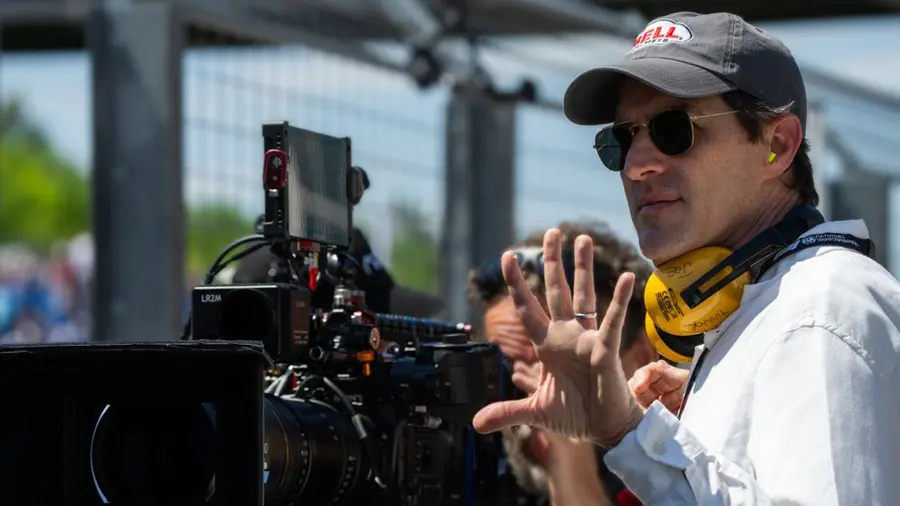
Based on a solid script, Joseph Kosinski has implemented the 'experiential blockbuster' he proved with his previous work 〈Top Gun: Maverick〉 (2022) on the ground rather than in the sky. When it was first said that this movie was being made, there were negative views that 'a car racing movie cannot succeed.' The methods already attempted in 〈Top Gun: Maverick〉 could not be easily applied. First, the weight of the camera that a fighter jet can withstand could not be handled by Formula 1, and we had to start with developing a camera suitable for this film. From the idea conception to production took four years, with blockbuster genius Jerry Bruckheimer as the producer, and actual F1 drivers also joined in to ensure both scale and realism. All these attempts at 'new' technology were conducted in the manner of the 'past,' filming only what was 'authentic' without borrowing digital technology.
In the midst of the astonishingly rapid development of digital and AI, 〈F1: The Movie〉 goes against the trend and reminds us of what we have seen through movies. Thus, this film has become a blockbuster that represents this era. Interestingly, the Korean release title includes 〈F1〉 along with the subtitle 'The Movie.' Korean audiences, thirsty for a 'cinematic experience,' responded immediately. Korea is now ranked 3rd in box office performance after North America and China, and the audience has clearly expressed through scores what kind of movie they want to see right now.
With high expectations for the sequel, we connected with director Joseph Kosinski in LA via Zoom to interview him ahead of the Apple TV release. The director said, "I didn't expect the Korean audience's response to be this great," and we discussed the direction of making blockbusters that can resonate with audiences in this era. 〈F1: The Movie〉 will be available on Apple TV starting December 12.
Each city and each track has its own unique character. There were many time constraints, and the pressure of not interfering with the actual race operations made it a significant task. Nevertheless, I felt that the character of each track was well represented. There must have been significant physical constraints; what challenges did you face?
Yes, I actually think that is the biggest charm of the sport of F1. F1 is a sport that takes place on a global stage, and the atmosphere is completely different at each track. Everything from the opening ceremony to the music and the surrounding environment is different. So I wanted to capture those differences as much as possible. I actually visited all the tracks and filmed while traveling around the world according to the F1 schedule. The movie features a total of nine tracks, each with different weather and challenges arising from that. Among them, Las Vegas was the most challenging filming location. I believe this global nature is the essence of F1. I especially wanted to reflect that in the music. So I collaborated with artists from around the world to create the soundtrack. The most frequently asked question is, "What is your favorite track?" Spa is really beautiful because it is in the Belgian forest, Las Vegas was extremely difficult to film, and Abu Dhabi, which decorates the end of the season, was truly an unforgettable place. It has a landscape that cannot be seen anywhere else and is the perfect track to end the season.
It was also impressive that the cheers from the stadium in Mexico City were conveyed so vividly.
I experienced the F1 Mexican Grand Prix last year, and the festive atmosphere and the energy of the crowd I felt then were incomparable to any F1 race I had seen before. I heard the crowd shouting "Apex!" and it was truly an unforgettable experience. I feel very lucky to have been able to capture this scene in the movie.
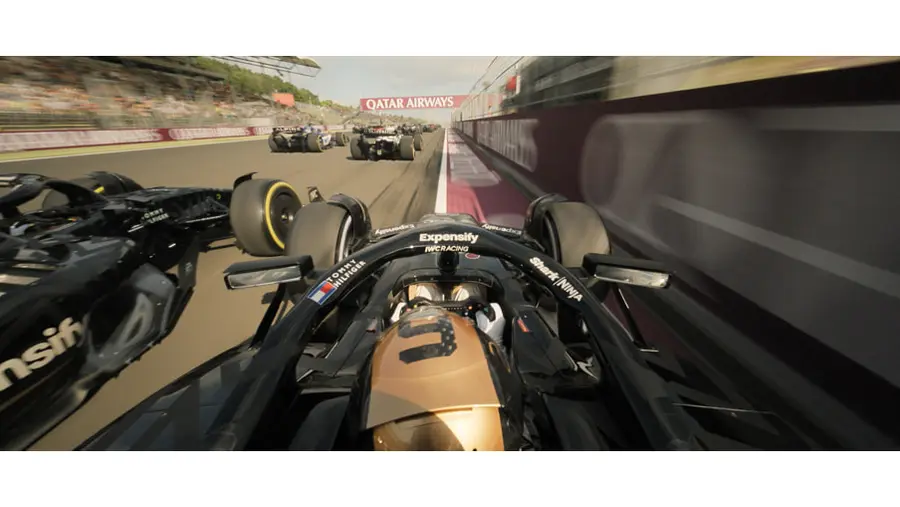
〈F1: The Movie〉
Having worked again with cinematographer Claudio Miranda, with whom you collaborated on 〈Tron: Legacy〉 (2010) and 〈Top Gun: Maverick〉 (2022), I believe this work is the result of the long collaboration and the thoughts and achievements that came from it.
Claudio is above all an outstanding artist. At the same time, he is an amazing technician and a kind of 'mad scientist.' When the idea of filming F1 came up, the camera system we needed did not exist in the world. Claudio worked with Sony and Apple to develop that system from scratch. It was completed after nearly a year of research. It was technically very complex, but thanks to that, we were able to capture the speed of F1 in a way that had never been done before. We also implemented a system that allows the camera to pan left and right, which we wanted to do during 〈Top Gun: Maverick〉, but it was technically impossible. It finally became possible in this film, and I am confident it will be used in even more diverse ways in the future.
It was a hot topic that actual F1 star driver Lewis Hamilton participated in production and acting, adding great realism to the film. In the Abu Dhabi Grand Prix, Lewis Hamilton competes with Apex's two drivers and collides with Joshua Pearce in the last lap. When I explained to Lewis that this scene was 'a sacrifice for Sonny to win,' what was his reaction?
Yes, as you mentioned, Lewis is also a co-producer of this film. When I said, "You need to appear as the final boss of this story and tell Joshua to 'race against you,'" Lewis mentioned just one condition. "This must be strictly a 'driving incident.'" He did not want to intentionally push Joshua off, nor did he want to be the one who was unilaterally disadvantaged. If you look closely at the scene, the two are competing very closely, and a contact incident occurs, ultimately causing both to fall. Lewis was willing to participate because it was a movie, but he was also clearly aware that it was a situation he would never want as a real racing driver. So I made sure to explain that this is fiction, and he understood that and generously participated. Another point I liked was the setting of Joshua Pearce facing off against his hero. It was a scene that fit very well narratively.
※ The interview with director Joseph Kosinski continues in the second article.
Cineplay Lee Hwa-jeong, Guest Reporter



 Cineplay Reporter Star Rating"" loading="lazy" />

![[Interview]](https://cdn.www.cineplay.co.kr/w160/q75/article-images/2025-12-19/0f437e1c-a904-4d07-a1be-db1751462e0e.jpg)
댓글 (0)
댓글 작성
댓글을 작성하려면 로그인이 필요합니다.
로그인하기