



※ 〈Hoppers〉 John Cody Kim Story Supervisor&Jo Sung-yeon Lighting Artist Interview continues in Part 1.
If there is a message about nature and humanity that you wanted to convey to modern audiences through the events and conflicts that Mabel faces, what would it be?
John Cody Kim The coexistence of humans and animals. That was the biggest theme and message of the film. What George always says is that we are all together, that human homes and animal homes are all part of one big place, which is George's 'Pond Law'. Treating others' homes as your own. Of course, there are many times when everyone does not share that sentiment. Just like Mabel and Jerry are always fighting. However, when a bigger problem arises, they learn to set aside their differences and figure out how to solve the bigger issue together. That was the big message of the film.
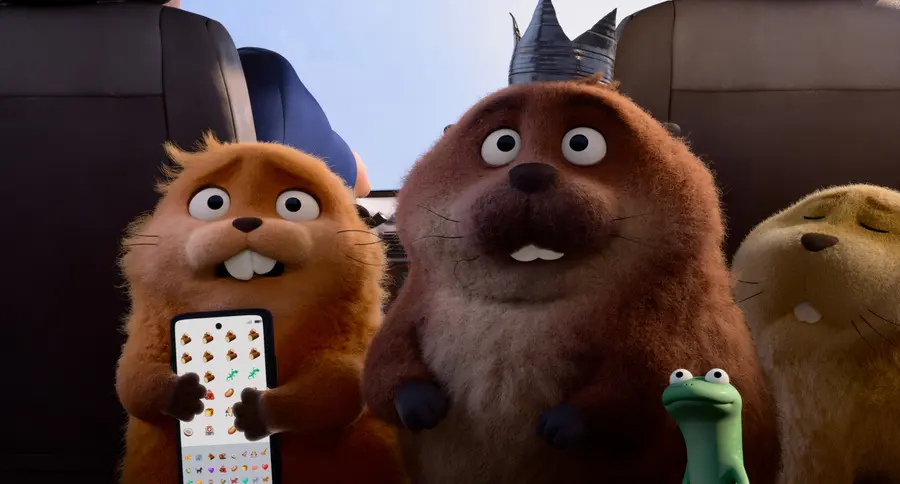
The scene where Mabel communicates by voice conversion on her smartphone in the car is impressive. How was this idea developed?
John Cody Kim I came up with a lot of ideas for that scene. I also did the storyboard for that scene. As I mentioned earlier, the director, writers, and story artists gathered in a room to deliberate on how to create this scene, how Mabel and Jerry would talk. It wasn't just a scene of running away; it had a hostage-like feel, and we wondered how we could incorporate comedy into it. In the film, humans and animals cannot communicate without earphones, so figuring out how they would converse was key. Initially, we thought of showing text typed on a phone. But when we drew it out, it felt awkward to write and show repeatedly. While brainstorming, we thought, 'Isn't there a way to do it verbally?' and came up with other ideas as well. We thought this could be used continuously. So, using TTS was only in that scene, but when I showed the storyboard to other staff, many reacted by saying, 'This scene seems unique to our movie, it's a special scene.' That's why we ended up using it in the final scene as well.
There has been a lot of feedback that you paid particular attention to humanism. What direction did you take to create this humanism?
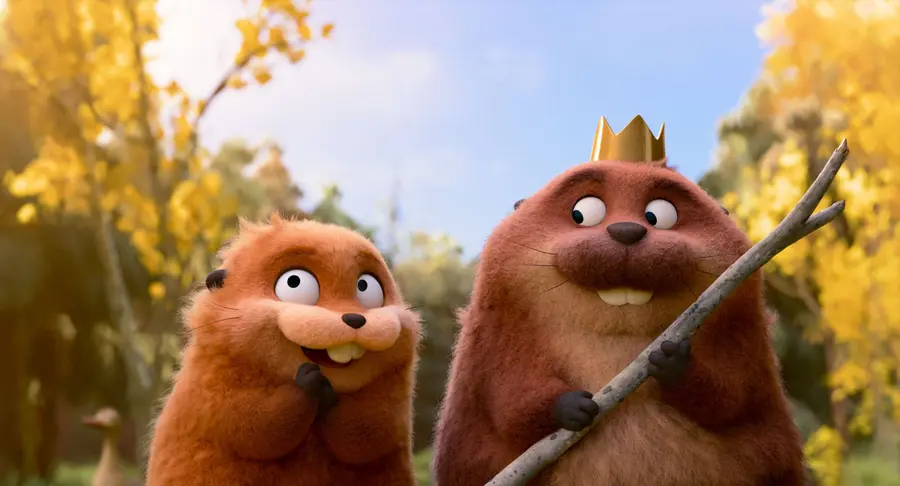
John Cody Kim Finding that balance was important. It was crucial that the scene where Mabel and Jerry argue, or how the animals are not portrayed as villains, and that neither humans nor animals are depicted as purely bad or good. So, when we first started, we watched a lot of films by Hayao Miyazaki and Isao Takahata, such as 〈Princess Mononoke〉 and 〈Pom Poko〉, to find parts that are not completely villainous. Mayor Jerry initially appears as a very bad person, but later he is depicted as just someone doing his job. He is trying to reduce the traffic time for the people in the city, and he also takes good care of his mother in his daily life. By showing such scenes, we made the audience feel that 'Jerry is not completely a bad person, he has good sides.' Mabel, too, in the scene where she argues with the mayor, if she seems too strong, we toned down that intensity a bit.
Jo Sung-yeon From a lighting perspective, we could have portrayed Jerry as a villain, but as you mentioned, he is someone who takes good care of his mother and is dedicated to his work. So, we could express it a bit dryly, but we aimed to depict scenes like him making delicious pancakes for his mom in a very warm and loving way. For example, in the morning, there is a scene where he wakes up in a place with a strong horse painting, showing the mayor fulfilling his duties, to express that 'this person is not a villain or a cold politician' in a balanced way. Jerry is just someone who didn't know much about animal habitats. However, for Mabel, that place holds precious memories with her grandmother, not just for the animals. So, by showing those personal aspects, we aimed to help the audience understand that character and the role he plays.
Director Daniel also transitioned from working on the script to directing this project. Do you both have dreams of becoming directors, and if you were to create your own work, what kind of project would you want to do?
Jo Sung-yeon When I was in school, I majored in animation and created a piece called 〈Grandmother〉, which is about my grandmother and our country's history. It was screened at film festivals as well. So, if I were to create a work in the future, I think I would want to do something Korean. Living abroad makes me miss Korea and increases my desire to create something Korean. When I lived in Korea, I found other things more appealing (laughs), like French films or Disney-style animations. Now that I live in the U.S., I find myself more interested in traditional Korean elements. So, I think it would be wonderful to create a work based on such themes.
John Cody Kim I have also wanted to be a director since I was young. I really enjoyed telling stories. So, I read a lot of comic books and made films with Legos from a young age. I got in trouble at school for it (laughs). Then, while in high school, I shot a lot of films, and from there, I went to CalArts to study animation. I created a zombie animation called 〈Steadfast Stanley〉 featuring a Welsh Corgi in 2013 or 2014. My first project at Pixar was 〈Hoppers〉. After five years of working on 〈Hoppers〉, I felt that films about animals suited me well. If I become a director in the future, I think I would make such films. Of course, directing is fun, but it also comes with a lot of stress. Director Daniel's hair color changed a lot while working on this project (laughs). It took six years, but it was enjoyable, so we could make this film.
The use of AI is increasing in various fields. How does Pixar view AI, and what can humans do in the face of AI's advancement?
Jo Sung-yeon AI is developing rapidly, which brings a lot of worries and fears. Pixar, being a leader in animation technology, is not using AI yet. I don't know the overall stance of Pixar, but from my personal perspective, Pixar puts a lot of care into every work. For example, techniques like rotoscoping, which involves filming live action and animating it, or motion capture that applies real acting data, are not used at Pixar. We value the craftsmanship of animating everything by hand. Shading and textures can be done by taking photos, but we consider it a strength to draw everything by hand. AI may have some influence, but I don't think it will have a significant impact. If we do use it, it would be to assist in reducing repetitive tasks that take too much time. Nevertheless, we focus more on how we can all pour our hearts into this work rather than rushing, so I believe we won't be greatly affected.
John Cody Kim Thank you for your great answer, I have nothing more to add (laughs). First of all, 〈Hoppers〉 did not use AI. I hope it stays that way. If we use AI in the future, it will be as a tool to assist us. However, for aspects that require imagination, such as story, ideas, or choosing overall color palettes, our artists will create what they want to create with time and care. Pixar will not go in the direction of producing things generated by AI.
Please give a final greeting on why people should see 〈Hoppers〉 in theaters.
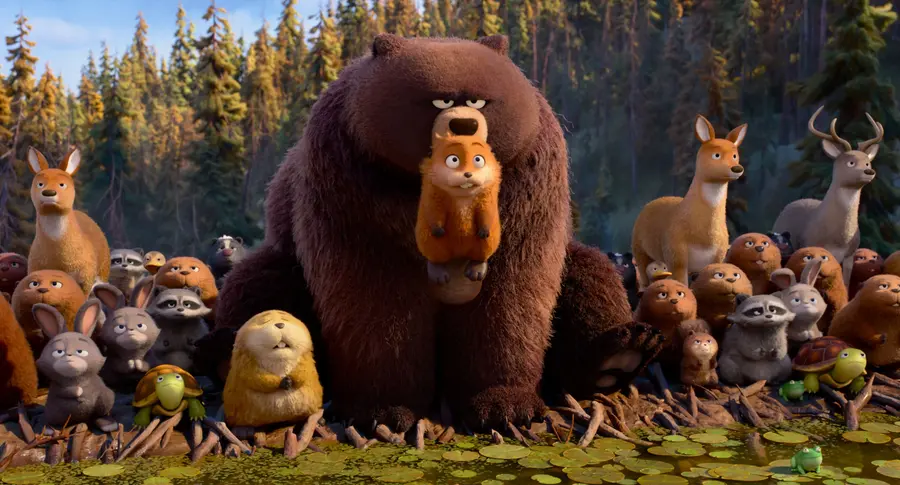
Jo Sung-yeon Since there are a lot of animals, there are many crowd scenes. So, you should see it in a big theater to enjoy the fun of the animals dancing and having a great time. A friend who saw the preview with the audience said they laughed out loud together with the audience. It would be great to enjoy it in a big theater. We adjusted every brush stroke while creating the scenes. You will feel that grandeur.
John Cody Kim Watching it in theaters allows you to experience various reactions. Whether it's surprise or laughter, those moments are much more enjoyable when shared with others in a theater. The story takes unexpected turns, and while some parts are comedic, they can suddenly shift to something scary and then flow into a more absurd storyline. Meanwhile, the animals that appear are incredibly cute. We blended emotion and warmth into the ending. So, it will be fun to watch it in theaters.





댓글 (0)
댓글 작성
댓글을 작성하려면 로그인이 필요합니다.
로그인하기