



Slapstick motion without end within the frame,
〈Our Hospitality〉(1923)
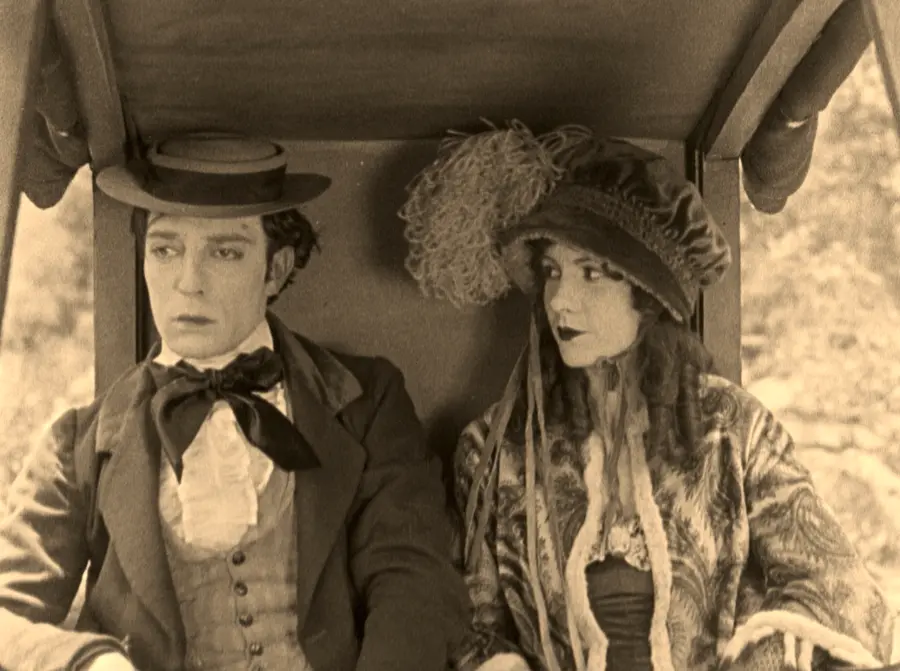
Willie McCay (Buster Keaton) heads back to his hometown to inherit the land. The railroad tracks are a mess, and even the dam collapses—he forges ahead through a perilous route. Along the way, he meets Virginia Canfield and grows close, eventually getting invited to the home. But Willie and Virginia don’t realize that the McCay family and the Canfield family have been sworn enemies for generations. On the surface, they show courteous “hospitality”—yet Virginia’s brother, the Canfield brothers, wants to kill him. 〈Our Hospitality〉 is packed with the charm that only a Buster Keaton film could deliver: dangerous relationships and surroundings that he insists on turning into his own terrain.
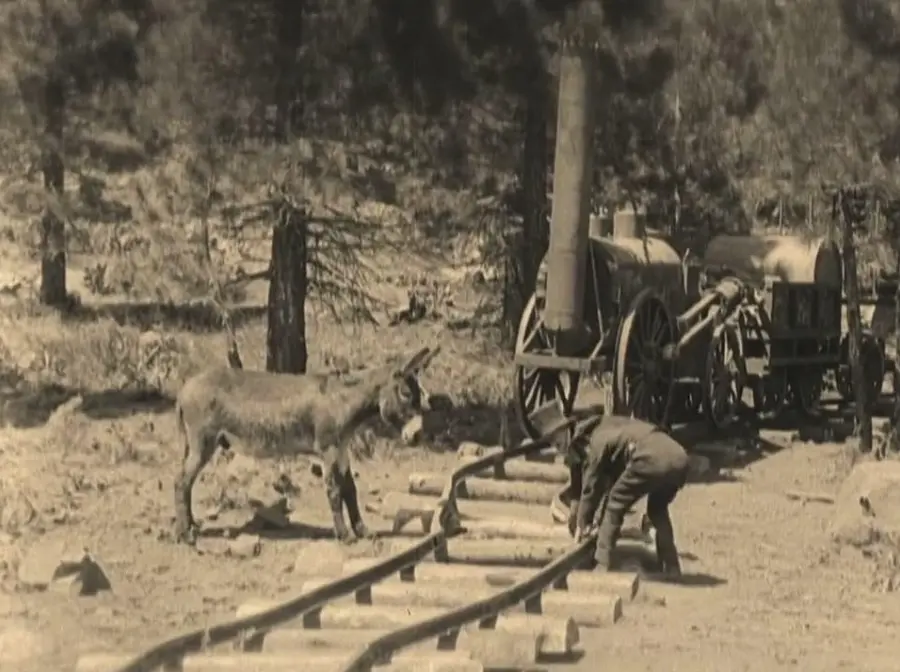
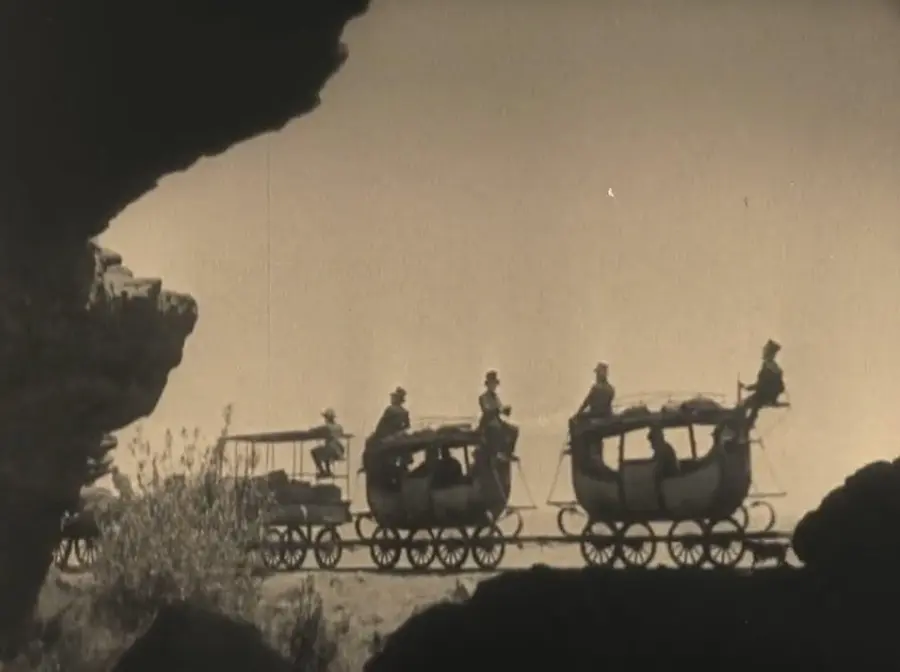
Willie hears the news that he’ll inherit a home from his Southern parents, so he takes the train to his hometown. The tracks look as if someone designed them on a whim, with plenty of bumps along the way. In fact, while the engineer lets his guard down, the train even leaves the tracks and goes onto flat ground. As you can tell from the shape of the tunnel designed to match the train’s smokestack, Buster Keaton transforms the real outdoor scenery the way you’d handle a studio set—flexibly, as though he were freely reshaping it. By changing the scenery of reality itself, his film gains an odd, comic effect as it shifts between nature and artificial sets.
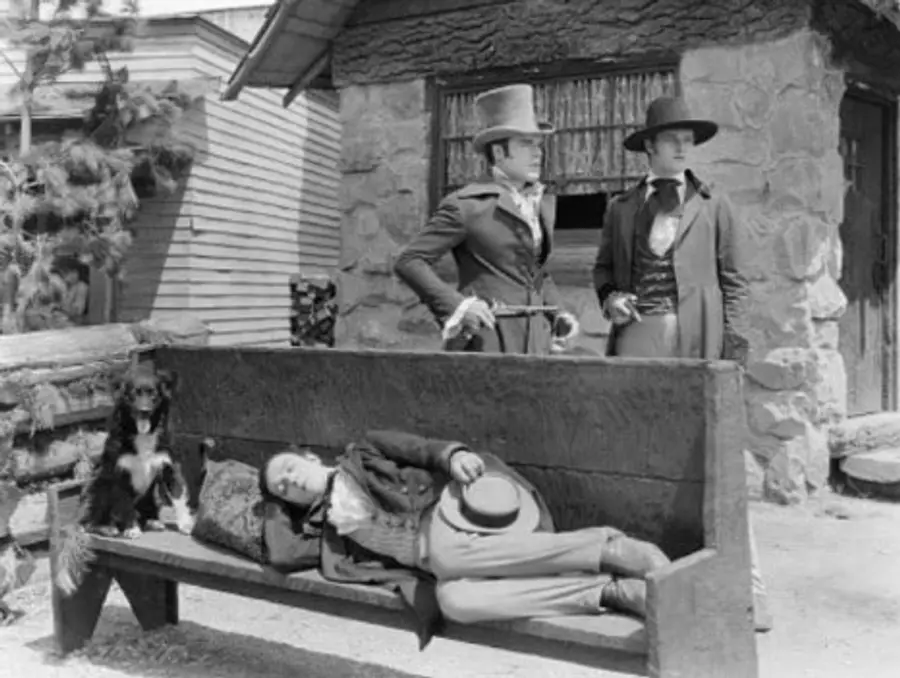
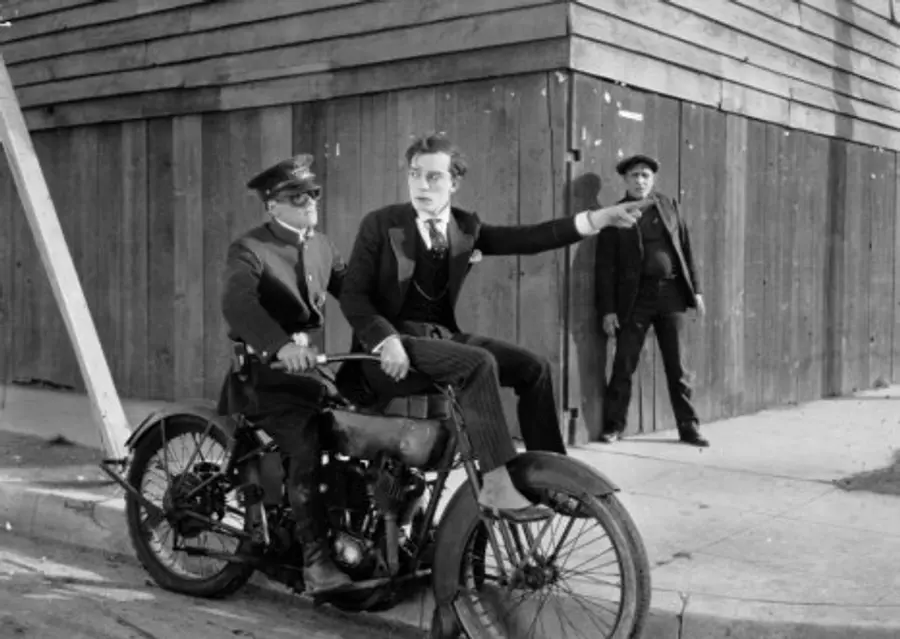
The economical mise-en-scène that Buster Keaton’s film presents originates deep within the screen’s sense of depth. By presenting two events in contrast, simultaneously, the tension is maximized. You’re set up to see, in the same frame: the Canfield brothers conspiring while pretending not to hear Willie eavesdropping on the plot; and Willie, who fails to see the hidden villain. All of this lets the narrative lock into place with no gaps. The engineer in the photograph is so distracted by his own carelessness that he doesn’t notice the passenger car that falls away and speeds off far ahead—leaving him utterly flabbergasted. Thanks to the depth created by the spatial layout, the two events are juxtaposed, producing suspense. Especially in the scene where the dam is blasted and water pours down in torrents: the flood may momentarily obscure Buster Keaton, but it won’t stay hidden for long. As water conceals Willie in the rear space, the Canfield brothers’ movements appear in the foreground. Buster Keaton erases the background, suddenly reveals new foregrounds, and draws clear distinctions—breaking the flatness of the screen composition and creating three-dimensional space. Even while sharing the same space, the Canfield brothers move about without realizing they’re close to one another, and Keaton adds a fresh narrative and mise-en-scène to their desperate searching for Willie.
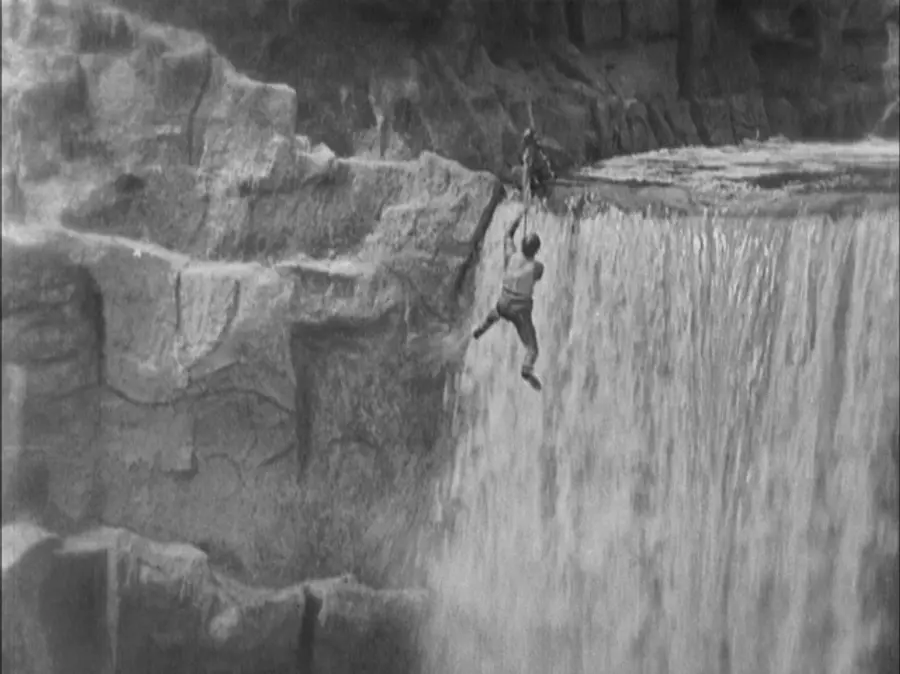
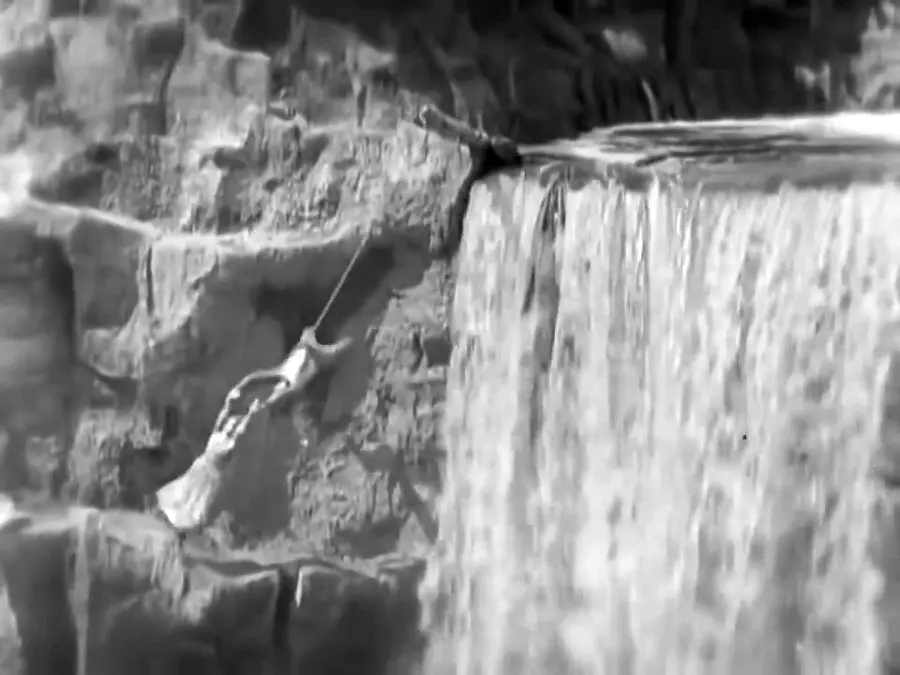
Here, Willie’s fishing scene is reinvented in a new variation: Willie’s body gets snagged on a rope as if a fish has hooked onto a fishing line. Through “human fishing,” 〈Our Hospitality〉 shows the internal unity of a film generated across different situations. It’s both an analogy for Willie’s circumstances inside the movie and a structural blueprint for a new comic narrative—one created by juxtaposing two narrative events with a time gap. And those events themselves showcase a quintessential slapstick stunt performance that only Buster Keaton could pull off: his act of saving a woman who falls from a waterfall while hanging from a rope—almost like a circus rescue—is impossible not to admire.
A film-within-a-film musing, far ahead of its time,
〈Sherlock Jr.〉(1924)
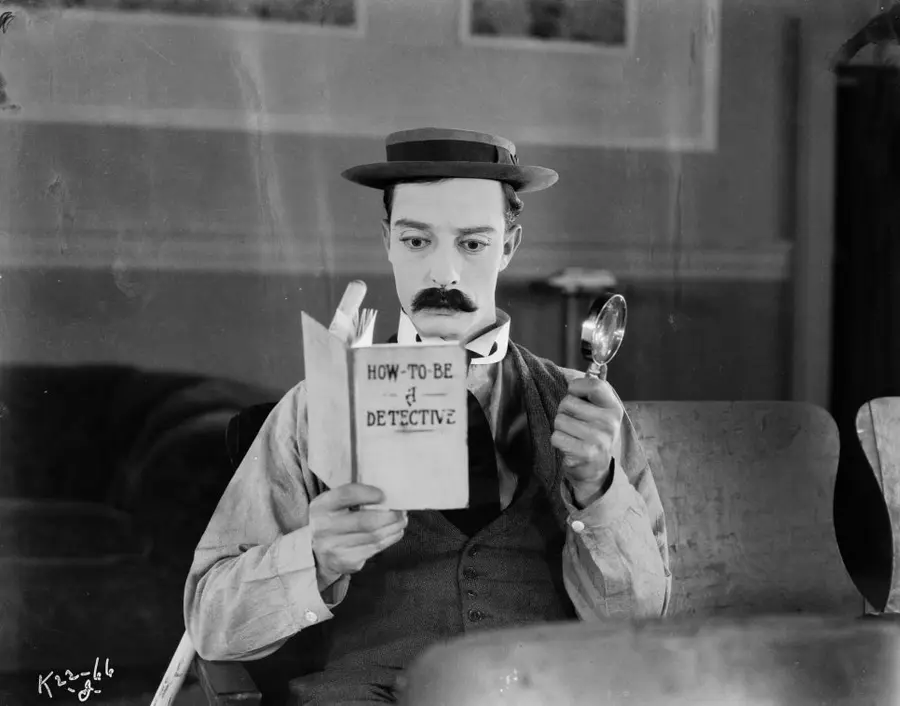
〈Sherlock Jr.〉 wasn’t an awkward 44-minute runtime; if it were, it would be worthy of being remembered as one of the cinema’s greatest masterpieces. It begins with the projectionist of a rural theater (Buster Keaton), who dreams of becoming a detective, sitting in the audience and reading a book called 「How to Become a Detective」. He falls asleep and dreams, and within that dream, another version of himself appears like an illusion. The two figures are shown together through a window-like opening where they each look at the screen from the projection booth (a double frame inside the film). 〈Sherlock Jr.〉 starts with the opening of the dream sequence, and it’s an expanded take on 〈The Play House〉(1921), where Buster Keaton appeared as an audience member and simultaneously played multiple people inside the theater.
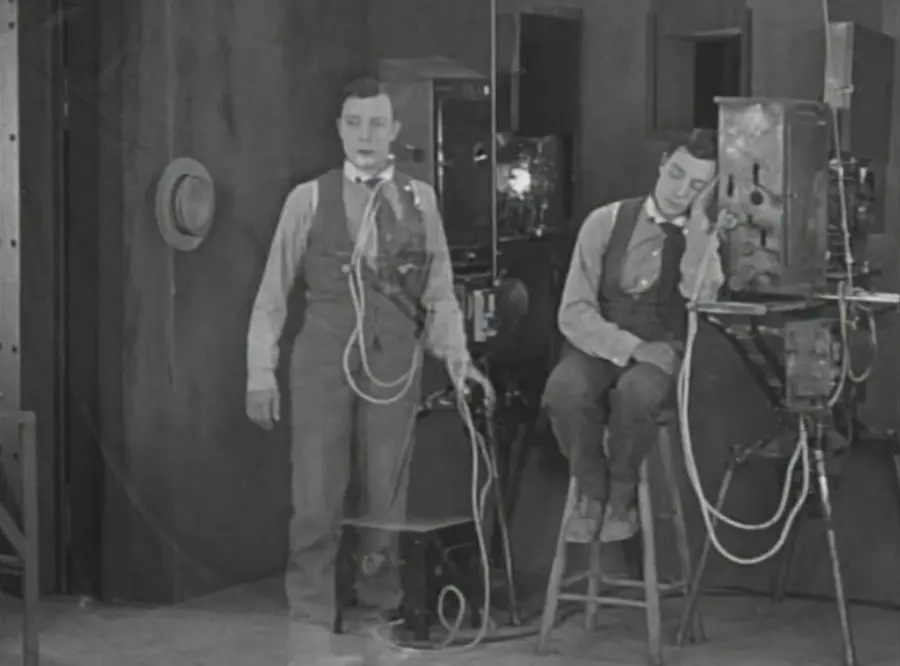
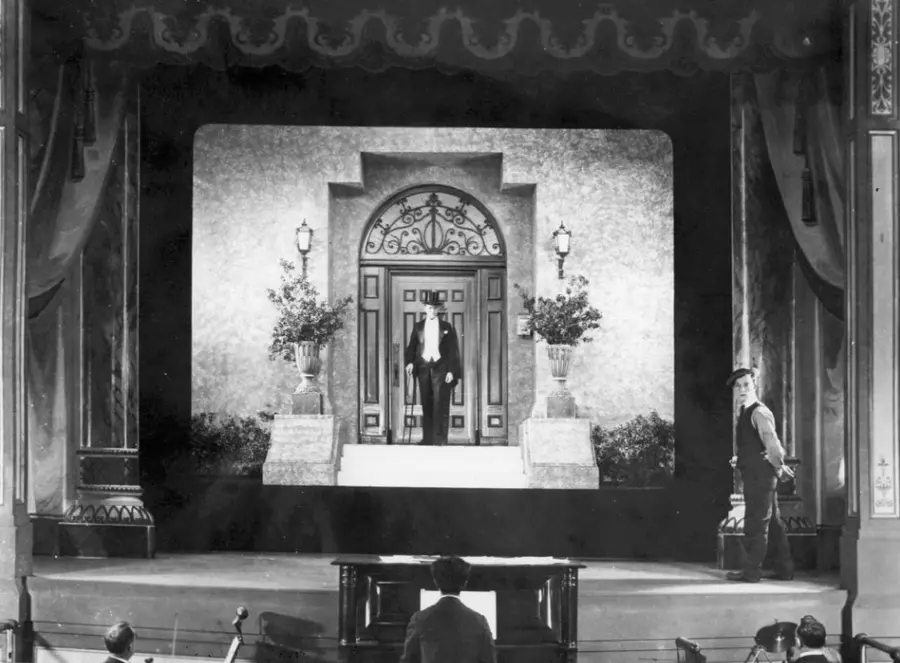
The projectionist tries to win over the woman he admires, but her father disapproves of him. Then a rival man—one involved in a love triangle—steals the father’s watch and frames the projectionist. The projectionist, played by Buster Keaton, walks into the screen and becomes the protagonist of the film within the film: Sherlock Jr., kicking off an adventure to find the real culprit. After that, what happens in reality (the projectionist loves a woman but is blamed as a watch thief and is rejected) is recreated in the dream like a theatrical performance. Once he steps into the movie, the theater stage vanishes in front of him, and an entirely different natural landscape unfolds. Now, he can’t come back out of the screen.
Once Buster Keaton steps into the film and becomes Sherlock Jr., with the transition between scenes he’s suddenly in the jungle. Behind Buster Keaton, who never leaves the frame, only the background as mise-en-scène keeps changing, driving him into crisis. The surreal idea of Brechtian distancing, the destruction of a linear narrative—at the very moment of that rupture, laughter erupts. As the size of the “stage” inside the film comes to match the screen size showing the film-within-the-film, Sherlock Jr.’s full-on active role kicks into gear.
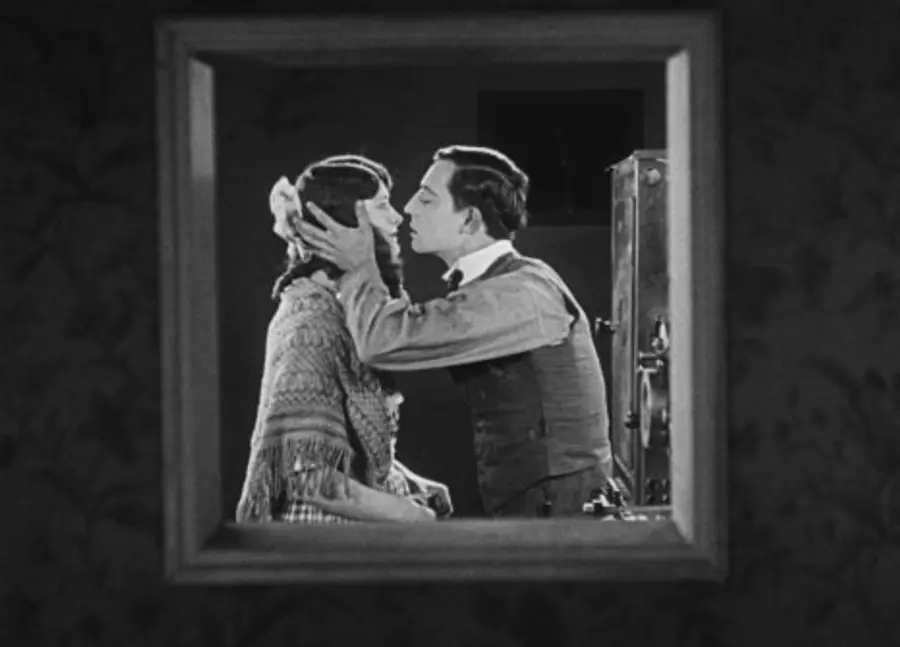
But it’s a dream, an illusion. In that dream, he is the master of the world—the great detective Sherlock Jr. In the dream (the film within the film), Sherlock Jr. solves the case, and in reality (the reality within the film), the projectionist Buster Keaton is cleared of the blame—he meets them as one again. And that meeting happens once more inside the film’s double frame. 〈Sherlock Jr.〉 is a monumental moment in film history about the relationship between dreams and movies, and about the convergence of film and reality.



댓글 (0)
댓글 작성
댓글을 작성하려면 로그인이 필요합니다.
로그인하기