



Chloé Zhao’s film 〈Hamnet〉 has been praised for its delicate storytelling, cinematic artistry, and the outstanding performances by its actors—both at home and abroad. In particular, with Jessie Buckley even winning the Academy Award for Best Actress, these reactions were only strengthened. I recognized the way the original work carries over its themes—overturning the existing, male-centered interpretations surrounding the great writer Shakespeare and his wife, and reinterpreting their relationship anew—as well as the achievement of this healing narrative that broadens an individual’s grief into the grief of the community and unfolds a story the present era needs. Still, I couldn’t fully embrace this film. In this piece, I looked at a few elements that I can’t just praise in 〈Hamnet〉.
Diagrammed, Stereotyped Agnes
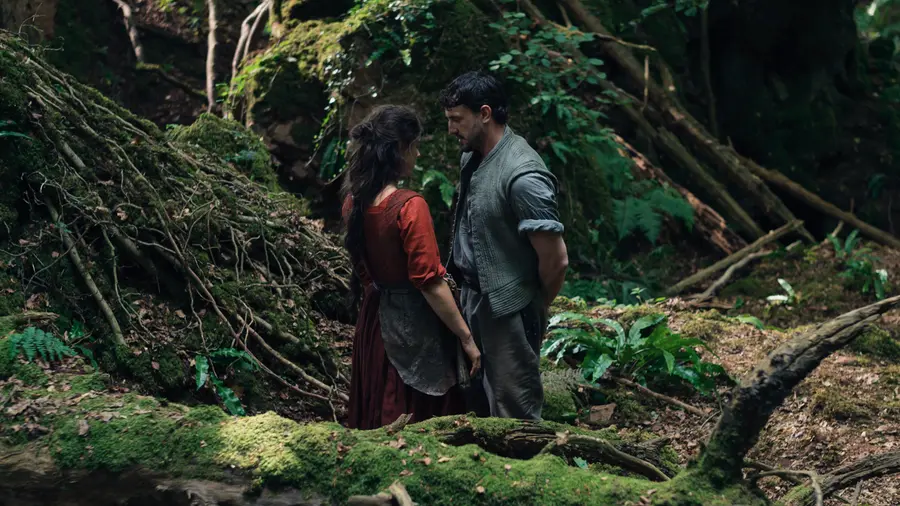
〈Hamnet〉 begins by showing a lush forest and the grandeur of the natural world. In the middle of that forest stands Agnes (Jessie Buckley), watching the hawk’s movement with sharp precision. In this way, Agnes is introduced as a nature-loving woman who shares a deep rapport with the outdoors. She is like Gaia, the goddess of the earth—possessing a kind of natural spirituality that lets her sense unseen changes in nature, along with a supernatural ability to glimpse, in a fragmentary way, the future of others. But soon, her free presence within nature is blamed on by people trapped in a stale mindset of the era, who label her a “forest witch.” The two-faced quality of Agnes—shifting depending on one’s perspective, like Gaia and a witch—adds richness to the character setting. At the same time, though, that setup is hard to shake off as an old, repeated iconographic template, something that has been endlessly recycled in works about women. On top of that, when it’s layered with the image of a mother devoted to her family, Agnes’s character feels even flatter. Even the repeated scenes of Agnes giving birth re-create a woman’s body as an idealized, mythic space where life is born, praising her with a revered, noble image. That’s how Agnes becomes diagrammed—trapped in the icon of being a conduit for nature, mystery, and motherhood.
A Closed-Off Women’s Narrative That Mirrors the Limits of Its Time
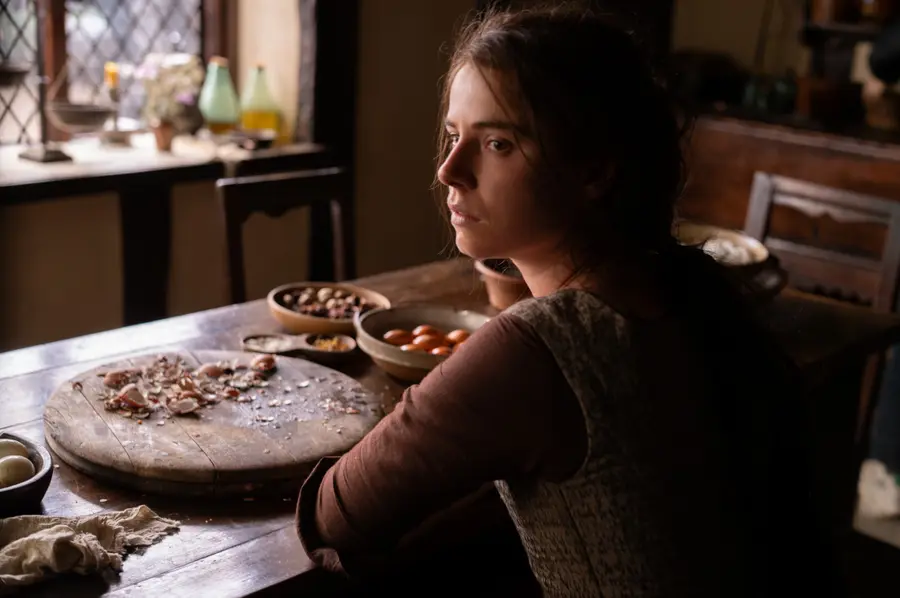
After the midpoint of the film, it shows Agnes and William (Paul Mescal) coping with grief in distinctly different ways. Agnes screams her sorrow with her whole body and clings the lost person and memories of the past onto everyday life. William, meanwhile, doesn’t share his grief with his family for a long time—he returns to London for his own work. These contrasting approaches reveal the attitudes a human being can take when facing loss, and they carry emotional persuasiveness. Yet at the same time, the process borrows the very familiar pattern from existing works: an excess of emotion that makes a woman lose her reason by fixating on her past, and a man suppressing his feelings and fleeing from them—leaving a sense of regret. On one hand, this middle movement also gives the impression of functioning like a signpost leading toward the film’s final chapter.
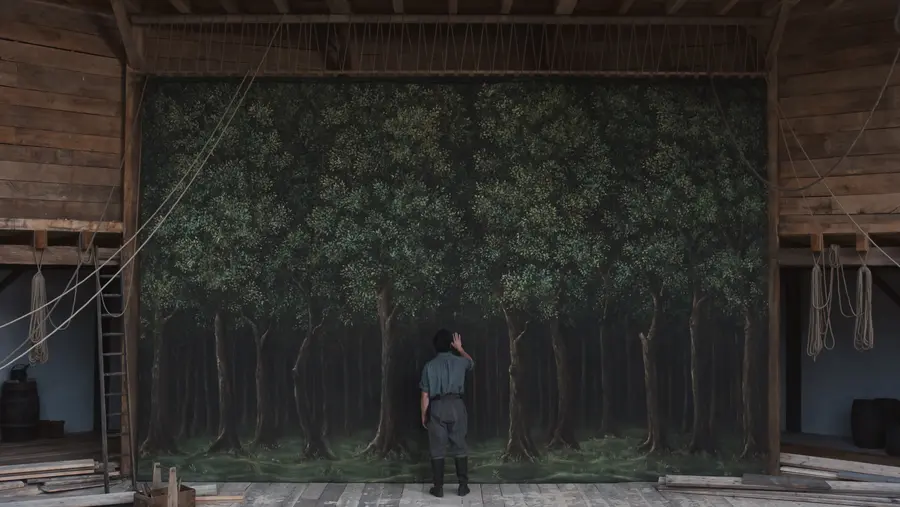
In London, William endures his sorrow alone and projects his loss onto theater. Agnes, who learns late that Will’s play deals with the death of their son, goes to see his performance. The film’s final sequence—where Will acts directly onstage, and Agnes and the audience watch his play—creates catharsis at the peak of the emotional arc. At the same time, that scene contains what this story ultimately wants to tell its audience. Chloé Zhao seems to believe that art can’t fully heal grief and loss on its own, but that it can give those emotions shape and make them something that can be spoken. Agnes’s and Will’s personal grief becomes dramatized, and at the moment when Agnes and the audience reach out toward the characters inside the play, it expands into the grief of the community. From the start, 〈Hamnet〉 uses the then-popular epidemic as a metaphor for the COVID-19 pandemic, portraying their private grief as the grief of the community. In this way, 〈Hamnet〉 functions as a healing narrative that gives form to the losses humanity has experienced and makes them exist within the public sphere.
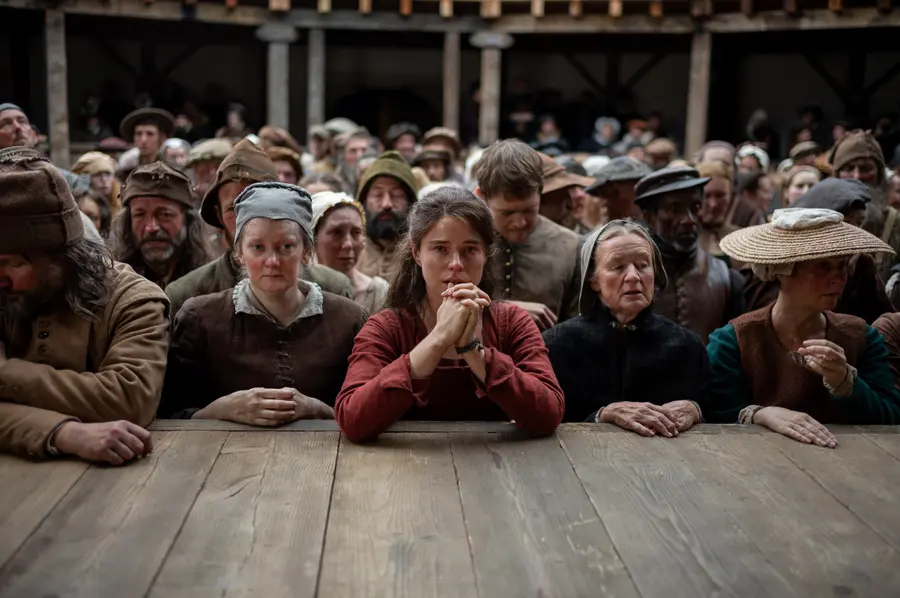
But 〈Hamnet〉’s final ending shows that Agnes still doesn’t have the language to express her own loss. William may be able to sublimate sorrow and loss into art, but there are essentially no art-making opportunities for women, and Agnes—being a woman in that era with constraints on her activities—can only carry her grief in her heart. Shakespeare sublimated tragedy into art and left his name in history, but Agnes remained tied to her home and family and lacked the language and space to structurally overturn her loss. Not being able to change the era’s paradigms or one’s circumstances is the limit of the era itself being reflected in the work. However, 〈Hamnet〉’s ending also fails to properly depict Agnes’s inner growth. Even though it is a women’s film, it doesn’t show both the protagonist’s growth and the visible achievements that come with change in her environment. In the end, like Agnes who can only hold her sorrow inside, I had to leave the theater with a suffocating frustration that never found resolution.


![[Chuseok Holiday Box Office] Yoo Hae-jin and Park Hae-il's 'Assassins' and 'Tazza 4' knock out 'The Odyssey,' draw 130,000 on opening day for No. 1](https://cdn.www.cineplay.co.kr/w300/q75/article-images/2026-09-26/9f21ef55-2288-4c72-b030-b8b00587e464.jpg)

![[Photo &] 2026 Berlin International Film Festival, Michelle Yeoh, Wim Wenders, Sean Baker and other masters and stars gather for an unprecedented lineup](https://cdn.www.cineplay.co.kr/w160/q75/article-images/2026-02-04/5aa8c6df-fd54-4f6c-a6f3-7bfcda95960d.png)




댓글 (0)
댓글 작성
댓글을 작성하려면 로그인이 필요합니다.
로그인하기