


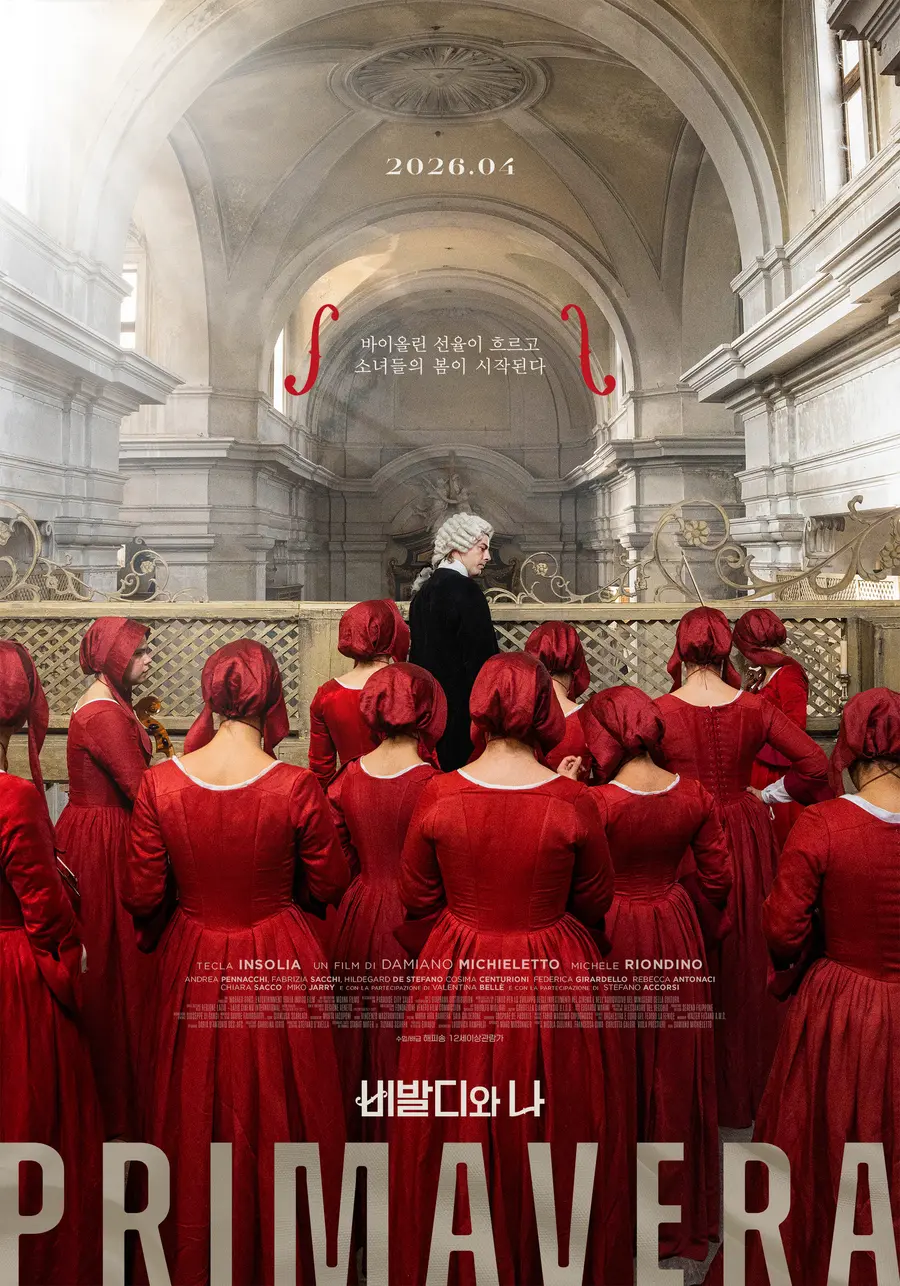
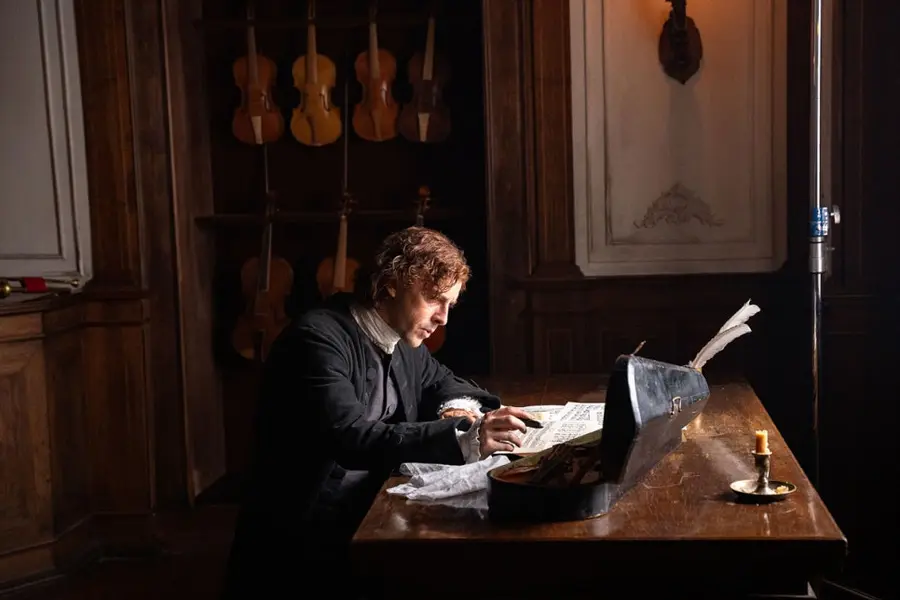
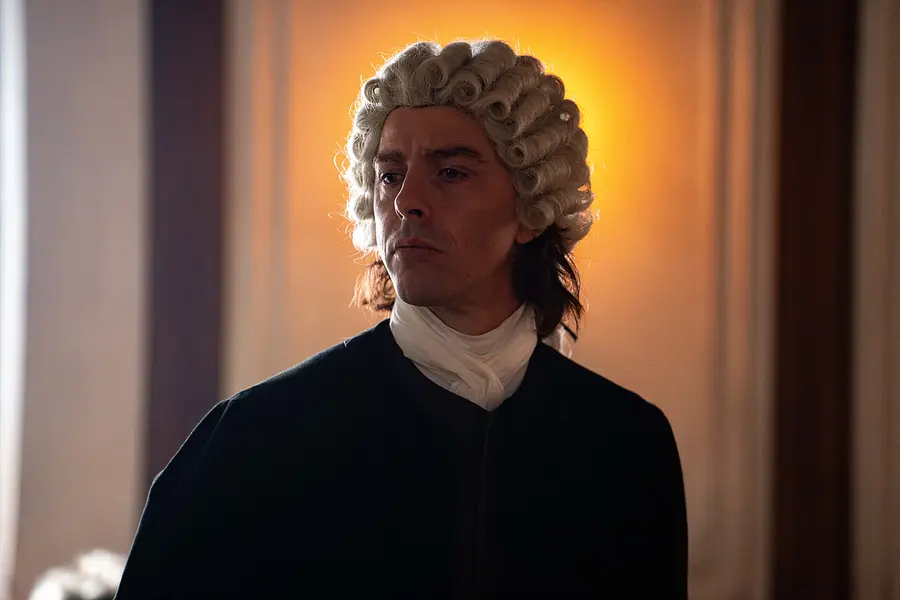
For a brief moment, we may feel like we understand or truly know the other person—so convinced that we believe it. Communication through music is like that. In the deepest layer of their relationship, we see it in Vivaldi’s confession—when, in the middle of the night, he comes first to Cecilia’s hiding place and pours out everything. It is not a confession of love; it is a heartfelt sincerity poured out toward music itself. “Inside music, everything is possible,” he says. The way his body often collapses because of asthma—he can only become fierce within music. Only someone who has put all of themselves on the line for music could say such a thing. And it’s precisely that authenticity that makes this scene so painfully stirring. For Vivaldi, music is reduced to social standing, to a name, to freedom of movement. For Cecilia, no matter how excellent it is, it cannot be reduced to any of those things. Though they perform the same music, though they dedicate themselves to it with such depth and approach one another with a similar passion and burning intensity, the way they—two people, a man and a woman—meet the outside world through music was completely different from the very beginning. The film never paints Vivaldi as a villain to the end. It shows him as a passive advocate, but also as someone who has the sincerity to give the violin he cherishes like a second heart to Cecilia, who is on the verge of marriage. “Your talent dazzles me—I hope you’ll keep playing even after you get married.” That pure 마음. Yet even pure sincerity cannot overcome society’s structural inequality. Cecilia was placed in the world of the grid from the moment she was born, while Vivaldi left from outside the grid to gamble everything on an adventure for his dreams, failed, and then returned for a brief moment to catch his breath. From Cecilia—who plays not to be praised, but simply to be music—Vivaldi gains musical inspiration. He achieves musical accomplishments by taking her as his muse, but that doesn’t make him bold enough to fight social conventions, nor influential enough to shake the existing order.
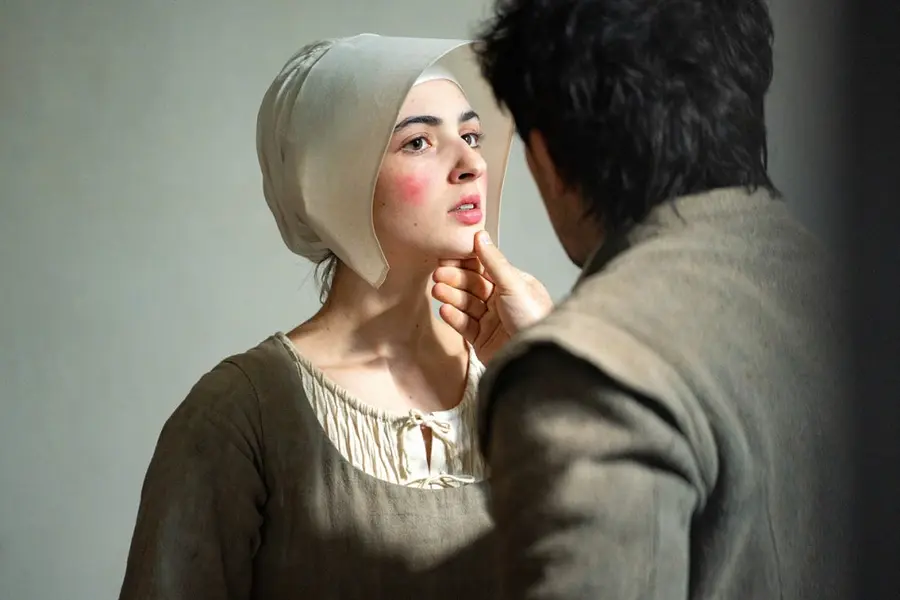
Even so, the reason they could encounter each other as horizontal equals in music—even if only for a moment—must be that both of them understood music was the only vessel that could fully hold them. The film allows no romance or hierarchy between the two. One discovers another possibility of life within music, and the other seeks recognition through it. Even within that asymmetry, they give and receive fairly. Vivaldi calls in the finest instrument maker of his day and orders a violin exactly matched to the length of Cecilia’s arm. A girl’s body is completely different from that of an adult male performer. Having a violin tailored exactly to the length of your arm would have been the greatest luxury a performer could enjoy at the time. It’s not a matter of adjusting the body to the standard—it’s a matter of making the standard fit the body. In “Pieta,” where everyone lives wearing the same clothes, girls’ bodies have always been squeezed into the framework of the system. This violin points exactly to the opposite place. A girl grips the instrument—she ardently longs for affection, conversation, and human warmth, but doesn’t know which direction to go in. From that moment on, the instrument becomes not just a proof of talent. It becomes the way a body—managed by the institution, hers by virtue of her status, yet never once felt as her own—finally gives voice to her existence for the first time.
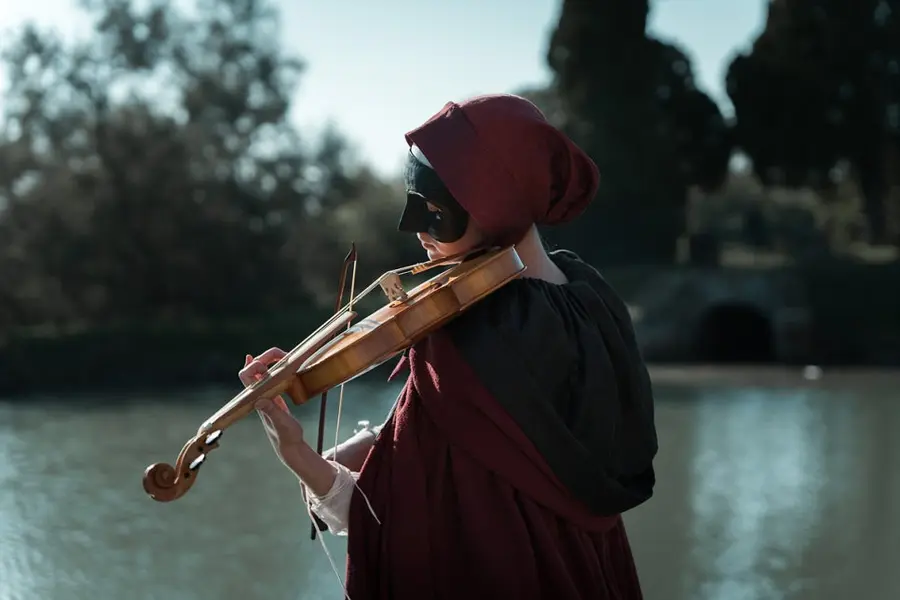
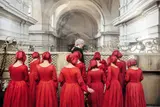
The longest echo this film leaves comes from the outdoor performance sequence. Girls who step outside the grid-pattern gate for the first time take a boat across the canal to the woods. They play in warm spring sunlight, walk along the lakeside where new life is taking root, and absorb the vitality of the forest into their entire bodies. Bodies that had been controlled breathe in a fresh, new air outside the system for the first time. As spring sprouts like a new shoot in a single moment, the violin’s strings quietly explore the beginning of spring on their own.
So the girls’ way back is even more cruel. On the way back, on the boat over the canal, they all wear masks, so you can’t see their expressions—but you can sense somewhere in them a dull, sorrowful heaviness. The more they are freed from the grid pattern, the more the girls erase themselves from the outside world with masks. The bodies that were just moments ago placed in spring under comforting sunlight become anonymous and retreat again. Somewhere along the boat route, the camera pauses as they pass in front of a butcher shop. A slaughtered pig hangs open as its carcass is split, and its blood flows into the canal without any fuss. The inside opens, empties out, and gets discarded. The image doesn’t explain itself. The girls stand beside one another—just there.
When they return to the orphanage, they bathe—washing their bodies—and they cry out loud. In the place where they must wash the bodies that have just savored and experienced freedom from the outside world. Bathing isn’t rest or purification; it’s the violent erasure of memory. Spring’s energy, the sensation of sunlight and the breeze brushing past their cheeks, the thrill of playing outdoors—those things simply wash away. Animal blood from the canal seeps in, and in the bathtub gathers the girls’ tears for what spring has been taken from them.
Cecilia’s performance completely captivates the King of Denmark. Moved to the core, the king approaches Cecilia and says something to her—passionately, at length. With the king, who has crossed over to this side, Vivaldi and the general music director talk among themselves in French. French, the language of European power at the time. Of course, Cecilia doesn’t know it. She never learns what those words directed at her actually were—what sentences, what exact words the king used to call her. The person who gave the impression is suddenly standing outside the language of that very impression. It remains somewhat unclear whether that impact is purely because of music—or whether youth and pure, beautiful appearance have been added to music’s result. Whether the grid is made of wood or the language is French, the logic of what lies inside and outside the boundaries it divides is always the same.
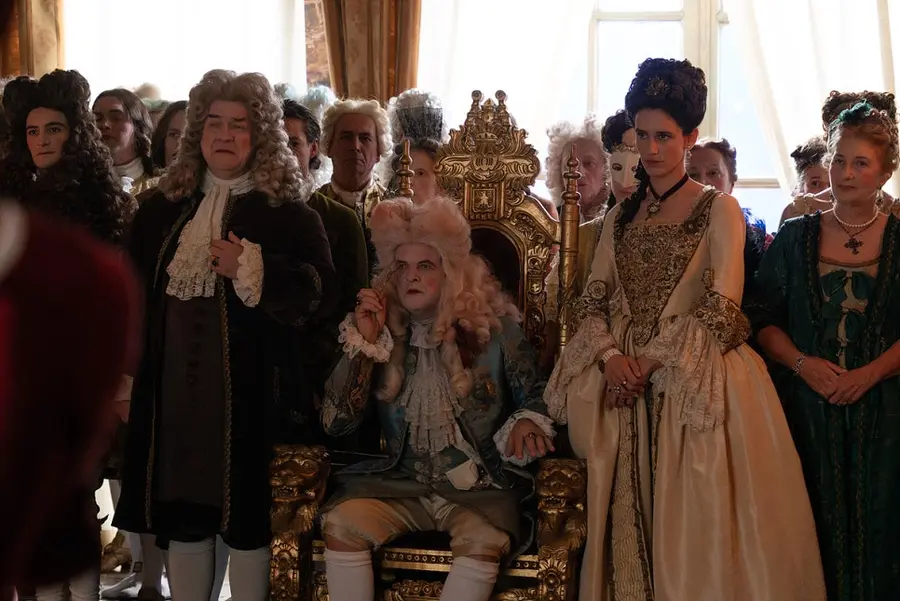
With marriage approaching, Cecilia throws away her virginity on her own. With an innocent face, she casually makes a voluntary choice. And when her fiancé learns the circumstances, she tells him with a face tinged with a kind of smile: “I don’t bear any resentment toward you.” In this era, within this institution—what price she pays for arguing that a person can decide her own body and use it freely, and even dare to build a name and career through music—returns as a brutal result. Her fiancé breaks Cecilia’s left arm in two separate blows. So she will never be able to hold a violin again. What she gets in return for what she can’t have and what she has wounded in his pride is always retaliation against her body. That savagery and aggressiveness must have let him survive on the battlefield. The world is designed so that people like him win.
Instead of Cecilia, the friend who marries is Constantia. She cries while listening to the performances of her former colleagues. But she can’t cry to her heart’s content. Her husband keeps reading the situation and giving her cues. Even dressed in splendid clothes and covered in jewels, she can’t even bring herself to shed a single drop of tears—she can’t decide that freely, with her own heart. In one scene, the film tells us what kind of life the institution called “marriage” allows. It also asks whose body a woman’s body truly is. It doesn’t explain it. It only shows it.
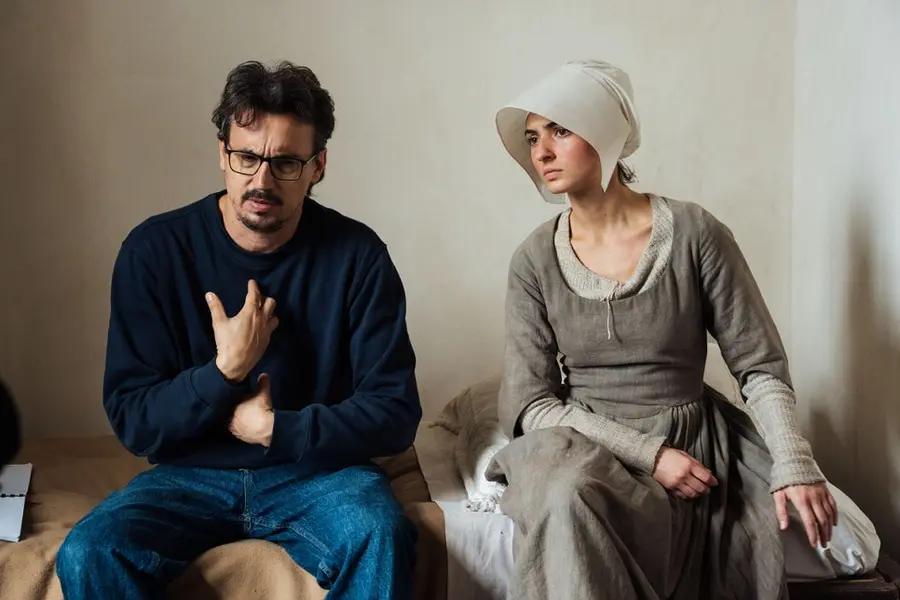
Cecilia, who has broken the institution she belonged to and escaped the prison that held her captive, takes a boat across the canal and throws half of the card bearing the compass her mother left behind into the river. The act of stopping waiting for someone to come and look after her. The act of finally ending the habit of leaving your direction to someone else. She reveals her hidden hair for the first time. Holding her broken arm, she walks away—leaving behind the place where she could have become a nobleman’s wife, and stepping into an unknown world where no one has ever promised her anything. How a woman’s body—once it has found its original owner—will be treated from that point on, the film doesn’t say, and doesn’t have to.
〈Portrait of a Burning Woman〉 asks who owns this woman’s face. And if 「The Vegetarian」 depicts a radical retreat in which this woman’s own body no longer offers itself to society, then 〈Vivaldi and Me〉 sits somewhere between those two points. A moment when bodies that cannot yet run away transcend themselves—through music, not through escape. That is why it is the only kind of freedom possible, and that is why it is even more bleakly poignant.
Spring isn’t just the season when flowers bloom. It’s the moment when the beings we could only hear finally begin to be seen.
Kim Na-hee, Music Critic



댓글 (0)
댓글 작성
댓글을 작성하려면 로그인이 필요합니다.
로그인하기