


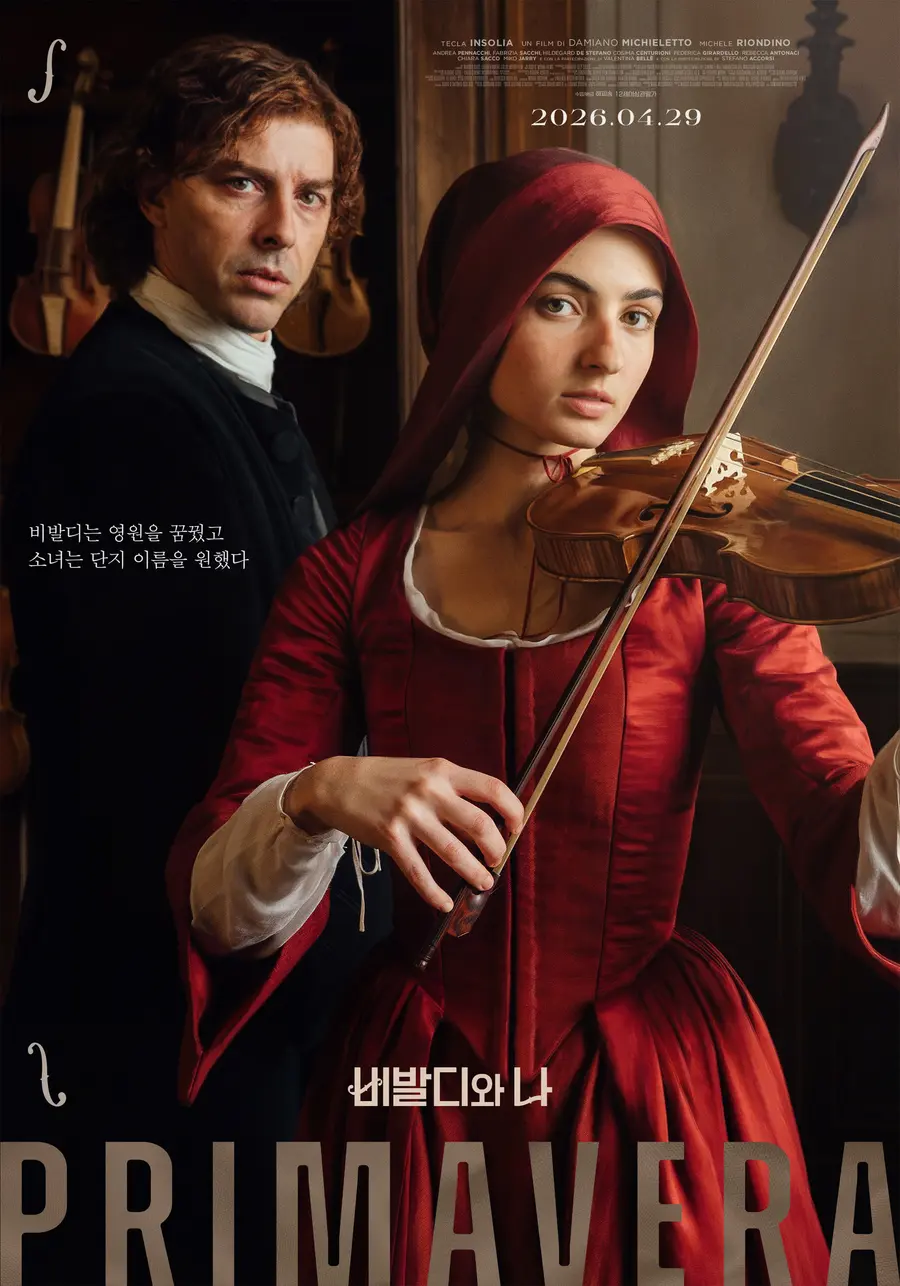
The original title of the film 〈Vivaldi and Me〉 is 《Primavera》, which means “spring” in Italian. It is also the name of the first concerto among Vivaldi’s 《The Four Seasons》, but in this context, spring is another word for liberation. Like the spring of Prague in 1968, the spring of Seoul in 1980, or the Arab spring in 2011, these are the times that arrived after an era of oppression. Moments when things that were held down for so long reclaim their original colors and begin to bloom again. We all know that “spring” is liberation in one way or another. The 〈spring〉 you hear with the film’s end credits—and the meaning this word carries—leaves a long aftertaste.
In the early 18th century, in Venice, the Ospedale della Pietà took in abandoned girls and educated them, raising them into outstanding musicians. Behind dense wooden lattices, they can perform only with their existence hidden. Their music fills the space, and the audience, moved to the point of tears, sends back scalding applause. Yet no one can see their faces. They can create music through performance, but they cannot reveal their presence—almost as if they are beings who do not have bodies.
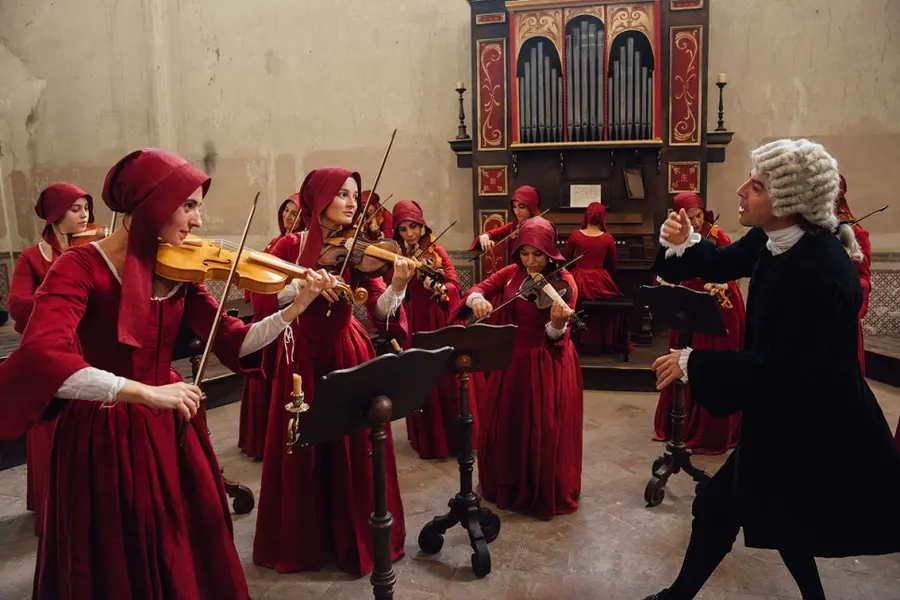
Thanks to the Korean title, at first you might think this film is a biographical story about Vivaldi, but the center of this narrative was never him from the start. Based on Tiziano Scarpa’s novel 『Stabat Mater』, and chosen as the debut work by opera director Damiano Micheletti, the true protagonist of this film is Cecilia. The newly arrived Vivaldi recognizes Cecilia’s musical talent. While driving at breakneck speed and testing the limits of technique, he sees something more than mere technical superiority in Cecilia—her uniqueness in choosing not to play just to make others happy, not to play just to earn praise. Did fate make him feel that Cecilia, who has a musical self and a special kind of charisma, would become a great inspiration for him, who is a composer? In a commercial republic where goods, people, and money move endlessly along the canals, exceptional talent can look like a means of liberation at first, but ultimately it leads to intensified control. Talent that threatens the system is simply something to manage—and it becomes another prison, trapping those who have talent.
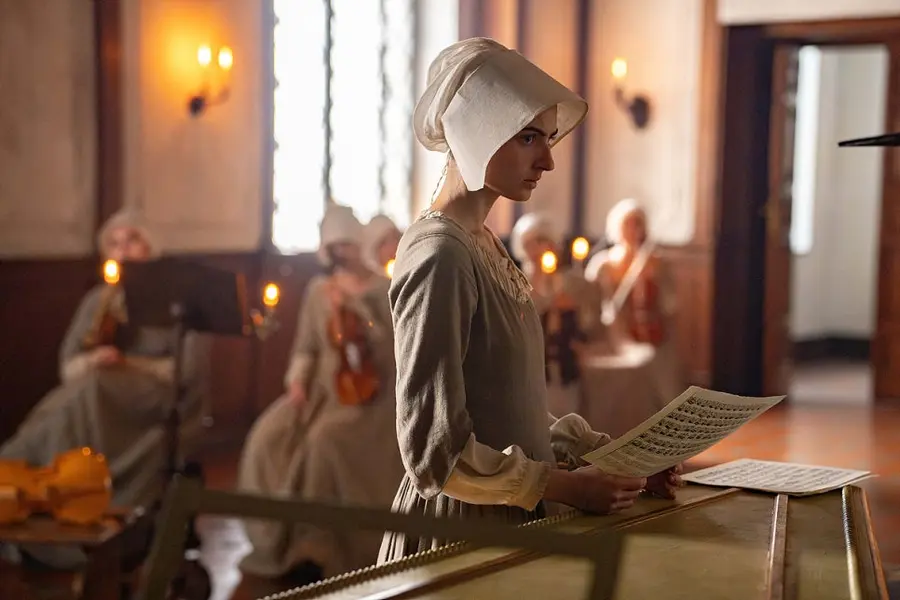
Cecilia’s story begins with a letter. Night after night, in darkness, with candles lit, she writes with all the intensity of longing. To her imagined mother, she tells her that it doesn’t matter what kind of being you are—whether a prostitute or anything else—then she writes out her own story. “One day, she’ll open that door, and Mom will come meet me.” How desperate and painful is that kind of waiting. Or perhaps, because it is impossible from the beginning, is it a cruel torture? Because her heart longs so much for her mother to come, Cecilia mistakes the woman who came looking for her daughter and moves toward her first, embracing her fully. She searches through the woman’s signs and records left behind, looking for even faint traces. The deputy director is also someone who was abandoned here, so she understands Cecilia and shows her where to find the records. The only clue left is a card bearing a compass drawn—cut in half within thick documentation.
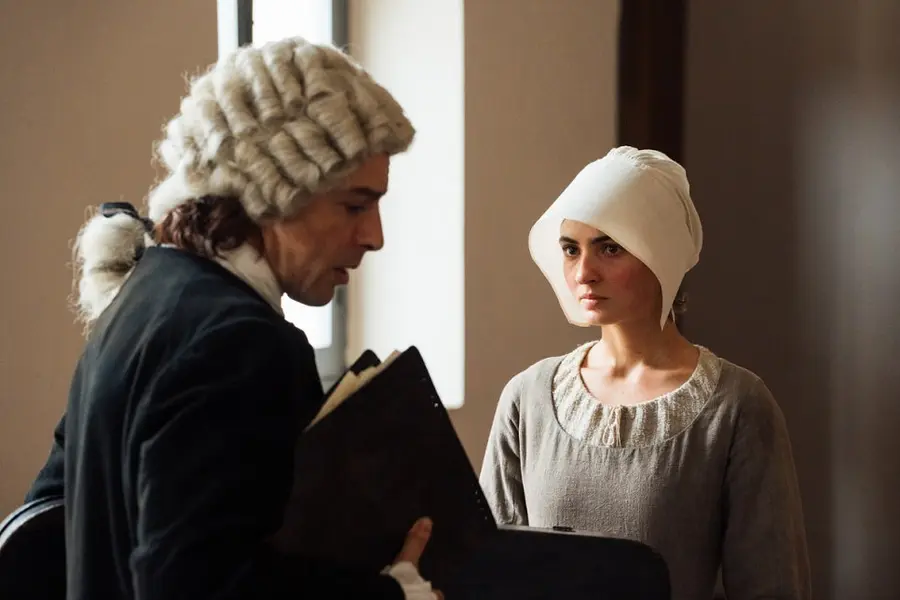
All the girls here are abandoned children. The orphanage takes them in, assigns them work, and gives them opportunities to display their talent through singing, playing instruments, and more. Within this system, the girls’ bodies are commodities—strictly managed objects. The choices laid before Cecilia are simple. She can be sold to a noble just like the other girls, or she can hope that her mother will return and come take her away. Because of her outstanding looks, Cecilia was decided to be sold early on, along with a large dowry. If only the war ends, the fixed fate will come right away. Cecilia, too, imagines the future while half resigned. So when Cecilia plays variations, Vivaldi, who discovers her exceptional musical talent, lets her own fate spill out as if mocking her. She says that once the war is over, she will marry her betrothed.
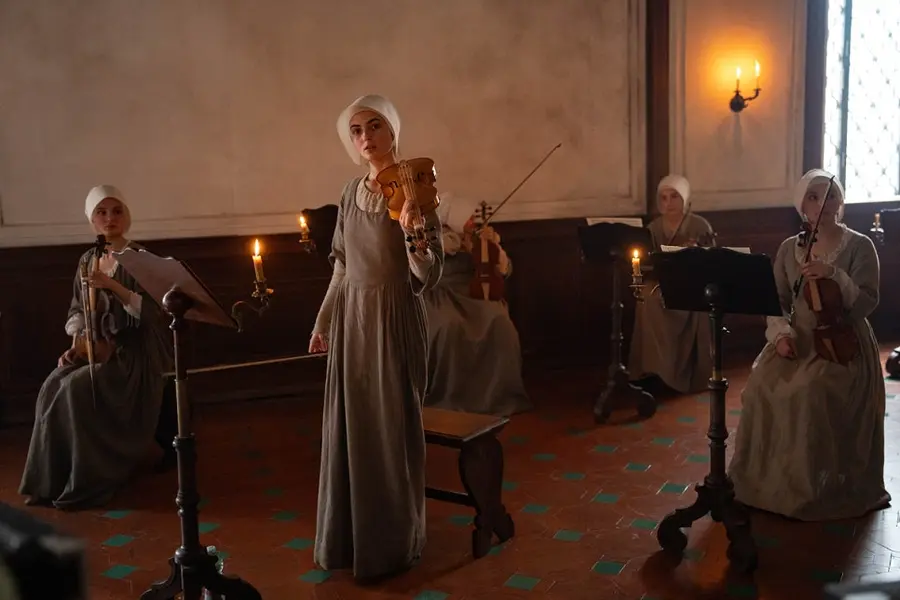
Running through this film, set in early 18th-century Venice, is money and power. It feels like an even more blunt fable than today’s capitalist society. Cecilia says it herself: “It’s always about money.” A noblewoman with no talent and no passion keeps the pointless lessons going through her weekend evening receptions, just to show off her skills. The music Cecilia makes her living is consumed by the nobility as mere decoration, nothing more than cultivation. Because it is the last wish of someone who is dying, she plays the violin even on the bedside right before death. For indulging in this luxury, he paid part of his wealth.
Just as modern consumers examine products in detailed product pages, old, wealthy men meet the performers—girls—separately, take a close look at them, and search for prospects to remarry. For old, wealthy men without wives, the young women offered by the orphanage are no different from products displayed inside a sophisticated kind of shop. Like a modern baby box, orphans continue to flow into the orphanage. They must be fed, educated, raised, and then sold expensively—only then can this system be maintained. When the director says there are countless orphans in Venice, no one can argue. The chilling truth hides a violent reality. The process by which old, wealthy men propose is polite; the music the girls play is beautiful; and only the chosen girls—wearing flashy dresses and veils over the lace they plucked—leave the orphanage through marriage. The deal continues in an elegant form: arts patronage. Venice, recognized as the most romantic city, is no longer the city in the postcards we admire and dream about. Amid a social hierarchy, cold negotiations, and bodies with different values measuring each other without restraint to put a price on them, obsession with money comes out in its rawest form. At the orphanage, the girls know instinctively which kind of body fetches the highest price—and that chastity, and without weapons like youth, beauty, and talent, no one can ever be sold expensively.
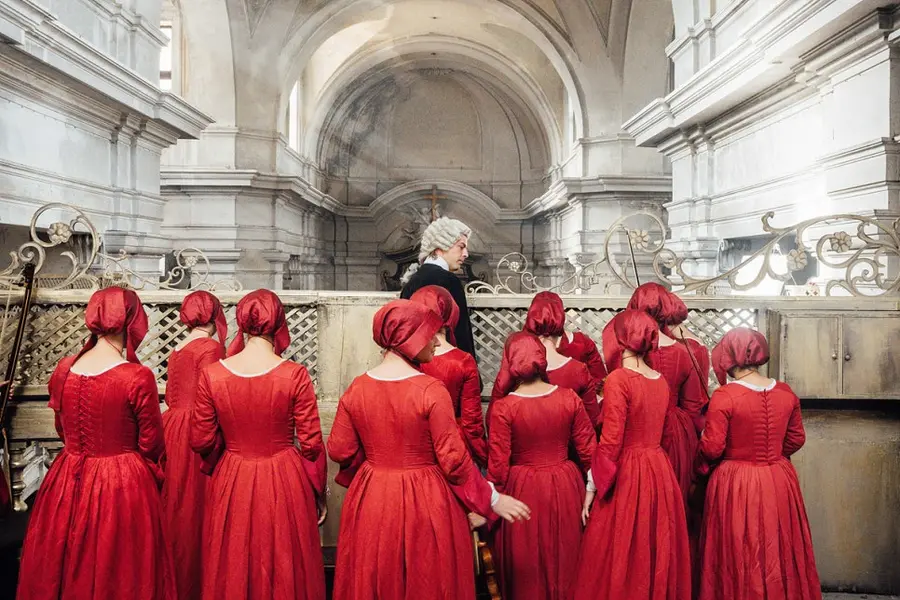
That Vivaldi eventually returned to Venice was, in the end, also because of money. He had shown musical talent early on and toured Europe in an attempt to secure positions such as court music director or Kapellmeister—but he failed again and again. He was someone with talent but a weak body due to asthma, and he had ambition for advancement but lacked the social gestures that would match it. Pietà could hire Vivaldi, who had outstanding talent at only one-third the cost of the current conductor. A genius is absorbed into the system only when they lose bargaining power in the market. Vivaldi was no exception. Born into the middle class, he was weak in his body from the start. All his life he suffered from severe asthma, and he couldn’t surpass the physical limitations of a body that would not tolerate even a bit of harshness. That’s why he repeats the expression “harshly” in his music. Everything that cannot be realized in real life becomes possible in music. Music was a choice that felt inevitable for him, but as a man born in the early 18th century—with the nickname “the red-haired priest”—he had freedom. Within social systems, he could dream about the future, design it, and choose directly. He could write, play, conduct, and express himself through music. He could reveal his face and name, build a reputation as a conductor, and lead an orchestra. For a woman like Cecilia, those things are not something she can dream of. The kind of communication Vivaldi and Cecilia share is not the romantic communication between a man and a woman—it is something subtle, like a moment when two human beings face each other and, through music, understand each other more deeply than anything else.
▶ The article about 〈Vivaldi and Me〉 continues in the second installment.
Kim Na-hee, Music Critic




댓글 (0)
댓글 작성
댓글을 작성하려면 로그인이 필요합니다.
로그인하기