




Released four years after Steven Spielberg turned to an autobiographical story with The Fabelmans, 〈Disclosure Day〉 marks his return to science fiction. Given Spielberg's earlier alien-centered classics Close Encounters of the Third Kind and E.T., the film was early on dubbed the final entry in "Spielberg's alien trilogy." After seeing the tightly guarded 〈Disclosure Day〉 at a press and distributor screening on June 9, here are my impressions.
The film opens with Daniel (Josh O'Connor) making a clandestine deal. He attempts to trade with a group called WARDEX but turns the tables and escapes using a piece of equipment he has stolen. Margaret (Emily Blunt), a Kansas City weathercaster, suddenly develops a transcendent intuition and insight, emits a strange sound during a broadcast, and collapses. When the FBI shows up looking for her, Margaret intuitively recognizes that they are not the FBI and flees. The two protagonists meet with the help of their contact Hugo (Coleman Domingo).


The narrative of 〈Disclosure Day〉 is striking from the start. Daniel is already in crisis when the film opens, while Margaret's story unfolds from the moment of her sudden change. The two-track structure is linear but not flat: at a certain point their threads intersect and the film reconvenes into a single story. Although Daniel and Margaret are at the center, Noah (Colin Firth), the WARDEX chief pursuing them, joins the action, creating a multilayered structure that often evokes espionage drama.
That multi-directional approach does not mean the tempo is breathless. Daniel trades off scenes with Jane (Eve Hewson), who is swept up in events because of him, while Margaret, meanwhile, interacts with those around her, including her partner Jackson (Wyatt Russell). For a genre picture, the film’s pacing is deliberately relaxed. When WARDEX bursts in, though, the tension spikes and the film fills those moments with intensity to refresh the atmosphere.
The film’s form is not its only distinctive element. The familiar storyline of a small group fighting forces concealing extraterrestrials acquires a new flavor once Margaret’s arc enters the picture. Here, the film gives weight to questions of the public’s right to know, world peace, truth and belief. Can humanity accept a nonhuman presence? Will the beliefs that have sustained human society shift toward a new being? If so, what then happens to the world?
In short, 〈Disclosure Day〉 is not a film that can be neatly reduced to conspiracy theories, sci‑fi or aliens. Steven Spielberg and longtime collaborator David Koepp use this story to reflect on contemporary society, the world, and on human beings. Spielberg frames the world of 〈Disclosure Day〉 as showing signs of a "third world war," a choice that likely reflects his effort to channel the crises he sees in the United States and around the world into the film. Jane is written as a religious figure who once lived in a convent, so the movie directly raises questions about the issue of "faith" that an alien presence would provoke. The film even delivers lines such as "empathy is a measure of evolution" and "faith is an essential human desire," refusing to reduce the question of extraterrestrial existence to mere curiosity and instead probing its deeper consequences.
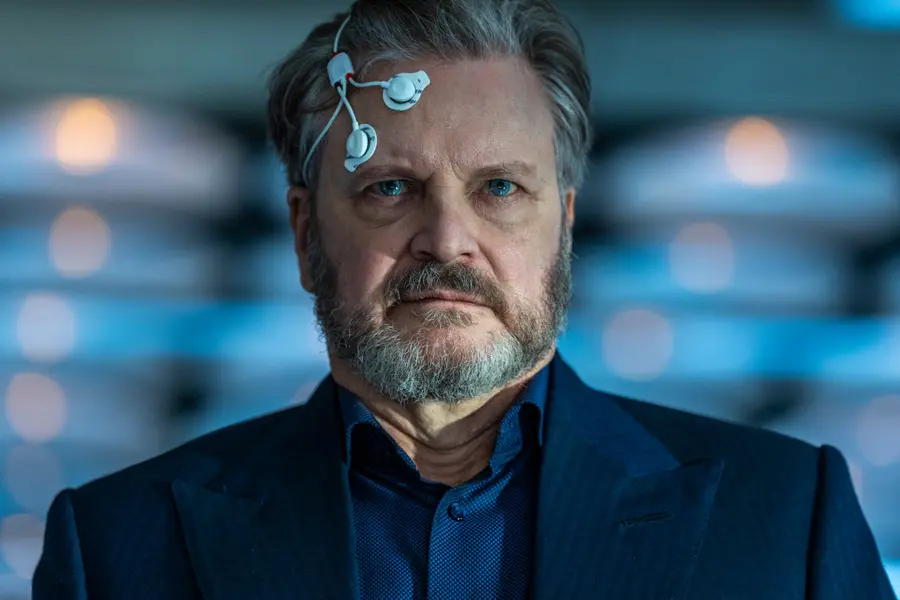
The problem is balance. If you watch 〈Disclosure Day〉 primarily for its alien or sci‑fi elements you may be satisfied, but if you expect a conventional "alien sci‑fi" you could find it underwhelming. You could even view this story as a revival of Close Encounters of the Third Kind, in that the aliens never fully take center stage. The film does not deliver large-scale action or spectacle built around mysterious lifeforms. Conversely, if you enjoy films that dwell on conspiracy or meditate on specific issues, it's hard to find another film that leaves such a strong lingering impression.
It is also unfortunate that the story’s density does not always match its ambition. As noted, the film unfolds around a variety of characters, which at times makes it feel scattered. The early sections, which cross-cut between Daniel’s crisis and Margaret’s inciting incident, continuously pique interest, but the time it takes to resolve that interest often feels overly leisurely. On the other hand, Spielberg’s longtime collaborator John Williams still delivers a superbly finished score, though his characteristic orchestral sound sometimes feels slightly at odds with the film’s uncertain mood.
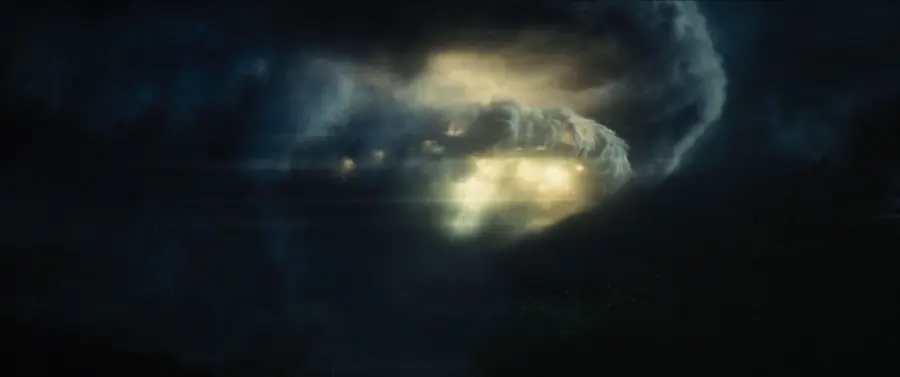
Yes: 〈Disclosure Day〉 offers commercial spectacle, but it is not easy, disposable entertainment. The film constantly presents mysteries and sustains tension. The cast delivers performances strong enough to keep viewers fully engaged. Spielberg’s craftsmanship is on display in the action scenes. Yet at the core are metaphysical questions. If you are willing to accept them, 〈Disclosure Day〉 will be an unprecedented feast; if not, it will look like hot air.






댓글 (0)
댓글 작성
댓글을 작성하려면 로그인이 필요합니다.
로그인하기