


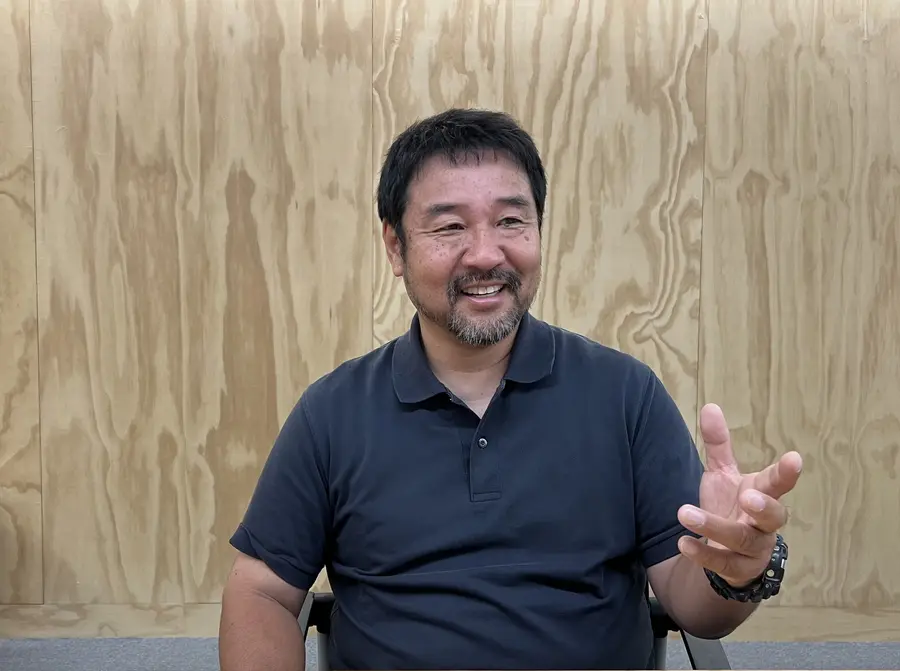
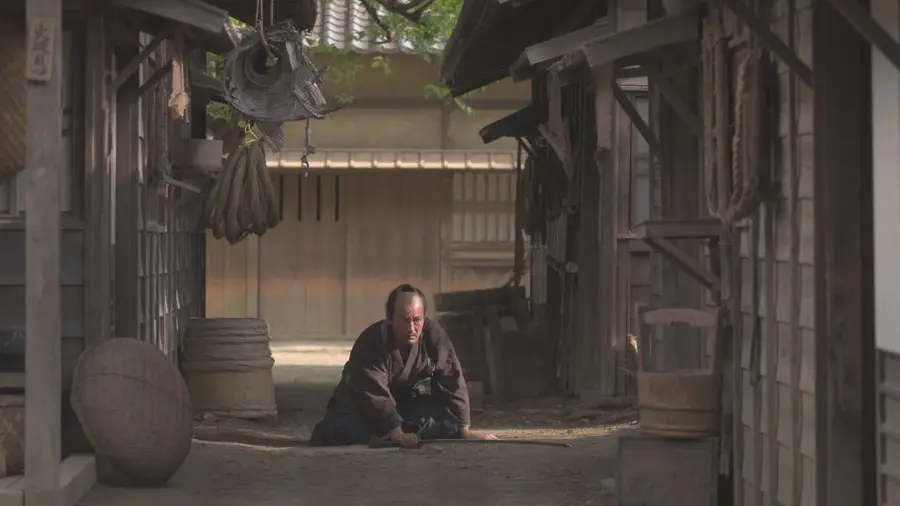
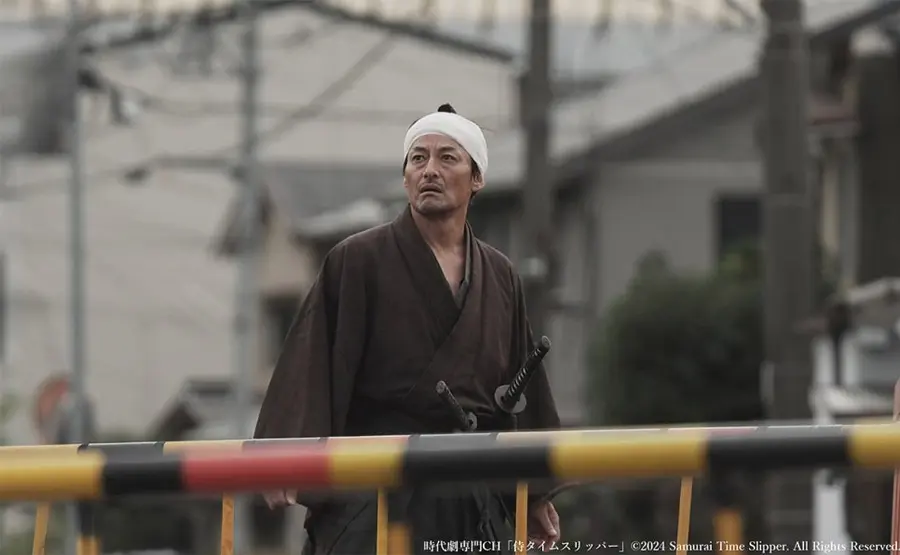
This is a structure that connects the filming set of the late Edo period with that of a modern-day historical drama. The former is an era in which the shogunate was in decline ahead of the Meiji Restoration, while the latter is a period that came after the heyday of 1970s-80s historical dramas—when production became more difficult. It was interesting how we overlapped those two time periods.
The film’s “present” is set in 2007. By then, period dramas had nearly disappeared, and at the time, TV period dramas were being sidelined while only one or two were still produced. Even on TV, people were saying things like, “Period dramas will be gone now.” As a farmer, farming was also a hard time because of changes in government policies and the like. People were saying, “Before long, we’ll all just end up eating bread.” Movies are similar. Once the digital transition came and the OTT era arrived, things that would disappear became visible. But if things are going to disappear, should we stop right here and now? Traditional industries are all facing a risk of disappearing someday. Even if they disappear when they do, I think I wanted to put into this film the encouragement that says, we’ll protect this even now and try until the end.
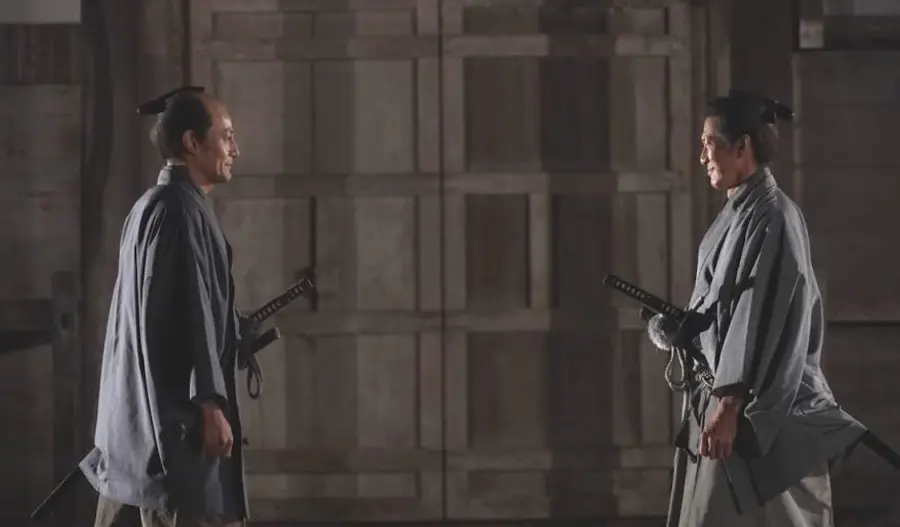
The most memorable part may be the final duel scene, which serves as the film’s highlight. The protagonist, Kosaka, insists on using a real sword rather than a prop, and filming proceeds like that. Unlike the comedic mood at the start, you directed the scene as a serious duel found in a traditional samurai movie—without CG, using staging that conveys the actual weight of the blade.
It was a scene designed to make viewers feel like they might actually be fighting with real live blades. The model sample was “The Matrix.” I think “The Matrix” accomplished something that Hong Kong films had not been able to keep doing until then—putting in the real-life element of kung fu action. In a virtual reality setting, you can call it a gimmick to have people think of it as real. I also used the fact that the movie-within-a-movie happening in the film is something audiences accept as reality. And in the final battle sequence, there’s a long stretch of silence—about that, I based it on Akira Kurosawa’s “Tsubaki Sanjuro” (1962). Audiences who know that film will get excited and feel tense because they’ll realize that one of the two characters is going to bleed and die. Even viewers who don’t know it would likely feel intense tension during that 40-second silence. Usually, people feel tense in moments when the righteous protagonist they’re rooting for becomes endangered. But in this film, because we created a story where audiences can relate to both Kosaka and Kazama, it has that effect of keeping tension going no matter which side is in danger. For these duel scenes, we chose to set the camera on a tripod and lock it in place, rather than using the “move-in close” style that’s used a lot recently.
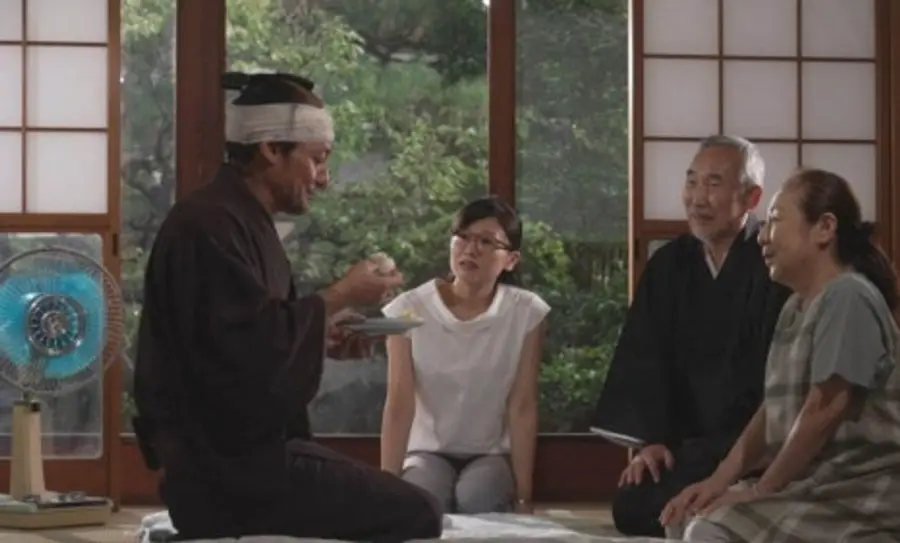
Unlike the solemn look of a samurai who puts honor and duty first, the scene where Kosaka eats a strawberry cake and is amazed makes the shift in the times stand out clearly.
I designed the cake-eating scene with a very complicated mix of feelings. At first, beyond the comedy of the person time-slipping being startled, I wanted to add something more. So the second beat is: in the past, we couldn’t enjoy a cake like this—now it’s changed so that even ordinary people like me can taste it, in an equal era, a time without class. That’s where the tears come from. The third and final message is also there: even though you might think we’ve become in a truly good world, I wanted audiences to wonder, “Is this really the Japan we dreamed of?”
You cast a large number of actors with experience. In particular, Makia Yamaguchi, who plays Kosaka, had mainly done supporting roles and bit parts in period dramas, but this work made her stand out. I’m curious about how the casting process went.
I was looking for filming locations by watching NHK dramas, and that’s when I saw a work in which Ms. Yamaguchi appeared. It has been 25 years since she debuted, and she had been active on stage, while on TV or in films she did small roles. When I proposed the role, I remember what she said: “I’ve lived as an actor working hard for 25 years, and to be able to take on this role at this timing is really a stroke of luck and I’m grateful. I’ll do my absolute best.” Even though it’s a low-budget home video B-grade film, I could feel how sincerely she was taking on this story. Now she’s become a star with casting offers that don’t stop, so it’s become really difficult for me to make another proposal. (Laughs.) Her acting is so good that throughout filming, I felt as if I was truly on set with a samurai who had time-slipped from the Edo period.
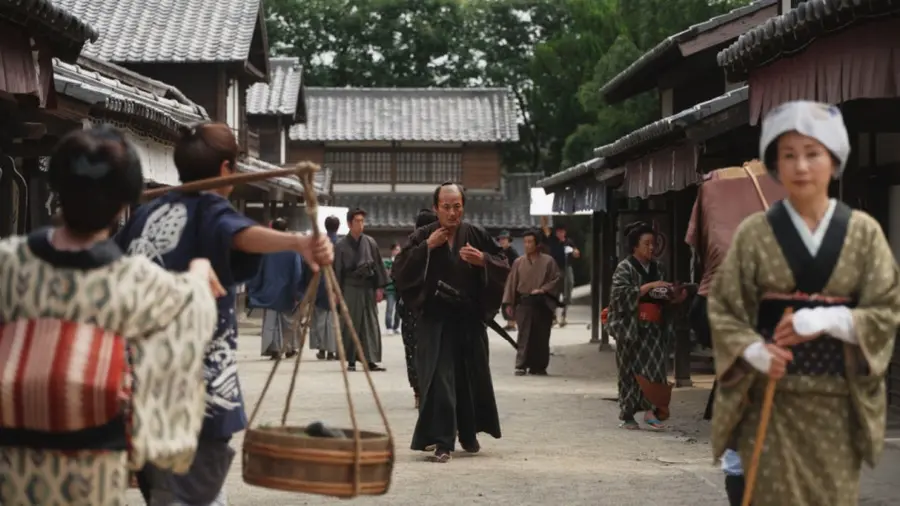
You said that in Kyoto, people who were active back when many period dramas were being made there—along with period-drama craftsmen—provided a lot of help.
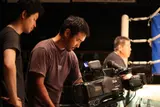
The rental fees for shooting sites are expensive. If we were filming according to our budget, we would have had to shoot within two to three weeks, but because demand dropped due to COVID, we were lucky enough to do it with a cost that was less than one-tenth of what it otherwise would have been, and as a result we filmed for six months. They told us, “You guys sure film movies in a very luxurious way.” Usually, when you come to a Japanese studio, about 30 to 40 pros show up and they each carry out their roles, moving around busily. But on our set, the entire staff was just 10 people. Everyone was an amateur, and except for me doing synchronized sound recording, it was all students or housewives. When a small number of people work, people usually say “a small elite team,” but ours wasn’t an elite team—it was just a small group. Since we didn’t know the rules of the studio very well, we were scolded a lot by them, except me. (Laughs.) They saw our awkwardness, but because they could see our sincerity and passion to still shoot a film, they said, “Fine, I’ll help you make a good movie.” While the period-drama filming scene is almost gone, they’ve been working hard with a mindset of “not today.” Through this work, I wanted to convey the hard work of everyone working in each part—costumes, hair and makeup, camera, and more.
I’d imagine that since the film succeeded dramatically, everyone involved would have felt very proud.
There’s someone who specializes in makeup and putting on wigs, and afterward I heard that they go around bragging, saying, “I was involved in ‘Samurai Timeslipper,’” and show it off. For the art team, they also showed the rental vouchers for props on TV as something to brag about. That’s how this project became their pride. There are proof photos. Right now, we shot the key visual for the spin-off series “Worry-Free Wanderer.” Normally, it’s just me and the actors, but this time everyone from art, costumes, and stunt people followed along and helped. (Laughs.) The production company told us, “You can do whatever you want, Director.” I thought that if there’s a lot of interference, it would be difficult compared with previous B-grade films, but it wasn’t like that at all.
It’s about the strength that allowed you to finish the film with a tight budget with no investment. I’m also curious about the system and know-how you put in place after trial and error, while steadily making B-grade films.
There are principles I’ve had since I started making B-grade films. Of course, the pay is small compared with big projects, but I set a principle that the basics required by Japanese law must be spent—whether they’re for staff or actors. Especially with food, I don’t save money. We eat things like tonkatsu and yakiniku, too. Even if there are fewer people, the relationships with the staff were so good.
In the film, the character of the assistant director Yuko is portrayed as someone who dreams of making her own work even as the industry declines. I guess the character also carries not only her determination but also the path the director has taken while making B-grade films. I’m also curious about what prompted you to start making films.
Ever since I was in school, I shot videos with friends using an 8mm camera. Back then, there was basically only one route to become a film director. To get hired at one of the three major studios—Toho, Shochiku, or Toei—you had to go through the assistant director role. Most of the people who got in had strong academic backgrounds, like graduates of the University of Tokyo, so as someone from the provinces, I thought, “Maybe I can’t become a film director.” So I made a living doing video work from the time I was in college. I filmed children’s musicals at kindergarten, made church wedding videos, and thankfully as the work kept growing, I was eventually assigned event shoots held in large halls. I started by making a video just one minute long, and later I made videos of 40 to 50 minutes, including CG effects. Among the audiences back then, I got close with Iwa, someone who made short films. Watching the film festival judges critique my friend’s work left a strong impression on me. Until then, as a video producer, I’d been making videos that met the target audience’s satisfaction. But I thought that movies are a step higher in terms of the world of expression. That’s when I started to want to make films seriously. The reason I handle so many roles myself when I make movies comes from the experience back then. When producing events, I personally handled almost everything—from directing, to set design, to staging direction, lighting design, poster design, audio recording, video editing, and even music video production. When I make things myself, we save on labor costs, and the overall cost ends up being about one-third compared with other places. It meant that the experience I’d built on the ground over a long time could be used naturally in film production.
You’ve walked your own path as a director over a long time. If there’s any know-how that helped you keep making films without getting tired, I’d love to hear it.
I got inspired by “Camera Won’t Stop!” and it also seems like you received recognition faster than you expected. In fact, I’m fundamentally very optimistic. If something seems worth trying, I just go ahead. If it goes wrong, I reflect and think about the next thing right away. In that sense, it’s not like I’ve made it this far by suffering a lot—more like I was able to keep going. And it became a talk of the town that we produced it using our own money—though it’s exaggerated in a fun way, we’re not actually without money entirely. Because I’ve done so many different things, even if we’re not always flush, I have the confidence to live without worrying about making ends meet. This time, too, I think it’s a relief that we were able to earn some revenue and that it won’t be a problem for raising our two daughters.
Your previous film “Pistol and Fried Eggs” (2014) focuses on a B-movie hero, and “BOS” (2017) focuses on a farmer’s life. The themes you want to highlight seem to follow a similar line within your works.
When people watch my films and leave the theater, I want to make a film that gives them the strength to think that, even in this harsh reality, you can still live—you can get through it. And I also want to create films while always having an awareness of problems in situations where, time after time, politically, people try to block our citizens’ eyes and push things through.
Just as the director said he was influenced by Director Shinichi Ueno, I think creators who are struggling on their own right now will also end up being positively influenced by the director.
The movie production environment differs between Korea and Japan, but one thing that can apply across both countries is this: if you aim for a nationwide large-release that must succeed, then from the perspective of the people making the film, it could make life pretty miserable. That’s because it’s not easy to achieve. When I made “BOS,” instead of distributing through multiplexes, I went around small theaters in regional areas and showed my film to the grandmothers and grandfathers who I thought might genuinely enjoy it. As it turned out, “Samurai Timeslipper” did well, and now it’s been sold to Netflix, where it ranked seventh. I think that starting small—rather than giving up—is the path that lets you live a life without regrets.
I understand that these days, big production companies are making a lot of proposals to you. In the future, won’t you drift away from B-grade films? Please also share what your plans are going forward.
No. I plan to do both. (Laughs.) Directors can want all the awards, and I even swept them up. In some sense, I felt like I’d achieved enough. So from now on, I’m in a mindset where I can enjoy it a bit and make films that are fun.
![[Interview] “I believed the box-office myth of 100 years would happen again.” Director Yasuda Junichi of “Samurai Timeslipper” ①](https://cdn.www.cineplay.co.kr/w160/q75/article-images/2026-07-01/3b4f06f3-b27f-46da-b1b0-76cacd52dda0.jpg)
댓글 (0)
댓글 작성
댓글을 작성하려면 로그인이 필요합니다.
로그인하기