


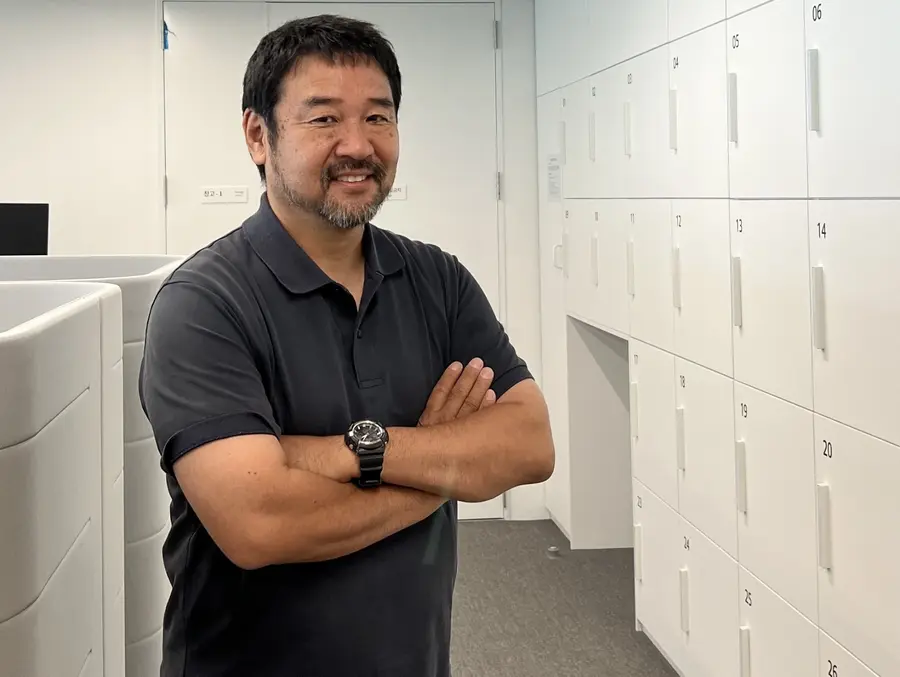
Even watching it again is surprising. 〈Don’t stop the camera!〉(2017) is the case in point. With a modest production budget of 3 million yen (about 28.5 million won), the film—made as a workshop project and initially screened in two theaters—went on to rake in a whopping 3 billion yen (about 28.4 billion won) at the box office, effectively writing a new chapter in Japanese film history. Even Shinichi Ueda, the director himself, couldn’t break the record of his predecessor with the follow-up works of 〈“Camera”〉. That’s how far ahead it was—an overwhelming, almost unmatchable benchmark.
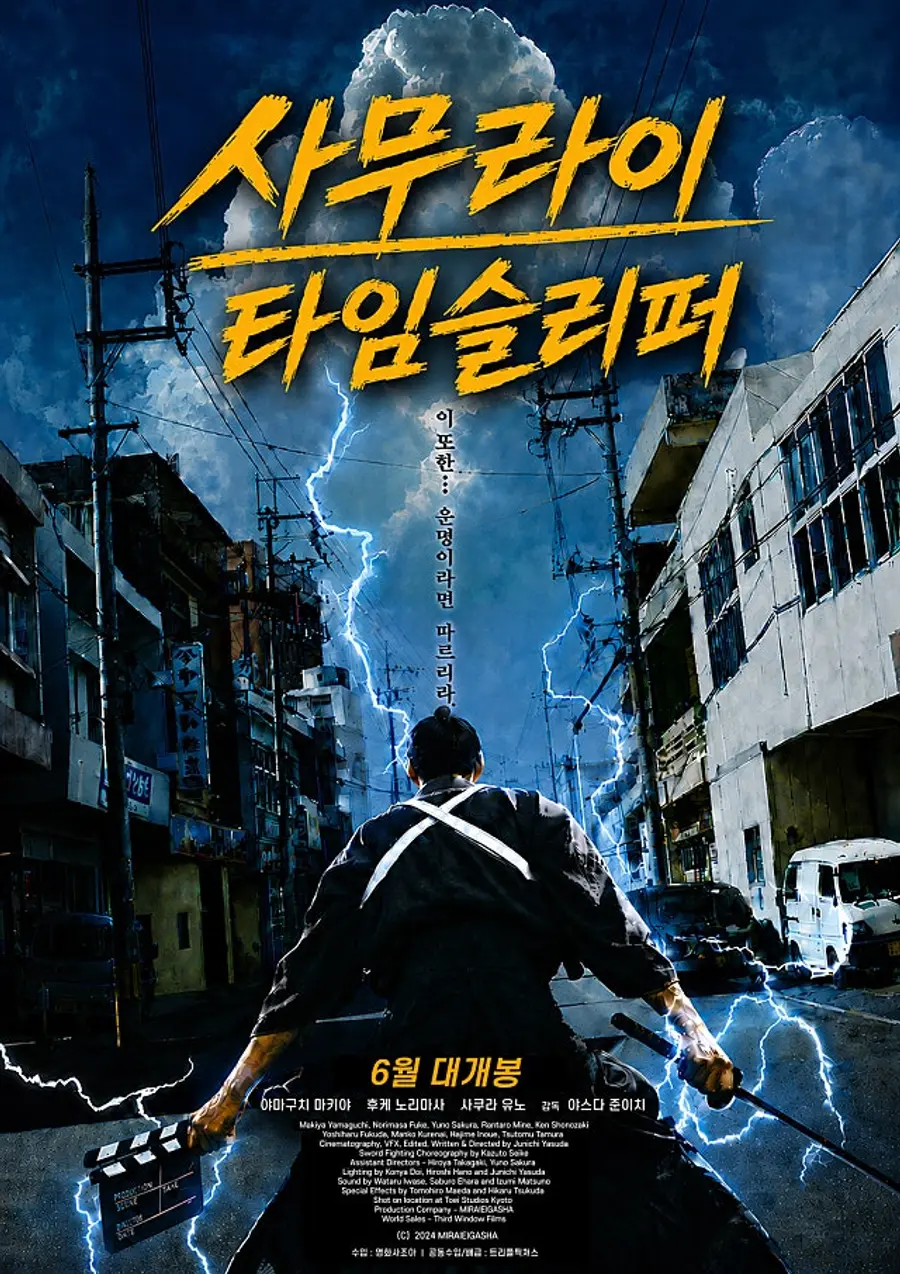
And yet records exist to be broken. The myth of 〈“Kamera”〉 was realized eight years later at Kyoto’s period-drama filming studio. 〈Samurai Timeslipper〉(2025), directed by Junichi Yasuda, proved once again the strength of Japanese “jishu eiga” (independent film) by posting a record run with a production budget of 26 million yen (about 250 million won) and box-office revenue of 1 billion yen (about 9 billion won). The film, screened at a single theater in Tokyo’s Ikebukuro district, expanded to 38 theaters along with praise from audiences on social media and blogs. For movie fans, the work is called “the reincarnation of 〈‘Kamera’〉.” The revenue scale is about one-third of 〈Kamera〉, but the film’s production approach and box-office pattern weren’t that different from 〈Kamera〉.
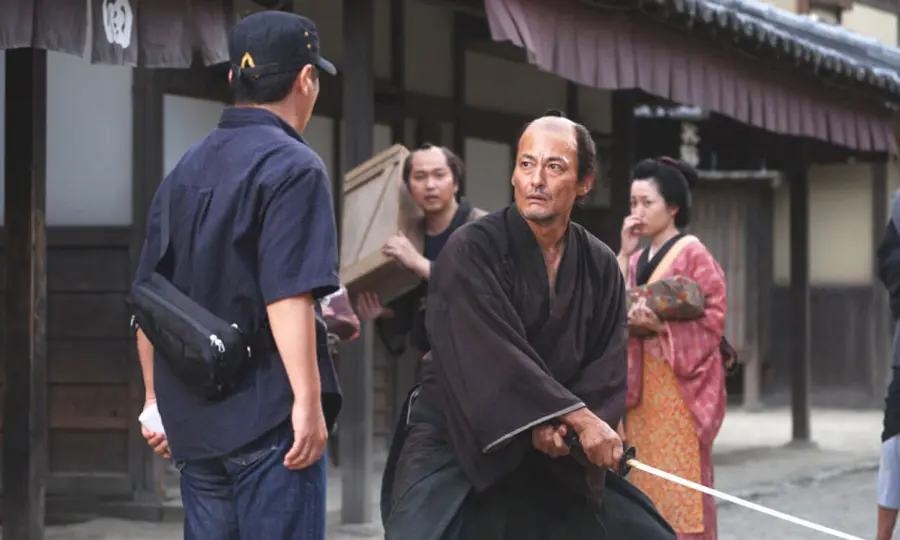
At the end of last year, at Japan’s Academy Awards, 〈Samurai Timeslipper〉 beat big-name buzz hits at a similar scale—such as 〈“Tei”—The Last Mile〉 and 〈Kingdom 4〉—to win in seven categories: Best Picture, Best Director, Best Screenplay, Best Actor, Best Cinematography, Best Lighting, and Best Film Editing. It was, in every sense, a “sweep” of major awards. The production team totaled 10 people. The name of director Junichi Yasuda—who covered everything from driving the on-site vehicle to handling multiple roles as one-man crew—appears no fewer than 13 times in the film’s end credits. He completed the movie by selling the car he had been holding back due to insufficient production funds, which fits the spirit of independent film in the most literal sense. “I decided to benchmark the case of 〈Don’t stop the camera!〉,” he says, adding that he approached audiences closely, driven by the thought that a miracle that happens once might happen again.
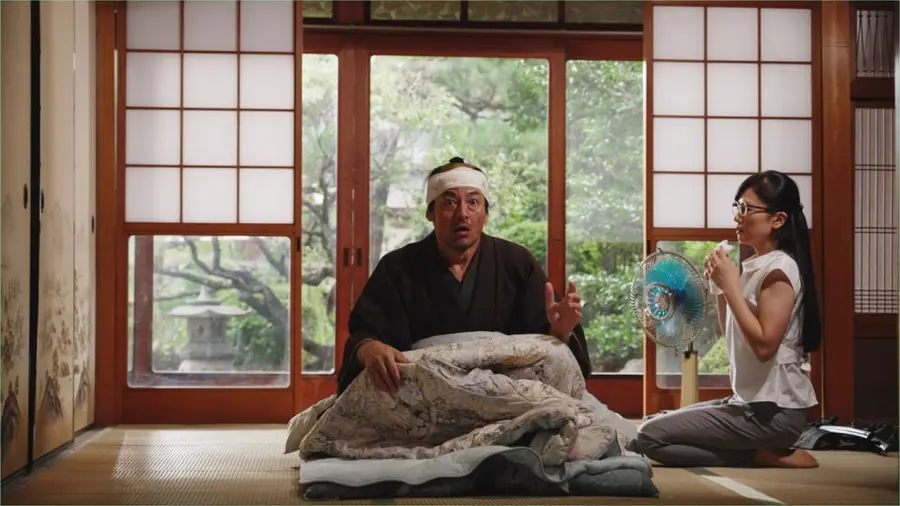
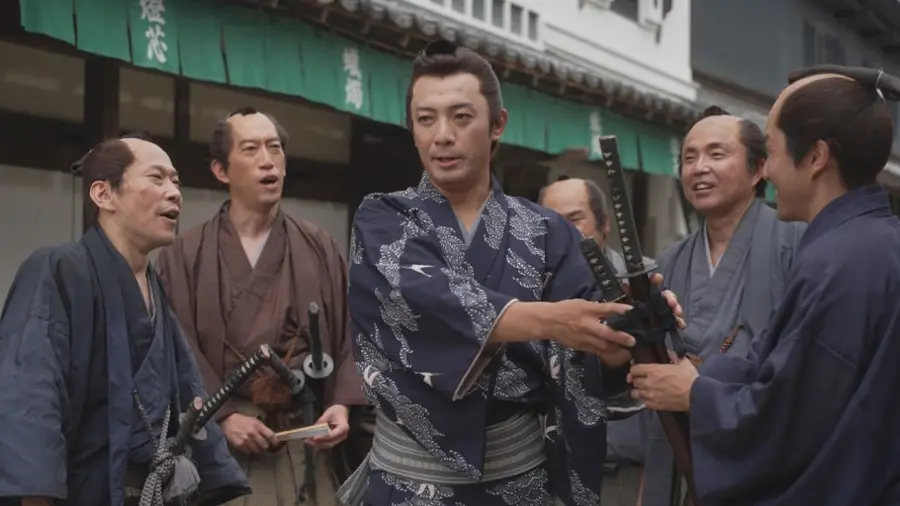
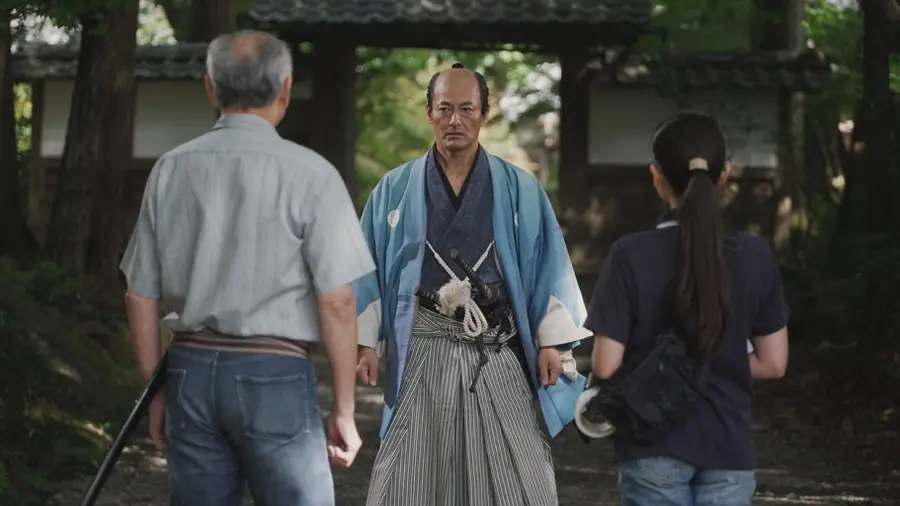
In Kyoto’s street scenes, the samurai Kosaka (Makiya Yamaguchiabe) “landed” into a modern, period-drama filming set. Coming from the present, he becomes a supporting actor specializing in “roles where you die in a flashy, dramatic way,” and experiences their struggles firsthand. An ironic situation: a “real” samurai plays a “fake” samurai. Amid the slapstick chaos and laughter, the film focuses on ordinary people, all while carrying a humanist viewpoint. Yasuda, who makes films while farming in Kyoto, looked at his own ancestors who had worked as farmers and other everyday people, and he turned his attention to the power created by ordinary people—not history’s heroes.
Ahead of the film’s Korean release, Director Junichi Yasuda visited Seoul on a short schedule. For him, the interview documented his long years spent making independent films and his passion for movies—talking about the fact that he is planning to create a six-episode spin-off series as a follow-up to 〈Samurai Timeslipper〉.
You visited Korea on a busy 1-night, 2-day schedule. I heard you’ve been busy lately with farming.
Yes, I farm rice in Kyoto. Of course, I’m busy with agriculture, too. But the real reason is that I’m filming a spin-off drama in the form of the “worry-free drifter” character that appears in 〈Samurai Timeslipper〉. Right now, we’re in the middle of filming, and these days I’m busy with editing schedules.
You met Korean audiences at the theater.
I was nervous—about what Korean viewers would think of Japanese samurai. The samurai concept people already have in mind isn’t always only the good parts, after all. In the movie, we depict samurai who are a bit different from those kind of warriors—ordinary but good people. I wondered whether there might be some resistance. Luckily, the audiences watched it and enjoyed it, so I felt relieved.
With an estimated production budget of about 26 million yen (roughly 250 million won), the film made about 1 billion yen (about 9 billion won) in revenue. It’s a record-breaking achievement—so much so that it’s called the reincarnation of 〈Don’t stop the camera!〉.
〈Don’t stop the camera!〉 is a miracle that shows up in Japanese film history only once in a hundred years, if that. Seeing it achieve 3 billion yen in revenue as an independent film made me reflect: “I, too, should make movies differently,” and “it needs to be even more fun.” Then I researched promotion methods, thinking that a miracle that happens once might happen again. The revenue scale is one-third of 〈Kamera〉, but when you look at the awards record, 〈Samurai Timeslipper〉 achieved a somewhat higher performance as an independent film.
There’s a little competitive streak, too. (Laughs) The success stories of these two works are extremely inspiring. In Japan, you had a conversation with Director Shinichi Ueda, and I heard you talked for almost five hours.
I don’t have any sense of competition. (Laughs) I really respect him. The truth is, the success of 〈Samurai Timeslipper〉 was possible thanks to help from so many people. When I met Director Ueda, I wanted to boldly say, “I reproduced the miracle again by following your example.” But I couldn’t say it with that kind of confidence. Then the director told me, “I, too, received help from many people, and it was the result of luck. Without that, we couldn’t have succeeded on such a big scale. It’s something absolutely necessary. So you should say it confidently going forward.” That really made me happy.
It was, in a word, that you covered the production budget with an independent-film style production method. And the anecdote about selling even your car to fund post-production became a topic of conversation.
Now, I bought a car exactly like the one I sold. But I bought it for three times the price compared with when I bought it.
Three times—so I can’t help but ask what model it was. Maybe you’re a fan of classic cars. (Laughs)
It’s a sports car called the Honda NX. When I farm, I use a Kei truck and a Bongo van, and I bought the Honda purely for my own hobby. I like driving it and cruising along mountain roads. When I bought it in 1992, I purchased it used for 3 million yen. I also modified it and took great care of the car. I sold it for 5.6 million yen, but now that it’s become more popular, the price has risen to 15 million yen. The manual transmission got too expensive, so when I bought again, I bought it as an automatic. If you look at the film’s end credits, my name appears about 12 times. I handled the driving of the vehicle myself, too. Right around the end of the movie, I checked my bank account and saw that the balance was about 6,500 yen. That was a bit risky. (Laughs) But it reassures me that with these big profits, I can make movies going forward. Even though I paid about 60 percent in taxes, I paid willingly. And for that car, I decided it’s the gift I give to myself.
I understand you abandoned the modern-setting project you originally prepared because of the coronavirus and made this instead. Where did your interest in samurai and period dramas come from?
I think Japanese directors probably have a dream that at some point they want to make a period-drama film. I felt the same way. But the budget was about three to five times that of a modern piece, so I couldn’t readily get started. Then during the coronavirus shutdown, the Kyoto studios had more free time, and many people cooperated a great deal, which made it possible. In recent years, “Chanbara” (traditional period drama) movies have shifted to very cartoon-like expressions. But I had a thirst to make a “proper” period drama like the works of the late director Akira Kurosawa, which I watched when I was young—something that could show realism.
You’re also a viewer who watched films during the heyday of period dramas—and an audience member. What do you see as the appeal of period dramas from a director’s perspective?
When I was a kid, if you turned on the television, period dramas were on almost every day. Samurai were major characters, but you also saw commoners like fish sellers and farmers—not just the image of “warriors.” When you look at works by director Yôji Yamada, you see people helping each other even when there’s no benefit of even one yen. There’s tension and dramatic storylines, but I thought the attraction of period dramas is that a warm worldview exists alongside it, and I wanted to make my film with that feeling in mind.
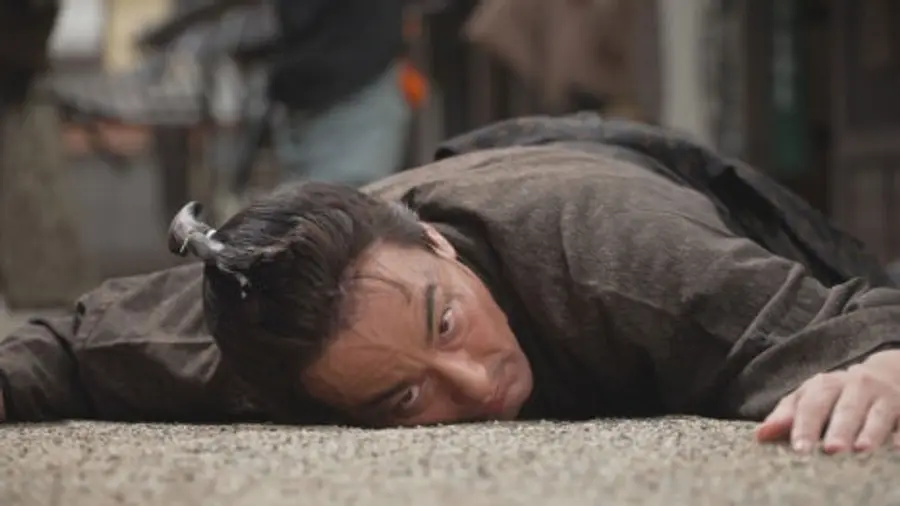
〈Samurai Timeslipper〉 puts forward an uncelebrated samurai as the protagonist—not a well-known warrior or hero such as Sakamoto Ryoma. There’s a natural connection to the line in the ending credits, “In Memory of Seizo Fukumoto.” (Seizo Fukumoto is an actor known for playing Captain Algren’s escort role in 〈The Last Samurai〉. In Japanese samurai period dramas, he often plays the kind of role where a character gets cut down and killed by sword. In the West, he introduced the concept of “kirareyaku (斬られ役),” which literally means “a sword-cutting role.”)
There are many famous samurai in history, but if you make them the protagonists, I felt audiences might see them as too distant. So I focused on an unknown figure. In the protagonist character of Shinzaimon Kosaka, you can find everything that I wanted to convey in a samurai. Japan’s history can be said to have been shaped by the samurai warrior class, but I actually believed that it was these farmers and ordinary people who protected their hometowns. Ever since my grandfather’s generation, my family has farmed rice, and my father worked as a public servant. I heard that 96 percent of those people in the family line were exactly like that. The remaining 4 percent were samurai—successful warriors. Samurai were somewhat idealized in Japan, but there were also negative sides to samurai culture, such as the practice of seppuku. In the film, in Kosaka Shinzaimon’s case, through time slip, he becomes a samurai who retains only the really good aspects, completely separated from those negative traits.
Why did you decide to use the time-slip device?
Time-slip period dramas are also a popular genre in Japan, frequently made as TV dramas. I thought the setup of “dropping onto a filming set” was something I hadn’t really seen before. I figured it would be intuitively fun, and that the comedy elements would get stronger. But what I considered important there was the protagonist’s purpose. In most time-slip stories, the goal is to return to the original world. I, however, wanted to tell how this character—after coming into the modern era and finding himself in such a difficult situation—would be able to get his life back and continue living.
▶ The interview with indie-style period-drama director Junichi Yasuda, and with “Samurai Timeslipper,” continues in Part 2.
![[4K] Remade after 23 years💕 The Scandal production presentation photo call📸 | Son Ye-jin, Ji Chang-wook, Nana, Director Jung Ji-woo](https://cdn.www.cineplay.co.kr/w300/q75/article-images/2026-09-29/1062be1a-04f6-43b0-99c9-f699be058f50.jpg)

![[Interview] “I believed the box-office myth from 100 years ago would return.” Director Yasuda Junichi of “Samurai Timeslipper” ②](https://cdn.www.cineplay.co.kr/w160/q75/article-images/2026-07-01/3e6f5b13-7e39-4cbd-bcb1-10a7f77b59cf.jpg)
댓글 (0)
댓글 작성
댓글을 작성하려면 로그인이 필요합니다.
로그인하기