


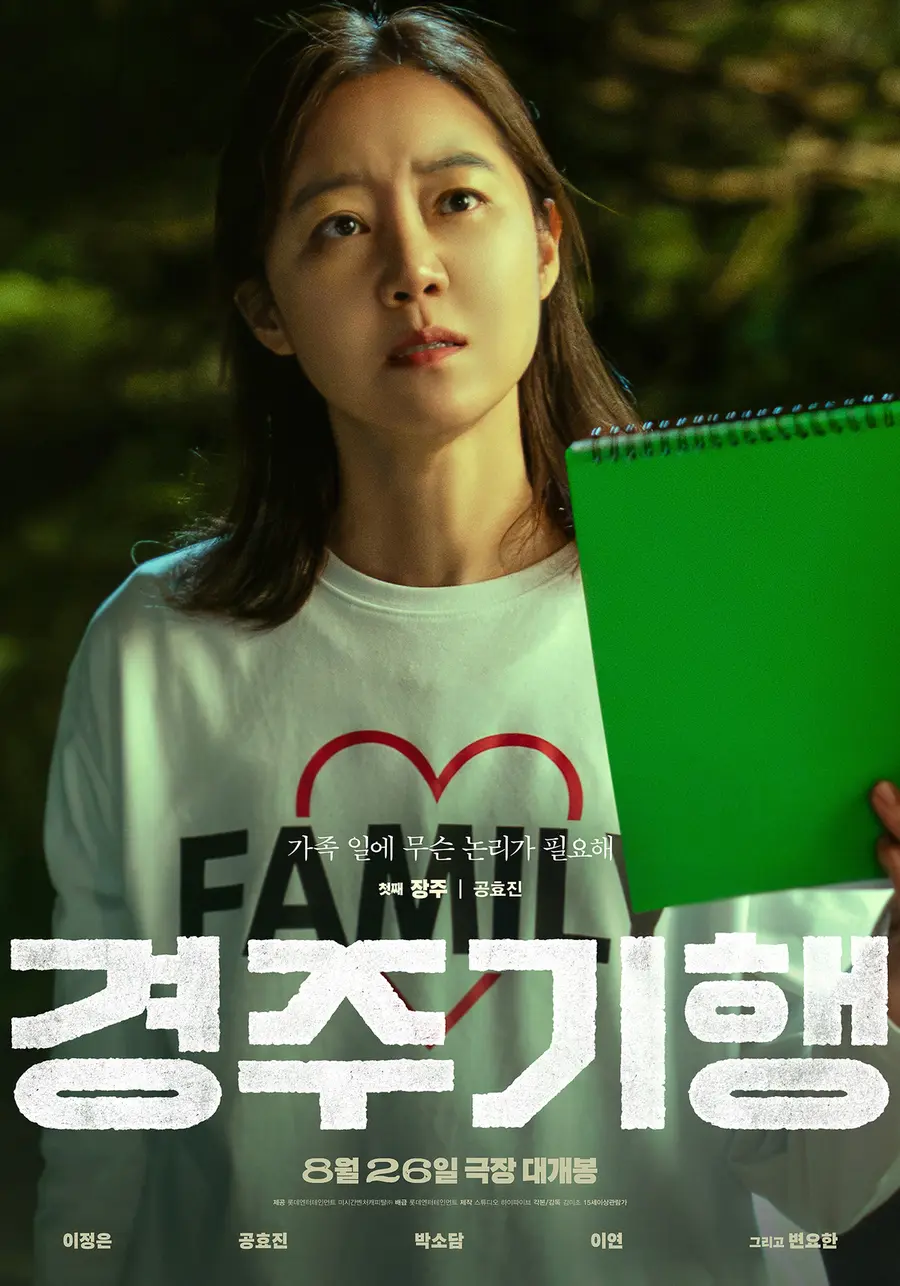
Gong Hyo-jin’s acting carries an unusually persuasive power. Even a premise in which a character sets out to punish a heinous criminal herself, and a genre blend that shuttles relentlessly between comedy and tears, feel entirely believable because of her. Known for her natural line delivery and elastic timing—qualities that have made her a singular presence—Gong returns in 〈Gyeongju Trip〉 as Jang-ju, the eldest daughter in a Korean family, bringing deep wounds and mordant humor to the road movie.
The film, opening on August 26, 〈Gyeongju Trip〉, follows a mother, Ok-sil (Lee Jung-eun), and her three daughters—Jang-ju (Gong Hyo-jin), Yeong-ju (Park So-dam) and Dong-ju (Lee Yeon)—who don matching group T-shirts and embark on a so-called "deadly family trip" to Gyeongju timed for the perpetrator’s release and to mark the birthday of the youngest daughter, Gyeong-ju, who disappeared on a school trip eight years earlier.
〈Gyeongju Trip〉 feels grounded in reality even as it brims with genre tension. It’s witty and resonant, with a distinctive tone. Gong Hyo-jin played a large part in shaping that tone. Her character, the eldest daughter Jang-ju, is both a spouse and mother to a young daughter and Ok-sil’s right hand—the self-appointed commander of the revenge plot. Yet Jang-ju carries extremely complex, layered emotions: the urgency to protect her family, deep love for her mother, and the real-world conflict of having to safeguard another household of her own.
After two years of waiting since filming wrapped, 〈Gyeongju Trip〉 finally meets Korean audiences next Wednesday. Ahead of the release, Gong Hyo-jin kept praising her co-stars, saying, "I hope Mom (Lee Jung-eun) wins Best Actress," and expressing steady confidence in the cast that made the film. The following is the full conversation Cineplay had with Gong Hyo-jin on the afternoon of the 19th at a location in Jongno-gu, Seoul, to mark the film’s release.
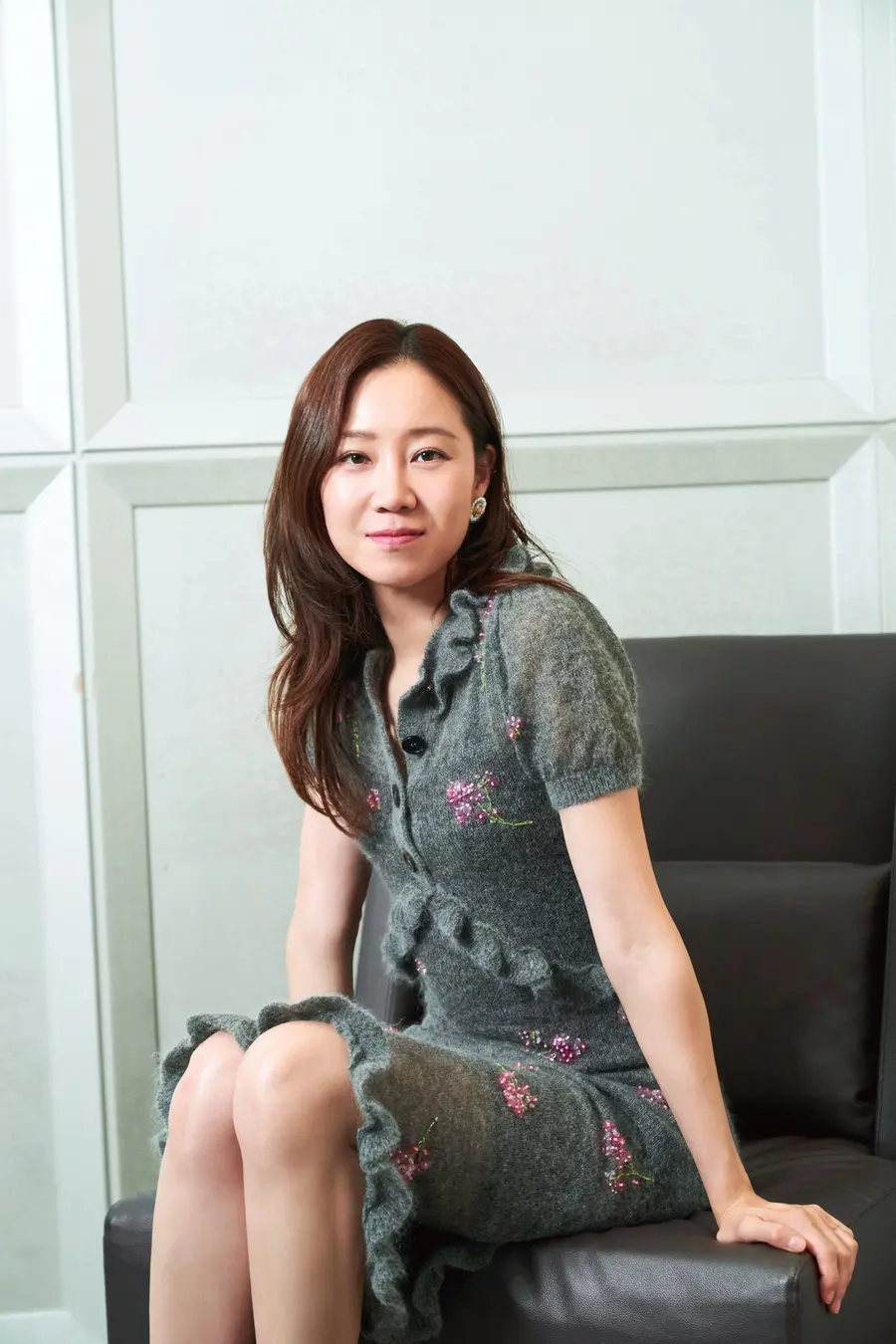
Reactions after the press-and-distribution screening of 〈Gyeongju Trip〉 have been strong. The drama currently airing, "Yubunyeo Killer," is also registering high ratings. How are you feeling these days?
I keep wondering whether this is a dream or real life. Ever since we finished filming I’ve been waiting for the release. Because this was made together, the joy is multiplied and I feel more secure than if I’d carried it alone. There’s a sense that something special may be happening, so I thought, "Today could be the happiest day," and decided to just enjoy it.
I heard the group chat among the actors has been active without fail while you waited these two years. (laughs)
We’ve been constantly checking in for two years, always knowing what everyone else is doing. It wasn’t like we drifted apart and then reconnected; we’ve remained close since filming 〈Gyeongju Trip〉. We keep messaging about what time someone left, what time someone finished, pulling all-nighters and so on. Mom (Lee Jung-eun) has been so busy that we didn’t see her much this year, but now that we’re finally traveling together to promote the film and seeing each other every day, shared joy beats solitary joy. Also, each actor’s work turned out well: Lee Yeon is great as Dong-ju, Park So-dam is great as Yeong-ju, and Byun Yo-han is great as Yo-han—everything came together, which makes me even happier. Some sets are joyful but you might have one person who’s a little less so; that wasn’t the case here. And the director has been getting such great notices that she’s happy too.
It seems you still address the cast by their character names.
It goes back and forth. But I’ve called Lee Jung-eun "mom" since When the Camellia Blooms. Park So-dam, since Parasite, has been calling Jung-eun "unnie"—so I felt like, "Okay, something’s gotten mixed up here." (laughs) So now I call her "eomni," something that lands somewhere between "unnie" and "mom." Calling her "senior" feels too distant. Who knows, later Jung-eun and I might play roles that aren’t mother and daughter, so for now that’s how I address her.
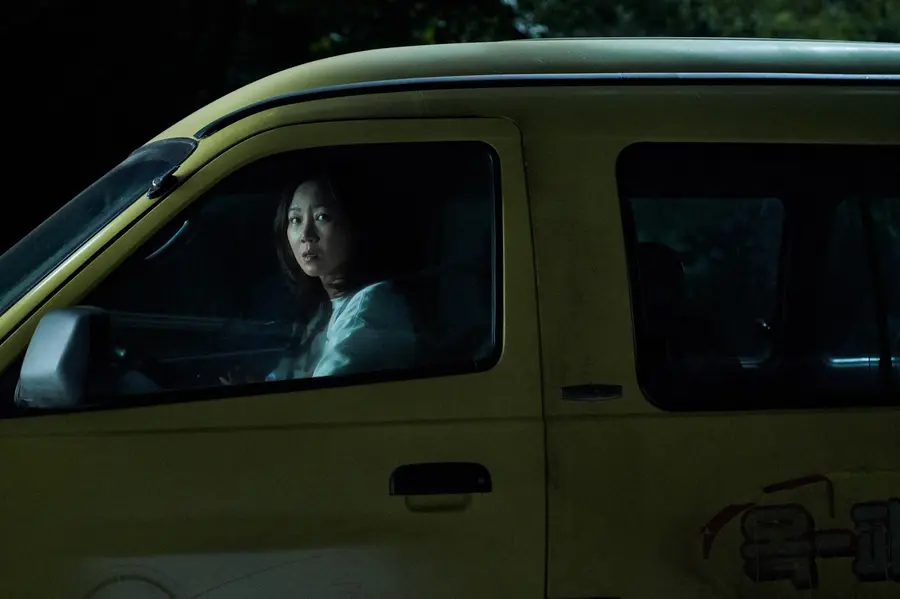
Director Kim Mi-jo is a woman, and the story is driven by female characters—the sisters and the mother. That must have made the set feel quite different from the usual.
Director Kim Mi-jo’s imprint is all over the film. I’m proud and happy she preserved and captured it so well. The story itself is a mother-and-daughters tale. Watching the film anew, I realized that even characters like the detective (Kim Jung-young) and Pil-rye (Nam Gwon-a) felt like women taking on roles we’ve typically seen men play in noir films. While shooting it felt entirely natural, seeing it again made me appreciate that choice.
You said Director Kim has a clear voice. Was there a moment on set when that stood out to you?
I want to give one scene as an example from 〈Gyeongju Trip〉. We’re lying in a guesthouse room, looking at the ceiling, and someone says, "Do you remember when we went to the beach?" A shadow falls across the ceiling, a Hawaiian tune plays softly, and the shadowed afterimage of us playing on the beach drifts by. That was actually a past scene we had shot in live action. Some viewers may just see branches casting shadows, but once you know, it’s a truly beautiful and aching moment. Originally that beach scene—us running with our parents—was the film’s epilogue. The director moved it into that guesthouse-ceiling shadow shot. That’s when I felt certain she had a distinct personal style.
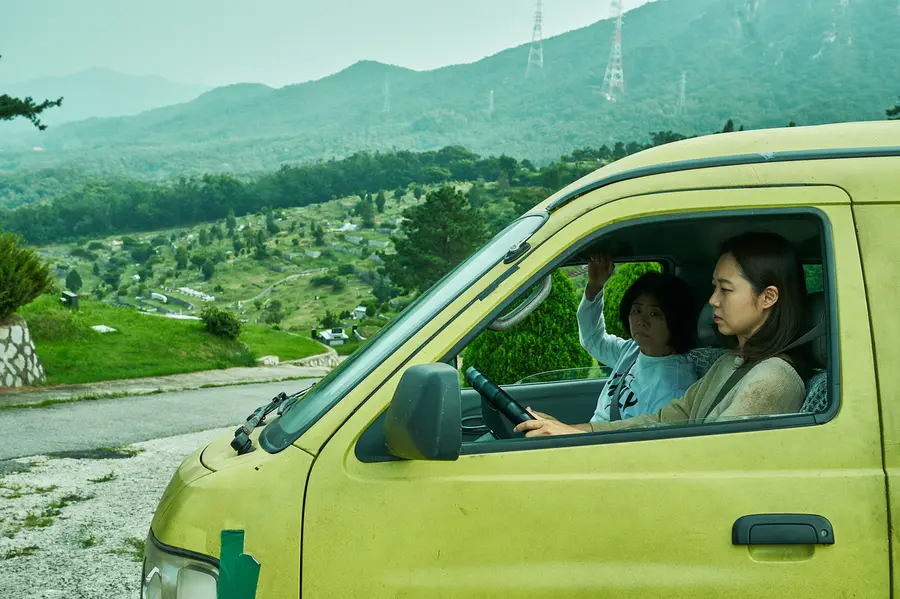
As the eldest, Jang-ju is both her mother’s right hand and the only character who has her own household—a husband and daughter. That dual position makes interpreting and performing her emotions especially difficult.
I thought about that a lot from a realistic standpoint. Would they have talked about this for eight years? When a family carries such a large wound, there’s often an unspoken rule not to bring it up. We debated whether they should set off in a buoyant, excited mood or an uneasy one. I decided it’s better if they depart in a way that makes the audience think, "Where are they headed that has them so tense?" On some level, I think Jang-ju may have hoped the revenge would fail. She didn’t want her mother’s hands to be stained with blood—if that happened, the trauma would only deepen. She must have wondered whether revenge would feel cleansing or whether it would be like driving a blade into her own heart. Also, Jang-ju’s situation changed: when her sister died she didn’t have a husband or child, but after starting a family her perspective might have shifted.
What direction did the director give you for the Jang-ju character on set?
The director wanted Jang-ju to be on the mother’s side rather than the sisters’ side. She envisioned Jang-ju as the mother’s right hand and the commander who helps carry the plan forward. Jang-ju is the daughter who tells her siblings, "Be quiet, don’t talk about it! It’s useless, we have to go. Mom wants to do this," trying to realize her mother’s wish. Then at the film’s climax Jang-ju experiences an awakening as a mother herself—"I’m a mother too, I have a daughter, what will happen to my child if I go to prison or get into trouble?" Up to that point she’s been carrying the story as a daughter, and then she gains a reason—because she’s a mother—to step back and decide she must protect those she looks after. That’s when the reversal begins.
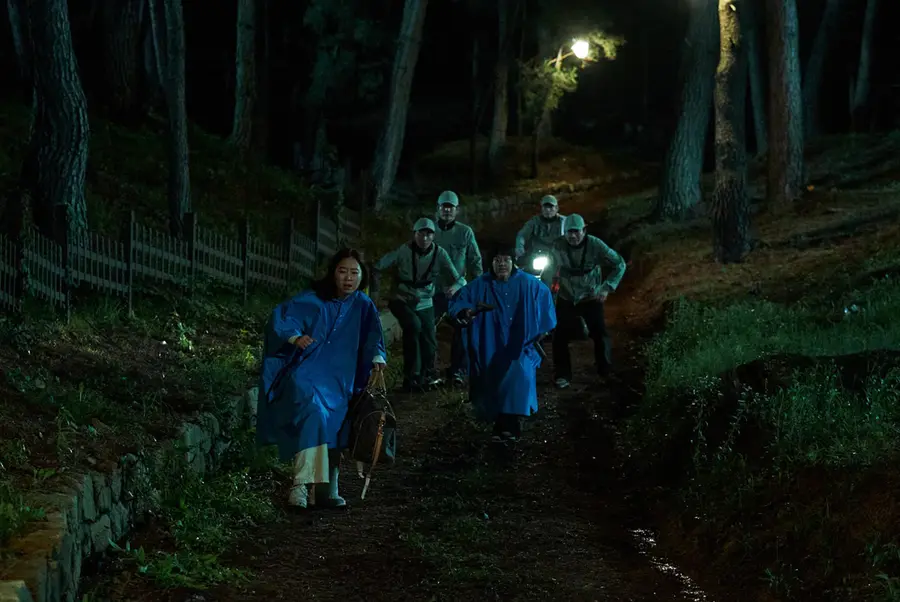
The scene in front of the van where Jang-ju and Mom Ok-sil cry and confront each other is the moment Jang-ju’s awakening explodes. How did you film that crucial emotional scene?
I think we did two takes. It was a scene with enormous pressure to get it right, and I personally rely a lot on sudden, intense focus. I hoped Mom would give me the emotional push I needed, and she delivered that swelling, choking emotion. Honestly, I felt a bit frustrated and left with some regrets about my own performance—thinking, "I could have done that a little better." But actors need to feel small disappointments about their work to keep improving. Whatever I felt was lacking in my performance was perfectly offset by Lee Jung-eun’s overflowing crying, so when you look at the film as a whole, it became a wonderful scene.
※〈Gyeongju Trip〉 actor Gong Hyo-jin interview continues in Part 2.

![[Lee Yeo-jeong’s Deep Detox] “Thank You to My Past Self.” Lee Yeon on “the ‘Dynasty Lady of the 21st Century,’” “Tango at Dawn,” and “Journey to Gyeongju” — Part 1](https://cdn.www.cineplay.co.kr/w160/q75/article-images/2026-05-29/72ecf600-3867-404e-b320-26dc10a7fb01.jpg)
![[4K/FULL] Lee Jeong-eun x Kong Hyo-jin x Park So-dam x Lee Yeon, and Byeon Yo-han | A Family Trip by a Mother and Daughters for Revenge #GyeongjuJourney #TheJourneytoGyeongju](https://img.youtube.com/vi/EW6TQgJ1mng/maxresdefault.jpg)
![[Photos&] Lee Jung-eun and Gong Hyo-jin’s “Gyeongju Trip”… A blood-soaked revenge drama for the youngest daughter they lost 8 years ago — press briefing site](https://cdn.www.cineplay.co.kr/w160/q75/article-images/2026-08-13/94f2573d-891a-4358-817c-8c239674fd47.jpg)

댓글 (0)
댓글 작성
댓글을 작성하려면 로그인이 필요합니다.
로그인하기