



Nolan has surprised audiences again. Director Christopher Nolan's new film 〈Odyssey〉 surpassed 10 million admissions on September 6. To mark the milestone, Cineplay’s reporters revisited the questions and reservations the film left with each of us. Below, each writer sets out the points they have been holding onto since 〈Odyssey〉 reached 10 million.
Seong Chan-eol_Special screens and the power of the Nolan name

At last, Nolan has set a new mark. 〈Odyssey〉’s 10 million admissions mark is not only a milestone for the film but also another landmark for Christopher Nolan. He remains the only foreign director in Korea to reach 10 million admissions twice with original, standalone films — not as part of an existing franchise. That suggests his work consistently draws Korean audiences and that those audiences reward the films with commercial success.
This achievement for 〈Odyssey〉 also differs from other releases in one major respect: the unusually large IMAX turnout. According to the Korean Film Council's Korea Box Office Information System (KOBIS), as of September 6, of 〈Odyssey〉's total 10,020,000 admissions, 1,130,000 were IMAX screenings — about an 11.3% share. KOBIS reports cumulative revenue for regular digital screenings and IMAX screenings at 83,127,700,000 won and 20,433,000,000 won, respectively.

Because premium-format screenings such as IMAX carry higher ticket prices, the film has enjoyed a notable revenue advantage beyond simply clearing the 10 million admissions mark. While Korean box-office coverage often focuses on admissions, the KOBIS revenue figures show the film was generating strong returns even before it crossed 10 million.
![A scene from the film 'Odyssey' [Courtesy of Universal Pictures. Resale and DB prohibited]](https://cdn.www.cineplay.co.kr/w900/q75/article-images/2026-07-24/edb0dc61-2ed3-4110-8375-71f3dba369aa.jpg)

That said, it is worth asking why. 〈Odyssey〉 is not an audience-friendly film in the sense of being an uncomplicated crowd-pleaser: it jumbles time, delays narrative resolution, and does not depend on nonstop spectacle. Yet it held momentum even as box-office rival 〈Spider-Man: Brand New Day〉 cooled. Many viewers may have seen both films, but 〈Odyssey〉 ultimately maintained stronger traction. I find that puzzling: why did audiences latch more strongly onto a brooding, lost individual than on a sleek, triumphant superhero?
I suspect the pull comes down to the Nolan name. His earlier 10-million film, 〈Interstellar〉, did something similar: in a market often described as inhospitable to serious science fiction, he reached 10 million with a work that treated its material seriously. 〈Odyssey〉 similarly draws on ancient epic poetry and integrates mythological elements. Both films include qualities that might seem to make box-office success in Korea difficult, and yet both became major hits here. Many viewers' expectations for Nolan are now rooted in those two successes. If other directors can make flashier pictures, Nolan's distinct approach — the particular way he realizes big ideas on screen — is what ultimately drives audience interest. The shared qualities of 〈Interstellar〉 and 〈Odyssey〉 are twofold: intellectual ambition and the believable translation of that ambition into cinematic terms. For Korean audiences, the originality they expect from Nolan may be precisely those things. As a longtime fan of Nolan's work, I still find the fact of two "double 10-million" films grounded in that appeal worth reflecting on.
Joo Seong-chul_The last traces of masculinity on film sets: the IMAX camera
The old saying that "cameras are heavy, so women can't work as cinematographers" has long circulated in the film industry. In filmmaking — both an art and a craft — the technical crews who handle heavy, complex equipment have historically been seen as a male preserve. One uncomfortable aspect of Nolan's obsession with IMAX shooting is that IMAX cameras themselves are genuinely heavy — heavy even for an adult man. Between the trend toward lighter, simplified gear and the desire to realize a more traditional film aesthetic, Nolan's preference for IMAX has won strong support. Still, that preference can feel like one of the last bastions of masculinity on sets that are increasingly moving toward virtual production.
Cinematographer Hoyte van Hoytema, Nolan's longtime collaborator on films such as 〈Interstellar〉, 〈Dunkirk〉, 〈Tenet〉, 〈Oppenheimer〉 and 〈Odyssey〉, is known for shouldering large IMAX cameras and even shooting handheld. Nolan and van Hoytema have worked to develop smaller, quieter IMAX rigs, but these setups can still weigh in the 20–30 kilogram range. Once enclosed in a large sound-damping housing, the rig can grow much heavier; on the set of 〈Odyssey〉, seven people were needed just to move the camera.

A paper published last year in the journal SAGE, "Virtual Inclusivity: Possibilities and Experiences for Women and Gender-Diverse People in Virtual Production Work Environments," notes that "film production has traditionally been a physical craft, and cinematography in particular remains an area where such stereotypes are strong" and that "those stereotypes have persisted until relatively recently." The study finds the longstanding belief that "to succeed as a cinematographer you must be able to carry and handle large, heavy equipment" still persists. One woman cinematographer interviewed for the paper said, "Women have been and are fully capable of doing actual camera work. The problem is the prejudice about women's physical abilities; women have had to prove they can do it more than men, so they've always had to work twice as hard." Even setting aside van Hoytema's imposing physique, that cinematographer warned that the image of IMAX cameras as something only a strong man can operate remains a significant barrier to entry.

There are, of course, cinematographers who have broken that stereotype. Cinematographer Autumn Durald Arkapo became the first woman and the first Black cinematographer to win the Academy Award for cinematography for 〈Cineus: Sinners〉. For that film she mixed Ultra Panavision 70 and IMAX shooting and sought advice from Hoyte van Hoytema; she shouldered an IMAX camera approaching 30 kilograms herself for some shots. Van Hoytema advised her, "Don't worry about the camera's size and weight — make the film as you would with any other camera," and Durald Arkapo said, "It's heavy, but manageable."
The long-standing culture that equates the ability to handle heavy equipment like IMAX rigs with technical competence has constrained women's entry into cinematography. Between that culture and the rapid rise of AI filmmaking and virtual production — which promise both a new visual language and a potential upheaval in gender equity on film crews — the IMAX camera, and the prestige attached to mastering it, is a question the industry should keep revisiting.
Kim Ji-yeon_Why does the Calypso scene stand out so much?
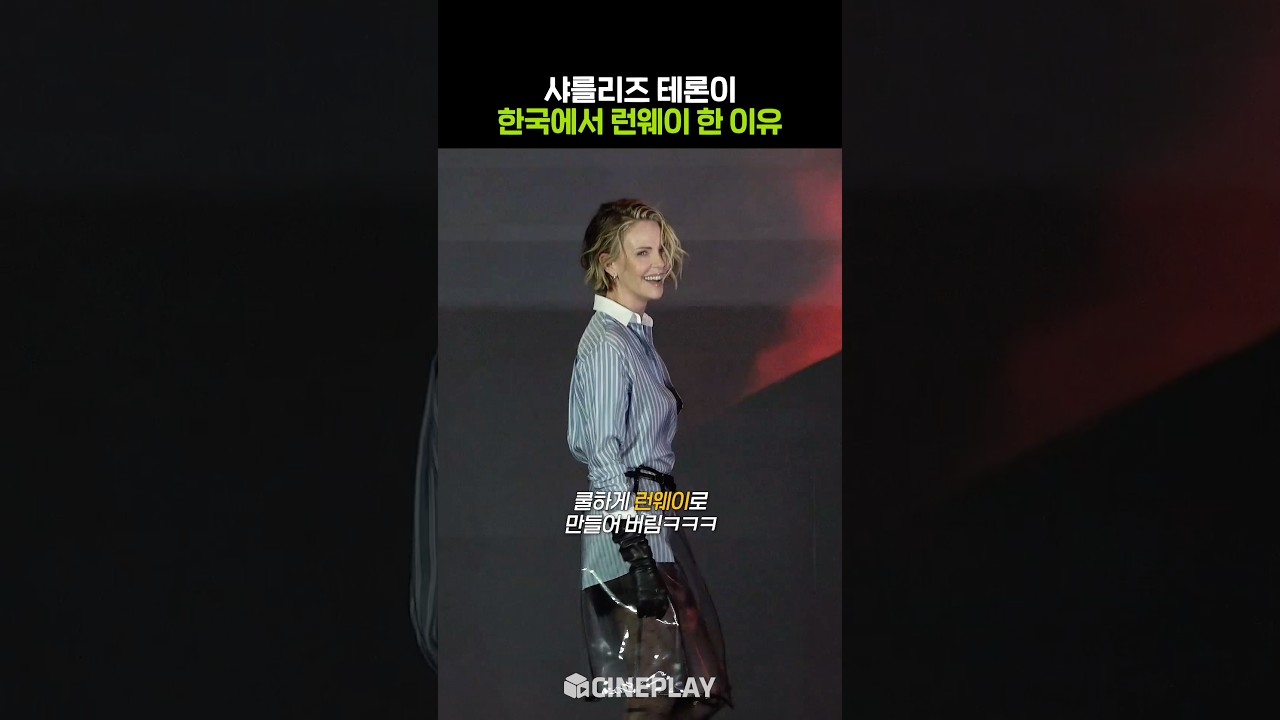
A common joke among viewers is that, during the nearly three-hour runtime of 〈Odyssey〉, if you absolutely must go to the restroom, many people pick the scenes featuring "Calypso" (Charlize Theron). That is probably because missing the Calypso–Odysseus (Matt Damon) exchanges does not prevent an audience member from understanding or emotionally responding to the film. Some argue that the island sequences with Calypso feel static and are staged in a sleek, modern manner that makes them stand apart from the rest of the movie.
That sense of dissonance may be intentional, but it also stems from the fact that the Calypso scenes function primarily as devices to support Nolan's trademark nonlinear structure. In 〈Odyssey〉, Odysseus spends time on Calypso's island, Ogygia, and the film unravels as he revisits lost memories one by one.

These scenes function as a portal into memory, a device used largely to sustain the film's nonlinear structure. That makes Calypso's character feel detached. In the original epic, Calypso sleeps with Odysseus and keeps him on the island by offering him immortality. The film instead reconfigures Odysseus as a man devoted only to Penelope (Anne Hathaway) and reduces Calypso to a flatter role: a passive emotional counselor who quietly harbors unrequited feelings and listens to Odysseus' confessions. As a result, the narrative turn in which the woman who held Odysseus for seven years suddenly feels pity, stops offering him companionship and lets him go lacks convincing psychological motivation.








![[4K/FULL] 🇰🇷 The Odyssey Team Loves Korea ❤️ Full Press Conference in Seoul | Director Christopher Nolan, Matt Damon, Charlize Theron and Emma Thomas](https://img.youtube.com/vi/qRBxRQPGBIk/maxresdefault.jpg)
댓글 (0)
댓글 작성
댓글을 작성하려면 로그인이 필요합니다.
로그인하기