



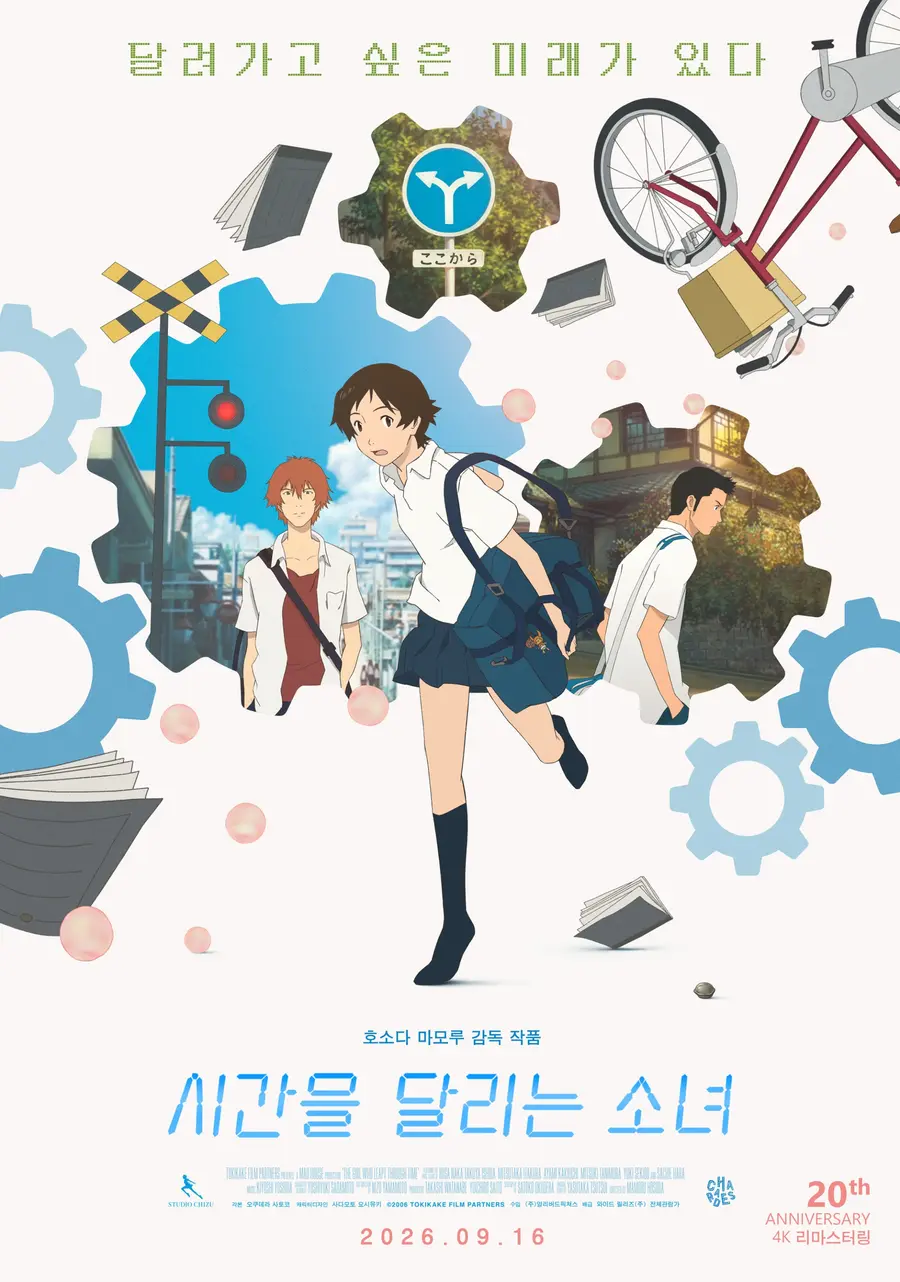
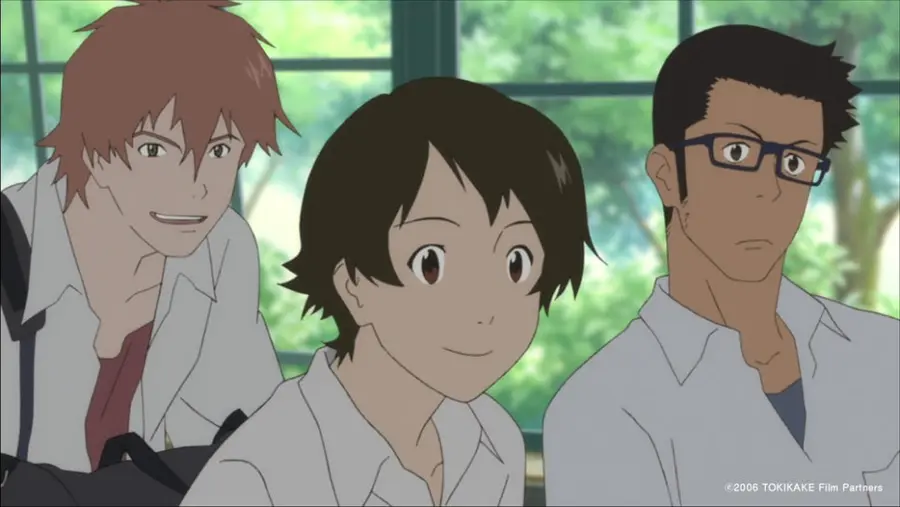
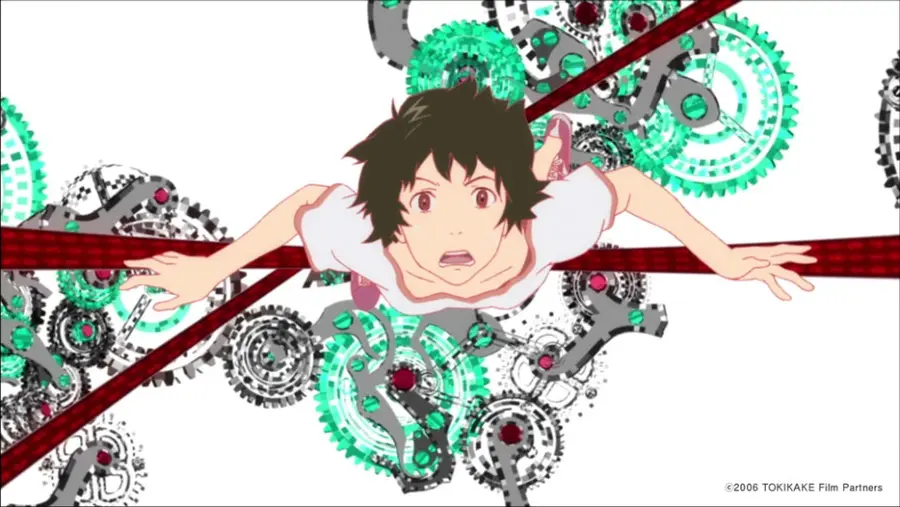
If you went back in time to meet someone who confessed their feelings to you today one week earlier, would they still feel the same way? Couldn't that person from a week ago have no interest in you at all? Human feelings can change from moment to moment. 〈The Girl Who Leapt Through Time〉 reshapes the grand, potentially cruel concept of time travel through the freshness of a teenage anime. Makoto is an ordinary high school student who is late every morning as routinely as she eats breakfast and constantly makes mistakes at school. She has two close male friends, Kousuke and Chiaki, the kind of handsome, enviable guys other girls would want to date immediately. One day, Makoto accidentally acquires the ability to travel back in time by running as hard as she can—a power known as a “time leap.”
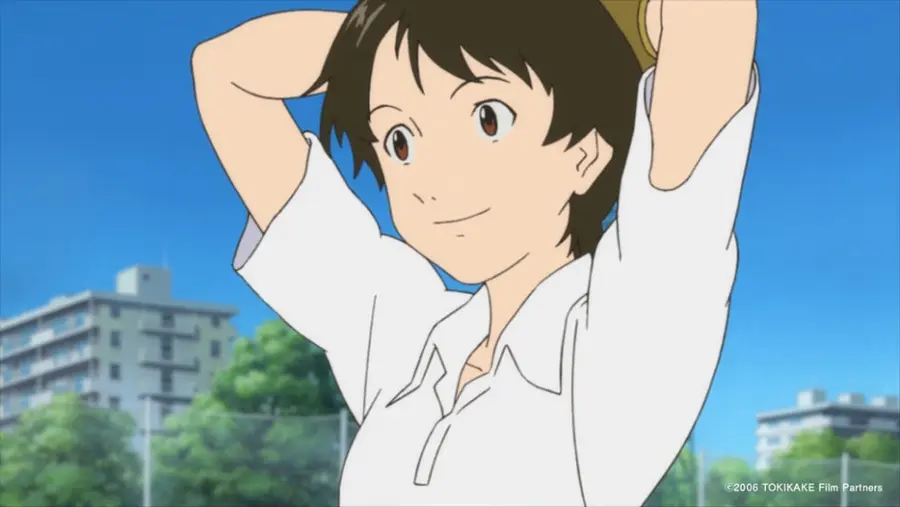
Makoto is initially astonished, but she quickly grows accustomed to the ability and delights in the small thrills of everyday life: going back in time to avoid being late, retaking a pop quiz she took the day before and extending her time at a karaoke bar indefinitely. But one day, while casually riding a bicycle with Chiaki as usual, he confesses, “Will you go out with me?” Her other friend, Kousuke, has already received confessions from younger female students. To calm her confused feelings, Makoto tries to go back to the moment before the confession and erase everything as if it had never happened. But as she repeatedly turns back time, she becomes caught in a tangled timeline and faces overwhelming confusion. She also discovers that the number of times she can turn back time is limited.
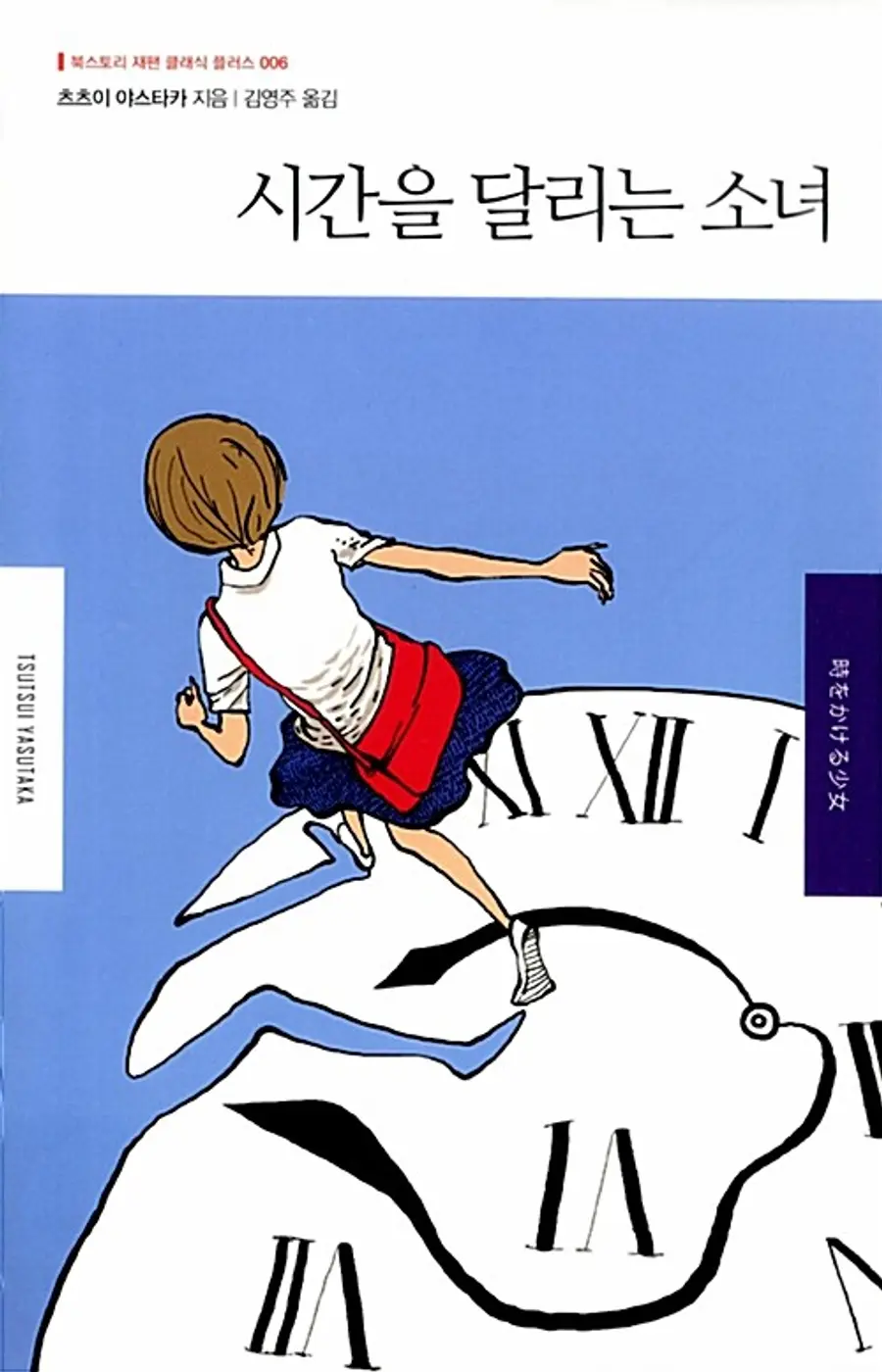
The original work is essential to the story. 〈The Girl Who Leapt Through Time〉 first saw the light of day in 1965, more than half a century ago. In Japan, it is considered a classic of time-travel fiction and has been remade numerous times as television dramas, films and manga. Its author, Yasutaka Tsutsui, is one of Japan's leading science-fiction writers. Active in the SF fanzine NULL, he is regarded as one of the three great masters of Japanese science fiction alongside Sakyo Komatsu, best known for 〈Japan Sinks〉, and the late Shinichi Hoshi, widely considered an elder statesman of Japanese science fiction. In South Korea, his short-story collection 「The Professor Tadano's Rebellion」 was published, along with 「The Dolphin That Swallowed an Island」 (the latter was later republished as 「Human Zoo」, but is now out of print). Manga based on his original works, including 「Nanase」 and 「The Girl Who Leapt Through Time」, have also been published.
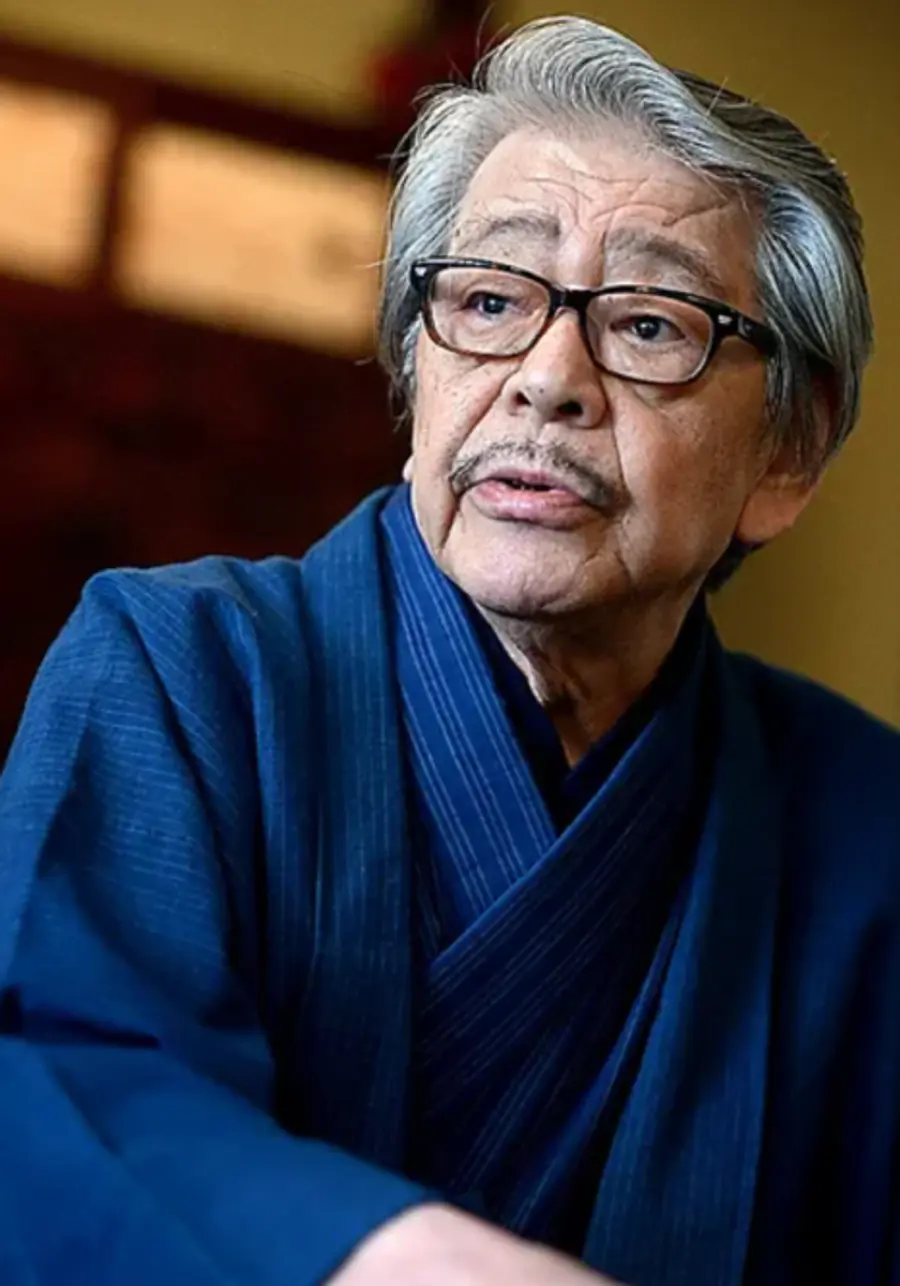
Born in 1934, Yasutaka Tsutsui has remained prolific since the 1990s. He appeared as the father, effectively the axis of evil, in Shin'ya Tsukamoto's 〈Gemini〉 (1999), and voiced the elderly Nippori in Isshin Inudo's 〈The Blonde Grassland〉 (2000). It is also notable that he appeared as both the original author and an actor in 〈Everything Sinks Except Japan〉 (2006), which attracted bizarre attention as a counterpart to 〈Japan Sinks〉 (2006). In 1973, after Sakyo Komatsu's novel 「Japan Sinks」 became a best-seller, Shinichi Hoshi jokingly said “Everything Sinks Except Japan” while drinking at a gathering to celebrate the success. Tsutsui, who was sitting beside him, drew inspiration from the remark and, after obtaining Hoshi and Komatsu's permission, wrote a short story titled 「Everything Sinks Except Japan」. It is a singular anecdote that brings together the three towering figures of Japanese science fiction. Tsutsui also became embroiled in a major controversy after making unspeakably abusive remarks about the statues of comfort women. Although he quickly deleted the offending social media post, bookstores across South Korea were asked to stop selling all of his works, including 「The Girl Who Leapt Through Time」. He had in fact been among those who criticized Japan's right wing for its lack of historical awareness, but the incident earned him the label “anti-Korean.”
Opinions differ on whether Tsutsui should be described as an SF writer, but there is no question that he occupies an important place in the language of contemporary Japanese literature, both within and beyond the science-fiction genre. He is known for his freewheeling prose, overflowing with wild imagination and bizarrely acerbic satire. The stories collected in 「The Dolphin That Swallowed an Island」 are noteworthy examples of his later work. 「Conditioned Reflex」 follows a writer who receives a dog's heart and a pig's stomach after a traffic accident and laments that he has become a “human zoo.” 「Sadism」 features not a gentle, elegant female android but an eccentric female android who, precisely because she is an android, can be handled roughly and even smashed. In 「Frustration」, a character insists that “men are better off cheating and roaming around.” Unlike most writers, Tsutsui's writing grew increasingly caustic in his later years.
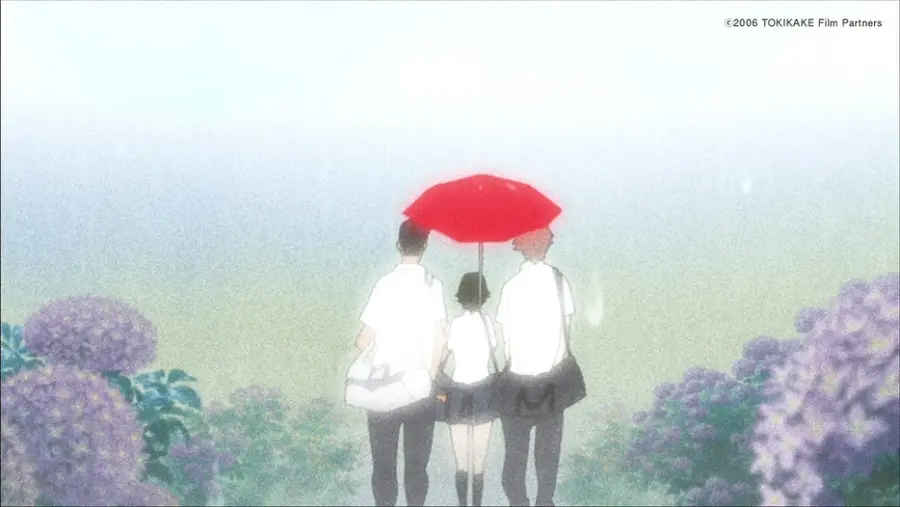
There are two reasons for this extended discussion of Tsutsui. First, 「The Girl Who Leapt Through Time」 stands well apart from his broader body of work: It is an elegant, gentle work in which his characteristic barbs are difficult to find. Readers who have encountered several of his books published in South Korea may feel as if they are traveling through time themselves, seeing another side of the author through this work's subject matter. Second, it is worth watching how his past imagination takes shape in the present. His critiques of the media, treatment of organ-transplant issues and frequent depictions of sex and desire are strikingly inventive and ahead of their time. But because they were so far ahead of their time, many elements can now seem somewhat dated. 〈The Girl Who Leapt Through Time〉 is a model example of how Japan's science-fiction tradition encountered the history of Japanese animation, apart from recent Japanese SF anime whose original works were themselves animated productions.
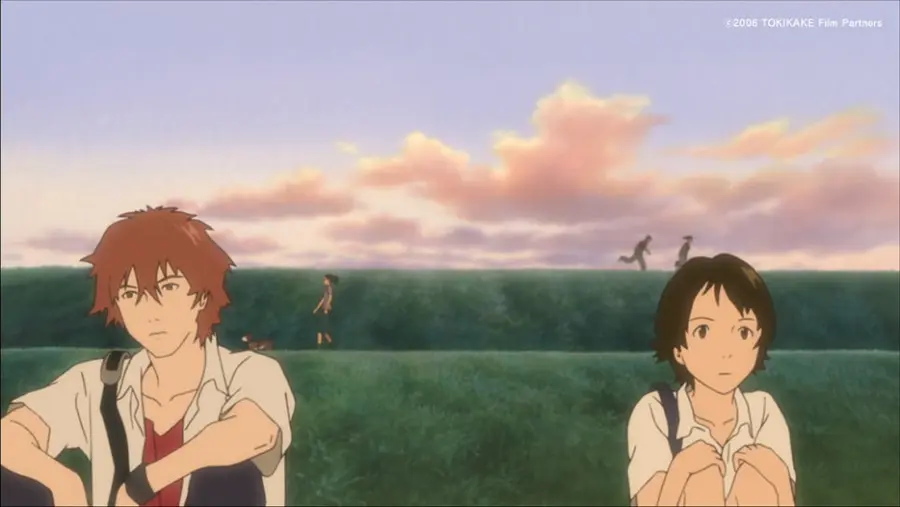
It is difficult to find Tsutsui's hard-boiled humor in 「The Girl Who Leapt Through Time」. The first animated adaptation of 〈The Girl Who Leapt Through Time〉 does not simply transfer the original story to the screen; it adapts it into a story for a new generation. That is understandable given that director Mamoru Hosoda had previously directed 〈Digimon Adventure〉 (2000) and 〈One Piece: Baron Omatsuri and the Secret Island〉 (2005). In the case of 〈One Piece: Baron Omatsuri and the Secret Island〉, unlike the theatrical films in the rest of the series, it borrowed relatively little from the original series' established settings and was recognized as the most emotional installment. That makes Hosoda's transformation of 〈The Girl Who Leapt Through Time〉 easier to understand. The director himself was nearing 40 when he made the film, and the story carries an air of nostalgia for the original. Even the original story's protagonist appears as Makoto's aunt, a 35-year-old woman who works as an art conservator. For fans who carry nostalgia for the original, it is the most heartwarming moment.
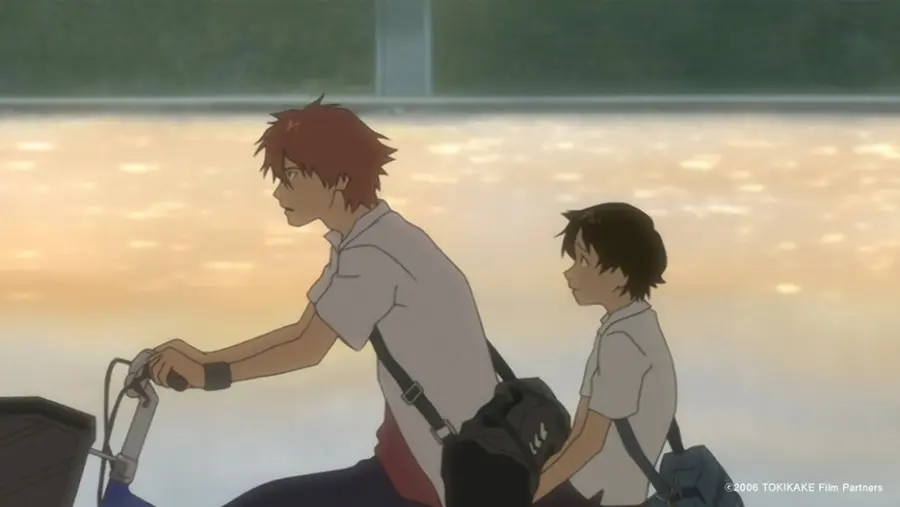
〈The Girl Who Leapt Through Time〉 also naturally recalls several Studio Ghibli films featuring female protagonists. Among them is Yoshifumi Kondō's 〈Whisper of the Heart〉 (1995), which in many ways appears most similar as a coming-of-age anime, as well as Hayao Miyazaki's 〈Spirited Away〉 (2001) and 〈Howl's Moving Castle〉 (2004). Hosoda left Toei Animation in 2005 to work as a freelancer and was hired to direct 〈Howl's Moving Castle〉, but had to leave the project midway after Studio Ghibli brought Miyazaki back. For Hosoda, 〈The Girl Who Leapt Through Time〉 became a spectacular comeback.






댓글 (0)
댓글 작성
댓글을 작성하려면 로그인이 필요합니다.
로그인하기