



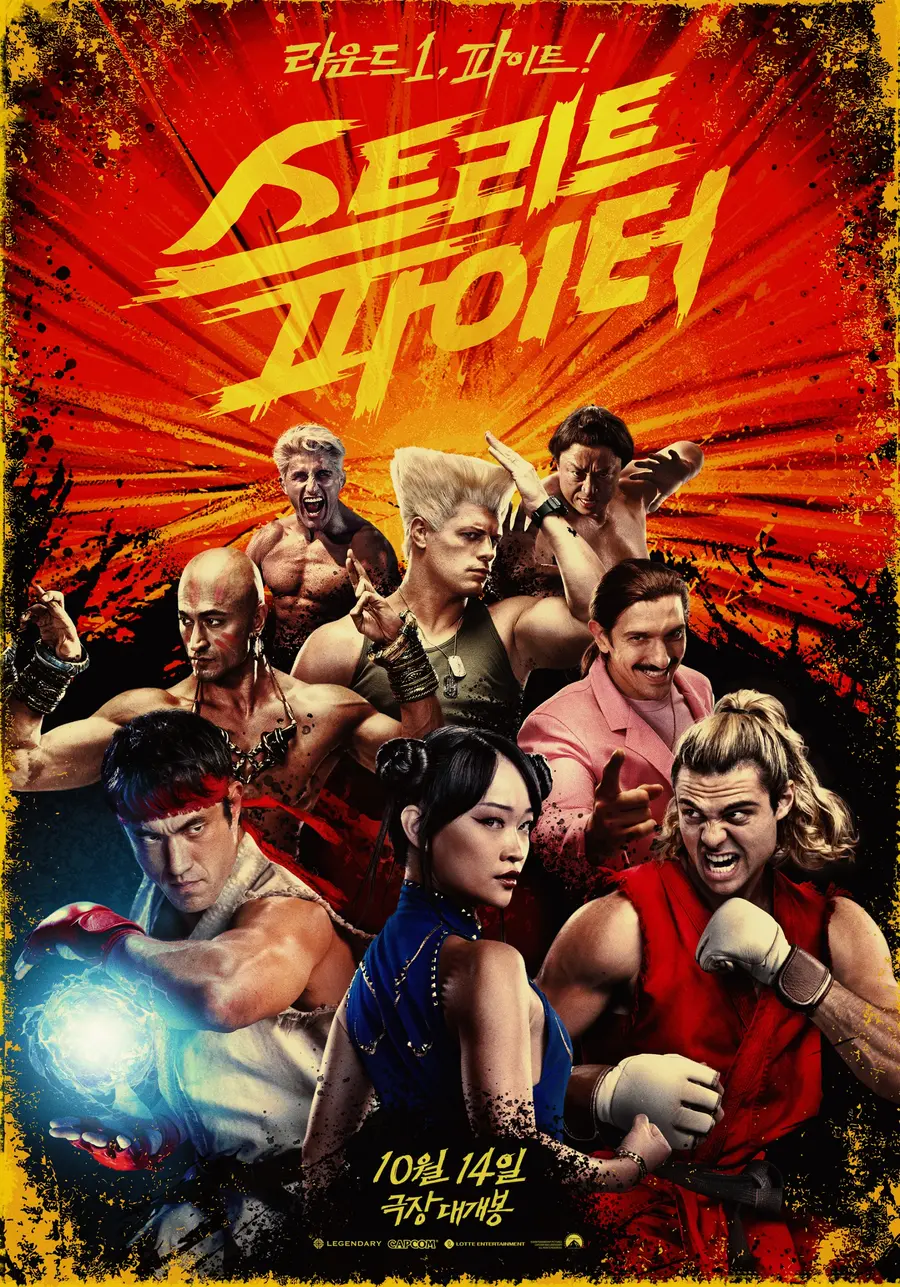
〈Street Fighter〉 is back! In 1993, fated rivals Ryu (Andrew Koji) and Ken (Noah Centineo) join the World Warrior Tournament at the invitation of Chun-Li (Callina Liang), a mysterious woman. The tournament is an arena where fists, fate and fury collide in brutal fashion. As the rounds continue, the two men confront the truth behind a vast conspiracy hidden within a battle royale in which their lives are at stake.
The 〈Street Fighter〉 series is based on the video game franchise of the same name, released in 1987 by Capcom, Japan’s renowned game developer. After the first live-action film, 〈Street Fighter〉 (1994), based on 〈Super Street Fighter II〉 and led by Jean-Claude Van Damme, became a huge success, several more films were made, including 〈Street Fighter: The Legend of Chun-Li〉 (2009). The prequel-like 〈Street Fighter: Assassin’s Fist〉 (2014) was also praised for making good use of elements from the original game. You could call it a model example of adapting a video game for film.
Director Kitau Sakurai’s new 〈Street Fighter〉, in terms of scale, has effectively brought the franchise back to the center of Hollywood live-action filmmaking for the first time in 30 years. The film is packed with the wide range of techniques seen in the game, including the Hadoken and spinning kicks, as well as the distinctive personalities of all the characters fans love. It is set to evoke deep nostalgia for the original, a legend of the fighting-game genre. Ahead of its Oct. 14 release in South Korea, we conducted written interviews with director Kitau Sakurai, Noah Centineo, who plays Ken, Andrew Koji, who plays Ryu, Callina Liang, who plays Chun-Li, and Andrew Schulz, who plays Dan Hibiki.
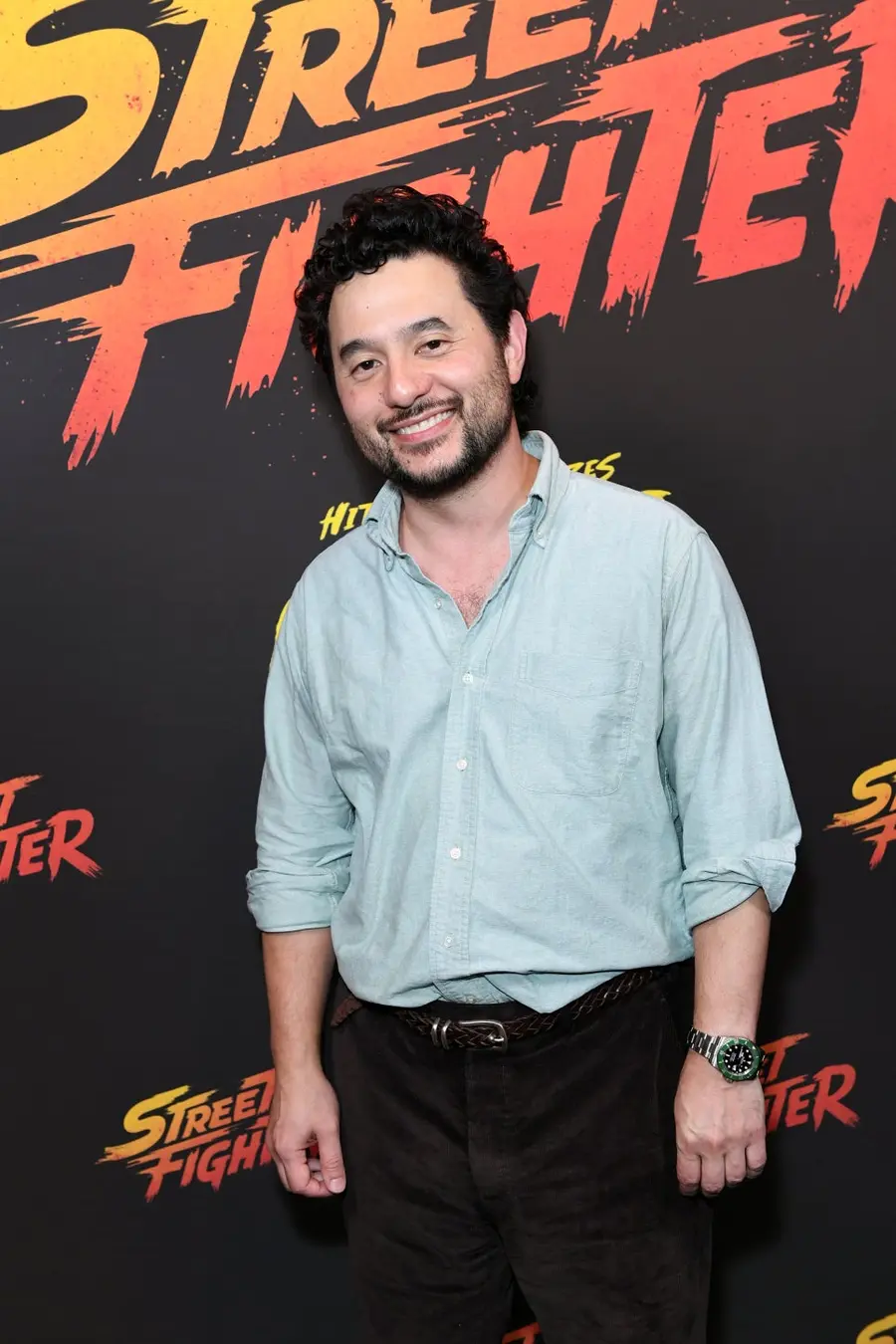
You have said that you were a longtime fan of 'Street Fighter.' How did you come to direct this live-action film?
Legendary Pictures reached out to me first about the project. At the time, the studio was considering how to bring 〈Street Fighter〉 to the screen, and I had experience working on 〈Twisted Metal〉 (2023), a series based on a video game. I directed four episodes and also served as an executive producer. I think the reason Legendary Pictures was interested in me and the reason I was drawn to the project were ultimately the same. They wanted to capture the chaotic, wildly inventive tone unique to the game. I have always enjoyed moving freely between and combining different genres, but I have maintained a distinct tone of my own in comedy and action. I also worked as a cinematographer for many years, so I tend to think in highly visual terms. Those elements I enjoy and have done well naturally aligned with what Legendary Pictures wanted to do with 〈Street Fighter〉. The studio did not want a safe, conventional 〈Street Fighter〉, nor a typical video game movie. They wanted someone willing to take a bold gamble and make a daring, chaotic and even strange film. That was the task they gave me. And if that was the assignment, it was completely in my wheelhouse.
You also worked for many years as a cinematographer. How did you approach and design the film’s many action sequences?
Naturally, every action sequence required an enormous amount of work and preparation. I also want to mention John Valera, the second-unit director and stunt coordinator responsible for the action choreography. We worked closely together from the storyboarding process, which took place in several stages, and designed all the action as a team. I approached it by establishing the concepts on a larger scale. It is 〈Street Fighter〉, after all. There obviously had to be a lot of fighting! In fact, this film has more fights than 〈John Wick〉. It is packed with action from beginning to end. At the same time, I thought we needed to make a film that audiences who are not interested in action itself could still follow and become absorbed in through the story and characters. Each fight also had to be different. Every action sequence needed its own world, a clear aesthetic concept and a narrative reason for why the fight was happening. I was always asking myself, “How can we make each fight special? What is this fight really about?” Then John Valera and I brought specific techniques from the game to life as practical action and applied the distinct visual style we had in mind. Overall, it was an incredibly fun process.
Of the film’s many action sequences, which is your favorite, and why?
That is a good question. We spent so much time and effort creating those scenes that they all feel like my children. The fact that a scene made it into the film also means it is one we truly love. If I had to choose one, though, it would be Honda’s steam-room sequence, the first large-scale action scene we shot. I love it because the concept is so clear. It is closely connected to the game, but it also shows the characters’ state of mind at that point in the story. Visually, it is spectacular. I especially love the way Ryu, played by Andrew Koji, moves through darkness and steam before emerging into the light. But it is not simply a scene that looks good; it is deeply connected to the story’s emotional arc and the spirit of the game. I love every scene that includes a fight, but if I had to pick just one, I would choose that one.
You mentioned the story of ‘Street Fighter.’ What did the game mean to you over the years?
I grew up in Ohio in the 1990s, and I did not have a game console as a child. So whenever I wanted to play, I had to go to a friend’s house. I remember when my best friend bought Street Fighter. We would all gather at his house and play together. The characters from Street Fighter are also so deeply embedded in popular culture that, in a way, they are like figures from Greek mythology. Even people who have never played the game know these characters. They have already become part of our culture. I grew up in Ohio as a mixed-race Japanese American, but I was also very close to Japanese pop culture, anime and manga. For me, Street Fighter was the place where my identity as a Japanese person met my experience as a child raised in the United States.
Which characters did you usually choose when you played, and why did you like them?
I remember playing Dhalsim a lot. I found him incredibly interesting and unique. Later, I also came to like Ryu. He is a fascinating figure in the Street Fighter universe. He is quiet and remarkably calm, like the eye of a storm. Even in this world where everything is spinning chaotically, he is firmly centered, and I was naturally drawn to him. But what I always loved about Street Fighter was the appeal of the ensemble, with multiple characters driving the story together. In truth, I was not skilled enough to stick with one character and play well, so I kept switching between them! Maybe that is why I developed an even stronger attachment to the ensemble as a whole.
You said the film’s characters are already deeply rooted in our consciousness. This film also reveals new sides and greater depth in familiar characters. Why did you feel it was important to bring those elements to the foreground?
I wanted to make a film that did not sand down the madness and sharp appeal of the game and its world. I wanted to bring the characters and their individual techniques to the screen as they are. In that sense, I wanted to move the game into reality in the most literal way possible. But I wanted to do it in a provocative, rebellious, punk-rock fashion. A conventional film might explain these elements in realistic terms and find a way to make them look more normal. I did not want to make this world normal. Instead, I wanted to fully enjoy the fact that all of it is insane. So whether we were dealing with the characters, the story or our work with the actors, the fun was not in forcing Chun-Li’s costume or a character like Guile to make rational sense. It was in creating context that allowed them to feel natural within this world. We gave each character a three-dimensional perspective and a backstory, creating a place where each could exist naturally even in this chaotic universe. That was the film’s biggest challenge and, at the same time, its most enjoyable aspect.
I heard that Callina Liang, who plays Chun-Li, completely lost it when you personally told her she had been cast. What do you remember about that call?
It was the first time I had ever spoken with someone who reacted that intensely to hearing that she had been cast. Callina Liang herself feels a very deep connection to Chun-Li, and Chun-Li is a character who means so much to her. There is something wonderfully strange about being so immersed in a character and then getting the chance to play that character for real. It can have a profound effect on a person. But I also knew Callina was exactly right for the role. From her audition, she showed us so much of herself. As I listened to her talk about her past, where she came from and who she was, I felt that so much of it connected with the Chun-Li we had envisioned. The same is true of the other cast members, but Callina’s very nature aligns exceptionally well with Chun-Li. It is extremely rare for a character and the actor playing that character to come together so perfectly.

That also seems to apply to Noah Centineo and Andrew Koji, who play Ken Masters and Ryu. How would you describe the relationship between the two?
Exactly. When the casting is right, in some ways you do not have to do much to create the relationship between the characters. Andrew Koji simply is Ryu. He is Ryu in every respect. He is quiet and does not easily reveal what is inside him, even in everyday life. He can be difficult to read and is shy, but there is also a playful side hidden within him. He is highly disciplined and an actor with world-class martial arts skills. He truly respects martial arts and has a deep passion for how to present them on screen. Above all, he genuinely cares about the character of Ryu. Noah Centineo, by contrast, is completely Ken Masters, from the way he speaks and acts to the way he moves through the world. He simply is Ken. When you put the two of them together, their personalities are complete opposites, yet they fit together like yin and yang, which is also perfectly suited to the two characters in the game. The relationship emerged naturally rather than being manufactured. When you are telling a story about friendship, you need characters who are very different but fundamentally compatible, and who make each other better when they are together. Noah Centineo and Andrew Koji were like that with each other in real life. They really did argue all the time. It was always playful, of course. That is simply their relationship. They cared deeply about each other, and you can feel that affection on screen.
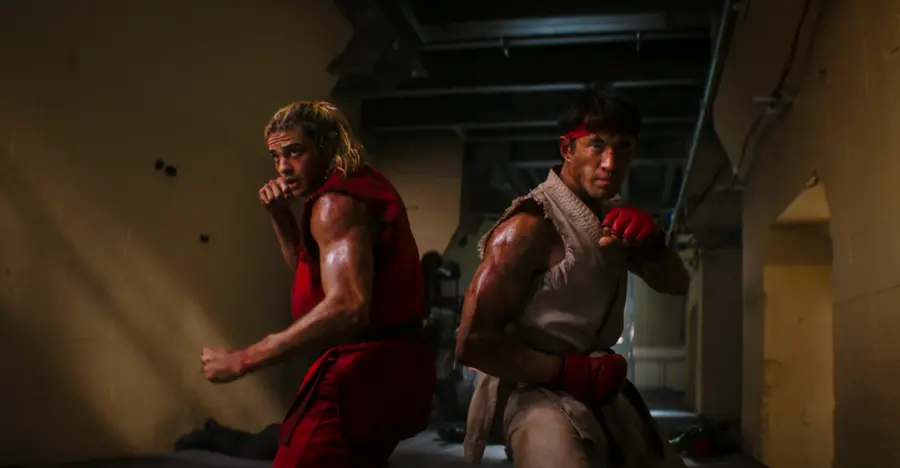
Tell us about the first camera test when the two actors were dressed as their characters. When did you become certain that “these two characters are going to work”?
It was thrilling. Everyone there felt exactly the same way, 100 percent. We put Andrew Koji and Noah Centineo in the actual costumes and tested them with the cameras and lighting we would use for the main shoot. The moment they stood back-to-back in the classic image of Street Fighter from the game, everyone got chills. The reaction was, “Wait. This is it. This is real.” The two characters felt like fully realized, three-dimensional people. It was so cool and exciting. For everyone, it was truly a “Wow, this is real” moment. We knew then, without the slightest doubt, that the film was on the right track.
One of the characters you approached most differently from the original in terms of appearance is the notorious villain Vega. In the game, he is a mountain of a man, but in this film, despite being much smaller, he is no less intimidating. Why did you consider David Dastmalchian the ideal actor?
I did not want Vega to be portrayed as a stereotypical villain. I did not want a character who simply thinks, “I am a bad guy, so I do bad things.” I think the best villains in movies are people who, when asked, “Are you a villain?” would answer, “No, I am not a villain! I am doing the right thing and making the world a better place.” They become villains because what they believe is fundamentally so different from what most of us believe. That was our approach to Vega. So I knew David Dastmalchian would be able to do it well. David thinks deeply about every character he plays and brings human depth and compassion to each role. He draws on his own past and many aspects of himself for his characters, and he is not afraid to look at the darker sides of humanity. At the same time, he does not judge that darkness carelessly. Instead, he approaches it by understanding and empathizing with the dark sides we all possess. While working with David, we also read many books about real-life narcissistic cult leaders. That helped us build the character’s psychological framework so we could understand why Vega became this kind of person and why he attracted so many followers. Why do the people in this world like Vega? Why does Vega have power? And what other power does he crave beyond what he already possesses? We kept asking those questions. In that sense, this film is also a kind of Vega origin story. It is the story of the seeds just beginning to sprout that will eventually grow into the Vega we know from the game. We wanted to create a character with a distinct personality and a clear internal logic that makes every action understandable from within his own perspective. And if David and I have something in common, it is probably that we like the bizarre and the strange. We both enjoy playing with darkness and finding fun within it. Vega is certainly that kind of character, too.
▶ The interview continues with Noah Centineo, who plays Ken Masters in 〈Street Fighter〉.

![[Written Interview] 'Street Fighter' ⑤ Andrew Schulz on playing Hibiki Dan: “Hibiki Dan is charming because he’s all bluster but has no skill.”](https://cdn.www.cineplay.co.kr/w300/q75/article-images/2026-10-02/5fa62a5e-e327-4577-83c9-3194105e7de5.jpg)
![[Written Interview] 'Street Fighter' ④ Kalina Liang on playing Chun-Li: “Everything you see in the film is my real body.”](https://cdn.www.cineplay.co.kr/w300/q75/article-images/2026-10-02/1723b98f-4889-4b2b-bdc5-cff2a9eee6cc.jpg)




댓글 (0)
댓글 작성
댓글을 작성하려면 로그인이 필요합니다.
로그인하기