



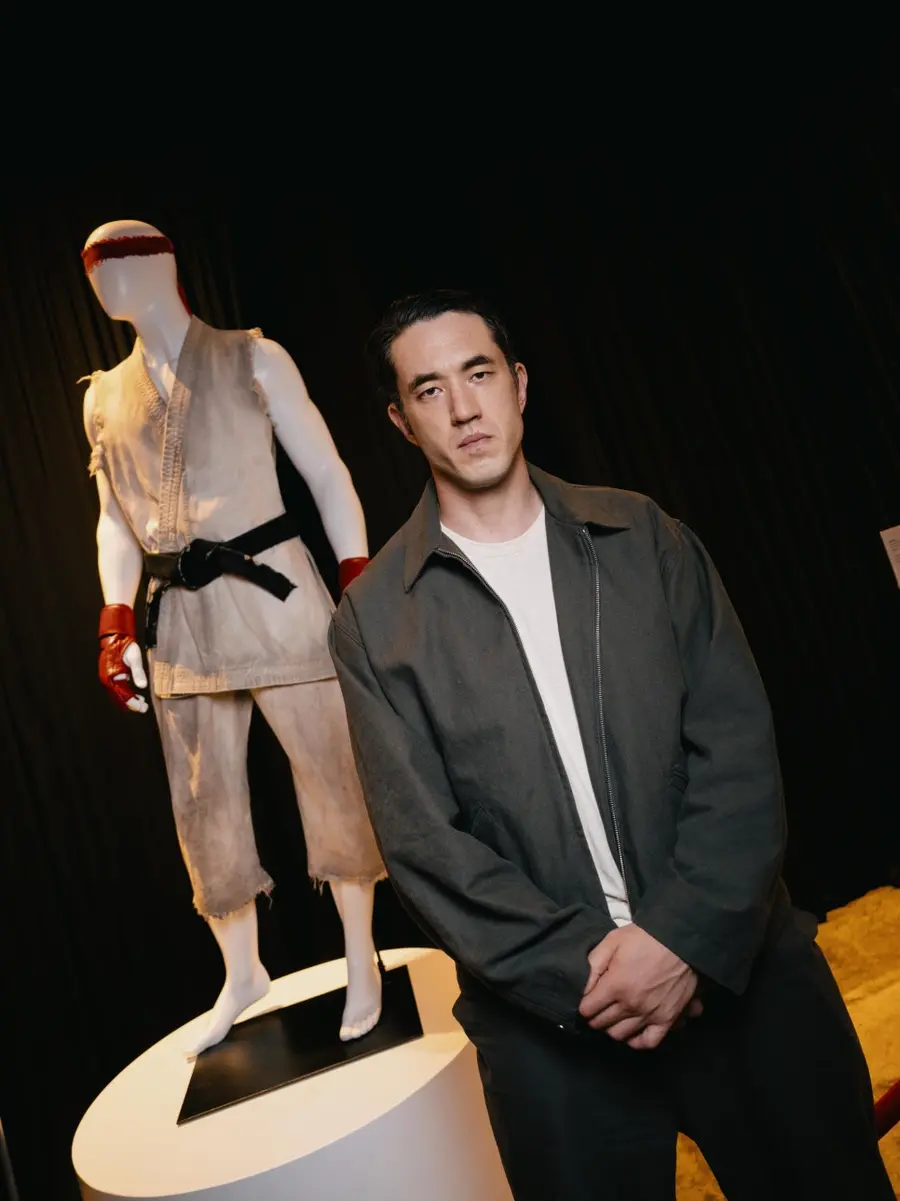
▶ 〈Street Fighter〉 continues from the interview with Noah Centineo, who plays Ken.
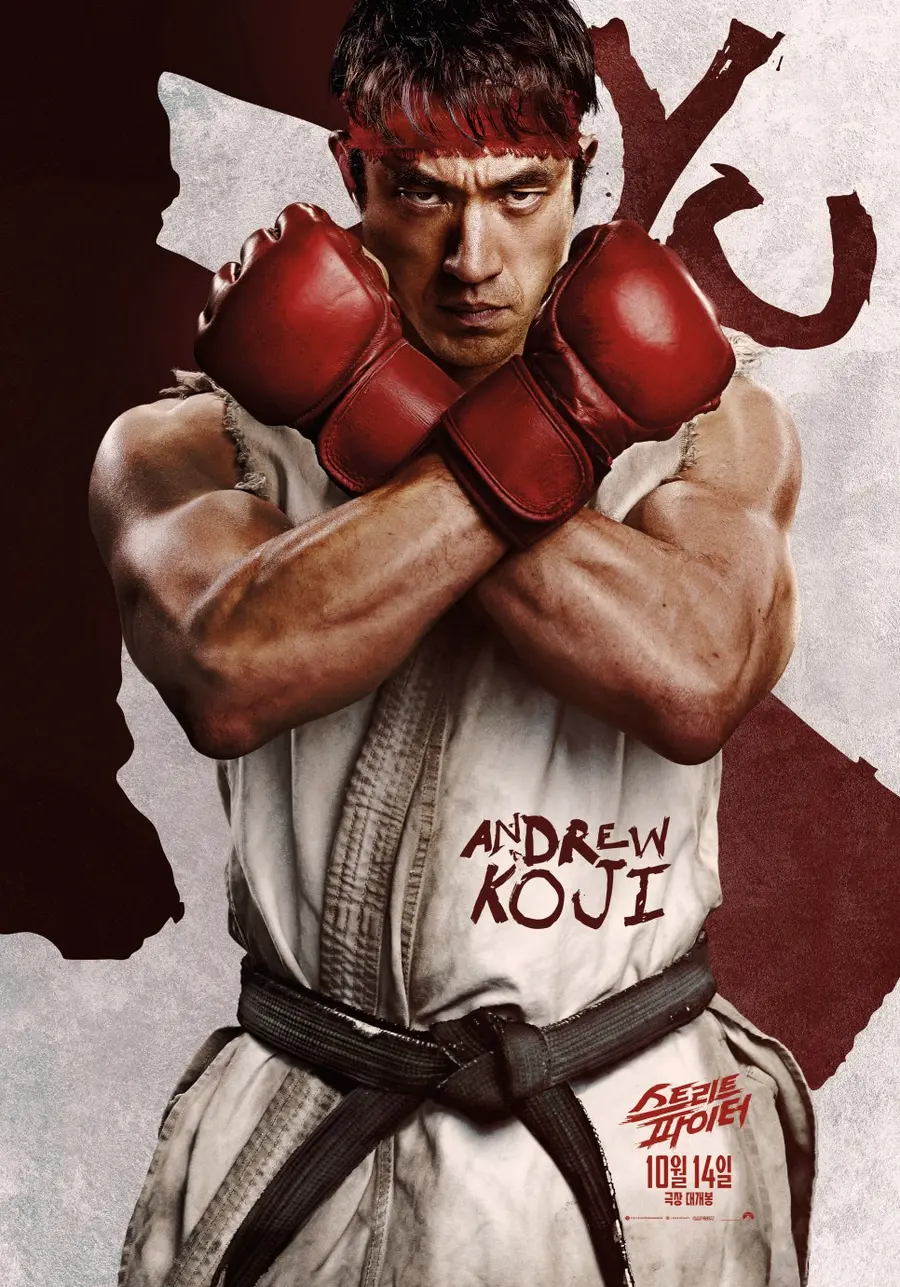
I heard you and Noah Centineo, who plays Ken Masters, Ryu’s friend and rival, were constantly engaged in intense competition on set. Is that true?
Yes, we went at it everywhere. (Laughs) At the gym, in the sauna, while eating barbecue, on set and off set. We even had a full-blown battle of wits over text last night. I tease Noah relentlessly. Given the characters we play, it makes perfect sense. (Laughs)
You seem to know everything there is to know about Ryu. Did you ever play the original Street Fighter game as a child?
Of course. I was actually born in 1987, the year the Street Fighter game came out. So I never played the original, but I did play the second installment. I’ve loved video games since I was a kid, and I still do. I just have less time to play these days. I wasn’t very good at Street Fighter, but I always chose Ryu. He was a Japanese character, and he looked exactly the way I wished I looked when I was young. Honestly, he was just cool. And when I was growing up, there weren’t many Asian characters available to play. Ryu was one of them.
As someone who was also a Ryu fan, how did it feel to step onto the set as Ryu for the first time?
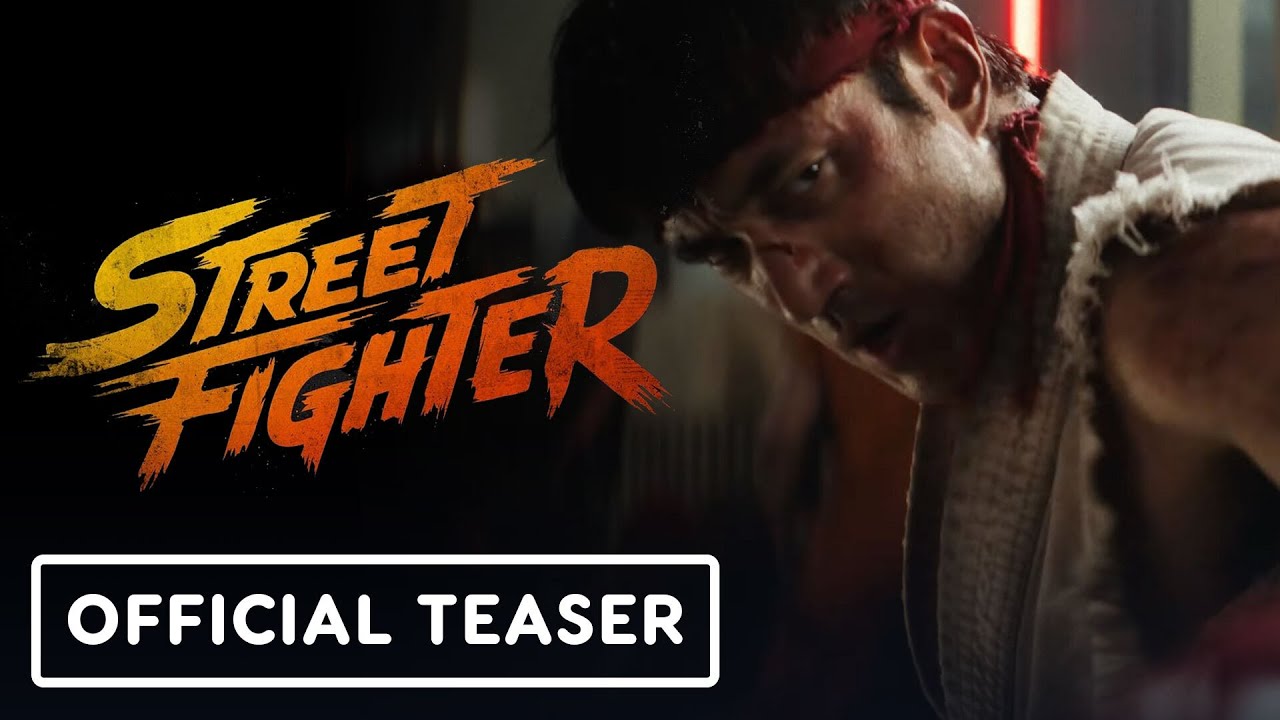
Honestly, at first I had serious doubts about whether I could pull off Ryu properly. Ryu is such an iconic character. There was a lot of pressure in playing a character who had lived in the hearts of fans, including me, for so long. But after I put on a lot of muscle, at some point the loose white karate gi and headband Ryu wears for training and matches began to feel like they belonged on me. I think I first felt confident that I could do it when Noah and I had our first camera test. We watched the footage back together and thought, “OK ... we can do this.” At first, it wasn’t easy to establish the tone of the character and the film. 〈Street Fighter〉 has to strike that balance. It has a serious side, but it’s also a lot of fun, with comedy that is sometimes exaggerated to a cartoonish degree. After the camera test, though, everyone felt that we had found the right tone. More than anything, we could feel the distinctive energy of 〈Street Fighter〉 in that first image. That was really important. As we continued filming, the process of finding that balance naturally guided us in the direction we needed to go.
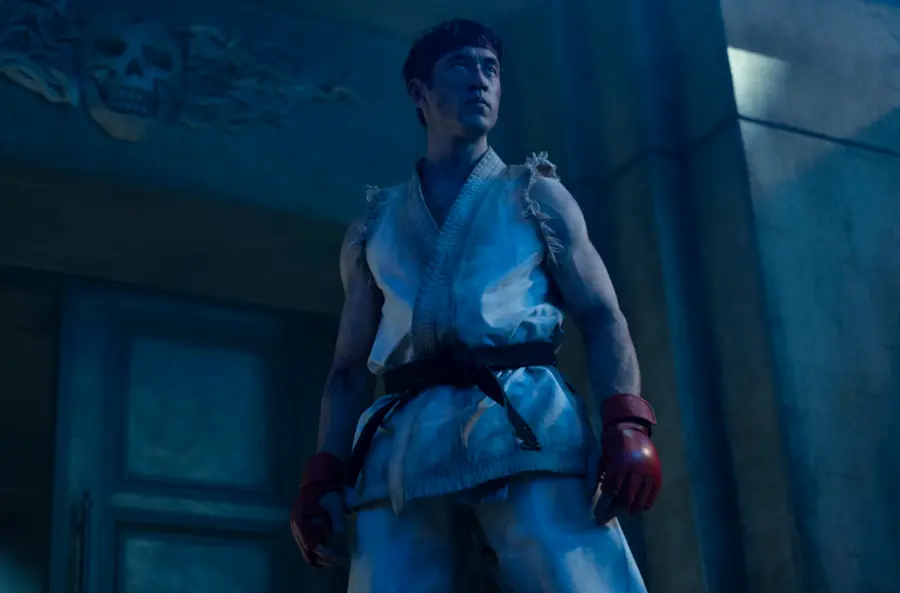
Director Sakurai Kitao said he wanted to delve deeply into the characters’ psyches in this film. How would you describe Ryu’s inner life?
Ryu’s inner life is tangled up with a great deal of emotion and conflict. He’s struggling in many ways. So I dug very deeply into Ryu as well. I examined and understood every aspect of the character, then tried to express all of it as simply as possible. The real-life martial artist who influenced me most in playing Ryu was the legendary Choi Bae-dal, the founder of Kyokushin karate. Born Choi Young-eui in Korea, he opened his first dojo in Tokyo in 1954 and spent long periods alone in the mountains, undergoing brutal training and testing his limits. Like Ryu, he never stayed in one place; he wandered. He was literally a drifter. Another influence was the swordsman Miyamoto Musashi, who wandered with two swords. I also read a great deal of Musashi’s writings on martial arts, strategy and philosophy, including 「The Book of Five Rings」, which he wrote. And because I had been talking with producer Kaile Boiter about the film for about a year and a half before I was cast, I had already been preparing little by little. I really wanted the role, and I wanted to understand Ryu as deeply as possible. In fact, Ryu and I have some profound similarities. At the time, I was working a great deal and had personal matters to deal with, so I had almost no time to meet or socialize with people. As a result, my life became quite similar to Ryu’s. My days were also filled with training and work. We had a lot in common.
Could you explain that in a little more detail?
Ryu is also fighting the Satsui no Hado, or surge of murderous intent. In other words, he’s fighting the darkness within himself. That darkness can take many forms, such as rage, anger or depression. At the same time, Ryu is trying to reach a state in which he can fully master himself through relentless training. That is the greatest force driving his life. Fighting isn’t a way for Ryu to gain fame. Even after winning the first 〈Street Fighter〉 tournament, he simply leaves. He isn’t satisfied even though he won. For Ryu, it was actually a failure. In that respect, Ryu is the complete opposite of Ken Masters. The two are stark contrasts. Ken Masters is, in some ways, a very modern character. Like an influencer, he cares deeply about how other people see him. Of course, there is another side to him deep down. Ryu, on the other hand, doesn’t care about fame, public attention or money. All he wants is to keep making himself a better person through martial arts and fighting.”
In a way, the process of playing Ryu became a form of healing for you as well?
The funny thing is, I’m not a method actor at all. Even so, I found myself constantly thinking about how the character saw the world and lived his life. The biggest danger when playing a character like Ryu is that he can become a stereotype. He could end up as nothing more than a quiet, serious martial artist. So I kept asking myself, “How can I make this character interesting, multidimensional, multifaceted and human?” Fans already know that Ryu is that kind of person. I hope we managed to capture his subtlety and depth in this film. That matters because there is surely an Asian or biracial Asian child somewhere watching this character, and I want Ryu to truly resonate with those children.
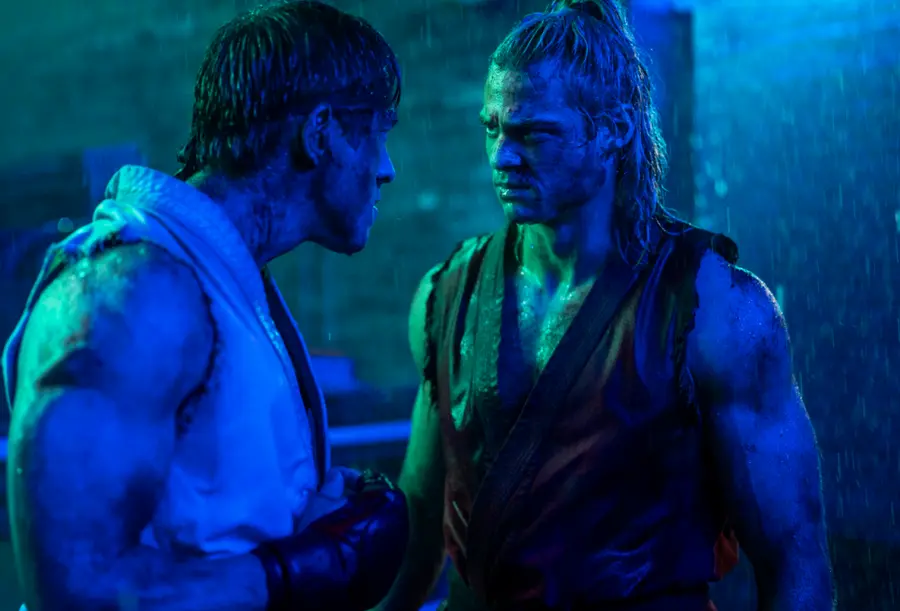
You have also trained in martial arts. Which of Ryu’s signature techniques did you most enjoy performing?
The Hadoken, of course. It’s Ryu’s technique for firing a burst of ki, usually depicted as a blue fireball, and it was great to perform that scene myself. I had trained in several karate styles, from Shotokan to Goju-ryu, and tried out a variety of movements. When we filmed it, I honestly thought they would simply add special effects between my hands, but I actually had to hold a wired device to establish the lighting reference. Basically, I was holding what amounted to a makeshift lightbulb in my hands. It wasn’t much fun at the time, but it looked really cool in the film. Playing Ryu allowed me to bring together the acting I had developed as an actor and the martial arts I had trained in over the years.
Why did you think director Sakurai Kitao was the right person to bring the world of 〈Street Fighter〉 to the screen? As a fan of the original game, are you satisfied with the result?
I’ve worked with a great many crews during my 20 years as an actor, and this was one of the best. The director’s greatest strength is that he collaborates with everyone in a genuinely open-minded way. He always chooses the best idea. He never imposes his own thinking. That’s why everyone respects him. Above all, he truly loves the world of 〈Street Fighter〉 and is always trying to explore it more deeply from a fresh perspective.
There must have been quite a bit of competition when you trained with Noah, too. So who can bench-press more?
Training was divided into three main areas. First, there was muscle-building and physical conditioning. Then there was proper martial arts training. Finally, there was learning the action choreography and training to tell the story through action. I have more experience than Noah in martial arts action films. But Noah is a humble and wonderful guy. When it came to strength training and building our physiques, we pushed and competed with each other. We were both trying to get as big as possible. The funny thing was that we looked just like Ryu and Ken Masters. But in the other areas, I helped Noah and tried to teach him as much as I knew about how to present action in front of the camera. I kept contacting him privately, saying things like, “I hear this instructor is teaching something. Let’s go train with that instructor, too.” Then Noah would complain, just like Ken Masters: “Oh, I don’t want to. Do I really have to? Why are we doing this?” But once he got there, he would win people over with his natural charm and do a great job. That’s the kind of guy he is—he gets everything done. It was really fun.
▶ 〈Street Fighter〉 continues with an interview with Callina Liang, who plays Chun-Li.

![[Written Interview] 'Street Fighter' ⑤ Andrew Schulz on playing Hibiki Dan: “Hibiki Dan is charming because he’s all bluster but has no skill.”](https://cdn.www.cineplay.co.kr/w300/q75/article-images/2026-10-02/5fa62a5e-e327-4577-83c9-3194105e7de5.jpg)
![[Written Interview] 'Street Fighter' ④ Kalina Liang on playing Chun-Li: “Everything you see in the film is my real body.”](https://cdn.www.cineplay.co.kr/w300/q75/article-images/2026-10-02/1723b98f-4889-4b2b-bdc5-cff2a9eee6cc.jpg)




댓글 (0)
댓글 작성
댓글을 작성하려면 로그인이 필요합니다.
로그인하기