



![Movie 'Digger' poster [Warner Bros. Korea provided. Resale and DB prohibited]](https://cdn.www.cineplay.co.kr/w900/q75/article-images/2026-09-29/c8ced3c8-cd31-4a46-944f-7f802d957b08.jpg)
Box-office prospects were already more or less lost, yet 〈Digger〉 is earning strong reviews from audiences. Of course, some viewers dislike it as critics did before release, but in South Korea (as of Oct. 7) it has a Watcha score of 3.8 and a CGV Golden Egg of 92%, earning especially strong marks. At the heart of that praise is likely the film's form — the way 〈Digger〉 had to lie about its structure until release. Seen in advance at a press screening, 〈Digger〉 all but begged to be discussed; I could barely keep quiet, so now that it has opened, here's a look at the film's form.
※ The following contains spoilers for 〈Digger〉.
〈Digger〉 centers on the premise that 'Digger Rockwell,' the third-generation oil magnate, sets out to solve a massive disaster that spreads from a problem he ignored. In fact, that was all the information released before the film opened, so audiences naturally assumed it was a story about a problem in the film's reality, told as a black comedy. But 〈Digger〉 actually builds a larger world: the events portrayed in 〈Digger〉 are themselves a real incident and the basis for a play called 'Fossil Fools,' and the film's apparent 'reality' is already the world after that incident. That revelation shows that the Tom Cruise we took for Digger Rockwell is actually an actor named Curtis, playing a real person named Digger Rockwell within the film's world.

By doing so, 〈Digger〉 argues that the staged version is an artistic reconstruction of past events, and that the 'real world' in the film is itself a fictional future. Interestingly, that imagined future doesn't feel alien to us. Because most of the action takes place inside a theater where the play is being staged, apart from the occasional video calls it looks a lot like the present. The handcrafted, analog sets, especially, feel remarkably familiar.
By splitting the film's world into two through the play-within-a-play device, 〈Digger〉 delivers a fresh jolt to viewers and leaves them with two questions. What was Digger Rockwell really like? And how will that world carry on? 〈Digger〉 chose this intriguing structure — the play within a play — and it runs through the whole film, yet the filmmakers felt they had to mislead audiences about it until release. That is notable because the structure could easily have been used as a selling point in the marketing.
'Digger' Is No 'Birdman'
Viewed simply, 〈Digger〉's structure looks familiar: a story about an actor striving to get onstage. You don't have to look far. It recalls Alejandro González Iñárritu's signature film 〈Birdman〉. Released in 2015, that film follows Riggan Thomson (Michael Keaton), once popular as the superhero character 'Birdman,' as he struggles to establish himself as a respected actor by participating in a play. The intersecting narratives of life onstage and the actor's personal circumstances are one of the commonalities between 〈Birdman〉 and 〈Digger〉. Perhaps Iñárritu worried that if too much about 〈Digger〉 were revealed, people would dismiss it as a rehash of 〈Birdman〉. Even if Iñárritu himself didn't think that, someone involved in the film may have.
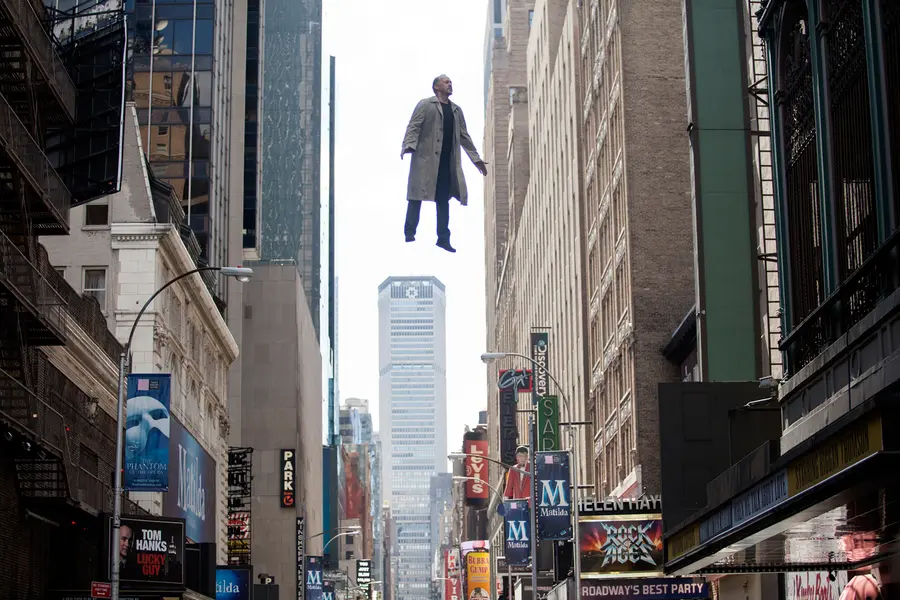

They only share similar material; 〈Birdman〉 and 〈Digger〉 are clearly different. Their protagonists differ, too: Riggan is a washed-up star trying to reestablish himself as a serious actor, while Curtis is already an actor with an established reputation. 〈Birdman〉 overlaps Riggan's story with Michael Keaton's own history, whereas 〈Digger〉 overlaps 'Fossil Fools' with the current moment. Even though the films are quite different, reducing them to 'a story about an actor preparing for the stage' invites misunderstanding. That may be why the filmmakers chose to misdirect.
Letting Viewers Share the Shock
But that alone doesn't account for the risk 〈Digger〉 took. Hollywood knows all too well that withholding information can provoke a negative reaction from audiences. Still, the decision to misrepresent the film's structure suggests the filmmakers judged that deception itself was a necessary element of the viewer's experience.
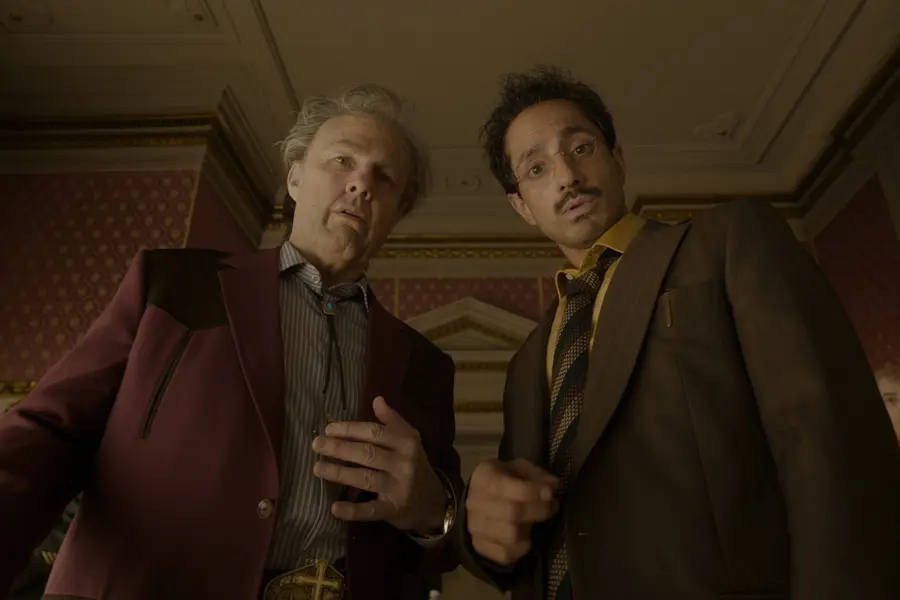
In the film, 'Fossil Fools' is presented as a long-dormant work being rediscovered and restaged. 〈Digger〉 is specifically the rehearsal for the play's first public performance in this new production. In an era when the original 'Fossil Fools'—performed by just three actors—has acquired legendary status, this is the day the new 'Fossil Fools,' fronted by a major star and outfitted with lavish sets, is unveiled. Audiences who watched the performance would have experienced the moment when the 'Fossil Fools' they'd imagined in their heads were utterly dismantled. By withholding the play-within-a-play until viewers could see it unfold, 〈Digger〉 may have been trying to make filmgoers feel the same icon-smashing shock that the play's in-film audience felt.
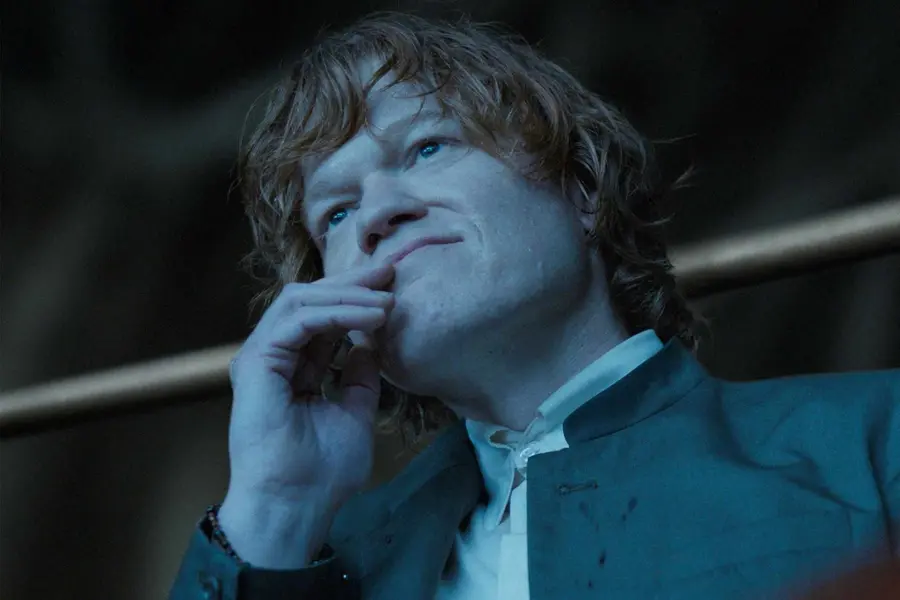
In that way, 〈Digger〉 shatters the audience's image of the film as a 'black comedy starring a renowned director and a movie star.' So why did 〈Digger〉 have to destroy that image? We should look at the film's strangest character, Kenny. Kenny, Digger's nephew and a witness and involved party in the original incident, says it doesn't matter if the production differs from what really happened; he invests to make sure many people see it. His motive is unclear. Money? Fame? Or a genuine desire to revive a masterpiece? For him, the truth isn't the point. What matters is reconstructing the incident from a new perspective and producing an emotional effect on the public watching it. That's the face of capital—or of art—we see in 〈Digger〉.
Using the play-within-a-play device in which 'Fossil Fools' destroys concrete reality, 〈Digger〉 actually comes closer to reality. Kenny's choice is what brings 'Fossil Fools' back in front of an audience. The scope of art we can see is determined by the decisions of people whose identities we do not know. No matter how brilliant the satire, the farce that unfolds within it can only exist if someone provides support. Perhaps that's what director Iñárritu, who borrowed Hollywood's big capital to make 〈Digger〉, wants to say. Whether this film is good or bad, whether the films you've seen before are good or bad, they exist only because of someone's choices and backing; art is formed that way. Or art has persisted until now because of those who provide that support. Either way, by misrepresenting itself, 〈Digger〉 has put a question in the audience's hands. Now it's up to each of us to find our own answers.





![[Photos] Tom Cruise visits Korea for 13th time, makes startling transformation into a potbellied, bald old geezer — speaks candidly about Best Actor Oscar at press conference](https://cdn.www.cineplay.co.kr/w160/q75/article-images/2026-10-02/e09377f5-bf48-440c-b191-cb589270da1f.jpg)


댓글 (0)
댓글 작성
댓글을 작성하려면 로그인이 필요합니다.
로그인하기