


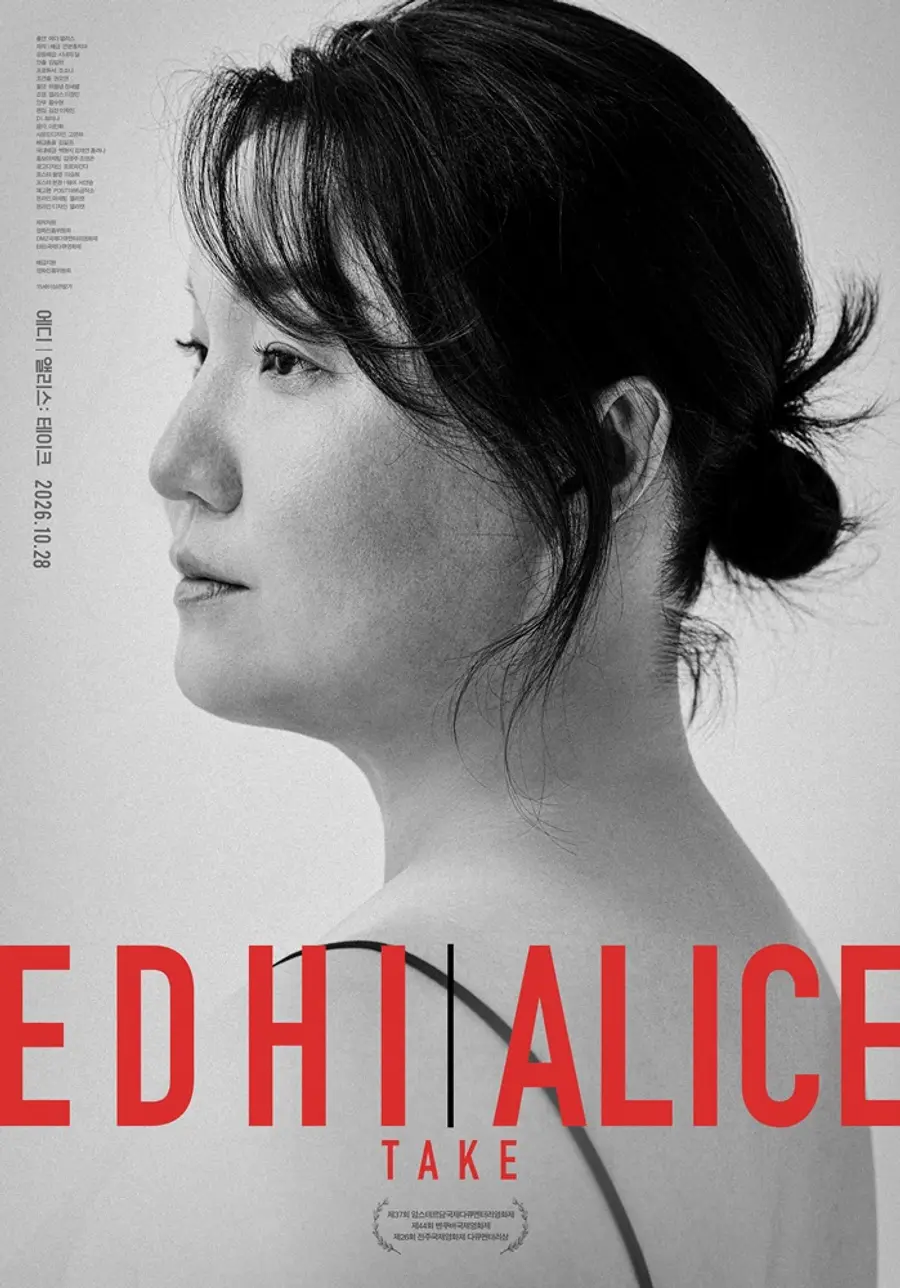

※ This interview with director Kim Il-rhan about 〈Eddie Alice: Take〉 continues from the first article.
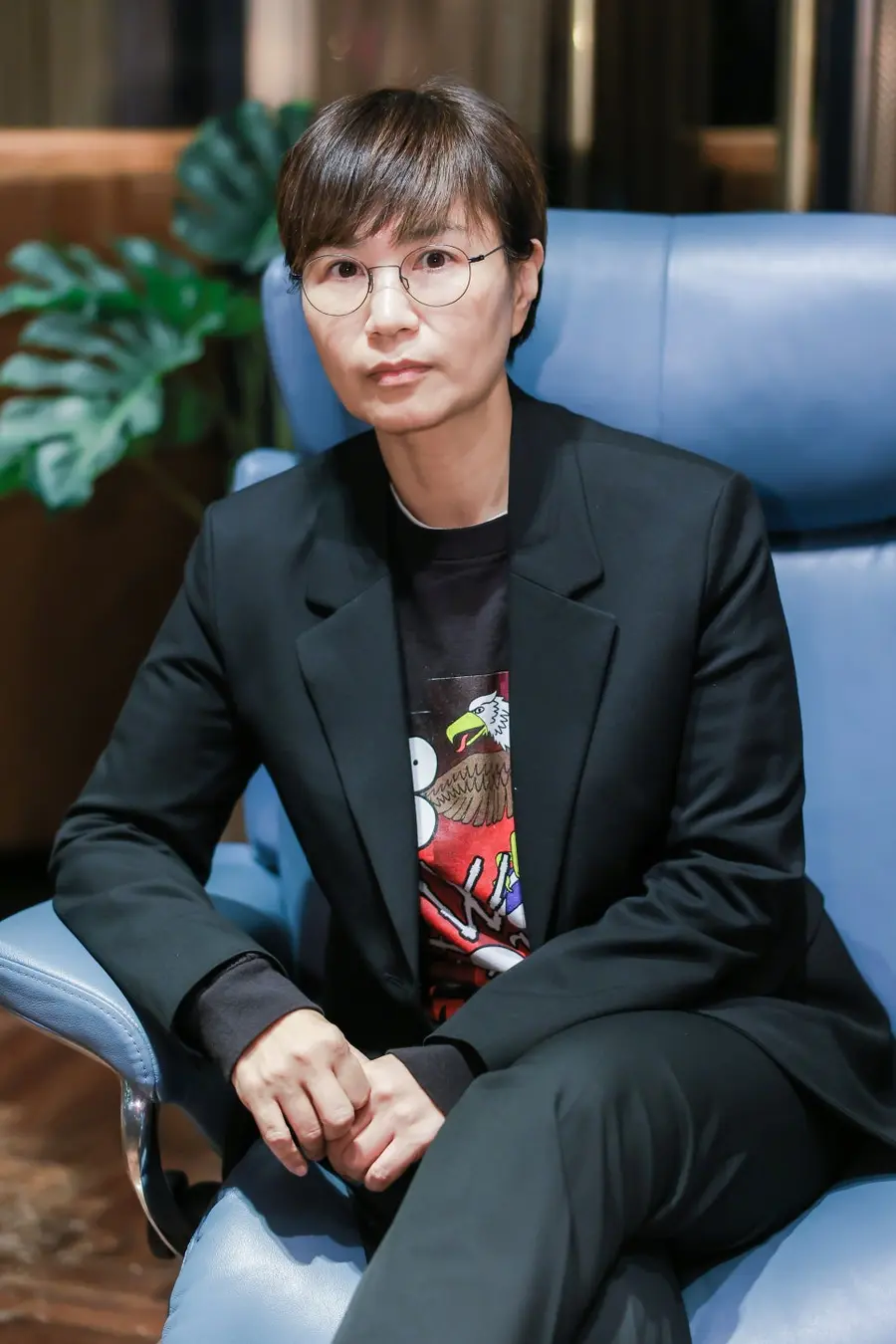
By drawing close to the two people named in the title, Eddie and Alice, the film also seems to invite viewers to compare their choices. In many parts of the film, I noticed that you deliberately observe the two as if they were mirror images.
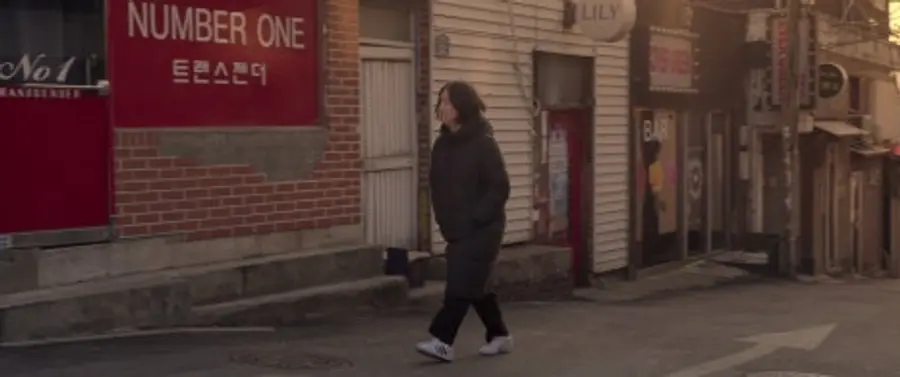
The narratives of Eddie and Alice switch places midway through the film. I thought of it as a hinge: fold it over, and the two sides are almost identical. For example, there’s a nearly identical composition in which Alice passes through Itaewon at night on her way home, while Eddie walks across Itaewon during the day. I thought that arranging the two within the frame and in front of the camera this way would create a space for us to enter. Alice lights Eddie’s scenes. At first, viewers don’t know that the film Alice is making is about Eddie, but they find out later. When that scene appears, I hoped viewers would feel not simply that the two lives were being compared, but that they were complementing each other.
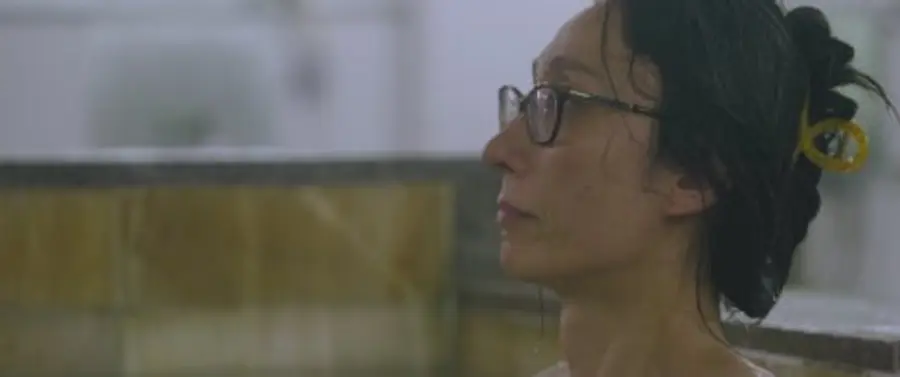
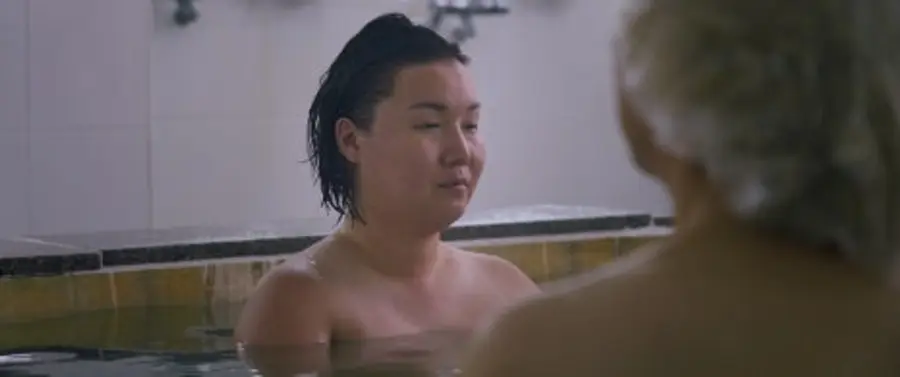
Most of the film follows the spaces where the two go about their everyday lives. The public bathhouse scene is different. It’s a highly dramatized space. The women’s bath is unfamiliar territory for them—somewhere they “wouldn’t have been able to go if they weren’t making a film.” It felt symbolic because it’s a place anyone can enter, yet one from which they had been excluded.
The bathhouse is a meaningful place for Eddie and Alice. For some cisgender women and people with trans-exclusionary views, it’s a space that must not be invaded; it can also be a place that turns trans women into objects of fear, so it’s fraught with tension. But I wanted to show what the women’s bath means to trans women—not as a space where someone invades or is invaded. Alice says she can’t go in, and worries that people will be afraid of her. There are many layers to this, so I thought we needed to show the space from multiple angles, truly from their perspective.
The film shows the two becoming more attuned to their bodies and accepting them. Deciding how to film their bodies—and how viewers would look at them—must have been an important challenge.
When I was making 〈3xFTM〉, I spent a lot of time thinking about how to represent trans men. It was a feature-length documentary about trans men opening in theaters, and I wondered what images I should use to show them. At the time, I took a somewhat solemn approach, framing almost everything from the chest up and focusing on their faces. Whenever people looked at trans men, they focused too much on their chests.
You thought your camera should block that gaze before it could happen.
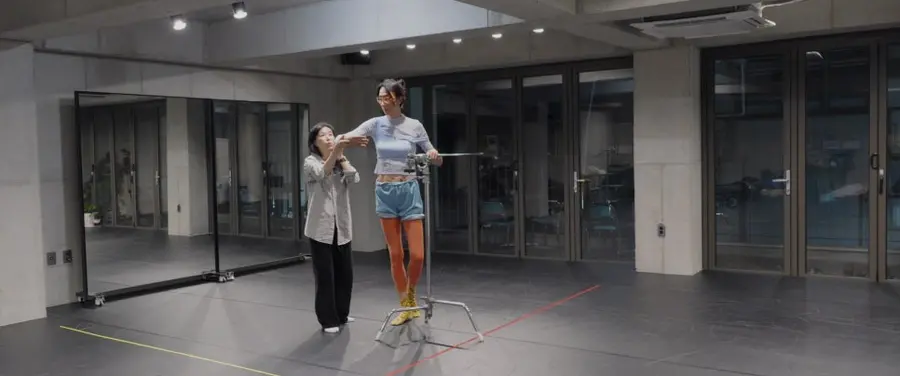
I didn’t want these people to become objects of ridicule, so I filmed them in full shots or focused on their upper bodies. But one day, while watching the film, I realized that the viewers were focusing too much on their faces. They’d look at the close-ups and say things like, “That looks feminine” or “Those eyes look like a woman’s.” Going through those trial-and-error experiences made me realize how problematic and arrogant it is for a director to make judgments before the audience does. Reflecting on that, I came to see showing the body as a question in itself, and asked Eddie and Alice what questions they wanted to raise. We talked through everything together, including how often to show their bodies and where to position the camera when doing so.
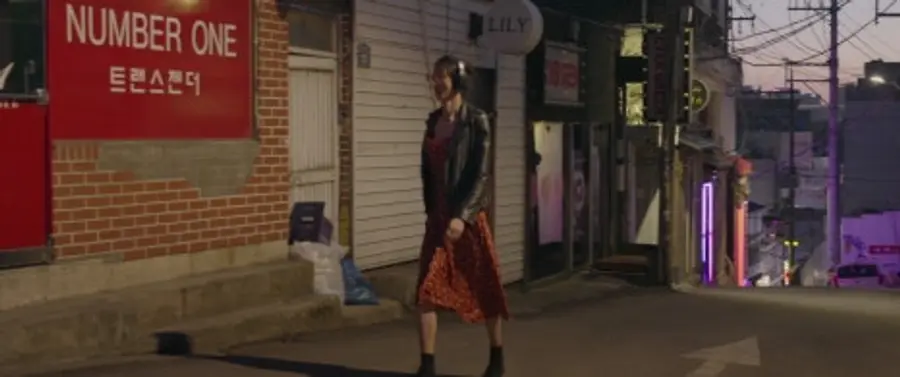
The film opens with a full shot of Alice walking through the streets of Itaewon. The camera work seemed to say, “Don’t look away—look closely at their bodies,” much like the day you first saw Alice. In particular, the bold choice to show Alice in her underwear seemed like a forceful statement of her own will.
Alice thought her small butt gave her a masculine look, so she was doing exercises to widen her hips. But at some point, she said, it became an obsession. She said she appeared in the film because she wanted to keep making peace with herself as someone who was at odds with her body, and that showing her body as it was seemed part of that process. The idea was to show that “this is what a trans woman’s body looks like.” Both of them thought deeply about showing their bodies. They appeared in the film hoping that trans women’s rights would improve and prejudice would disappear, and they kept summoning their courage throughout filming.
Did you suggest filming the scene of Eddie inserting a device into her vagina after surgery for dilation (the regular expansion of the surgically created vaginal canal to maintain its depth and width)?
Eddie said she didn’t know exactly what it was, either. No medical staff had explained it to her. It had been less than a week since her surgery—maybe the fourth day—and we were taking turns caring for Eddie when the second camera operator called me. “Director, Eddie’s dying right now.” I asked what she meant. She said Eddie had undergone some kind of procedure and was in terrible pain. I rushed over and found that Eddie had just finished dilation and was in pain. The scene in the film shows her undergoing dilation for the second time, the following day. We stayed with Eddie in Thailand for about a month, around five weeks, until she had recovered. Watching her in that pain, we all cried with her.
It’s widely known that people go to Thailand for gender-affirming surgery, but there’s a real lack of shared information about the procedures and recovery.
That’s why Eddie wanted to document the process. This is just my speculation, but I think the process brings up complicated feelings for trans women who have had surgery. There’s fear and shame, and they may worry about hearing that the surgically created vagina is “fake,” or about facing hatred because of it. I think those concerns are why this part of the story has been left out. But Eddie said that this information needs to be shared accurately so people can understand what the process means to trans women.
There are brief moments in the film when we see you reacting to Eddie and Alice. It didn’t feel like you appeared simply because the camera angle left you no choice; your presence seemed to offer a clue about “how I’m looking at this subject.”
Rather than my appearing in the film, the emphasis was more on the filming process and the crew being visible. If they weren’t shown, I thought these sensitive scenes might be questioned in ways unrelated to my intentions—people might wonder, “What does this mean?” or “Are they trying to make this look provocative?” I hoped that showing the set and crew as a kind of community would help allay suspicions about what the scenes were meant to do.

Watching those scenes, I also thought of the questions about the relationship between documentary filmmakers and their subjects explored in Lee Chang-dong’s 〈A Possible Love〉.
A documentary seems to take shape to the extent that the director and protagonist make room for each other. The camera can enter only because Eddie gives so much of her life and makes room for us. I have a photo from the first day we filmed Eddie. The cinematographer and assistant director didn’t go near her because they weren’t close yet. But later, the cinematographer filmed Eddie’s dilation scene from very close up. Physical distance and emotional distance inevitably go hand in hand. They narrow over time, as you meet and talk. That process unfolds little by little throughout the film.
Even if you begin by agreeing to make a film together, I imagine there are many moments of doubt at first: What are this person’s intentions? Can I really put 100% of myself out there?
Documentaries are like living things. Whenever the protagonist’s circumstances change, something that was possible before may no longer be possible, and everything keeps changing. So you’re always careful. It’s actually difficult to keep the same cinematographer on a documentary, because filming takes so long and can happen at a moment’s notice. We kept the same crew together for four or five years on this film. Cinematographer Heo Cheol-nyeong worked incredibly hard. Unless he had other paid work or there was an unavoidable situation, he prioritized this film in making his decisions. Bringing in a different cinematographer would have meant the protagonists had to build a new relationship all over again, which would have been difficult, so he worked to maintain a sense of stability on set.
I imagine that careful approach to making the film also carried through to its release. This time, instead of audience Q&As, you planned a lecture series aimed at a specific audience. Called “Cinematic Dysphoria,” it brings together a series of talks on discussions related to transgender people.
With 〈Two Doors〉, box office success loomed large for me. It was a way to confirm that people supported the film. And while what mattered to me with 〈The Remnants〉 was engaging people who cared about the issue in discussion, 〈Eddie Alice: Take〉 has made new conversations possible. These were things that had been difficult to bring into public discussion before, but I thought the film might spark conversations about trans women’s experiences that we could now begin. We’ve put together a panel of experts to talk about a range of topics, including menstruation, sexual pleasure and family planning for transgender people. Rather than give the film a quick theatrical run for a month or two and then stop, I want to keep expanding the discussion with this package.






댓글 (0)
댓글 작성
댓글을 작성하려면 로그인이 필요합니다.
로그인하기