
Find your next favorite work.

Search results for "Documentary Film"

DMZ Docs Budget Slashed 71%, From 3.1 Billion Won to 900 Million Won; Film Industry Rallies in Protest

DMZ Docs Budget Slashed 71%, From 3.1 Billion Won to 900 Million Won; Film Industry Rallies in Protest

29 film festivals and 1,843 industry professionals issue joint appeal as key creative-support programs face shutdown
“More than a simple cutback, this threatens the festival’s very survival”—fears grow over collapse of the cultural ecosystem Gyeonggi Province has slashed next year’s budget for the DMZ International Documentary Film Festival by more than 70% compared with this year, triggering a fierce backlash...
‘A Night in Seoul’: The December 3 Martial Law Crisis, Captured on Film

‘A Night in Seoul’: The December 3 Martial Law Crisis, Captured on Film

A vivid record by the MBC ‘PD Notebook’ team; winner of the NETPAC Award at the Rotterdam Film Festival
At 10:28 p. m. on December 3, 2024, then-President Yoon Suk Yeol abruptly declared “emergency martial law. ” As an unprecedented state of emergency in the nation’s constitutional history was declared, journalists rushed to Yeouido in Seoul.
[Interview] 'Possible Love' Star Cho Yeo-jeong, Part 1: “Ye-ji Is a Character With Pure, Sincere Intentions”

[Interview] 'Possible Love' Star Cho Yeo-jeong, Part 1: “Ye-ji Is a Character With Pure, Sincere Intentions”

Perhaps she meant every word: “I'm trying to love those people. ” Ye-ji (Cho Yeo-jeong) stands at the most ambiguous point in 〈Possible Love〉. Is her love a form of heartfelt solidarity, or merely a means to her own ends. Ye-ji sharpens the questions at the heart of 〈Possible Love〉.
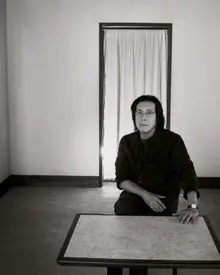
[Interview] 'Possible Love' Director Lee Chang-dong, Part 3: “Each Person’s Moon and Everyone’s Moon—What We Think Before That Unchanging Moon Is Up to Each of Us”

[Interview] 'Possible Love' Director Lee Chang-dong, Part 3: “Each Person’s Moon and Everyone’s Moon—What We Think Before That Unchanging Moon Is Up to Each of Us”

※ This interview with Lee Chang-dong, director of 〈Possible Love〉, continues from Part 2. Despite her circumstances, Mi-ok is portrayed as someone brimming with life. Was there anything in particular you wanted to express through her character. Mi-ok isn't anyone extraordinary.
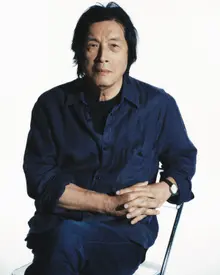
[Interview] 'Possible Love' Director Lee Chang-dong, Part 2: “There Is Always a Line Between When to Point the Camera and When to Turn It Away”

[Interview] 'Possible Love' Director Lee Chang-dong, Part 2: “There Is Always a Line Between When to Point the Camera and When to Turn It Away”

※ This interview with 〈Possible Love〉 director Lee Chang-dong continues from Part 1. I imagine considerable effort went into casting the four actors: Sul Kyung-gu, Jeon Do-yeon, Cho Yeo-jeong and Zo In-sung. Are there any behind-the-scenes casting stories.
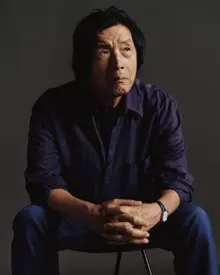
[Interview] 'Possible Love' Director Lee Chang-dong, Part 1: “An Event That Formalized the Idea That Workers' Rights Don't Matter—It Would Change Our Lives, So I Made It Into a Film”

[Interview] 'Possible Love' Director Lee Chang-dong, Part 1: “An Event That Formalized the Idea That Workers' Rights Don't Matter—It Would Change Our Lives, So I Made It Into a Film”

There were several setbacks before this film reached audiences. There was even a moment when he resolved to let it go. Fortunately, however, a global company stepped in, and director Lee Chang-dong's 〈Possible Love〉 finally made its way to viewers.
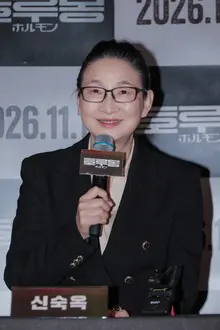
[Interview] 'Horoomon' Human Rights Activist Shin Sugok, Part 2: “Japan's Conscience Saved Me; Minorities Need the Majority's Strength to Fight”

[Interview] 'Horoomon' Human Rights Activist Shin Sugok, Part 2: “Japan's Conscience Saved Me; Minorities Need the Majority's Strength to Fight”

※ This interview with human rights activist Shin Sugok of 〈Horoomon〉 continues from Part 1. In this age of algorithms, people's beliefs and opinions often become even more entrenched. As a human rights activist, how do you think we can break through that.
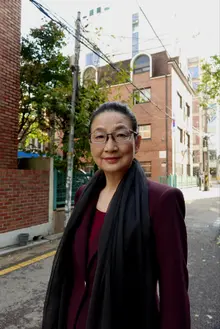
[Interview] 'Horoomon' Human Rights Activist Shin Sugok, Part 1: “Discrimination Persists Because Japan Has Never Examined Its Own Actions and Reflected on Them”

[Interview] 'Horoomon' Human Rights Activist Shin Sugok, Part 1: “Discrimination Persists Because Japan Has Never Examined Its Own Actions and Reflected on Them”

One individual won a legal battle against a corporation. But what followed was not a jubilant cheer, but a sigh of relief at finally being able to catch her breath. The documentary 〈Horoomon〉, opening November 11, retraces human rights activist Shin Sugok's defamation lawsuit against DHC Television.
Setting the Record Straight After a Report Distorted by Prejudice: A Review of 'Horoomon' and the Voices Behind It

Setting the Record Straight After a Report Distorted by Prejudice: A Review of 'Horoomon' and the Voices Behind It

What if, overnight, it seemed the whole world was pointing fingers at you? Could you endure a flood of condemnation based solely on your background, without even a fair chance to respond? One person lived through an ordeal that sounds like something from a movie and ultimately got the chance to...
How Did a Three-Hour Documentary Top the North American Box Office? Meet “You Can See Everything”

How Did a Three-Hour Documentary Top the North American Box Office? Meet “You Can See Everything”

There is no word yet of a release in South Korea, but one documentary’s success in North America has captured the attention of Korean cinephiles. It’s a documentary that runs three hours, yet its poster or trailer is enough to make it unforgettable. The film is 〈You Can See Everything〉.