



In the drama, Young-hwan (Kim Won-hae) asks Ho-jin, a multilingual interpreter, how many different languages exist in the world. Ho-jin replies that there are over 7,100. While what he said may be true, it is not the answer Young-hwan is looking for. "Ding! No. There are as many languages as there are people in the world. Everyone speaks their own language. So, they can't understand each other, hear things backwards, and say hurtful things." Joo Ho-jin is a person with a solid and upright but sharp language. He is someone who is not honest with his feelings, and his worries about the person he loves come out in sharp words. Ho-jin, who struggles to express love, meets Mu-hee, who expresses love indirectly, and embarks on a long journey to truly understand and love each other. In this work, Kim Seon-ho reveals Ho-jin's true feelings with his unique gaze that lovingly looks at Mu-hee, carefully capturing nuances in his words and actions. Each detail of his performance builds up to complete Ho-jin's character arc of accepting both his own and the other's deficiencies. After his previous works 〈When Life Gives You Tangerines〉(2018), 〈Startup〉(2020), and 〈Hometown Cha-Cha-Cha〉(2021), Kim Seon-ho returns with a more mature melodrama, and we had a conversation about the work and the characters.
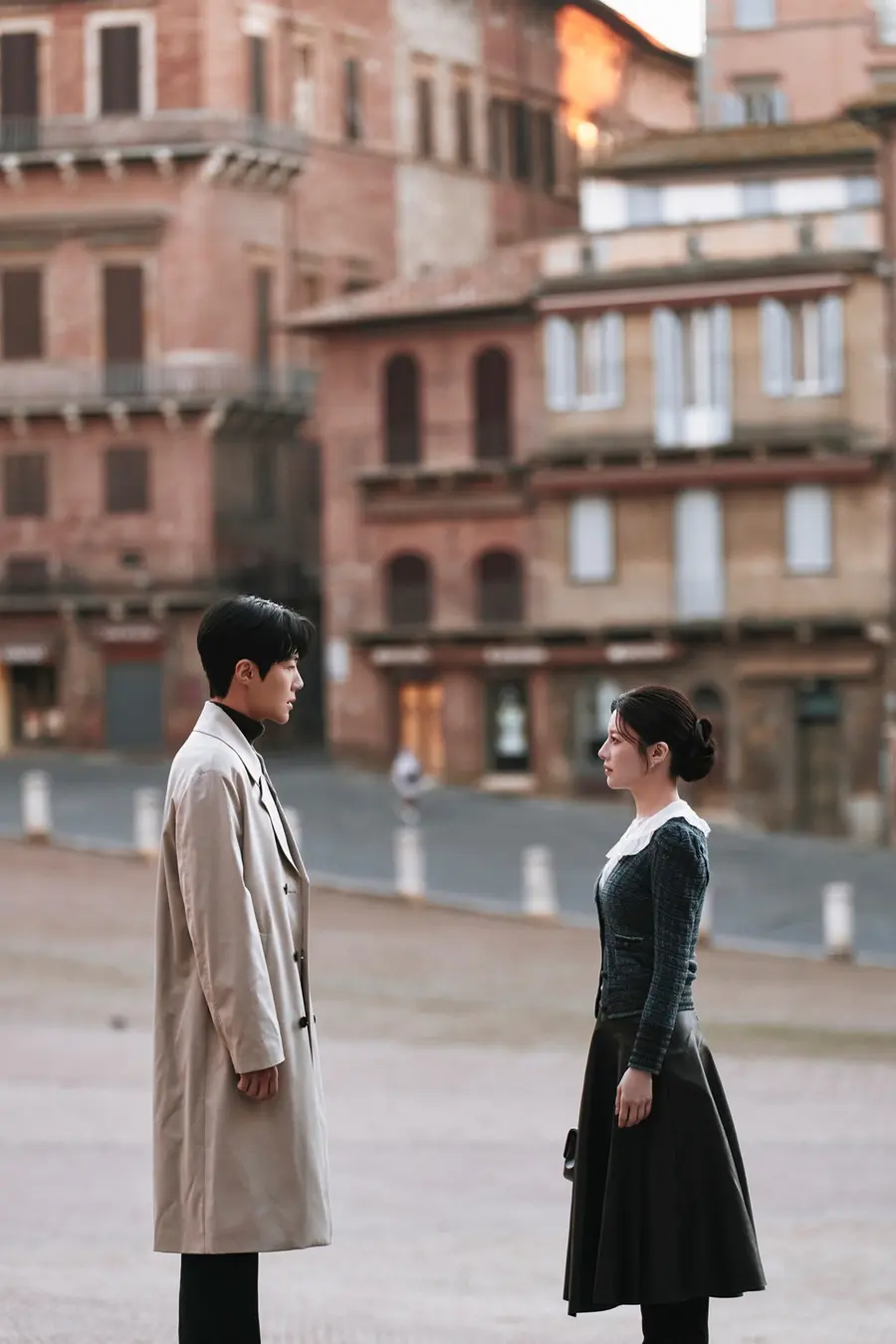
〈Can This Love Be Translated?〉 has ranked 2nd in the global TOP 10 non-English shows since its release, achieving great global success. Please share your thoughts on the release of the work.
All the actors and staff were eagerly waiting for the work to be released. Before that, all the actors gathered together to have a meal with the director. We talked about how we hoped the day would come when we could monitor together after the release, and now that day has arrived, I feel really excited. I’ve seen some reactions on YouTube and social media. However, I’ve been preparing for performances and filming at the same time, so I haven’t been able to sleep much. I had to focus on practice, so I could only see a little of the reactions. Still, it seems like there are many people supporting us, which makes me really happy. It’s wonderful to receive support for the work I filmed.
In your previous work 〈The Childe〉(2023), you showed a bit of English acting. Did that experience give you confidence for this project?
Well, that work gave me a glimpse of possibility rather than confidence. I realized I could do it. But this time, it was really tough. It’s not just one language; I had to use Italian, Japanese, and Korean simultaneously. I read somewhere that when interpreting multiple languages in your head, you have to close the structure of one language. If you don’t, they all come out at once, and you can’t speak either. Apparently, multilingual interpreters really experience this.
So, I think I was really nervous while delivering my lines. I practiced a long scene where a child has an emergency at a Japanese ramen shop, and right after that, I kept messing up my Korean for two hours. I kept wondering why I was doing this. It wasn’t even a difficult line! I even hurriedly took ginseng, which I dislike. But that day was the first time I met (Go) Yoon-jung. It was the first day of filming, and I was like that… Later, Yoon-jung told me she thought, 'That senior must be really struggling.' (laughs)
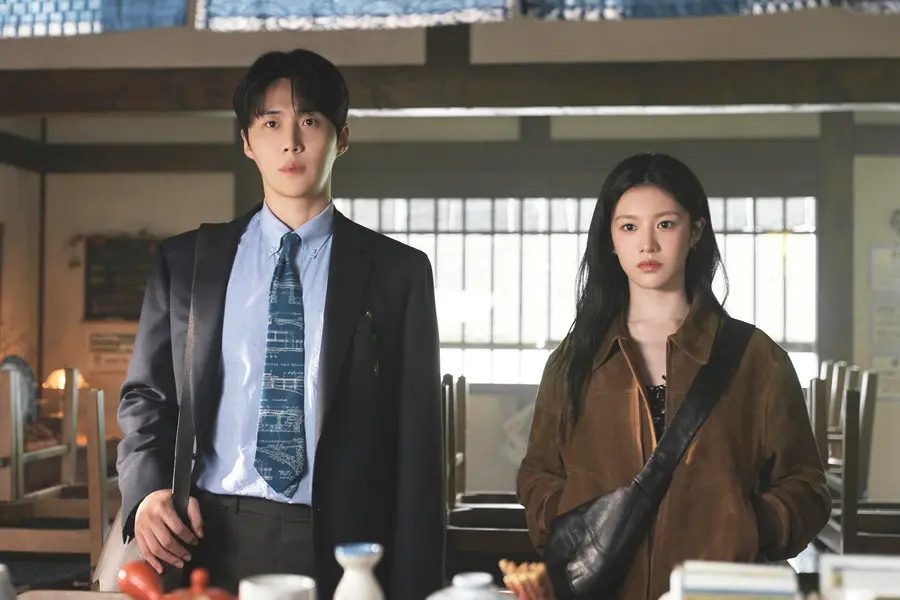
I’m curious about your experience working with actress Go Yoon-jung, who plays the role of Cha Mu-hee.
Yoon-jung is such a great colleague. I was really grateful that she was so open-hearted. She took care of not just me but all the staff. On the first day of filming in Japan, she bought souvenirs and handed them out, asking even the staff she just met what they had for dinner the night before. I never put up walls when working on a project. I believe that’s the only way to communicate well with others, and since we matched in that regard, we could focus on creating the work, which created synergy. We discussed various aspects openly without being closed off, and as a result, we quickly became close, and our acting matched up quickly.

Knowing that the role of a multilingual interpreter would be difficult, was there a specific reason you decided to take on this project?
When I read the script, I was captivated by the line, "Everyone has their own language." That phrase resonated with me. There are times when a work opens my eyes wide. I saw this project as not just limited to love but as a work that could apply to all situations where languages don’t connect, including not just spoken language but also the language of actions and various other languages colliding. I thought this work could touch someone’s heart, which made me want to take on the challenge.
You mentioned that acting in a foreign language was quite difficult. What was the most challenging aspect while studying? If you were to learn another language, which one would you like to learn?
I recently encountered Italian for the first time, and it was more fun than I expected. I learned a little Italian, but now I’ve forgotten it. Please don’t make me say it! (laughs) I can understand just a little. The tempo of Italian is really interesting. The speech is surprisingly fast and energetic. So, I became interested in Italian and would like to learn more.
I studied foreign languages for about four months. I had no choice but to receive the script and practice only that part. The hardest part was syncing Ho-jin’s atmosphere with the tempo of the different languages. Because, usually, when speaking in English, it’s said that it’s good if your voice doesn’t change. Similarly, I thought about how to sync Ho-jin’s voice, intonation, and the other languages, considering breathing, tempo, and speed. I didn’t want it to seem like one person was making too many different sounds, so I think I studied that aspect for a long time. When I told my teacher I wanted to say the line, "Why is the child suddenly sick?" the teacher would show me how to act very quickly and passionately in the native Italian pronunciation. But I couldn’t do that, so I would lower the excited tone a bit and ask, 'How about this level? Is this realistic?' It took longer than I expected to confirm those things.


In the drama, there are many narratives that help understand Cha Mu-hee's past, but there isn’t much explanation about Joo Ho-jin. If we were to infer, could it be that Ho-jin's rational personality is built in contrast to the emotional tendencies of the people around him?
When I read the script, I asked the writer from the beginning. I wanted to know exactly what happened to Ho-jin's mother and father and what deficiencies formed this character. Ho-jin grew up wealthy, but there are circumstances related to his mother, and these were clearly established by the writer. Of course, it can’t be said that the drama perfectly unravels Ho-jin’s narrative, but I think both characters have deficiencies. I created the character based on what I heard from the writer.
There are various ways to avoid getting hurt, as a defense mechanism. I think Ho-jin chose to act as if nothing is wrong. So, he is not used to expressing himself. Therefore, I discussed a lot with the director about how to gradually let Ho-jin be influenced by Mu-hee and at what point he could express himself to evoke empathy from the viewers. We would open the script together and say, 'Shall we try to soften Ho-jin's heart in this scene?' and adjusted it that way. If he remains a solid character, I felt that he would never embrace Dorami when she appears later. To eliminate Dorami, he needs to empathize with this person's pain, so I tried to show moments of wavering in between.
Joo Ho-jin has clear standards and frameworks, and he hides his emotions a lot. I’m curious if this is similar to your actual personality or if it was so different that it was hard for you to understand the character.
I found it interesting while reading the script. I thought, 'This character speaks like this' when I saw the lines of this character. Because I’m an F. Yoon-jung is a T. So, I asked Yoon-jung if she understood when we swapped scripts, and she said she did. Conversely, I understand Mu-hee. So, we decided to swap roles and read the script in countless situations. I don’t know if that helped Yoon-jung, but it was a great help to me. You know, there are times when you think you might get hurt by what someone says. But that person didn’t intend it; they just stated the facts. I also asked Yoon-jung what to do if the other person gets hurt. She clearly said that you just need to apologize. (laughs) By adjusting like this and reading the script differently, I eventually came to think that it was possible for Ho-jin to feel that way.
▶ 〈Can This Love Be Translated?〉 Kim Seon-ho's interview continues in Part 2.







댓글 (0)
댓글 작성
댓글을 작성하려면 로그인이 필요합니다.
로그인하기