


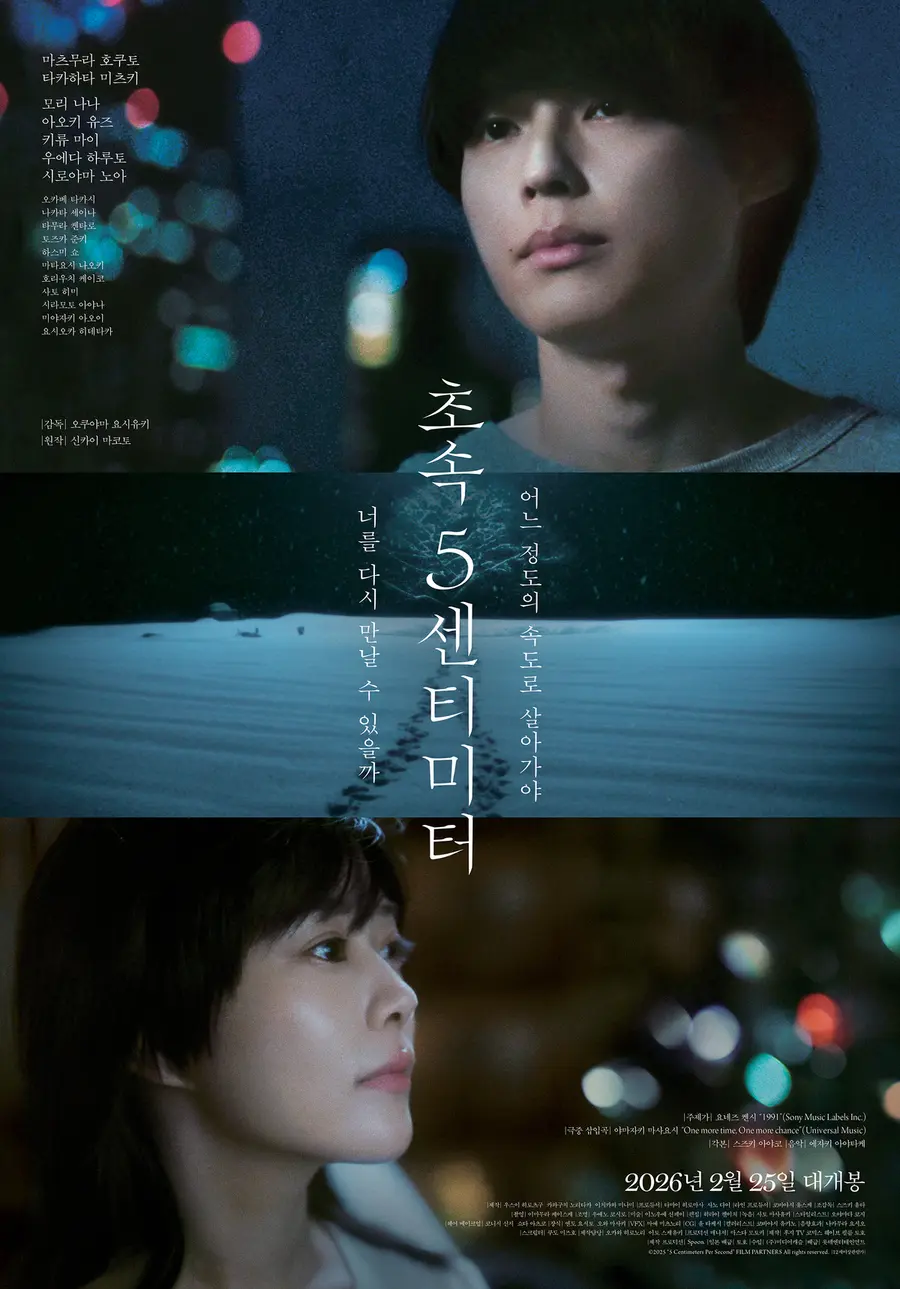
Director Yoshiyuki Okuyama revealed that he rewatched Makoto Shinkai's animation 〈5 Centimeters per Second〉 in his thirties. He states that as an adult, he has come to empathize more deeply with the protagonist Takaki's anxiety and loneliness about the future in the work he revisited. As he mentioned, Okuyama's live-action version of 〈5 Centimeters per Second〉 depicts the feelings of anxiety and regret of Takaki, a child at heart who has not grown up internally, leaving pure memories only in the past. Thus, the story that Shinkai crafted at the age of thirty-three is reborn as Okuyama captures it again through the camera. I compared the key elements of the two works, which resonate with the sense that everything in the world is connected.
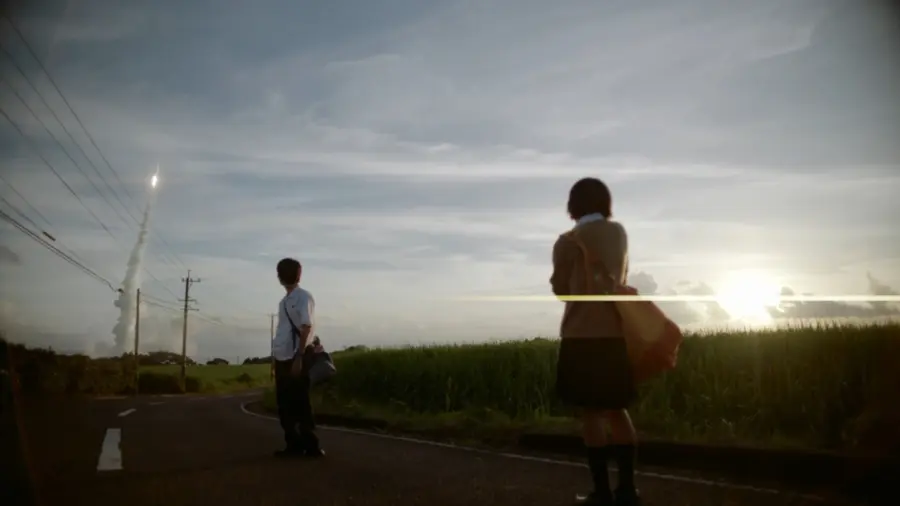
In 2008 Tokyo, Takaki (Hokuto Matsumura) feels a sense of boredom in his daily life, repeating things he never dreamed of, letting each day slip by. Akari (Mitsuki Takahata) often encounters traces of childhood memories in her daily life. As they each live their lives, the two recall the promise made on that day in the winter of 1995, just before turning thirty in 2009. In the spring of 1991, Takaki and Akari met for the first time at a Tokyo elementary school and gradually grew closer, delving into each other's hearts. However, they are separated when Akari moves to another region right after graduation. The two keep in touch through text messages and reunite on a cold winter night during a snowstorm. Under the snow-covered cherry tree, Takaki and Akari promise to meet again here on March 26, 2009, when a comet collides with Earth. However, time gradually erases their promise, leaving only longing and the faint energy of a reunion.
Reproducing the Beautiful Animation
in Stunning Live-Action Landscapes
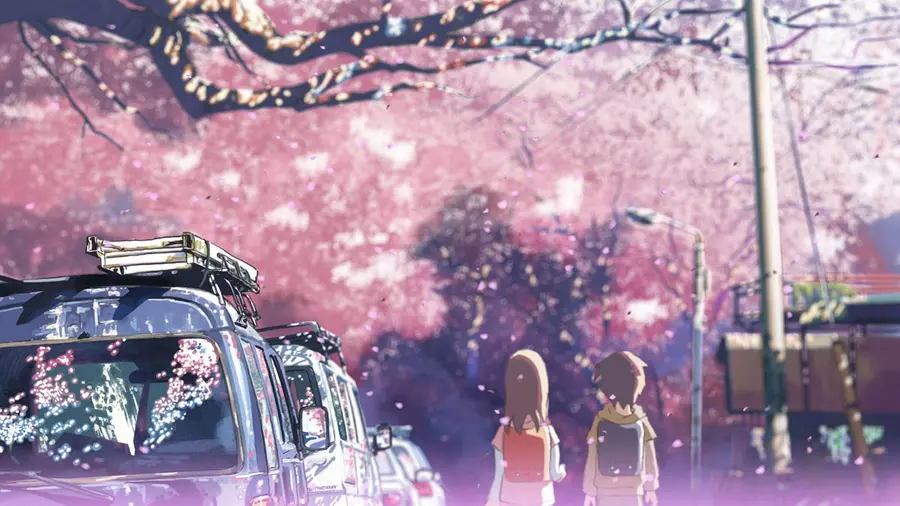
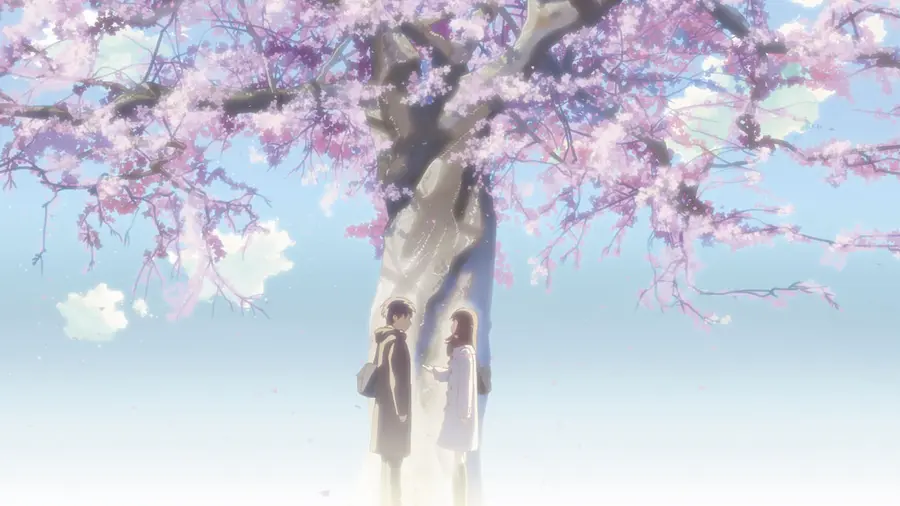
Makoto Shinkai's film 〈5 Centimeters per Second〉 evokes poignant emotions through Japan's unique aesthetic sensitivity, mono no aware (物の哀れ, a Japanese aesthetic concept centered on the transience of things and the world). Takaki's childhood, filled with happiness alongside Akari, blooms beautifully like cherry blossoms but ends quickly, leaving only longing and the desire to meet her again in his life. The cherry blossoms and snow that flutter in the film serve as visual motifs that evoke this mono no aware, symbolizing uncommunicated messages like Takaki's letters carried away by the wind, which cannot be fully expressed in words. The images of cherry blossoms and snow visually express the emotional distance created by the passage of time and physical separation, as they drift further away from that moment without clearly confirming each other's feelings. Thus, the cherry blossoms and snow in 〈5 Centimeters per Second〉 do not merely add a sense of season to the film but mediate emotions and nostalgia that cannot be reduced to language. The poignant sense of loss and nostalgia felt in the original work stems from the characters' emotions, which remain frozen like snowflakes in Shinkai's animation.
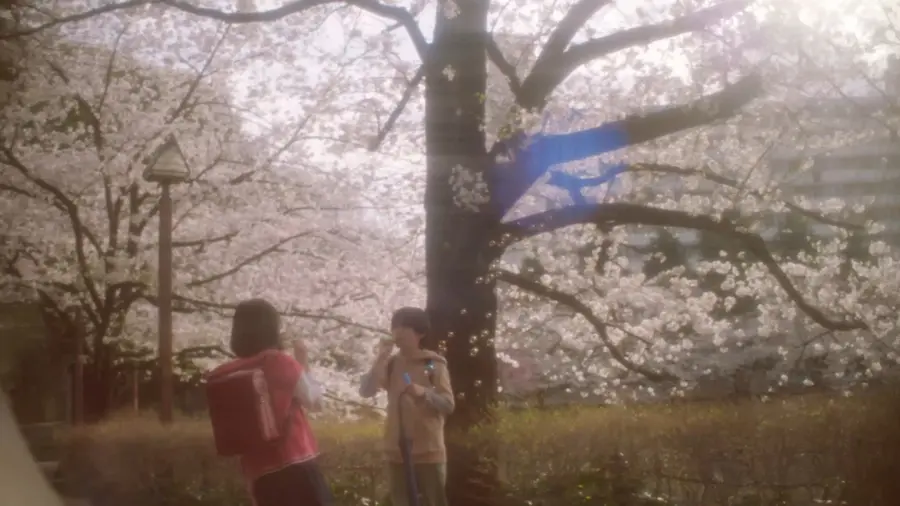
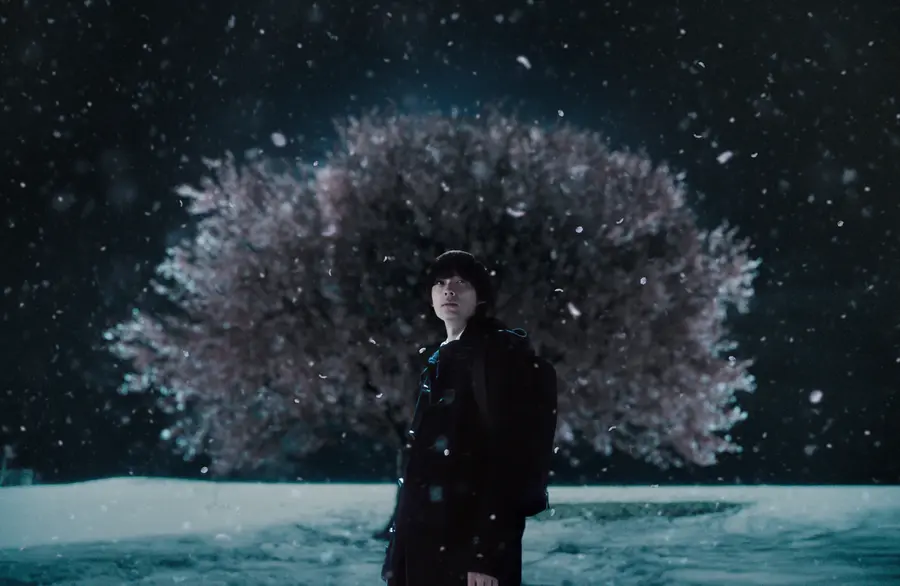
Yoshiyuki Okuyama's live-action adaptation successfully translates Shinkai's beautiful landscapes into the concrete beauty of reality. Okuyama meticulously captured the landscapes and seasonal changes of various regions in Japan by primarily filming on location in places like Tokyo and Tanegashima. The cherry blossoms, summer night skies, the moon over power lines, snow falling in the city, and the lights of crosswalks and station platforms, all captured on 16mm film, express a deep ambiance that embodies the beauty unique to live-action. Above all, he paid great attention to preserving the important visual motifs of cherry blossoms and snow from the original work. The textures created by filming real cherry blossoms and snow turn them into physical obstacles intertwined with the characters' emotions rather than mere backgrounds. Additionally, the scene where cherry blossoms transform into snow using VFX confirms the beginning of a separation, moving the audience's emotions. However, this VFX sometimes feels overly explanatory, diminishing the poetic space of the original work.
"Takaki will be okay from now on"
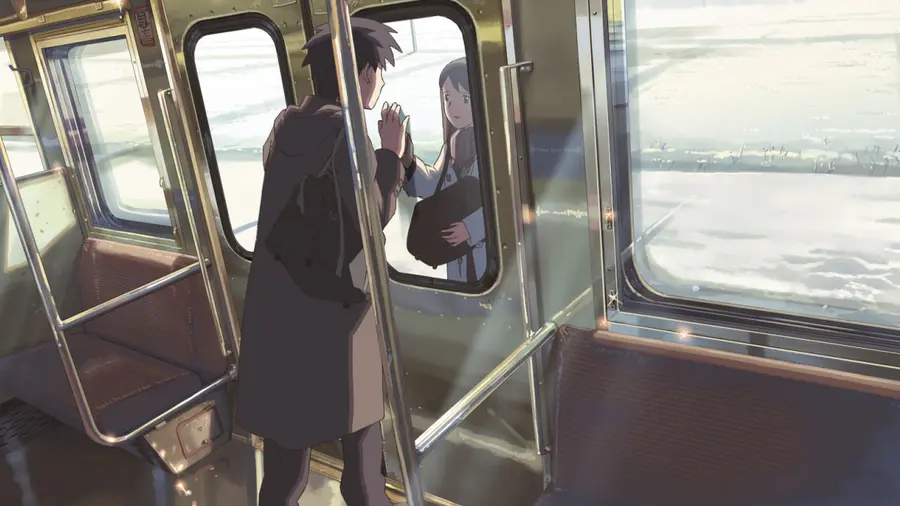
Makoto Shinkai's 〈5 Centimeters per Second〉 continues the lineage of works that connect everyday issues of 'me and you' composed of men and women to extraordinary problems like 'the crisis of the world' and 'the end of this world,' similar to his previous short film 〈Voices of a Distant Star〉 (2002). In the original work, Takaki imagines the loneliness of a spaceship drifting through the darkness of the universe. At the end of that daydream, there is a planet where the spaceship is destined to arrive. In Takaki's daydream, Akari exists on that planet. For him, the desire of the spaceship to delve into the deep depths of the universe and uncover the secrets of the world, along with his unreachable dream of loving the universe, overlaps with his desire to meet Akari. Okuyama inherits the sensibility of the world depicted in the original work. In the live-action version, twenty-nine-year-old Takaki speaks to his former teacher about the sensations he feels between the world and himself. "It's like a bad premonition. After seeing a truly beautiful landscape, many unwanted things have happened to me," he says. He seriously believes in the various coincidences that accompany misfortune and fortune, considering them as evidence that the world and he are connected. Takaki's personality traits reflect the characteristics of the world, where the limits of the protagonist's self-awareness are akin to the limits of the world. In the live-action version, Takaki continues to indulge in the universe and seeks traces of his happy childhood spent with Akari. For him, the longing for the universe and the unreachable Akari are equally considered unattainable, weighing down his current life.
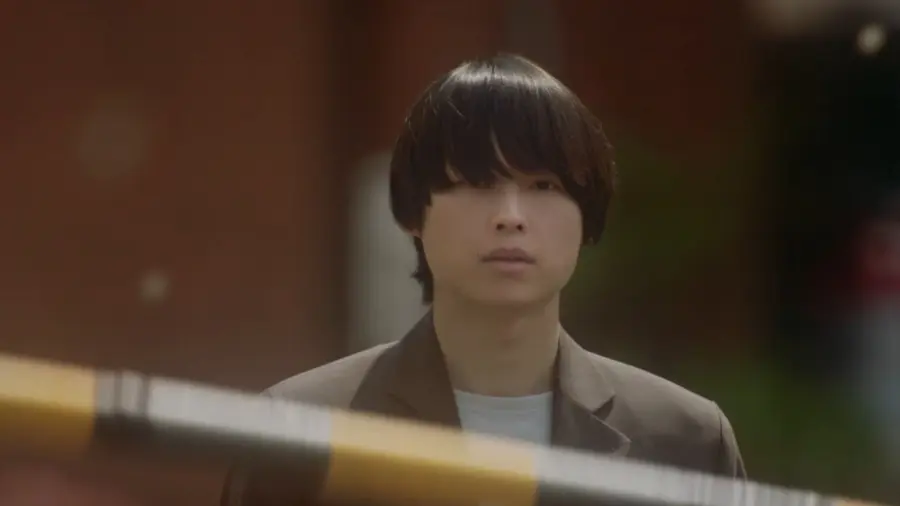
However, Yoshiyuki Okuyama imagines and adds narratives omitted in Shinkai's animation, complementing the original's ending. In an interview, Shinkai stated about his work, "I wanted to depict Takaki's growth as he moves on from his first love. However, I realized that such intentions were not sufficiently conveyed and reflected on that. There were many impressions like 'I was just sad' and 'I was so shocked that I couldn't get up.'" (Refer to 「Talking about Makoto Shinkai」, Naoya Fujita, Seong-woo Jeon, Yoda, 2024, p. 82) The original work, which focused on conveying the imagery and feelings rather than explaining the characters' narratives, failed to communicate the growth of Takaki that Shinkai originally intended to the audience. Okuyama's film shows Takaki's growth through narratives where he becomes a programmer at a science museum, faces the breakup with his ex-lover properly, and expresses the sadness he has harbored for a long time to others. The live-action Takaki is becoming a good adult, just as Akari told him he would be a "wonderful adult."

![[Photos] Song Hye-kyo, Lee Jung-jae, Lee Byung-hun, Jeon Do-yeon... Netflix’s 10th Anniversary Celebration Unveils 2027 Slate in Korea for the First Time: ‘What’s Next?’](https://cdn.www.cineplay.co.kr/w300/q75/article-images/2026-10-26/fa6f1d6d-1a12-4731-8920-ff12b9e9ee54.jpg)
![[Premiere Ratings] Ahn Hyo-seop’s ‘Final Table’ Opens at 1.9%… Why the Genius Chef Was Furious](https://cdn.www.cineplay.co.kr/w300/q75/article-images/2026-10-26/9ad424b2-9eab-4c73-9219-1365ad541930.jpg)



댓글 (0)
댓글 작성
댓글을 작성하려면 로그인이 필요합니다.
로그인하기