


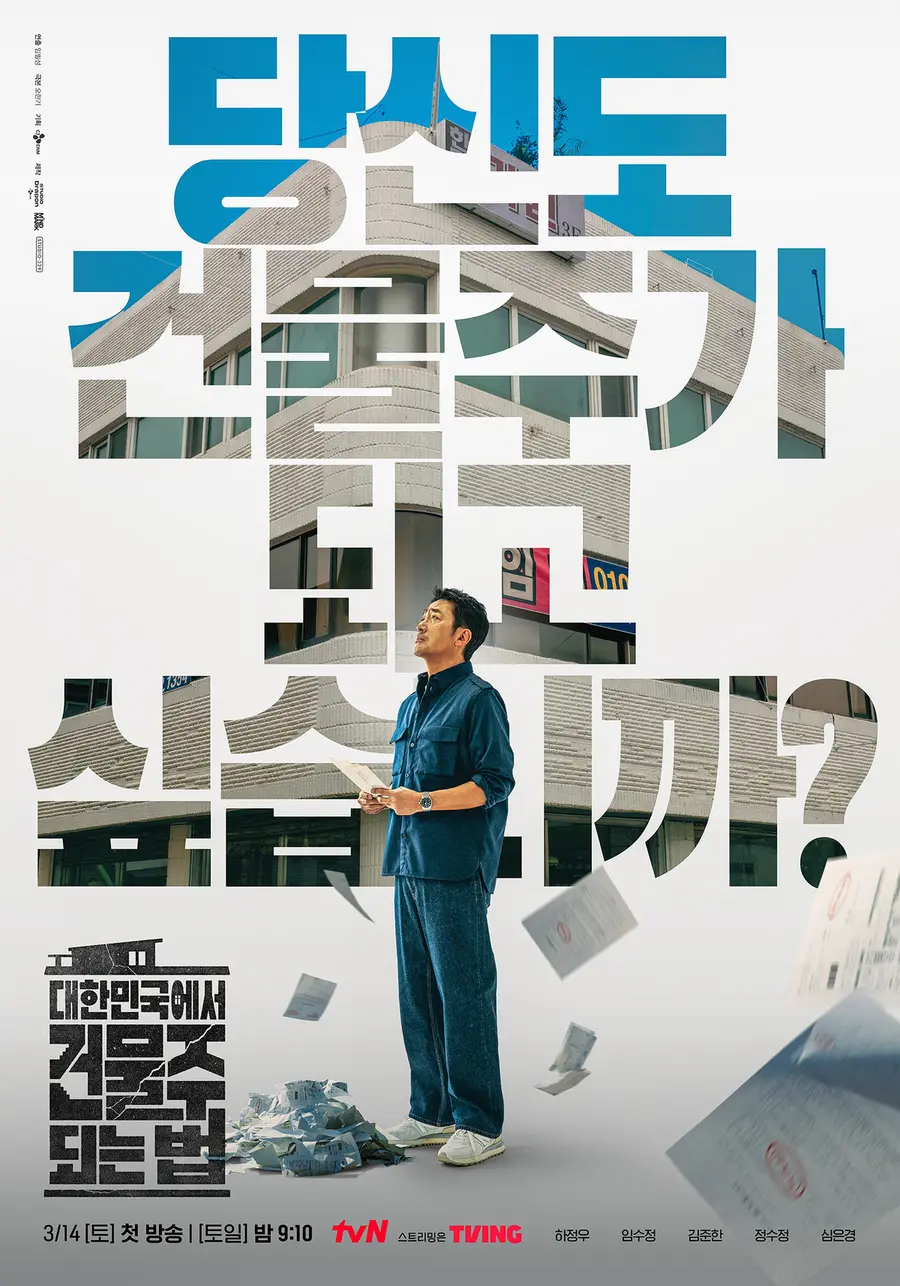
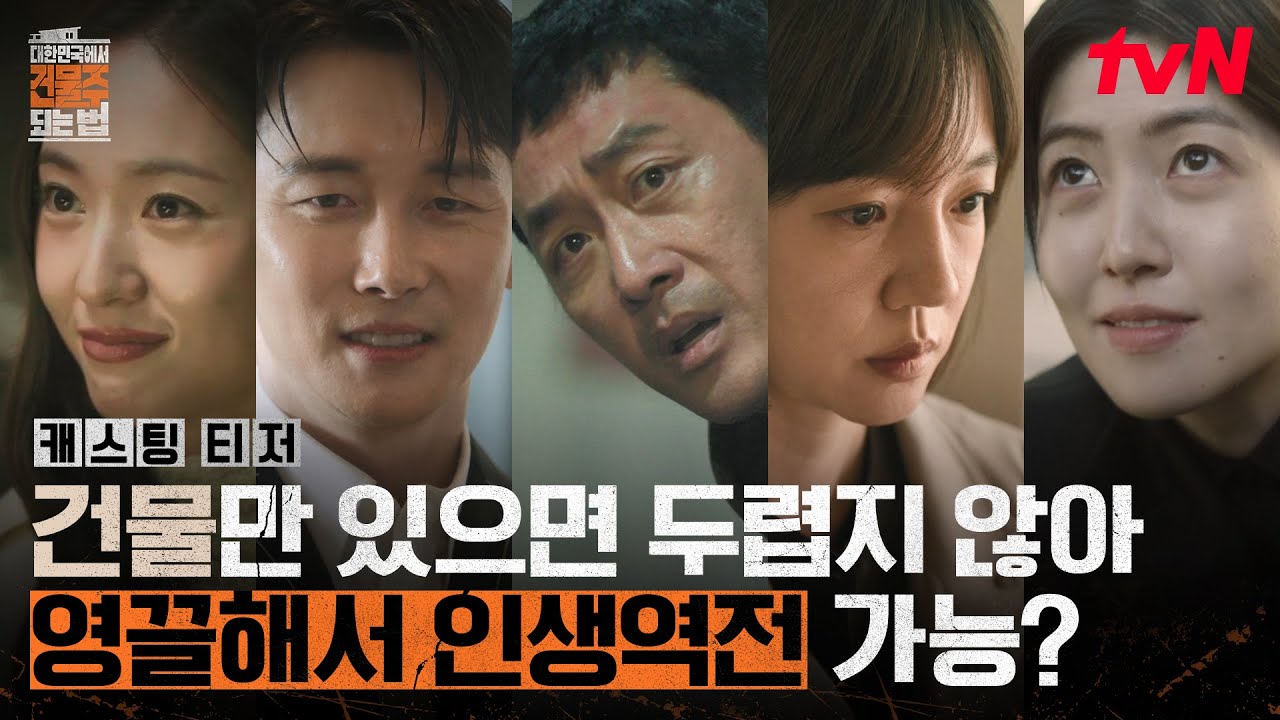
〈How to Become a Landlord in South Korea〉 is being watched with great interest. It aired through episode 8 over the weekend, and yet even after passing the halfway point of this 12-episode series, it’s still a drama that’s impossible to predict. It’s a drama that’s impossible to predict. Even when you ask what the highlight is, it’s hard to pin down any one point. From episode 1, each installment unfolds as an unrelenting chain of major incidents. The detective investigating the case dies, and then a real-estate executive dies. After killing off whoever they kill in each episode, only a few characters remain. And now even a licensed real-estate agent gets killed and exits the story. This is the first time since the shock delivered by Steven Soderbergh’s 〈Contagion〉 that the drama has gone this bold in eliminating characters. Over there, it was an irresistible force called a virus—here, it’s murder driven by the characters’ own decisions. So it’s scary in a different way, too.
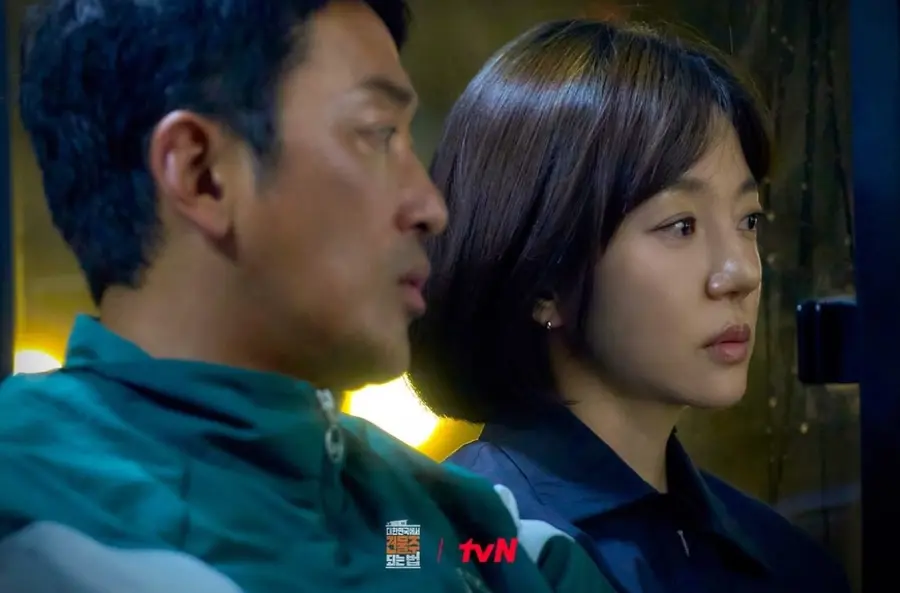
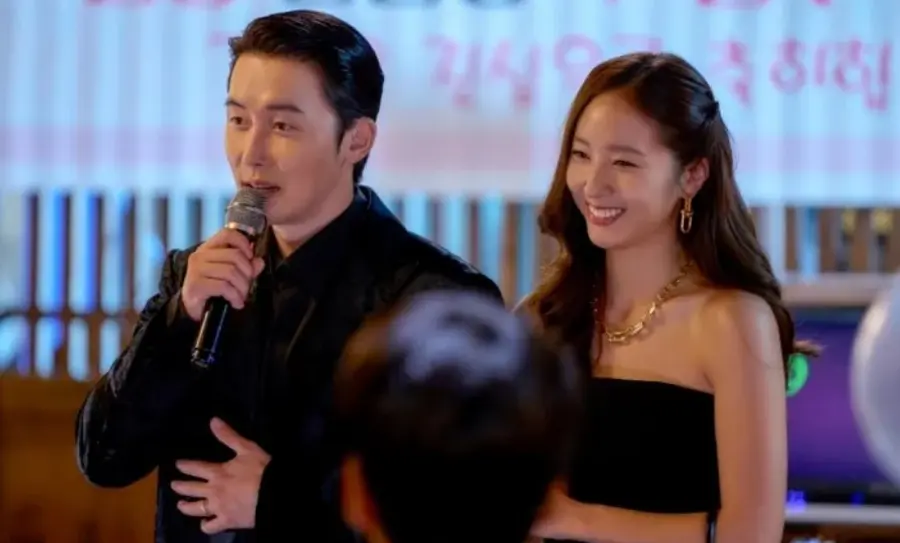
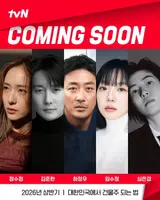
Who’s it going to kill next? Even as it stays rooted in crime and thriller, it also branches out into full-blown melodrama. Ki-su-jong’s (Ha Jung-woo) wife, Kim Seon (Im Soo-jung), is having an affair with her closest friend, Min Hwal-seong (Kim Jun-han). Min Hwal-seong covets his mother-in-law’s money, kidnaps the wife, and uses Ki-su-jong’s position—no, uses Ki-su-jong himself, luring him in through a scheme that pretends to be a kidnapping, treating him as an unwitting “borrowed hand.” During the chaos of the kidnapping incident, Min Hwal-seong is injured and rendered unconscious. Meanwhile, Ki-su-jong realizes his best friend was trying to use him. Even after barely surviving, he’s still plotting to deceive his friend again. Kim Seon, having committed adultery, pushes her own immorality aside so she can deal with the situation first, and then sides with her husband’s crime by saying he “did his best for the family.” With the characters all turning into this kind of person, who is there even to trust?
If it were a conventional noir, the most awful character would be “Yona” (Shim Eun-kyung), an employee of a global money-lending racket, Real Capital, that “squeezes money” out of Koreans involved in redevelopment and land speculation—but she’s so clear-eyed about her crimes that there’s no trace of a shadow afterward, and she ends up looking like a transparent criminal. Dysfunction, and then getting pulled right back into the middle of ordinary Seoul—everyone, no matter who, is ready to trade money and ethics! 〈How to Become a Landlord in South Korea〉 is a drama that shatters the current-day success myth of “If you own just one building in Seoul, you’ve succeeded.”
I guess I expected something along the lines of 〈The Story of Mr. Kim Living in a Self-Owned Home in Seoul Working at a Big Company〉. It sounded like a story about Ki-su-jong, the landlord who bought a building after leveraging his finances to the max—and the woes that come with that. But once you peel it back, the development is completely different. Of course, Mr. Kim is an executive at a big corporation. Still, if the work were portraying the tragedy of an eternal office worker in a way that draws empathy, that might have worked. But Ki-su-jong doesn’t. First, there’s the natural distance you feel from someone who’s a landlord. Then there’s how readily he gets pulled into Min Hwal-seong’s kidnapping scheme. And if you add his plan to keep committing crimes—imprisoning the tenants so he can secure funds for his daughter’s study abroad—empathy becomes unlikely. It feels like he’s stepped into the world of criminals in a homegrown crime noir, like 〈beasts that just want to grab even a straw〉—not the world of a drama that contains the realism of Mr. Kim.
〈Man’s World Forever〉 〈I Live by Self-Sufficiency〉 and other works by novelist Oh Han-gi, who has crafted stories that combine real materials, imagination, and humor, have met the genre sensibility of director Im Pil-sung, who has also directed 〈Antarctic Diary〉 and 〈Hansel and Gretel〉. 〈How to Become a Landlord in South Korea〉 could be seen as a genre crossover—a bizarre kind of drama—that connects two worlds you’d never expect to meet in one single series. Director Im Pil-sung, who made extraordinary characters move within cinematic devices for both good and evil, transfers those familiar genre setups into the realistic people of Korean society as they are. A terrifying drama where every single character is a villain—so it’s “nice to meet you, but you’re new here,” right?
Fast pacing, daring developments, action and crime, back-and-forth between thriller and melodrama—this is definitely genre flex. Director Im Pil-sung shows every episode with storytelling craft that feels like genre cinema, thanks to a character lineup and plot turns you haven’t seen before. Because the structure takes materials drawn from reality and gradually pulls you into a genre world that’s increasingly far from reality, the “betrayal” some viewers expected—the kind of familiar developments—makes it hard for everyone to agree, and opinions aren’t exactly unanimous. Even so, if you approach it with different pacing in mind, the charm of this work can be appreciated in an interesting way.
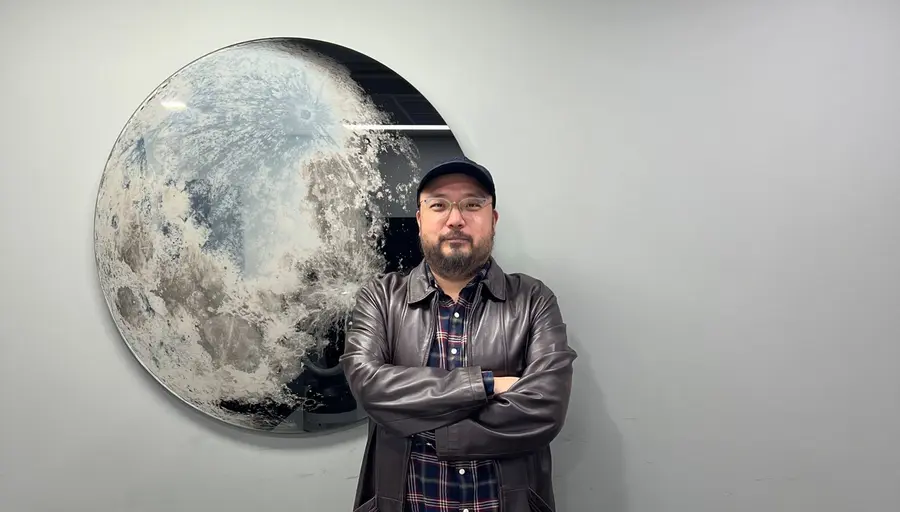
The process by which a 46-year-old landlord who thinks he’s doing “his best” in every moment ends up directing that “best” only toward the family’s desires—leading to disaster—is more chilling than any kind of fear. I can’t stop thinking about why Director Im Pil-sung’s work keeps bringing me back to the thematic awareness of the Coen brothers’ 〈Fargo〉—the story of Jerry, a man in North Dakota who derails and destroys everything because he’s blinded by desire, set in 1987 right in the middle of Seoul. I asked Director Im Pil-sung about his choices and worries up to the point of meeting him and working on directing the drama—what did “best” mean, and what did he choose?
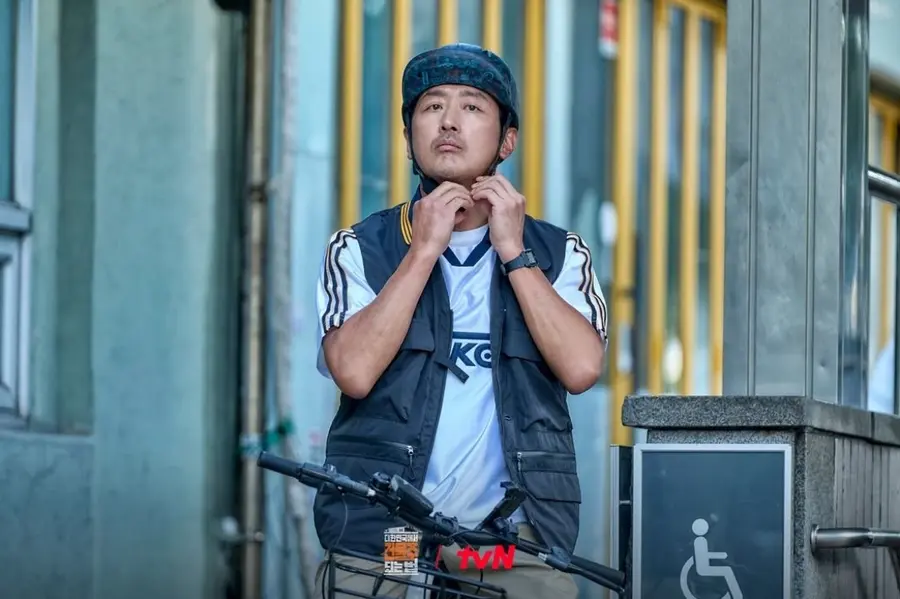
We’ve already passed the turning point out of a total of 12 episodes. We’re not keeping any of the characters alive in each episode. The shock is pretty big..
The development is fast, and lots of characters show up, too. It keeps going like that all the way through. And then there’s an even bigger catastrophe. What’s clear is that what we’ve poured out so far isn’t the end.
Among the remaining characters, many viewers even predict Da-rae (Park Seo-kyung), Ki-su-jong’s daughter, as the most likely twist character. Somewhere between the absolute battle of pure evil and the absolute arrival of good—right? (Laughs)
It won’t head in the direction you’re thinking. (Laughs)
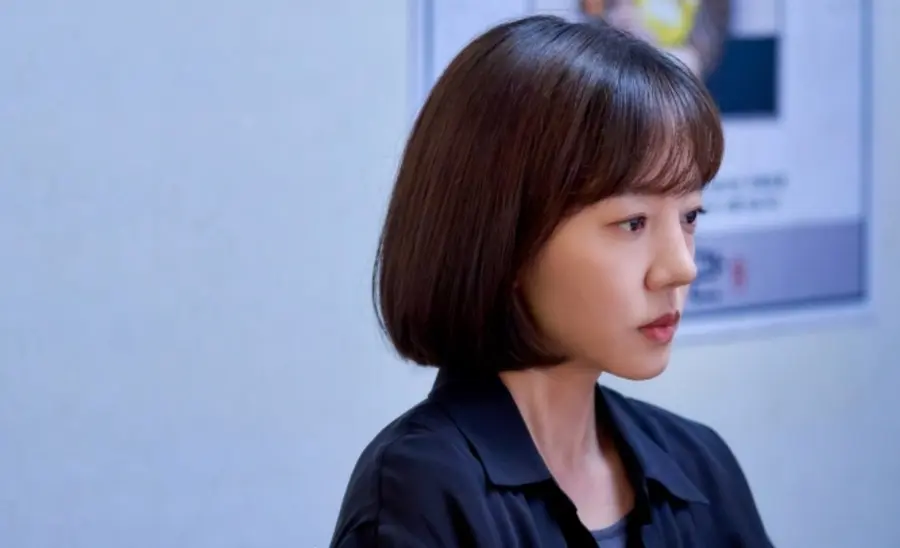
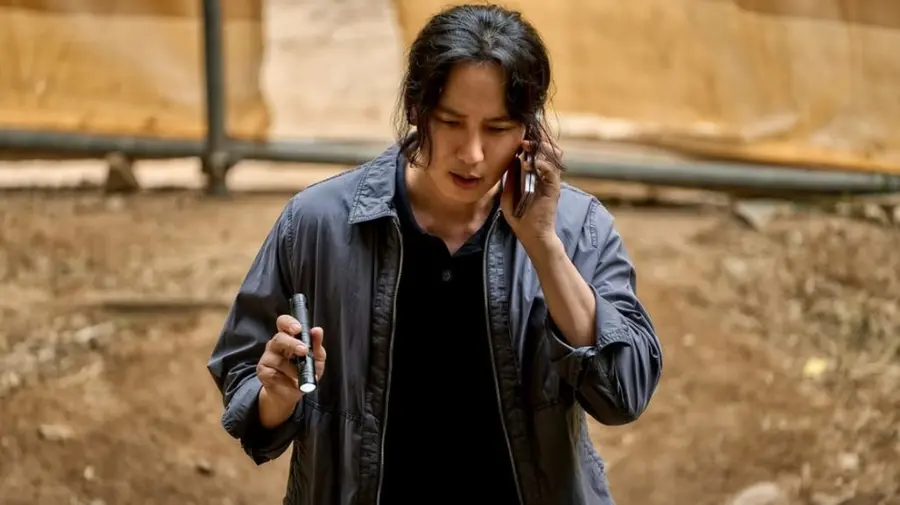
At this point, ratings are inevitably a matter of interest. The gap with viewers has to be converted into numbers, after all. Where do you think that gap exists?
Around 7% is where you can say it’s in the stable zone and has gotten a good response. It would need to be double that compared to now, but the viewership rate is still disappointing more than I expected. At the studio, reactions to the work itself were very positive. Many people also praised it as fresh and distinctive—something that isn’t easily attempted in dramas. Everyone had high expectations, but in the end, you sometimes hear the story that it became a slightly more niche, almost “mania” kind of drama that matches what genre fans like. There can be several reasons. For channel dramas, midway commercials interrupt the flow, and you have to wait a week for the next episode. For a genre piece like a thriller, flow matters a lot, but it’s not easy to untangle that part. Because of that, many people seem to binge-watch it on OTT platforms like Tving or Wavve instead of watching live.
Another point of critique is plausibility. For example, in episode 6, there’s a part where a detective chases Soo-jong and then quickly moves on to a different incident—those are scenes that need explanation. There aren’t just a couple of criticisms about parts that don’t feel smooth in the way the story unfolds like that.
That was something I worried about. On one hand, I kept having to balance the idea that “If we try to explain everything, the flow dies.” I worried about it constantly on site. The parts that were lacking, we tried to supplement with additional scenes. But even those scenes raise questions like, “Why would they act like that?” So even in the later half, we kept trying to fix those parts—by filming additional scenes and revising the script—so we could reinforce at least a minimal level of plausibility. Still, if you try to explain everything all at once, the flow breaks. So we chose a structure that leaves some things as questions for the audience and then wraps them up in the later half. I think we worked with the mindset that if you watch to the end, the “setups” will all be paid off.
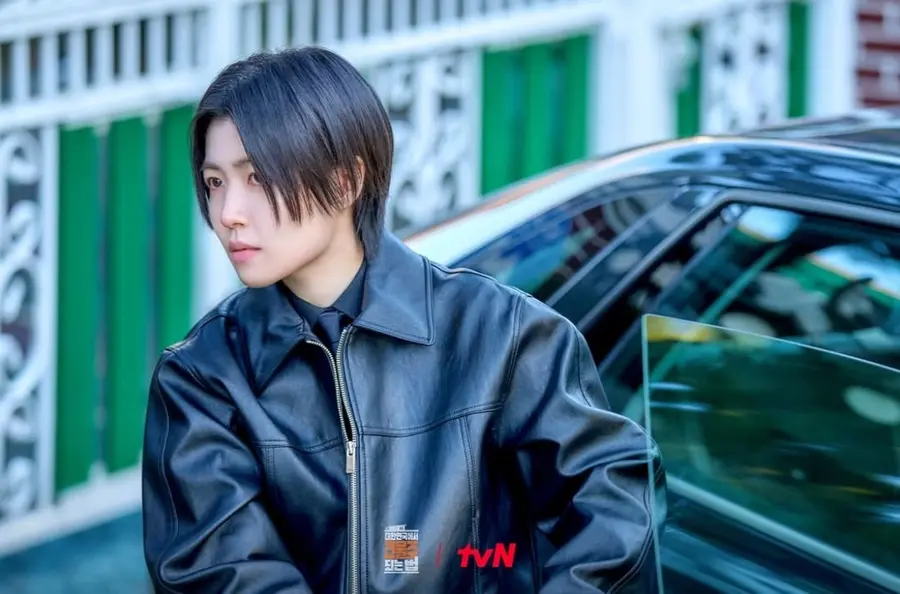
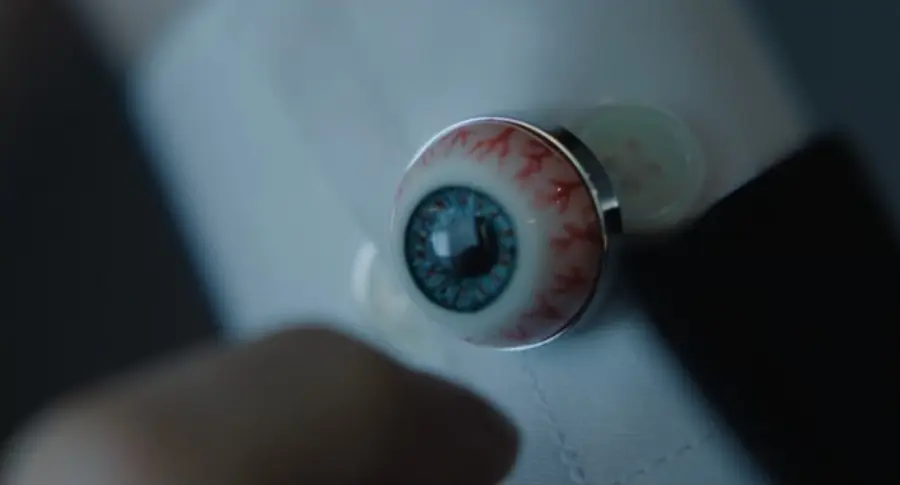
It’s a weekend prime-time slot for a weekend drama series—Saturday and Sunday. But I also think it’s not an easy time slot to get a genre-forward work to land compared to a drama that feels familiar to a wider audience.
There was a lot of worry about that. I also felt that the Saturday/Sunday 9:10 p.m. slot isn’t an easy time slot to handle genre dramas. Also, we saw quite a few discussions within the production team about how to schedule such a dark genre drama on TV.
You’ve directed some episodes from the Apple TV+ series 〈Dr. Brain〉 (2021), but this is the first time you’ve directed a drama in a full-on way. It must have felt quite different from film work in many ways.
The biggest difference was pacing. I approached this thinking of it as a 12-hour feature film, but in a series, consumption is divided into one hour each week. I think that difference also shaped how viewers reacted. There are parts where we chose a structure that resolves questions in the later half rather than immediately. It felt too “movie-like” at times. But in dramas, there are many cases where they don’t give you the time to wait for that. I wonder if that’s where the gap with viewers came from.
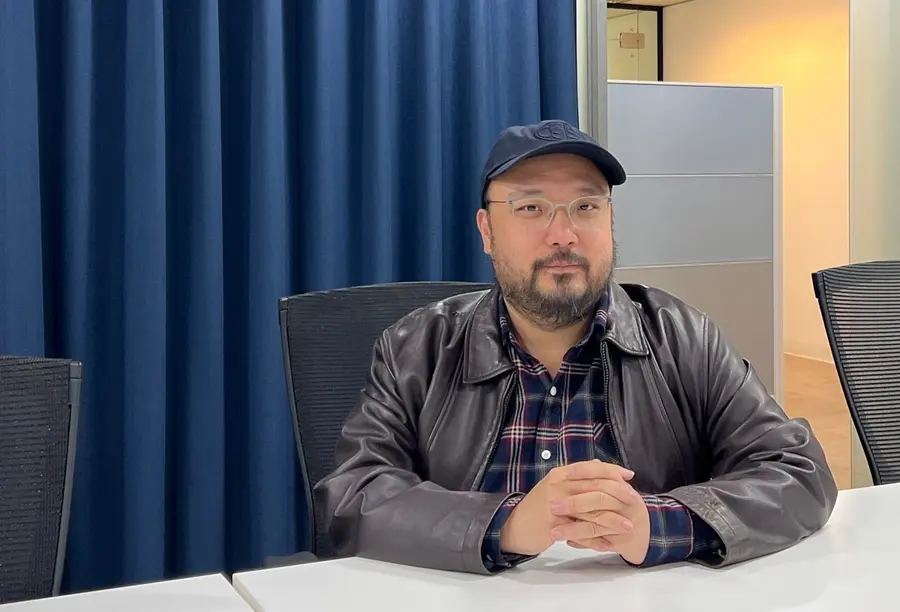
This work mixes in such a wide variety of elements that it’s close to a “genre flex” of almost everything—drama, crime, noir, horror, and black comedy included. In particular, in some scenes that depict Ki-su-jong’s uneasy psychology while carrying out the crime, I found it interesting that the director’s horror sensibility came through.
Of course, I think the genre tastes inside me—like horror sensibilities or action styles from the 1980s and 1990s—were things that naturally had to come out. But this time, I didn’t have the room to think, “I need to bring this out.” Since the filming environment was so tight, I just worked by pulling out whatever I had inside me in a straightforward, intuitive way. There were days when we filmed as many as 8 pages in a day; by the standards of other series or dramas, that’s a pretty large amount of material. As a director, I didn’t focus on the greed of “I should show my own color.” Instead, this time I focused on completing the work as a professional director. I didn’t have time to think about other things or take my eyes off the work.
What stands out is that this is an original series by writer Oh Han-gi, not a webtoon or novel adaptation. How did you communicate with the writer?
When I was offered this project, that part felt very fresh. Nowadays, there are a lot of webtoon-based works. When I received the script, it was already up to episode 7. Out of all the scripts I’ve received over the years, it was the most enjoyable. I also felt confident that with this script, good actors could be cast. And because the structure makes every character feel like a protagonist, it felt even more appealing. I remember thinking, “I have to move quickly before it goes to another director.” (Laughs)

댓글 (0)
댓글 작성
댓글을 작성하려면 로그인이 필요합니다.
로그인하기