



![A still from the movie ‘My Name Is’ [Lets Film · Aura Pictures provided]](https://cdn.www.cineplay.co.kr/w900/q75/article-images/2026-04-02/affde9f4-4494-4f08-a50b-9d76e47b7249.jpg)
There are stories we try to bury—but we shouldn’t. And there is a director who makes sure to pull such stories back up, rekindling the public’s memory. The director for 〈My Name Is〉, releasing on April 15, is Director Jeong Ji-young. Director Jeong Ji-young has boldly woven into her works sensitive points in South Korean society up to now—such as the partisans(〈Southen Army〉), the PTSD of a Vietnamese war veteran(〈The White War〉), and the forced interrogation carried out under an authoritarian regime(〈Namyeong-dong 1985〉). With 〈My Name Is〉 once again, she draws out a case that has been repeatedly rediscovered and reexamined in modern Korean history through the story of a mother and her son. Here are three movies that are great to watch before and after meeting 〈My Name Is〉.
〈Jiseul〉
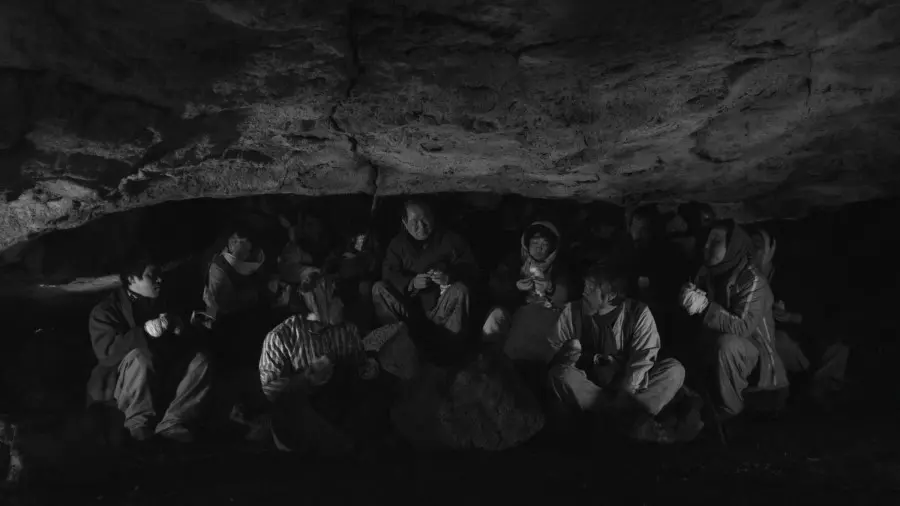
Without mentioning it up front to prevent spoilers, it’s fairly well known that 〈My Name Is〉 deals with Jeju’s April 3 Incident. And when you talk about the April 3 Incident, this film can’t be left out. Director O Myeol’s 〈Jiseul〉 not only tackles a story that has been largely ignored in the film world, but also won the Jury Award (World Cinema Dramatic Competition) at Sundance—becoming the first Korean film to do so, and drawing attention that an independent film could hardly have imagined.
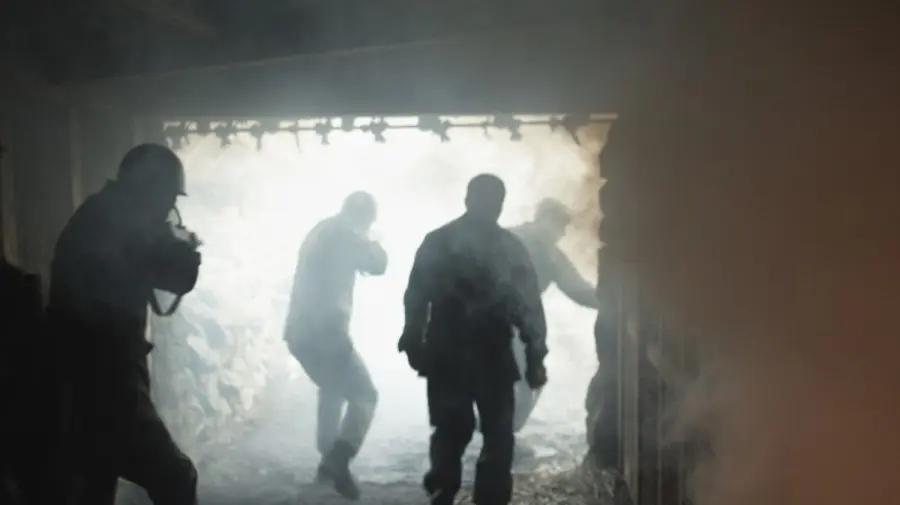
At its core, the film depicts the incident without being confined to Jeju Island’s regional specificity. Growing up on Jeju himself, Director O Myeol cast actors who could naturally use the Jeju dialect, bringing even more of the atmosphere of the time to life. Since the title 〈Jiseul〉 is the unfamiliar Jeju word for potato, you can sense—throughout the film—an attitude that feels rooted in Jeju itself. The movie isn’t satisfied with just describing or recreating the incident; its ending goes one step further, which is also striking. Of course, some responses noted that there were many elements that could lead to misunderstanding, since there’s no context before or after the April 3 Incident—but that also makes the film’s strength clearer: it brings an incident that had barely been highlighted in modern history at the time up to the surface.
〈Hannang〉
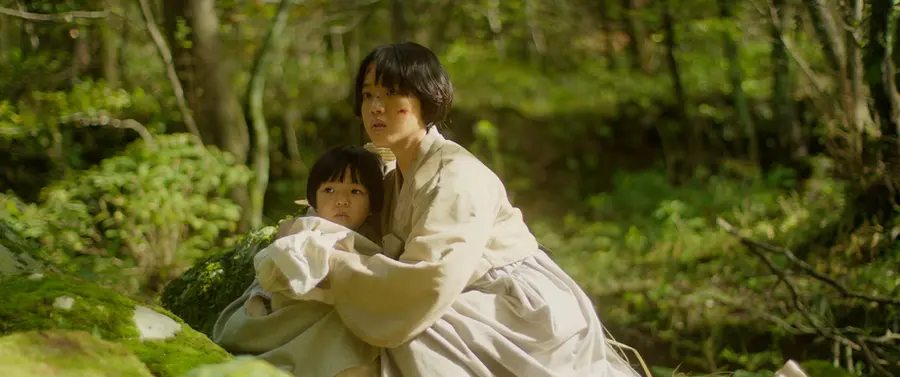
In a sense, 〈Hannang〉 sits right between 〈Jiseul〉 and 〈My Name Is〉. If 〈Jiseul〉 adopts a cinematic form that turns into a ritual offering to comfort the spirits of the dead, and 〈My Name Is〉 expands violence from the past into the present through the story of a mother and her child, then 〈Hannang〉 looks at the period’s reality more closely and with greater detail. 〈Hannang〉, which follows the time that Ajin (Kim Hyang-gi) and her daughter Hae-saeng (Kim Min-chae) endure while surviving amid the Jeju counterinsurgency operation, includes not only the victims’ perspective but also that of the perpetrators. Even among the South Korean military suppression forces, there are people who suffer, and there is also a women’s battalion that threatens displaced people who are trapped in their ideals, in the same predicament. In this way, 〈Hannang〉 minimizes bias as much as possible, instead focusing on the people who were swayed without understanding anything.
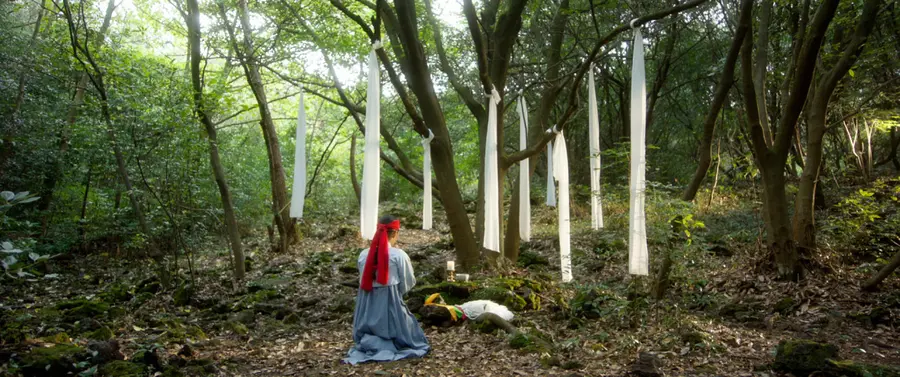
Director Ha Myeong-mi, who handled the screenplay and direction, isn’t from Jeju herself, but she lived there for more than 10 years and decided to turn the Jeju April 3 Incident into a film. Because it wasn’t a project that began with a light heart, she dug through and dug through materials from that time, capturing the spaces that became the backdrop of the real incident—and placing the language preserved in records into the dialogue. To deliver the old Jeju dialect as realistically as possible, she cast 10 language consultants. As a result, even Jeju residents who attended the preview responded, saying it was “perfect.”
〈A Small Pond〉
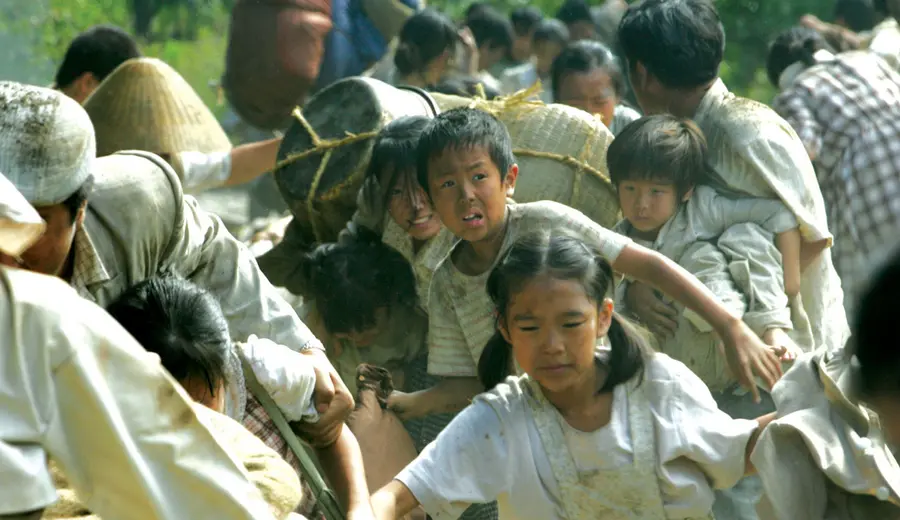
Although 〈A Small Pond〉 doesn’t deal with the Jeju April 3 Incident, it can be placed on the same line in that it portrays the violence of war—massacres of civilians by soldiers. It adapts the “No Gun-ri Incident,” which took place in Yeongdong-gun, Chungcheongbuk-do during the June 25 War, into a film. What sparked the most buzz during the making of 〈A Small Pond〉 was that theater director Lee Sang-woo took on the challenge of film direction, and that to support him, countless theater actors came to the set—even if only for a few seconds. (The film, however, maintained the perspective that the U.S. soldiers who met these residents face-to-face were simply following orders.) Since it was originally a case committed by U.S. forces, the film—difficult to secure financial support or investment—could only be released after quite a long time. As a work aiming for “a movie where everyone in the village is the protagonist,” the shock of an ordinary everyday landscape being swept away, and a tragedy that suddenly erupts, hits even harder. The seasonal atmosphere in the film makes you realize this is a story about our time in our country—something different from other foreign films.




![[Press Preview First Reactions] “My Name Is” Cineplay Reporter’s Star Ratings](https://cdn.www.cineplay.co.kr/w160/q75/article-images/2026-04-02/07303159-e61b-45f8-949e-50176ab7f90a.jpg)
![[Photo&] Film Honored with Standing Ovation at the Berlin Film Festival, 'My Name Is'—Press Screening and News Conference 'On Site'](https://cdn.www.cineplay.co.kr/w160/q75/article-images/2026-04-02/727d617f-ccc6-4500-abfc-96ea6e6ddb9b.jpg)
댓글 (0)
댓글 작성
댓글을 작성하려면 로그인이 필요합니다.
로그인하기