



※ The interview with 〈Gunche〉 director Yeon Sang-ho continues from Part 1.
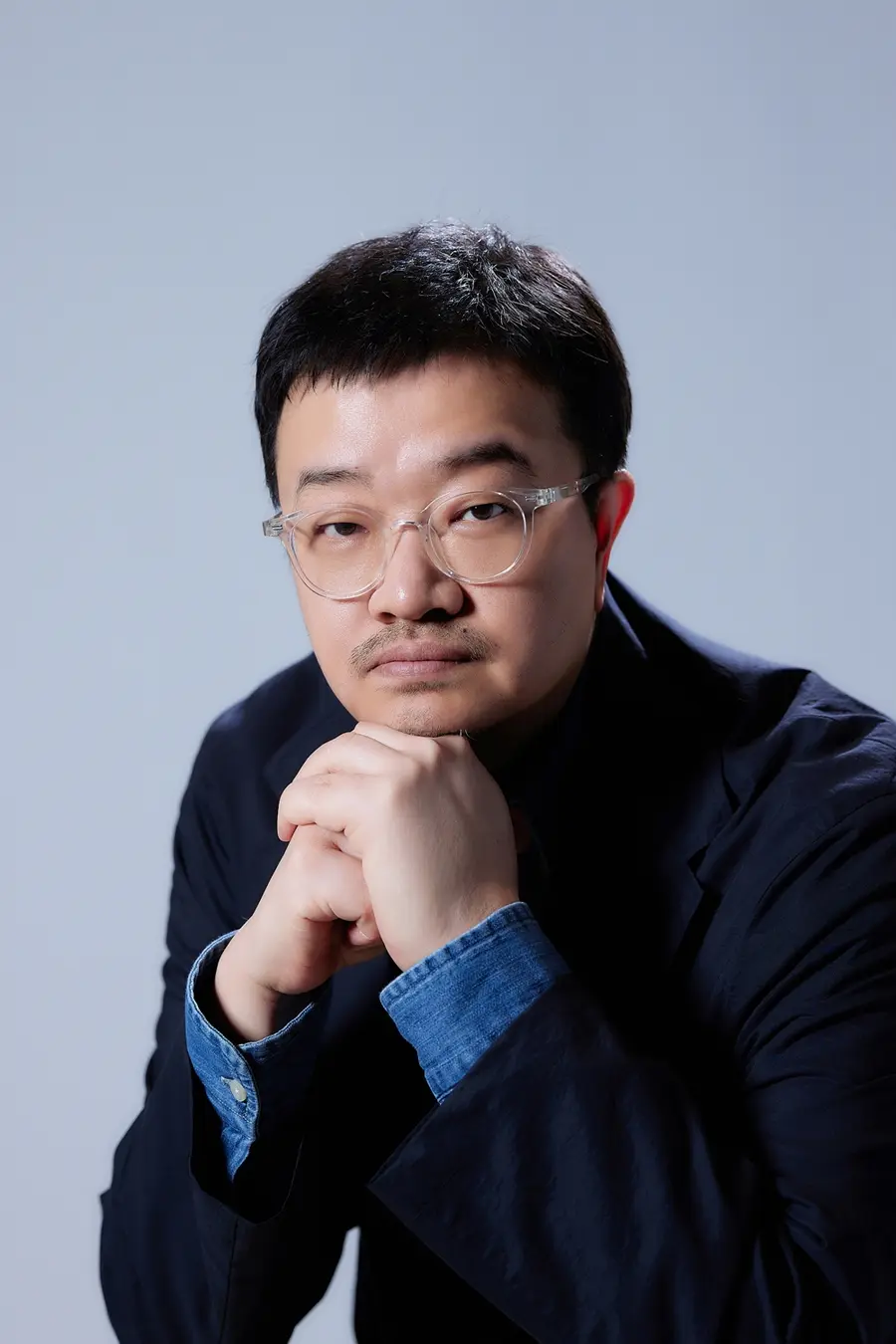
It's been 10 years since 〈Train to Busan〉. Did returning to zombies come with any pressure?
"I didn't come in thinking, 'I have to do something new.'" Writing with writer Choi Kyu-seok, we talked along the line of 〈Hellbound〉 and I sketched a sentence like 'the powerlessness of individuality felt within beings gathered by common thinking.' It wasn't a zombie story from the start. Then we thought it could be a zombie story, and we decided to tell it that way. We didn't approach it with the idea of 'we must do something with zombies.' If you were to compare 〈Gunche〉 to other films, I thought it resembled 〈Invasion of the Body Snatchers〉 (1978)."
〈Gunche〉 is, in effect, a movie where the zombies are the protagonists. You could be seen as the emblematic figure of Korean zombie cinema.
"I'm like Mun Ikjeom—the historical figure credited with introducing silkworms to Korea. (laughter) You could jokingly call me 'the Zombie Mun Ikjeom.'" He added that since 〈Train to Busan〉 there has been an expectation worldwide for Korean zombie works. "That's for sure. I'm proud of that. I hope it continues. Recently I released 「Doctor Apocalypse」 with writer Jeon Geon-woo, and that's also a zombie story—about a surgeon who operates on zombies."
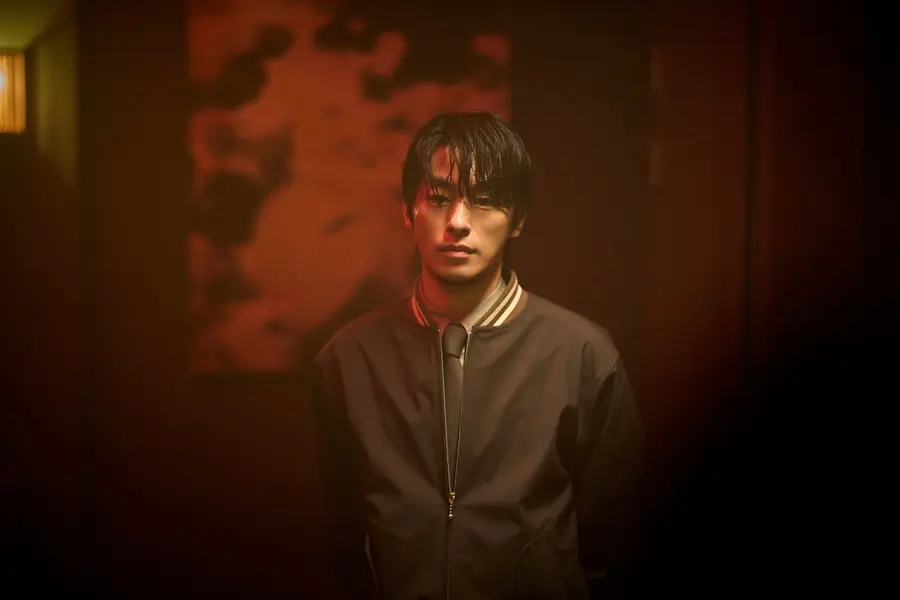
There is a development where Seo Young-chul is captured and then released. Was there a reason you chose that turn?
"That was my design. Koo Kyo-hwan's character, as Seo Young-chul, talks about communication and his philosophy, but I didn't think words alone would make the audience agree. I wanted there to be a moment when viewers emotionally get pulled into the actor. I wanted that moment to occur when he's escaping from being confined. At the moment a character whose behavior frustrates the audience is eliminated, a kind of ironic catharsis can occur, and I saw that as the point when the audience emotionally agrees with Seo Young-chul. For some viewers, the reconciliation mood between the two high school girls might be irritating. When that mood is overturned, the reversal creates a kind of catharsis that can make viewers briefly side with Seo Young-chul. It's also the moment that highlights how frightening he is."
You often collaborate with Koo Kyo-hwan. Why did you cast him as Seo Young-chul?
"He's an actor who suits extraordinary roles. That extraordinariness isn't so much what he expresses but an inner attitude that gives a sense of being unusual. Koo Kyo-hwan is like that. We're personally close, and he's a film buff—he watches B-movies, too. That makes communicating with him easier. When we did 〈Parasyte: The Gray〉, he often said, 'I want to become a Parasyte and have powers' (the character Seol Kang-woo, played by Koo, is an ordinary human). So I told him next time I'd give him a role with powers, and that turned out to be 〈Gunche〉."
With recent advances in generative AI producing AI-made films and many changes, what do you think about AI's use in filmmaking?
"〈Gunche〉 did not use generative AI image tools. The CG industry looks set to change rapidly with the use of generative AI. I find myself thinking about how generative AI actually operates—it's a technology built as a sum of universal images. There's a lot of talk about whether this can be art. Art implies originality, which seems at odds with universality. Can the two coexist? I studied fine art in college, and this debate has long existed there. Marcel Duchamp, by presenting a manufactured urinal as 'Fountain,' asked whether mass-produced objects could be art. Once that was accepted, Dadaism and Andy Warhol followed. I take the view that such debates enrich the art world. Originality and universality can coexist; I believe their combination is possible. It's not about right or wrong, but about how the argument enriches things. In Duchamp's time, the concept of 'making' was important; Duchamp undermined people's preconceptions by presenting readymades as art, and that led to Dadaism and contemporary art. I think the marriage of today's AI and art will follow a similar path. AI has already penetrated our lives deeply; that broad concept is based on universality. AI may seem challenging now, but film is itself an art form that is both universal and original. It may not even be a question worth debating. I think it's a form we'll have to work through."
Among many horror subjects, you particularly focus on zombies. Why that material?
"George Romero's 〈Night of the Living Dead〉 symbolized the fears of its era. Zombies feel individual but sustain fear as a collective. Unlike vampires or demons, zombies symbolize collective fear. Thinking about the fear rooted in modern society's collectivism led me to zombies."
Then what extreme fear do you see in our society?
"My previous works explore similar themes: the relationship between organizations and individuals and the fears that arise from that. This time I clearly wanted to focus less on the terror of collectivism itself and more on a society forged only by universal thinking—the powerlessness of individuality felt most frightening. I wanted to turn that into a film. I don't see the zombies here as dead beings. When Choi Hyun-seok was filming action, I explained it the same way: you can think of them as almost the same as humans. I used the term 'update' to express collective consciousness in the script: their collective mind updates, sometimes showing errors and sometimes correcting them. Think of a flock of birds—each individual influences the others and they fly as a cluster. I imagined that. Seo Young-chul's intervention marks a major error in those clusters. Looking at social behavior, Seo Young-chul can be called a demagogue; when someone tries to artificially manipulate creatures that move as a swarm, errors can occur."
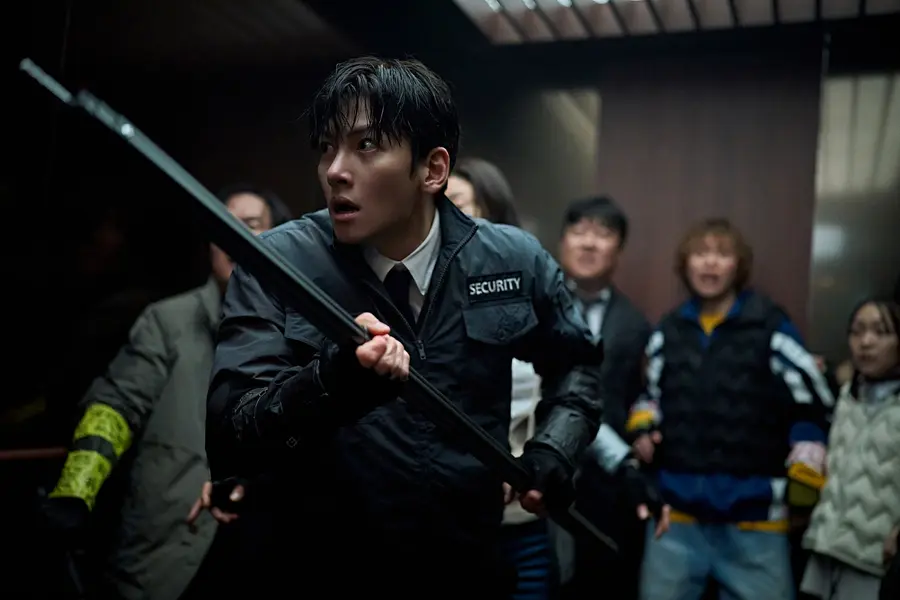
Watching the action scenes for Choi Hyun-seok, played by Ji Chang-wook, it was striking that you, who have worked across many genres, haven't made a full-fledged action film yet.
"I talked about that with Jeon Ji-hyun. She's good at action and said she wanted to try. Martial-arts-style action was only in 〈Jung_E〉, but I'd like to make a film with rougher, more visceral action."
Are you planning a sequel to 〈Gunche〉?
"I've written follow-up material. But instead of another film, I'm compiling it into a book packed with settings and publishing it as a graphic novel. And I expect an experiential game based on the book may follow… I've had a longstanding dream for film content to branch into other formats, like manga becoming anime. I've wanted to try that. With the film 〈Gunche〉 released, we're preparing a game that's a spin-off and could be considered a sequel."
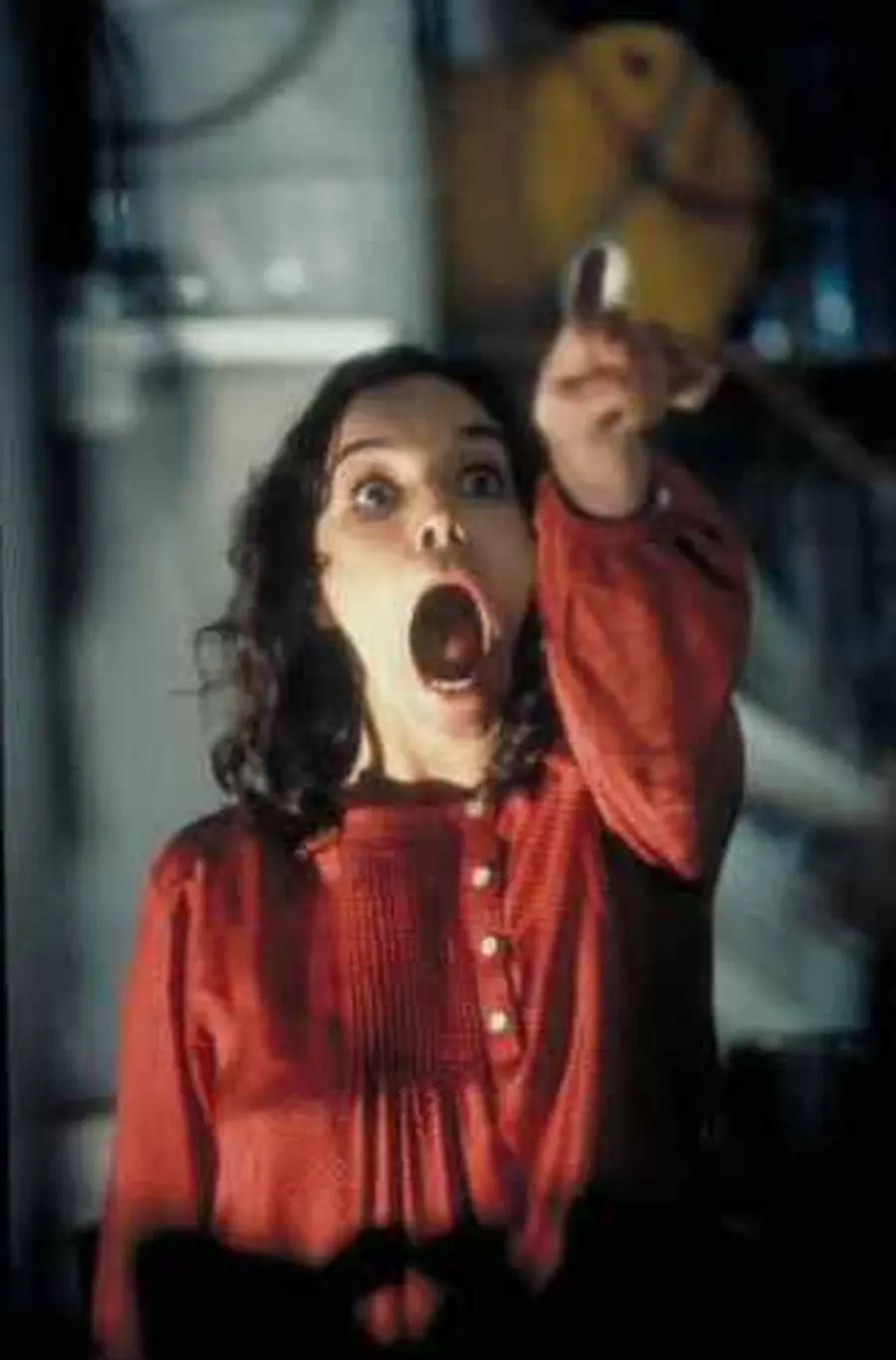
How did you come up with the movement for the moment the zombies 'update'? Was there a reference?
"In the aforementioned 〈Invasion of the Body Snatchers〉, when they discover something they make a kind of pointing or wagging motion. That movement might not seem to fit our film at first glance, but it works in that film. It's similar with the jiangshi, too. I thought it had to be done with that force. I drew on exaggerated movements I don't think I could have come up with on my own and worked with the choreography team to create intense motions."
Aside from zombies, do you plan to explore occult creatures like the jiangshi?
"Yes. But it's not easy to do alone. I've done the manga adaptation 〈Parasyte: The Gray〉, and I'm also involved in 〈Gas Human〉. 〈Gas Human〉 (original title 〈Gas Human No. 1〉) is a 1960s film—I was captivated the moment I saw it. Old B-movie horror is full of strange, wildly entertaining things. I'd love to explore more of that."
You briefly mentioned the upcoming 〈Gas Human〉. Why did you take on only a producing role?
"Toho approached me. Toho produced many tokusatsu works in the 1950s and 1960s. They offered several remake projects from that tokusatsu series, and I picked 〈Gas Human〉 because I found it interesting. But working with Japan was new for me, and collaborating with Japanese actors felt daunting. So I spoke with director Katayama Shinzo, who directed 〈Gannibal〉, and we hit it off, so I asked him to direct."
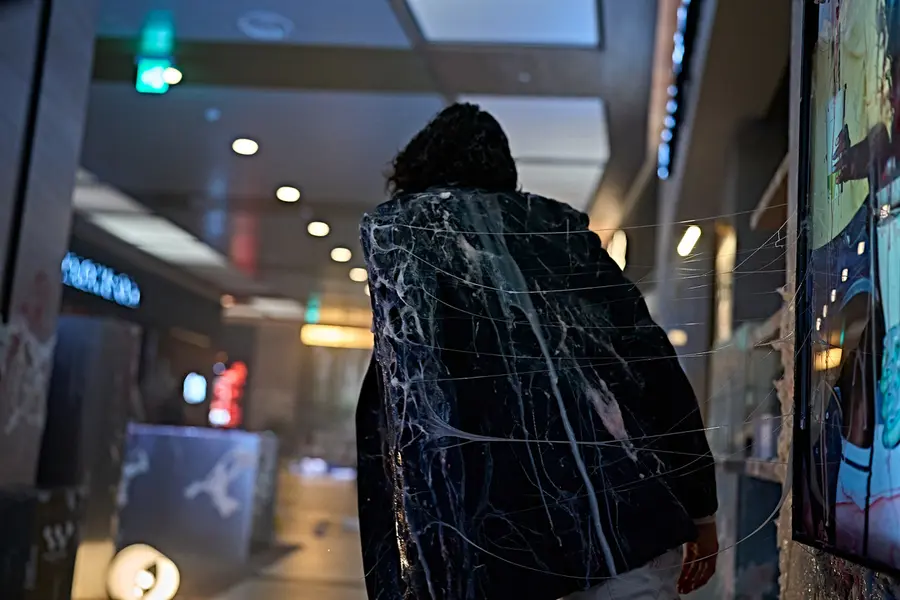
You've said the atmosphere on set is important and not something you can overlook.
"I think film is a product of collaboration. Even though I talk in interviews as if it's my personal work, film is actually far from a solo endeavor. The reason I moved from fine art to animation was the collaborative aspect. Making something together and showing it to the public was appealing. The art world, in some ways, limits its audience to people who enjoy and interpret it—which I didn't like. Choosing animation and film was a desire to make more accessible work. I pursue filmmaking as clear collaboration. I plan, but the process of getting financing and making a film is the result of many people's cooperation."
You've worked in animation and live-action, and in live-action for more than a decade—what drives your creativity?
"I've spent 10 years working in commercial film. From the collaboration standpoint, I've worked within the commercial film and OTT systems. Working on 〈Face〉 last year made me yearn for a new system outside or within the system. I'm approaching fifty, and when I think about how I'll make films in the next ten years, I feel strongly that I want to do it differently than the past decade. I have a desire to try experimental or otherwise unseen things. That excitement keeps me motivated."
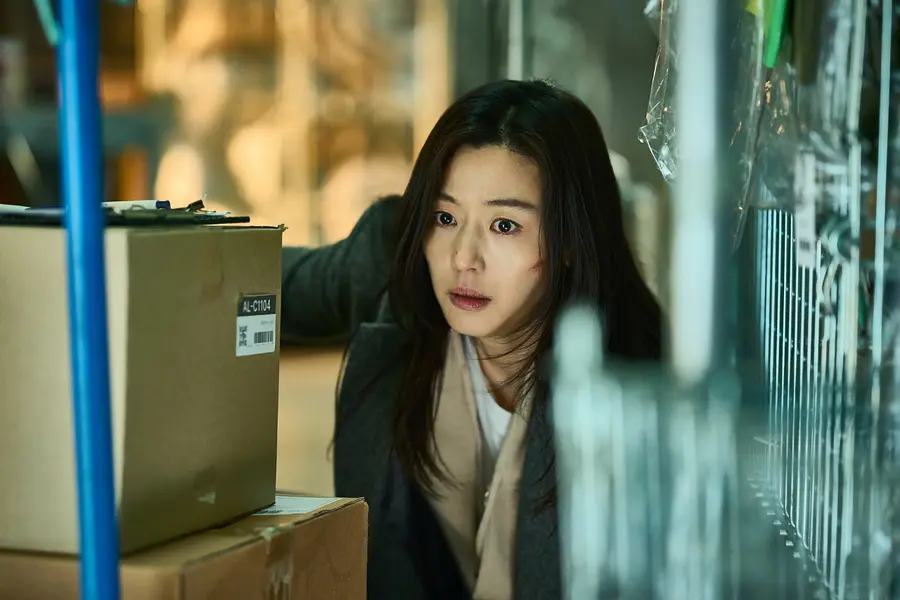
As a creator, what's the appeal of zombie stories?
"Zombies inherently have strong social elements. Since I began by making works with social messages, the genre fits well when it becomes stylized. After 〈Train to Busan〉, it became a more mainstream subject. Zombies offer a lot of room for variation."
Could you feel your profile had grown there?
"With 〈Train to Busan〉, that was the case. Ten years ago at Cannes nobody knew me. It probably felt like a person named Yeon Sang-ho suddenly appeared and showed 〈Train to Busan〉. This time I felt like people were watching me. I sensed that people wondered what the director who made 〈Train to Busan〉 would show this time. It's been ten years, so that feeling is natural. I was much more at ease now than then."
Tell us about your upcoming projects.
"Having a background in animation, I'm interested in using animation techniques. I joke about wanting to make indie animation, and this project is driven by the desire to create a film in a unique way, like that. I think I can show it next year. It will be different from my previous work; people may wonder, 'Why did he do this?' Of course, there is also the upcoming release 〈Gas Human〉 and 〈Paradise Lost〉. There's a long road ahead. I'll talk more about my next film when 〈Paradise Lost〉 comes out."

![[On Location at BIFF] “It Started With My Experience of Being Talked About Behind My Back” — 28-Year-Old Newcomer’s That Day’s Tae-joo Explores the Truth Behind a Busan Film Festival Rumor](https://cdn.www.cineplay.co.kr/w300/q75/article-images/2026-10-11/cd04a9b2-6b0a-4cab-ba9a-4200dea4aa8f.jpg)
![[First Press-Screening Reactions] 'Colony' Cineplay Critics' Ratings](https://cdn.www.cineplay.co.kr/w160/q75/article-images/2026-05-20/452c0988-e945-4a36-b7f9-1fc529600a3a.jpg)


댓글 (0)
댓글 작성
댓글을 작성하려면 로그인이 필요합니다.
로그인하기