



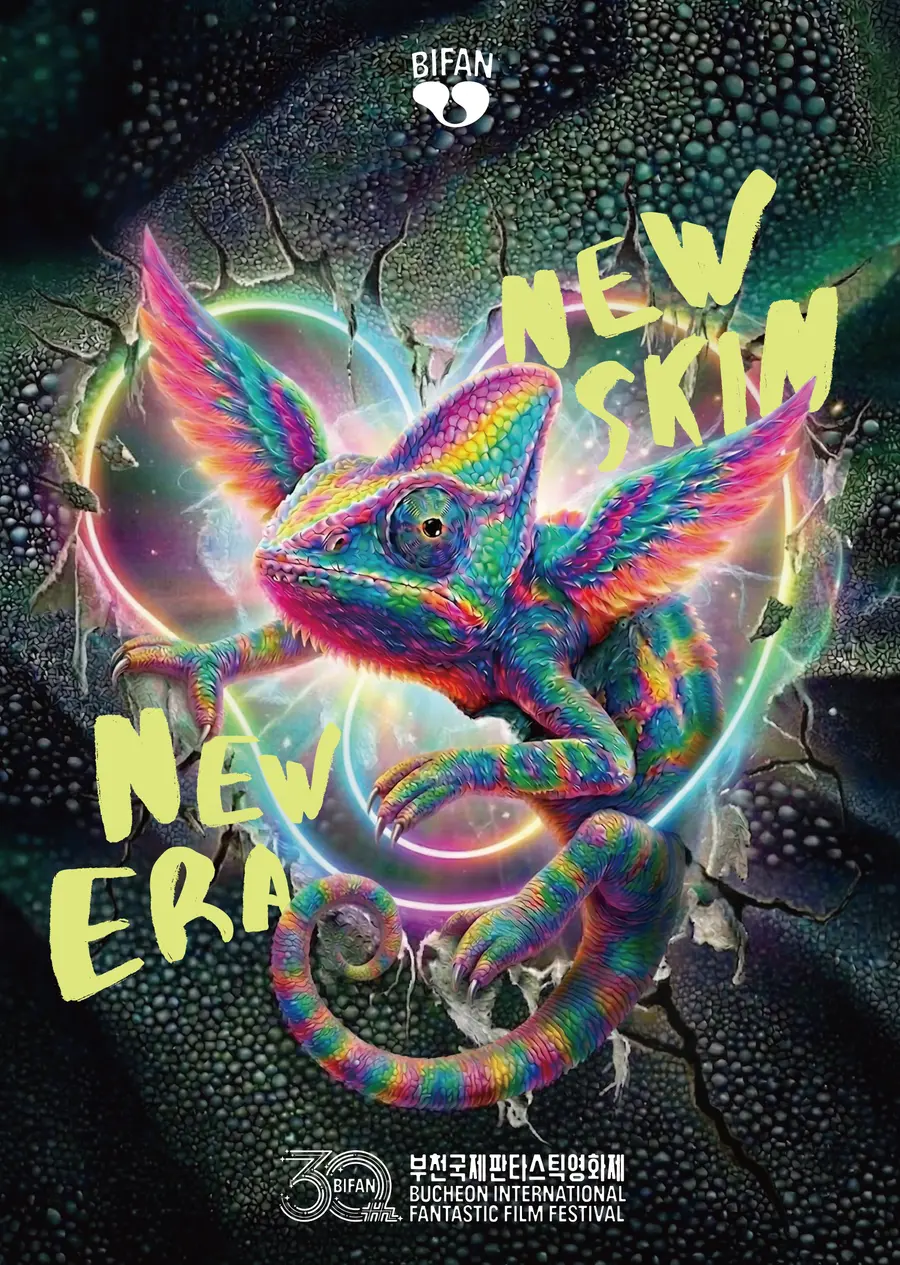
Above all, it’s a genre festival! For its 30th Bucheon International Fantastic Film Festival (Chairman Shin Chul, hereafter BIFAN), the festival screens 321 films from 50 countries (170 feature films, 85 short films, 38 AI titles, and 28 XR titles), and of these 93 are world premieres. This year’s central theme is a re-examination of BIFAN’s identity as a genre film festival. First, it announced the start of its three-year project, “Asian Genre Films 99” (Asian Genre Films 99). This special exhibition is a three-year project that selects 33 works each year, for a total of 99 works, and will run from this year through 2028, when the festival reaches its 32nd edition. Each year, works are selected by region. This year’s 30th BIFAN—which marks the beginning of the project—selected 33 Korean genre films. The selections cover theatrical releases made over 30 years, from 1997, when BIFAN began, through 2026. It captures the “decisive scenes” of genre films—films that innovated the rules of genre, unlocked industrial potential, and created trends and patterns.
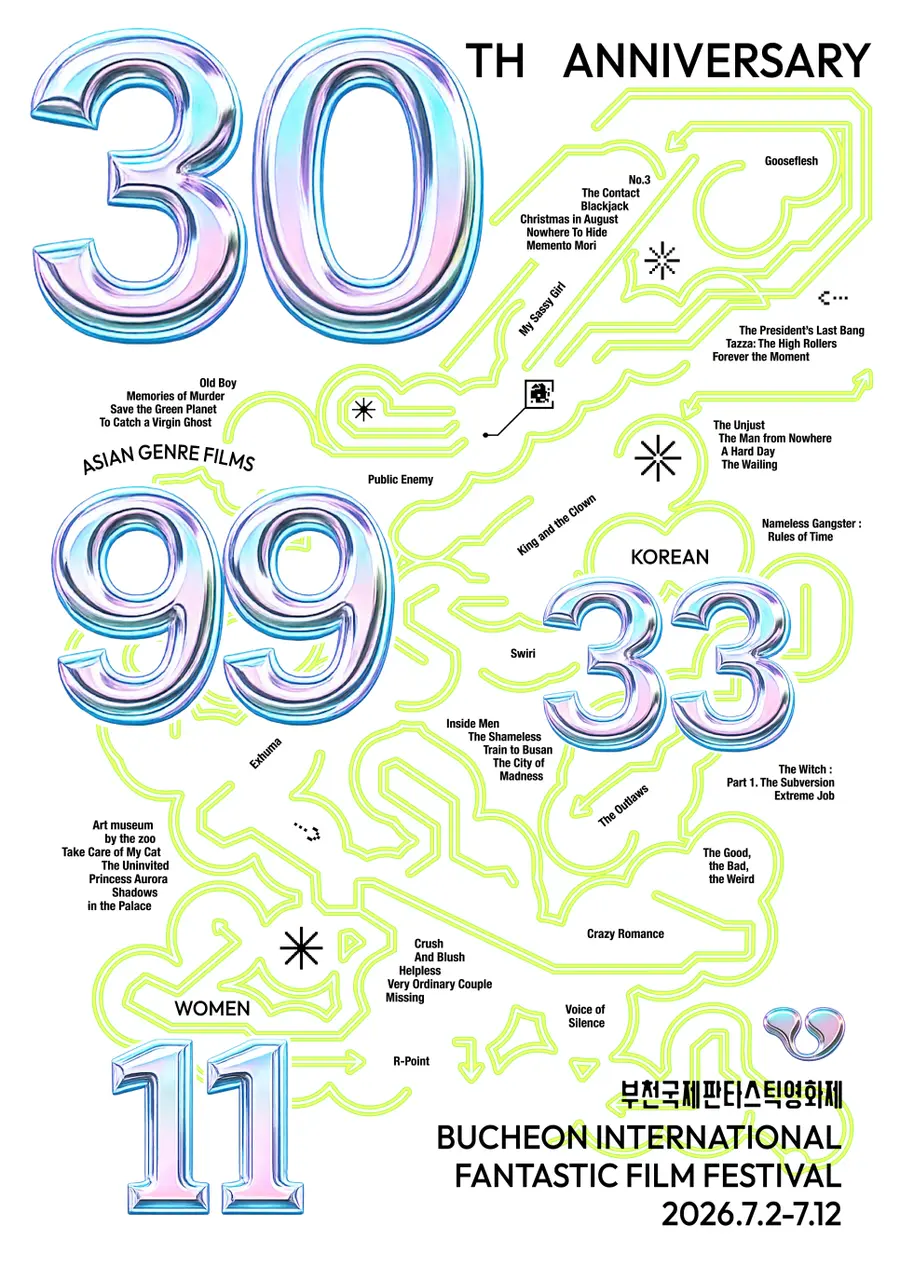
Genre films are the backbone of the film industry and the foundation for a wide range of aesthetic experiments. Over the past 30 years, BIFAN has introduced a variety of genre films from around the world. In particular, it has been a place where Asia’s genre legacy and talented directors meet audiences. This project is an effort to draw a map of Asian cinema’s landscape and systematically survey the flow of it, from the perspective of “genre,” which is BIFAN’s own identity. This effort is not just a look back. It also reflects a hope that Korean cinema—currently facing a crisis—can find a breakthrough by refreshing the energy of genre films. And it will be meaningful that, in Korea’s film culture, a systematic listing work for genre films has been surprisingly rare.
The 33 Korean genre films selected this year include nearly every genre, from horror, thriller, and mystery, to action, as well as romance, comedy, melodrama, and youth. The subjects were films in which genre conventions sit at the center of the narrative; films that either follow or remix clichés; and films that use a style that is genre-formatted. The list was completed based on the full list of genre films (1997–2026), through feedback and meetings by the selection committee. The selection committee included Kim Sun-a (professor at Dankook University), Kim Young-jin (professor at Myongji University), Nam Dong-cheol (chief programmer of the Busan International Film Festival), Darcy Paquet (film critic), Mo Eun-young (director of the Korean Film Archive), and Oh Seung-wook (film director), along with BIFAN programmer Kim Hyung-seok and programmer Lee Jeong-yeop. The list is as follows.
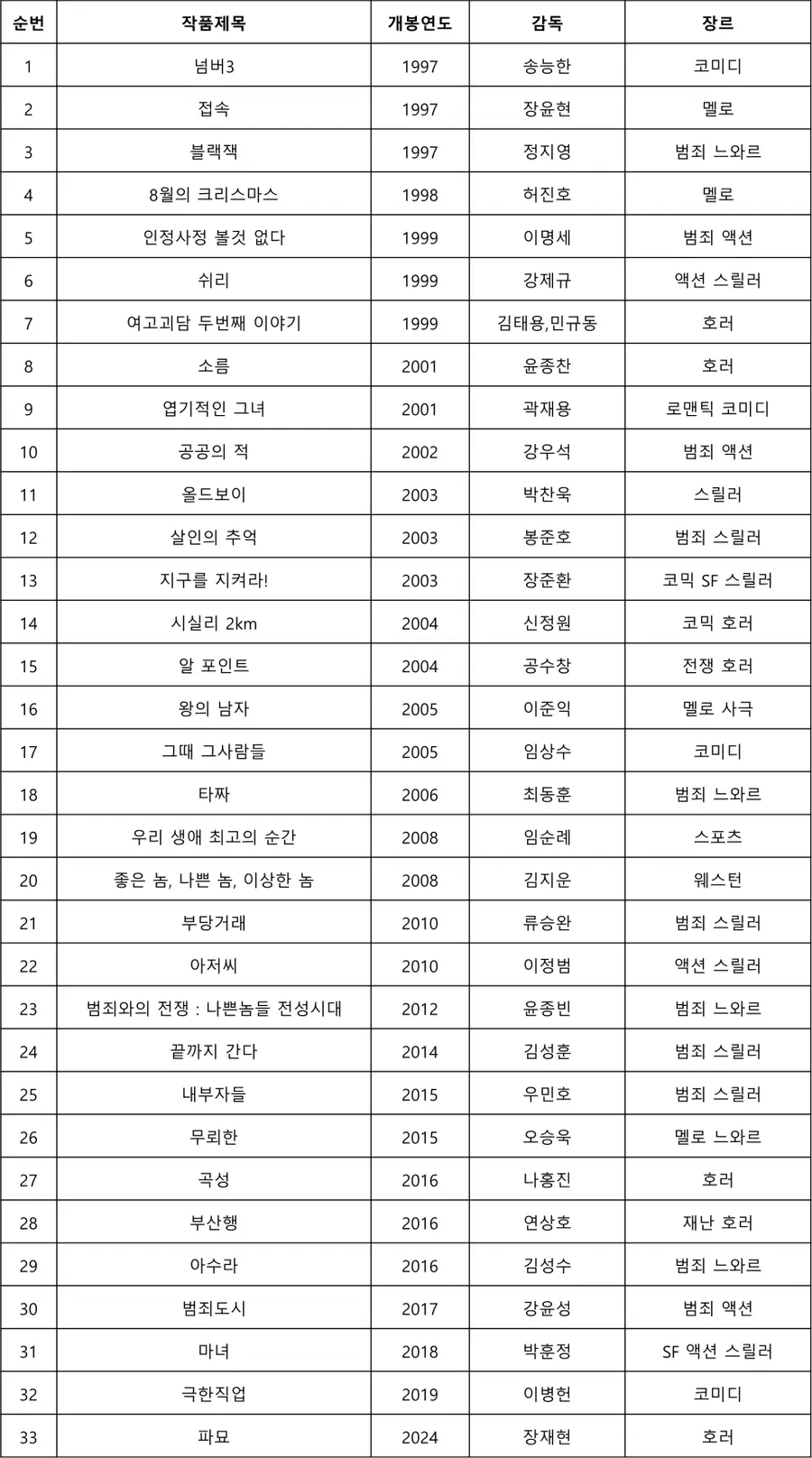
In addition to the genres BIFAN has traditionally favored—such as horror and thriller and action—romantic comedy and other genres also make up important themes on the list. Selected works include 〈Christmas in August〉 (1998), 〈My Sassy Girl〉 (2001), and others from the late 1990s and early 2000s. 〈Number 3〉 (1997) and 〈Those Were the Days〉 (2005), such as sharp black comedies, also received favorable evaluations from the selection committee. Alongside 〈Memento Mori 2〉 (1999), horror is included in the list through a wide range of specs: the comedic horror 〈Sicily 2 km〉 (2004); war horror 〈A Phone Point〉 (2004); disaster zombie horror 〈Train to Busan〉 (2016); and occult horror 〈The Exhuma〉 (2024), among others. The crime film genre accounts for the largest share, a window into Korea’s genre trends since the 2000s. There was also an element of discovery. Director Jung Ji-young’s 〈Black Jack〉 (1997) earned a spot with the assessment that it was “an exceptionally well-finished hardboiled noir for its era.”
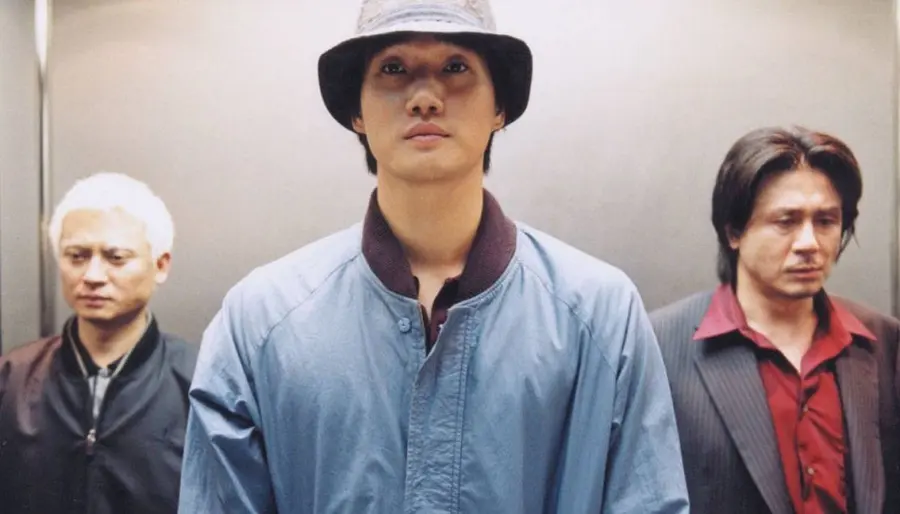
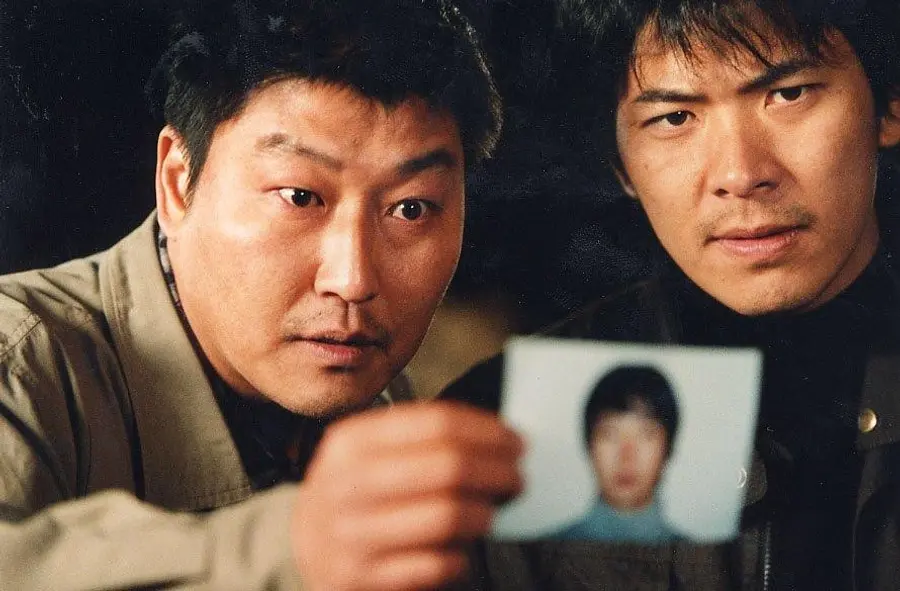
During the selection process, the purpose was to include the genre worlds of more directors in the list, so each director contributed only one work. Among director Ryoo Seung-wan’s many action films, the committee highlighted 〈The Unjust Deal〉 (2010) by focusing on the “social gaze.” Among the works of director Kim Jee-woon, who has a filmography covering almost every genre, 〈The Good, the Bad, and the Weird〉 (2008) was selected from the standpoint of “genre thrill.” Directors Park Chan-wook and Bong Joon-ho were also mentioned for multiple films, but the choices that changed Korea’s genre paradigm were 〈Oldboy〉 (2003) and 〈Memories of Murder〉 (2003).
With the Women’s Film Professionals Association (CEO Kim Sun-a), the festival prepared another project. This is a list of 11 genre films made by Korean female directors. It is an effort to pinpoint the timeline and key moments of works created by female directors in a reality where most genre films are directed by men. The list is as follows.
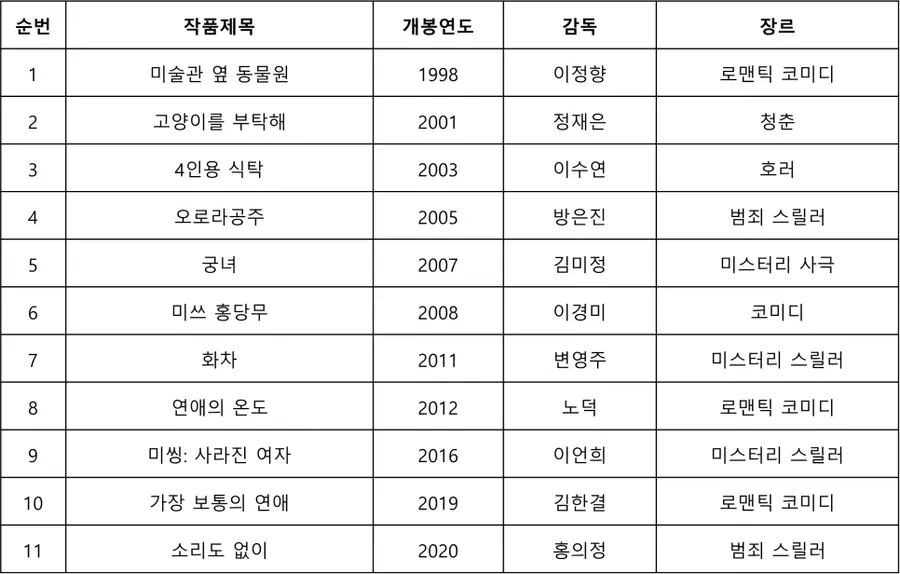
In this “11 Genre Films Directed by Women,” 11 genre films by Korean female directors were selected, ranging from 〈The Animal in the Museum〉 (1998) to 〈Without Sound〉 (2020), each leaving a distinct footprint across various genres. Over the past 30 years, Korea’s genre films achieved remarkable growth, but behind that success, the role and accomplishments of women directors have been relatively underlit. This special exhibition is not a flat space that simply gathers and showcases works by women directors. It’s a stage that lets viewers examine the fierce process through which female creators have transformed and expanded male-centered genre grammar and narrative structures. Moreover, amid growing voices saying Korea’s film industry needs new breakpoints, the project is expected to become a turning point—one that revisits the male-centered genre inertia and clichés Korea has long followed through a woman’s sharp perspective.
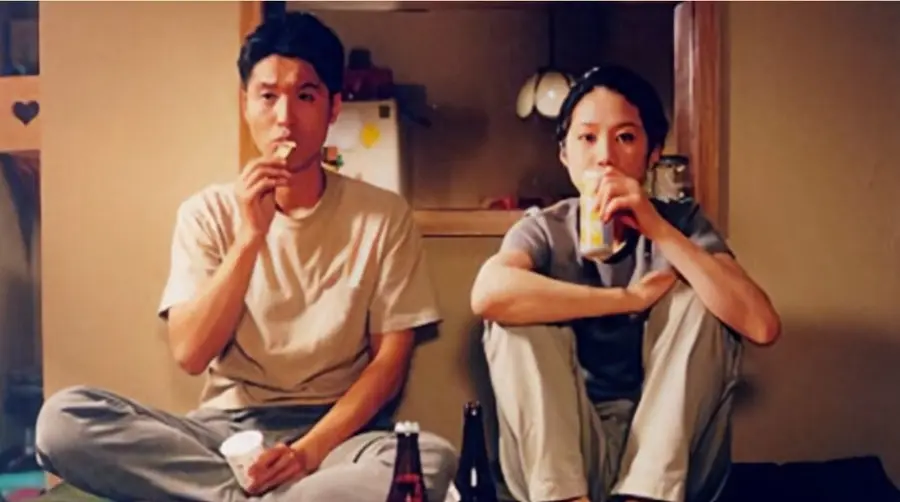
With the selection process, BIFAN’s Kim Young-woo and Kim Hyung-seok programmers and Women’s Film Professionals Association CEO Kim Sun-a participated. Programmer Kim Hyung-seok said, “An important turning point for women-directed genre films was 마련 when director Bang Jun-jin’s 〈Princess Aurora〉 (2005) and director Kim Mi-jeong’s 〈The Housemaid〉 (2007) appeared in the early 2000s.” CEO Kim Sun-a added, “Where existing women directors previously stood out mostly in romantic comedy, after that, they pioneered a new flow by presenting works centered on women’s narratives even in the horror and thriller genres.” In fact, among the 11 selected works, five are in the horror-thriller category.
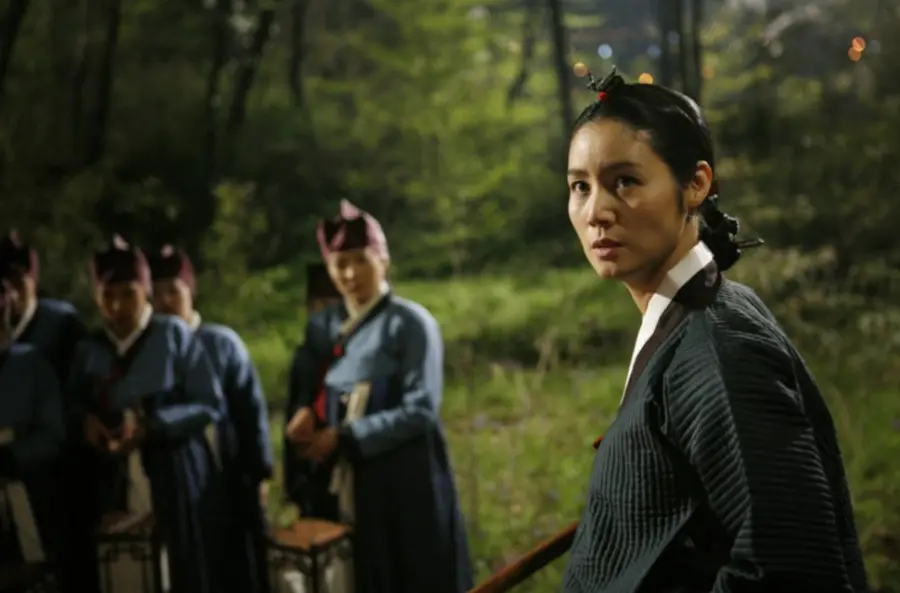
The selected works are evenly spread with titles that allow viewers to trace women directors’ currents and the changes of the times. Director Lee Jeong-hyang’s 〈The Animal in the Museum〉 (1998) proved the possibilities of a new romantic comedy during a period when the presence of women directors was minor. Director Jeong Jae-eun’s 〈Please Take Care of My Cat〉 (2001) is still regarded as Korea’s definitive representative youth film. Director Kim Han-gyeol’s 〈The Most Ordinary Love〉 (2019) unraveled changed ideas about dating with a new sensibility. Director Byeon Young-ju’s 〈Hwasya〉 (2008) turned tragedies made by capitalism into a chilling mystery. Director Lee Eon-hee’s 〈Missing: The Other Woman〉 (2016) created memorable female characters by delving deeply into social issues. Each of these made its name on the list.
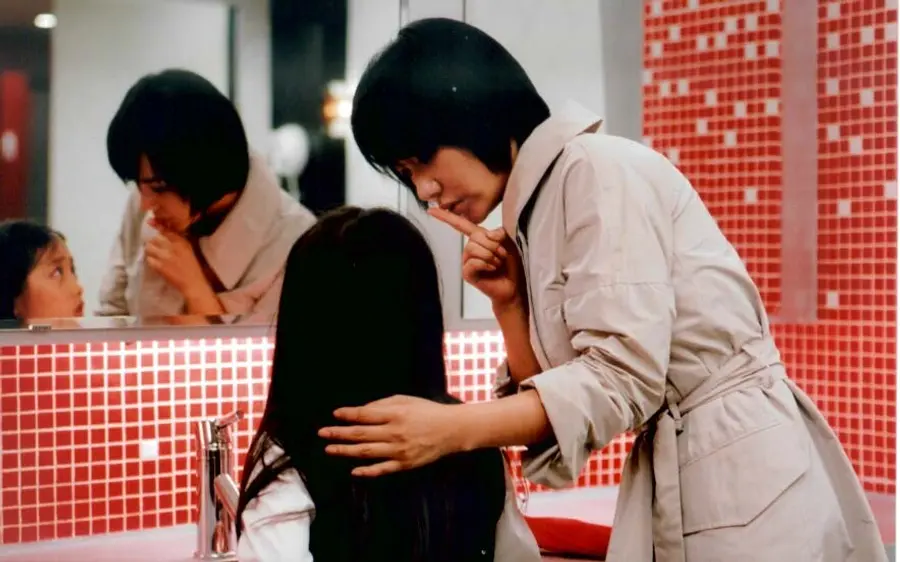
Director Lee Soo-yeon’s 〈Table for Four〉 (2003), which programmer Kim Young-woo called “one of the most shocking debut works by a female director,” also made it onto the list unanimously by the selection committee. For director Lee Kyung-mi’s work, there were heated debates between the provocative and new-sensation 〈Miss Hongdangmu〉 (2008) and 〈No Secrets〉 (2016), which boasts outstanding genre completeness. Ultimately, 〈Miss Hongdangmu〉 won strong support. In addition, director No Deok’s 〈The Temperature of Love〉 (2013) and director Hong Ui-jeong’s 〈Without Sound〉 (2020) were also selected together as shining achievements in genre filmmaking carried out by women directors connecting generations.
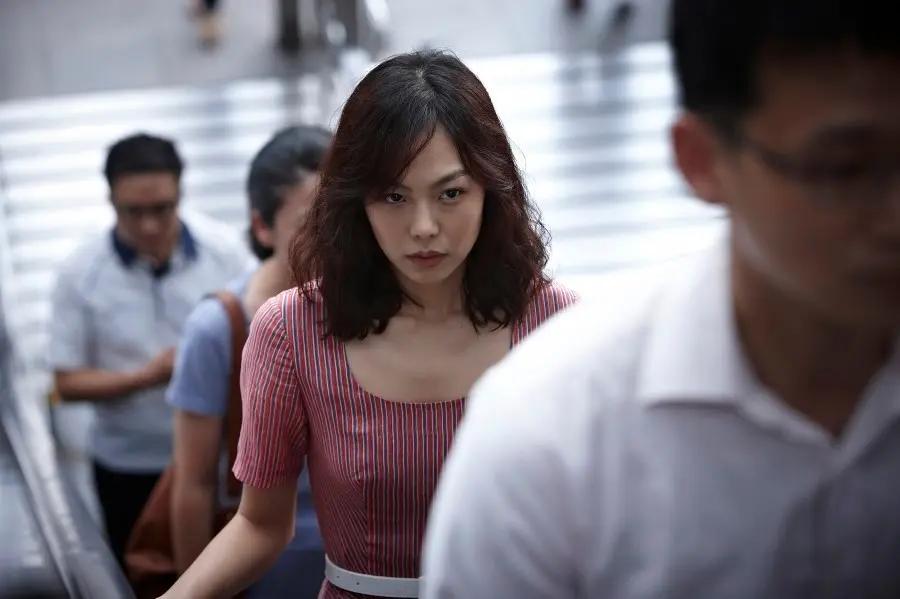
The selection committee said they found significance in the fact that BIFAN, as a genre film festival, focused on commercial genre films. At the same time, they expressed deep regret that it did not also encompass works by female directors who have been active relatively in the independent film scene. Alongside that, they strongly agreed that commercial filmmaking going forward should keep alive a wider variety of genres and women’s narratives. The 11 selected works are results that proved new women’s narratives and genre evolution within the trajectory of Korean genre films—from 1998 to 2020. The spectrum is truly broad, spanning works that capture subtle tremors of daily life to weighty films that look squarely at anxiety and violence rooted deep in society.
The 11 films being revealed this time are an excellent starting point that will let viewers reread the history of Korean genre films from a new perspective. It is a place to take a serious look at who has written the history of genre films—and how female creators, within the confines of those frames, have carved out their own narratives and characters that breathe with life. It also raises a fundamental question about what perspectives and stories future genre films should carry. The Women’s Film Professionals Association emphasized, “Genre films have become an important pillar of Korea’s film industry, but in terms of the history, there is an aspect where it has been described focusing on male creators and male-centered narratives. ” “This special exhibition is an attempt to shine a light on the new characters and sensibilities created by women directors within genre—and to reread the history of Korean genre films from a different viewpoint.” It added, “The 11 selected works are not an exceptional achievement by women directors, but rather an important current that has continued steadily within the ecosystem of Korean genre films. We hope this special exhibition and forum will more actively talk about women creators’ artistic achievements and become an opportunity to think together about the creative environment and industrial structure ahead.”

![[Photo &] 30th Bucheon Film Festival Screens Record 321 Films, Jet Li Named Opener](https://cdn.www.cineplay.co.kr/w160/q75/article-images/2026-06-09/0d80e7dc-582b-43bb-bbbf-916d003d9070.jpg)


![[BIFAN 2026] Enjoying Bucheon 30 Years in 100 Times ② Bucheon Is AI! AI Content Summit & Beyond Reality](https://cdn.www.cineplay.co.kr/w160/q75/article-images/2026-06-24/f7c7b85c-e482-45c5-934e-c6ee070df25c.jpg)
![[BIFAN 2026] Enjoy Bucheon 30 Years 100 Times ③ Lee Choon-yeon Film Award returns, new International Federation of Film Critics prize, and the July Carnival](https://cdn.www.cineplay.co.kr/w160/q75/article-images/2026-06-24/8af08672-24a9-4c9a-9b57-2af9c5e0c0c9.png)
댓글 (0)
댓글 작성
댓글을 작성하려면 로그인이 필요합니다.
로그인하기