



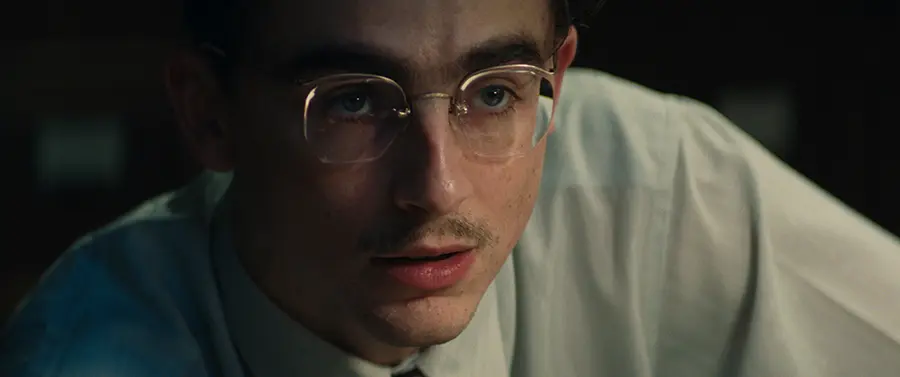
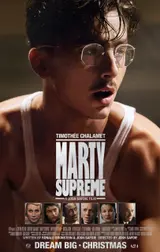
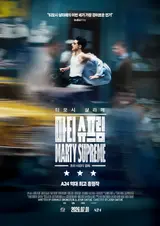
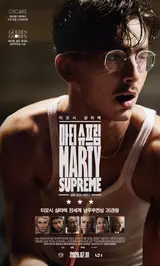
〈Marty Supreme〉 is similar to Josh Safdie’s earlier works, but also different. The most decisive factor is that after going through 〈Heaven Knows What〉 (2014), 〈Good Time〉 (2017), and 〈Uncut Gems〉 (2019), which they co-directed under the name “Safdie Brothers” with his younger brother Benny Safdie, he went on to direct 〈Marty Supreme〉 on his own. 〈Heaven Knows What〉, based on the nonfiction book 「Mad Love in New York City」 about Ariel Holmes, a drug addict who lived as a homeless person in the New York subway, was invited to the Venice International Film Festival, and that’s when the Safdie Brothers began to be known more widely (and Holmes herself also took the lead role). From that point on, writer and producer Ronald Bronstein—who had worked with them on a number of projects, including their co-directed short 〈John’s Gone〉 (2010)—kept working with the Safdie brothers straight through to their feature films.
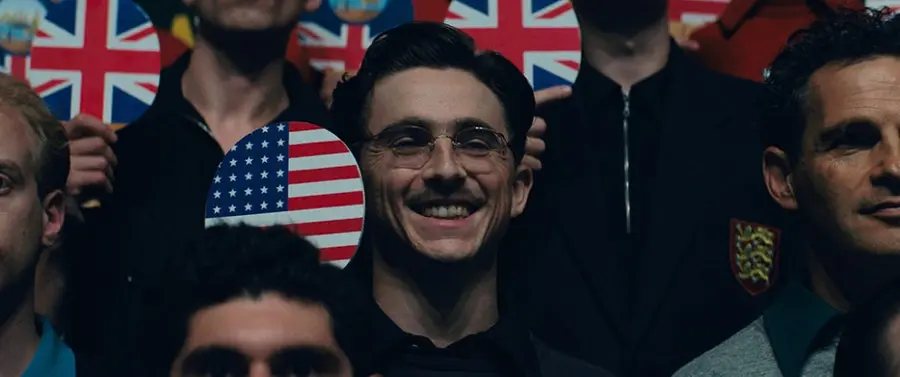
They said that, after the end of 2024, they would no longer work together. After that, 〈Smashing Machine〉 (2025), Benny Safdie’s solo directorial film starring Dwayne Johnson as mixed martial arts fighter Mark Kerr, won the Distinguished Jury Prize at last year’s Venice International Film Festival. Josh Safdie’s solo directorial film 〈Marty Supreme〉 (2025) also earned nominations in nine categories at the Academy Awards—Best Picture, Best Director, Best Original Screenplay, Best Actor, Best Production Design, and Best Costume Design, among others. In other words, both brothers’ films—which were well received—were their first projects after the split. What’s especially striking is that both are a kind of sports movie built around real-life figures that the brothers, together, had never tried before. Meanwhile, Darius Khondji, the cinematographer who crossed paths with the Safdie brothers on 〈Uncut Gems〉 as well as on other work, also joined 〈Marty Supreme〉.
Compared with the period when Josh Safdie was working under the name of the Safdie Brothers, the biggest difference in 〈Marty Supreme〉 is the setting: New York in 1952, not modern-day New York. Maybe that’s a backdrop that shows, more clearly than the earlier films, the Jewish identity behind it all. Above all, there is a particularly striking scene where Bella—played by Geza Roerig—talks about a “honey” episode from her time at the Auschwitz concentration camp, less than a decade after the end of World War II. The story is that she put honey on her own body so others could eat it. The tale sounds almost like fantasy, but it’s known to be true. And Geza Roerig—who played Bella—had previously played “Saul,” the protagonist trapped in Auschwitz, in 〈Son of Saul〉 (2015).
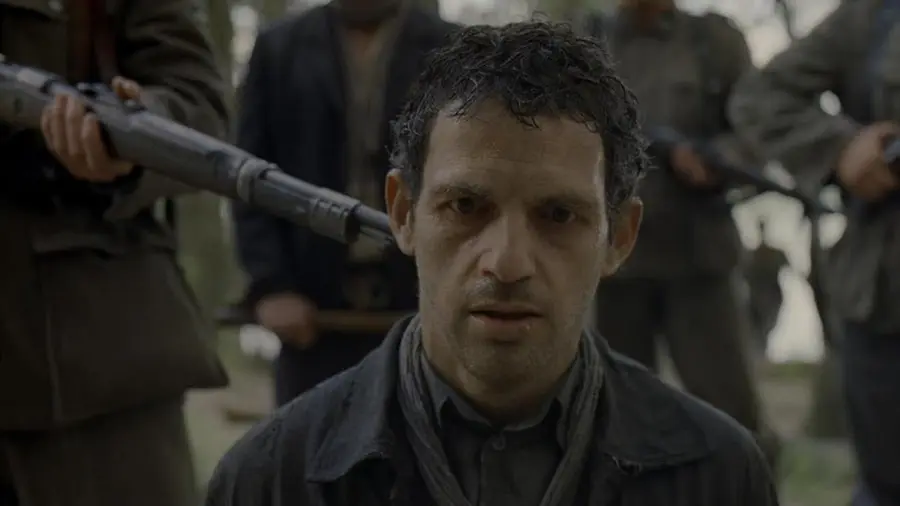
In 〈Son of Saul〉, which won the Grand Prix at Cannes, Saul worked in 1944, when the Nazi atrocities were at their worst, at a secret work unit inside the Auschwitz concentration camp used to handle corpses. One day, he saw the body of his young son. He then decides to find a rabbi and give him a proper burial, starting a difficult journey. In other words, Saul’s experience in 〈Son of Saul〉 can be understood as another episode alongside the camp story Bella describes in 〈Marty Supreme〉. Coincidentally, that connection between the two different films creates a richer structure. Also, Geza Roerig is set to play Jesus in 〈The Way of the Wind〉 (The Way of the Wind), a new film directed by Terence Malick that is currently scheduled for production and depicts the life of Jesus Christ.
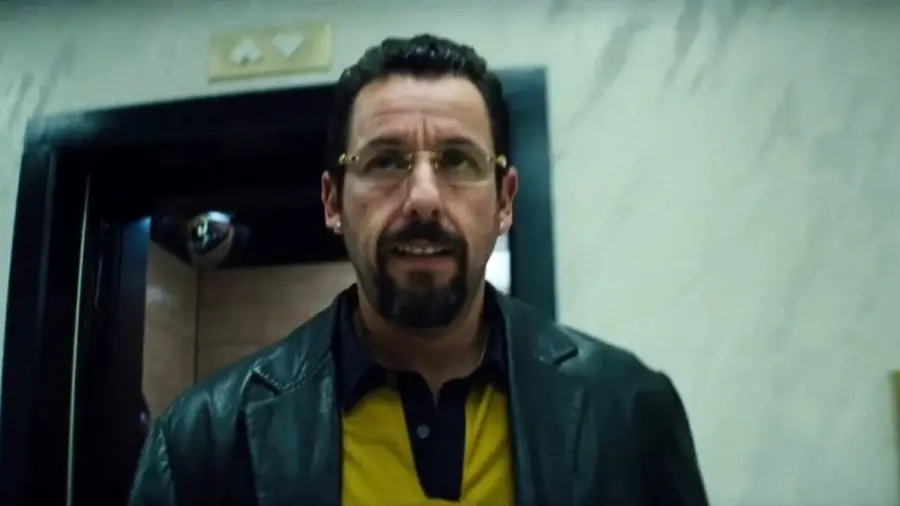
There is more, too: in Marty’s story, gang boss Ezra, played by Abel Ferrara, has a dog named “Moses” placed in his care. But the owner of the house where Moses ends up staying is someone who intensely hates Jewish people, making it difficult to get the dog back. Who is Moses? He is a religious leader and national hero of ancient Israel who was discarded along the Nile River, raised in a royal palace, enslaved in ancient Egypt, and then led the Hebrews to escape. Even when Marty goes to Egypt for a game, he brings a broken piece from a pyramid and tells his mother about “ancestors.” Just like how Howard Ratner, played by Adam Sandler in 〈Uncut Gems〉, was a Jewish jeweler, in 〈Marty Supreme〉 Safdie puts that Jewish identity he had been revealing piece by piece in earlier work at the center of the narrative itself.
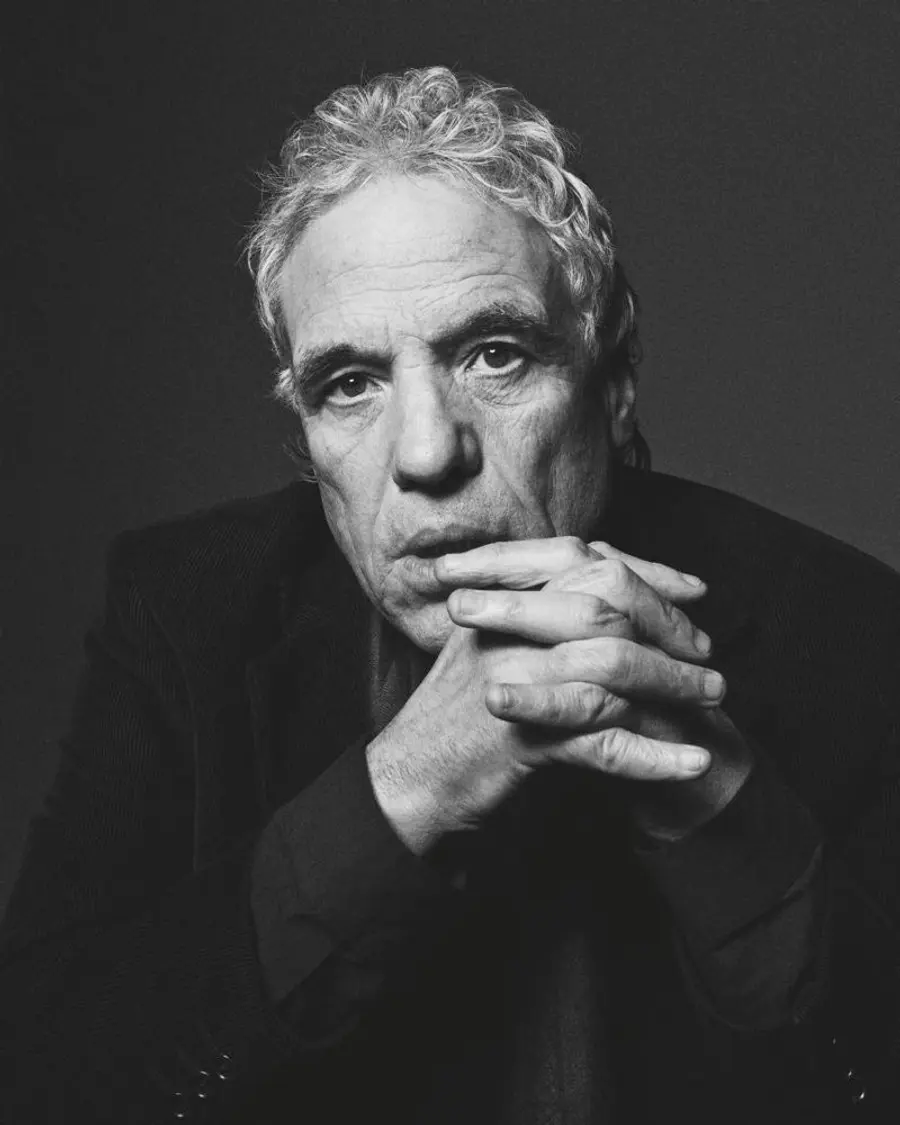
Meanwhile, the actor who plays gang boss Ezra, who is with Moses, is director Abel Ferrara, who directed 〈King of New York〉 (1990), 〈Bad Lieutenant〉 (1992), and more. He, too, is similar to the Safdies in that he has always made movies with New York as the backdrop. And since Safdies have a deep admiration for director Martin Scorsese, and Ferrara’s also similar to him in some ways—so much so that he has the nickname “the dark Martin Scorsese”—it’s a meaningful homage in the form of a casting choice.
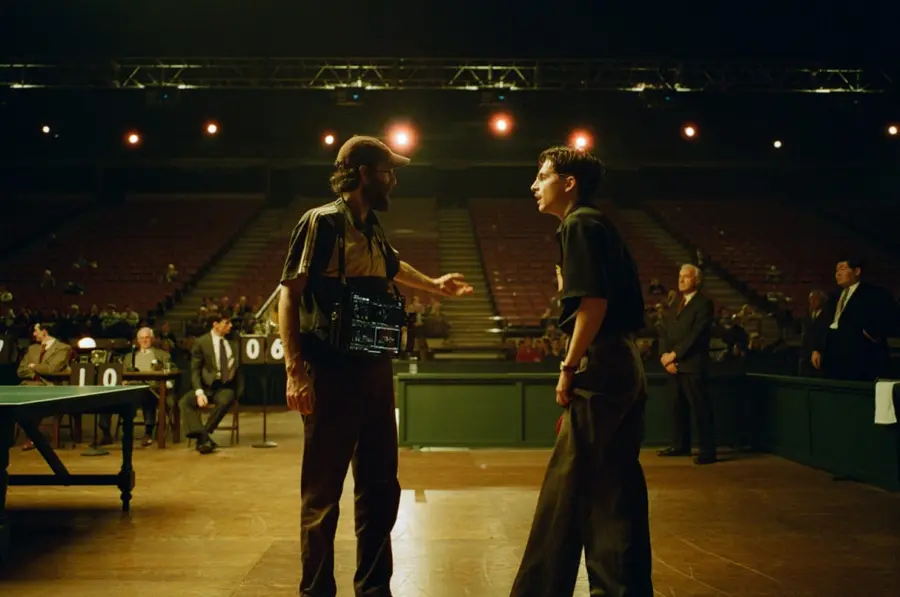
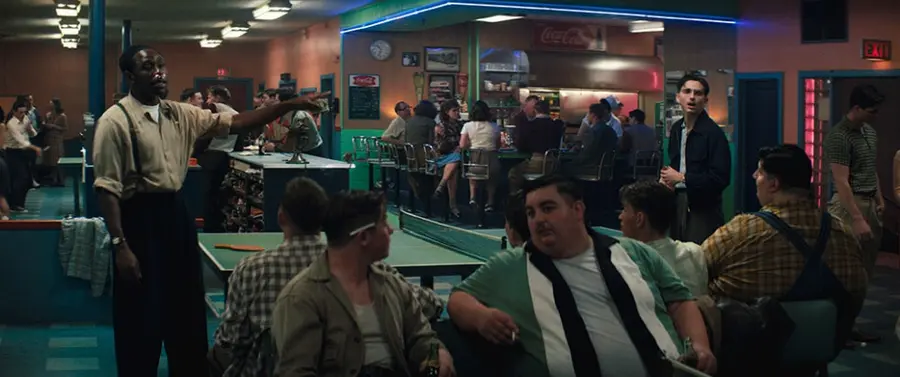
In fact, the older brother Josh Safdie made his feature debut first with 〈The Pleasure of Being Robbed〉 (2008). It’s interesting to note that when he directs solo, the humor and fantasy elements show up more. For example, the flashback to Bella’s Nazi concentration camp scene mentioned earlier; the computer-graphics sequence of sperm racing toward the egg in the opening; the scene where Marty Mauser enjoys table tennis with playful movements; and the moments where businessman Milton Rockwell (Kevin O’Leary) says that he is a vampire born in 1601. Given that in the real world, Kevin O’Leary is an actor and billionaire businessman, the idea of a businessman—someone who has experienced all kinds of things and achieved success—being a vampire fits together in a slightly uncanny way. All of these are the advantages and charms you come to experience when Josh Safdie directs on his own. So, can it be said that Josh Safdie gained even greater freedom through this?









![[Joo Sung-cheol’s Locker] Watching “Marty Supreme,” Recalling Yoon Nam-gyu’s Penholder Table Tennis Racket](https://cdn.www.cineplay.co.kr/w160/q75/article-images/2026-06-29/6d43e8be-1f8f-4c69-85c5-0bc635b36926.jpg)

댓글 (0)
댓글 작성
댓글을 작성하려면 로그인이 필요합니다.
로그인하기