


I get hooked on the music in films. Music often reveals intimate emotions a picture or dialogue alone cannot convey. It can become a window into a creator's hidden intent. For me, listening to a film's music is one way to get closer to what the film is doing. "Choo A-young's Music Box" listens to a film's voice through its music. (P.S. I recommend listening to the music while you read.)
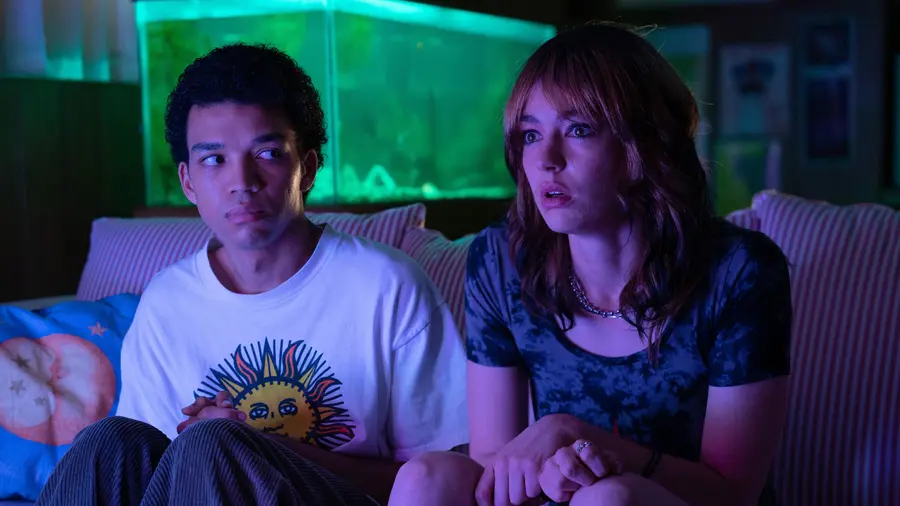
Director Jane Schoenbrun's film 〈I Saw the TV Glow〉 is a finely crafted work that blends nostalgia for 1990s American pop culture with the strange, beautiful confusion of gender identity. It stirs nostalgia for the years when the characters we loved on screen offered clues to who we might be. At the same time, it exposes the mismatch between the child we once were and the person we are now, evoking longing and sadness. The song featured in the film, "Anthems for a Seventeen-Year-Old Girl," captures this core emotional current. Schoenbrun's 〈I Saw the TV Glow〉 and "Anthems for a Seventeen-Year-Old Girl" share the painful shock of waking up to one's true self.
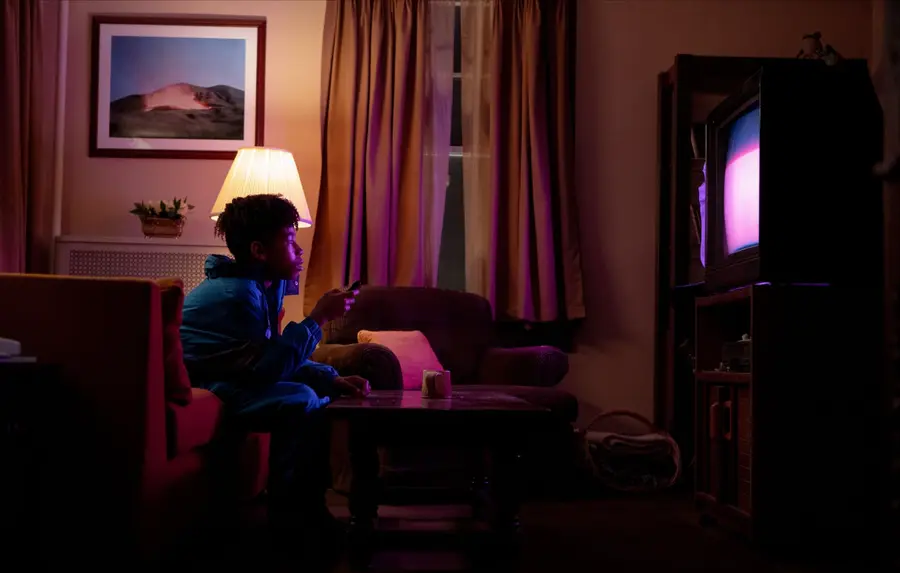
Quiet, introverted Owen (Justice Smith, Ian Foreman) stumbles on a trailer for a teen horror TV show called Pink Opaque. He is instantly captivated, but his father's strict control prevents him from watching it. One day, Owen meets Maddy (Jack Haven), a girl captivated by Pink Opaque, and begins to slip free of his parents' control. After they watch Pink Opaque together at Maddy's house for the first time, Owen keeps following the show on tapes Maddy records for him, sinking deeper into its world. Through Pink Opaque, he begins to discover another side of himself.
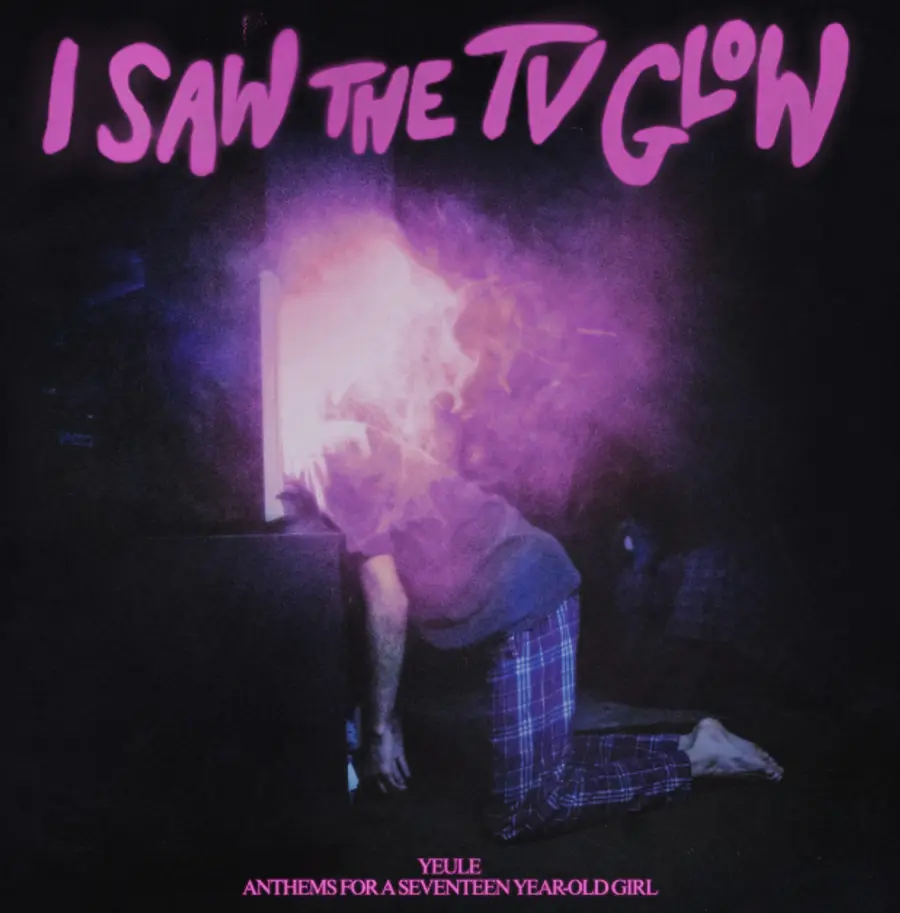
The Canadian indie-rock collective Broken Social Scene's song "Anthems for a Seventeen-Year-Old Girl," covered for the film by Singaporean artist yeule, cuts to the emotional heart of the movie. The original recording appeared on Broken Social Scene's album You Forgot It in People (2002) and was widely praised on release, quickly becoming a staple of the indie scene. "Anthems for a Seventeen-Year-Old Girl" expresses a longing for a purer past self alongside disgust and sorrow at the ways the present self has been altered to fit social expectations. The song's narrator declares, "I used to be one of the rotten ones too, and I liked you that way," mourning a version of the self unpolished by life. The song also becomes a metaphor for the modern tragedy of losing one's true self and living behind a false persona. Its repetitive lyric patterns build a structure that mirrors the confusing, overlapping impressions and memories of adolescence. "Anthems for a Seventeen-Year-Old Girl" is a requiem for how growing up demands discarding pieces of identity that once made youth feel wholly like oneself, making that pure past feel as if it no longer exists.
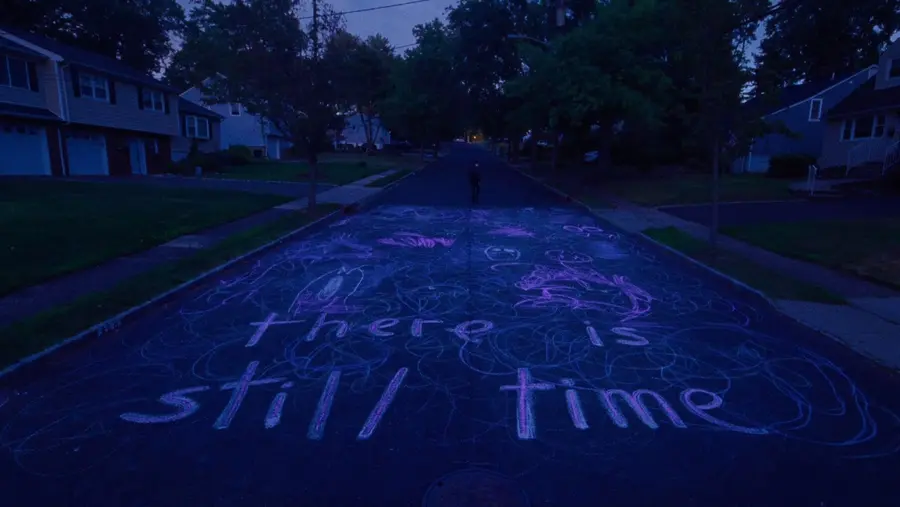
For the film, yeule's cover keeps the original song's framework but adds a far more lo-fi, glitch-tinged sound that melts seamlessly into the film's uncanny mise-en-scène. The analog warmth of the original instruments gives way to synthesizer textures in yeule's version, creating a darker, lonelier atmosphere. Intentional digital processing and distortion fragment yeule's vocals, lending a hallucinatory, dreamlike quality. Her voice takes on a fragile, unstable quality, as if projecting a distorted self trapped inside an imagined space. Combined with the song's glitches, yeule's vocals dovetail perfectly with the film's liminal mood where reality and fiction, past and present, collide.
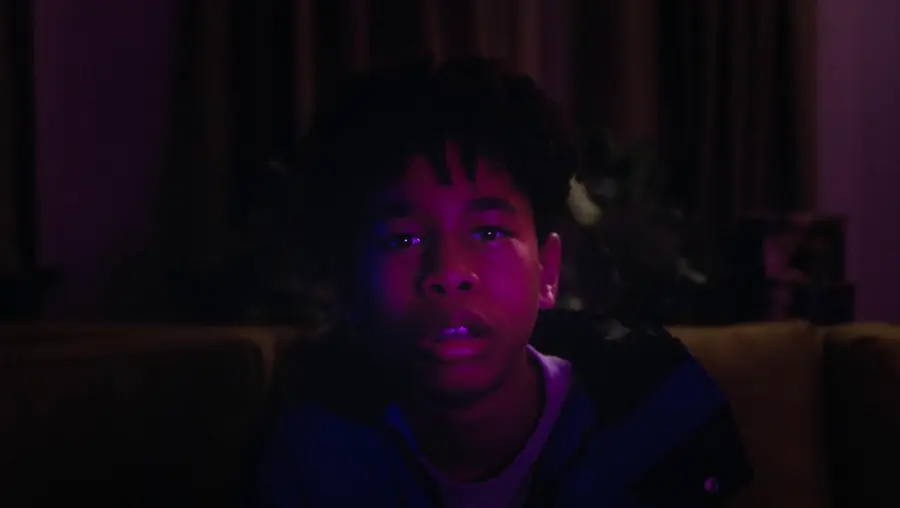
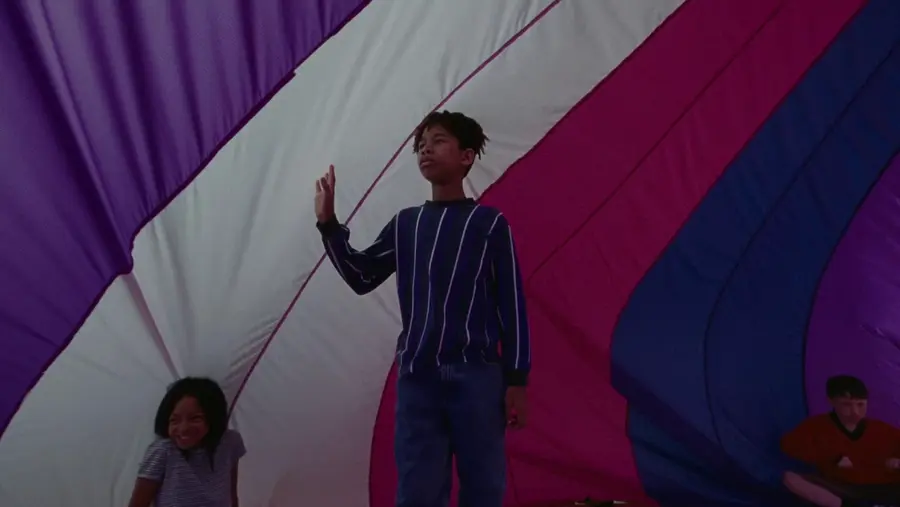
The song "Anthems for a Seventeen-Year-Old Girl" appears at both the beginning and the end of the film. Early on, after young Owen sees the Pink Opaque trailer, the music continues into a subsequent scene in the school gym where he plays with a parachute. Those two scenes function as a foreshadowing of Owen's forthcoming inner journey. Through Pink Opaque, Owen discovers an internal refuge where he can exist as his whole self, free from the norms that repress him in the real world. The liberation he feels when he first encounters Pink Opaque and the reverence he has for that media as an escape connect directly to the rapture he experiences while playing with the parachute. The sequence marks the threshold at which that fantastical world begins to feel more real to Owen than ordinary life.
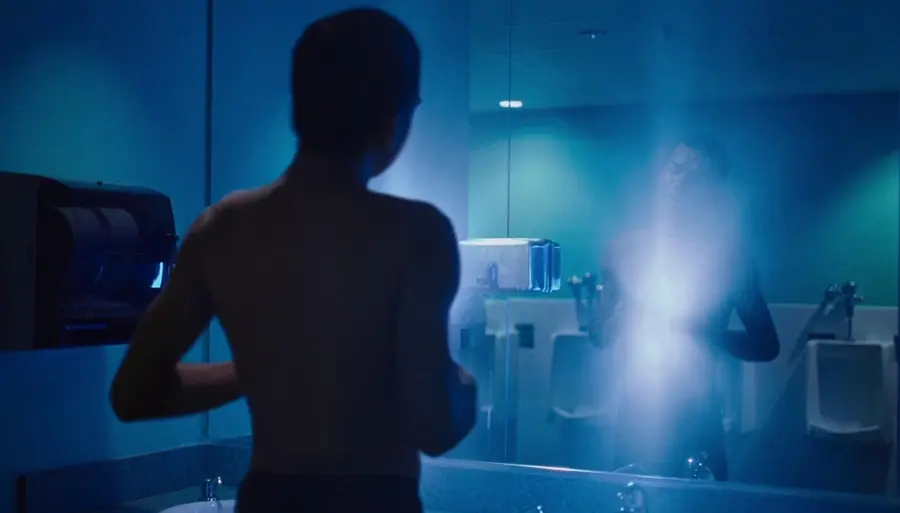
The music returns again just before the film's end. Decades later, as an adult, Owen holds a mirror up to the light leaking from a crack in his body. Having built a household and become a seemingly respectable member of society, he has turned into a flat, indifferent adult who even reacts to his once-favorite TV show, Pink Opaque, with detachment. When Owen cuts open his chest and confronts the glowing light inside, he exposes the essential self and identity that long lay buried beneath a monotonous life. In this moment, yeule's cover summons the primal sensations Owen felt as a child and signals the return of his essential self. The cover's glitchy, lo-fi texture amplifies the uncanny atmosphere where reality and fiction collide and sonically renders Owen's painful moment of self-recognition.
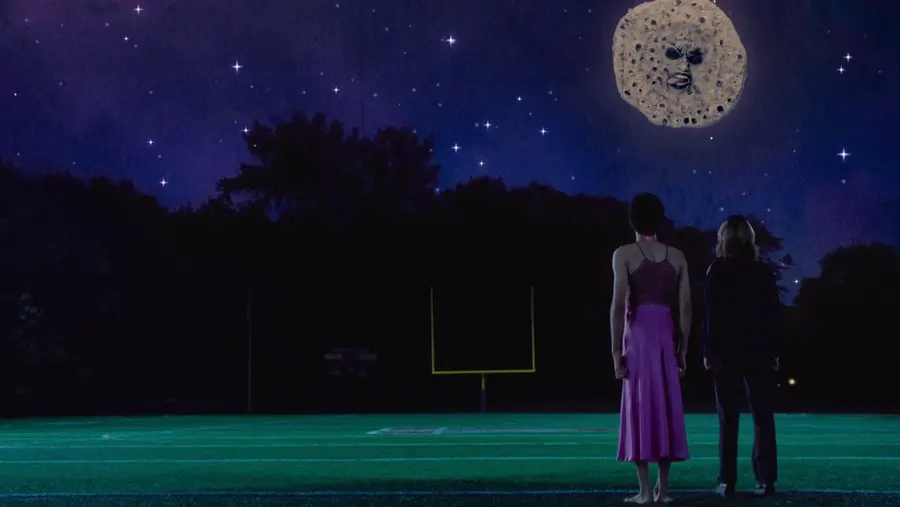
In this way, "Anthems for a Seventeen-Year-Old Girl" expresses Owen's pain at losing his essential self. But Schoenbrun uses the song to reveal not only the painful underside of growing up, but also the gender dysphoria and the liberation of repressed identities experienced by queer people and others with marginalized gender and sexual identities. The song connects the fracture points in Owen's life where his sense of self splits. The parachute sequence, with the colored fabric draped over Owen, evokes the trans pride flag and suggests how media like Pink Opaque provided a clue that helped him recognize his queer identity. Schoenbrun fashioned Pink Opaque as an homage to the U.S. TV drama Buffy the Vampire Slayer (1997–2003), which was groundbreaking for its inclusion of LGBTQ+ characters at the time; Owen projects himself onto the queer characters in Pink Opaque and identifies with them as he approaches an understanding of his own sexual identity. Yeule's music conveys Owen's interior fears and desires in a way that escapes easy verbal description. In Schoenbrun's film, "Anthems for a Seventeen-Year-Old Girl" expands into an anthem for all outsiders trying to reclaim their agency.



![[Seong Chan-eol’s Comic Books] She Lied Her Way Into the School Heartthrob’s Engagement in 〈The Glory of Yuriko the Liar〉](https://cdn.www.cineplay.co.kr/w160/q75/article-images/2026-07-02/6803c06c-f9bd-42f1-a50b-2fce2c351c70.jpg)
![[Joo Seong-cheol’s Locker] David’s Stone That Took Down Goliath, “David” All the Way Through](https://cdn.www.cineplay.co.kr/w160/q75/article-images/2026-07-13/dea82c7d-1cec-42ad-a58b-dbd1a3bfabd8.jpg)
![[Kim Ji-yeon’s Jewel Box] Han Ji-eun Gives the Best Scene-Stealing Performance of the First Half in 〈Notes from the Last Row〉](https://cdn.www.cineplay.co.kr/w160/q75/article-images/2026-07-14/22f85ccb-03a8-4d9f-9c17-0a0f51b8cf1f.webp)
댓글 (0)
댓글 작성
댓글을 작성하려면 로그인이 필요합니다.
로그인하기