



Albert Camus’ 「The Stranger」, long considered a near-untouchable text for filmmakers, returns to the screen in François Ozon’s bold adaptation — one that restores the colonial Algerian context the novel left at the margins. “Mother died today. Or maybe yesterday.” With that striking opening line, Albert Camus's novel 「The Stranger」 immediately pulled readers into its alien world. 「The Stranger」 condenses Camus's central meditation on the absurd and remains a work of enduring power in literary history. French director François Ozon brings the enduring classic to the screen with characteristic audacity; he has long explored the subversion of sexual desire and family norms and depicted life and death across genres from psychological thrillers to black comedy and melodrama. Camus's 「The Stranger」 had been effectively taboo for filmmakers since Italian master Luchino Visconti's 1967 attempt, which critics dismissed as an "overly faithful adaptation" and deemed a critical failure. With 〈The Stranger〉, François Ozon breaks that taboo and directly challenges it. His film restores the Algerian political and historical context that was excised from Camus's original. On his approach to the adaptation, he said, "I felt I was carrying forward a story for which Camus had left only a hint in the novel and never fully developed." What does Ozon's 〈The Stranger〉 inherit from Camus's novel, and what does it add?
Rendering the absurd
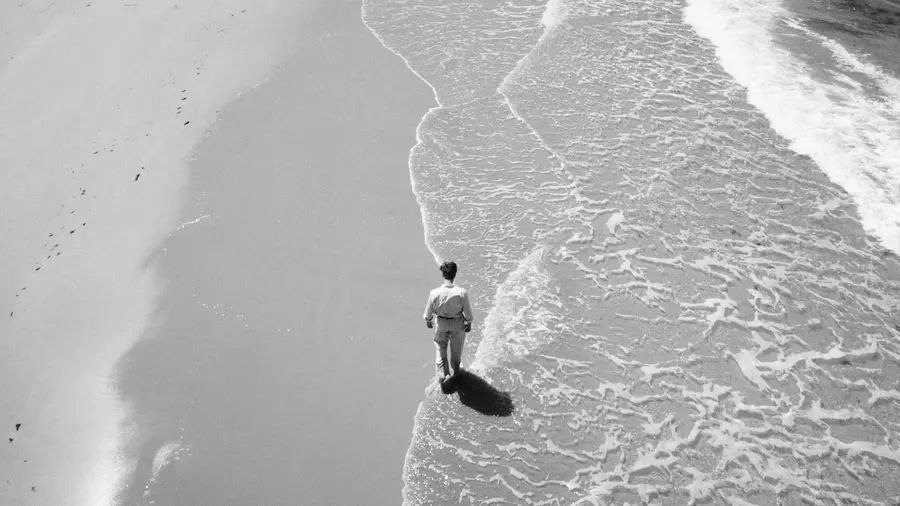
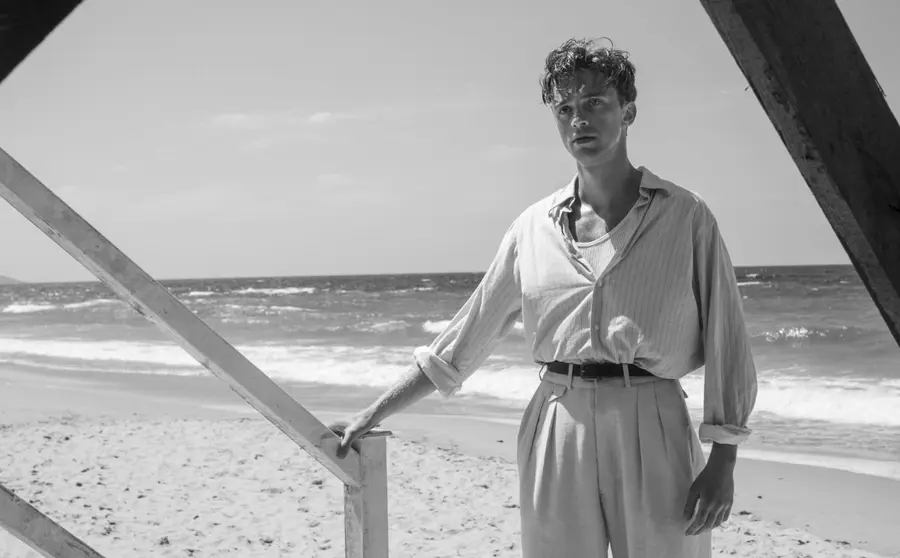
François Ozon's 〈The Stranger〉 renders on screen the sensory world of sunlight and heat that presses on Meursault's consciousness in the original. Ozon uses black-and-white cinematography not to map Meursault's (Benjamin Voisin) psychology in exhaustive detail but to reveal, through a restrained atmosphere, the emotional distance and isolation he feels from the world. That approach captures the cool effect of Camus's spare prose. At the same time, the high-contrast black-and-white photography turns the brightness of sun and beach into clashes of light and shadow. Sunlight ceases to be a benign, natural force and becomes something destructive that blinds the eye and overexposes things. In the film, the sun-drenched beach is not a restful resort but a space that bears down on the human body and will. Ozon's 〈The Stranger〉 succeeds in translating Camus's absurdity not as an abstract idea but as the palpable pressure of heat on Meursault's experience.

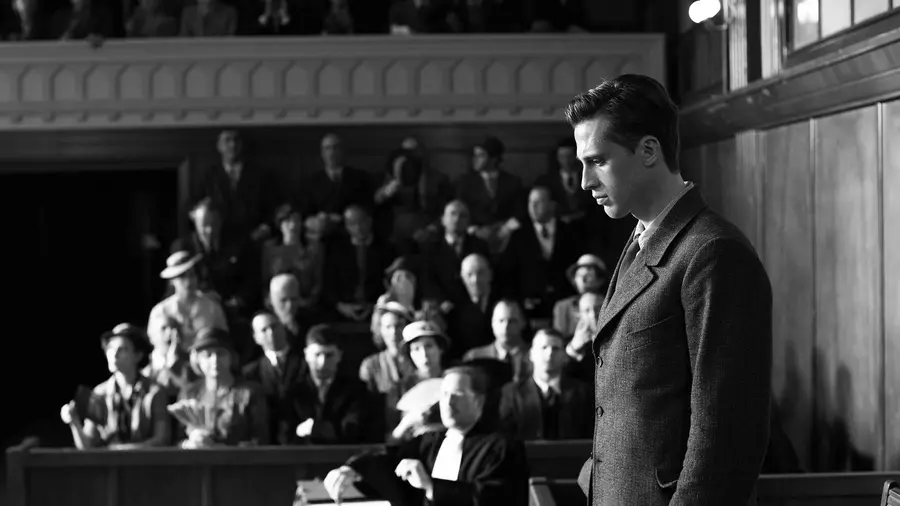
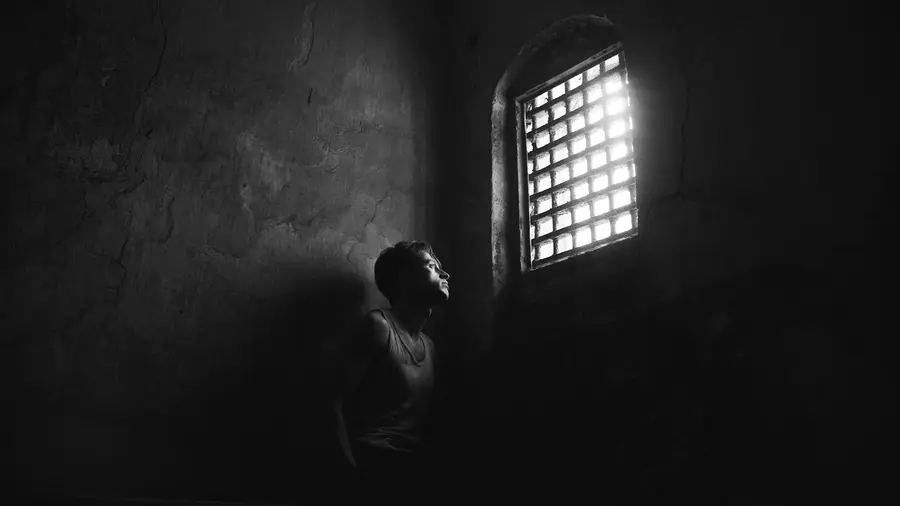
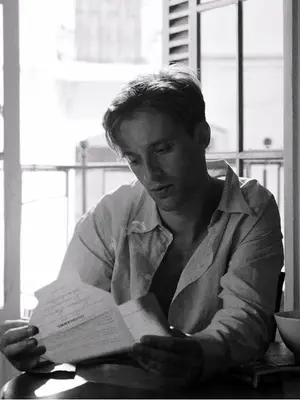
As in the original, the film is divided into two parts centered on Meursault's shooting of the Arab. Part One shows Meursault carrying on with his life seemingly unaffected after his mother's death. His swimming and his desire for his lover Marie (Rebecca Marder) suggest a drive to keep making contact with a world that offers no meaning. In Part One he occasionally feels a unity with the people around him, with nature and with the world. By contrast, Part Two depicts the trial and imprisonment that estrange Meursault from the world. That contrast forces viewers to look critically at the court process in Part Two, which seeks to force an intelligible social meaning onto the inexplicable detachment of an individual shown in Part One. People stitch together Meursault's cool behavior at his mother's funeral and the murder into a single narrative and judge his criminal act. The courtroom is portrayed not as a place where truth is discovered but as a stage where judge, defense lawyer, prosecutor, witnesses and jurors perform preassigned roles. More than that, because it defines what kind of person he should be, the trial turns into a moral drama. Throughout this process, the Arab who was killed is thoroughly marginalized.
"I killed an Arab"
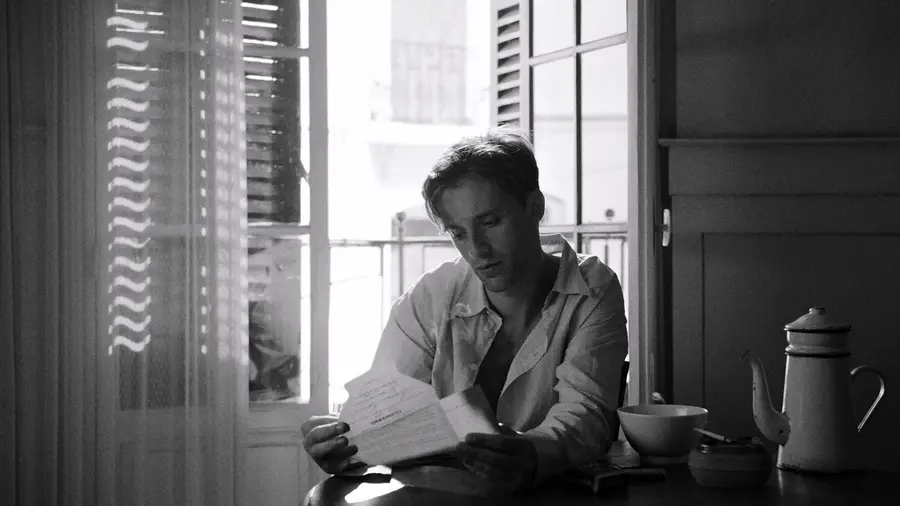
Since the gunshot rang out on an Algerian beach in 1942, for a long time the victim of that shot remained the nameless "Arab" in Camus's novel. Algerian-born writer Kamel Daoud's novel 「The Meursault Investigation」 was the first to give that victim a name: Moussa. 「The Meursault Investigation」 overturns 「The Stranger」 by recounting the story from the viewpoint of the slain Algerian's brother. Daoud deals with colonialism and the suppression of identity under French rule in Algeria, bringing back to the center of the narrative the history of Algeria and the memories of the Arab who had been pushed outside Camus's novel. François Ozon's 「The Stranger」 takes up this thread. The director opens the film with footage that presents colonial Algeria as a space developed by France. The footage adopts a familiar colonial perspective that frames domination as civilization and modernization. By placing that material in the opening, Ozon establishes a historical frame that shapes how viewers interpret the subsequent story. Before seeing Meursault's individual awareness of the absurd, audiences see the condition of colonial Algeria, and they follow Meursault's actions from a more critical standpoint.
"I killed an Arab." After the opening footage, in the next scene Meursault answers an Arab who asks him his crime on his first day in prison with those words. That line, not present in the original novel, was added for the film. "I killed an Arab" reverses the immortal line "Mother died today" from 「The Stranger」. It also reverses the novel's ordering of deaths, which structures the entire work. In the original, Meursault's mother's death is presented first and acts as the mechanism that presses on the novel and the character's unconscious. That ordering even overshadows the Arab's death, pushing the victim to the margins of both the trial and the world of the work. By making the Arab's death the first thing the audience is made to recognize, Ozon refuses to reduce Meursault's killing to a matter of individual existential absurdity and instead situates it within the power structure that frames how the French in a colonial society view Arabs. As a result, the film's narrative does not remain confined to Meursault's inner life and awareness of the absurd; it brings the Arab's otherness to the foreground and deconstructs a Eurocentric gaze. The film ultimately restores the erased victim’s name, engraving it on a gravestone onscreen. The victim's sister, Jamila, stands before a gravestone that bears the Arabic inscription "Moussa Hamdani."







댓글 (0)
댓글 작성
댓글을 작성하려면 로그인이 필요합니다.
로그인하기