


※ This article includes plot developments from the latter part of the film and its epilogue.
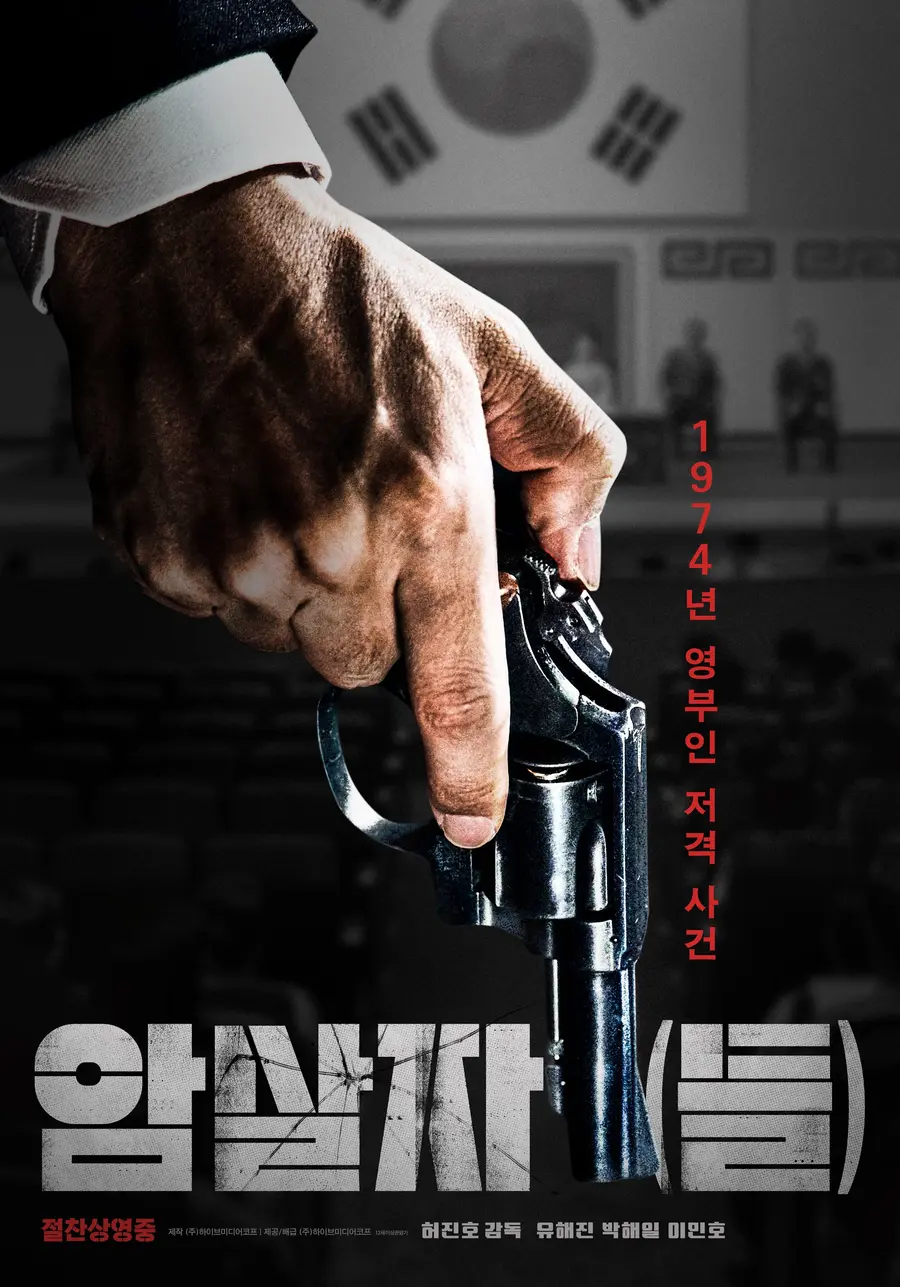
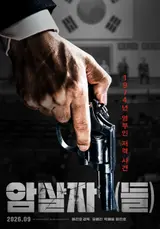
Heo Jin-ho’s 〈Assassin(s)〉 rings out with six gunshots. But what the film tracks to the end is not the bullets, but the questions left behind where the shots passed. Who fired? How many rounds were fired? Why did the evidence disappear? Above all, why are some questions not supposed to be asked?
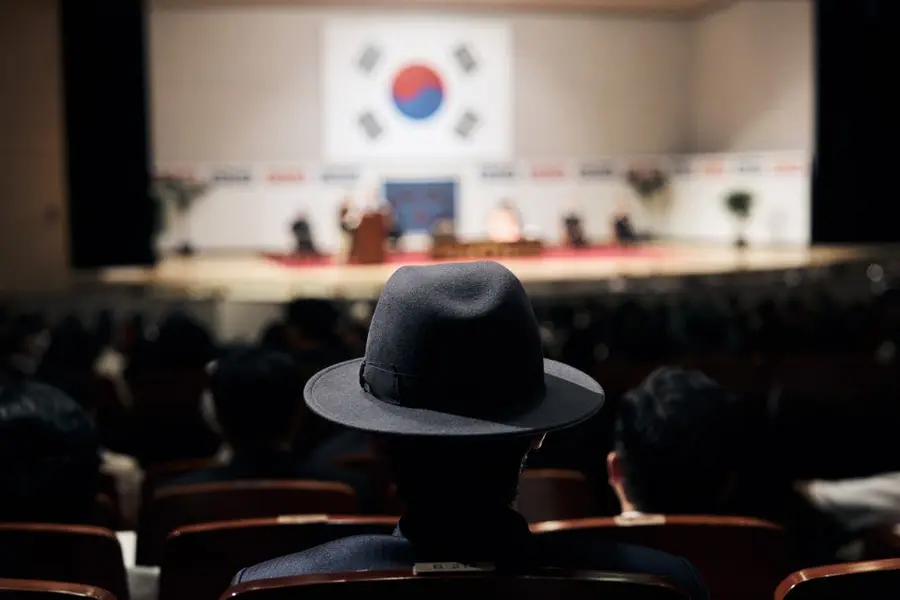
Aug. 15, 1974. At the National Theater, where a ceremony marking Liberation Day is underway, a bullet aimed at the president kills the first lady, and the gunman is arrested soon afterward. The government quickly explains what happened. There is a perpetrator, there is a motive, and the case is closed. Everything is astonishingly simple. But the moment those simple facts begin to contradict one another, the film starts to question that very simplicity.
The same day, Seoul opened Subway Line 1. As gunfire rang out and blood flowed on one side of the city, the first train began service on the other, a symbol of modernization. The film does not let that coincidence pass. The subway, imported from Japan at twice the price, was built in part by Far East Group, a company that expanded on profits generated by South Korean-Japanese economic cooperation. The company chairman’s youngest brother becomes the reporter pursuing the truth about the shooting. The irony of 〈Assassin(s)〉 begins there.
What it means to ask questions
The goal of 〈Assassin(s)〉 is not to layer another conspiracy theory onto a historical event. Rather than hastily declaring who was behind it, the film asks a more fundamental question: When the government declares that it has finished explaining an incident, what remains for those who doubt that explanation?
The film contains unexplained gunshots and a bullet that is never found. Witness memories conflict with the official investigation, evidence that should be there disappears, and inexplicable certainty spreads too quickly. Those who briefly stated the facts later deny everything and say, “I don’t remember.” From that point on, the most important act in the film is asking questions.
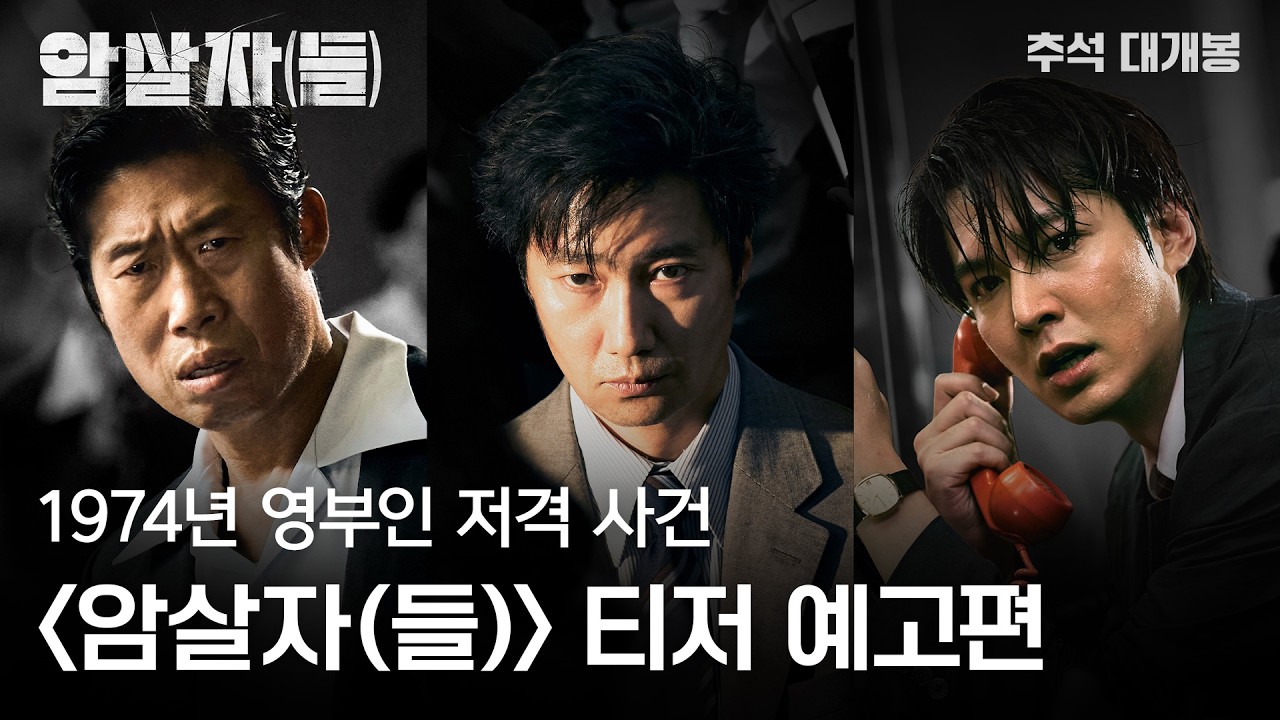
The film does not force viewers to decide whether the person asking questions had the right answer. It says that anyone with reasonable doubts should be able to ask. That is why the film cannot be read solely as a political statement. What 〈Assassin(s)〉 defends is not a particular answer, but the position of the person doing the asking. Three people stand in that position, each with something different and each paying a different price.
Jae-hwan, the man who writes to the end
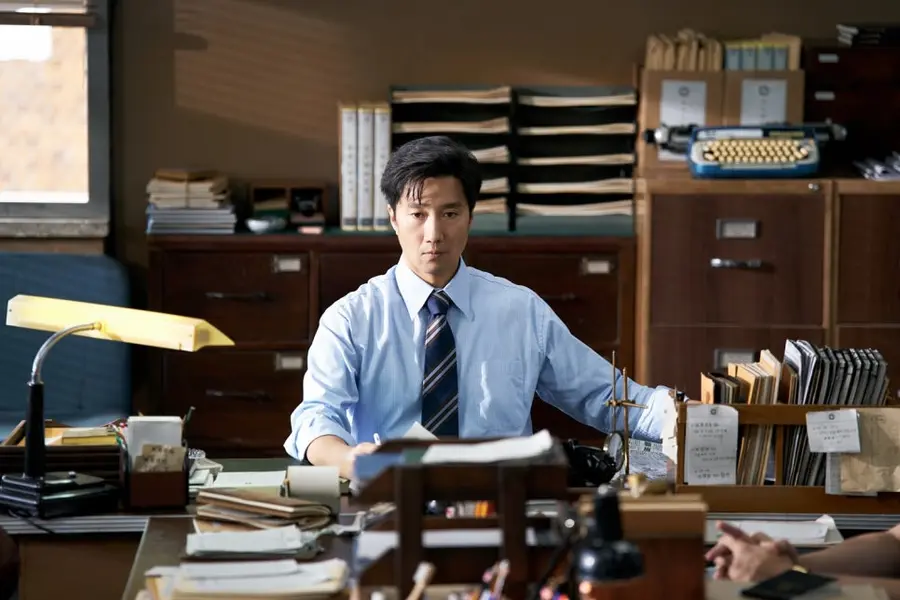
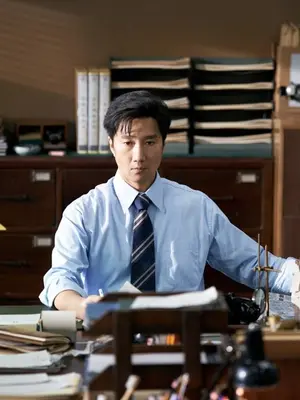
Kim Jae-hwan, played by Park Hae-il, is the social affairs editor at Dongseong Ilbo and the film’s ethical center. He is not a young hero. He is past the age when he could be intoxicated by youthful bravado without knowing what he might lose. From the outset, the film shows how well he understands danger. Because he wrote an article the regime disliked, he is loaded onto a military truck with fellow reporters. Soldiers kick him, then throw him from the moving truck onto an earthen slope. When he returns, covered in dirt, a Central Intelligence Agency official is waiting in the newsroom. The official crosses out the headline with a red pen and orders him to replace the words with more positive ones.
Some violence is not inflicted only on the body. Dictatorial power does not stop at throwing reporters down slopes; it reaches into sentences and the spaces between them to select the words they may use. It decides not what is true, but what expressions are permitted, and orders journalists to write only within those limits. That is what it means to take language away. Jae-hwan does not bend as a journalist. The courage of someone who walks back into the same place despite knowing danger all too well carries more weight than the courage of someone who does not understand the danger.
Jae-hwan’s private life remains almost entirely out of view throughout the film. He often wears a moderately rumpled striped shirt, and his drawer is stuffed with socks and underwear. He changes out of dirt-stained socks and resumes reporting. We never learn what kind of home he has or who might be waiting for him. Perhaps he has no family. The only places where he exists are his desk in the social affairs department, paper, a typewriter and pen, the reporting scene and, occasionally, gatherings with colleagues. This restraint does not make the character thin. With his private background blurred like an out-of-focus shot, Jae-hwan’s dignity as a journalist comes into sharp relief. Because only his public self remains, “truth is more important than patriotism” to him. We also understand why he reacts so violently when that truth is insulted, as if his entire life had been denied.
If Jae-hwan is in his 40s, and his age is placed against the era, he likely was born in colonial Korea and attended school when Japanese was the “national language.” He belongs to a generation that watched the country’s name and language change through liberation, the U.S. military government and the Korean War, repeatedly seeing yesterday’s truth become today’s lie. That person became a reporter for a Korean-language newspaper, carefully recording the facts, and in middle age tried once again to defend the right to record them. The agency’s red pen would not have been entirely unfamiliar to him. He had already lived through an era when those in power replaced a person’s language wholesale.
Power humiliates and threatens him whenever he draws close to the truth. It rolls up a newspaper like a club and jabs him in the jaw and stomach, threatens him with dismissal and the closure of his paper, and finally pours a sack of sand into his typewriter, destroying his tool of record. Jae-hwan picks up a pen instead. He dips the same pointed nib that pierced the sandbag into ink and writes, one character at a time, breathing life into the empty page as he sets down the “Declaration of Practice for a Free Press.”
The reading of the declaration that follows is the film’s high point. The pen that served as an instrument of threat returns to its role as an instrument of record. Deprived of his typewriter, Jae-hwan returns to an older, slower method. He must dip the nib in ink again with every stroke, yet letters and sentences continue to pour from his fingertips. Power has destroyed only the machine’s physical form, not the will of the person who wants to write. Written as if in a confrontation with the page, those sentences begin at the film’s lowest register and remain its most far-reaching voice. Through a voice filled with resolve, a moment arrives when inner sincerity, rather than heroic oratory, finally finds expression. Even as hesitation and fear show through, the words move across dynamics and pitch like notes, striking the listener’s heart.
Cheol-gu, the man who carries a life on his shoulders
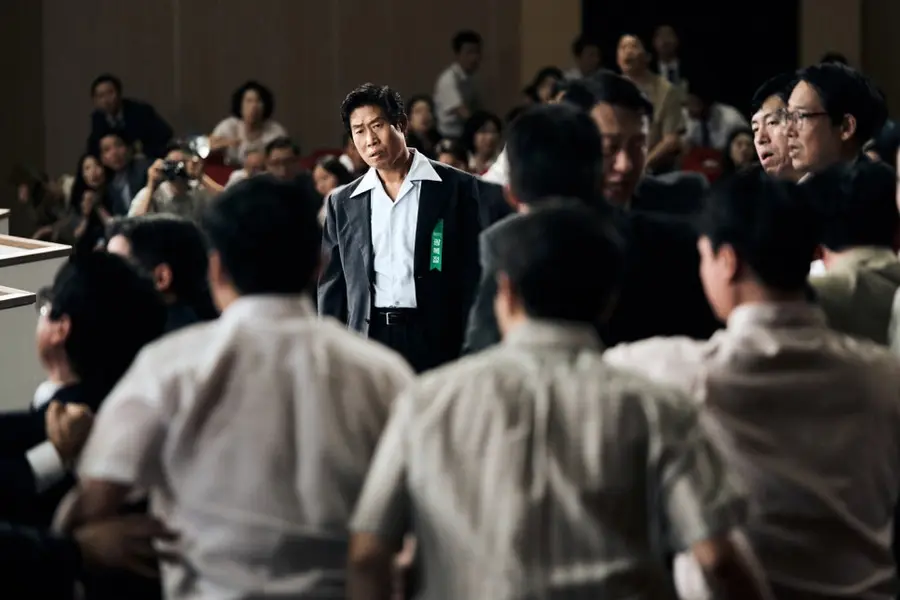
Inspector Cheol-gu of the Jungbu Police Station, played by Yoo Hae-jin, occupies a different position from Jae-hwan. If Jae-hwan’s life converges on his identity as a reporter, Cheol-gu’s is packed with work, family and daily life. The film shows his home and neighborhood without hiding anything: orders from above; his wife, daughter and son; and a junior police officer renting the small room by the front door, along with the officer’s pregnant wife. A dutiful detective worthy of a commendation, he is threatened over his family for following the traces of the case to the end and is ultimately dismissed after being made the fall guy. His wife immediately takes a Yakult cart into the struggle to make a living. The price of demanding the truth does not remain confined to one person’s body. For someone with a livelihood and family to support, the cost spreads to the entire family. Even after he no longer salutes the flag, Cheol-gu does not stop. On the day of Mun Tae-gwang’s trial, he leaves home dressed in his police uniform. It is the uniform his wife ultimately pressed neatly, even as he grumbles about whether any of this is right. The state took away his profession, but he continues to demand the truth from Mun Tae-gwang. In Japanese, the language that can reach most directly a Korean resident of Japan who never fully learned Korean, he cries out for Mun to tell the truth.
Here the film asks once more: Does truth belong only to those whose profession is to pursue it? Even after losing his job, Cheol-gu continues to ask what he should have asked as a detective determined to uncover the truth.
Young-il, the man who has much to lose
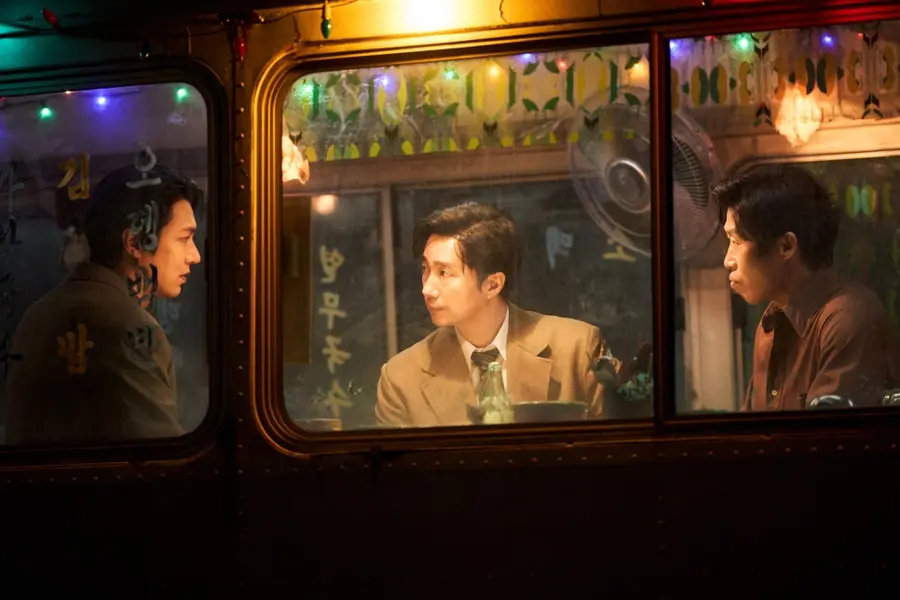
Then there is Han Young-il, played by Lee Min-ho, a rookie reporter. Born in 1948 or 1949, he is in his mid-to-late 20s. People call him a parachute hire, but he shoots back that he entered through the front door after passing the press examination. The youngest son of a chaebol family who became a reporter by his own choice, he is always relaxed, his eyes shining with ambition and passion.
Outside the National Theater on the morning of Liberation Day, a high school girl picks up and hands him a ticket stub she dropped and begs him to write an article about her choir. Young-il takes her picture and promises to write the story. The Olympus pen camera hanging from his neck appears to be his personal possession, not newspaper equipment. It is small, light and easy to operate. Its lightness resembles the way Young-il walks.
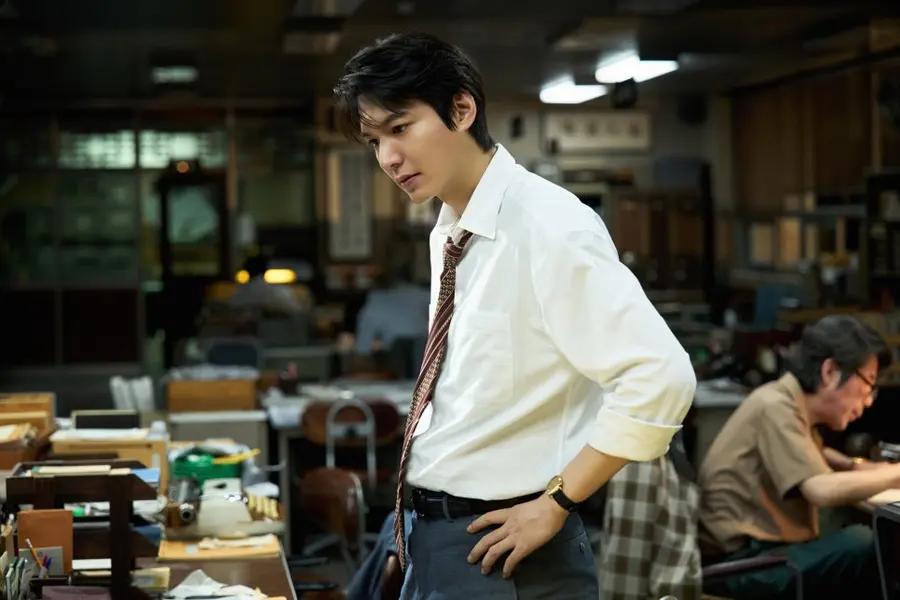
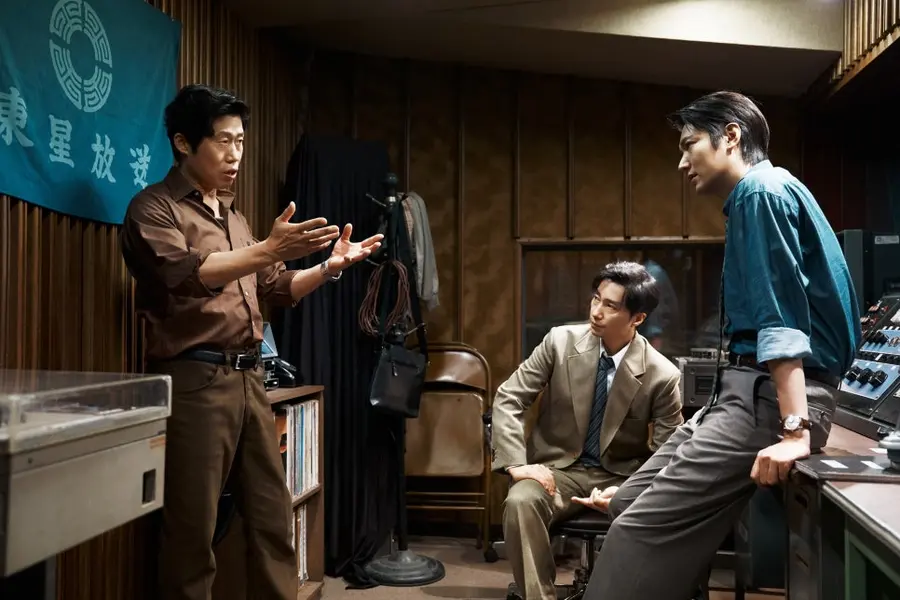
The film contains two pens. One is the pen with which Jae-hwan writes the declaration; the other is Young-il’s PEN, which records the assassination scene amid the chaos to the very end. The high school girl who smiled brightly in the photograph that day collapses after being struck by a stray bullet and eventually dies. At Seoul National University Hospital, where everyone is focused on news of the first lady, Young-il stays until the end to confirm whether the girl is alive.
During the harsh Yushin era, Young-il’s background opens doors whenever reporting is blocked. The audio room at Dongseong Broadcasting opens to a bottle of liquor he brings, and the prosecutor in charge of the investigation stops with a welcoming expression at the name of his eldest brother. The suspected accomplice’s immigration records, multiple passports that had been nearly impossible to obtain, even a branch-office employee waiting in Tokyo—all are possible because he is the youngest son of Far East Group. Everyone has the right to demand the truth, but as his eldest brother says, in a “country torn apart by poverty,” the path to the truth is not open to everyone at the same width. While Jae-hwan and Cheol-gu encounter threats early on, Young-il clears obstacles with relative ease. The capital supporting that ease has flowed from the very system in which the case he is trying to expose is rooted.
※ The review of 〈Assassin(s)〉 continues in Part 2.






댓글 (0)
댓글 작성
댓글을 작성하려면 로그인이 필요합니다.
로그인하기