



※ 〈Assassin(s)〉 actor Park Hae-il's interview Part 1 continues here.
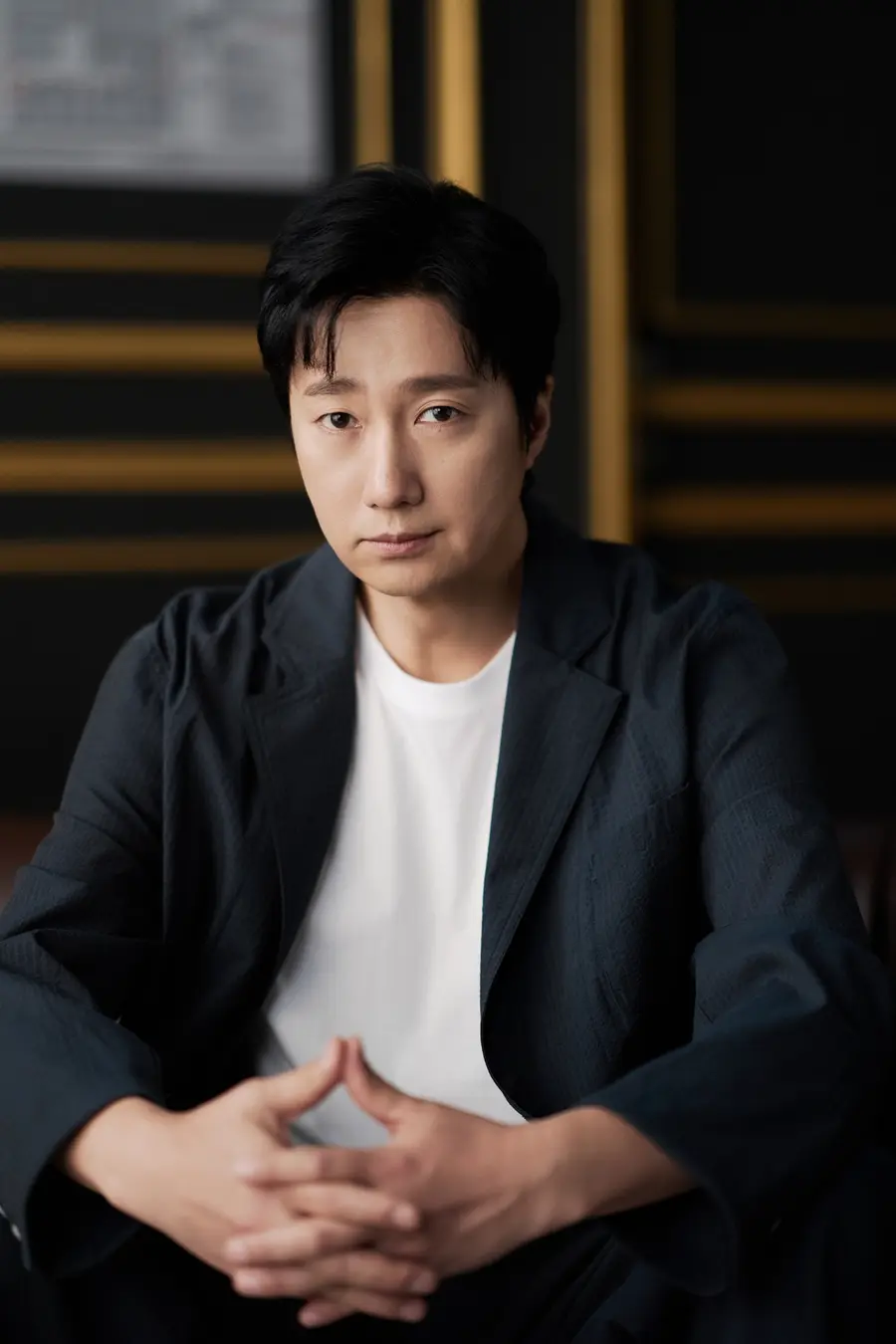
In his position as section chief, Jae-hwan both leads his team and takes the lead on the Declaration for the Practice of Free Press. From an actor's perspective, what is it about Jae-hwan that you think pushed him to go that far?
There are professional elements at play. Cheol-gu is a detective, and Jae-hwan, Yeong-il and everyone at the newspaper are journalists. Around the major assassination case, many different professions appear. I think director Heo Jin-ho focused on several of those professions to show how people with a clear sense of duty confronted the era and the events. Jae-hwan seems to be someone who sincerely tried to protect the freedom of the press as set out in the Declaration for the Practice of Free Press. That explanation worked for me. Given how difficult freedom of expression was in that era, he was someone who insisted on defending it. Today, individuals can express themselves more freely on social media, but back then the film depicts a censorship inspector system, so maybe Jae-hwan wanted to break that stifling feeling.
You mentioned the social media era — do you think a figure like Kim Jae-hwan is still necessary today?
I've said before that journalists then and now try to maintain an objective professional stance. The Kim Jae-hwan of that era walked the path of integrity. Today's professions are more diverse, but I see it as stories about each person following their own standards. Rather than a film that nails down a specific message or tone, I think — as your question suggested — it asks the audience what they think. I hope viewers stay through the end credits, including the text that appears after the additional footage, and then tell me what they think. One thing is certain: the present is a freer era than that time.
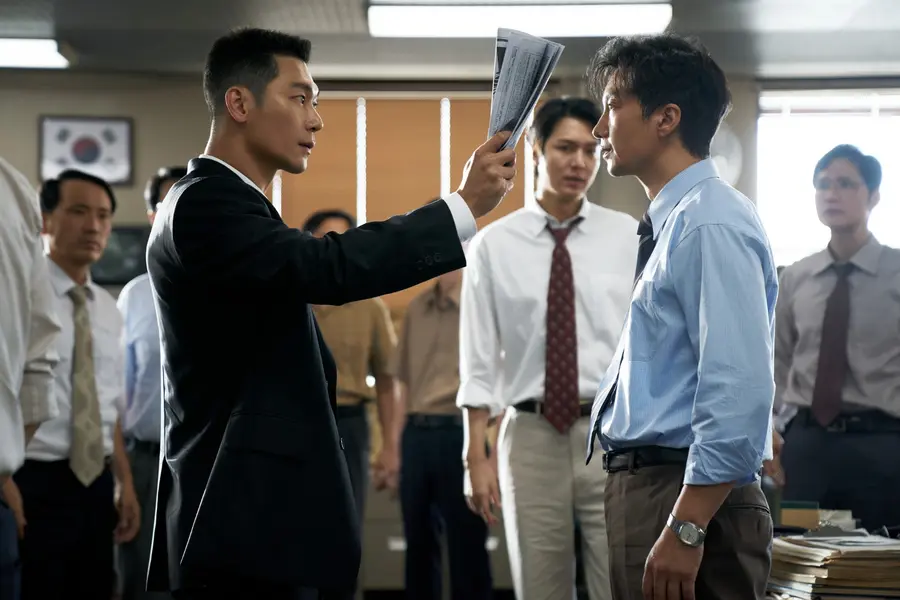
Many actors appear as antagonists in the film, and in particular Jae-hwan often clashes with Kim Sang-pil, played by Park Hoon.
It's hard to dislike Park Hoon — in 〈Hansan: Rising Dragon〉 he was the nearby commander, the role of Lee Un-ryong. He acted so well then that director Kim Han-min and I both said, “We met a very charismatic actor,” and this is the second time I've worked with him. He'd also played many public-official roles in works like 〈Seoul-ui Bom〉; he has that kind of charisma. Now his character comes into the newspaper. You don't know how many years he's been at the paper, but he carries himself as if he's partly become a reporter — brandishing a red pen. He plays an editorial role, so it felt like a character with intellectual ambitions. At the start of the film, Jae-hwan appears being transported in an escort vehicle, and I wonder if that opening existed because of Park Hoon's character. So in a way they're a kind of Tom and Jerry pair (laughs). Despite their dynamic, there are scenes in the newspaper office like sprinkling sand, so we had fun discussing details and experimenting while shooting.
Among reporters, forms of address differ slightly from ordinary office staff. For example, instead of saying the honorific form like 'Mr. Section Chief,' people often just say 'section chief.' Did that feel awkward to you?
It wasn't too awkward — I used terms like senior and senior a lot in theater, so it felt less strange. I wonder if newspaper offices of that era were really that united. The director mentioned something similar, saying it's better to focus on the essence of writing articles than on age gaps. People sometimes call an editor 'senior,' and those relationships can look subtly different from other professions. I'm the sort of person who sees that as a good quality.
From an actor's perspective, does working on a period piece like this hold a particular appeal or meaning for you?
Right now, things aren't all neatly organized. By contrast, the history of the Joseon era or modern history has been shaped and sorted through various literature and media, which you can reference. There's excitement in jumping to another era like a time machine — different trends, artistic domains, and the way I stand in front of the camera in a newspaper office, the differences in those spaces. But when you dive into another period, you have to express those gaps appropriately for the era: the costumes, the style, the culture, how people interacted, the political, economic and social-cultural atmosphere. You can't just estimate those things roughly; experts on set help shape them. Nuances, the breathing in relationships, eye contact — catching those is not easy but it's interesting. Maybe that's why Korean cinema often returns to modern history or the Joseon dynasty.
You've been active as an actor for a long time, and when people look back at your work they often find your presence at the center of the projects. You're known for that distinct quality — how do you prepare mentally when you join a project?
Thank you for saying that. Maybe that's my temperament. Actors have different temperaments; when I see an actor in a film and think, “I could never do that” — that kind of performance makes me raise both hands in surrender. When I see a great performance from someone with a different temperament, I don't think imitation will work. It makes me think about what kind of performance a natural person with my temperament can deliver. I'm not someone who focuses on just nailing a single moment; I hope to blend in well with the whole. That, to me, is good acting and a way a solid project can come together. It's more fun that way. For example, in 〈War of the Arrows〉 the bow was a very specific element and I loved that. I tried handling a traditional bow and liked the texture of it. When this role as a reporter was offered, I thought, after about 20 years of work, I must have met many reporters, but I don't think I've ever done a project where a reporter was the real focus. We had this source material to work with (laughs), so I wanted to do it. In 〈Decision to Leave〉 the detective role is something new actors often play, and it didn't appeal to my temperament as much. But that detective was different — polite to citizens, maintaining dignity as a detective — not the detective I expected or was used to. My curiosity was sparked. The role of Jae-hwan and digging into the 1970s was something that really intrigued me.
Did you do any special reporting research with journalists from that era?
I thought I should seek out journalists directly, but the director said it wasn't necessary. Instead, he shared his sense of what journalists from that era were like and suggested a line to take Jae-hwan. He provided materials and we had a lot of casual conversations. Those one-on-one talks before filming were really helpful, and I imagine the other actors felt the same. The newspaper cast got together and talked a lot about the project and our characters, and we even shared a cup of makgeolli and talked about life. The director wove that into the film's scenes — it made me realize how he brought realism to life.
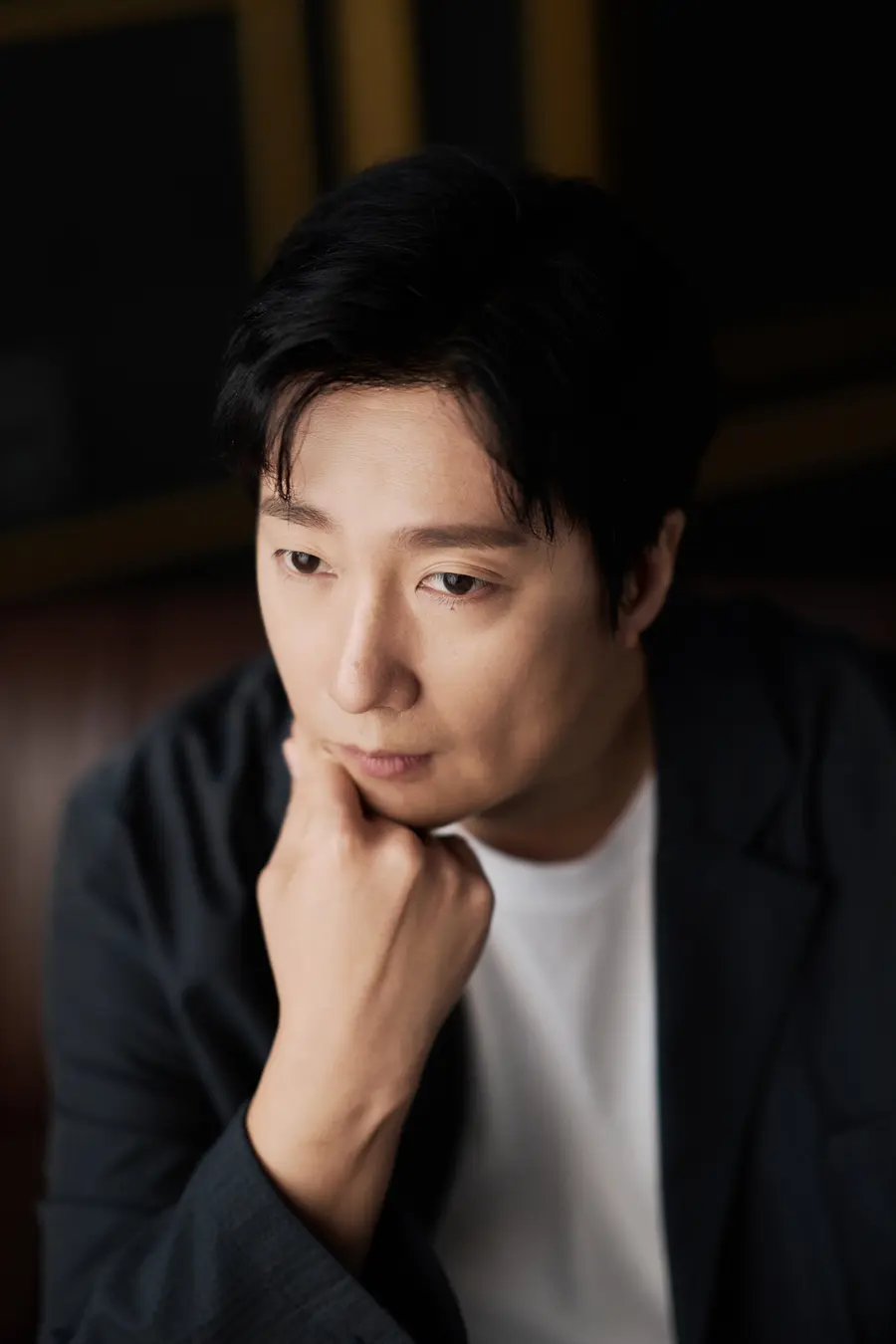
〈Assassin(s)〉 begins with Jae-hwan sending the rookie Yeong-il to cover an event. What kind of choice was that for Jae-hwan — trusting his junior?
There may well have been people like Jae-hwan in that era. I think the director wanted Jae-hwan to feel like someone who could exist today, too. Sending a newcomer to such a not-small assignment shows team trust and a hope that the junior will grow. Jae-hwan himself must have been a newcomer once, too. He experienced seniors in his profession and later encountered juniors. Looking at it that way, Jae-hwan seems like a character who learned the organization well. Trusting a newcomer, building the social-beat team through trust, not wanting to expose a junior to danger — that sense of responsibility. Jae-hwan both cares for his juniors attentively and also boldly hands them assignments. I secretly hoped — because we rarely get to portray the same profession together like this — that we'd be loved by people in that profession. (everyone laughs)
As always, you have an ageless look that makes it hard to guess your age. Do you have any secrets to staying young-looking? And how would you evaluate your own look in this film?
Everyone ages (laughs). From now on I need to age gracefully. Makeup director Song Jong-hee, who worked with me on 〈Decision to Leave〉, is celebrating her 30th anniversary this year and even held an exhibition. She worked with us again and gave just the right push in decisive scenes, so I think that helped. A great makeup director is a veteran who knows exactly when to give that push. I have to thank the makeup team.
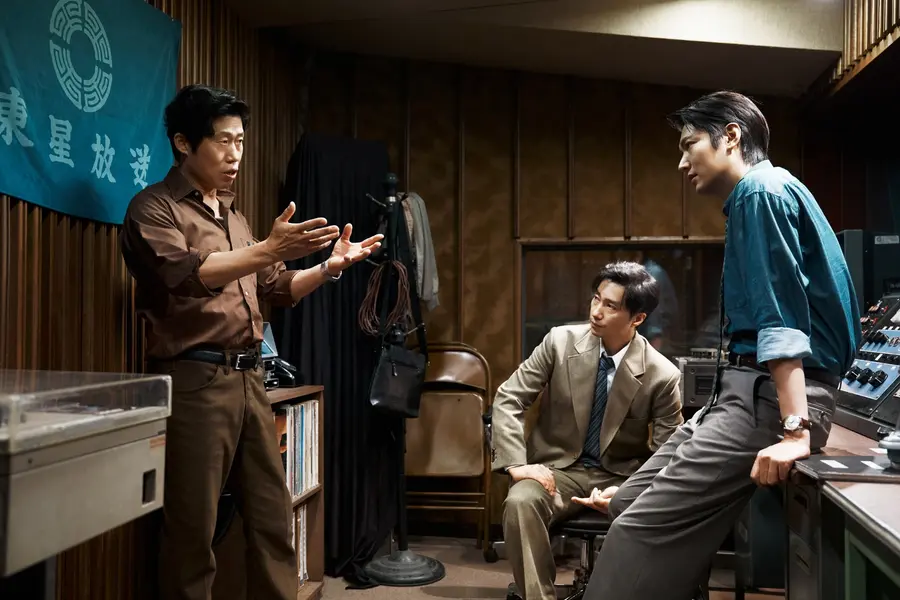
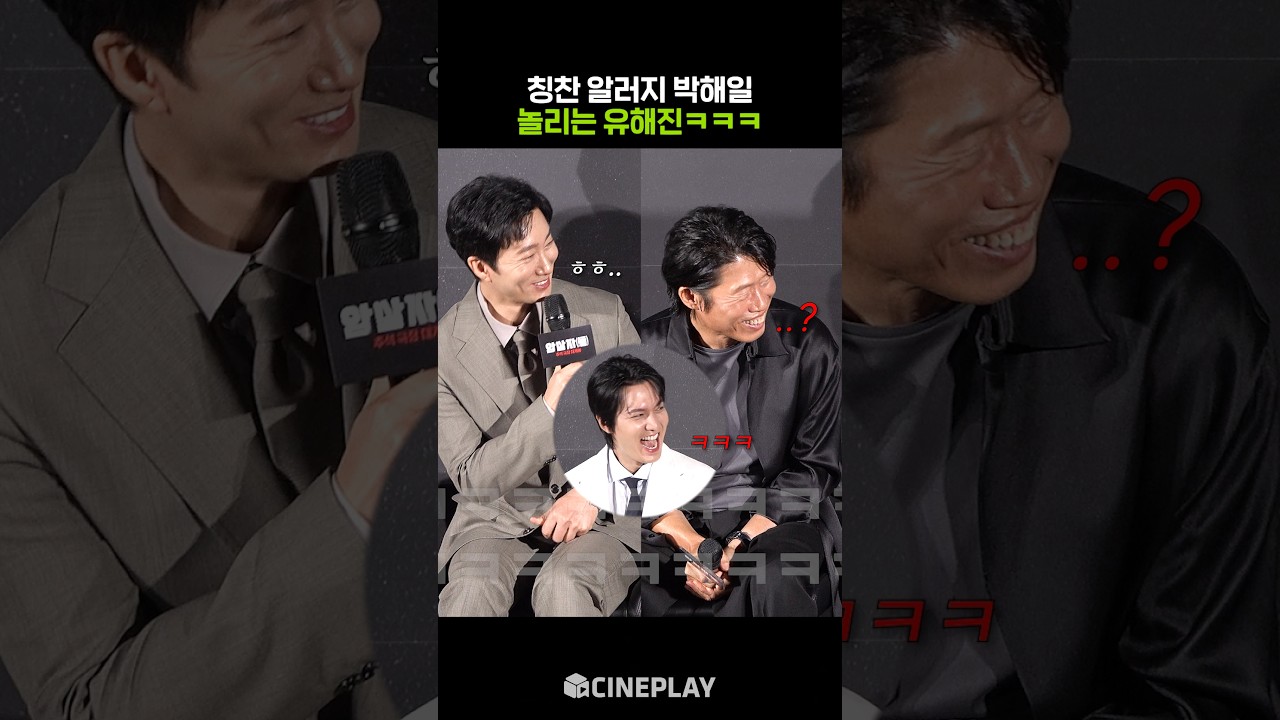
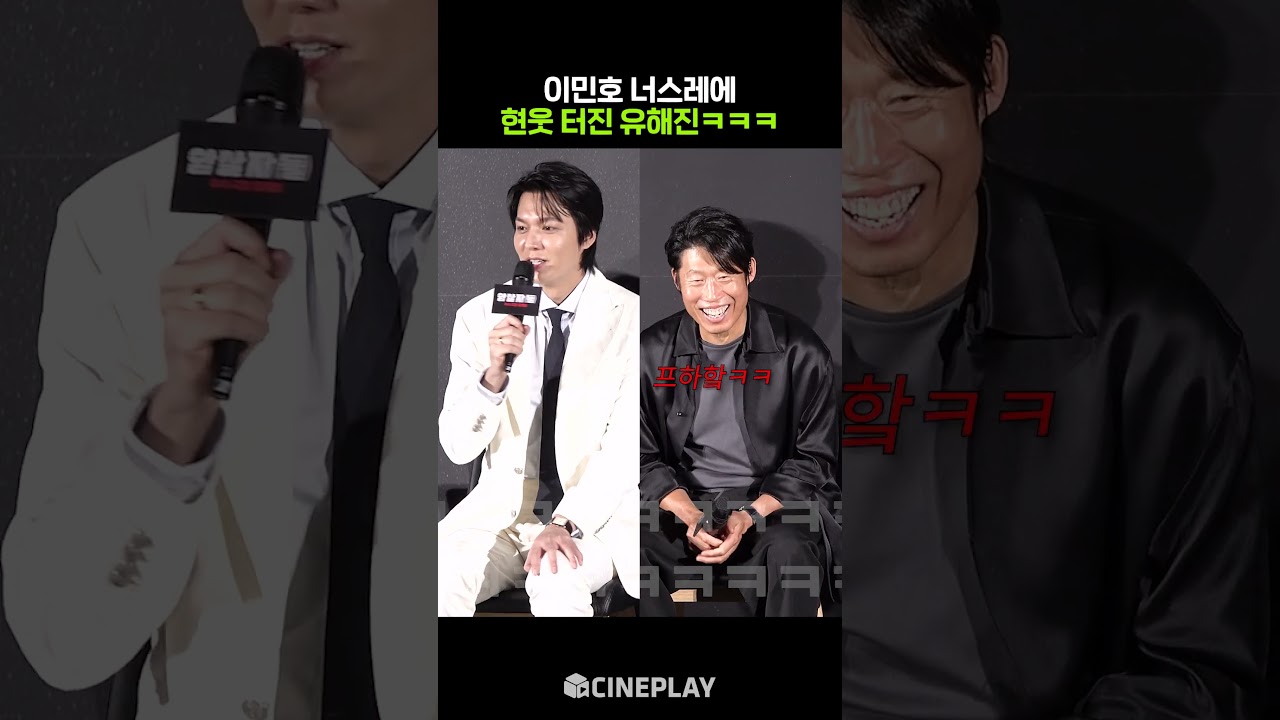
You reunited with Yoo Hae-jin for the first time since 〈Moss〉. You two even shot a promotion video challenge together, which felt a bit unfamiliar. How was it for you?
These days, promotional campaigns often ask for a challenge. Yoo Hae-jin handled it very smoothly. I learned a lot from him, not just about promotion. He helped me a great deal while building the character for this project. I joined the adult theater circuit around 1998 as a new troupe member, and while other theater groups were performing plays around us, in the play-within-a-play for "Birds Don't Cross the Crosswalk" they staged "Waiting for Godot," in which seniors Park Hee-soon and Yoo Hae-jin performed brilliantly. They were electric onstage. They went into film first, and I first met Yoo Hae-jin in 〈Moss〉. He was truly formidable — in one scene he threw everything into it and later won awards. This time we met again after about 15 years, and I became curious about how he has managed to sustain such a long career. He recently reached a peak with 〈Wang-gwa Saneun Namja〉 and his energy is incredible. I wondered how he prepares on set. First, I secretly looked at his script and saw he had dense notes written for every scene. He always carried that script and would pull out those pages as needed while acting. I'm not that kind of actor.
Another thing: after a shoot wrapped — maybe in Jeonju — I followed his car as we left for the accommodations because we finished at similar times. Yoo Hae-jin changed into running clothes and got out in the middle of the road. About six kilometers remained to the lodging, and he ran. Watching that I was struck. He was letting go of stress right then and there. I realized that's how he builds his stamina and mental focus. That's an important part of being an actor. The next day I looked for a place near the accommodations to run (everyone laughs). I didn't tell Yoo Hae-jin — I found the Jeonju riverside and ran, too. Running felt great; it helped me sleep well. What matched this film is that it starts and then keeps running at a fast tempo until the end. Yoo Hae-jin may have sensed that tone and appeared to maintain a similar daily routine. I followed his lead (laughs). I learned things from my senior like that, and I want to take this opportunity to thank him. Please make sure to tell the reporters.

댓글 (0)
댓글 작성
댓글을 작성하려면 로그인이 필요합니다.
로그인하기