



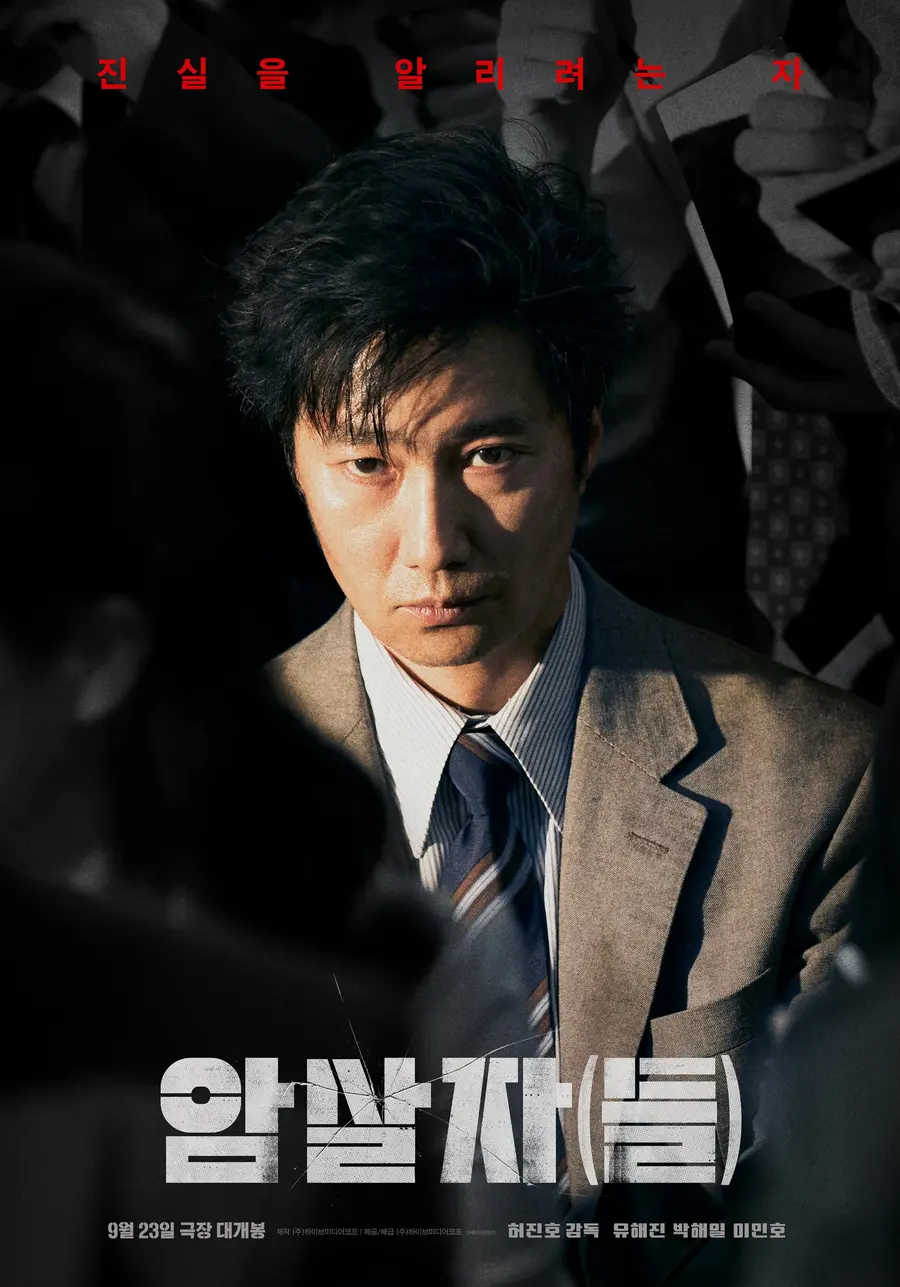
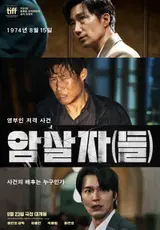
Actor Park Hae-il is returning to theaters with 〈Assassin(s)〉, a Chuseok release that revisits the 1974 killing of South Korea’s first lady through the eyes of a detective and two reporters. The film reconstructs that incident from the perspectives of Detective Cheol-gu (Yoo Hae-jin), social affairs editor Jae-hwan (Park Hae-il) and rookie reporter Young-il (Lee Min-ho). The crime scene raises more questions than answers, but the authorities move quickly to close the case. Chasing that mystery, the three sift through every piece of evidence to tease out who might be behind it.
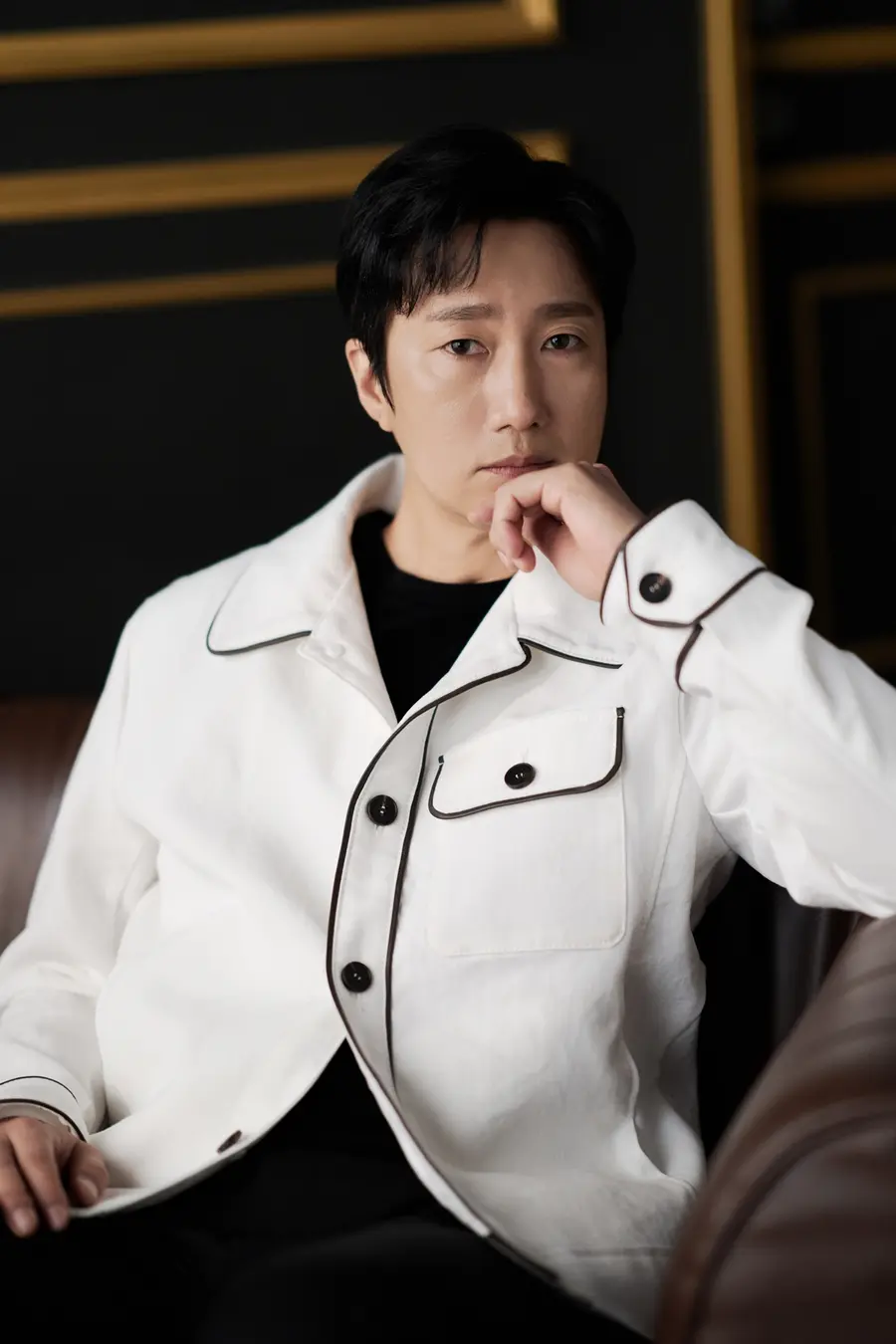
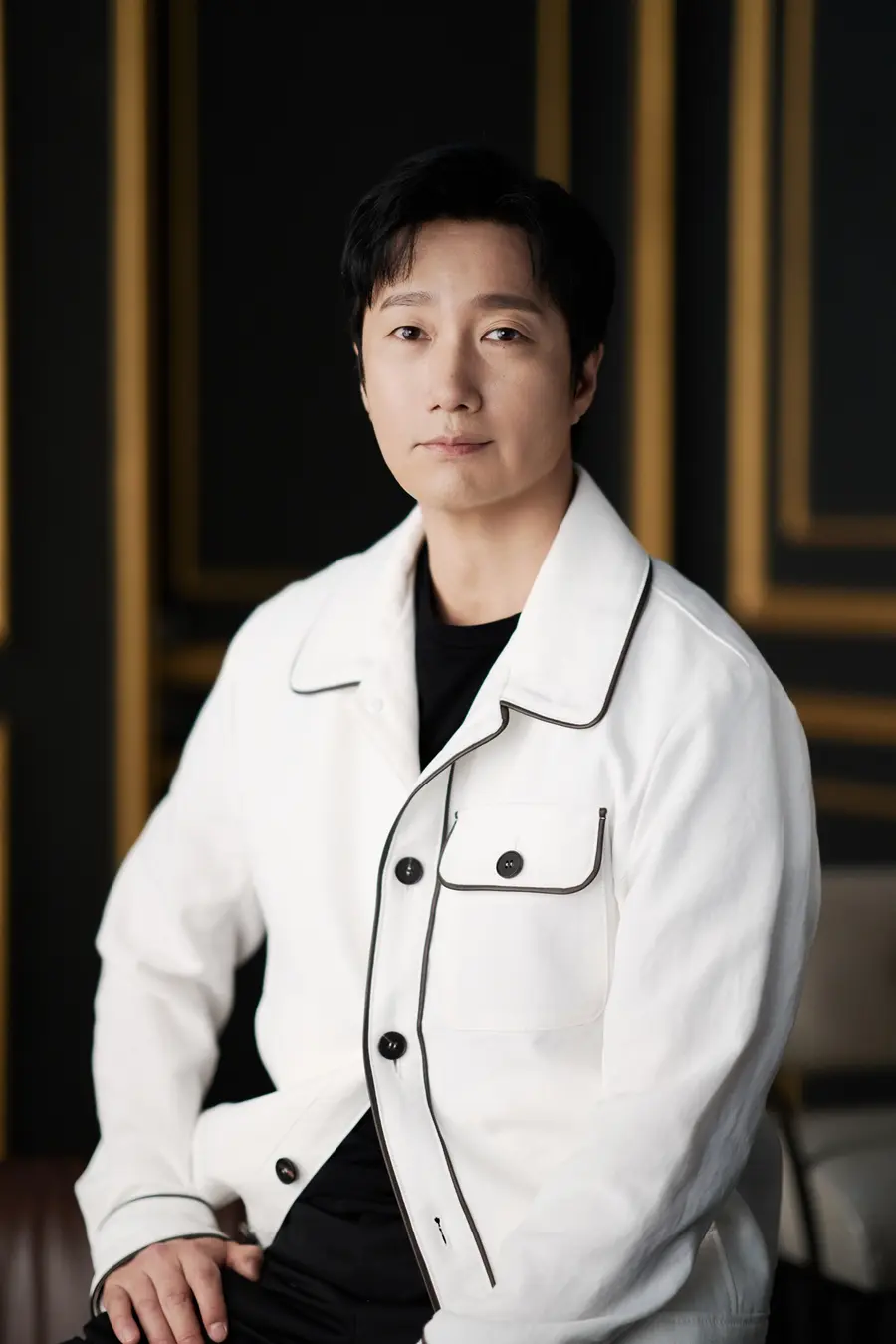
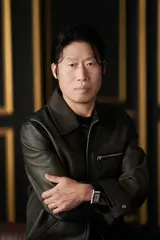
Ahead of the film's Sept. 23 release during the Chuseok holiday, I met Park Hae-il on Sept. 10 at a location in Seoul's Jongno District. He had A4 sheets lined up neatly on the table and held his pen tightly. Like his character Jae-hwan, whose quiet exterior masks a burning obsession with the truth, Park Hae-il spoke in a deep voice and conveyed his commitment to the project. Below are his comments about 〈Assassin(s)〉 and his work.
It’s your first film in four years since 〈Decision to Leave〉 and 〈Hansan: Rising Dragon〉. Was there a reason it took four years until your next project?
It seems I’d been waiting for Director Heo Jin-ho’s next film. (murmurs) Director Heo likes to drink makgeolli now and then, and he called to chat about ordinary things. We met casually, and then he offered the project and gave me the script. After reading it, I said to him, 'Is this what I’d been waiting for?' A week later I asked, 'Director, this is your first time dealing with the 1970s, right?' He said yes. His previous films — 〈The Last Princess〉 — focused on the late Joseon period, and he’s handled other eras and small everyday stories of the ’80s and ’90s, but not the 1970s. I was born in the ’70s, but the major events the film deals with happened before I was born; the incident occurred around the time I was a toddler, so I approached it wanting to learn about that era through the film.
Director Heo has said he wrote the role of Jae-hwan with you in mind from the script stage. When did you become certain this was the right film for you?
I can’t say I ever felt complete certainty, even through the end of shooting. My first impression was that I needed to breathe the atmosphere of that time, so I took cautious steps, testing every approach. I often asked the director, the main staff and the other actors whether what we were doing was heading toward the right period feel. Since my character is a reporter, the first task was to make the newsroom and my manner as a reporter believable. What would feel natural? That’s what lets the audience into the drama. The case has been covered extensively by period records, documentaries and national broadcasters, so I wanted at least to understand the broad outline before diving into the creative work.
How much did you know about the case before you received the script?
Speaking as an ordinary person, it happened before I was born, so I didn’t know much. Even as an adult I never actively researched it; I only knew the incident existed. There have already been films about 1980s events like 〈Seoul's Spring〉 and 〈1987〉, so after reading this script I wondered why this particular incident hadn’t been made into a film earlier. It’s one of modern history’s major events. Though this happened in South Korea and not every detail translates, other countries have made films from similar material. I like films such as 〈Spotlight〉 (2015, directed by Tom McCarthy). I thought: what if part of my character drew from that kind of film, showing that Korean cinema can also handle this genre? Director Heo liked that idea. The strongest motivation was wanting to bring that cinematic genre into Korean film.
Among the three main characters, Jae-hwan has the least explicit personal background. I’m curious how you prepared for the role.
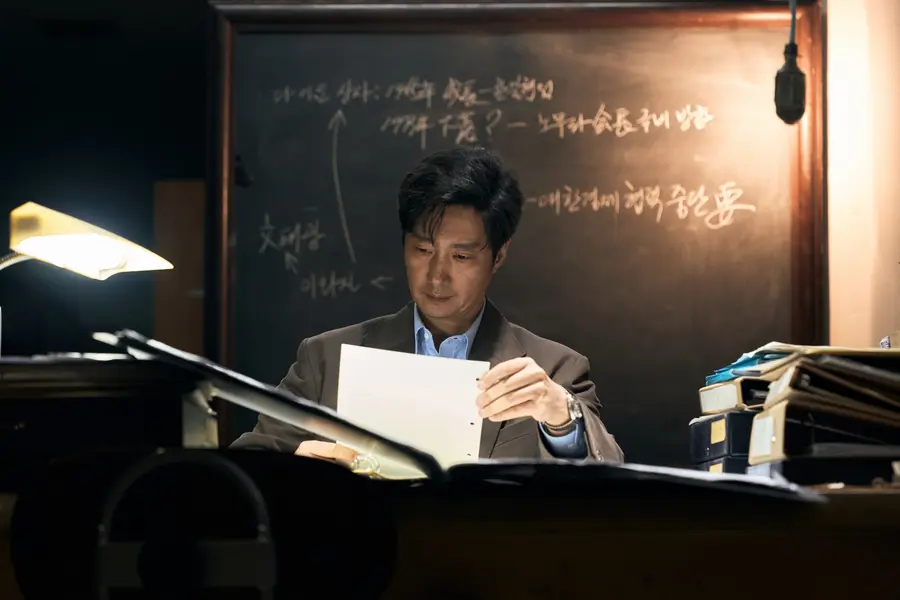
Because Jae-hwan’s past barely appears apart from his role as a reporter, I felt I didn’t have to construct an extensive personal history. That allowed me to dig deeper into his professional life and how the case affects him. Still, I asked the director, 'How might Jae-hwan have lived?' Actors and directors usually work through those questions together — was he married, had he been in the military, did he have children? In this film those personal details are largely omitted, so it felt right to focus the character on the events and the role within the story. Yoo Hae-jin’s Cheol-gu, by contrast, has a rich personal and professional backstory. Perhaps the director intended that contrast.
This is your second collaboration with Director Heo Jin-ho after 〈The Last Princess〉. What is he like as a director?
Director Heo is probably the gentlest director I know. But if you look closely, there’s tremendous turmoil beneath that calm; you have to look carefully to see it. He leads the set in a truly gentle way that lets actors and crew concentrate on their parts. While we were performing, he would sometimes ask, 'Why is your acting coming out like this? Why did you move that way?' He observes even how I breathe and invites us to share the cut and the take together. That attitude builds trust and allows for honesty. Sharing even small choices disarms everyone and increases focus.
At the press conference you said one of your challenges was avoiding repetition of yourself.
The word "repetition" suddenly came to mind that day. When you work with the same director a second time, familiarity can be a benefit, but as an actor you also want to draw out something new from what you have and show it. That’s why I used the word. In 〈The Last Princess〉, I wasn’t the story’s main focus, but I appeared as the reporter Kim Jang-han. For this film I wanted to find something new to show a director I’d worked with before. I think the director understood that and nudged us down different paths at different times.
There is a climactic scene where you deliver the "Declaration to Uphold Freedom of the Press." From the film’s overall tone it could have come off as awkward. How did you prepare to perform that scene?
For me that scene was especially important, as was a long meeting scene with Chairman (Jung Woo-sung) in which, as a senior reporter, I present evidence and context. That scene was quite long; it was actually trimmed. As far as I know, the first take ran seven to eight minutes. I prepared a lot. The director left the final call on how to shoot the dialogue until the very end; he ultimately decided he wanted to film the lines as written. I did wonder whether, if I saw a scene like that in another film as an audience member, it might feel burdensome. Inside the newsroom the situation is chaotic, and then someone reads a declaration — would that work? When you shoot, once or twice among many takes you sometimes hit a weightless state. In 〈Decision to Leave〉 the final seaside scene was like that. Looking back, those are the rare weightless moments. Fortunately, a similar state came once while filming the declaration scene. It wasn’t a long state — I couldn’t dwell in it — so there are some faltering moments. I felt delivering it perfectly from memory might be odd, so I tried to feel the scene in front of me. Even if I stumbled a bit, I wanted to keep the emotion going. I’m satisfied with the result more than I feared.
The newsroom at Dongsung Ilbo comes across as unusually egalitarian. The director said that atmosphere came from you — how did you try to cultivate that on set?
We had Lee Min-ho, Ryu Hye-young, Kim Dae-myung, senior actor Bae Sung-woo, and even our boss, Kim Ki-cheon. (laughter) I’d previously worked with Kim Dae-myung in 〈The Last Princess〉, where he played a role that helps set off a key moment in the story, so we were already comfortable with one another. Even in the same profession, we moved together without friction. I met Ryu Hye-young on 〈My Dictator〉 and hadn’t seen her in a while — I’m a fan of hers. She’s bold and sharp, and the director must have known that. She’s Dongsung Ilbo’s only female reporter; she seemed fully aware that there were not many women reporters in that era, and you could see how hard she worked to do it justice. The sense of camaraderie among colleagues felt very natural.
Early in the film, there’s a phone scene between Young-il and Jae-hwan that you both performed on set. I heard you squeezed your body under the phone while exchanging lines. Was that a gesture of consideration as a senior actor?
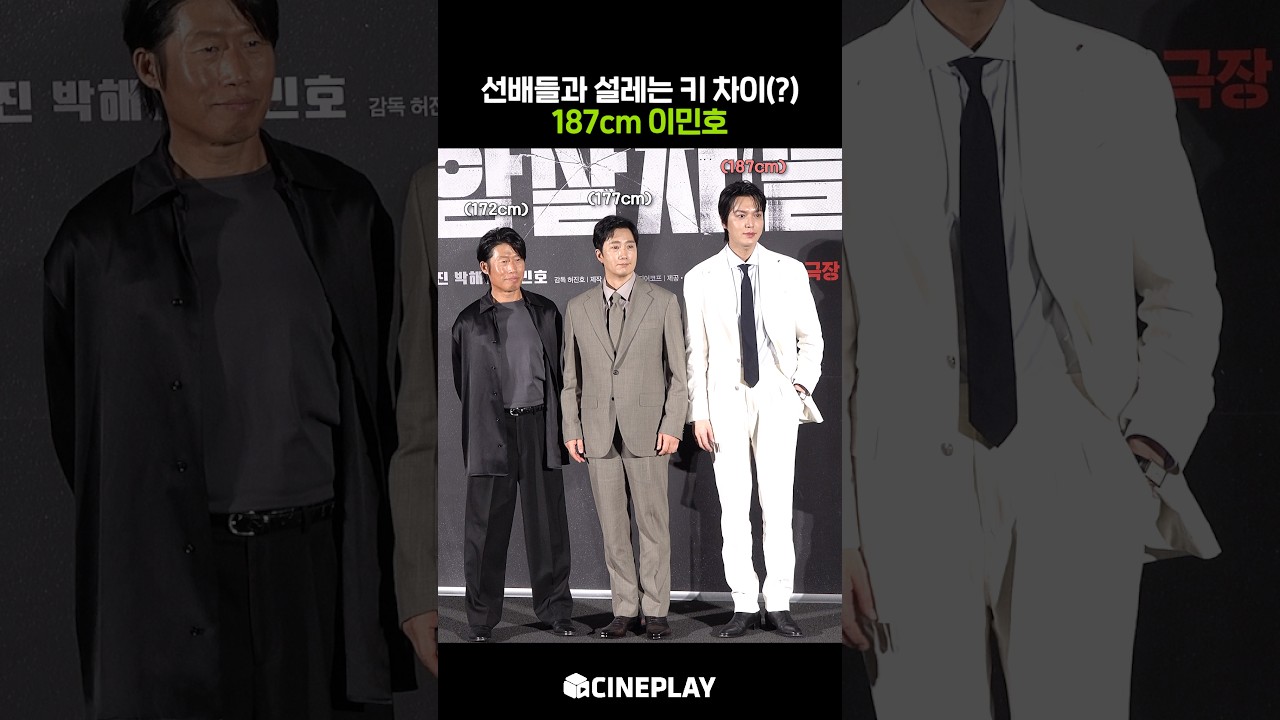
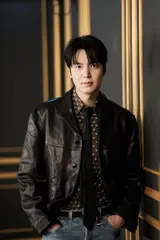
I met Lee Min-ho at the film company; he’s very tall. My first image was, 'Someone like this at a newspaper?' (laughter) I thought, what an odd cinematic situation — oh right, we’re making a film. At the same time, I could see why Director Heo wanted him in the film. I also felt that Lee Min-ho’s Young-il would be convincing to audiences and interesting. He has a masculine presence, but he also reminded me of a young Shin Seong-il. That blend felt appropriate for a character plausibly in 1974. Young-il isn’t a nepotism hire; he earned the job by passing the highly competitive journalism entrance exam. At that young age he’s capable and deserves the opportunities he gets, so it makes sense he joined the paper. As Jae-hwan, a veteran reporter, I imagined I’d want to guide a junior at some point. But when Young-il proved himself, Jae-hwan would be moved. He becomes a reliable junior and professional colleague.
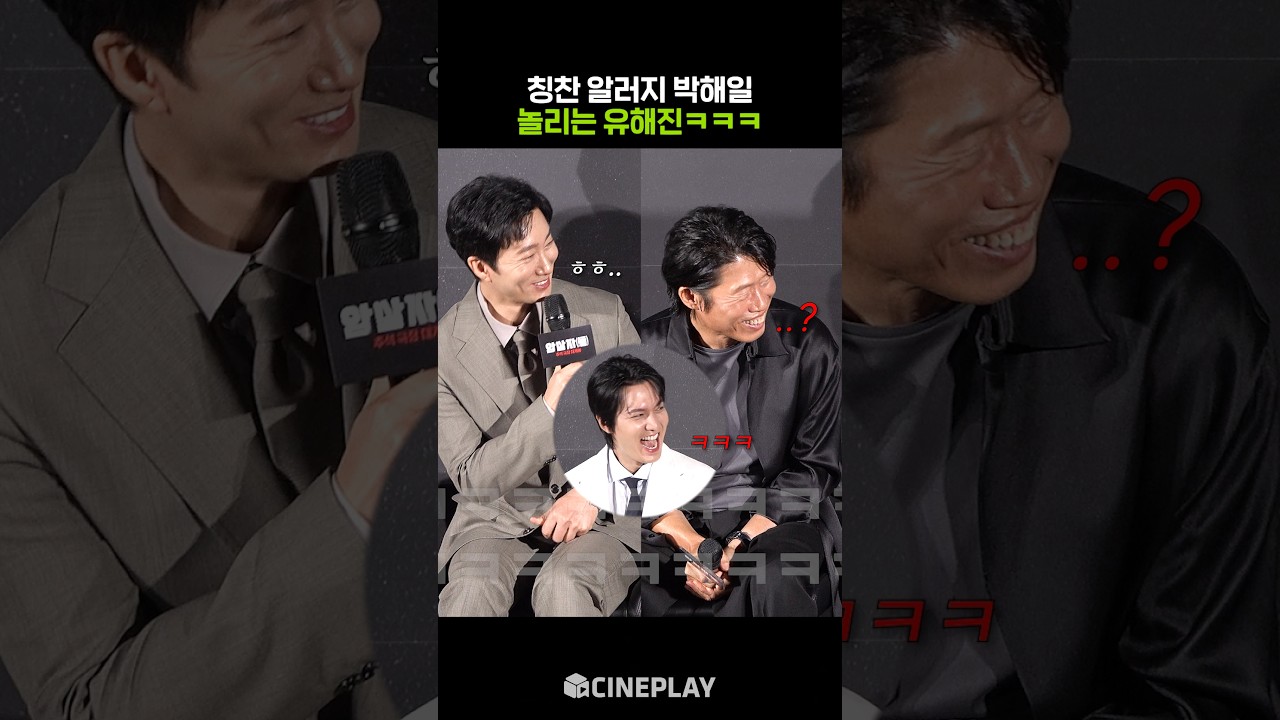
When Lee Min-ho’s casting was announced, some people said he didn’t seem to fit the part. From your perspective, what do you think the director saw in him? And how was it working with him on set?
Look at Director Heo Jin-ho’s filmography: Bae Yong-joon, Jung Woo-sung — and Heo himself is tall. Lee Min-ho also has qualities the director likely wanted. From what I saw, it felt like he came having set everything else aside and fully committed. He would even come to the set on days he wasn’t shooting. I suspect he didn’t like to say this himself because it’s embarrassing, but fans would show up from various countries even on set. (laughter) It was surprising. He must be aware of that and feel some pressure, but he still came to support the team. When he says a word of encouragement, the whole set comes alive. (laughter) Our first shoot together was the phone scene where he makes the call. I went to the set because I wanted to see how he moved as an actor. I also had my own scene receiving that call in the newsroom, so it served as a kind of rehearsal for me. So it worked out both ways for me. (laughter) I went to look after my own part, too.
※ The interview with Park Hae-il about 〈Assassin(s)〉Part 2 continues.

댓글 (0)
댓글 작성
댓글을 작성하려면 로그인이 필요합니다.
로그인하기