


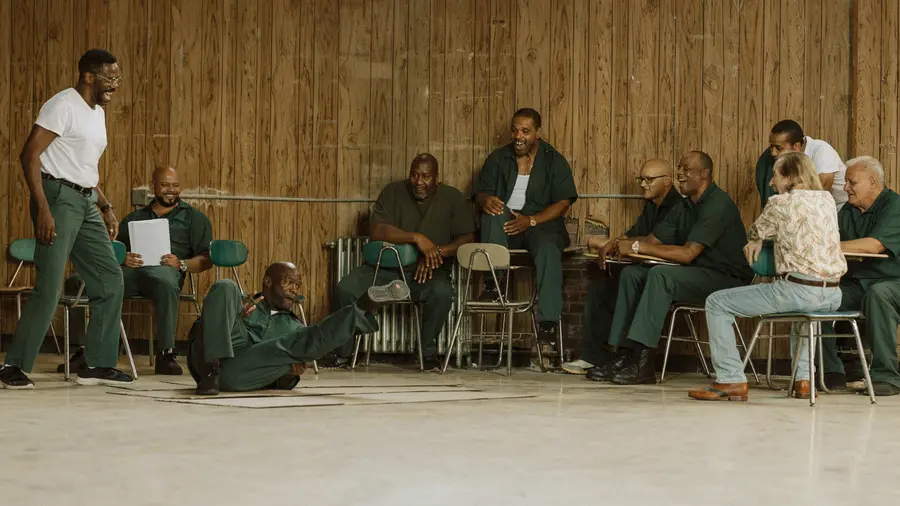
Calling them nonprofessional actors would itself be an insult. They may be newcomers to screen acting, but they had already spent years performing onstage in prison. They are the cast of 〈Sing Sing〉.
〈Sing Sing〉 follows Divine G (Colman Domingo), imprisoned at New York’s Sing Sing Correctional Facility after a wrongful conviction, as he finds meaning in life through theater. Rehabilitation Through the Arts, or RTA, the arts-based reentry program depicted in the film, began as a theater workshop at Sing Sing in 1996. Having helped significantly reduce recidivism, it has since expanded to other prisons.
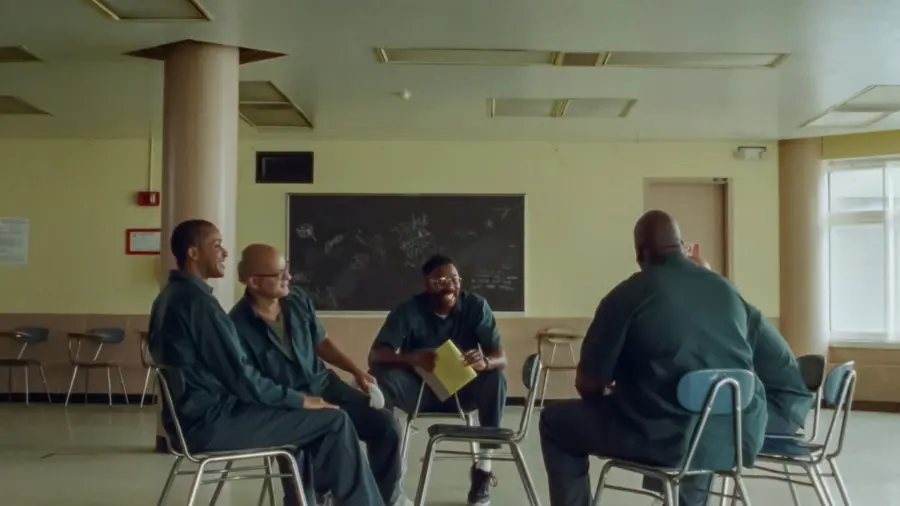
Rather than preach the benefits of RTA, 〈Sing Sing〉 quietly observes the men putting on a play and living their lives. In a prison once dominated by macho posturing, the theater workshop brings them together to sit and talk openly, show their vulnerabilities without hesitation and share cherished memories one by one. They begin to recall their real names, the names they were called as children, long hidden behind tough nicknames. In doing so, they reclaim themselves as human beings, not just incarcerated men.
The play the RTA participants stage is a true genre mash-up: an original comedy featuring Hamlet alongside Western cowboys and Egyptian pyramids. Sing Sing’s singular production begins with a suggestion from Divine Eye (Clarence Maclin): “Do we always have to do serious plays? We deal with trauma, incidents and tragedy here every day. I bet the guys would rather do a comedy.” Whether or not it has “a message,” the play simply includes everything they like. For men who had long been unable to speak honestly about their feelings, it becomes an invaluable outlet for self-expression.
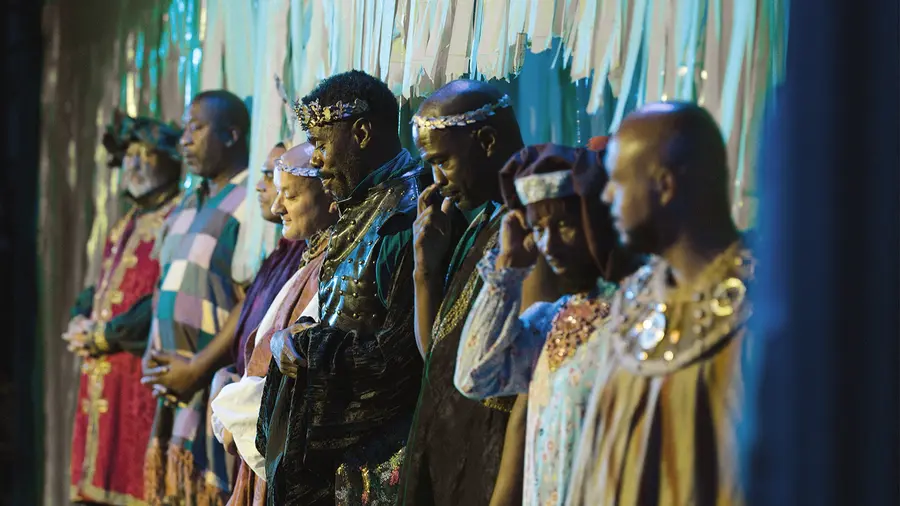
The play staged by the men in the film, ‘Breakin’ the Mummy’s Code,’ was actually performed by Sing Sing RTA participants in 2005. More astonishing still, 85% of the film’s cast are RTA alumni who were themselves incarcerated. That is why 〈Sing Sing〉 does not feel complete until the end credits roll: Beside the performers’ names appear the words “as himself.” The people we have watched laugh and cry on-screen were, in the end, playing themselves. Only then does the audience see that what it has been watching was both a performance and their lives.
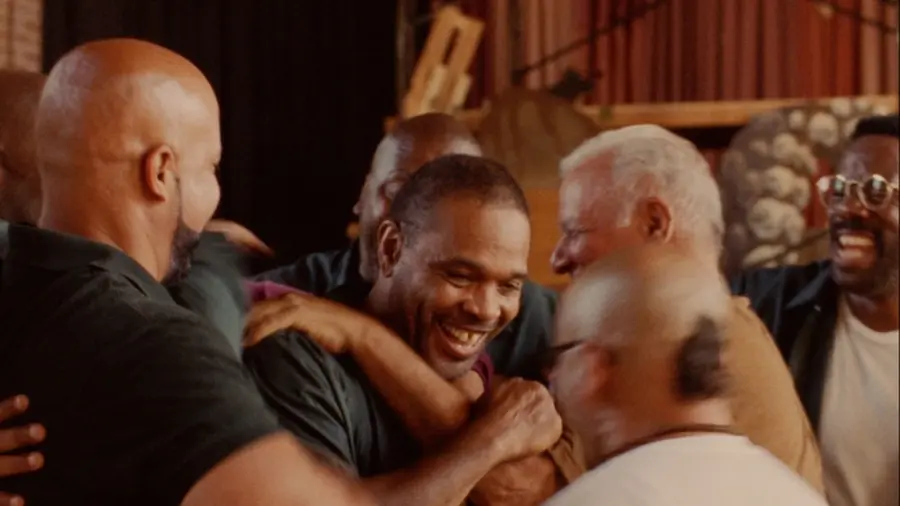
At its center, the film traces how Divine G and Divine Eye tend to each other’s wounds and become friends. Divine Eye applies to RTA after a chance encounter with 「King Lear」, which falls from a library cart. “When I was in solitary, I came across this book,” he says. “Something a guy in it said really got to me. What was it? ‘When we are born, we cry that we are come to this great stage of fools.’ I thought, the guy who wrote that must’ve done time.”
A gangster stumbles on a Shakespeare play that has fallen from a library cart and discovers the world of theater. That is Divine Eye’s story in 〈Sing Sing〉, and it is also the story of Clarence Maclin, the actor playing himself. Maclin, who spent 15 years in prison, also found theater by chance. He says he got lost on his way to the prison yard, happened upon the RTA program and began acting. Once so tough that he called himself “the yard bandit,” he was captivated by theater: “In prison, you had to hide your feelings because you couldn’t show weakness. But onstage, you could have feelings.” Chance encounters led Maclin to art. Other RTA alumni, including Sean “Dino” Johnson and Jon-Adrian “JJ” Velazquez, likewise play characters modeled on themselves, bringing the weight of lived experience to the story onstage.
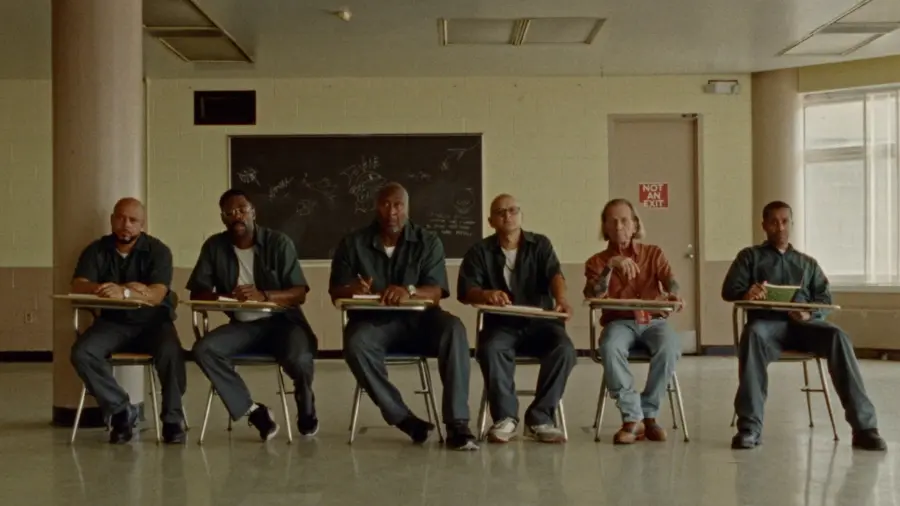
That is what makes a moment late in the film, when its staged play overlaps with footage of an earlier production at the real Sing Sing, so striking. Fiction may be woven into the film’s story, but the film itself is unmistakably real. Not everything factual feels true, and a little fiction does not make something untrue.
The scene in 〈Sing Sing〉 in which Divine G faces a parole board can be read the same way. It confronts the question of what is fabricated in the film and in acting itself. Divine G explains RTA to the board: “It was created to improve the management of incarcerated people, but it became something a little more remarkable. It helps people manage and develop their emotions, leading to genuine rehabilitation.” The board members counter: If he has learned to become someone else onstage, could the remorse he shows them now also be an act?
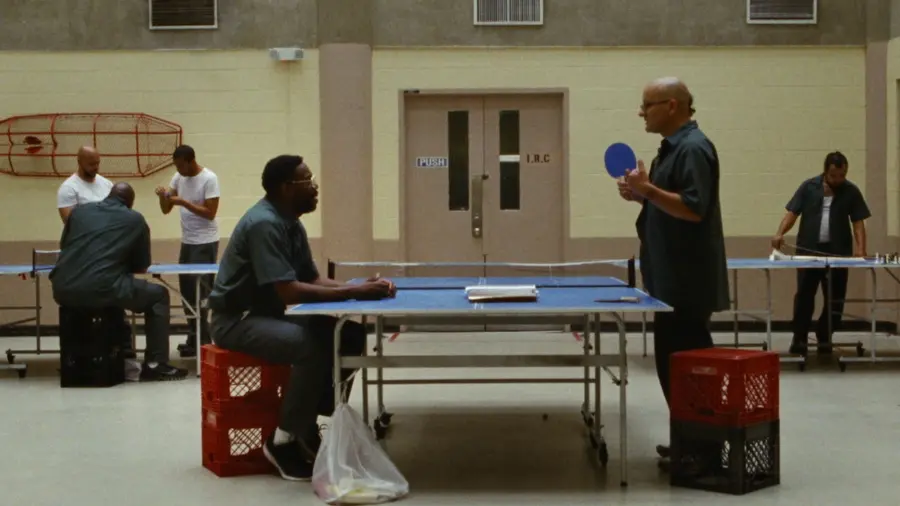
Does that mean their work, their acting and, by extension, 〈Sing Sing〉 itself amount to nothing more than making things up? The board suspects Divine G is performing at his hearing just as he does onstage. But it was offstage that these men had to perform a false version of their lives. Paradoxically, only after stepping onto the plainly fictional stage of a play did they gain the freedom, perhaps for the first time, to express their real feelings.
Acting may be invented, but it is not deception. The people they play were never false. Actor, character in the film, character in the play within the film: Those three overlapping faces are not so much a lie as the person himself. Maclin really did find theater by chance, and it changed his life. The emotions and experiences the actors bring to their performances are real, too.
That is where the film draws its power. And, really, our lives are rather like ‘Breakin’ the Mummy’s Code’: a strange, jumbled tragicomedy without a consistent genre or a grand lesson. As one incarcerated man confesses, “Playing all those characters in one show—that’s exactly what my life is like.” The men in 〈Sing Sing〉 throw on makeshift costumes and romp across the stage, finally able to breathe. So 〈Sing Sing〉 can be read as a film asking whether art can change people. At the same time, it resonates with all of us trying to make it through the awkward tragicomedy of living. That, after all, is what life is.



댓글 (0)
댓글 작성
댓글을 작성하려면 로그인이 필요합니다.
로그인하기