



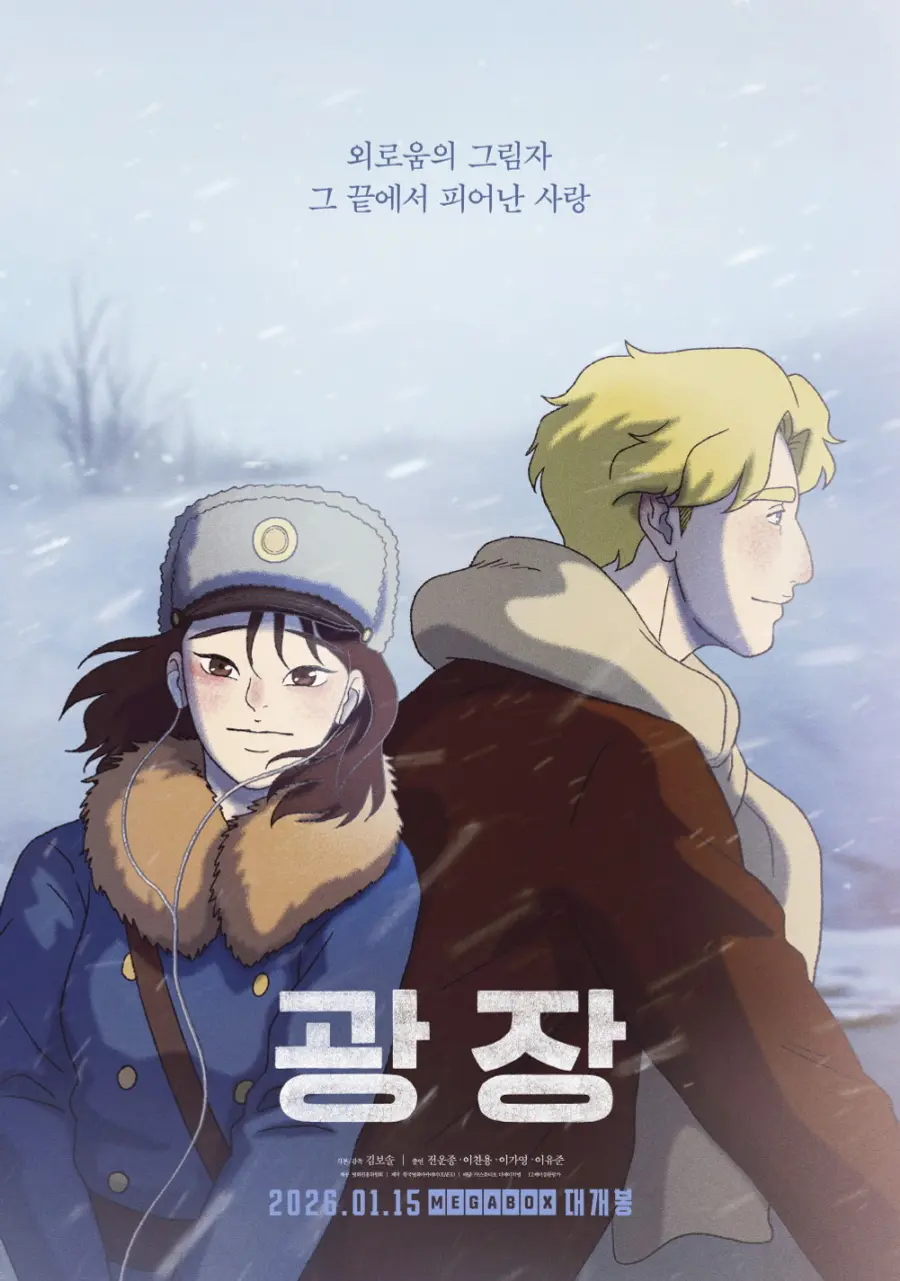
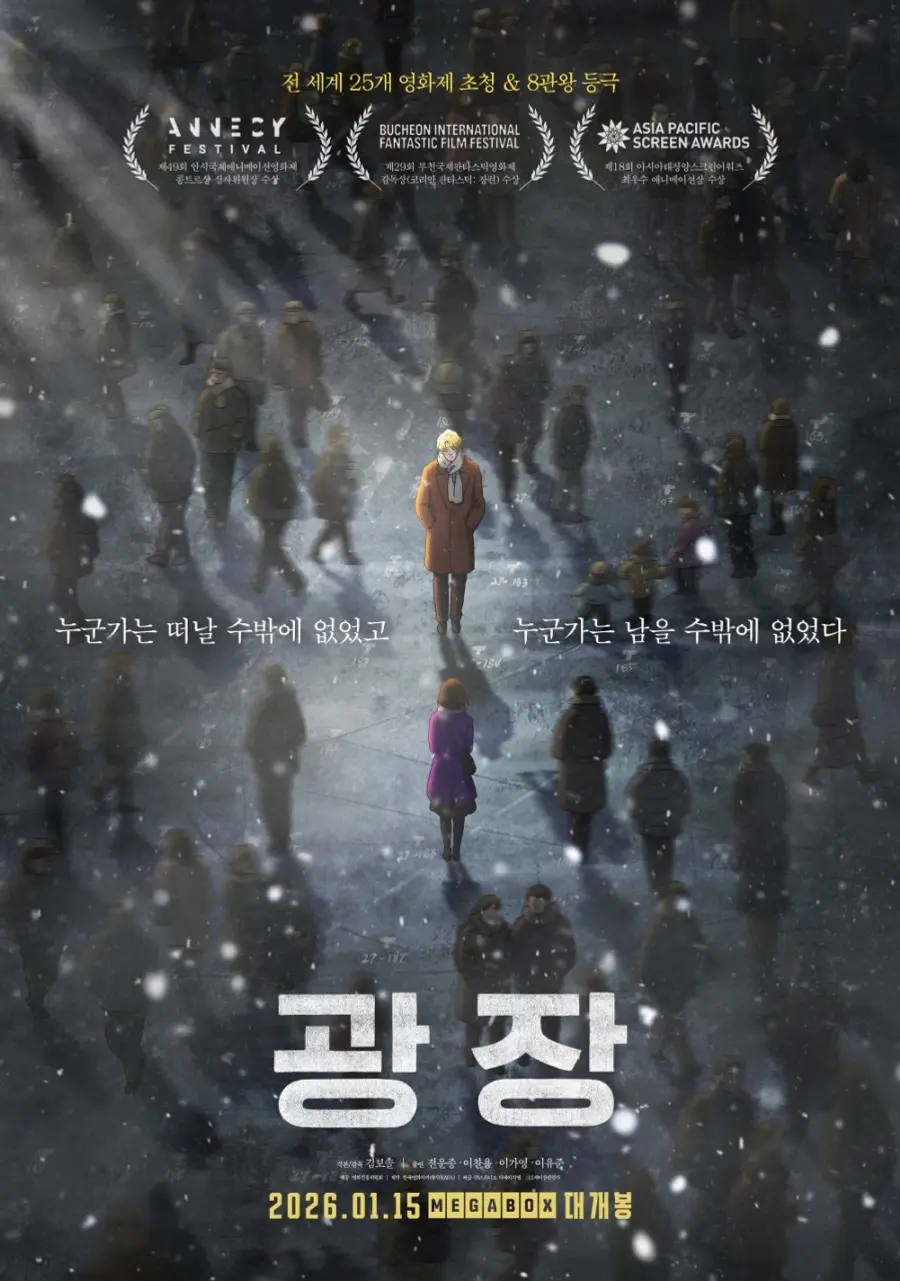
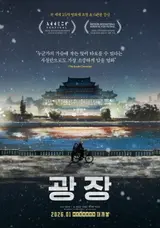
Winter, an animation perfectly suited for this winter that seeps into the skin, is coming to theaters. Kim Bo-sol's 〈Square〉 received the Jury's Special Award in the Contrechamp section at the Annecy International Animation Film Festival last June, surprising the film industry. It was the moment when the work, completed by director Kim Bo-sol after five years of struggle with a small staff, bore fruit. After being presented to Korean audiences at the Bucheon International Animation Festival, 〈Square〉 is now set to be released in theaters on January 14. Set against the backdrop of Pyongyang, North Korea, the story of the love between Swedish diplomat Bori and North Korean traffic police officer Bok-joo, along with the interpreter Myung-jun who secretly watches them, will leave a spark in the hearts of the audience. Cineplay met with director Kim Bo-sol, who directed and wrote 〈Square〉, to discuss the work ahead of its release.
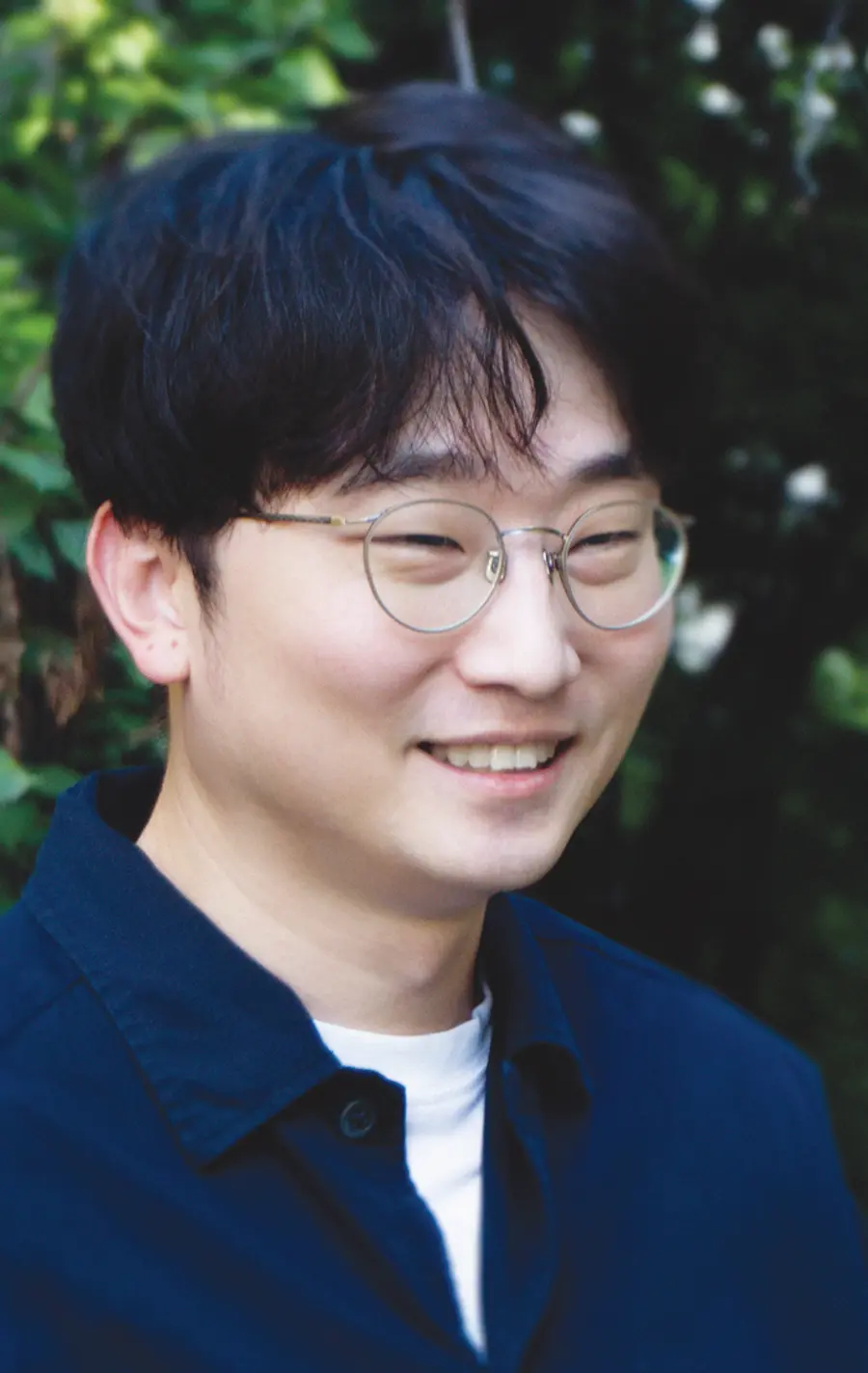
Before the domestic release, you won an award at the Annecy International Animation Film Festival and screened at the Bucheon International Animation Festival. I'm curious about your feelings as the release approaches.
I thought I wouldn't care, but I do. Because I think there is a difference between festival audiences and general audiences. Festival audiences are people who love and are interested in films, so they come with a somewhat favorable mindset. However, general audiences can give honest evaluations without such premises, so while I try not to care too much, I also feel a bit of fear.
I'm curious if there was any difference between receiving the award at the Annecy Film Festival and screening at the Bucheon Film Festival. The audience demographics must have been different, with one being global and the other domestic.
I was invited to Annecy in 2023 with director Oh Yu-jin's short film 〈Unique Time〉, and it was a very difficult time for me personally. I was already in a state of burnout while working on 〈Square〉, so I was just thinking that I needed to finish the work quickly. Fortunately, director Oh Yu-jin's short was invited to Annecy, and I felt very embarrassed about our work. It seemed to have a lower level of completion compared to other shorts, and the difference was clearly visible among world-class works in various sections. The production budget and animation quality were also factors. So, at the end of the festival, there was a BBQ party hosted by Pixar and Disney, but I didn't go. We just sat at the dock, watching boats, and had a beer or wine, vowing, "Let's come back here with 〈Square〉". So, when I visited the Annecy Film Festival again, it felt special. In early 2025, when the invited works for Annecy were announced, I was working on the storyboard for another commercial film. Director Oh Yu-jin and I were in a small studio when we heard the news and hugged each other and danced. The Annecy Film Festival is so big and was a place I had high expectations for, often referred to as the 'Cannes of Animation' for those in the animation field. So, in contrast, Bucheon felt a bit more comfortable. The sentiment in Bucheon was different. It was the first festival where my short 〈Home〉 was screened, and it was also the first place where 〈Square〉 was shown, so it holds deep personal significance. And since it was the first time meeting domestic audiences, I was curious about the GV questions. But honestly, I don't remember much. I think the questions were about how the film started, where the research was done, and why I wanted to tell a story about North Korea.
I was fascinated when I first heard about 〈Square〉. At first, I thought it was an animation adaptation of the late author Choi In-hun's 「Square」. Of course, it was said to be inspired by it, but it was a different story. Any Korean audience with formal education would likely recall that novel. You mentioned that you drew inspiration from the interviews of Swedish diplomats who actually worked in Pyongyang.
Now there is also a webtoon and Netflix drama titled 〈Square〉. (Everyone laughs) The reason the title is 〈Square〉 is complex. If you read the interview with the Swedish diplomat, there is a part where he mentions riding a bicycle alone on an empty highway to relieve the loneliness and stress of being in North Korea, where he didn't know anyone. That image triggered the concept. The article talks about the highway, but the space I envisioned was a 'square'. Since there was already information about the novel 「Square」, it connected. In the novel, the protagonist Lee Myung-jun embarks on a journey to find the truth. Our film's Lee Myung-jun also contains a process of searching for something. So, I thought I should use the name Lee Myung-jun as a motif. When I was writing the 〈Square〉 script, there was a special lecture by author Choi In-hun at the National Museum of Modern and Contemporary Art in Gwacheon. It was conducted by Choi In-hun's son, columnist Choi Yoon-goo, who inherited all the intellectual property rights of his works. He said, "The best critique is when the author evaluates their own work rather than literary critics evaluating the author." It is said that every time the preface is reprinted with the new year, those prefaces are very good. A memorable sentence from the first edition's preface was, "We live amidst many rumors; living life as if listening to rumors is a sad thing." Considering the life of author Choi In-hun, who experienced the Cold War period in the 50s and 60s, it seems he was very saddened by the conflicts and bloodshed caused by people caught up in rumors about capitalism and communism. So, I think he wrote the novel with a genuinely sorrowful heart, which helped me a lot in making the film. I, too, am depicting a space I don't know, which is North Korea. I had a mindset not to approach it in a consumptive way as the media does, but after hearing Choi Yoon-goo's words, I realized that it ultimately comes down to the attitude of the creator. The moment of representation inevitably loses objectivity, so I tried to maintain the thought that what remains is only the creator's attitude throughout the production process. Because of that influence, it felt very natural for the title to be 〈Square〉. I read the novel again, and it is excellent. It's hard to believe that author Choi In-hun wrote this novel at the age of 26. Comparing it to my 26, I was surprised that he had such insight to read the era broadly. It's also impressive that he wrote it while in the military. He graduated from Seoul National University Law School, but he mentioned that he followed his friends there, so I think he was a genius. While researching, I came across many interesting stories about author Choi In-hun. When he lived in Ilsan, he said that when he woke up in the morning, famous people would be lined up in front of his house. They went to such lengths just to hear a word of advice from him. I also heard that columnist Choi Yoon-goo and author Jo Se-hee (「The Little Ball Thrown by the Dwarf」) are friends, and when they talked on the phone, the call quality was terrible, and later, author Choi In-hun said, "It's because our house is being wiretapped."
In the film, there is a recurring motif of eggs. I'm curious if that also came from the novel.
Do eggs appear in the novel? I don't remember exactly. In 〈Square〉, eggs have various symbolic meanings. If I were to visualize 〈Square〉 as one image, there is a thick concrete wall that has developed fine cracks over time. It seems so subtle that one might wonder if anyone could capture such cracks, but I think the film captures the moment when that crack occurs. Ultimately, it is a film that expresses the possibility of the impossible. Eggs carry that symbolism. In the film, eggs appear in a deliberately illogical form. Bori puts it in Myung-jun's pocket, but it's actually in the inner pocket, not the outer one. An egg that comes through the window, if it were a raw egg, would be impossible to bounce off and fall like that, but later, when it breaks, it turns out to be a raw egg. A boiled egg has lost its vitality, while a raw egg has the potential for hatching, but you don't know until you break it. It is a device that makes Myung-jun confirm and act by breaking the egg. The crack in the concrete wall, the crack in the glass window, the crack in the egg. I tried to keep aligning these images.
Since South Korea has existing relations with North Korea, it must have been difficult to find materials. You mentioned seeking advice from defectors, but I'm curious how you gathered visual images or cultural materials to incorporate into the work.
For primary research, I used Google (search engine), and for secondary research, I utilized Instagram a lot. Swedish or Chinese tourists and guides recruit travelers to enter North Korea. The photos taken during that time are close to the actual living conditions of the residents. Although I didn't directly depict that in the film, it was a tremendous help in understanding the lives of actual Pyongyang citizens. I referenced a lot about the state of street repairs, household items, vehicle levels, bicycles and motorcycles, and clothing. You can see people riding electric bicycles, and overall, the clothing is colorful. Since the materials themselves are not exposed, I had to dig deeper to access many things, so there was a staff member who spent about a month just gathering image materials during pre-production. Then, as you mentioned, I sought advice from art director Oh Jin-ah. She had lived in Pyongyang, so I asked her very detailed questions. For example, when a soldier appears, I asked about the color of the epaulettes, the position of the epaulettes according to rank, specialty markings, the color of the military uniform, etc. I also inquired about what rank this would be equivalent to in the South Korean military. I received a lot of language advice, which was a great help. The Pyongyang dialect is very similar to the Seoul dialect. The only difference is the accent and certain pronunciations from the old Joseon Dynasty. The way of speaking that often appears in the media, like "Did you do it?" or "Did you do it?" is said to be from the 1950s. It feels closer to the old Seoul dialect. By the way, director Oh Jin-ah also mentioned that many people who seek North Korean dialect coaching intentionally maintain that way of speaking. Hearing that makes me feel uncomfortable when I see the media imitating North Korean speech patterns.
What was director Oh Jin-ah's reaction when you first told her about 〈Square〉?
I created the relationship between Bori and Bok-joo through research. It is evident from the materials that locals are not allowed to meet foreigners. It is said that if a tourist gets too close to a North Korean, a man comes to separate them. That person is a watcher. However, the first thing I asked director Oh Jin-ah was, "Is this possible? They can't meet, right?" This has to be the case for the film to be made. (laughs) The director's first words were, "You've done a lot of research, you've studied a lot." In fact, I was more nervous when I went to seek advice than when the film was released, so I was grateful for her words. I was also very scared. The world of North Korea is something I don't know, and I was worried about misrepresenting it. Surprisingly, there weren't many corrections made. Only the speech and dialogue were adjusted a bit. The director also transitioned from being an actress in the artistic department of the North Korean security agency to directing because she didn't like being in a position of being chosen. She has directed about three films in South Korea and understood and respected the creators well.
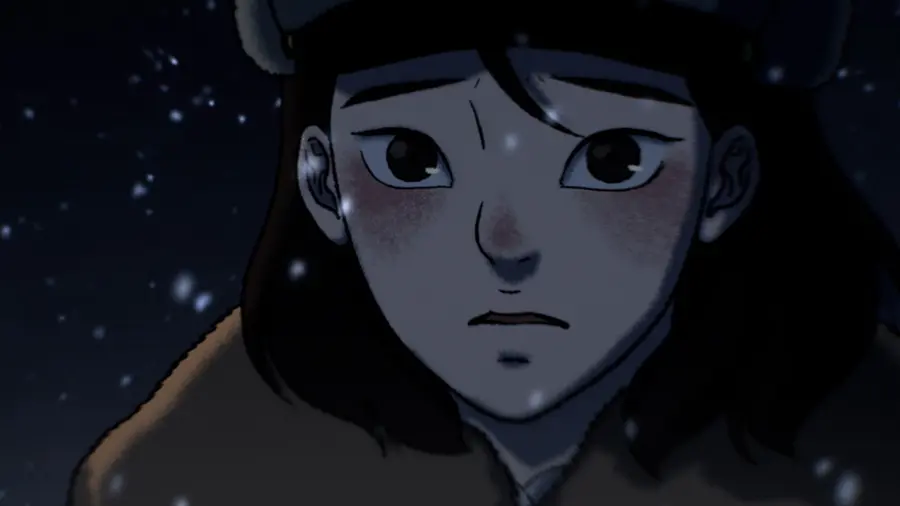
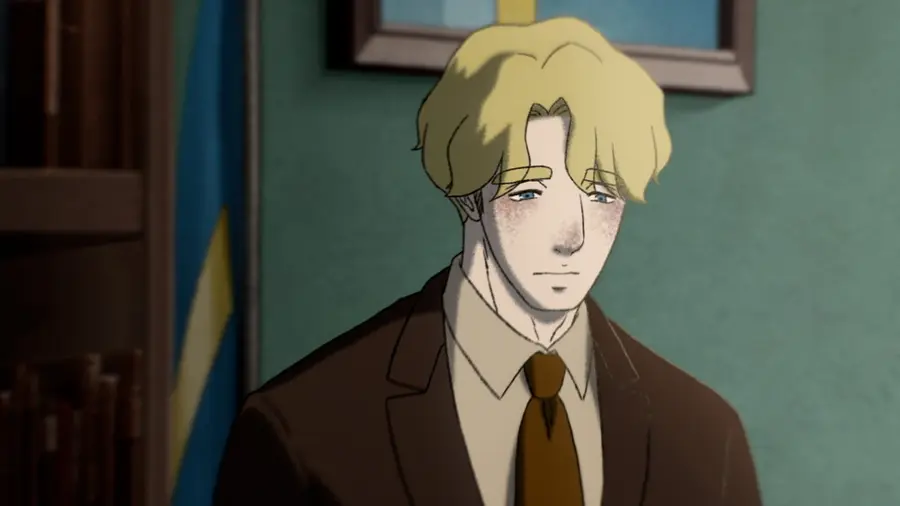
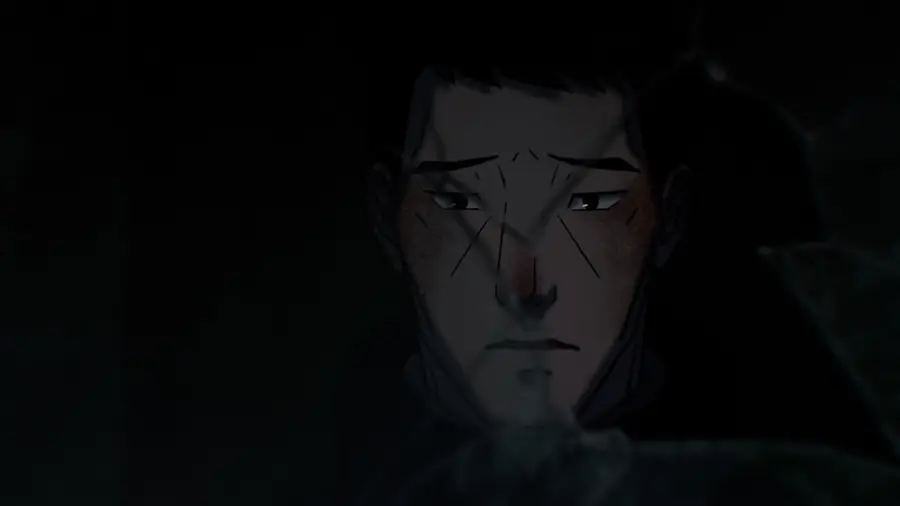
How did you create the three main characters, Bori, Bok-joo, and Myung-jun, who drive the film?
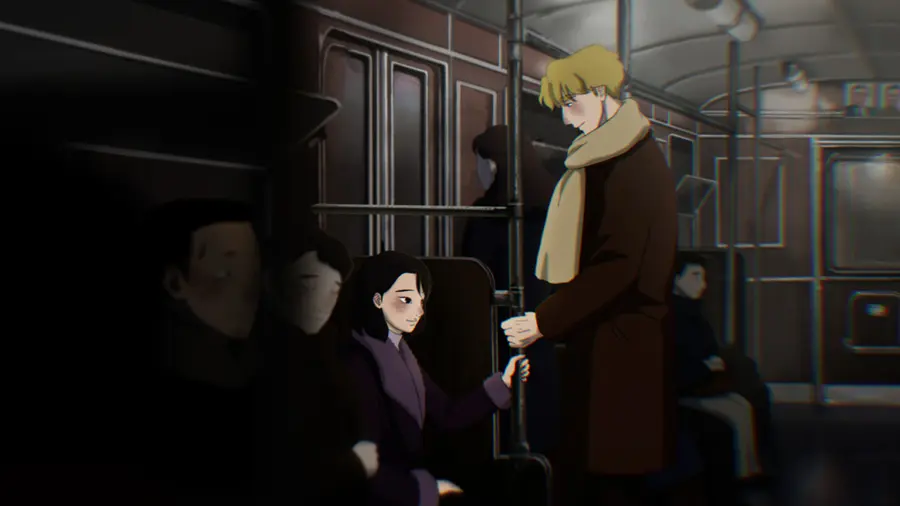
Bori was created through articles from the Swedish embassy, and Bok-joo was developed through research. Although I created these two characters, I felt that even though a foreigner appears in the film, I needed to tell a story about North and South Korea. It was complex. There was also the influence of the novel 「Square」, which shows the state of North and South Korea at that time, and now, when dealing with North Korea, only soldiers or special agents appear, and works that talk about unification have disappeared. So, I thought it would be meaningful to revisit such stories. Thus, Myung-jun, who symbolizes North Korea, was created. Bori represents South Korea, Myung-jun represents North Korea, and Bok-joo is a character that symbolizes the unification we want to meet or achieve, like Kim Chun-soo's poem 「Flower」. Setting up these three main characters made me think I should create a film centered on Myung-jun, wrapped in a romance.
Did you lose any biases about North Korea during the preparation process?
Yes. As I looked closely at the realities of North Korea, I felt frustration and sadness. I had a strong progressive inclination due to my background in art and film, but as I looked into North Korea, I became a bit more conservative. I realized that it is indeed a very difficult situation for North Korea to change. I began to think about what we in South Korea should do, but on the other hand, I felt that no matter how much dialogue is attempted in South Korea, if there is no change within North Korea, it would be difficult to create a crack. Therefore, the CDP in the film is an important motif. It represents what I think of as the unification view, namely 'cultural infiltration'. The reason North Korea prohibits cultural infiltration is to prevent the collapse of the worldview they have created, and interviews with defectors reveal that everyone knows this. The current younger generation in North Korea is called the 'Jangmadang Generation'. Originally, communism is a system where produced resources are collected and then distributed, right? However, now that resources are scarce, the market has gradually become active. It is said that the authorities can no longer stop this market. This market is called Jangmadang, and the generation that emerged when this Jangmadang was established is referred to as the Jangmadang Generation. Here, not only goods but also media and information are circulated, so the younger generation is said to know all about South Korean media.
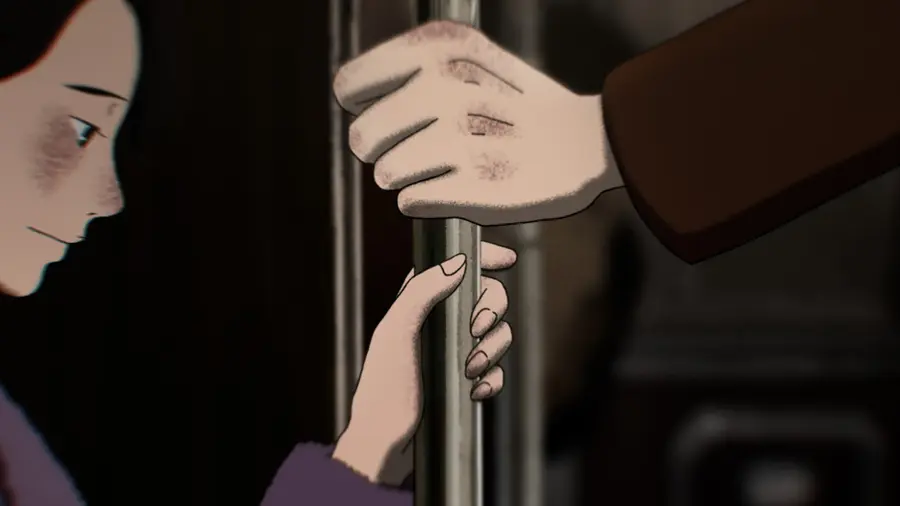
I realize that the market scenes in 〈Square〉 are very meaningful. Since we are familiar with the concept of a market, we might not have noticed it.
Returning to the topic of biases, it is a place where people live. In the North Korea we see in the media, it seems that if you make one mistake, you would be executed immediately, but there are aspects where human relationships resolve issues. The character Jin-cheol, Myung-jun's superior, showing leniency in his decision is significant. The members of the security department have strong relationships. Now, as I depict the city of Pyongyang, it is actually like a European city. Although there are infrastructure differences between Seoul and the provinces in South Korea, the difference between Pyongyang and other regions in North Korea is said to be enormous. Also, to reside in Pyongyang, one's background is heavily scrutinized. They assess loyalty to the party based on what your parents or grandparents did, and the authorities directly determine where you can live. This is also a historical fact. Among the defectors, there was a journalist who mentioned that they received a punishment of expulsion from Pyongyang for mishandling a notebook from the party. Knowing these aspects, one would view Jin-cheol's character differently.
Given this background, it must have been challenging to find voice actors to take on the roles. The process of guiding their speech and tone must have been difficult as well.
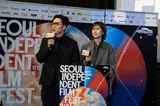
From the beginning of the planning stage, I thought it would be difficult to find voice actors. I was worried about whether there would be voice actors who could practice North Korean speech. So, I looked for actors trained in voice based on theater. When I posted a short script and a recruitment ad on Film Makers (a film production job community), about 250 people applied for the audition. Initially, I was looking for a male actor, but among the 250, there was one standout actor. That was Lee Ga-young. So, I cast her as Bok-joo right away. Although she wasn't very experienced, I felt she could do it just with her voice. While watching films related to defectors with the main staff, one actor caught my eye. The staff I was watching with also thought this actor was great, so I contacted him even though he wasn't an applicant. That was actor Jeon Woon-jong, who played Myung-jun. Finding a voice for Bori was the most challenging. I originally wanted to find a real Swedish person who speaks Swedish, but during the preparation period for the film, the COVID-19 pandemic occurred, and most foreigners returned to their countries. Still, I thought I should try to find someone, so I posted on foreign recruitment sites, and I received samples from regular people like IKEA employees and LG engineers. I was very grateful, but after listening to the samples, I became convinced they weren't actors. I then changed Bori to a Korean speaker and, while looking for an actor, I saw actor Lee Chan-yong in the Seoul Independent Film Festival's actor project and cast him. The actors worked very hard to prepare for the North Korean dialect. According to director Oh Jin-ah, it takes about three months to sound somewhat similar, so the actors diligently prepared. Director Oh Jin-ah recorded the lines intermittently, and the actors practiced individually.
I watched the premiere yesterday, and the sound was quite unique. There was a particular scene where the sound was very impressive.
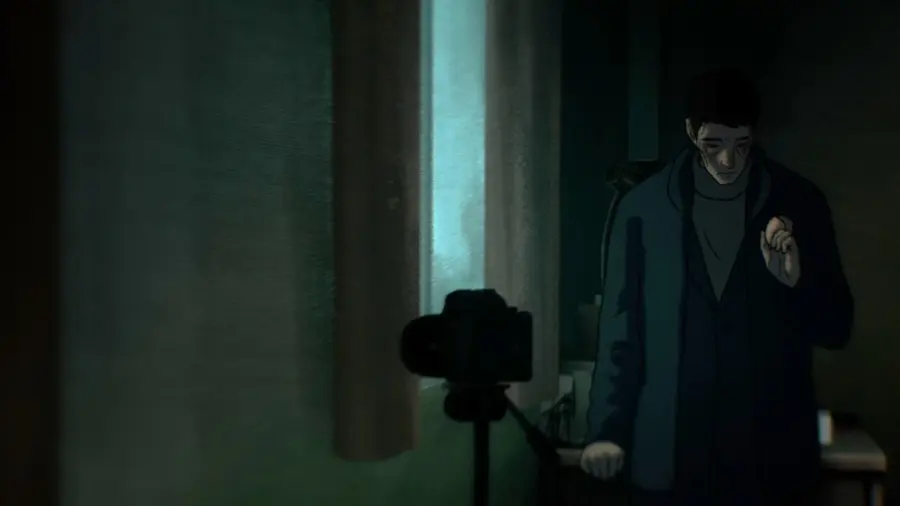
At the moment Myung-jun enters his space, I wanted to give a feeling of suffocation as if submerged in water, so I removed the ambiance. I aimed to create a feeling of a vacuum state. In a way, it is the point where the protagonist changes.
Was there a scene that was particularly difficult to create?
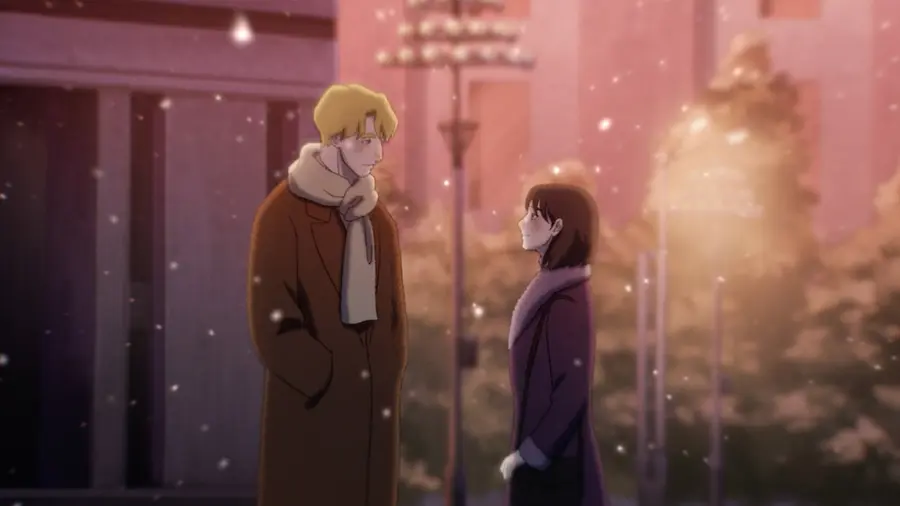
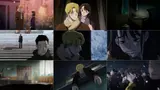
There is a cut where the camera goes through a broken window and the snow suddenly stops. The snow in the film wasn't drawn directly; it used a physics engine, but since the engine was set to continuously let it snow, when I tried to stop it for direction, one snowflake would bounce or disappear. I remember trying that about 41 times to create a scene without it. The scene where the characters ride bicycles was also difficult due to the angle being hard to draw.
The scene where Myung-jun rides a bicycle was very impressive.
That scene is what I consider the climax. Those who have seen it might pick the subway scene, but I think it's that one. It was important to convey the emotion that makes Myung-jun feel freedom. In fact, there is a direction in that scene where the images don't really connect in the snow, and originally, I wanted each snowflake to turn into starlight. But it was too difficult, so I gave up and resolved it through direction. The scene where Bori emotionally breaks down has a very different style, and another author actually worked on it. Director Oh Yu-jin, who worked with me, majored in Western painting, so I asked a nearby artist for help. Since we had to complete it within a limited budget, I thought we should focus our efforts on the scenes that required more time. To give an example from director Oh Yu-jin's favorite 〈Attack on Titan〉, (laughs) you can definitely see that they spent a lot of money on the action scenes compared to the dialogue scenes.
It took five years. Looking back, that five years coincided with the start of the COVID-19 pandemic. Did the theme of loneliness in the film influence you?
Not really. The five years took so long because I had to secure production funds intermittently, which caused work to stop. I did freelance work to earn money for staff wages. There were also times when I paused to work on director Oh Yu-jin's short film. In fact, if I had the money, I could have exchanged it for time. Personally, I want to produce a lot, but 〈Square〉 took longer than expected.
So, what are your plans for your next project?
It's a story about three sisters fighting ghosts in Gwanghwamun Square. Not 〈K-Pop Demon Hunters〉. (laughs) I plan to do it as an animation. There are things that are difficult to do in live-action, but I want to build an animation pipeline and production system with the know-how I gained this time. In live-action, technical staff can be deployed immediately for each project. Animation is different. It varies by production company, but I had a conversation with director Han Ji-won of 〈Necessary for Breakup〉, and she operates her own team along with external production companies. So, for scenes that are challenging or require a lot of communication, her team handles them, while scenes where speed is crucial are done by external production teams. In this way, we can also gather and disperse in the future, but I want to create such a system.
While watching the film, I became curious if you ever thought of a different ending at the last point.
There were no other options. I thought this film had to end positively. I heard that the scene Myung-jun sees is considered an afterthought. However, I wanted to end it positively, even if only in a fantasy. I wanted to conclude with Myung-jun looking at the two people, while simultaneously wrapping up Myung-jun's story.
Finally, please say a few words to the audience who will come to see 〈Square〉.
It's a great movie for couples to watch in the cold winter. I thought it was a romance film, but as you watch, another character will draw you in. I hope that character stays in your memory. This is something that applies to all films (laughs), but it is a film made with the big screen in mind, so I hope you feel the impact when you watch it in theaters.

댓글 (0)
댓글 작성
댓글을 작성하려면 로그인이 필요합니다.
로그인하기