



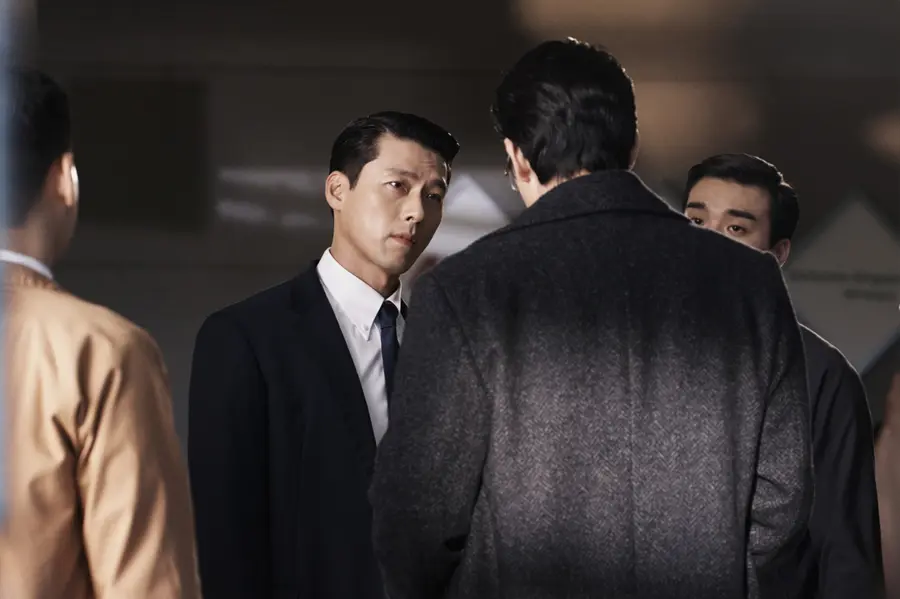
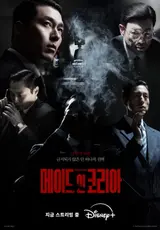
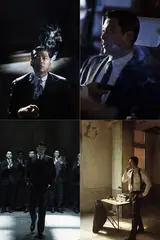
In 1970s South Korea, where turmoil and a leap forward coexisted, a man named “Baek Ki-tae” (Hyun Bin)—who aims to climb to the pinnacle of wealth and power by treating the nation as his personal business model—and Inspector “Jang Geon-young” (Jung Woo-sung), who relentlessly tracks him to the very edge with frightening determination, face off against massive events sweeping across the era 〈Made in Korea〉. With the last set of six episodes set to be released today, the production team unveiled stills that foreshadow an intense battle brewing amid surging desire, further heightening anticipation for the finale.
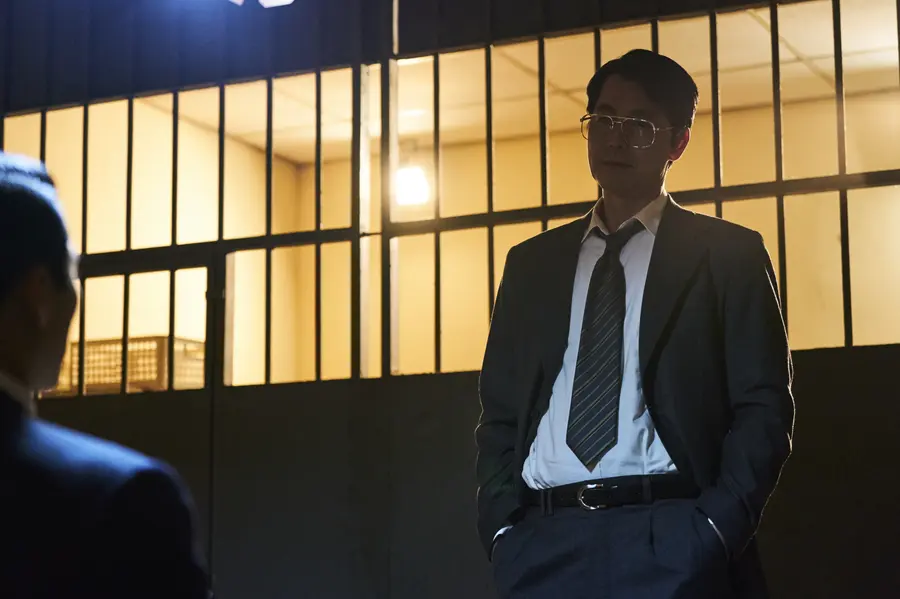
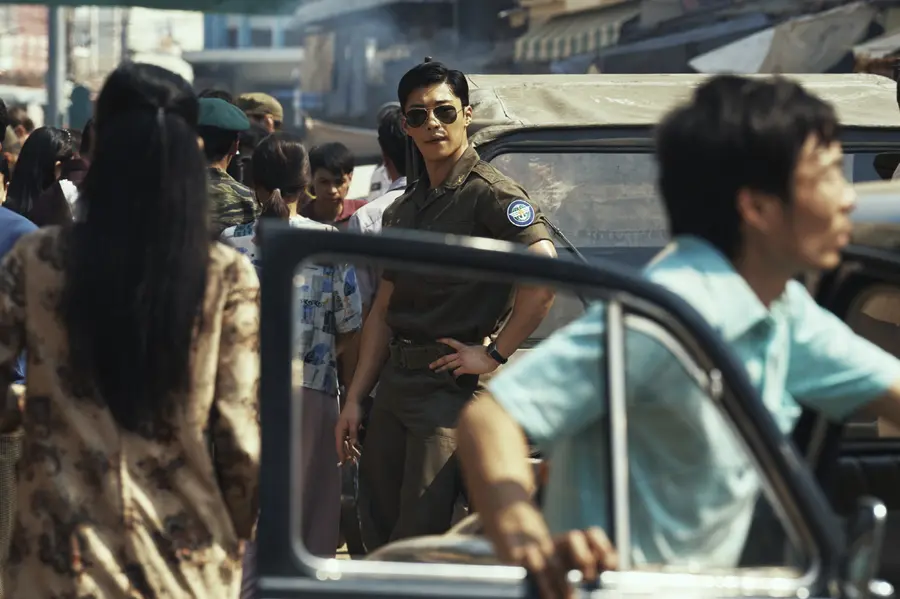
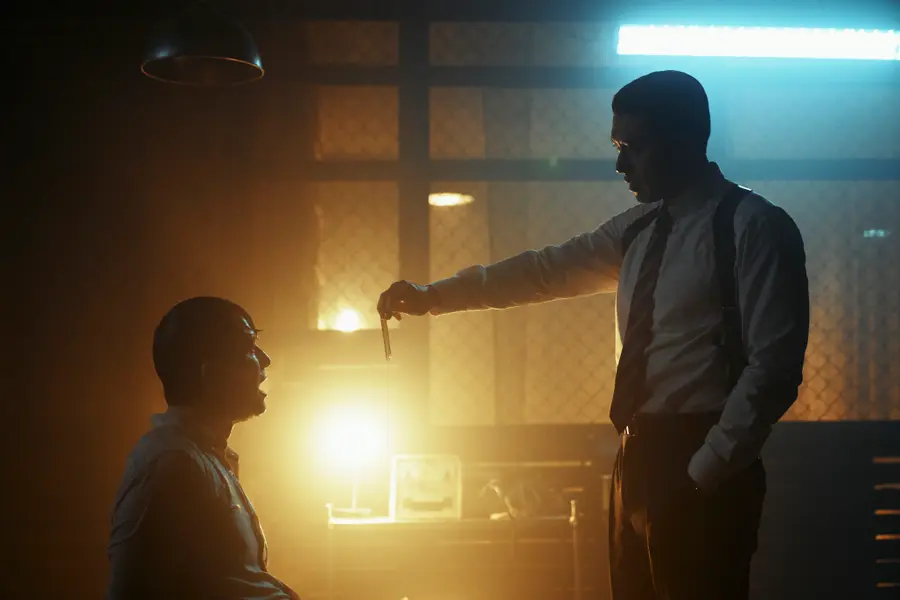
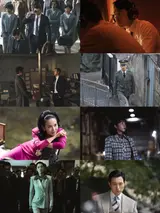
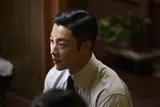
First, what stands out is the calm, unshaken gaze of “Baek Ki-tae” (Hyun Bin) as he faces “Jang Geon-young” (Jung Woo-sung), who arrives with a warrant. Next, the scene cuts between Jang Geon-young’s fierce, unrelenting pressure on Baek Ki-tae—and, in contrast, Baek Ki-tae’s intimidating presence, as if he already holds the upper hand—interrogating Jang Geon-young with terrifying momentum, sparking curiosity about where their seething desire and obsession will ultimately lead. Also, amid exotic scenery, “Baek Gi-hyeon” (Woo Do-hwan), who has decided to leave for Vietnam, becomes impossible to predict in terms of the path he’ll take. At the same time, attention turns to how the dangerous dealings between these two figures will unfold—through the appearances of Baek Ki-tae and “Ikeda Yuji” (Won Ji-an). Finally, a still of Baek Ki-tae radiating charisma at the center of the Central Intelligence Agency makes you wonder just how far his ambition will reach.
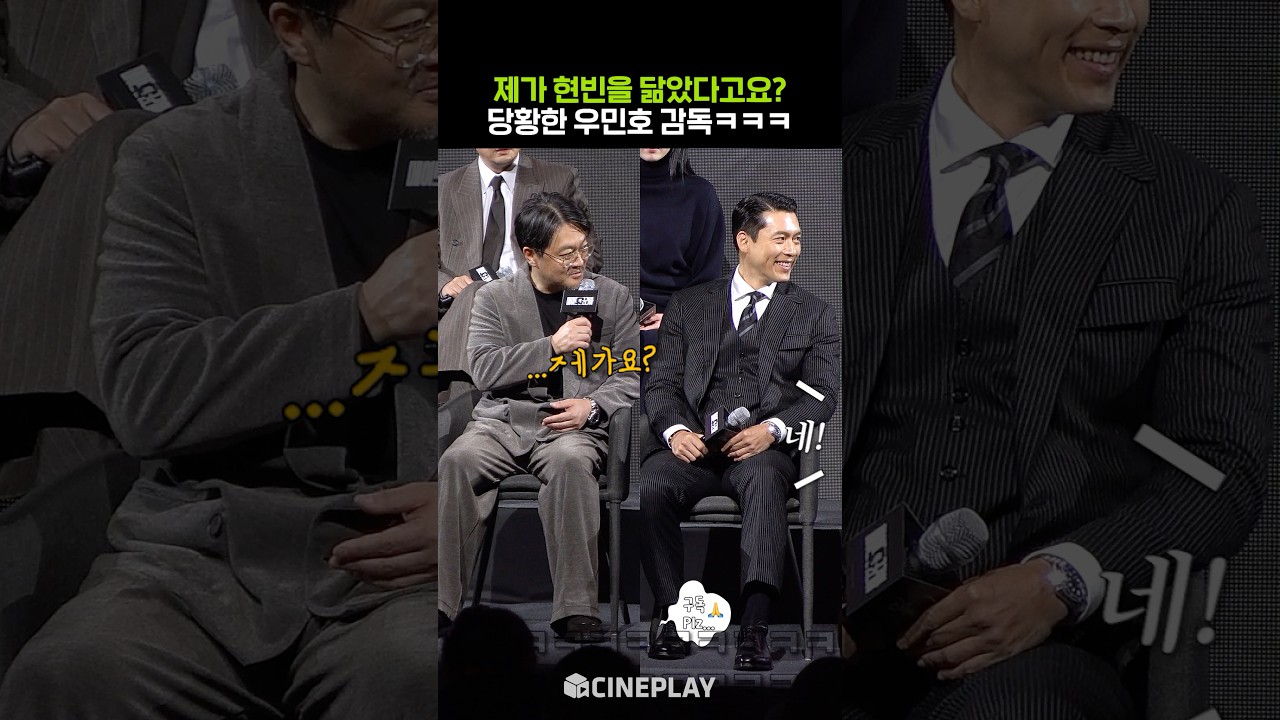
Disney+ original series 〈Made in Korea〉 is available as a total of six episodes. What charm and meaning does this series hold? It feels almost as if 〈The Chiefs in Namsan〉 (2020) has been swapped for 〈The Chiefs in Busan〉. In 〈Made in Korea〉, the heart of the story is a showdown where Baek Ki-tae, the deputy director of the Central Intelligence Agency’s Busan branch (Hyun Bin), and Jang Geon-young, a special division inspector at the Busan District Prosecutors’ Office (Jung Woo-sung), collide at full power. Continuing from 〈The Drug King〉 (2018), which follows the life of drug smuggler Lee Do-sam (Song Kang-ho), and from 〈The Chiefs in Namsan〉, the series also takes on 1970s South Korea. While director Woo Min-ho has explored the 1970s multiple times, for writer Park Eun-kyo—who has worked on other projects such as director Bong Joon-ho’s 〈Mother〉 (2009) and 〈Miss Hongdangmu〉 (2007), as well as 〈Never-Ending Story〉 (2012), 〈A Normal Family〉 (2024), and Netflix series 〈The Sea of Tranquility〉 (2021)—it can be seen as a fresh challenge because the era’s backdrop is entirely different. The key lies in the power dynamics among Central Intelligence Agency figures within the story. As with director Woo Min-ho’s “’70s trilogy,” which continues from 〈The Chiefs in Namsan〉 and 〈The Drug King〉 through to 〈Made in Korea〉, the Central Intelligence Agency is at the very center. Even though it comes up in dialogue, it feels almost like the U.S. CIA—maybe not exactly, but in any case, it was the most uniquely distinctive organization in South Korean society at the time.
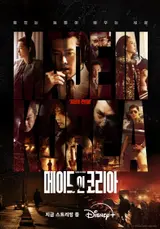
There are also several reasons people have been waiting for 〈Made in Korea〉. First, it’s a work by director Woo Min-ho and writer Park Eun-kyo—two names you can trust. Most of all, I got hooked on the phrase “the power of a dog” printed on the poster for the Jang Geon-young character. Even Jang Geon-young the inspector has a line that says, “Save me with the power of a dog.” That’s exactly what brought to mind the crime novel 「The Power of the Dog」 by Don Winslow, which portrays a fierce conflict between American and Mexican drug organizations through nearly a hundred characters and a sweeping story spanning more than 30 years. It’s also a book introduced by writer Kim Eun-hee on the book-variety show 〈Nordic Kingdom〉 (broadcast in 2020), where she said it was one of the “books of my life” and “a book that provides huge inspiration when aspiring writers with an interest in genre fiction learn how to build their stories.”
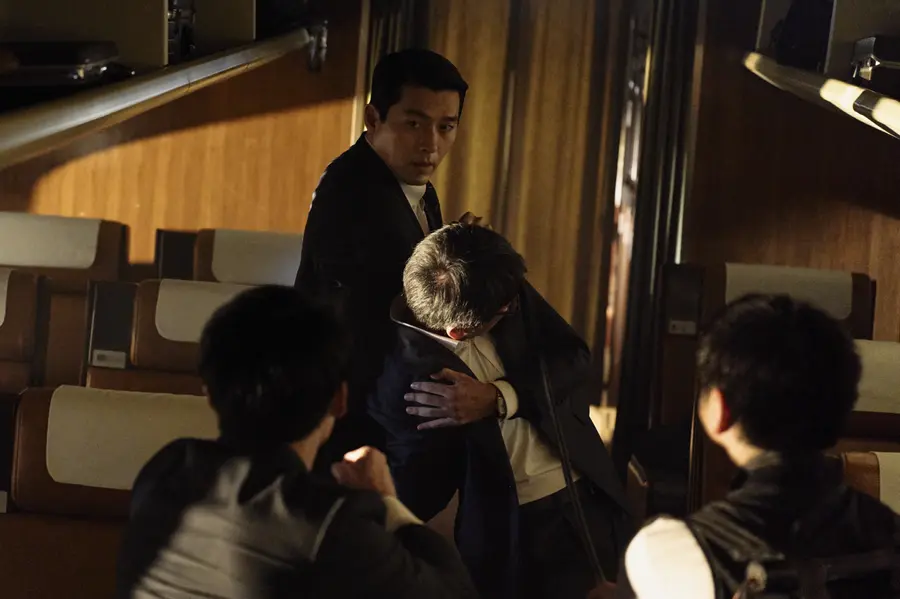
〈Made in Korea〉 consists of a total of six episodes. The main characters remain the same, but in each episode, the lead narrator who “opens the door” is different—so it feels as if you’ve stitched together six separate movies. Since each installment arrives with its own concept and style, it even makes you wonder whether director Woo Min-ho—despite this being his first series—might actually be the kind of director who has made countless series before. Especially ambitious are episodes 1 and 2, which are devoted entirely to Baek Ki-tae (Hyun Bin) and Jang Geon-young (Jung Woo-sung), respectively. For instance, in episode 1, after the airplane hijacking incident wraps up, the most memorable moment is the scene at the very end, when he finally says, “I’m Baek Ki-tae,” revealing his name. In episode 2, the standout moment is when Jang Geon-young realizes he’s been wiretapped and then bursts into hearty laughter. It felt like a massive opening act—signaling that their showdown would truly kick off starting with episode 3. On top of that, in episode 3, the series takes you to meet Cheonseok-joong (Jung Seong-il), head of the presidential security service, who sits above even Hwang Guk-jang (Park Yong-woo), his direct superior—making you feel, firsthand, what real power looks like. The power hierarchy is beyond imagination. In episode 3, titled “The Age of Prohibition,” Bae Geum-ji (Jo Yeo-jung)’s presence is overwhelming. The most outstanding scene is one where Baek Ki-tae, who has his mind completely blown after realizing who truly holds power, has the situation explained through Bae Geum-ji’s narration. And decisively, you can see the hierarchy clearly when you watch Bae Geum-ji laugh while mentioning Hwang Guk-jang’s wig—then see him freeze completely, unable to move an inch.
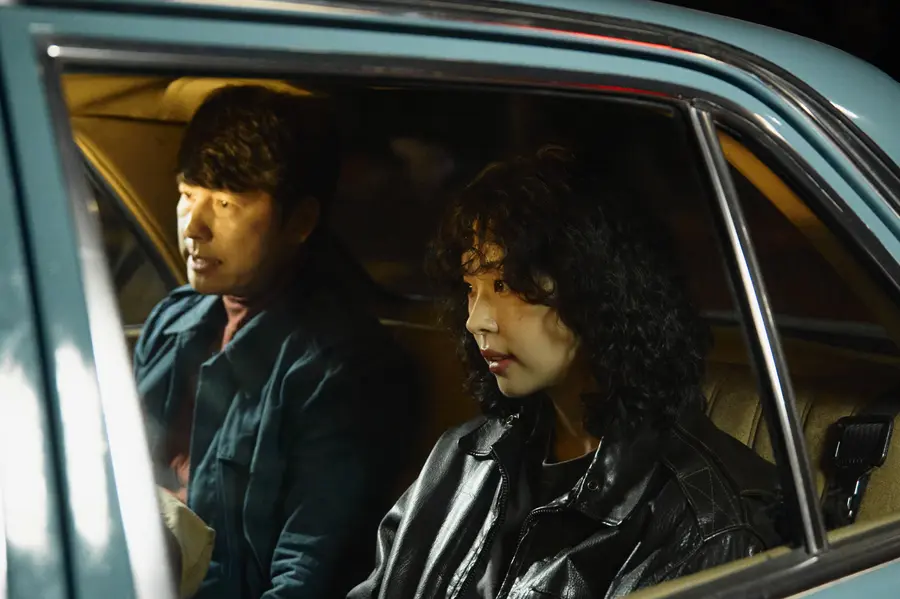
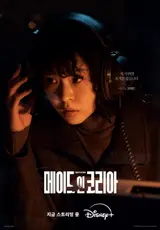
〈Made in Korea〉 is also a tightly plotted espionage drama. The contrast between light and dark is sharp, and even though it’s a period piece, it still feels unmistakably modern. That’s why the most memorable scenes are the ones where Oh Ye-jin (Seo Eun-soo), a detective who’s like Jang Geon-young’s right-hand, says that the documents in front of her keep looking like French actor Alain Delon. When you think of Alain Delon, Jean-Pierre Melville’s films—masterpieces of French noir—come to mind. And director Woo Min-ho’s recent works, from 〈The Chiefs in Namsan〉 and 〈Harbin〉 to 〈Made in Korea〉, give off the same vibe as Melville’s films, making you think these moments are paying homage in their own way. Meanwhile, when you look at Baek Ki-tae in the photo and hear Oh Ye-jin say, “Alain Delon is here too,” it even hints that Baek Ki-tae and Jang Geon-young may belong to similar types of people. It’s like two sides of the same coin that reflect each other: Baek Ki-tae is water, while Jang Geon-young is fire. Baek Ki-tae stays cold and never gets excited no matter what moment it is, whereas Jang Geon-young is fire that boils over in every moment—as seen in his exaggerated laughter. That’s why the tension in episode 4 is incredible. Baek Ki-tae brings up stories about Jang Geon-young’s younger sister, who works at a dye factory; and Jang Geon-young, in return, mentions a small incident from Baek Ki-tae’s brother Baek Gi-hyeon (Woo Do-hwan), when he was a high school student in the past. By showing how each side spots the other’s weaknesses one by one, it generates tremendous tension.
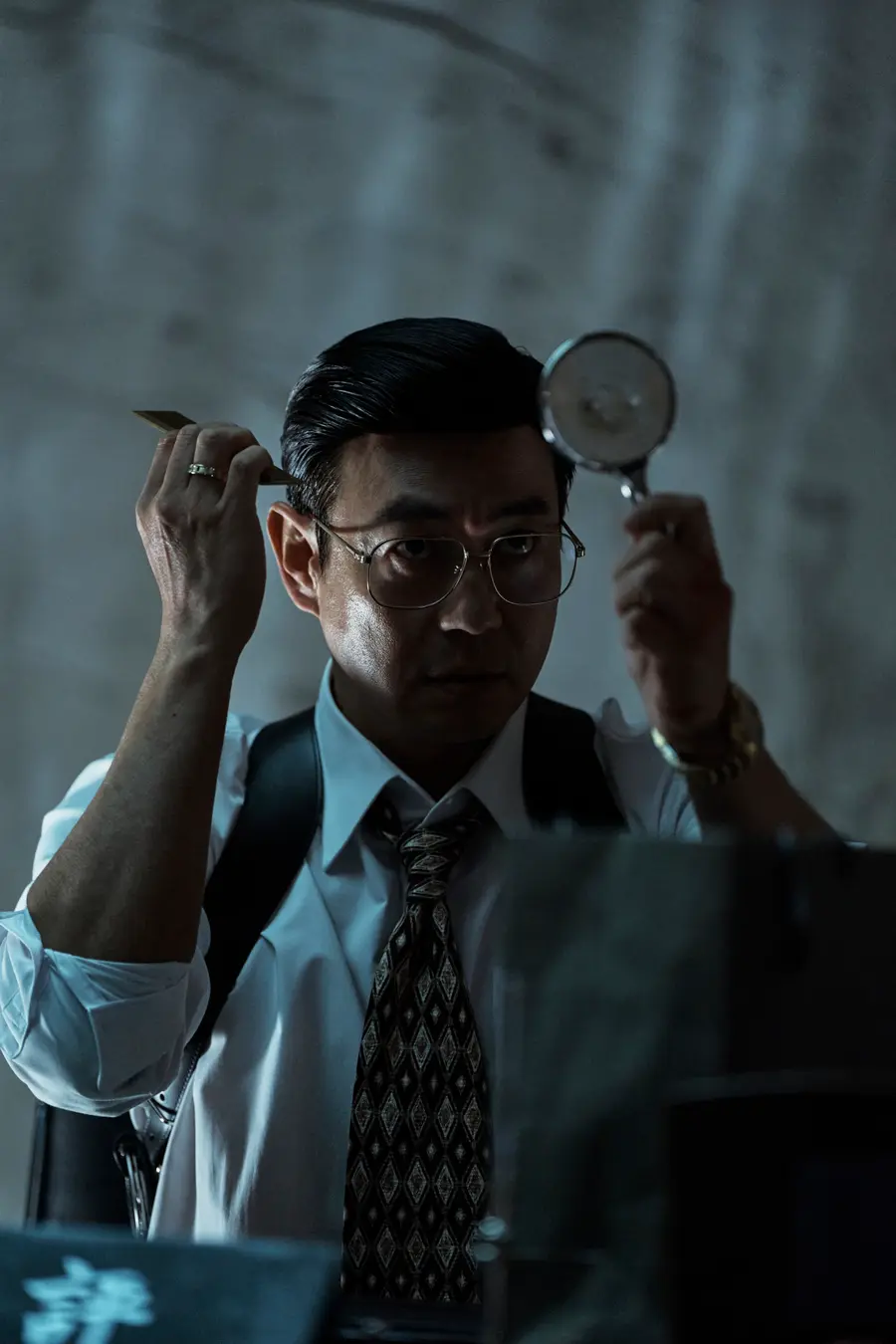
Just like that, 〈Made in Korea〉 feels like a massive roster of characters, and the charm of characters with wildly different desires is blended and handled harmoniously by South Korea’s top actors. As 〈The Chiefs in Namsan〉 did, a picaresque setup centered on an antihero shines brightly. Either way, it’s compelling—and there’s no question about Hyun Bin and Jung Woo-sung. But what’s also captivating is Jung Seong-il, who interpreted and played the head of the presidential security service in an entirely different way from what Lee Hee-joon did in 〈The Chiefs in Namsan〉. There’s also fun in seeing actors Kang Gil-woo and Noh Jae-won—often regarded as treasures of independent cinema. And above all, Park Yong-woo as Hwang Guk-jang at the Central Intelligence Agency is, for once, a welcome and fresh presence. Because everything becomes so tightly entangled, with nearly every moment of modern Korean history—from the history of fathers after liberation—woven in closely, it almost feels like a modern Korean history textbook.
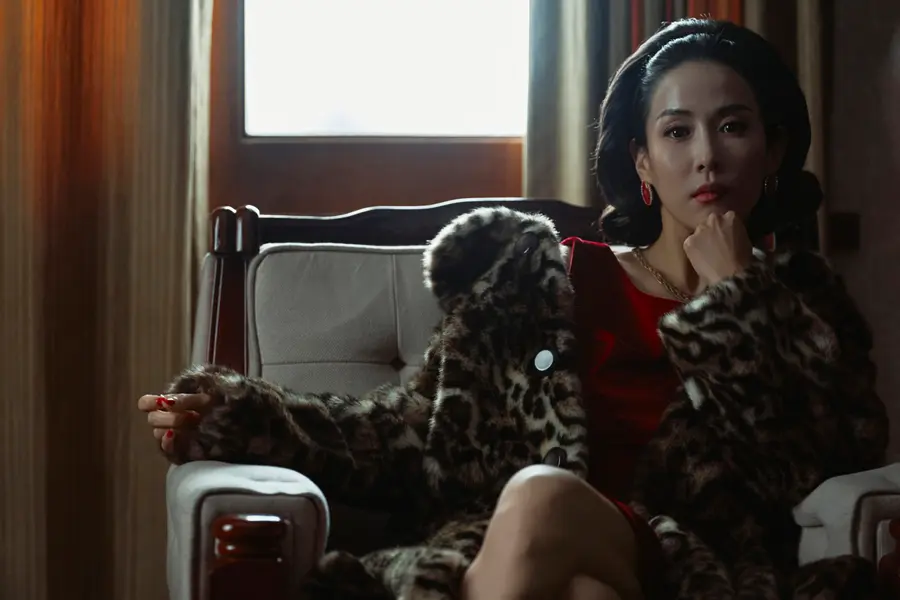
The three key words of 〈Made in Korea〉 are money, power, and love. And that’s exactly what Bae Geum-ji (Jo Yeo-jung) tells Baek Ki-tae (Hyun Bin) in episode 3. “What do you really want? Money, power, love? You want to have it all, don’t you? You want nobody to look down on you. I’m like that too—just like you.” 〈Made in Korea〉 reveals the shadow of desire surrounding South Korea’s modern history—desire rooted in money, power, and love. Additionally, if you’re looking for one more title to watch together on Disney+, there’s director Kang Yoon-sung’s 〈Fine〉. If 〈Made in Korea〉 depicts a world of desires aimed at power, 〈Fine〉 draws those desires from hidden corners of the outside world. 〈Fine〉 is also set in 1977, so the time period backdrop is almost the same as 〈Made in Korea〉. When you watch the two works together, you see 1970s South Korea depicted as it really was.


![[Video&] Made in Korea _ Teaser Trailer _ Disney+](https://img.youtube.com/vi/UmUedQhYuSU/maxresdefault.jpg)





![[Photo&]](https://cdn.www.cineplay.co.kr/w160/q75/article-images/2026-01-16/b2dcecdf-e0ff-437b-8d18-f2a7f26dcce3.jpeg)
댓글 (0)
댓글 작성
댓글을 작성하려면 로그인이 필요합니다.
로그인하기