


※〈Notes from the Last Row〉 actor Choi Min-sik interview continues from Part 1.
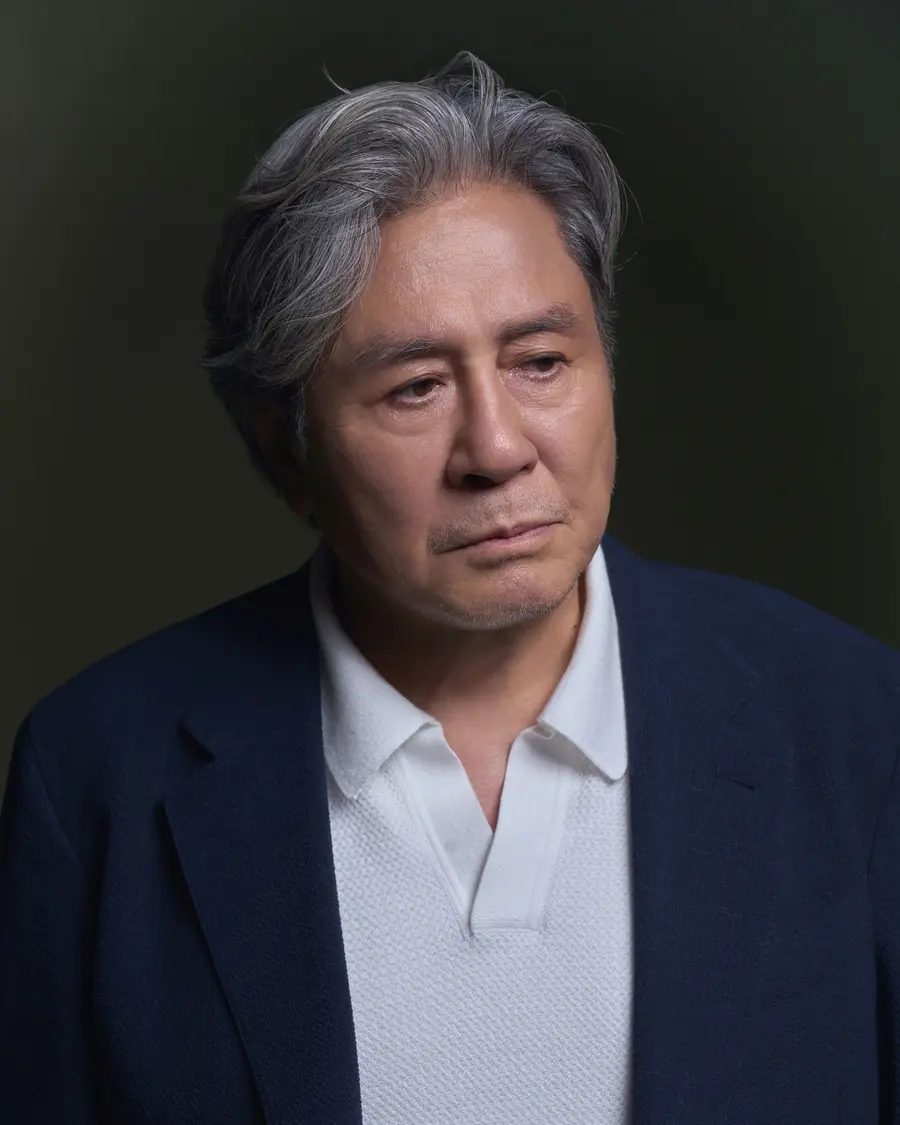
Among viewers' reactions to 〈Notes from the Last Row〉, many say, "It feels like my most embarrassing, hidden complex has been stripped bare and exposed — it's funny but very uncomfortable." As someone who took part in 〈Notes from the Last Row〉, are there any lines that particularly stayed with you or scenes you especially love?
But more than my lines, Kim Su-hoon's (Heo Jun-ho) lines stayed with me for a long time. "If you don't have a story to tell, isn't it better not to write? Isn't it okay to live like that?" That line was really chilling. It was the same when I read it in the script. Jang Myeong-woo is a frightening writer. (laughs) I think that line says a lot.
The scene where Mun-oh tries to repay Kim Su-hoon's remark but ends up completely flattened is both bitter and striking. How was it working off Heo Jun-ho in that scene?
He tries to give it back awkwardly and just ends up making himself look more pathetic. It's Kim Su-hoon he thought he'd left behind suddenly in front of him again. But you can't just fly into open anger. He tries to be clever and strike back, but he's flattened by Su-hoon's experience. I really like that scene. Jun-ho did so well. He was also my junior in the military. We're perfectly in sync.
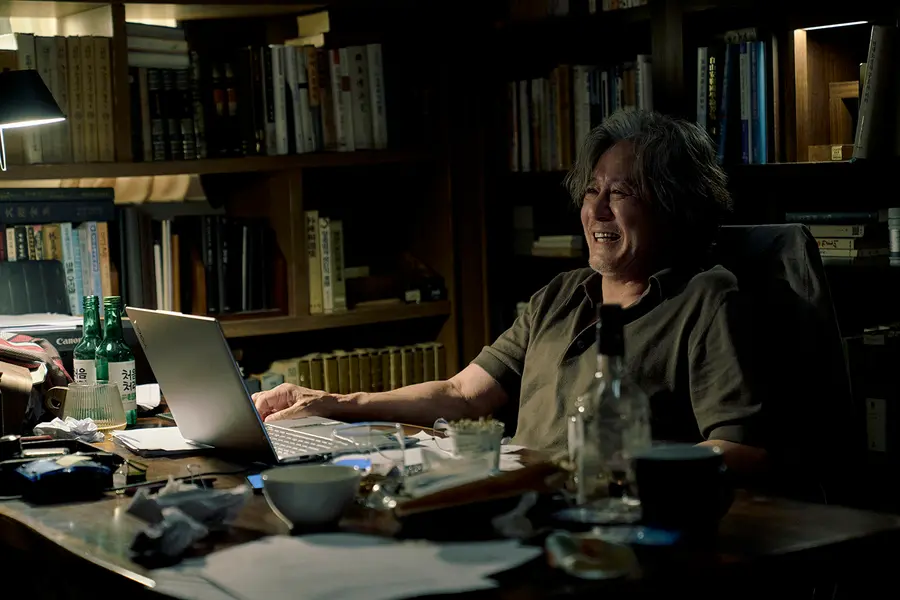
Even though his character is a professor of Korean literature, Heo Mun-oh uses a lot of coarse language. He even blurts out "awesome" while reading an assignment. Your flavorful delivery helped bring out the character's dual nature. How did you try to capture that 'voice'?
It wasn't deliberate. As I thought about portraying the hypocrisy and unvarnished side of an intellectual, I realized that being a professor doesn't mean you're a professor through and through, so I tried to express those details. The word "awesome" wasn't in the script; it came out of me without thinking. I think that made it even more honest.
Mun-oh's obsessive fixation on his first love An Eun-joo (Kim Yoon-jin) drives him to ruin. Is 'first love' really so powerful for a man that it can paralyze his capacity to reason? (laughs) And did Mun-oh truly love his current wife Hyun-sook (Jin Kyung)?
Of course. Not in my own case, though. (laughs) But Mun-oh's feelings for Eun-joo were intensified because her husband is Kim Su-hoon. At this point it can't be called love. It's jealousy toward Su-hoon. In fact, it's a delusion to think Eun-joo is his woman. She's not interested in him at all. (laughs) He has a persecution complex that Su-hoon stole that old love. He probably loved his current wife Hyun-sook, too. But because of his obsession and jealousy, he clings to the past and is irresponsible toward his present love.
From an acting perspective, how do you view Heo Mun-oh?
Even while acting, I thought, 'Mun-oh, you're hopeless.' But after living as that character for months, looking back I feel pity and compassion. He's not inherently that bad a person, really; I don't know where it all went wrong. I want to tell him to pull himself together, and I also want to hold him.
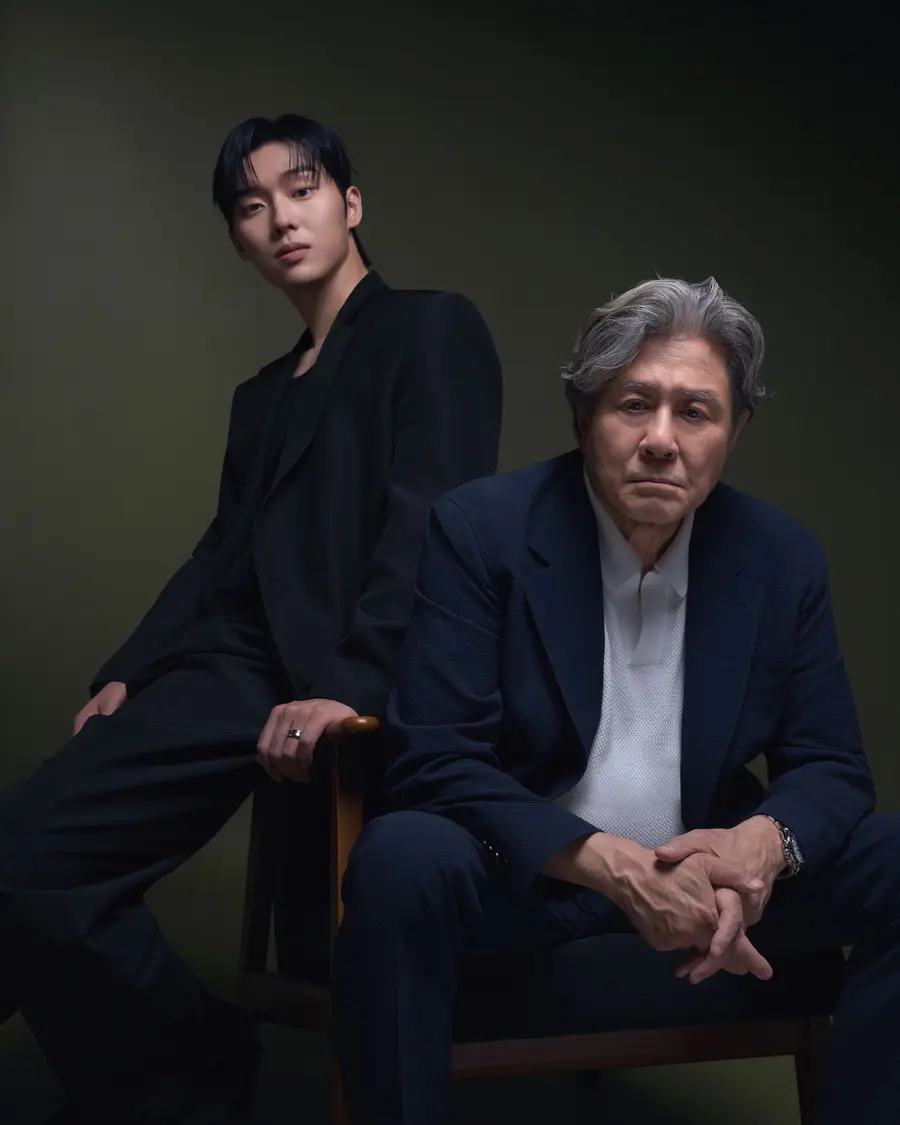
〈Notes from the Last Row〉 bluntly dissects intimate human deficits — inferiority, jealousy and envy. Even as one of South Korea's leading actors, do you feel jealousy or envy when you look at others?
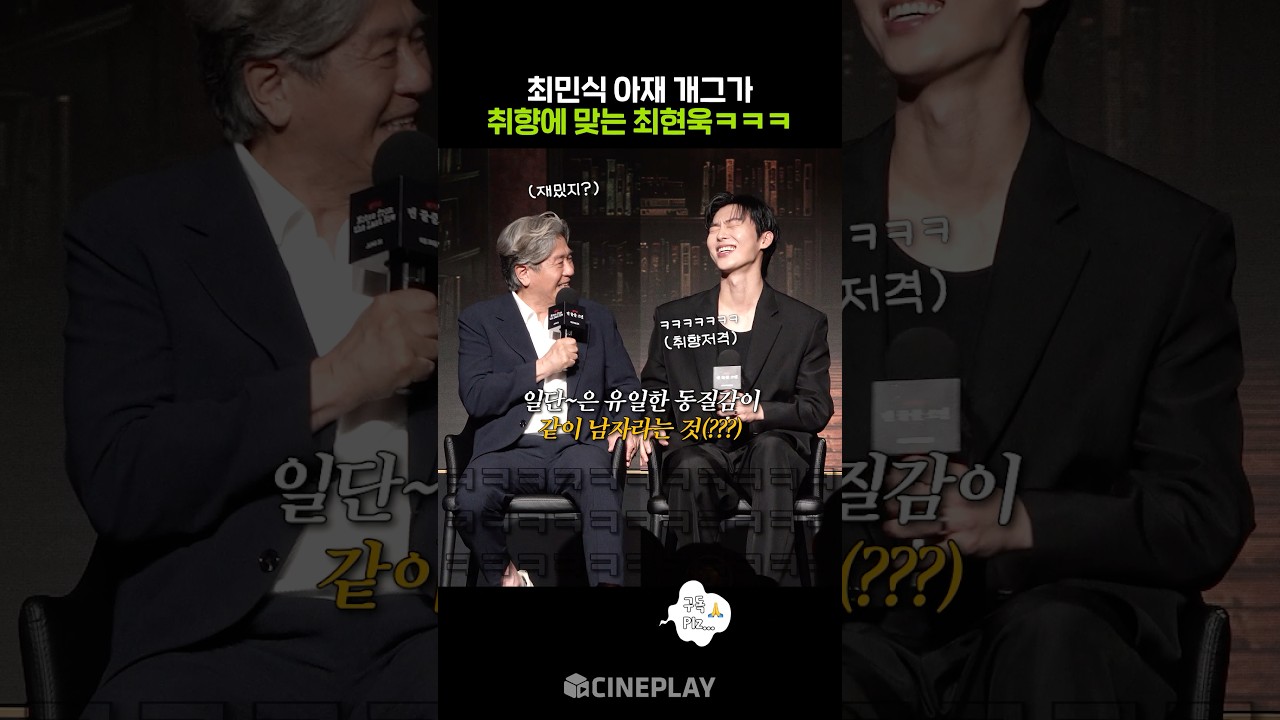
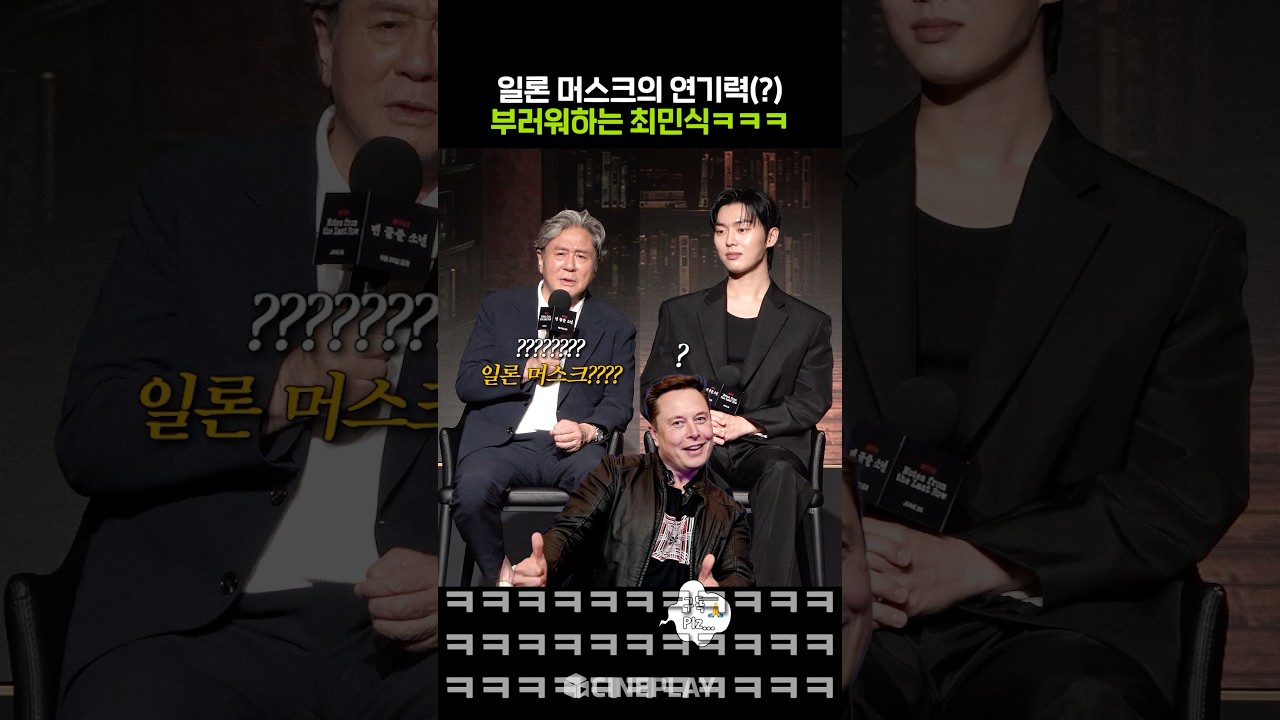
Of course. Regardless of age, I’m often inspired by other actors in the industry. But it has a very positive effect on me. Watching Hyun-wook this time, I thought, 'Did I act like that at that age?' These days, actors in their 20s and 30s don't hesitate to express themselves. They're very bold.
During promotion for your previous film 〈Pamyo〉 (2024), you became an unlikely fan-engagement icon, sparking a fan-driven 'grandpa styling' craze — for example, wearing headbands fans gave you. Has your attitude toward the public changed?
If I like something I like it; if I don't, I don't. But during 〈Pamyo〉 I was so grateful. After COVID-19, seeing theaters fill up again made me truly thankful. People had been saying theaters were finished, but I thought culture really has changed. In the old days people would just clap at post-screening appearances; now they bring bundles of things and ask to take photos together. So how could I refuse if people return to theaters? Seeing packed audiences made me so grateful; what's so hard about taking one photo? (laughs) But I got a lot of flak. My juniors said, 'If you do that, shouldn't we do it too?' (laughs) It wasn't intentional, but before I knew it, it had become part of the fan culture.
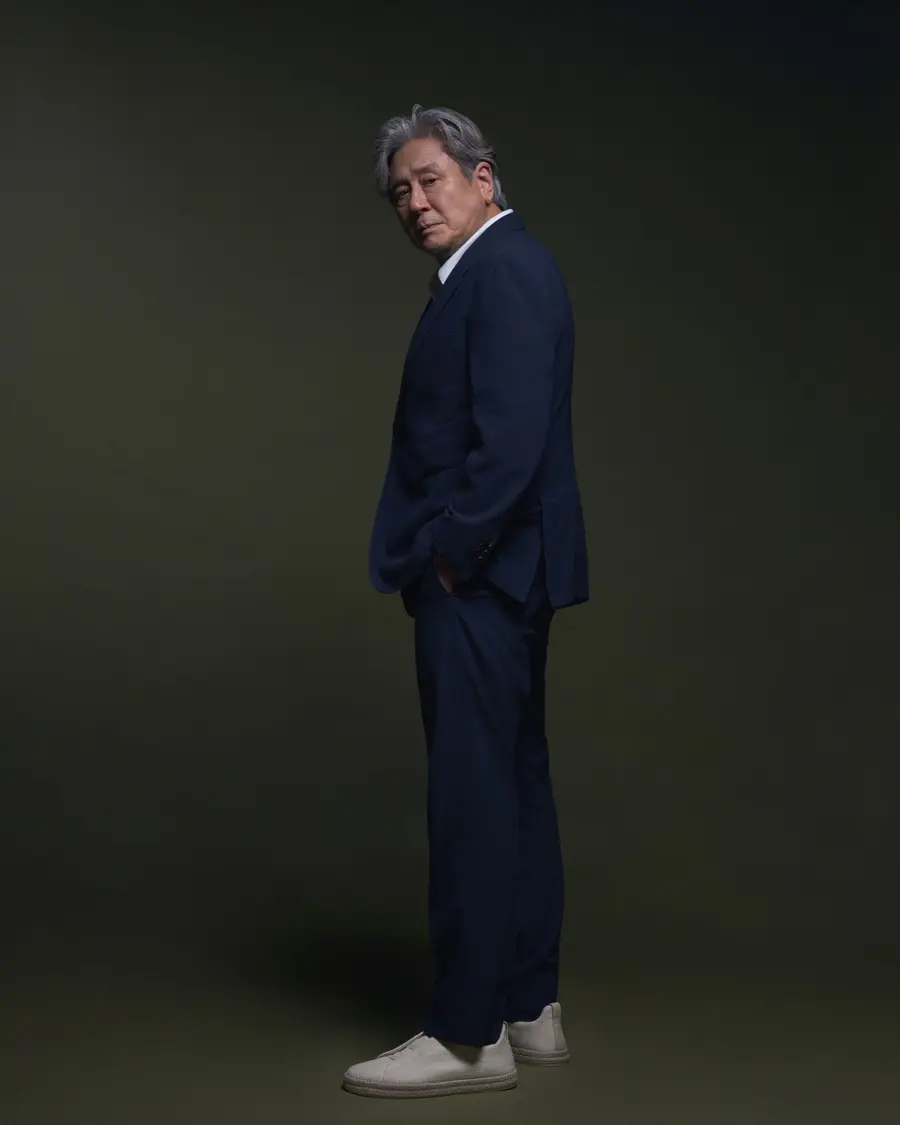
You are now in your 45th year since debut. Over the long years, has your mindset toward acting changed?
I don't think anything has changed. The desire to do good work still burns in me. I don't know how you'll take this, but I feel I understand a bit more now—about people too. I want to explore more works in a variety of ways.
You said you'd like to do more work, and previously you said you wanted to try the melodrama genre. Do you still want to do melodrama?
Of course. A love story interpreted by people who have lived a certain amount of life. For example, like 〈The Bridges of Madison County〉 (1995). I want to dig into the feeling of love rather than approach it from a moral perspective. Also, working on 〈Notes from the Last Row〉 made me think I'd like to reinterpret Korean short stories. Or I thought about adapting a play like 「A Streetcar Named Desire」 in our own way. The original setting is New Orleans, but if we did it in our style, maybe set it in Dongducheon or against the backdrop of a U.S. military base in the chaotic postwar period. I've thought about that.
![[OTT Ratings] Cineplay Reporters Review Netflix's 'Notes from the Last Row'](https://cdn.www.cineplay.co.kr/w160/q75/article-images/2026-06-29/b9f39822-feb8-4c9c-8454-bd9d172b1af8.jpg)
댓글 (0)
댓글 작성
댓글을 작성하려면 로그인이 필요합니다.
로그인하기