


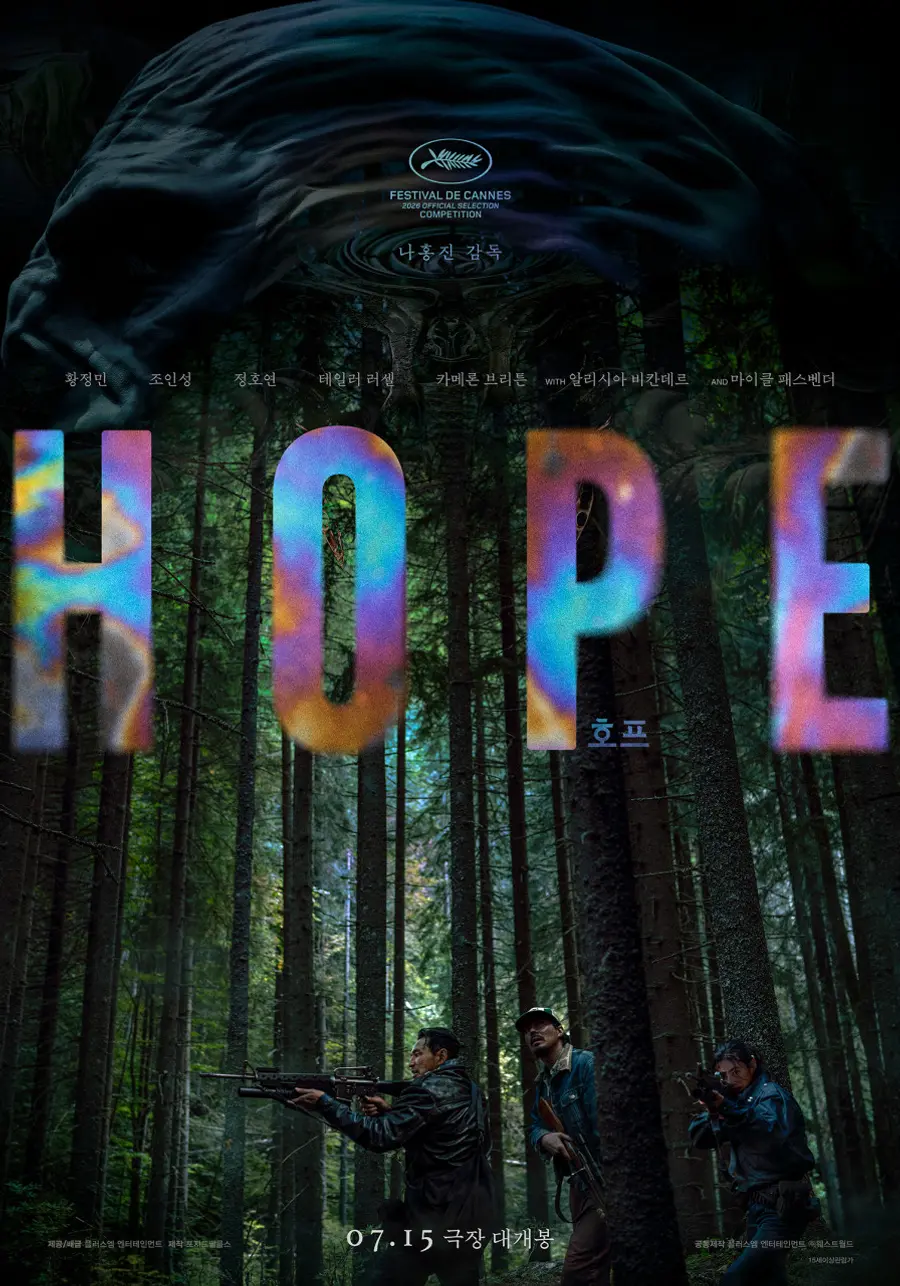
The trailer for 〈Hope〉 promises a showdown between humans and aliens. Instead, director Na Hong-jin delays the alien’s appearance until nearly an hour into the film and focuses first on how a stray rumor spirals into collective panic. He also refrains from giving the alien a backstory in those opening minutes. He offers no real backstory for Hopo Port—a murky space where mismatched elements coexist—and little history for the characters themselves. Minimizing exposition that would help the audience follow what unfolds, Na dramatizes how a trivial rumor can spiral out of control. Viewers follow that process through the eyes of the protagonist Beom-seok (Hwang Jung-min). Yet Beom-seok never fully grasps what is happening and repeatedly misidentifies the alien’s location. Why does Na prioritize this chase from Beom-seok’s limited perspective? And why does Beom-seok keep mistaking the alien’s whereabouts? The answer becomes clear when we trace the recurring themes of belief and misperception that run through Na’s two films, from 〈The Wailing〉 to 〈Hope〉.
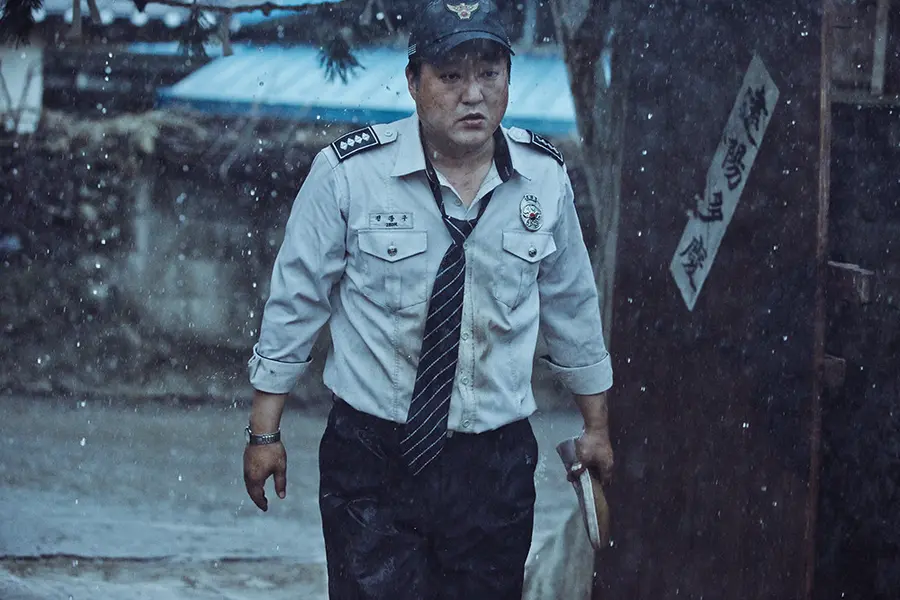
![A still from the film 'Hope' [Courtesy of Plus M Entertainment]](https://cdn.www.cineplay.co.kr/w900/q75/article-images/2026-05-19/865cc974-685e-46f1-a3ee-e515825dc4d8.jpg)
First, consider how both films begin. 〈The Wailing〉 and 〈Hope〉 both open with rumors. In 〈The Wailing〉, Jong-gu (Kwak Do-won) hears a rumor from a fellow policeman about a Japanese outsider (Jun Kunimura) after a death in the village. At first Jong-gu does not believe the rumor, but he gradually links the events in the village to it and begins to suspect the outsider. In 〈Hope〉, Beom-seok responds to a report about a cow found dead for unknown reasons and, at the scene, hears a rumor about a tiger descending into the village from Siberia. In both films the rumor points to an external presence—an other from outside the closed community—and it names that other as the cause of an inexplicable death. Jong-gu and Beom-seok accept the rumors uncritically. What begins as light hearsay and baseless speculation hardens into conviction and ultimately brings disaster. The way each film establishes the truth of the rumors, however, unfolds somewhat differently.

〈The Wailing〉 asks the question, "What should we believe?" Jong-gu tries to determine whether the outsider is a spirit out to harm his daughter or an innocent person. As Jong-gu’s suspicion grows, Il-gwang (Hwang Jung-min) and Mu-myeong (Chun Woo-hee) present him with contradictory information. By the film’s end, Il-gwang points to Mu-myeong—not the outsider—as the origin of the events, while Mu-myeong offers statements that contradict Il-gwang and leave Jong-gu confused. Jong-gu’s belief here is directly tied to his family’s survival. Ultimately, trusting Il-gwang’s word, Jong-gu returns home and confronts a catastrophe. The film’s ending appears to conclude that the outsider really was a spirit — from the perspective of a Catholic subdeacon, Yang Yi-sam (Kim Do-yoon), a demon. Yet viewers who have followed the events from Jong-gu’s point of view may find that conclusion hard to accept because, like Jong-gu, they gathered information and held competing hypotheses. In fact, the ending of 〈The Wailing〉 can also be read as the way Jong-gu’s—and Yang Yi-sam’s and the villagers’—premature belief takes on reality. In 〈The Wailing〉, the rumor functions as a flawed method of understanding the unknown other. The rumor Jong-gu hears plays out within the film, and that process shows how a hasty belief about the other can become real. Subjective conviction, not objective fact, comes to govern our reality. The outsider tells subdeacon Yang Yi-sam, who has come to confirm the stranger’s identity, "No matter how many times I tell you who I am, it won’t change what you think. You came here to confirm your suspicion that I’m a demon." In the scene that follows, in which the outsider manifests as a demon, Na Hong-jin argues that we make our beliefs real regardless of what is actually true. He represents the other as a supernatural being in 〈The Wailing〉 and as an alien, a pan-cosmic being, in 〈Hope〉, criticizing the tendency to hastily define and judge the other from fragmentary understanding.
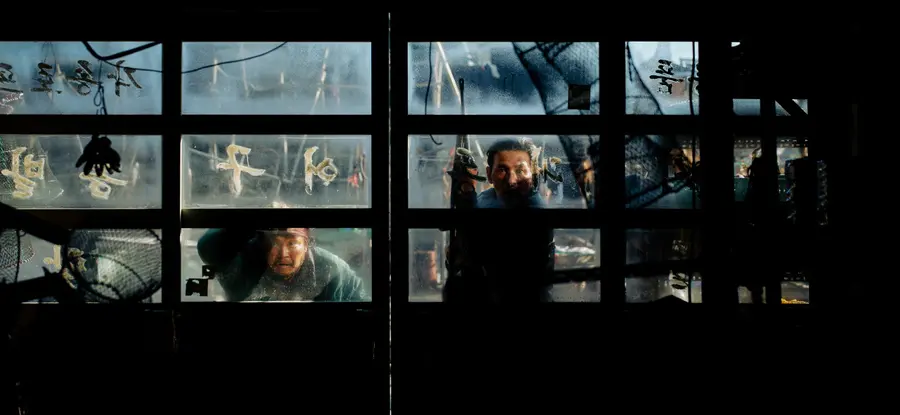
Keeping 〈The Wailing〉's themes in mind, reconsider the opening of 〈Hope〉. At the scene where the cow was found dead, Beom-seok hears from one of Seong-gi’s fellow hunters. At first he doesn’t accept the rumor outright; he reasonably questions whether a tiger could reach this place while "avoiding landmines and barbed wire." But Seong-gi and his companions respond that if it’s what Mr. Haesul says, it must be true, and their certainty unnerves him. Beom-seok wonders why everyone in town already knows the rumor while he is hearing it for the first time, yet he soon accepts it and begins tracking the tiger. The moment Beom-seok starts the pursuit, reports about an unknown presence multiply and Hopo Port descends into chaos. In 〈Hope〉 as well, misguided belief takes precedence over actually determining the cause of an unexplained event. From this perspective, the film’s early stretch can be read as the process by which an otherwise ordinary person without entrenched bias acquires a mistaken belief and moves toward catastrophe. Because a biased conviction has not yet deeply taken root, Beom-seok—unlike the others—misidentifies the alien’s location. His repeated mistakes reflect the confusion of trying to locate the truth in a situation that resists clear understanding. What Beom-seok sees, hears and senses during his search are the countless pieces of information one encounters when trying to find the truth. The film’s rapid succession of events leaves him no time to assess that information rationally. That evokes our present reality of accelerated, saturated information. Na seems to suggest that in a world awash with data, finding the truth has become even harder.








댓글 (0)
댓글 작성
댓글을 작성하려면 로그인이 필요합니다.
로그인하기