


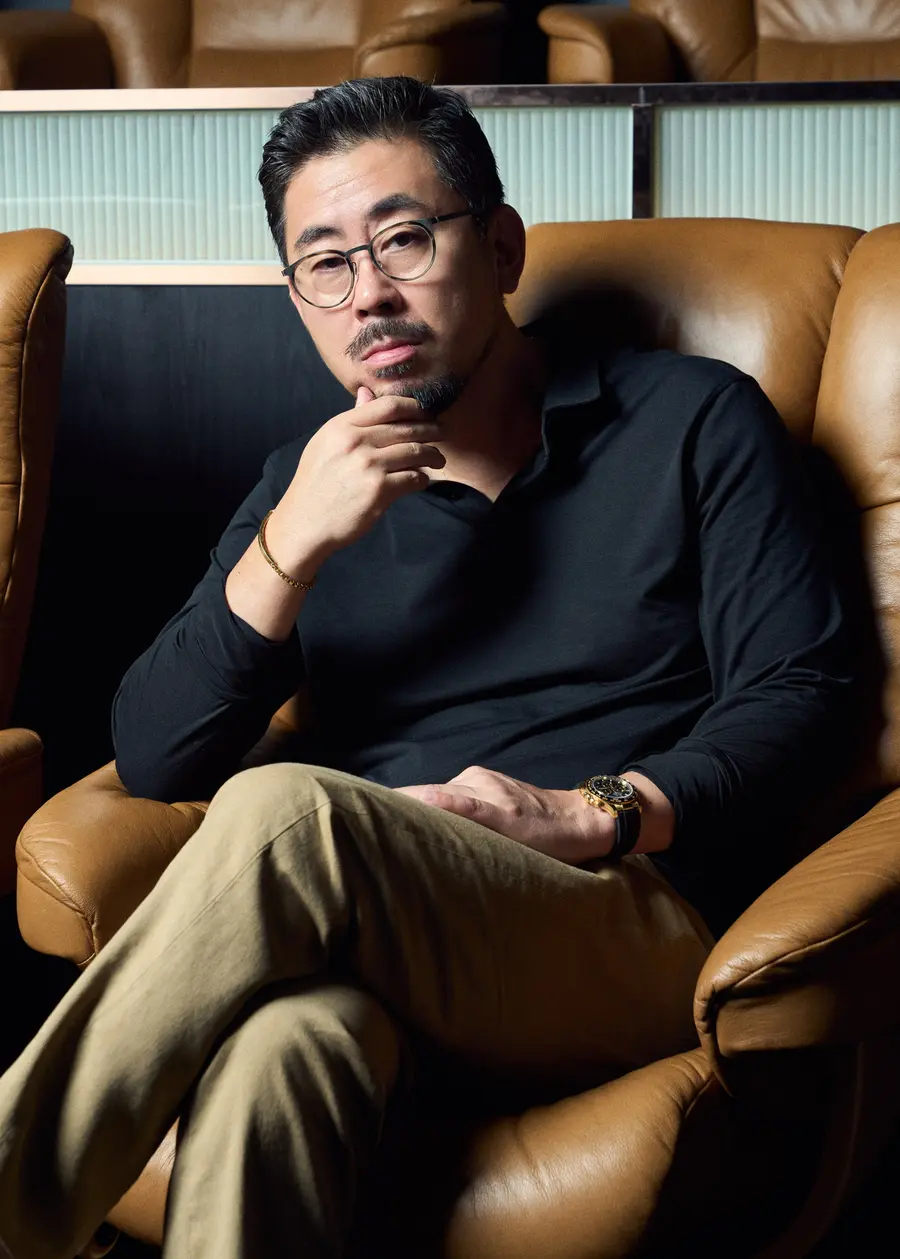
“All tragedy begins with perspective.” Director Na Hong-jin wrote that line in the director's note for 〈Hope〉.
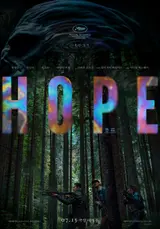
On July 15, the director's new film 〈Hope〉, invited to compete in the competition section at the 79th Cannes Film Festival, is set for release. The story expands a petty act of wrongdoing in a small town into a cosmic tragedy, while clearly carrying the questions about humanity and faith that Na Hong-jin has long pursued.
Even so, for all of Na’s familiar questions, 〈Hope〉 is unmistakably an entertaining film. Like an amusement-park attraction, it throws viewers onto a giant roller coaster and barrels ahead without a dull stretch or explanatory hand‑holding. Blending sci‑fi, the western, comedy and action, it offers a kind of genre fun viewers have not seen before. It drives straight toward its ending, then asks the question Na Hong-jin has explored throughout his work: if what we watched is an allegory, what does that metaphor mean?
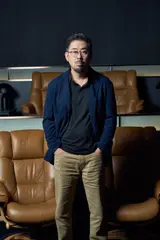
An exacting perfectionist, Na was still adjusting the film’s sound and visual elements less than a week before its July 15 release. On the afternoon of the 7th, CinePLAY met Na Hong-jin somewhere in Seoul’s Jongno District to talk about everything from his thoughts on the release to behind‑the‑scenes stories from the film. Below is the full interview.
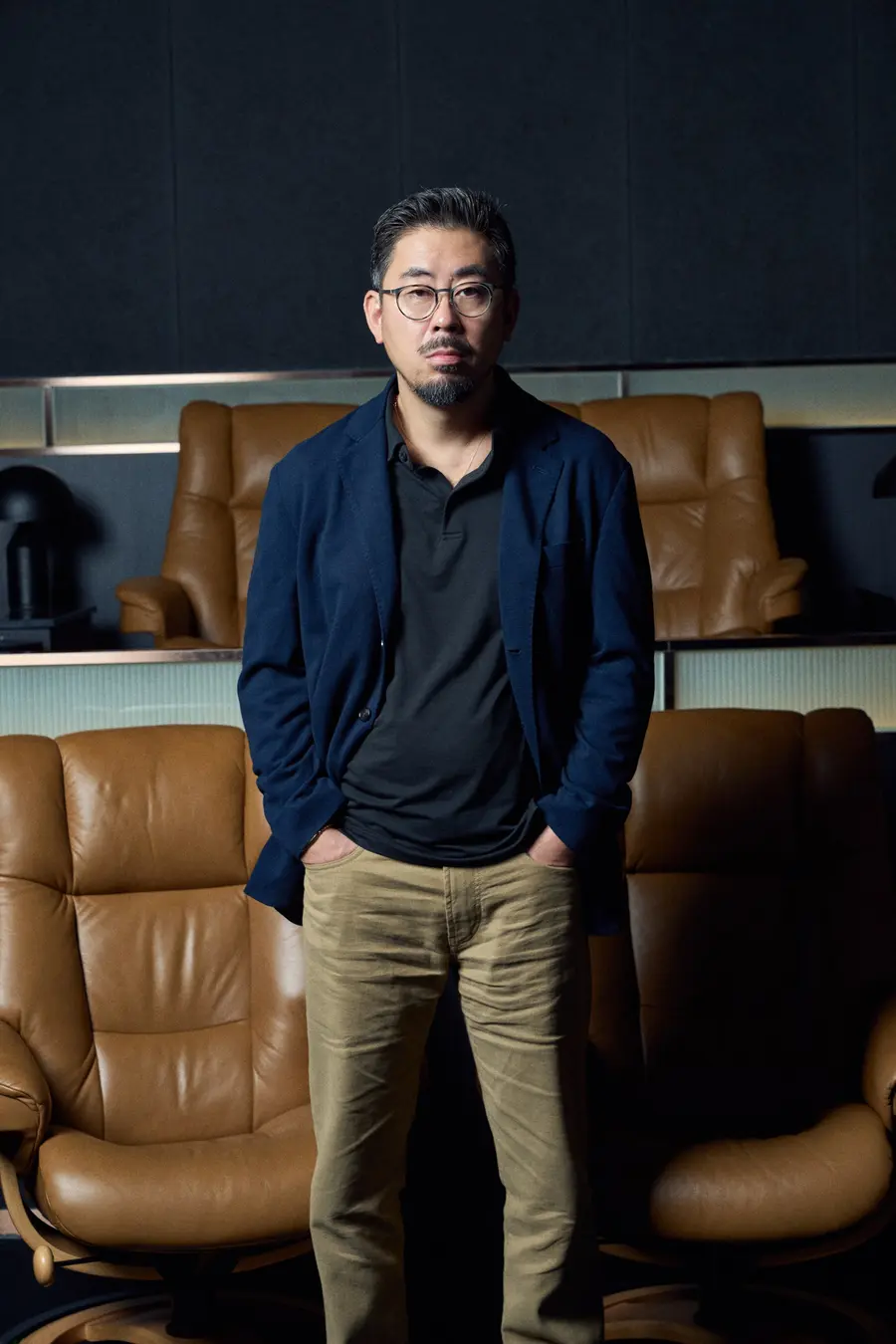
The film has generated strong reactions at home and abroad, including at Cannes. Since the press-and-distribution screening, you’ve received positive reviews — what are your honest impressions?
To be frank, I’ve heard a lot of good things, but they haven’t really sunk in. I actually rewatched the film yesterday in the theater next to the Dolby auditorium — the regular auditorium. I had never seen this film in a 5.1‑channel regular theater, so right after yesterday’s press event I rushed to adjust the sound mixing. I called the team and the DI suite and plan to finish up right after today’s interviews. Tomorrow I’m flying to the U.S. to finalize the Dolby Vision visuals. When I come back there may literally be no time left to do anything more. I’m grateful, but I’m not in a mood to be celebratory. I just want to finish — to raise even one visible thing — and I’ll do my best until the very end.
What specifically are you still adjusting to the very end?
The quality of the sound and music. The balance in the Dolby Atmos version ended up different from the 5.1 version. Usually we down‑convert the work done in Atmos sessions to 5.1, but because music and sound are so crucial in our film, we redid the 5.1 mix from scratch. But the power changed, so even at the same level some parts feel louder or quieter, and we’re fixing that now. And the film’s specific "tears" scene — it didn’t look the same in the DI room as it does in the theater, and that drives me crazy. I don’t know how many times I’ve gone back and forth because of that.
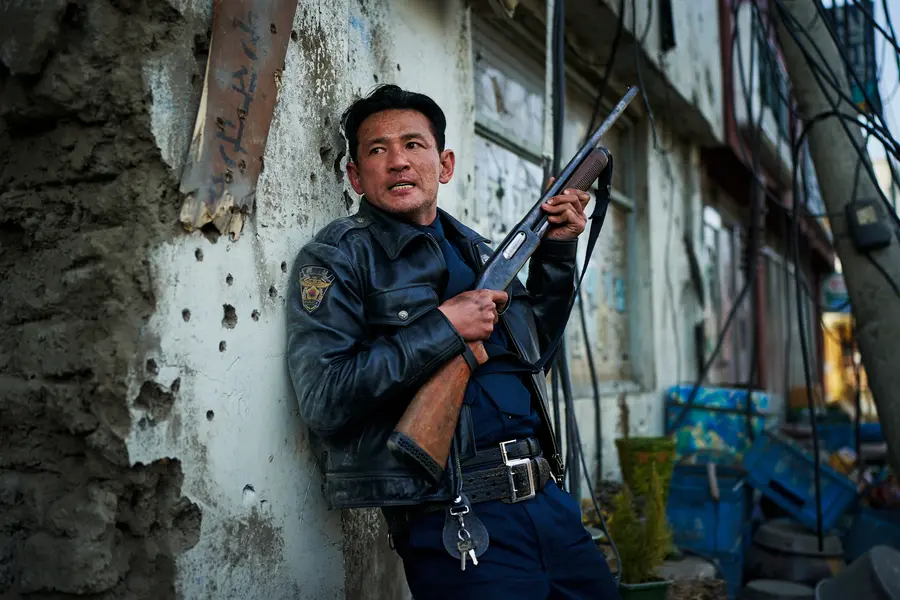
The scene where the protagonist Beom-seok (Hwang Jung-min) confronts an unknown presence and the film’s "tears" sequence is striking. That sequence requires precise CG technology. How did you approach creating this "tears" scene?
That moment is an emotional one, so I treated it as direction rather than a purely technical challenge. We did motion capture with the actor, but even with high‑speed shooting and frame‑splitting, the data proved insufficient and matching failed. We basically had to recreate it. If we had been filming the actor in front of the camera, I could have called "NG" and shot it again until it became "OK," but with CG you don’t get an easy "OK."
The film has been labeled sci‑fi, but it’s hard to call it a conventional sci‑fi movie. Do you agree?
People started calling the film sci‑fi mainly because we needed some kind of category and couldn’t find a label that really fit. If I had to choose one, sci‑fi seems closest, but it doesn’t conform to strict sci‑fi grammar.
Your previous film 〈The Wailing〉 included outsiders; in 〈Hope〉 you go further and introduce extraterrestrial beings. Why bring aliens into this film?
I wanted to take the folkloric gods and supernatural phenomena I explored in 〈The Wailing〉 a step further and approach a larger presence. That naturally led to the cosmic setting, and to represent and symbolize that presence we developed a designed form — an "alien." In 〈The Wailing〉, outsiders sufficed; this time I felt the escalation required something greater, so I introduced aliens. We also restored scenes that had been cut and increased the screen time for the character Yang‑bae, played by Eum Moon‑seok. The film asks how something very small and petty in a tiny town can grow and spread. I wanted to show that a great tragedy can stem from something minor, and that the originator of the harm may appear to have no malice at all. Yang‑bae is a character meant to explain that those who cause wrongdoing are not necessarily malicious.
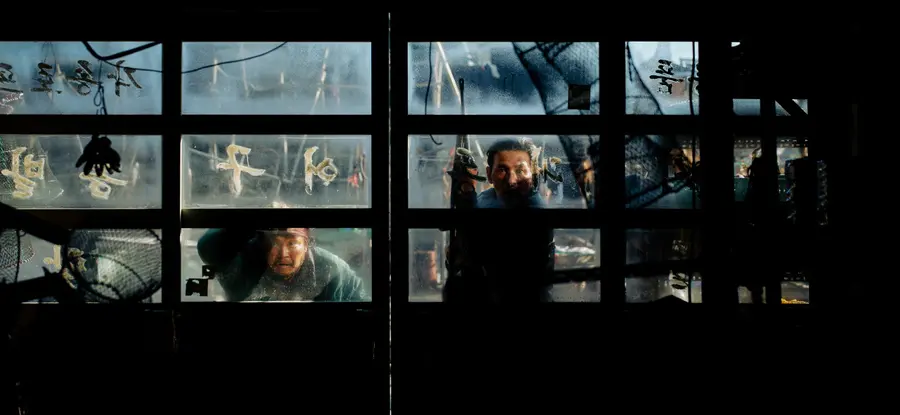
The film depicts two major clashes between humans and the aliens. It also runs two narrative strands — Beom-seok’s (Hwang Jung-min) journey and Seong-gi’s (Jo In-sung) journey — through most of the runtime. Why structure the film this way?
For about 2 hours and 20 minutes, the audience watches these clashes. While delivering action thrills, I also had to guide how the audience feels and receives the story. I wanted the two major confrontations to feel different from front to back. Strictly speaking, the second clash could be seen from the aliens’ perspective, but I chose the audience’s perspective. In the first roughly hour, viewers see an intense battle from Beom‑seok’s point of view. Later, through Seong‑ae (Jung Ho‑yeon) and Seong‑gi, the audience learns information Beom‑seok doesn’t know. I even included a testimony scene with actor Im Hyun‑sik where I hoped the audience would laugh or find it entertaining. Then I wanted them to feel guilt later — to ask themselves, "Why did I laugh at that?" By the time of the second clash, the film should logically be seen from the aliens’ vantage, but I aimed to pull viewers back into a human perspective and have them unconsciously re‑engage with the sequence as humans.
Despite the story unfolding in bright daylight, the film is overwhelmingly frightening. The early car‑action sequence also carries an analog, 1980s blockbuster mood. What was your visual strategy?
I wanted to shoot with extremely wide lenses to make the audience feel closer and as if they were stepping into the space. Art direction, cinematography and action camera movement were all designed to feel like they brushed past with wide lenses. We set the period in the past largely because of smartphones: if the film had them, we’d have to account for too many modern details, which becomes a hassle. (laughs) We used seriously vintage lenses and matched costumes, sets and makeup, which also made designing and staging the aliens easier.
The fictional town Hopohang looks modest, while the nearby forest feels almost exotic. Why set these spaces this way?
The setting needed to be rigorously isolated and later useful for the escalating narrative. Most importantly, I wanted the structure where something tiny and insignificant spirals into a story about the whole universe. I thought about which places in Korea fit that idea and settled on a northern part of Goseong, which I visit often — it felt right.
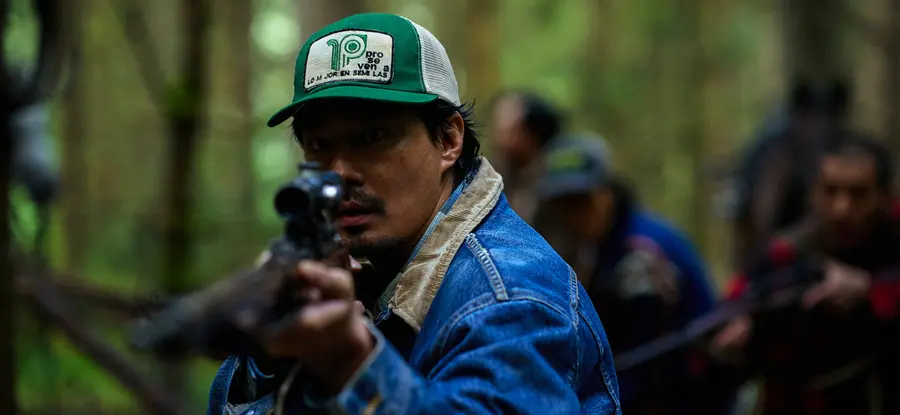
The forest chase sequences feel incredibly fast. How did you pull off that kind of shooting?
That speed can only come from taking real risks and moving the camera quickly. There were no references for filming a horse running fast through a forest, so we cleared stones and created an environment for something to run quickly. We used bikes a lot. We partnered with action‑infrastructure teams from big Hollywood productions to set up camera dampers and rigs and then just ran. We mounted cameras on the front and back of vehicles, on horses, and tried everything. At times actors even held cameras with one arm and shot. After cutting paths, we later restored the bare earth with CG grass so it would look like fresh ground.
The first appearance of the alien is shocking. In a humble town, a huge unknown presence can feel jarringly out of place for some viewers. Why does that sense of dissonance stand out?
First, ideally the audience shouldn’t immediately know the being is an alien. It should feel like a tiger or something familiar at first before an unknown creature pops out. But by the time people see the film, they’ve read articles and seen ads that say there’s an alien, and they recognize within 50 minutes that the thing Beom‑seok meets is an alien. I wanted the design to keep its identity hidden, but because everyone already knew it was an alien, its sudden appearance feels off — people say, "That’s not an alien." Second, I made a mistake by having that fast‑moving subject run in bright daylight. When you film a high‑speed subject at normal frame rates, motion blur smears everything. Trying to force it to look sharp feels strange. Also, the weather at the Haenam coast where we filmed was wildly changeable — sunshine, shade, all over the place. If it had been during 〈The Wailing〉, cinematographer Hong Kyung‑pyo, who obsessively cares about weather, would have waited for the right light, but he said, "It’s fine! The sky naturally has clouds — let’s shoot quickly." (laughs) Our shots ended up inconsistent with the sun coming and going, and those were challenges.
The aliens in 〈Hope〉 resemble humans, and each character’s alien form is different. How did you approach the alien designs?
At first we started from tabloid‑style, stereotypical aliens because we thought realism demanded it. But as we talked with designers and learned how yet‑to‑be‑released films were designing aliens, we realized we shouldn’t follow that route and kept evolving the design. The alien evolution took almost eight years. We began designing in 2017–2018, modeled and tested pieces in the film, and then went through the biggest transformations when matching them with actors — that’s how we arrived here.
The actors deliver brutal, desperate survival action. Jo In‑sung’s relentless Seong‑gi and Jung Ho‑yeon’s resilient Seong‑ae stood out. How did you conceive these two characters?
Seong‑gi embodies how tenaciously humans cling to life — a person who fights fiercely not to die. In short, he represents the "earthling swagger," so his action was staged that way. Seong‑ae was inspired by a young woman I saw at a tiny, bitterly cold airport in a very cold country. She guided planes on the runway without gloves; her hands and face were bright red from the cold, and she boarded the plane and spoke with the captain very professionally, leading the whole process. I was so impressed and wanted to capture that kind of person on film.

![[First reactions] 'Look Back' Cineplay reporters' star ratings](https://cdn.www.cineplay.co.kr/w300/q75/article-images/2026-09-29/86caa45d-4319-4803-92b7-38b58935b7d3.jpg)
![[On the Ground at BIFF] “Art Is Art”: Zhang Yimou Breaks Silence on Historical Controversy Over “Assassins”; Top Asian Film to Be Named on 15th](https://cdn.www.cineplay.co.kr/w300/q75/article-images/2026-10-07/c4d38025-dc2a-4cf0-919a-792227afc5f5.jpg)



댓글 (0)
댓글 작성
댓글을 작성하려면 로그인이 필요합니다.
로그인하기