


▶〈Hope〉: this piece continues Part 1.
Director Na Hong-jin deliberately disorients the audience by showing Beom-seok misidentify the alien's location. Beom-seok and Jong-gu are both police officers, but they are timid and incompetent. The shared setup of inept police in both films functions as an allegory for a government absent in the face of catastrophe, and it also marks the starting point of Na's playful game with viewers. He intentionally casts his protagonist as an ordinary person who breaks down and feels bewildered amid disaster. He then turns viewers' identification with the protagonist against them. Viewers who share the protagonist's incomplete point of view fall into the trap of misrecognition Na has set. In 〈The Wailing〉, Na conveyed that through dialogue and editing—most notably in the cutting of the sequence involving Il-gwang's ritual—while in 〈Hope〉 he relies on image and sound. The moment the audience, alongside Beom-seok, hears the alien's sound, they fall into that trap. He also limits Beom-seok's field of vision by composing shots that withhold information. From 〈The Wailing〉 to 〈Hope〉, part of why Na's films divide viewers stems from this technique. Through narrative tricks, Na shakes the audience's cognitive framework, expands the cinematic experience and completes an intellectual game. The confusing emotions that inevitably arise in the process feel alienating and unpleasant to some viewers, while for others they convert into aesthetic pleasure as a form of reward.
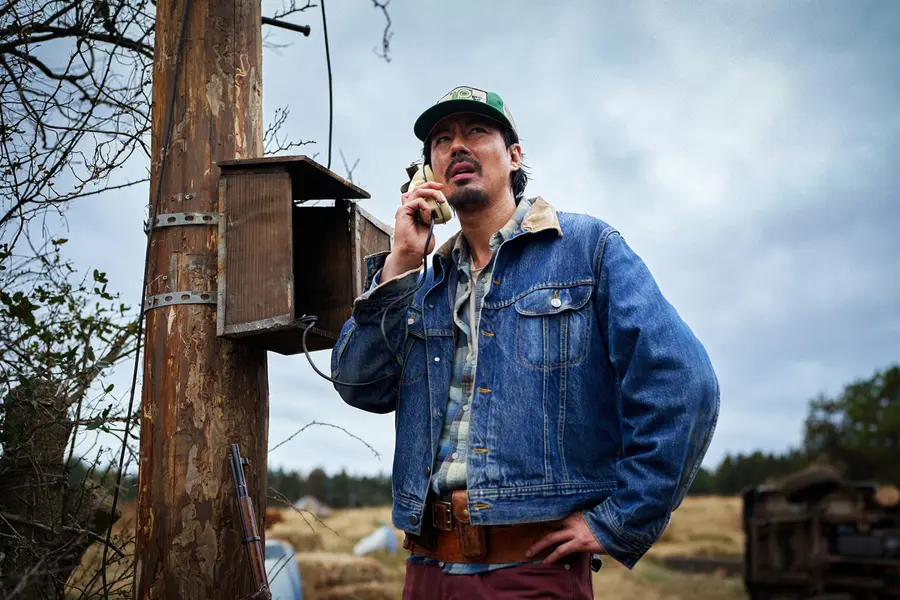
Where 〈The Wailing〉 began without resolving whether the rumors were true, 〈Hope〉 starts from the premise that the rumors are false. The hunter who tells Beom-seok about Haesul later says he, in fact, never actually saw him. The audience, unlike Beom-seok, learns the truth of the rumor. The scene in which Haesul tells Seong-ae (Jung Ho-yeon) what he says he witnessed likewise reveals that his account does not match the facts. Haesul says the alien was more than 4 meters tall, but the coroner who dissected Bamigir's (Cameron Britton) corpse, played by Hwang Seok-jung, estimates roughly 3 meters. Haesul spreads four fingers and says he saw three, then folds one finger. Haesul's account is closer to falsehood, mixing exaggeration with distorted memory. Yet the people of Hopohang believe anything Haesul says. Na reuses the figure of Haesul—whose words carry absolute authority—to reflect contemporary Korean society. People uncritically accept and trust the words of influential figures, whether populist politicians or social-media influencers. Conversely, to keep their belief systems intact they manufacture proxies who fit their beliefs and then grant those proxies authority. If 〈The Wailing〉 was about the limits of perception and the anxiety of not knowing which account is true, 〈Hope〉 is about the refusal of rational knowledge itself—the deliberate choice to believe what you know to be false, and the erroneous faith that follows. Na appears to argue that in contemporary Korea, preserving falsehoods that sustain blind faith can matter more than knowing the truth. Through this film he gives audiences the contradictory experience of believing what they see is false yet accepting it anyway.
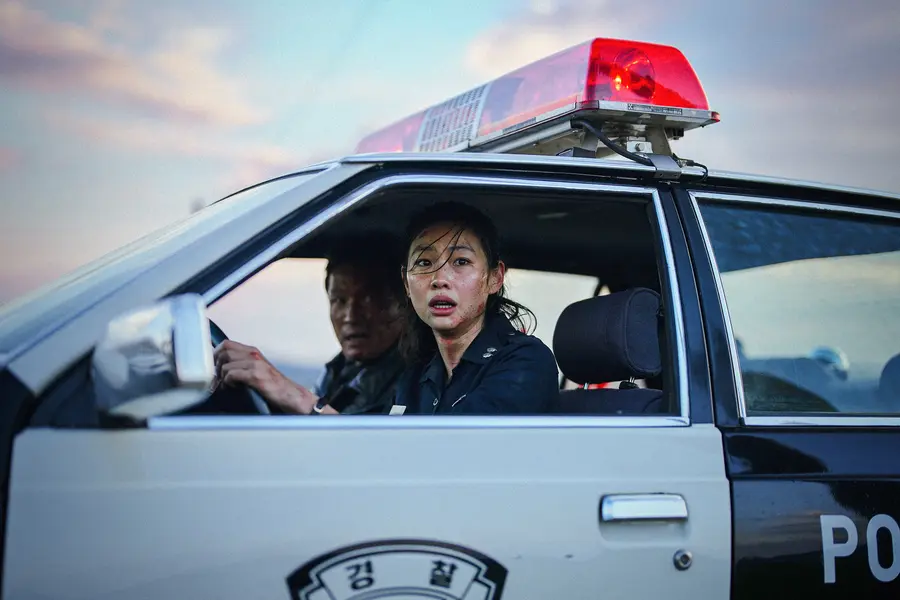
Na Hong-jin's characters harbor an intensely paranoid form of belief. Philosopher Robert Pfaller, borrowing the psychoanalytic analysis of Octave Mannoni, identified three types of imagination—superstition, creed and paranoia. According to him, people with paranoid beliefs suffer from an obsession to act immediately. For them, "there is no condition or occasion for doubt that determines whether a claim is true." He adds that "the paranoid subject never considers what he imagines to be foolish or worthless; he distances himself not a whit from his imagination and rather feels entirely one with it. The paranoid subject wraps the entire world into his thought (or imagination) and possesses a gapless explanation for that world." (「The Technique of a Bad Life」, Robert Pfaller, translated by Na Yoo-shin, Sawol-ui Chaek, 2024, pp. 170-172.) In Na's films, characters so blinded by paranoid belief cannot meet the other as they are; they project their inner fears and define the other as an enemy. Na repeatedly weaves this pattern into his cinema and diagnoses paranoid belief as a force dominating contemporary Korea.
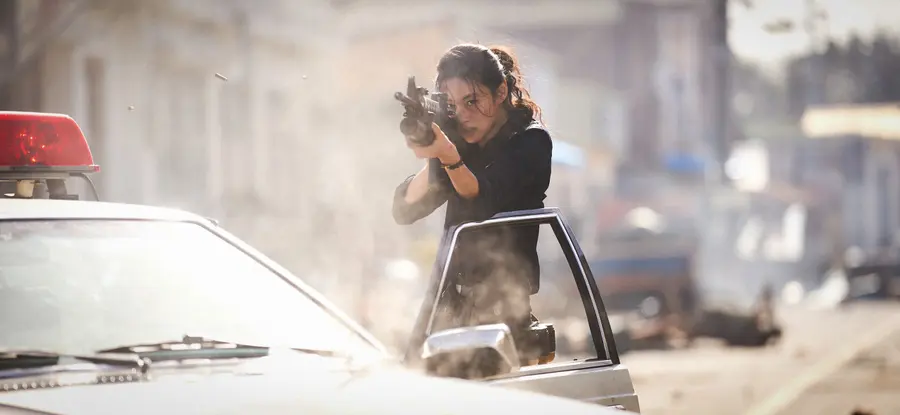
Na also sees Korea's historical traumas as a primary filter for identifying outsiders in society. Both 〈The Wailing〉 and 〈Hope〉 recall Korea's traumatic history. The outsider in 〈The Wailing〉 evokes the memory of two invasions and colonial rule across the Imjin War and the Japanese colonial period—repeated aggressions and collective violence. Memories and trauma from colonial rule project onto the foreign figure and turn him into a demon. In fact, the outsider may not be a devil at all but rather a figure made real by our lingering historical trauma. That concern carries into 〈Hope〉 as well. Hopohang is a fictional space set near the Demilitarized Zone; an atmosphere of national-security fear pervades it. The film shows posters and banners urging citizens to report spies. In this way 〈Hope〉 calls to mind the Korean War and Korea's modern history plagued by the Red Complex. In the film Seong-ae attacks Bamigir and says, "You crossed the line," while Beom-seok tells Yang-bae, "If you cross this line, I'll kill you." The line they repeatedly invoke is more than a spatial boundary: it is a forbidden zone one must not breach, a physical and psychological limit where communication and understanding collapse. Cross that line and the other is immediately deemed an enemy and merciless attacks follow.
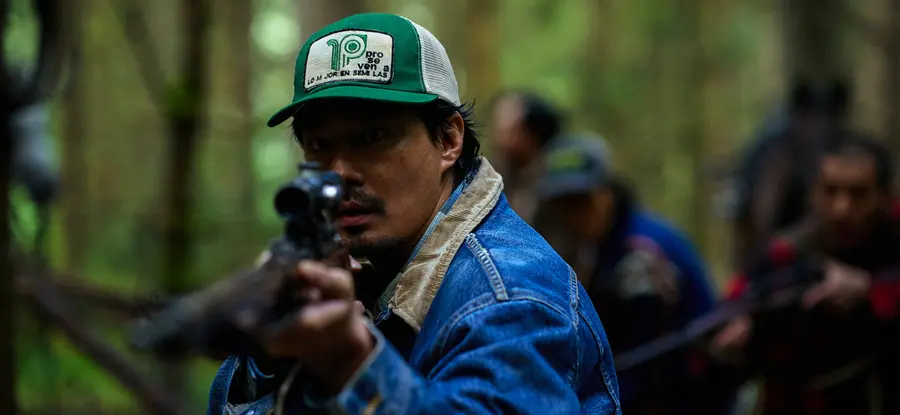
Yet 〈Hope〉 leaves room for connection between the alien rendered as a monster and humans. The alien—an otherworldly being—bears a face, and that collision of familiarity and strangeness creates ambiguity. By giving them faces that can register emotion, Na allows for the possibility of understanding. Beom-seok sees tears in Bamigir's eyes and feels something change inside him. Though alien in appearance, Bamigir's face shows familiar human emotion and prevents Beom-seok from seeing him only as an alien. This cracks the paranoid insistence on defining the other solely as an enemy, and it throws the audience into uncertainty at the blurred boundary between alien and human. The hope for escaping the film's apocalyptic catastrophe rests on the fate of the alien baby Kali, but perhaps it also lies in a pang of sympathy Beom-seok feels.








댓글 (0)
댓글 작성
댓글을 작성하려면 로그인이 필요합니다.
로그인하기