


![Film set for the movie 'Odyssey' [Provided by Universal Pictures. No redistribution or DB use]](https://cdn.www.cineplay.co.kr/w900/q75/article-images/2026-08-18/ffe6067c-6128-4979-b3d3-9dd264e495ca.jpg)
A longing for the “real thing,” and a image-quality debate beyond the screen
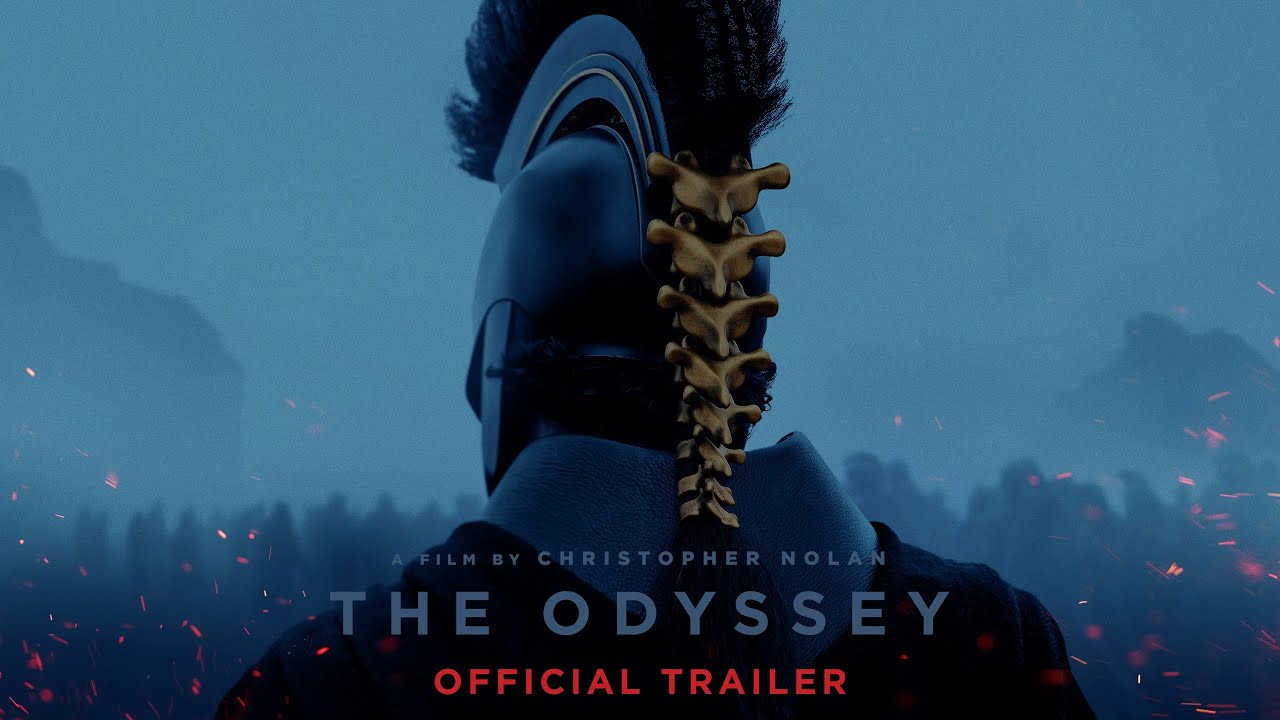
Director Christopher Nolan’s latest film, Odyssey, has sparked an unprecedented box-office surge, pulling audiences toward IMAX theaters. But an allegation has been raised that, in South Korea, there are no true screening venues that meet the complete specifications centered on the network. The crux of the controversy is that, despite the fact that this is a blockbuster made by shooting the entire runtime with a 70mm IMAX film, there are vanishingly few places in South Korea that can fully replicate it—with the requisite projection facilities and screen aspect ratio.
![Poster for the film 'Odyssey' [Provided by Universal Pictures. No redistribution or DB use]](https://cdn.www.cineplay.co.kr/w488/q75/article-images/2026-08-18/18ef2d9f-fb8f-407b-bd97-73c8628d1875.jpg)
A resolution revolution: the overwhelming immersion delivered by 18K image quality
Developed in Canada, IMAX made its debut to the world through the 1970 Osaka Expo. Unlike conventional films, which run 35mm film vertically through the projector, this system lays a 70mm film—twice the size—horizontally so it moves. The so-called 15/70mm format, which uses 15 perforations (holes) per frame, carries more than 10 times the information of standard film, and it boasts clarity that reaches a theoretical maximum 18K resolution. The screen aspect ratio is also designed differently: rather than the typical 2.39-to-1 found in standard theaters, it is set at 1.43-to-1 or 1.9-to-1, providing an image expanded up to 67% to fill the viewer’s field of view.
![CGV IMAX theater [Captured from the CGV website. No redistribution or DB use]](https://cdn.www.cineplay.co.kr/w900/q75/article-images/2026-08-18/4548efe5-4c1b-4851-b7c3-b9512b1e5513.jpg)
The only sanctuary in South Korea, 'Yongahm'—but opinions diverge
To watch this new release’s original 1.43-to-1 aspect ratio without cropping, the theater must use the same specifications. Among the 27 IMAX theaters nationwide operated under an exclusive partnership with IMAX Corp. by CJ CGV—currently the only company in South Korea with such a partnership—only Yongasan I'Park Mall in Yongsan, Seoul, the so-called Yongahm, supports a ratio close to a perfect square.
![GV Yongsan iPark Mall 'IMAX Laser' theater [Provided by CGV. Yonhap News photo]](https://cdn.www.cineplay.co.kr/w900/q75/article-images/2026-08-18/c98254e8-803b-4e64-9d04-ab5ccda05314.jpg)
Is it the limitation of digital laser projectors, or the direction of the times?
Even as the sole alternative, some movie fans dismiss the venue as a half-measure. It is because it uses a 4K dual-laser projection system (GT Laser) rather than a 15/70mm film projector. The technical shortcoming—being unable to perfectly replicate the analog-specific texture while chasing extreme resolution—has spawned an attention-grabbing tag that calls it fake. However, critics say that framing is excessive strictness. Across the world, only 41 locations have both a 1.43-to-1 screen and a film projector at the same time, and in South Korea, there are currently no film projectors at all.
![Size of IMAX theaters worldwide as of the last quarter [Captured from the IMAX SEC report. No redistribution or DB use]](https://cdn.www.cineplay.co.kr/w900/q75/article-images/2026-08-18/a5310aff-ec58-4e57-90ff-f8bbff0182a3.jpg)
The truth about the 1.9-to-1 ratio: the official standard certified by headquarters
There is also the matter of the mocking phenomenon that calls the 1.9-to-1 ratio adopted by the other 26 theaters “Lie+IMAX.” For a digitized system introduced to fit the commercial multiplex environment, the ratio derived from that is one HQ sides maintains its own firm stance on. Through its official website, the company states that filmmakers take both aspect ratios into consideration when shooting, and it also declares that 1.9-to-1 is an official specification.
![CGV Apgujeong IMAX theater [Provided by CGV. No redistribution or DB use]](https://cdn.www.cineplay.co.kr/w900/q75/article-images/2026-08-18/774f54a0-1739-45cc-bcb6-04021c4e8ce2.jpg)
A compromise between commercial appeal and artistic ambition—questioning what viewing is really about
For theater operators, there is a clear reason they cannot simply expand the number of 1.43-to-1 venues. There is an absolute shortage of content shot in that format in the first place. In addition, the inefficiency of having to proceed with screenings while leaving massive black bars (margins) at the top and bottom of the screen has to be absorbed on a regular basis. Experts advise that while public enthusiasm for perfect specs is positive, it should not come at the cost of losing the point. Since even the director recognizes the value of watching in a standard theater, the focus should be on the message each work delivers and the cinematic experience itself, rather than being tied to the specifications.
![A movie theater in downtown Seoul [Yonhap News photo]](https://cdn.www.cineplay.co.kr/w900/q75/article-images/2026-08-18/7ac1c70f-6c4b-48d7-b108-9aa53e697fd0.jpg)
More important than the specs: the attitude toward viewing, and the completion of the cinematic experience
Movies ultimately come together through the audience’s line of sight. Technical numbers and a theater’s specifications cannot be the definitive measure of emotion. What matters more than the size of the screen is our open-minded attitude in front of the work.


![[Photo &] Christopher Nolan’s New Film, “Odyssey,” Shot Entirely in IMAX for the First Time Ever—Releases on Aug. 5](https://cdn.www.cineplay.co.kr/w160/q75/article-images/2026-07-24/873d94e4-89dc-4fb8-803c-f6e144aaccfa.jpg)
![[Photo &] “Odyssey” Dumps CGI, Builds a 10m Trojan Horse and Drinks in 640km of Film—A 10m Trojan Horse and an 18m One-Eyed Monster](https://cdn.www.cineplay.co.kr/w160/q75/article-images/2026-08-10/e6b0c5e9-e6a6-4800-b8cc-30108fe66960.jpg)
![[Weekend Movie Theaters] Nolan’s New Film ‘Odyssey’ Sparks an IMAX Booking War, Surpassing 3 Million in 10 Days](https://cdn.www.cineplay.co.kr/w160/q75/article-images/2026-08-10/17bcfaee-4409-4e2d-a479-789845063c1d.jpg)
댓글 (0)
댓글 작성
댓글을 작성하려면 로그인이 필요합니다.
로그인하기