


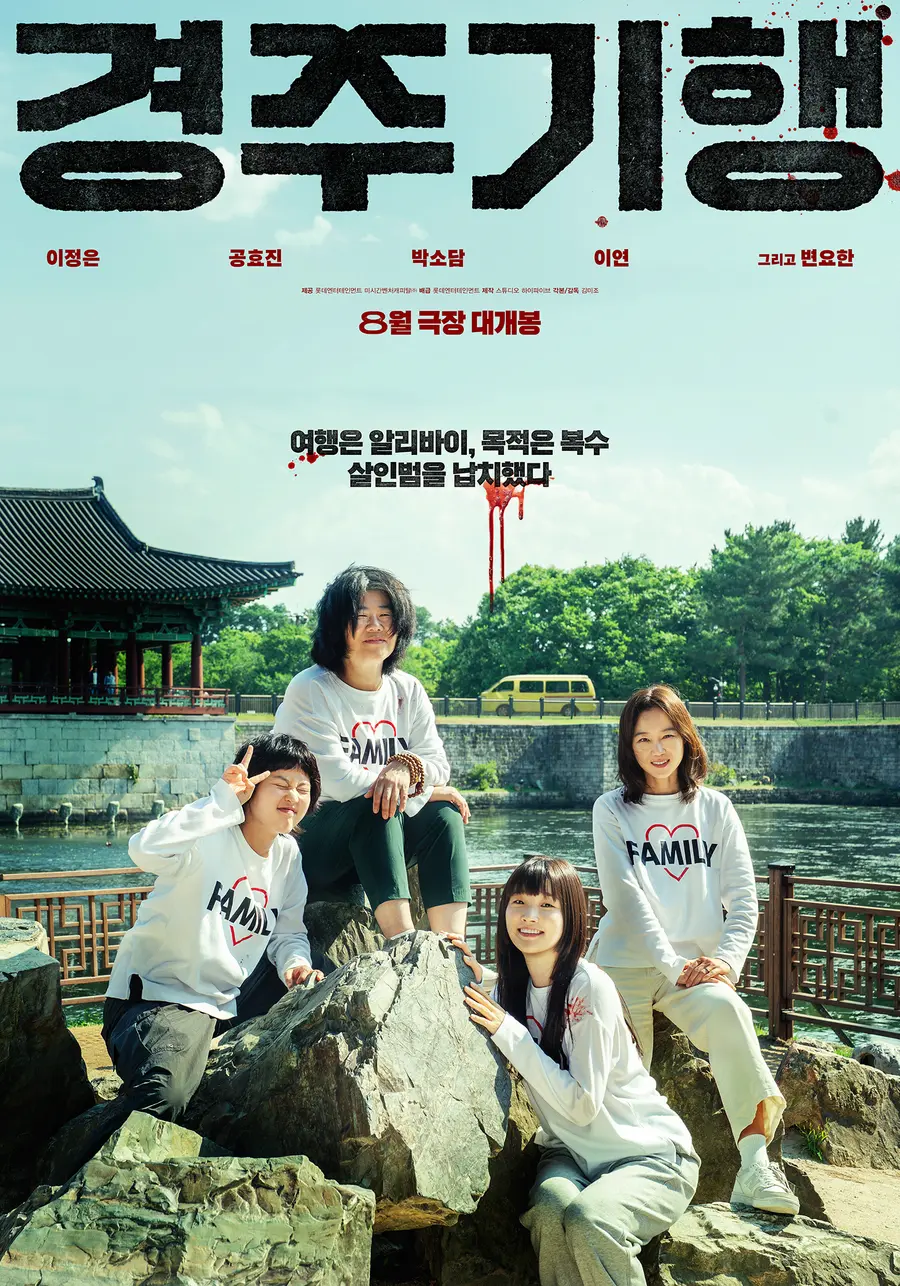
Kim Mi-jo’s 〈Gyeongju Trip〉 is a brisk, chilly revenge drama that announces a director with a singular, hard-to-pin-down voice. Director Kim Mi-jo said that 〈Little Miss Sunshine〉 (2006) and Bong Joon-ho’s 〈The Host〉 (2006) were the biggest influences on 〈Gyeongju Trip〉. It may seem surprising that two such contrasting films could shape a single work so profoundly, but after watching 〈Gyeongju Trip〉, you find yourself nodding at the way the film flexibly moves between tragedy and comedy — that bittersweet ebb and flow.
Combining the rattling yellow van from 〈Little Miss Sunshine〉 with the strange family ensemble of 〈The Host〉, this original film resists being boxed into a single genre. Kim Mi-jo’s film 〈Gyeongju Trip〉, which opened on the 26th, rejects the conventional private-revenge fantasy of a cathartic, soda-pop payoff or easy forgiveness. As the director’s credo puts it, "Even on the way to get revenge, you still have to eat and go to the bathroom — that’s the raw face of real life." The film moves sharply between tears and laughter.
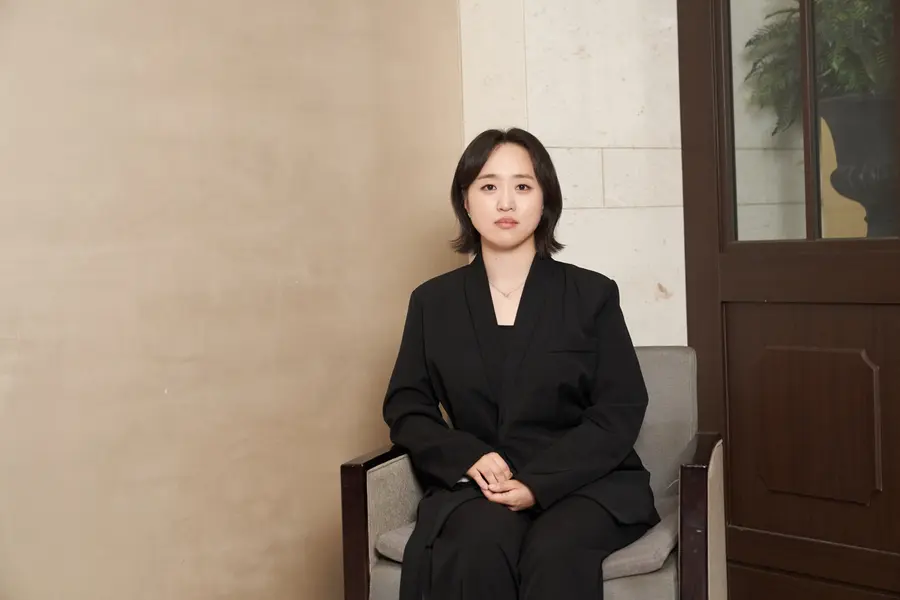
Perhaps Kim Mi-jo herself is much like 〈Gyeongju Trip〉. "She’s the most distinct character among directors I’ve met — she herself feels like a movie character," actor Gong Hyo-jin said, and that was no exaggeration. Like the film, in a positive way she’s unpredictable, shifting naturally between seriousness and humor. She is, like 〈Gyeongju Trip〉’s Ok-sil (Lee Jung-eun), someone who had to bring her story out fully before moving to the next stage. On the afternoon of the 19th, ahead of the release, Cineplay met Kim Mi-jo, director of 〈Gyeongju Trip〉, at an undisclosed location in Jongno District, Seoul to talk about her directing journey.
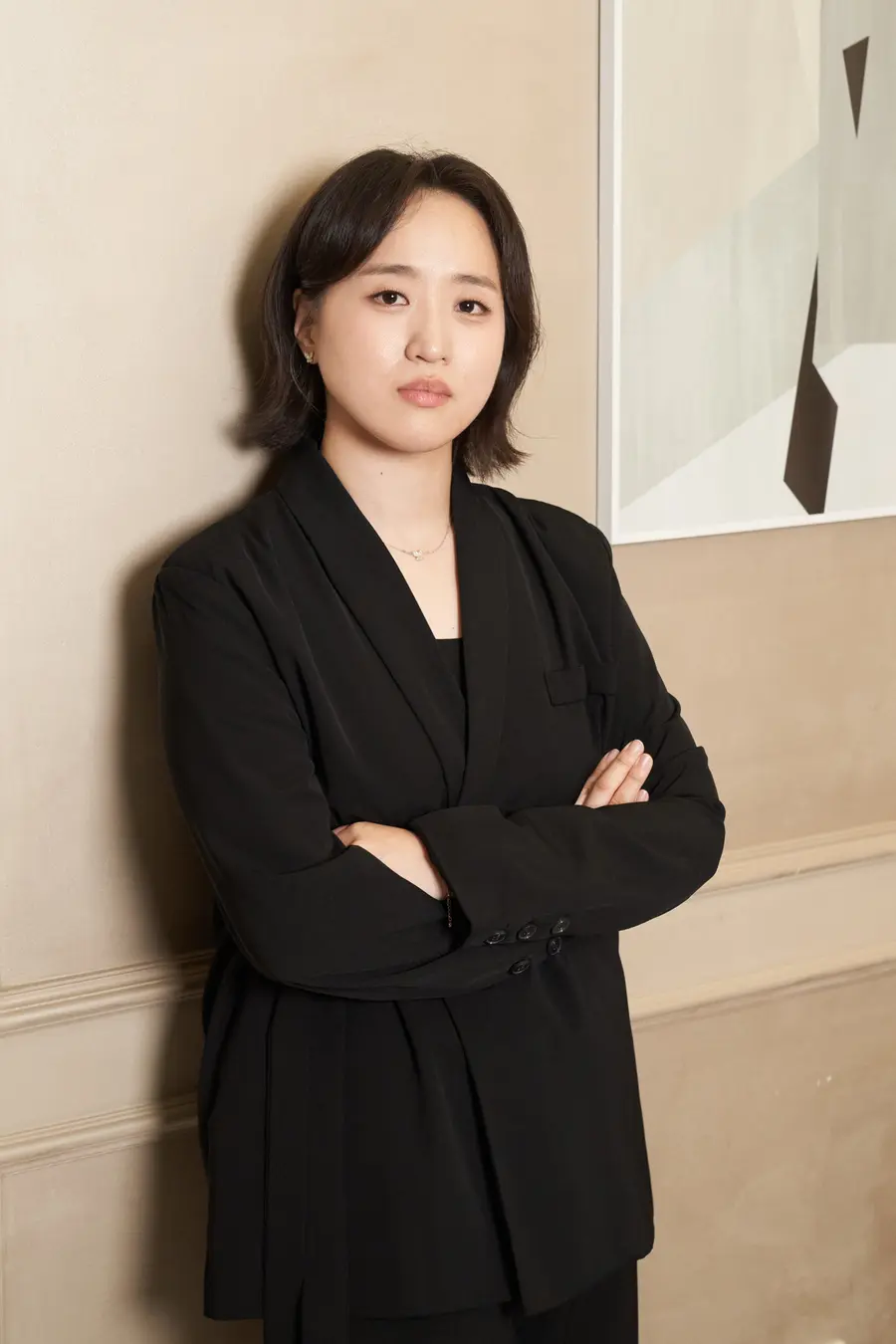
〈Gyeongju Trip〉 has received very positive press response after its preview screening. How do you feel waiting for the release?
I’m happy the reactions have been good, but ultimately audiences have to like it too, so I have a lot of worries and concerns. We still have to pass the break-even point (1,200,000 admissions). There’s work left to do, so I’m spending each day feeling a mix of worry and pleasant tension.
I’m curious what you talked about with the cast after the preview screening.
The actors were incredibly kind and really liked the film. They appreciated that each of their characters was fully alive and not neglected, and I was very grateful for that. The comment that meant the most to me came from actor Gong Hyo-jin. She said, "You can feel that the director cared about every single shot until the end," which was very encouraging. She especially liked the scene where the shadow seen while lying in the pension shifts into an image of the past family. Hearing that helped me a lot.
All four women — mother and three daughters — keep their distinct personalities, which makes the film even more entertaining. What directing priorities guided you when building each character?
With so many characters, there’s a risk that each person could become merely functional, so I paid close attention to character development. I also wanted to give every character one key scene. Thankfully I was able to cast very strong actors — almost an "Avengers"-level lineup — and I didn’t want to hear anyone say, "Is that all you could do with them?" I wanted the ensemble to shine, so I focused carefully on each key scene.
Which specific scenes did you envision as each character’s key moment?
For Jang-ju (Gong Hyo-jin), I saw the key moment as the late scene in which she confesses her inner feelings to her mother Ok-sil (Lee Jung-eun). For Yeong-ju (Park So-dam), it was the scene at the express terminal when she finally realizes her mother’s sincerity. The third daughter Dong-ju (Lee Yeon) has a climactic line where she asks their mother, "Do you still hate me that much?" For Ok-sil, the important moments were the scenes late in the film when she confronts Baek Sang-hyun (Byeon Yo-han) and the ending when she lets Gyeong-ju go. For Baek Sang-hyun, his first appearance and the emotional exchange when he finally faces Ok-sil at the end were crucial.
According to Gong Hyo-jin, the original draft centered more on Ok-sil and Jang-ju’s role was smaller than it is now. What changes came during development?
Honestly, I didn’t expect such great actors to come on board. (laughs) The original draft was Ok-sil–centered. The daughters were mostly just observers, but as I developed the script I became curious about what the daughters were feeling, and the characters gradually came to life. During development I often heard that firstborns tended to identify with Jang-ju easily without much explanation, but people who weren’t firstborn or who weren’t sisters found it harder to empathize deeply. The male crew, the cinematographer and the production designer all brought great ideas, and we worked to balance things carefully.
〈Gyeongju Trip〉 introduces many characters; the challenge must have been to keep the audience from despising any one person outright and to allow empathy for each. In particular, Yeong-ju (Park So-dam) could easily come across as cold or unlikeable. What devices did you use to help audiences empathize with her?
So I actually used a few small "tricks." For example, when Dong-ju gets slapped by Ok-sil at a rest stop, Yeong-ju steps in and shields her with her body. Or when a child at the pension asks, "Why do you leave the aunt’s door open?" she answers, "So the youngest aunt can come in when she comes in." I wanted to show, bit by bit, that what she says isn’t what she feels. Even the money line in the scene where they go to hang lanterns was originally a different line; we refined the characters a lot during ADR.
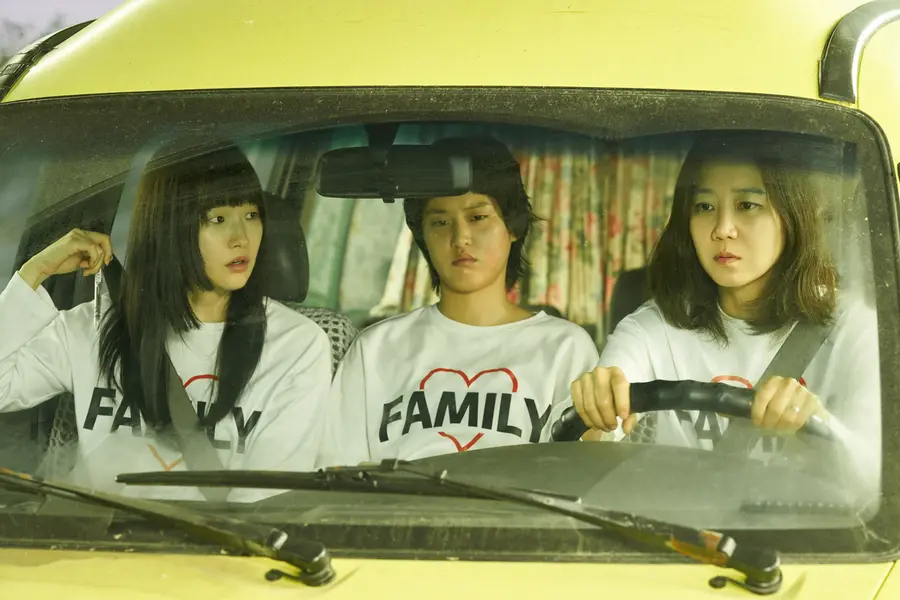
〈Gyeongju Trip〉 handles a terrible loss while maintaining an upbeat black-comedy tone throughout. What allowed you to balance humor and drama without trivializing sadness?
My father is very humorous. The biggest inheritance I got from him is the ability to not see tragedy as only tragic. Because of his temperament, our family has always tried to find even a tiny bright spot in serious situations. Since 〈Gyeongju Trip〉 is ultimately a story written by Kim Mi-jo, I came to think of 〈Gyeongju Trip〉 as an extension of myself. That meant the way I see the world naturally found its way into the film.
〈Gyeongju Trip〉 is a distinctive hybrid-genre film: even on the trip to get revenge, comedy intermittently pops up. Did you always intend the journey to be a black comedy?
I didn’t set out intending to make a black comedy. I’ve always been curious about those little moments. I watch a lot of camping videos by people who sleep in their cars, and I’m always thinking, "It looks so cool and pretty, but excuse me — how do they go to the bathroom?" (laughs) The sleeping parts are edited out, and it’s always like, "I’m going to sleep now," and then the next day starts. I’m curious about what happened in between. "What happened that night? Did an animal make a noise and scare them? Did a stranger come and tap the door?" That curiosity is fully reflected in 〈Gyeongju Trip〉. We know they want revenge, but will they only focus on revenge while they’re on the road? Won’t they get hungry? Won’t they need the bathroom? With so many characters traveling together, I expected conflicts to emerge, so some black-comedy elements felt natural to me.
Your previous film 〈Seagull〉 also has a scene late in which a mother and daughter travel in a compact car. 〈Gyeongju Trip〉 also takes the form of a road movie. Do you have a particular fondness for the road-movie format?
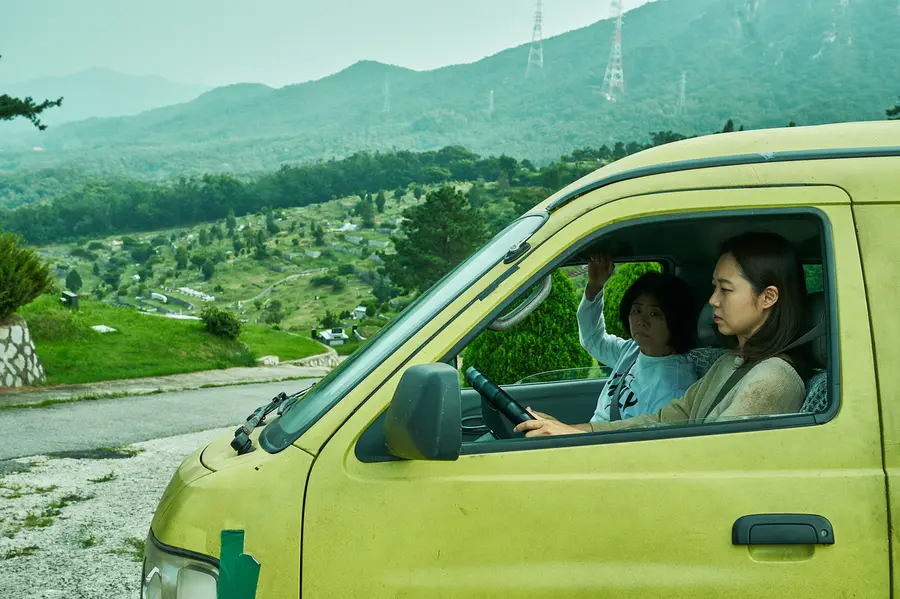
Two films influenced 〈Gyeongju Trip〉. One is 〈Little Miss Sunshine〉, and the other is Bong Joon-ho’s 〈The Host〉. What I loved about 〈Little Miss Sunshine〉 was how that family trapped in the van eventually had to confront what they hated about each other. I thought that was necessary for 〈Gyeongju Trip〉 as well. Whether by choice or not, I wanted to show this family crammed into a small van, continually bumping into each other and exchanging words, so the road-movie form naturally followed.
Why Gyeongju as the setting? Is it your hometown?
My hometown is Jeonju in North Jeolla Province. I chose Gyeongju because when I started making films in 2014, my family and I took a trip there. Visiting Gyeongju as an adult made me think anew that it’s a place where the living and the dead coexist. It also rains a lot there. Along with its bright side, the town has a damp, gloomy side too. When my family visited Daereungwon, it suddenly rained, and everyone bought 2,000-won blue ponchos at a convenience store and walked on. I was following them from the back and thought, "This looks like someone coming down after killing a person." (laughs) I took a photo, and that memory inspired a scene in the film. Gyeongju is a tourist destination and a quiet place, and I thought it would be ironic for a revenge story to unfold in such a setting; the fact that it’s a city with many tombs also felt like a "mourning space." That’s why the pension where the family stays in 〈Gyeongju Trip〉 is above a memorial park, and several of the film’s scenes are set in front of graves. I felt it right for the story to unfold close to graves. The youngest daughter being named "Gyeong-ju" also made the family’s journey feel inevitable rather than accidental.
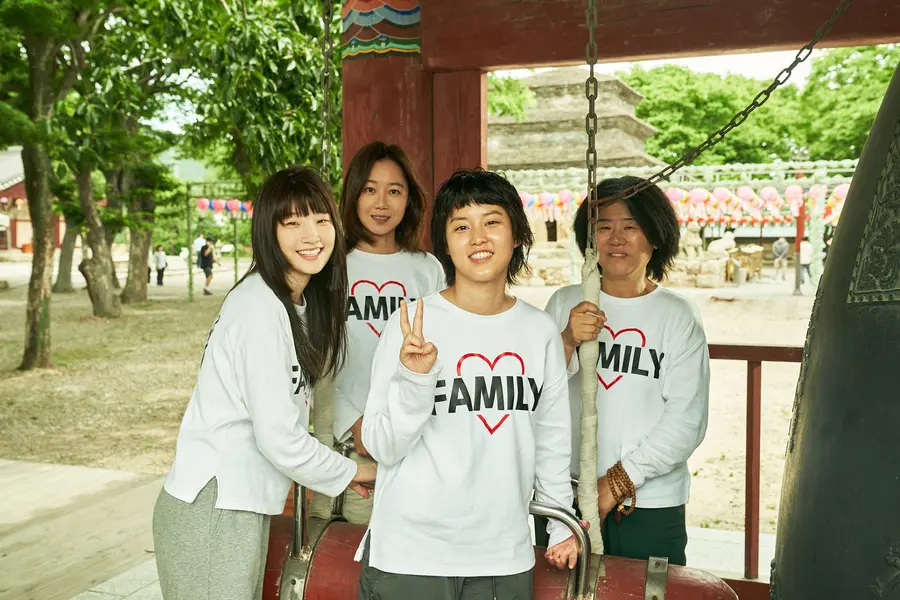
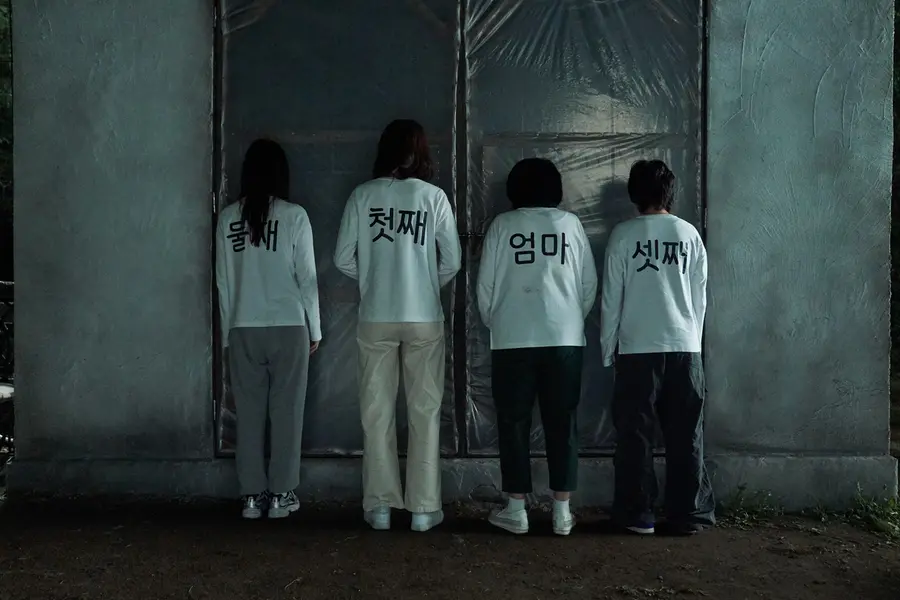
The image of the mother Ok-sil and daughters Jang-ju, Yeong-ju and Dong-ju appearing in matching family T-shirts was an interesting detail.
The family appears in matching T-shirts, almost like a military unit. I wanted Ok-sil to appear as the leader of a tightly united group. To outsiders, it looks like they’re leaving united in revenge, but as the story progresses the family members begin to expose their wounds and distinguish themselves as individuals, a process of unraveling and disintegration. That "disintegration" and "collapse" aren’t meant negatively — whether family or co-workers, people may seem united, but up close everyone has their own thoughts and universes. After Baek Sang-hyun escapes, the other family members start putting on coats, but Ok-sil keeps wearing the matching T-shirt to the end. I wanted the costumes to show that Ok-sil remains the same while cracks begin to appear in her daughters’ hearts.
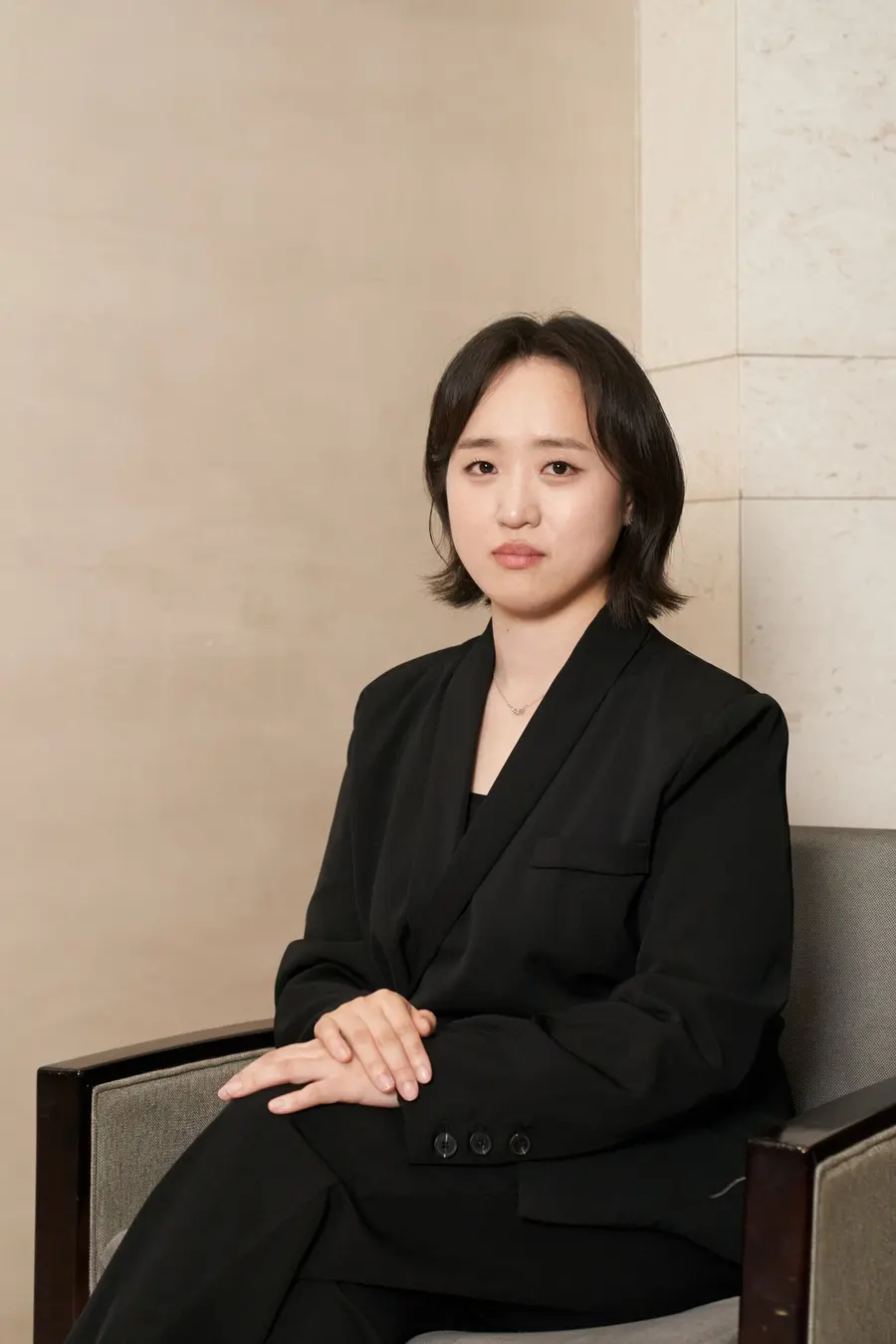
You said the idea for 〈Gyeongju Trip〉 came to you in 2014, which was also the year of the Sewol ferry disaster. The story about children who did not return and the people left behind resonates with the emotional landscape of such tragedies.
Because I’m the one who ultimately made this story, so many incidents naturally seeped into it. There’s the Sewol ferry incident, the Sampoong Department Store collapse, the Sealand fire from our childhood, and also the Itaewon crowd crush and the Daegu subway disaster. Whenever I see those events, I’m always deeply curious: "Why didn’t those who went out ever come back?" and "How do the people left behind live afterward?" I used to watch the investigative TV program 〈Unanswered Questions〉 all the time because I genuinely wanted to know. (laughs) All those things naturally found their way into the film.
![[On the Ground at BIFF] “It Wasn’t Your Birth Mother’s Fault”: ‘Home Sick’ Director Sørensen’s First Confession Reveals Truth Behind 56 Falsified Adoptions](https://cdn.www.cineplay.co.kr/w300/q75/article-images/2026-10-10/6dca361c-d923-44a5-9b83-86299ab17f64.jpg)

![[Interview] Gong Hyo-jin on the laugh-and-cry power of 'Gyeongju Trip' (1)](https://cdn.www.cineplay.co.kr/w160/q75/article-images/2026-08-21/a6201ecb-56d9-4bd7-a2f1-fe4d93a1bfdd.jpg)


![[Kim Ji-yeon’s Jewel Box] From raw terror to weighty warmth, Kim Young-sung of 〈Gyeongju Trip〉, 〈Salmokji〉 and 〈Big Sleep〉](https://cdn.www.cineplay.co.kr/w160/q75/article-images/2026-08-25/104ad788-e253-46bc-8899-bc79d863c6c9.jpg)
댓글 (0)
댓글 작성
댓글을 작성하려면 로그인이 필요합니다.
로그인하기