


Film music hooks me first. It often reveals emotions that images and dialogue alone cannot fully carry, and it can open a window onto a filmmaker's hidden intentions. For me, understanding film music has been one path to understanding the film itself. "Choo A-young's Music Box" listens to a film's voice more closely through its music. (P.S. Please listen to the music while you read.)
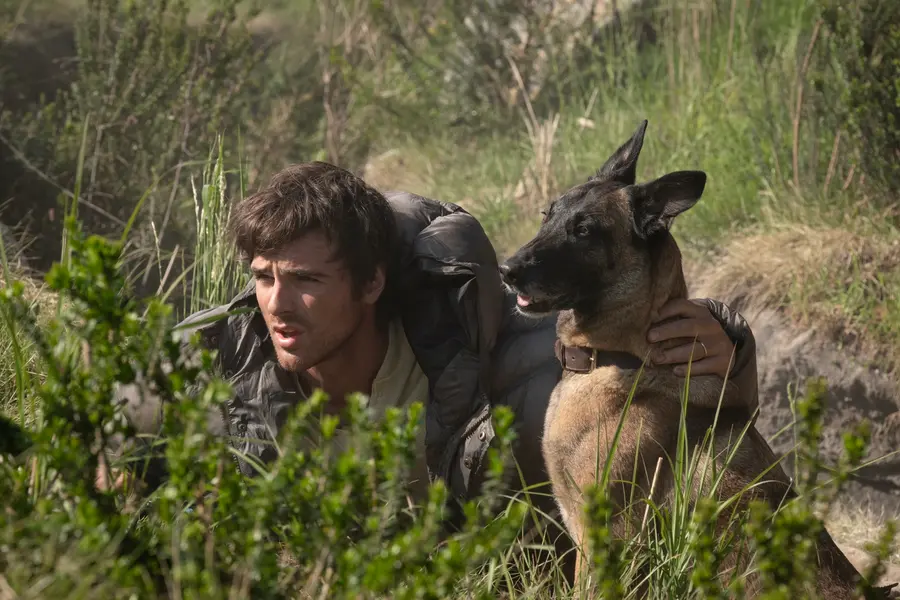
Ridley Scott's new film 〈Dog Star: Last Hope〉 (hereafter 〈Dog Star〉) continues his lifelong inquiry into the essence of humanity. With this movie, Scott asks what human values a small number of survivors in a ruined world should pursue beyond mere survival. To convey that theme and the enduring hope in Peter Heller's original novel 「Dog Star」, he renders the film in an optimistic tone rather than the gloomy mood typical of the post-apocalypse genre. The Irish singer-songwriter Hozier's song "Like Real People Do," which accompanies both the film's opening and closing, elevates the movie's hopeful atmosphere even further. It also aligns with Scott's message of hope.
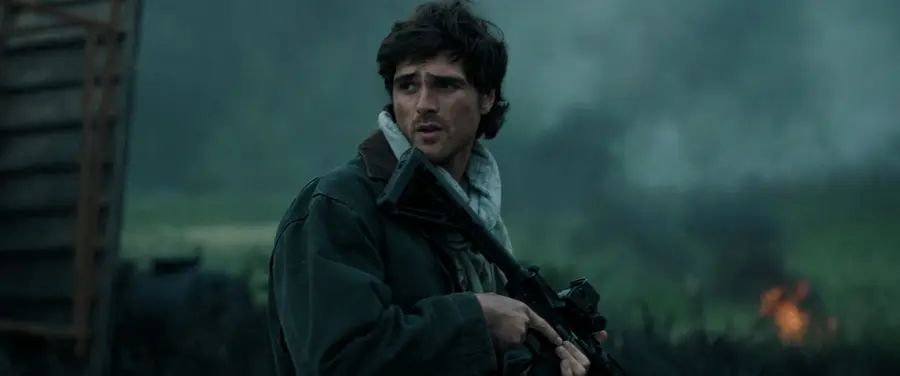
A pandemic has left the world in ruins. A small number of survivors find ways to live in the aftermath. Hig, a man who lost his wife (played by Jacob Elordi), lives on the outskirts of the city with his dog Jasper and his only neighbor, Bangley (Josh Brolin). He occasionally flies an old Cessna light plane and clings to hope that a better world still exists after hearing radio transmissions from other zones. After clashing with Bangley over how to treat other survivors, Hig sets out for Grand Junction, the zone that sent the radio transmission. But he crashes during the flight and encounters survivors Sima (Margaret Qualley) and Pops (Guy Pearce). With their help, Hig tries to make his way toward what he believes is the last hope.
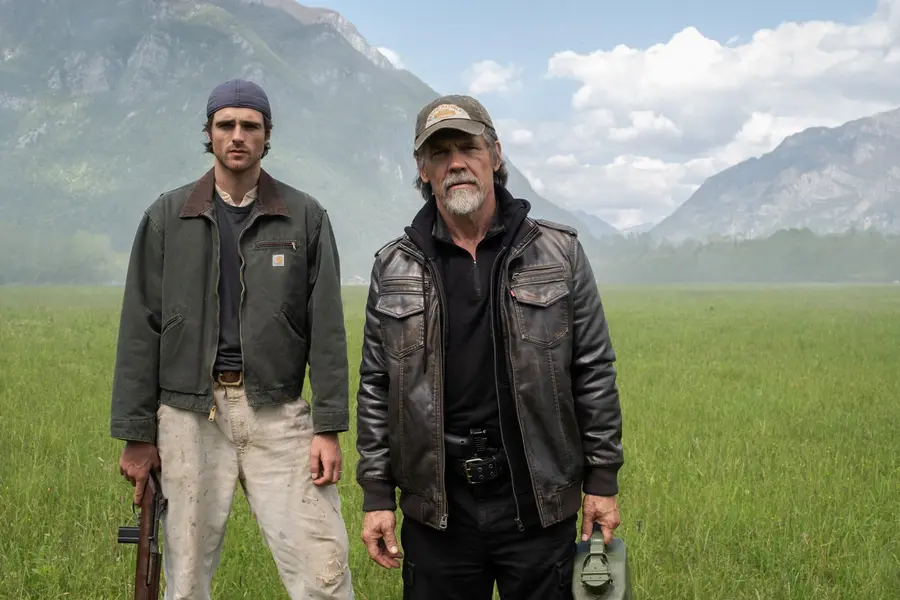
〈Dog Star〉 considers what values survivors should follow if a small remnant of humanity tries to rebuild the world after its destruction. In doing so, Scott turns the film into a sweeping allegory for the United States. Bangley, a former Marine, shoots any intruder who comes to his shelter, regardless of their motives. His firm, survival-first stance and insistence on his own rules point to an America where a nation-first mentality has taken hold. Bangley's isolation—excluding outsiders and hoarding space and resources—mirrors the Trump administration's hardline approach to refugees and foreigners, prioritizing national self-interest. Yet despite his stern methods, Bangley eventually loses his shelter to raiders from Mexico. Bangley's arc is further underscored by Pops's story.
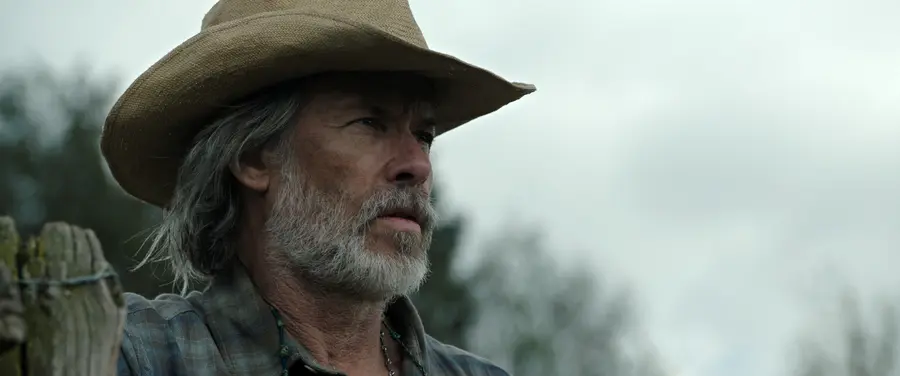
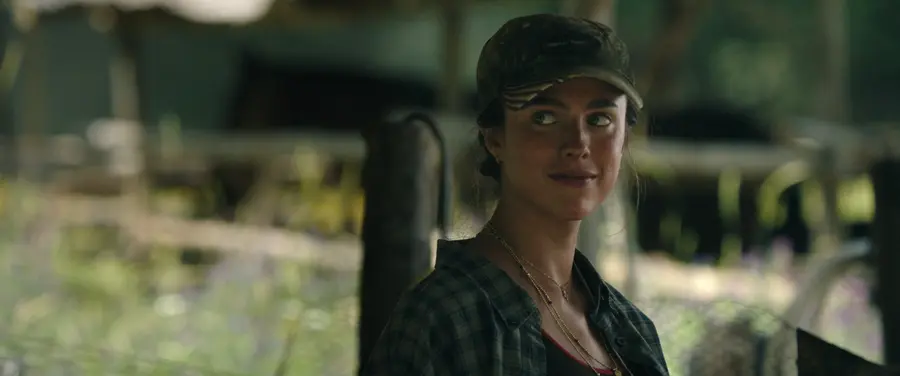
Scott does more than depict contemporary America; he borrows the imagery and conventions of the Western and even invokes the country's early history of campaigns against Native Americans. After Hig's plane crashes, he finds shelter with Pops and Sima, a father-and-daughter pair; Sima has not lost the spirit of care and hospitality toward strangers and welcomes the wandering Hig. Pops, who initially prioritizes survival and tries to drive Hig out, gradually accepts him. Their space becomes a place of human warmth. That peaceful space is then invaded by survivors styled to resemble Native Americans. Pops, wearing a cowboy hat and firing on them, evokes the classic Western cowboy figure. Here Scott deliberately inverts the old Western formula in which a white cowboy assails an Indigenous village in the name of civilization. Whereas classic Westerns justified the white cowboy's conquest of Indigenous land, Scott flips that script: in a wasteland where modern civilization has collapsed, a white man stripped of his former privilege is expelled by those who assume the appearance of past victims, exposing a reversed power dynamic.
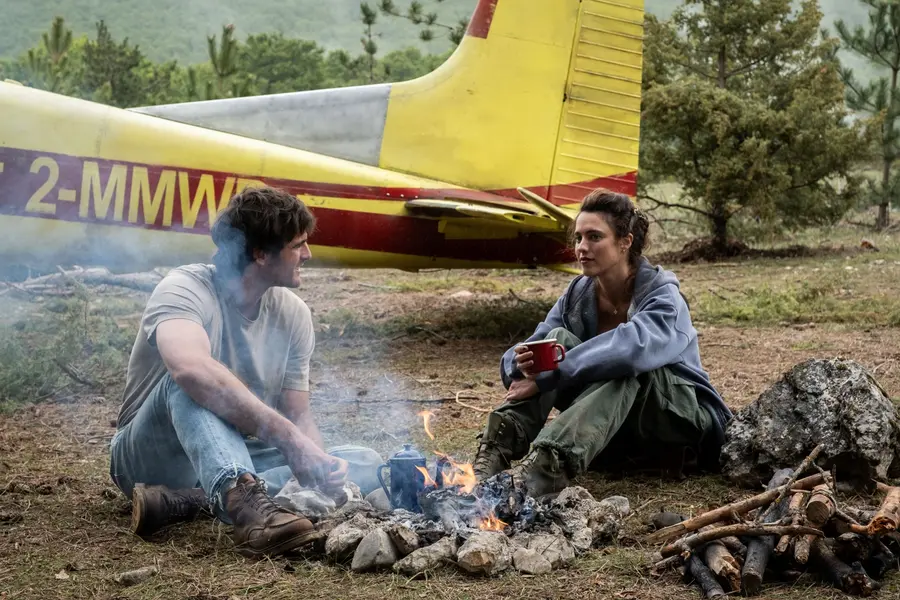
At first glance, this could be read as reinforcing a white-supremacist sense of victimhood tied to Bangley's shelter being invaded by raiders from Mexico. But Scott's real intention is to stress that the recurring tragedy of 'movement' throughout human history—of taking and being taken from—is a universal condition that, in an extreme post-apocalyptic scenario, can befall anyone. By upending the usual roles of victim and perpetrator, Scott argues that in an age when the very idea of land ownership has disappeared, what we should cling to is not impenetrable walls but solidarity with others.
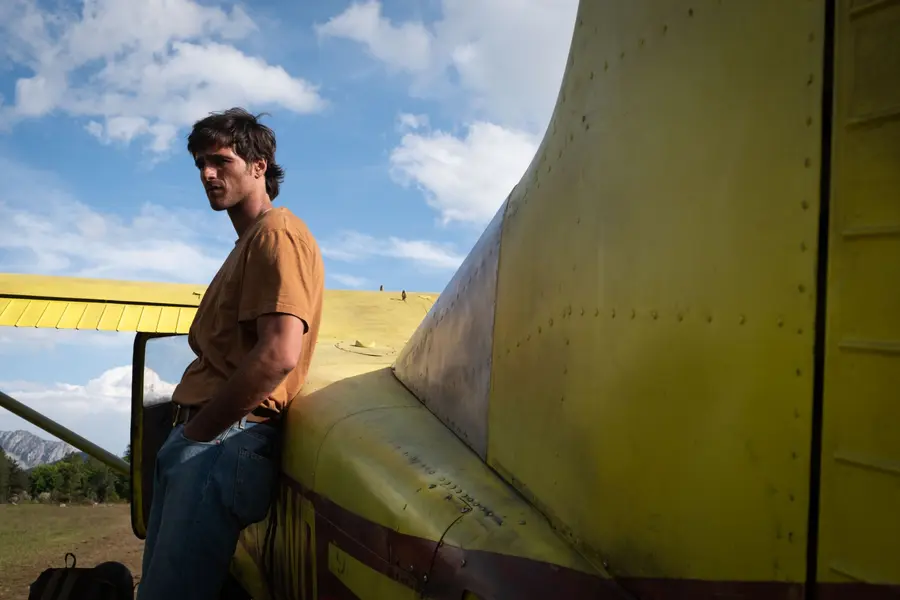
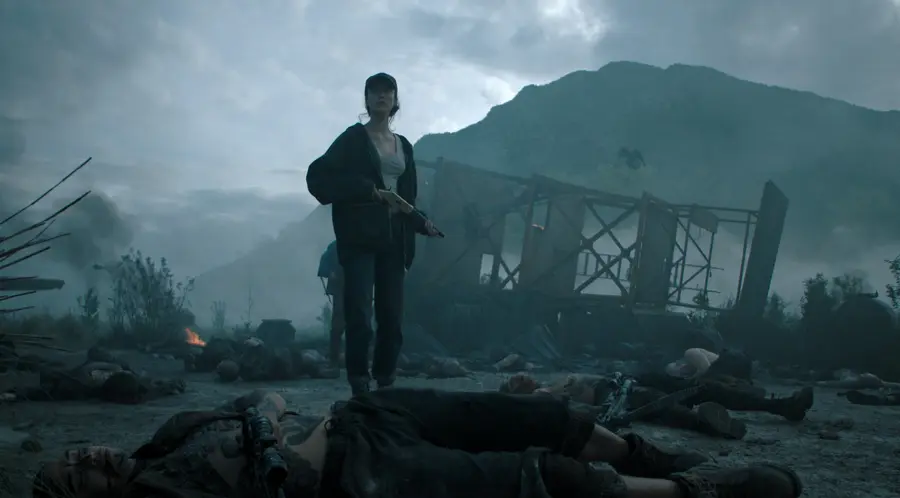
After Hig, Pops and Sima lose their shelter, they head for Grand Junction in search of the last hope. But Grand Junction—the utopia it claims to be in the aftermath—is actually a totalitarian society where freedom is tightly controlled by its rulers and a class system divides people by occupation, reproducing many of the ills of human civilization. Grand Junction's mise-en-scène, steeped in the artificial aesthetics of retrofuturism, makes clear that this so‑called new world is not a genuine utopia but a relic of old values, a civilization embalmed and frozen in the past. Like Bangley's and Pops's domains, Grand Junction stamps visitors with class marks, labeling Hig a simple laborer—and in the end it is upended by him. Hig brings Pops and Sima back to what had been Bangley's shelter, only to find that even that refuge has collapsed. Hig then joins Bangley, now dispossessed, and they settle at a Mennonite community. The film's Mennonite community adheres to religious values, refuses violence in a violent world, practices hospitality, prioritizes solidarity with neighbors, and deliberately keeps its distance from modern scientific civilization, which hinders bonds between individuals. Scott's conclusion in this return is that, amid a crumbling world, rebuilding human relationships and bonds of connection offers an alternative way of life for humanity.
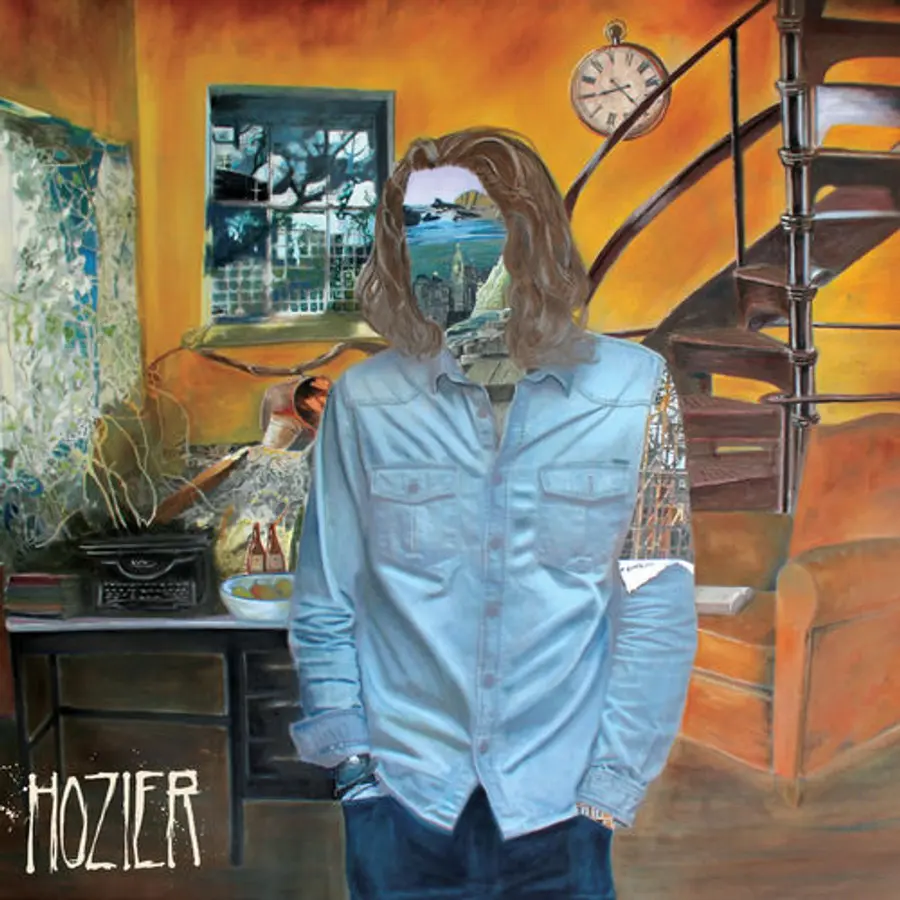
The Mennonite community's way of life in the film shares a spirit with Hozier's music. "Like Real People Do" distills Hozier's characteristic lyrical and earthy sensibility into a fine work. Hozier composed the song inspired by a sequence of poems by Seamus Heaney about the wetlands of Northern Ireland. Heaney's poems about bog bodies—human remains preserved for centuries in Ireland's peat bogs—transform the act of lifting a bog body from the ground into the act of uncovering someone and beginning a love with them. In both Hozier's song and the film, that love becomes the love of wounded beings. In "Like Real People Do," the narrator does not pry into the raised person's past or wounds; instead, the song urges focusing on the present moment and loving one another "like real people do." In the film, Hig has been haunted by the memory of his wife, whom he lost to the pandemic. He confesses the truth behind his wife's death to Sima, but she does not interrogate his wounds; she chooses to be with him in the present. The song's message of unconditional acceptance and love matches Hig's psychological shift: he buries the memories of his wife in his heart and, like a character reborn from the blackness of the earth into the restored world of the song, becomes someone who can live a new life with those beside him. Through this song, Ridley Scott argues that what remakes us as human in a post-apocalyptic world is not high technology but modest love and solidarity that tend wounds and live in the present.



![[Chu A-young's Music Box] How Don Hertzfeldt's 'It's Such a Beautiful Day' and Smetana's 'Vltava' Capture Life's Beauty](https://cdn.www.cineplay.co.kr/w160/q75/article-images/2026-07-30/8e4453b0-0238-49d6-9947-8e664799fe0f.png)


![[Joo Sung-chul's Locker] What Are the Improvised Explosive Devices (IEDs) in 'Warfare' and 'The Hurt Locker'?](https://cdn.www.cineplay.co.kr/w160/q75/article-images/2026-08-24/4a41c3d4-32a0-46a8-ac3f-57b7af93404d.jpg)
![[Kim Ji-yeon’s Jewel Box] From raw terror to weighty warmth, Kim Young-sung of 〈Gyeongju Trip〉, 〈Salmokji〉 and 〈Big Sleep〉](https://cdn.www.cineplay.co.kr/w160/q75/article-images/2026-08-25/104ad788-e253-46bc-8899-bc79d863c6c9.jpg)
댓글 (0)
댓글 작성
댓글을 작성하려면 로그인이 필요합니다.
로그인하기