



“The rush of battle is often a potent and lethal addiction, for war is a drug.” The Hurt Locker (2009), which won the 2010 Academy Award for Best Picture, opens with that title card. Director Kathryn Bigelow drew the quotation from War Is a Force That Gives Us Meaning, a 2002 nonfiction book by Chris Hedges, a New York Times war correspondent and journalist. The Hurt Locker follows an Explosive Ordnance Disposal (EOD) team carrying out special missions in Iraq. After the team loses its squad leader in an explosion during an operation, a new leader, James (Jeremy Renner), arrives. But his reckless solo actions, more dangerous than the bombs themselves, lead to conflict.
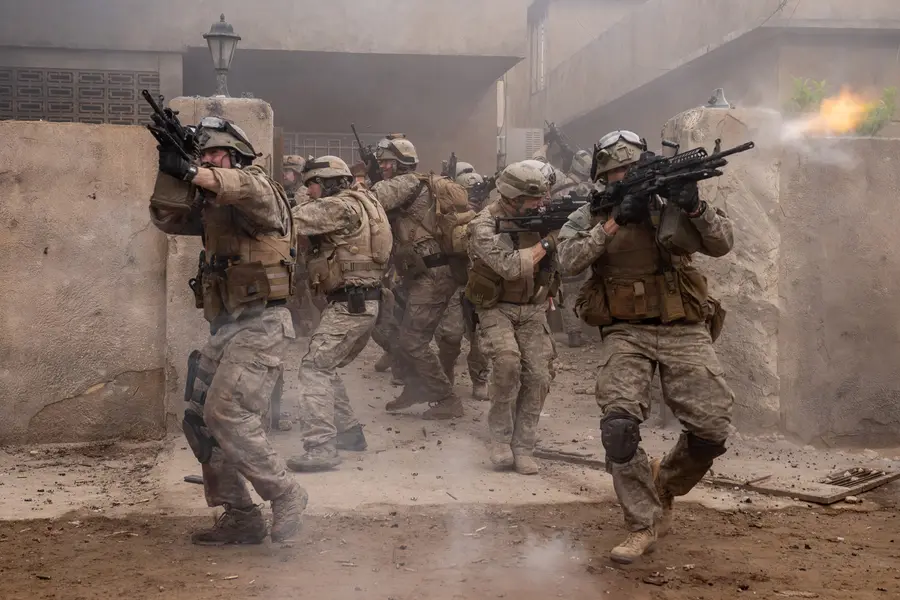
The opening title card from The Hurt Locker also applies to Warfare, A24's recently released war film. Set just after the Battle of Ramadi in Iraq on Nov. 19, 2006, the film vividly depicts Alpha One, a Navy SEAL platoon occupying a two-story house in the middle of enemy territory, designated OP1, to cover a U.S. military route. The platoon becomes isolated after an unexpected ambush. Amid a barrage of concentrated attacks, the soldiers fight for their lives to rescue wounded comrades, including the first sniper, Elliot (Cosmo Jarvis), and Sam (Joseph Quinn), and return safely to base. The real-time survival action never lets up. As conditions at the scene continue to deteriorate, the film captures the raw terror of modern warfare: repeated air-force “shows of force” meant to help the soldiers move, a wounded man unable to stop screaming and pleading for morphine, and field command passing from platoon leader Erik (Will Poulter) to Jake (Charles Melton). The soldiers in The Hurt Locker had just 38 days left before leaving the service. The soldiers in Warfare, too, were on the verge of going home.
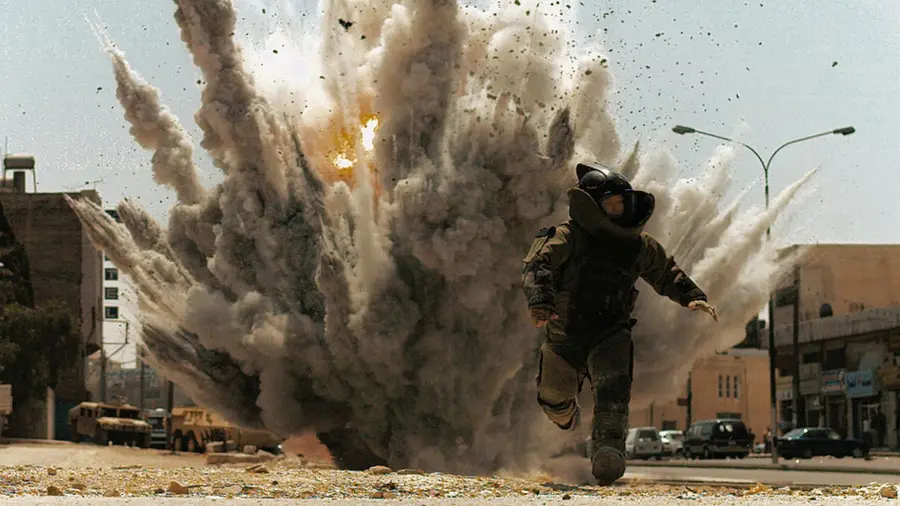
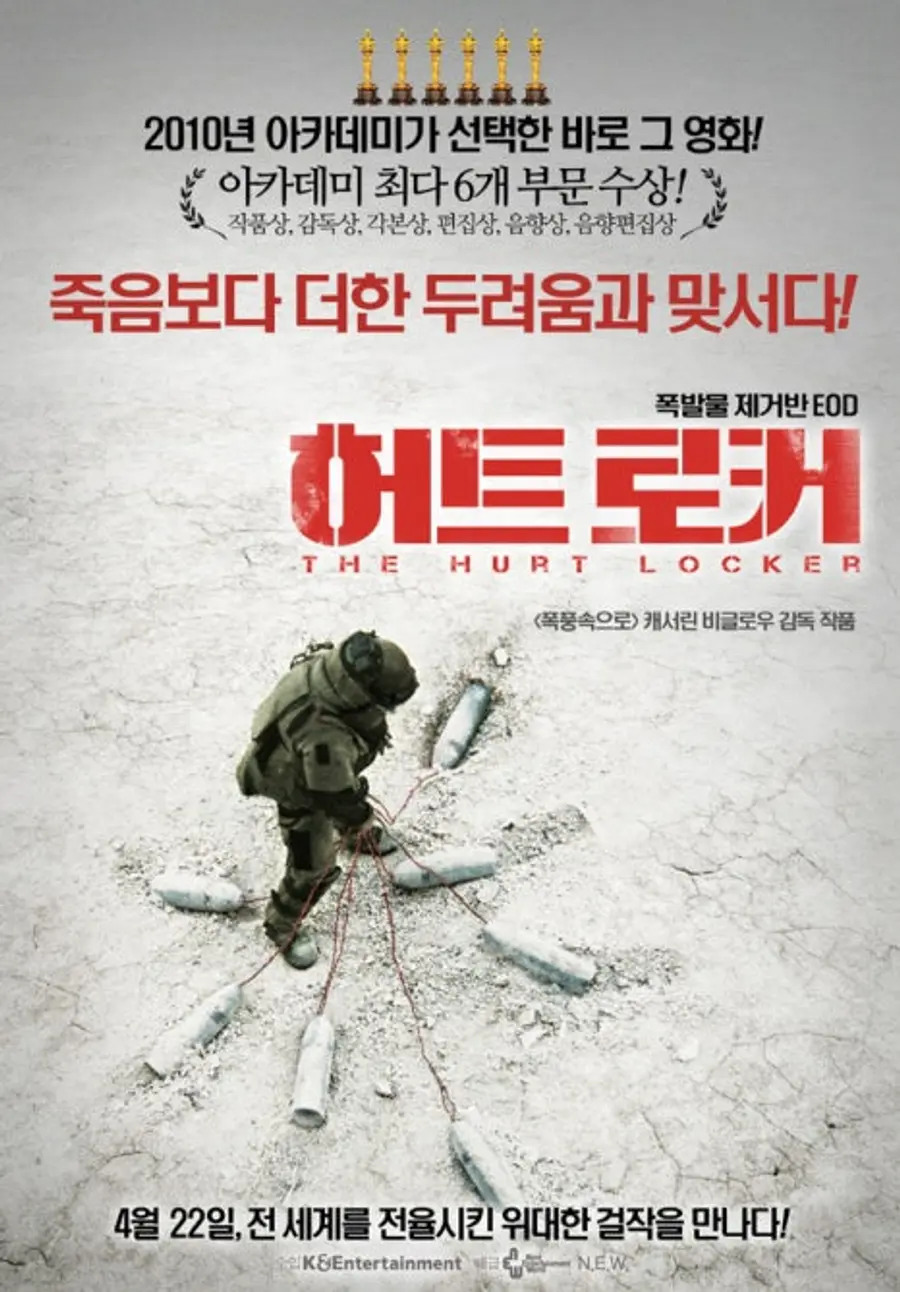
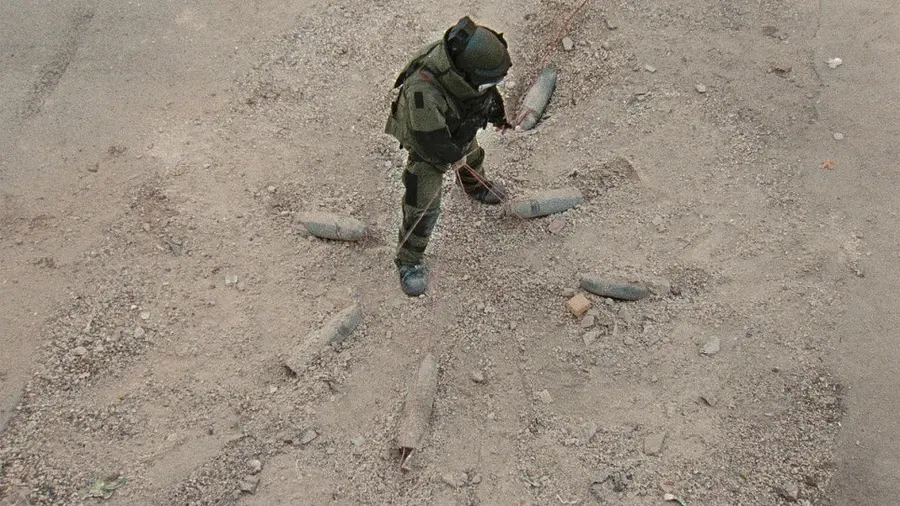
The two similar films, The Hurt Locker and Warfare, share one central object: the improvised explosive device, or IED. Set during the Iraq War, The Hurt Locker tells the story of an EOD team, a subject not often seen in war movies at the time. The explosives they primarily handle are IEDs. Unlike standardized weapons, IEDs are improvised from whatever materials and triggering devices are available. Often translated as “homemade bombs,” they can take many forms, from modified everyday objects to cheap electronics such as cellphones and digital watches used as triggers, making them difficult to identify. The Hurt Locker's poster features a scene in which James pulls out an IED made from seven 105 mm shells. When James sees four 155 mm shells stacked in the trunk alongside the 105 mm shells—powerful enough to destroy the main battle tanks of the era—he removes his protective suit before attempting to dismantle the IED. He reasons that working in the suit only increases the chance of making a mistake, and that if it explodes, he will die anyway.
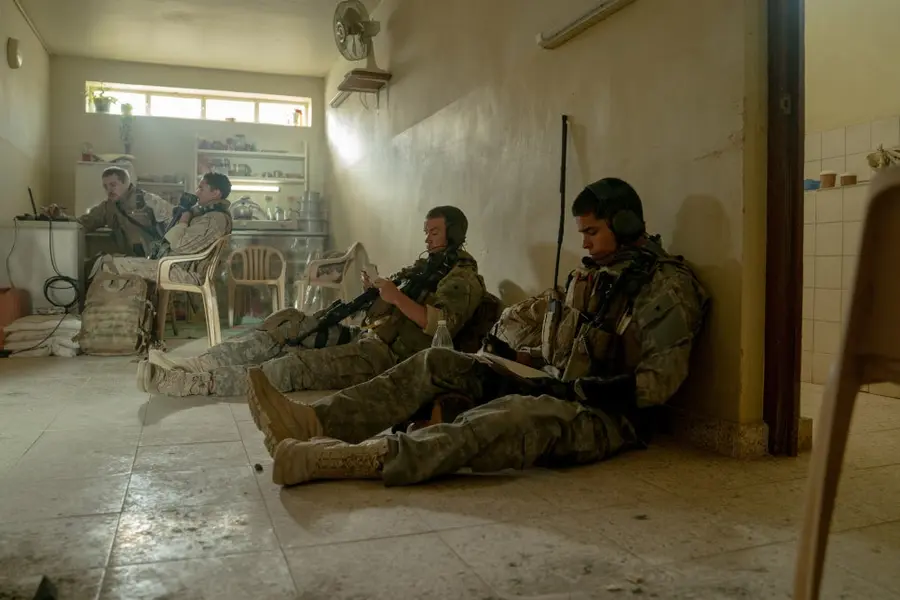
As wars in Afghanistan and Iraq broke out and local guerrillas began using IEDs widely, the term became familiar to the public through news coverage. Because IEDs were scattered across vast areas and hidden in many different ways, they inflicted heavy casualties on U.S. forces. Since they could explode in completely unexpected places, soldiers could never relax their vigilance. Beyond the physical damage, the weapons also proved highly effective at creating psychological terror. And although they are called “improvised,” their quality is anything but makeshift. IEDs can incorporate artillery shells, aerial bombs and other munitions used as standard weapons by militaries. When deliberately built, they can be powerful enough to destroy armored personnel carriers and tanks. In Warfare, an IED detonates as the soldiers try to leave the house they have occupied, knocking an armored vehicle onto its side and leaving the unit isolated.
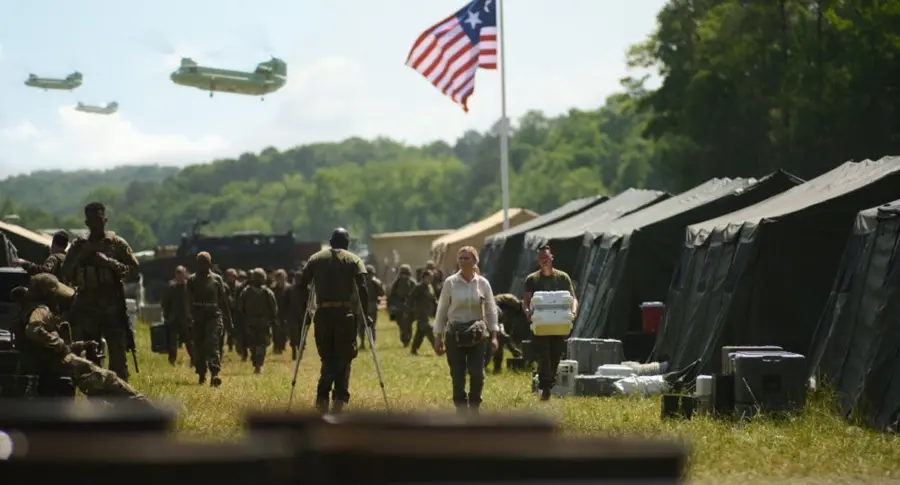
Alex Garland, who directed Civil War: Age of Division (2024), a war film and alternate-history drama about the United States descending into the worst civil war in its history amid extreme polarization, captures the unvarnished face of real war in Warfare. Ray Mendoza, who served as a military adviser on Civil War: Age of Division, is credited as co-director. He is a former Navy SEAL who served for 16 years and was present at the real-life events that inspired the film. The communications specialist Ray (D'Pharaoh Woon-A-Tai) is Ray Mendoza himself. So faithful is Warfare to the real events and the battlefield that it contains no flashbacks, narration or music. Apart from the two songs heard at the beginning and end, not a single note of score plays. Instead, two handheld cameras roam ghostlike through a set that, remarkably, reproduced an entire street near London, capturing long takes lasting from five to 15 minutes. The principal actors trained for three weeks and exchanged radio dialogue over a real communications channel during filming.
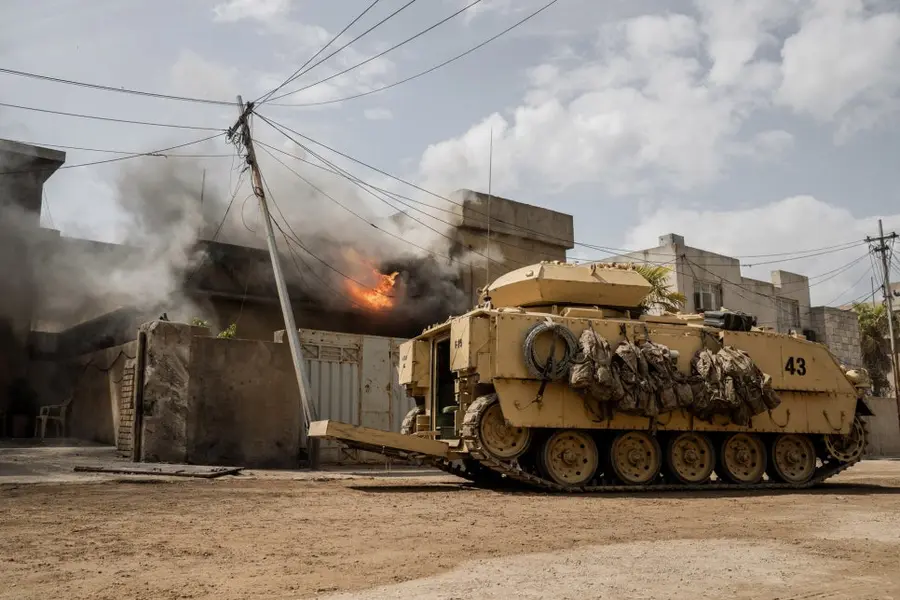
In Warfare, the razor-sharp tension of the soldiers maintaining their mission while watching every direction, the dust blanketing the battlefield and the hair-trigger atmosphere, with artillery seemingly about to erupt at any moment, convey the suffocating pressure of witnessing a real operation. The Hurt Locker, too, forgoes even the familiar background music, creating the feeling of a documentary filmed alongside an EOD team rather than a movie being watched. Both films offer strikingly realistic depictions of the Iraq War. Instead of focusing on flashy action, they portray, with nuance and brutal realism, what war really is.
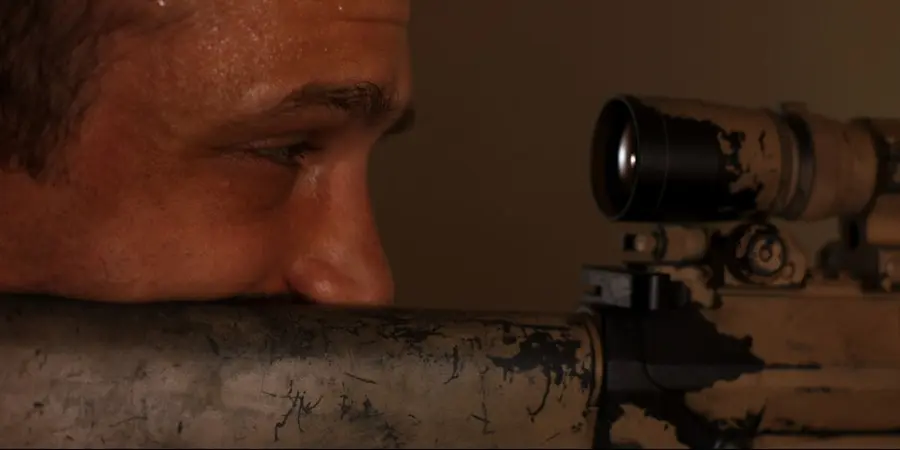
Warfare builds tension so patiently before the full-scale firefight begins that it could be called a film of silence. For long stretches, nothing happens. The soldiers simply sit still or wipe dust from a window frame. War movies may seem as if they should be in constant motion, with one event following another, but there are many moments when that is not the case. At the same time, no war movie I have seen has subjected me to such agonizing screams for so long. Twice, soldiers walking past accidentally touch an injured man's leg, making his pain worse. The film depicts these incidents matter-of-factly, as though they could easily happen in the chaos of a battlefield—and that makes them all the more frightening. All of them seem to be “addicted to war, like a drug,” as The Hurt Locker's opening title card puts it. Through the local family living in the occupied mansion, the film also delivers a powerful antiwar message. Reality, however, is even more grim. When Warfare opened in North America in 2025, the Russia-Ukraine war was raging. Now that the film has opened domestically, that war still has not ended, and it has been joined by the U.S.-Iran war that began in February this year. This reality is what “real” looks like.
Cineplay reporters are beginning a series of biweekly columns shaped by their individual tastes and perspectives: Joo Sung-chul's Locker, which assigns excessive meaning to objects in movies; Kim Ji-yeon's Jewelry Box, a user's guide to actors poised for a breakout; Chua Young's Music Box, a listening room for film music that moved her; and Sung Chan-eol's Comic Books, a buying diary from a subculture purveyor.
![[Joo Seong-cheol's Locker] The Black Speaker of 'Sirat' and the Monolith of '2001: A Space Odyssey'](https://cdn.www.cineplay.co.kr/w400/q75/article-images/2026-02-23/01816f3a-b433-4072-887b-e760357e6cc7.jpg)
![[Joo Seong-cheol's Locker] The 'Canned Cart Camera' that Changed the History of World Cinema with 'Nouvelle Vague'](https://cdn.www.cineplay.co.kr/w400/q75/article-images/2026-01-27/563f1a4c-20b8-460b-8523-f31511911bd5.jpg)
![[Joo Sung-cheol's Locker] Ahn Sung-ki is Born, I am Ahn Sung-ki](https://cdn.www.cineplay.co.kr/w400/q75/article-images/2026-01-13/362be897-34af-4524-9a57-6b9935666a0a.jpg)
![[Jusungcheol’s Locker] Odyssey’s one-eyed giant Cyclops and Ray Harryhausen’s “The Seventh Voyage of Sinbad”](https://cdn.www.cineplay.co.kr/w400/q75/article-images/2026-08-10/5faf400e-cf0b-466c-a3d7-31a8bbb38075.jpg)
![[Joo Seong-cheol’s Locker] See ‘Hope’ Again Through the Driver-Grade Cap Joo Seong-cheol Wears While Racing Across Seong-gi Bridge in ‘The Yellow Sea’ and ‘Goksung’](https://cdn.www.cineplay.co.kr/w400/q75/article-images/2026-07-28/7bf74e36-337d-4fd0-8cec-b890f5604345.jpg)
![[Joo Sung-cheol’s Locker] Watching “Marty Supreme,” Recalling Yoon Nam-gyu’s Penholder Table Tennis Racket](https://cdn.www.cineplay.co.kr/w400/q75/article-images/2026-06-29/0dc02383-0dc9-4ea1-9de5-f1eaffbeb9b9.jpg)
![[Joo Seong-cheol's Locker] The Aesthetics of Jongmyo That Captivated Masters of Martial Arts from Ho Kim-jun to John Woo, Jackie Chan, and Sammo Hung](https://cdn.www.cineplay.co.kr/w400/q75/article-images/2025-12-16/4d8670a7-ef95-4635-8d0c-34313f13dd52.jpg)
![[Joo Seong-cheol's Locker] The King Lear of Korea and Japan, Lee Soon-jae and Nakadai Tatsuya, Two Masters Rest](https://cdn.www.cineplay.co.kr/w400/q75/article-images/2025-12-01/3e753af3-e8d5-41df-83cf-00e9ddfdaae7.jpg)
![[Joo Seong-cheol's Locker] When Trees Comfort Trees, the Cello of 'The Moment the Bell Rings' and 'Can't Help It'](https://cdn.www.cineplay.co.kr/w400/q75/article-images/2025-11-18/52034c54-93dc-4b4c-ac9f-5f9b7946fb23.jpg)
![[Joo Seong-cheol's Locker] What Beer Did Sergio (Benicio Del Toro) Always Carry in 'One Battle After Another'?](https://cdn.www.cineplay.co.kr/w400/q75/article-images/2025-11-04/0794fe08-e847-46a1-ba4c-445f814803a8.jpg)
![[Joo Seong-cheol’s Locker] Do You Know the Origin of Woody in “Toy Story”?](https://cdn.www.cineplay.co.kr/w400/q75/article-images/2026-06-16/eb2c5055-d2de-4464-b9e2-eceeca8c7759.jpg)
![[Joo Seong-cheol's Locker] Tony Leung Sometimes Wants to Hold an Ashtray.](https://cdn.www.cineplay.co.kr/w400/q75/article-images/2026-02-09/8b9ac9f0-6899-4ce2-a562-5594a5b06d61.jpg)
![[Chu Sung-cheol’s Lockers] Who Spat on Leslie Cheung in “Farewell My Concubine”?](https://cdn.www.cineplay.co.kr/w400/q75/article-images/2026-04-06/7b608cd9-af6c-4c1d-8e87-38c2d2619d55.jpg)
![[Joo Seong-cheol’s Locker] Zombie Things That Don’t Flinch Even When Shot: Korea’s First Zombie Film, “Kwe-si” (1981)](https://cdn.www.cineplay.co.kr/w400/q75/article-images/2026-06-01/26c56ce7-1ddb-46bd-ae67-f71a1ba9e276.jpg)

![[Joo Seong-cheol’s Locker] David’s Stone That Took Down Goliath, “David” All the Way Through](https://cdn.www.cineplay.co.kr/w400/q75/article-images/2026-07-13/524bb041-0e4e-4f59-824b-21d2f7df60a9.jpg)
![[Joo Sung-chul's Locker] If it's hard to visit Cheongnyeongpo of Deposed King Danjong, head to Geumseongdang of Prince Geumseong!](https://cdn.www.cineplay.co.kr/w400/q75/article-images/2026-03-10/7ddd3634-6a13-4eef-870c-e4e6dbcdac04.jpg)
![[Joo Seong-cheol’s Lockers] The Great Dancer Turned Film Director Summoned by “Michael”: Bob Fosse’s “All That Jazz”](https://cdn.www.cineplay.co.kr/w400/q75/article-images/2026-05-18/922af142-be9f-4f1c-98d1-4a7a6667943c.jpg)
![[Joo Seong-cheol’s Lockers] Lee Cronin’s The Mummy and Murderous People Season 2 — and a Scorpion Jacket That Feels Like the Rise of Drive](https://cdn.www.cineplay.co.kr/w400/q75/article-images/2026-04-20/1df79cf4-44ef-48e4-a6b4-46f6e35c4eb5.jpg)

![[BIFF On Location] ‘Shaving’ Marks Show Kasamatsu’s First Korean Film Challenge: “We Create 100% Miracles on Set”](https://cdn.www.cineplay.co.kr/w300/q75/article-images/2026-10-09/70cadf5a-5820-4f28-bdea-52d94531634c.jpg)
![[At BIFF] ‘Dora’ brings Kim Do-yeon to tears during news conference; Jung Ju-ri’s 20-year project](https://cdn.www.cineplay.co.kr/w300/q75/article-images/2026-10-09/4a118116-5011-4858-a62b-2cedd0851b97.jpg)


댓글 (0)
댓글 작성
댓글을 작성하려면 로그인이 필요합니다.
로그인하기