
Find your next favorite work.

[Chul-cheol Joo’s Locker] Poroporomi! Stephen Chow’s Most Heartbreaking Object: The Pandora’s Box in ‘A Chinese Odyssey’

I’m drawn to objects in movies. I find myself wondering why a director, cinematographer, production designer or actor would put a particular object in front of the camera. ‘Chul-cheol Joo’s Locker’ is a record of the objects in movies that have caught my eye.

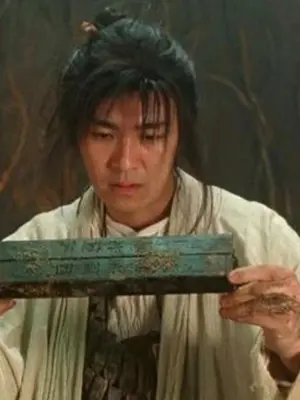
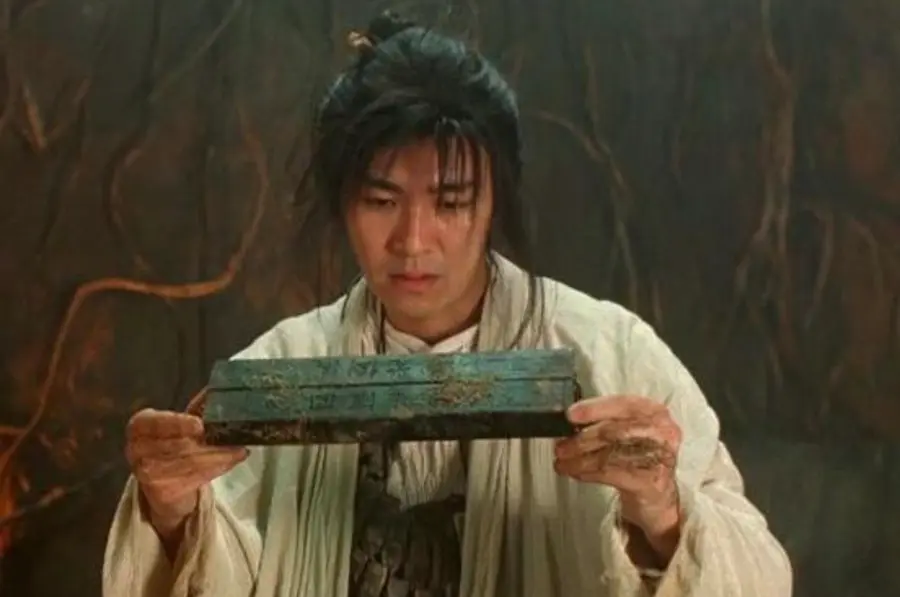
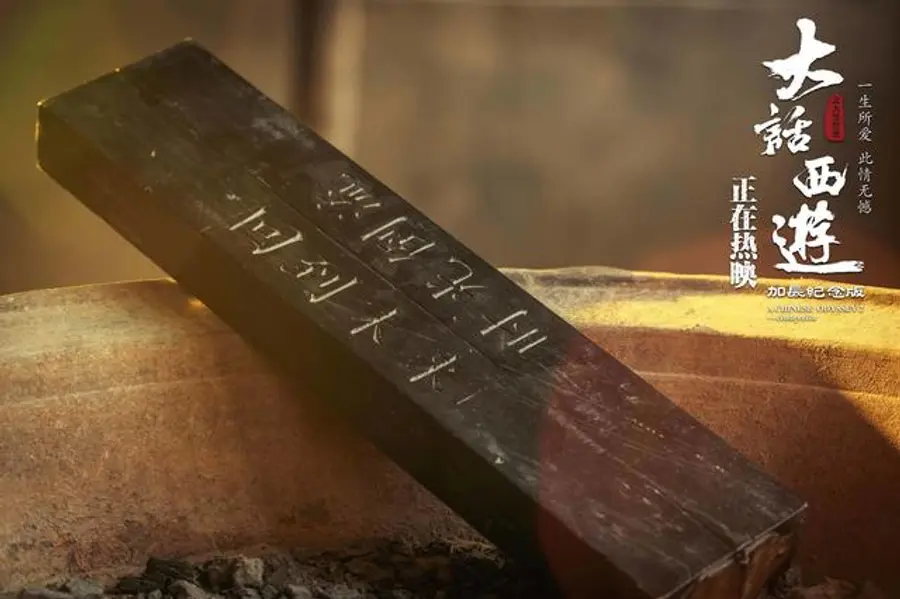
〈A Chinese Odyssey Part One: Pandora’s Box〉 Pandora’s Box

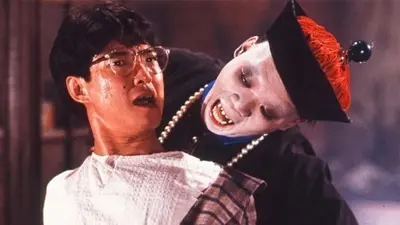
Welcome to Stephen Chow’s world. If you’ve fallen for Chow’s movies after seeing the recent rerelease of 〈Kung Fu Hustle〉(2004), the next films I’d recommend are the two 1995 movies that die-hard Chow fans collectively call 〈A Chinese Odyssey〉: 〈A Chinese Odyssey Part One: Pandora’s Box〉(hereafter 〈Pandora’s Box〉) and 〈A Chinese Odyssey Part Two: Cinderella〉(hereafter 〈Cinderella〉). They are both the culmination of director Jeffrey Lau’s ambition—he helped make Chow a star with 〈All for the Winner〉(1990)—and a definitive showcase for Chow’s inimitable comedy. If his films can be divided broadly into contemporary stories such as 〈All for the Winner〉, 〈Tricky Brains〉, 〈Fight Back to School〉, 〈From Beijing with Love〉 and 〈King of Comedy〉, and period pieces such as 〈Justice, My Foot!〉, 〈Royal Tramp〉, 〈King of Beggars〉, 〈Flirting Scholar〉 and 〈Hail the Judge〉, then 〈A Chinese Odyssey〉 is the defining example of his period films—and, alongside 〈King of Comedy〉(1999), one of his most moving romantic dramas.
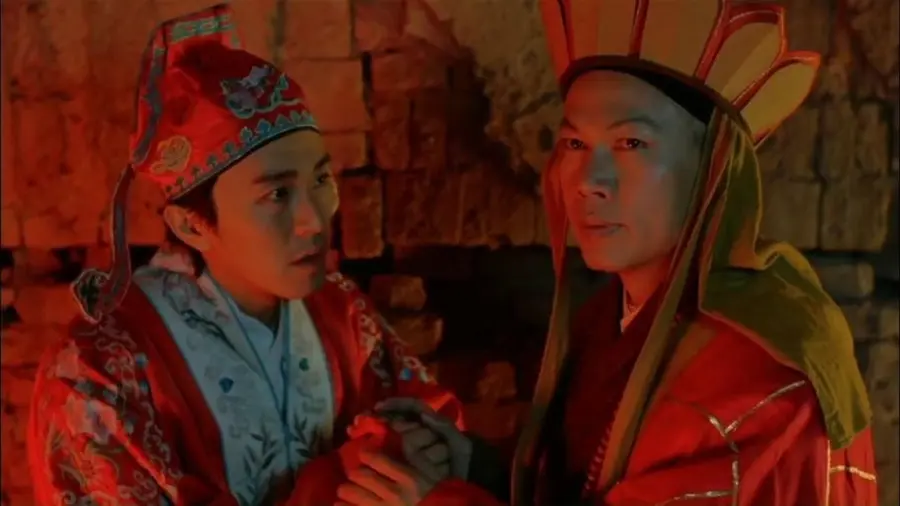
〈A Chinese Odyssey Part One: Pandora’s Box〉

​

“Pandora’s Box” (月光寶盒) literally means “a box of treasures bathed in moonlight.” Given the film’s English title, 〈Chinese Odyssey Part One: Pandora’s Box〉, the phrase also carries the meaning of “Pandora’s box.” In the film, it refers to a magical box that can turn back time. In 〈Pandora’s Box〉, Sun Wukong (Stephen Chow), punished by Guanyin, is reborn 500 years later as the leader of a band of mountain outlaws on Wuyue Mountain, known as Joker. He had refused to accompany Tang Sanzang (Law Kar-ying) to fetch the scriptures and tried to kill him after being tempted by the Bull Demon King’s promise of immortality to anyone who ate him. One day, two demons searching for Tang Sanzang appear: Spider Woman (Yammie Lam) and White Bone Demon (Karen Mok). Reborn as a human, Joker remembers nothing, but it turns out that 500 years earlier, when he was Sun Wukong, he and White Bone Demon had been lovers.
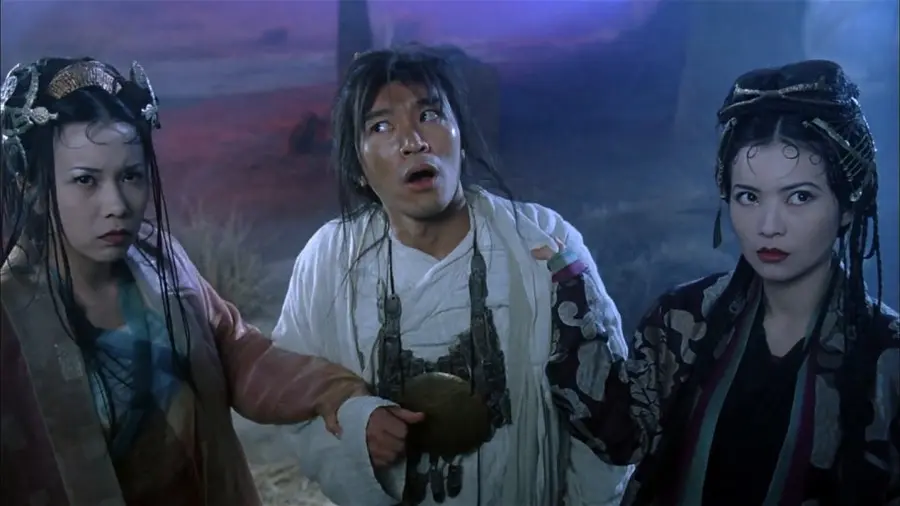
(From left) Karen Mok, Stephen Chow and Yammie Lam

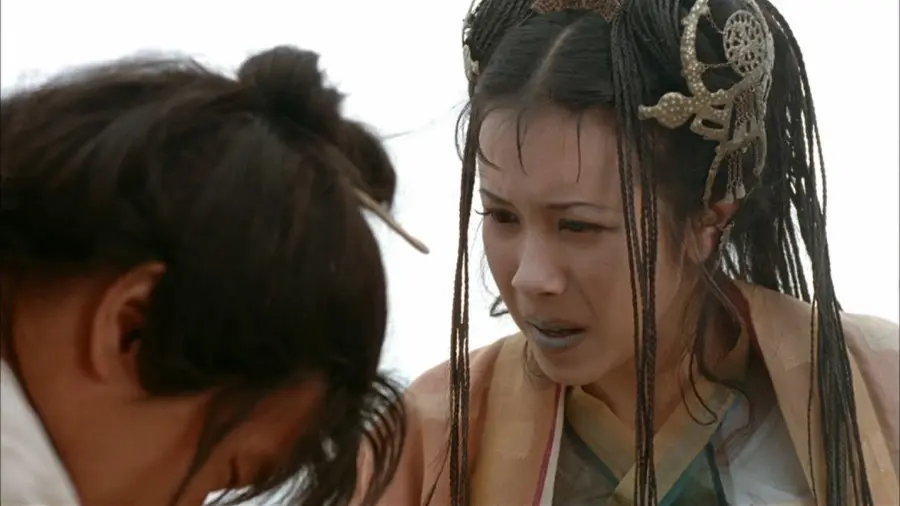
When they meet again, White Bone Demon is consumed by hatred for Sun Wukong, who abandoned her. Then the Bull Demon King arrives, and as the demons battle, Joker and White Bone Demon fall in love again. The deputy chief, Iron Fan (Ng Man-tat), also accidentally (!) falls for Spider Woman, and she becomes pregnant with his child. After a series of events, Joker discovers that he is Sun Wukong and sets out to find the “Pandora’s Box,” which allows time travel, so he can save White Bone Demon, who is about to kill herself. But after several attempts, he ends up 500 years in the past, where he meets Zixia (Athena Chu), the Fairy of the Spiders, who is also White Bone Demon’s teacher.
​

The first film, 〈Pandora’s Box〉, is a kind of warm-up for the heart-wrenching love and pain of 〈Cinderella〉. So scenes that feel familiar from other Stephen Chow parodies unfold throughout. If 〈A Chinese Odyssey〉 as a whole is a parody of Wong Kar-wai’s 〈Ashes of Time〉(1994), the bandits in the opening scene—wearing shabby clothes and old hats, crouched on a sand dune watching passersby—are unmistakably reminiscent of Ouyang Feng (Leslie Cheung) and Hong Qi (Jacky Cheung) in 〈Ashes of Time〉. The two roles played by Brigitte Lin as Murong Yin, who asks Ouyang Feng to kill Huang Yaoshi (Tony Leung Ka-fai) because he left her younger sister for another woman, also bring Spider Woman and White Bone Demon to mind. The waves Joker sometimes sees in his dreams resemble those in 〈Ashes of Time〉 as well. 〈Pandora’s Box〉 brings 〈Ashes of Time〉 into the story with striking directness. These details were possible because Wong and Jeffrey Lau were close friends who had even written scripts together when they were starting out.
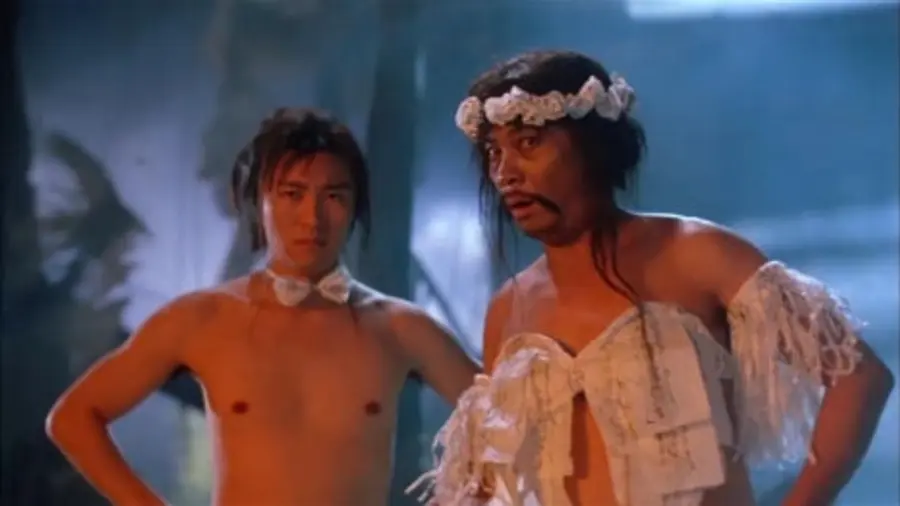
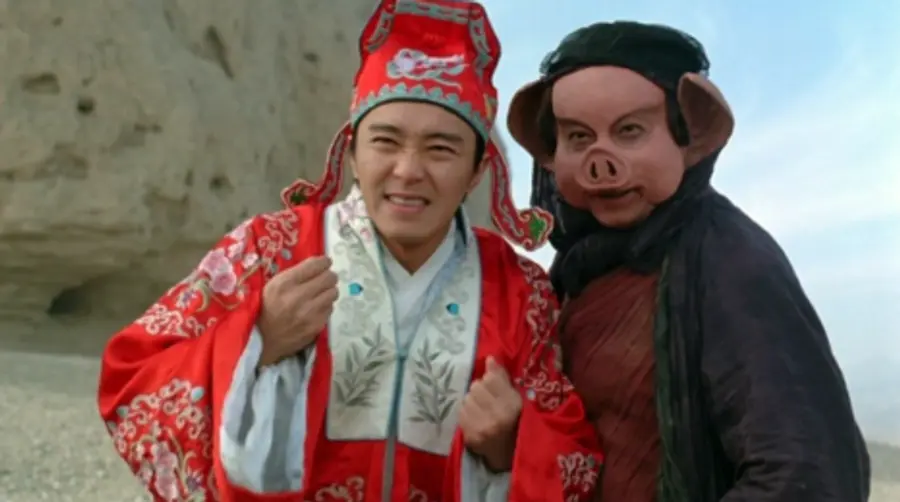
A tender moment between Stephen Chow and Ng Man-tat

​

​

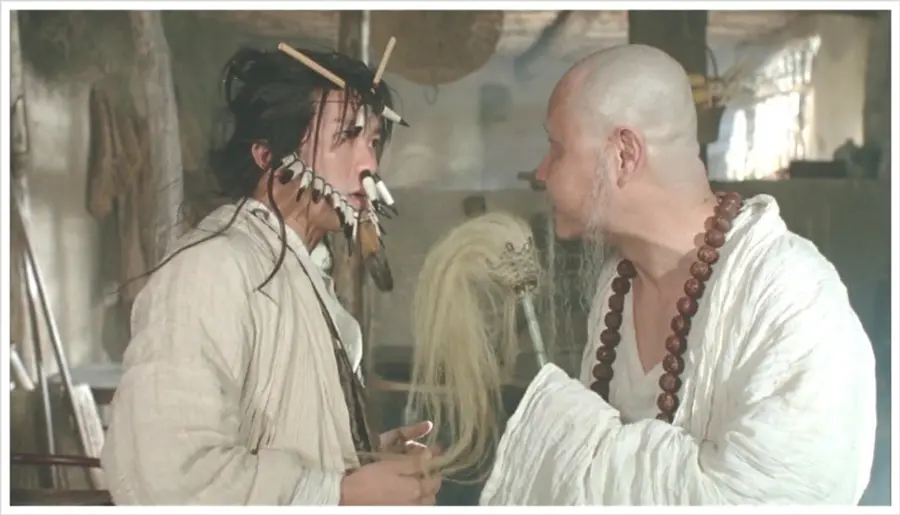
Jeffrey Lau also made a cameo. The burly actor who first appears in the film disguised as a grape and later turns up as Master Bodhi, an exorcist who isn’t much help, is Lau himself. Earlier, the production of 〈Ashes of Time〉 had dragged on indefinitely, which is why nearly the same cast was able to appear in Jeffrey Lau’s 〈The Eagle Shooting Heroes〉(1993). 〈The Eagle Shooting Heroes〉 was no mere cheap parody made by borrowing his friend’s actors. It was the film that came to the rescue by providing funds to finish 〈Ashes of Time〉, which was on the verge of being abandoned. Then 〈Chungking Express〉(1994), which Wong hurriedly completed in just a month out of desperation, provided the money for the post-production of 〈Ashes of Time〉. So although 〈Ashes of Time〉 began as the first production of Wong’s Jet Tone Films, it became his second film, following 〈Chungking Express〉.
​

Stephen Chow (left) and director Jeffrey Lau, who makes a cameo

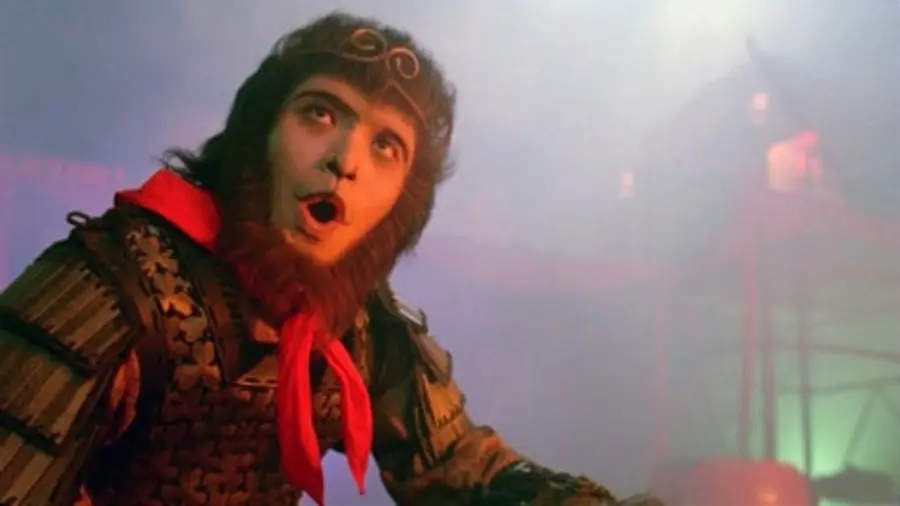
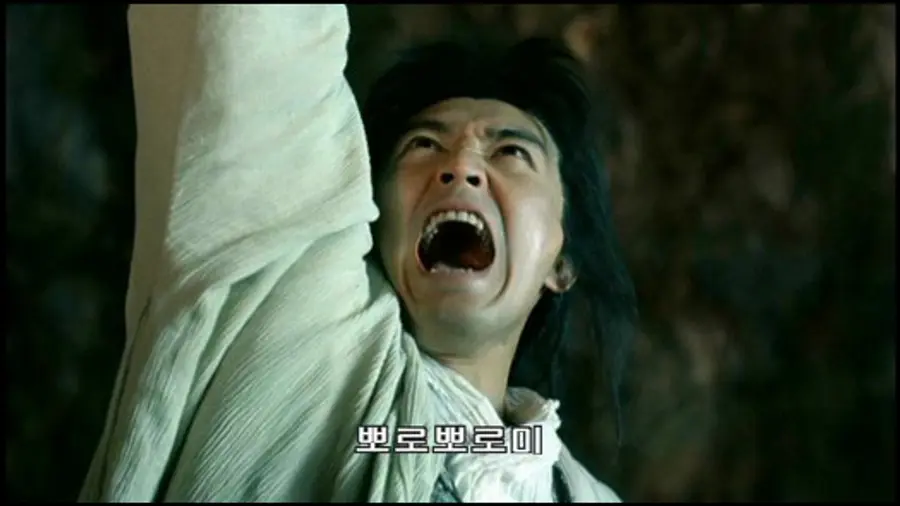
The line fans of 〈A Chinese Odyssey〉 cherish most is the incantation Stephen Chow shouts under the moonlight while holding the Pandora’s Box: “Poroporomi!” Apparently, it’s a playful Cantonese-style imitation of the Sanskrit “prajñāpāramitā” (般若波羅蜜), and it carries the Buddhist meaning of “crossing over suffering through wisdom.” Buddhism teaches prajñā, or wisdom, as the highest pāramitā—a virtue a bodhisattva must practice on the path to becoming a Buddha—and the best route to nirvana. In other words, it refers to the wisdom of awakening, gained through a bodhisattva’s practice, that allows one to recognize the truth and reach the far shore of nirvana. Of course, fans know these “facts.” But Stephen Chow fans have a special attachment to “Poroporomi,” the subtitle used in the 〈A Chinese Odyssey〉 films when they first came out on VHS long ago.
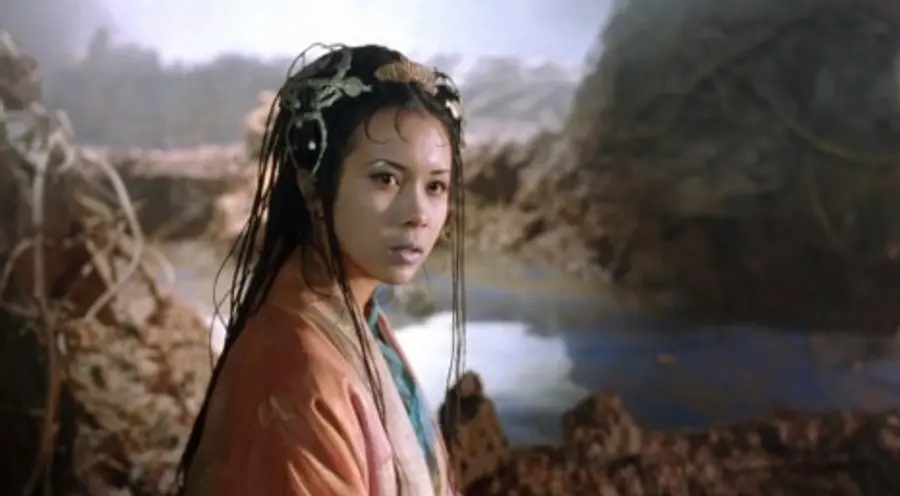
​

Some fans reportedly sent complaint emails to the video distributor, insisting that translations must always stick closely to the original and asking it to replace “Poroporomi” with the precise term “prajñāpāramitā.” But “Poroporomi” isn’t all that far from the actual pronunciation. And in 〈Cinderella〉, the characters’ bodies are switched by a transformation spell: Zhu Bajie (Ng Man-tat) and the Fairy Zixia (Athena Chu) swap bodies, as do the Bull Demon King’s younger sister and Sha Wujing. Stephen Chow tries to kiss Ng Man-tat, then ends up retching. In a movie full of kisses, the incantation “Poroporomi” fits perfectly.
​

​

I don’t know who the translator was, but I think it was a clever rendering made possible by being a Stephen Chow fan at the time. Longtime Hong Kong movie fans may feel a pang when Chow Yun-fat is called Zhou Runfa, which somehow brings Choi Bul-am’s laugh to mind, or when Leslie Cheung is called Zhang Guorong, making it feel as though you have to visit Seooreung on April 1. If, in the manga 「Slam Dunk」, Sakuragi Hanamichi—not Kang Baek-ho—said, “The left hand is just for support,” it might make you think the right hand should help, too. And if the school were called Shohoku High School, as in the original, instead of Buk-san High School, it might even feel as if your old school had been merged with another and disappeared. If 〈Pandora’s Box〉 and 〈Cinderella〉 are ever rereleased, like 〈Kung Fu Hustle〉, I hope Stephen Chow will hold up the Pandora’s Box and shout “Poroporomi!”—just as 〈Kung Fu Hustle〉 restored the name Pig Sty Alley to its original name, Kowloon Walled City.

​

Starting with ‘Chul-cheol Joo’s Locker,’ an over-the-top attribution of meaning to objects in movies, Cineplay’s reporters are launching a series of columns every other week, each reflecting their own tastes and perspectives: ‘Ji-yeon Kim’s Jewel Box,’ a guide to actors expected to make it big; ‘A-young Choo’s Music Box,’ a listening room for film scores that moved me; and ‘Chan-eol Sung’s Comic Book,’ a buying diary from a purveyor of subculture odds and ends.
[Joo Seong-cheol's Locker] The Black Speaker of 'Sirat' and the Monolith of '2001: A Space Odyssey'

[Joo Seong-cheol's Locker] The Black Speaker of 'Sirat' and the Monolith of '2001: A Space Odyssey'

I get fascinated by objects in movies. I deeply ponder why the director, cinematographer, art director, or even the actors placed that object in front of the camera. 'Joo Seong-cheol's Locker' is a record of the objects in movies that have lightly stepped on my eyes.

[Joo Seong-cheol's Locker] The 'Canned Cart Camera' that Changed the History of World Cinema with 'Nouvelle Vague'

[Joo Seong-cheol's Locker] The 'Canned Cart Camera' that Changed the History of World Cinema with 'Nouvelle Vague'

I am fascinated by objects in movies. I ponder deeply why directors, cinematographers, art directors, or even actors placed that object in front of the camera. 'Joo Seong-cheol's Locker' is a record of the objects in movies that have lightly stepped on my eyes.

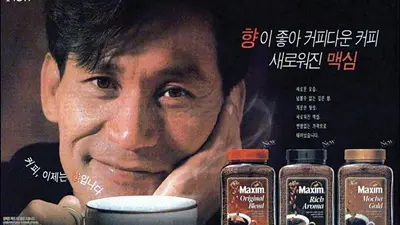
[Joo Sung-cheol's Locker] Ahn Sung-ki is Born, I am Ahn Sung-ki

[Joo Sung-cheol's Locker] Ahn Sung-ki is Born, I am Ahn Sung-ki

I get attached to objects in movies. I deeply ponder why the director, cinematographer, art director, or actor placed that object in front of the camera. 'Joo Sung-cheol's Locker' is a record of the objects in movies that have lightly stepped on my eyes.

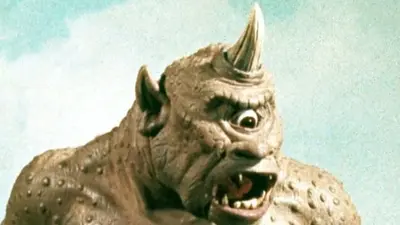
[Jusungcheol’s Locker] Odyssey’s one-eyed giant Cyclops and Ray Harryhausen’s “The Seventh Voyage of Sinbad”

[Jusungcheol’s Locker] Odyssey’s one-eyed giant Cyclops and Ray Harryhausen’s “The Seventh Voyage of Sinbad”

I can’t help getting captivated by the objects in movies. I find myself in deep thought about why, of all things, the director, cinematographer, production designer, or even the actors would put that item in front of the camera. “Jusungcheol’s Locker” is a record of the film objects that have landed gently on my eyes.

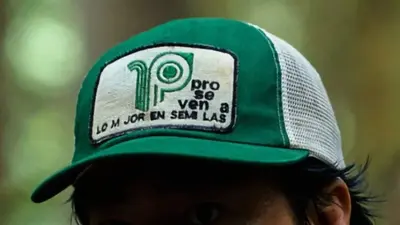
[Joo Seong-cheol’s Locker] See ‘Hope’ Again Through the Driver-Grade Cap Joo Seong-cheol Wears While Racing Across Seong-gi Bridge in ‘The Yellow Sea’ and ‘Goksung’

[Joo Seong-cheol’s Locker] See ‘Hope’ Again Through the Driver-Grade Cap Joo Seong-cheol Wears While Racing Across Seong-gi Bridge in ‘The Yellow Sea’ and ‘Goksung’

I get hooked on the objects in the movies. I end up deep in thought about why the director—whether it was the director, the cinematographer, the production designer, or even an actor—put that particular item in front of the camera. ‘Joo Seong-cheol’s Locker’ is a record of the objects in films that delicately landed on my eyes.

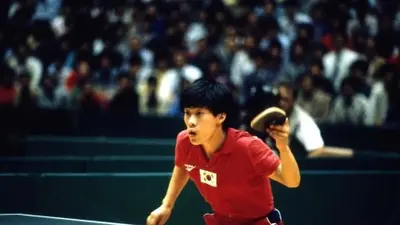
[Joo Sung-cheol’s Locker] Watching “Marty Supreme,” Recalling Yoon Nam-gyu’s Penholder Table Tennis Racket

[Joo Sung-cheol’s Locker] Watching “Marty Supreme,” Recalling Yoon Nam-gyu’s Penholder Table Tennis Racket

I get hooked on objects shown in movies. I can’t help but wonder why the director, the cinematographer, the production designer—or even the actor—put that item in front of the camera. “Joo Sung-cheol’s Locker” is a record of the movie objects that landed softly in my eyes.

[Joo Seong-cheol's Locker] The Aesthetics of Jongmyo That Captivated Masters of Martial Arts from Ho Kim-jun to John Woo, Jackie Chan, and Sammo Hung

[Joo Seong-cheol's Locker] The Aesthetics of Jongmyo That Captivated Masters of Martial Arts from Ho Kim-jun to John Woo, Jackie Chan, and Sammo Hung

I get fascinated by objects in movies. I fall into deep contemplation about why that object was placed in front of the camera, whether it be the director, cinematographer, art director, or an actor. 'Joo Seong-cheol's Locker' is a record of the objects in movies that have lightly stepped on my eyes.

[Joo Seong-cheol's Locker] The King Lear of Korea and Japan, Lee Soon-jae and Nakadai Tatsuya, Two Masters Rest

[Joo Seong-cheol's Locker] The King Lear of Korea and Japan, Lee Soon-jae and Nakadai Tatsuya, Two Masters Rest

I become fascinated by objects in movies. I fall into deep contemplation about why those objects were placed in front of the camera, whether by the director, cinematographer, art director, or actors. 'Joo Seong-cheol's Locker' is a record of the objects in movies that have lightly stepped on my eyes.

[Joo Seong-cheol's Locker] When Trees Comfort Trees, the Cello of 'The Moment the Bell Rings' and 'Can't Help It'

[Joo Seong-cheol's Locker] When Trees Comfort Trees, the Cello of 'The Moment the Bell Rings' and 'Can't Help It'

I become fascinated by objects in movies. I find myself deeply contemplating why the director, cinematographer, art director, or even the actors chose to place that object in front of the camera. 'Joo Seong-cheol's Locker' is a record of the objects in films that have softly caught my eye.

[Joo Seong-cheol's Locker] What Beer Did Sergio (Benicio Del Toro) Always Carry in 'One Battle After Another'?

[Joo Seong-cheol's Locker] What Beer Did Sergio (Benicio Del Toro) Always Carry in 'One Battle After Another'?

I get fascinated by objects in movies. I ponder deeply why that object was placed in front of the camera, whether by the director, cinematographer, art director, or actor. 'Joo Seong-cheol's Locker' is a record of the objects in movies that have lightly stepped on my eyes.

[Joo Seong-cheol’s Locker] Do You Know the Origin of Woody in “Toy Story”?

[Joo Seong-cheol’s Locker] Do You Know the Origin of Woody in “Toy Story”?

I can’t stop fixating on the objects in the movies. I get pulled into deep thought over why—director, cinematographer, production designer, maybe even an actor—someone put that object in front of the camera. “Joo Seong-cheol’s Locker” is a record of the objects from films that landed in my eyes, as if they gently stepped over them.

[Joo Sung-chul’s Locker] The Still-Enchanting Mambo Dance in the 4K Re-release of *Days of Being Wild*—Leslie Cheung and the Mirror

[Joo Sung-chul’s Locker] The Still-Enchanting Mambo Dance in the 4K Re-release of *Days of Being Wild*—Leslie Cheung and the Mirror

I get fixated on objects in movies. I find myself wondering why the director, cinematographer, production designer or actor put a particular object in front of the camera. “Joo Sung-chul’s Locker” is a record of the objects in films that have quietly caught my eye.

[Chu Sung-cheol’s Lockers] Who Spat on Leslie Cheung in “Farewell My Concubine”?

[Chu Sung-cheol’s Lockers] Who Spat on Leslie Cheung in “Farewell My Concubine”?

I get hooked on the objects in movies. I find myself falling into deep thought—why, of all things, did the director, cinematographer, production designer, or even an actor put that item in front of the camera? “Chu Sung-cheol’s Lockers” is a record of the film props that gently but firmly captured my attention.

[Joo Seong-cheol's Locker] Tony Leung Sometimes Wants to Hold an Ashtray.

[Joo Seong-cheol's Locker] Tony Leung Sometimes Wants to Hold an Ashtray.

I get fascinated by objects in movies. I ponder deeply about why the director, cinematographer, art director, or even the actors placed that object in front of the camera. 'Joo Seong-cheol's Locker' is a record of the objects in movies that have lightly stepped on my eyes.

[Joo Sung-chul's Locker] What Are the Improvised Explosive Devices (IEDs) in 'Warfare' and 'The Hurt Locker'?

[Joo Sung-chul's Locker] What Are the Improvised Explosive Devices (IEDs) in 'Warfare' and 'The Hurt Locker'?

I am drawn to objects in movies. I find myself wondering why the director, cinematographer, production designer or actor put that particular object in front of the camera. 'Joo Sung-chul's Locker' records the objects in movies that quietly catch my eye.

[Joo Seong-cheol’s Locker] Zombie Things That Don’t Flinch Even When Shot: Korea’s First Zombie Film, “Kwe-si” (1981)

[Joo Seong-cheol’s Locker] Zombie Things That Don’t Flinch Even When Shot: Korea’s First Zombie Film, “Kwe-si” (1981)

I can’t help but fixate on the objects in the movies. I find myself getting deeply lost in thought about why—of all things—this director, cinematographer, art director, or even the actor, placed that item in front of the camera. “Joo Seong-cheol’s Locker” is a record of the objects in films that landed on my eyes with a light, delicate stomp.

Joo Sung-chul's Locker: What's Wrong With Talking About 'Assassins' and the Missing Bullet?

Joo Sung-chul's Locker: What's Wrong With Talking About 'Assassins' and the Missing Bullet?

I fixate on objects in movies. I find myself wondering why the director, cinematographer, production designer or actor placed that particular object in front of the camera. 'Joo Sung-chul's Locker' records the objects in movies that quietly catch my eye.

[Joo Seong-cheol’s Lockers] The Great Dancer Turned Film Director Summoned by “Michael”: Bob Fosse’s “All That Jazz”

[Joo Seong-cheol’s Lockers] The Great Dancer Turned Film Director Summoned by “Michael”: Bob Fosse’s “All That Jazz”

I can’t help but get hooked on the objects in movies. Director, cinematographer, production designer, or even an actor—why, exactly, did they put that item in front of the camera? ‘Joo Seong-cheol’s Lockers’ is a record of the movie objects that lightly landed under my gaze and, somehow, stuck there.

[Joo Seong-cheol’s Locker] David’s Stone That Took Down Goliath, “David” All the Way Through

[Joo Seong-cheol’s Locker] David’s Stone That Took Down Goliath, “David” All the Way Through

I can’t help getting captivated by the objects in movies. I fall into deep thought over why, whether it’s the director, the cinematographer, the art director—or even the actor—someone felt compelled to place that particular item in front of the camera. “Joo Seong-cheol’s Locker” is a record of the movie objects that came down on my eyes like stepping onto a soft stair.

[Joo Sung-chul's Locker] If it's hard to visit Cheongnyeongpo of Deposed King Danjong, head to Geumseongdang of Prince Geumseong!

[Joo Sung-chul's Locker] If it's hard to visit Cheongnyeongpo of Deposed King Danjong, head to Geumseongdang of Prince Geumseong!

Located in Jingwan-dong, Eunpyeong-gu, Seoul, Geumseongdang is a shrine dedicated to the deified Prince Geumseong and also serves as a shamanism museum.

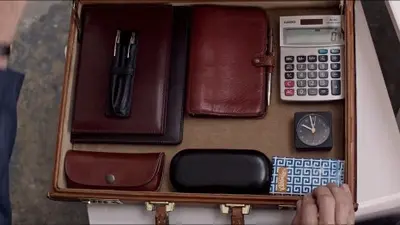
The Intern Carrying an Executive’s Briefcase: The Paradox of the “Intern” Leather Attaché

The Intern Carrying an Executive’s Briefcase: The Paradox of the “Intern” Leather Attaché

I fixate on objects in movies. I find myself wondering why the director, cinematographer, production designer or actor put that particular object in front of the camera. “Joo Sung-chul’s Locker” records the movie objects that have lightly crossed my path.

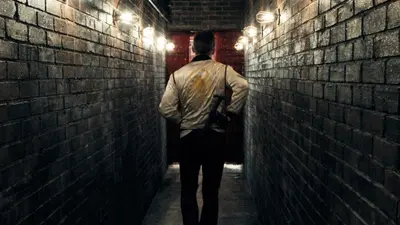
[Joo Seong-cheol’s Lockers] Lee Cronin’s The Mummy and Murderous People Season 2 — and a Scorpion Jacket That Feels Like the Rise of Drive

[Joo Seong-cheol’s Lockers] Lee Cronin’s The Mummy and Murderous People Season 2 — and a Scorpion Jacket That Feels Like the Rise of Drive

I get hooked on the objects in movies. I can’t help but get lost in questions about why the director, cinematographer, production designer, or even the actors put that thing right in front of the camera. “[Joo Seong-cheol’s Lockers]” is a record of those movie objects that land lightly—right onto my eyes.

×

댓글 (0)

아직 댓글이 없습니다. 첫 댓글을 작성해보세요!

댓글 작성