



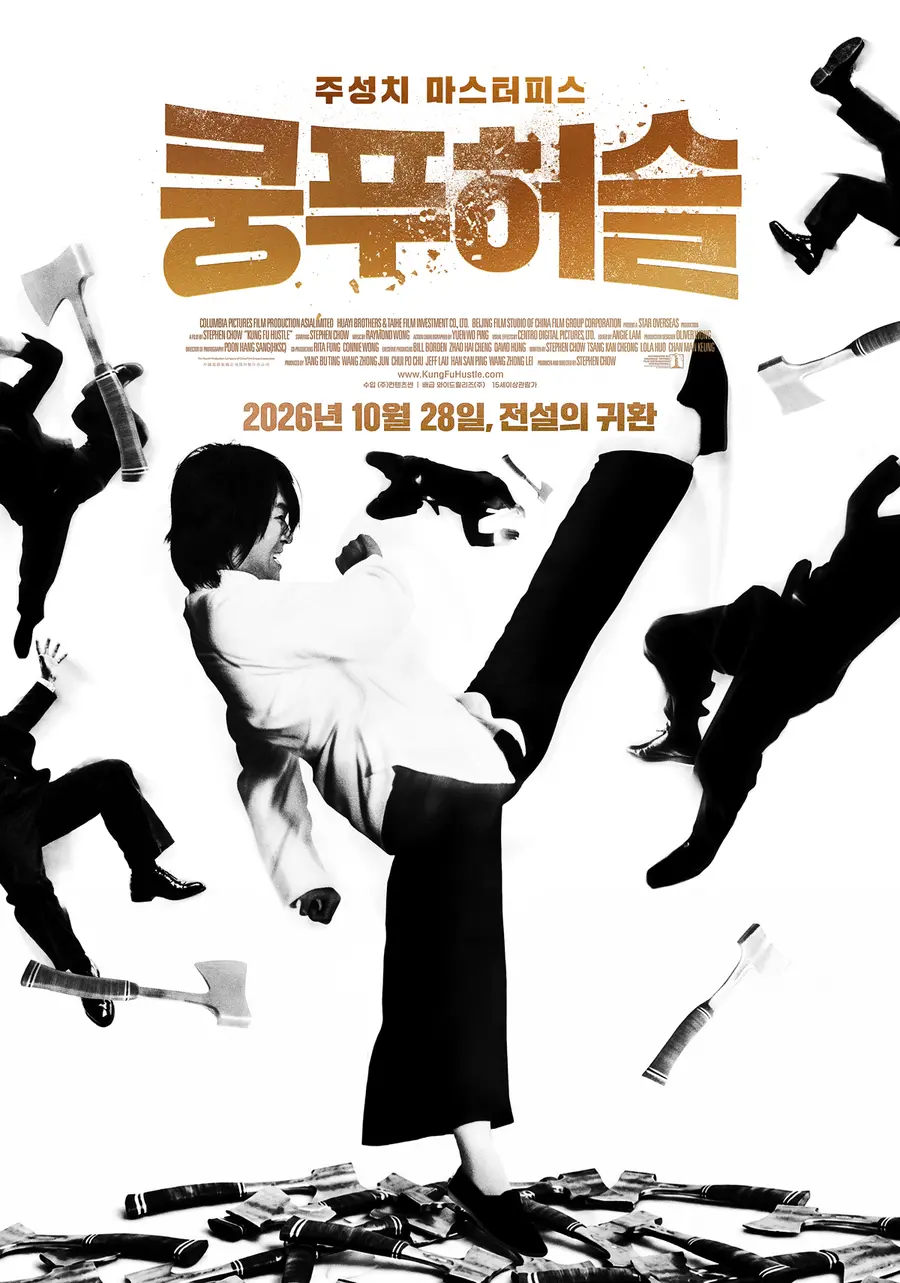
※ This article continues from Part 1 of our coverage of 〈Kung Fu Hustle〉, returning to theaters after 20 years.
Beyond his admiration for the great wuxia directors Chang Cheh and King Hu, Stephen Chow also pays tribute to Bruce Lee, the global superstar, and Jin Yong, the master of wuxia fiction. Lee, Chow has said, has always been his unwavering idol. The list of films in which Chow directly imitated him—including 〈The God of Gamblers III: Back to Shanghai〉(1990) and 〈Fist of Fury 1991〉(1991)—is so long it hardly needs to be recited. Lee’s influence can be seen in virtually every character Chow plays. In 〈Fist of Fury 1991 II〉(1991), Chow plays a fighter who steps into the ring wearing Lee’s trademark yellow tracksuit.
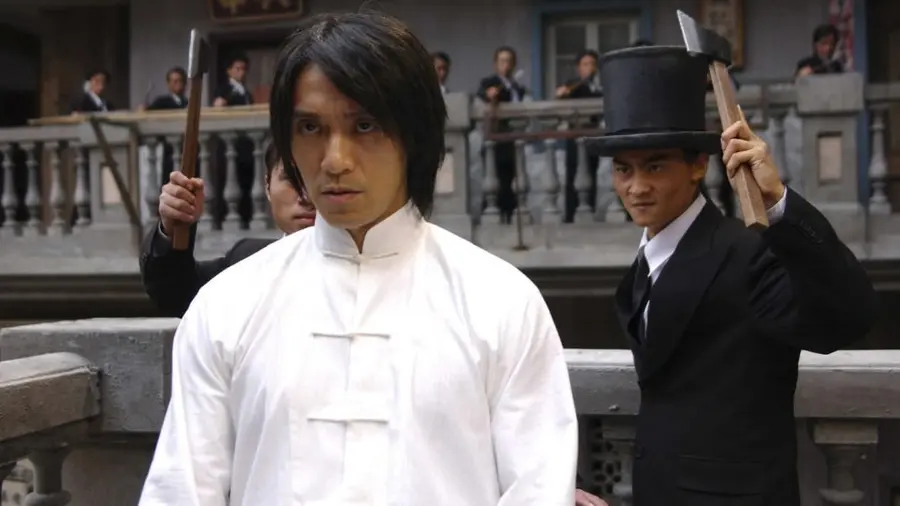
His enduring admiration for Bruce Lee and Jin Yong
Chow paid 10,000 yuan per reference, for a total of 60,000 yuan, to use names from Jin Yong’s wuxia novels in 〈Kung Fu Hustle〉, including Toad Style, One Yang Finger, Yang Guo, Little Dragon Girl and The Return of the Condor Heroes. The references go beyond the names of martial arts techniques. Near the end of the film, martial arts director Yuen Cheung-yan, brother of action choreographer Yuen Woo-ping, makes a cameo as a street vendor selling martial arts books to a child. From left to right, the titles are “Thousand-Hand Divine Fist,” “Eighteen Dragon-Subduing Palms,” “Nine Yang Divine Skill,” “One Yang Finger” and “Dugu Nine Swords.” Chow’s affection for Jin Yong, with whom he was said to be close, runs deep. He had already played the lead character, Wai Siu-bo, in 〈Royal Tramp〉(1992), based on Jin Yong’s novel; featured the Eighteen Dragon-Subduing Palms in 〈King of Beggars〉(1992); and, during the cooking duel in 〈The God of Cookery〉(1996), introduced a dish called “Heartbroken Rice,” prepared using the Heartbreak Palm technique.
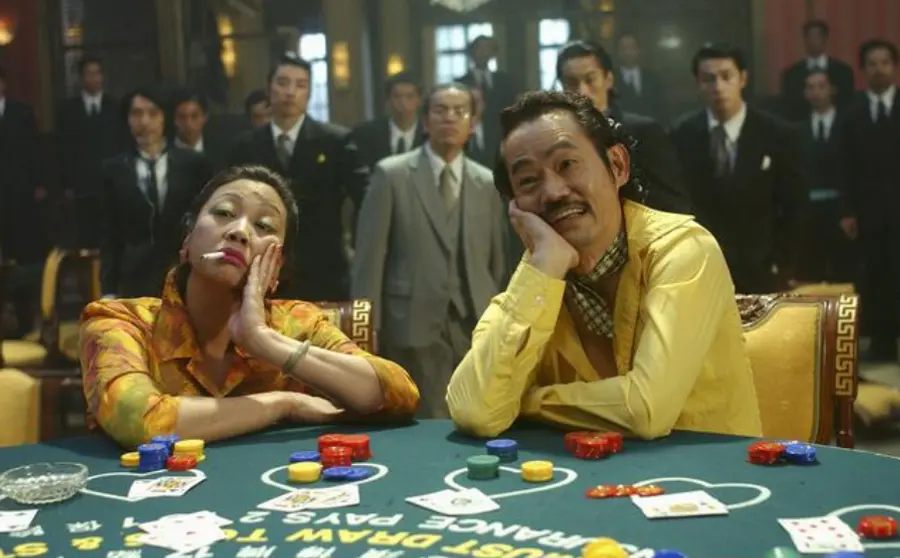
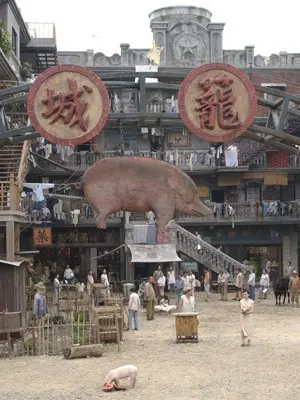
Above all, 〈Kung Fu Hustle〉 stands out for its smooth, impressive recreations of the martial arts techniques Jin Yong invented—techniques that countless TV series and films had failed to bring convincingly to life. In that sense, Chow’s description of 〈Kung Fu Hustle〉 as “the realization of a childhood dream” rings true. Toad Style, used by Ouyang Feng, the Western Venom, in the novel 〈The Legend of the Condor Heroes〉, is performed to perfection by the Beast (called “The Beast” in the Korean release subtitles). Chow had already attempted Toad Style in 〈The God of Cookery〉, but the difference between the two films is enormous. The same goes for the Finger-Playing Divine Skill, which channels inner strength through the sound of a stringed instrument. And casting the Pigsty Alley landlady and landlord, Yuen Qiu and Yuen Wah, as Little Dragon Girl and Yang Guo from 〈The Return of the Condor Heroes〉 also reflects an exceptional depth of affection. For instance, the wandering brothers who use the Finger-Playing Divine Skill before the Beast appears reclaim their original name: the “Twin Harp Killers.” They are named for the traditional instrument they carry, the guqin. Some call them the “Twin Zither Killers” because it resembles the Korean geomungo. In the end credits, they are listed as “Guqin Player 1” and “Guqin Player 2.”
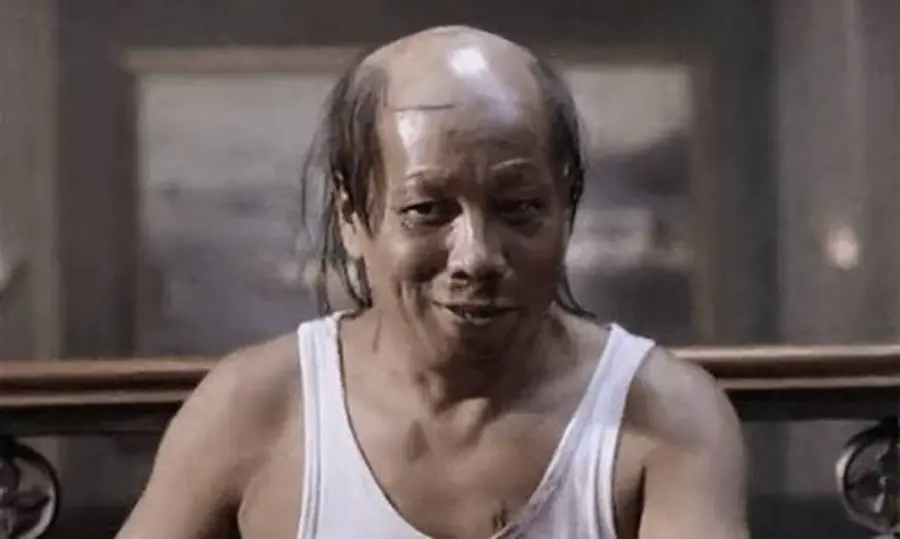
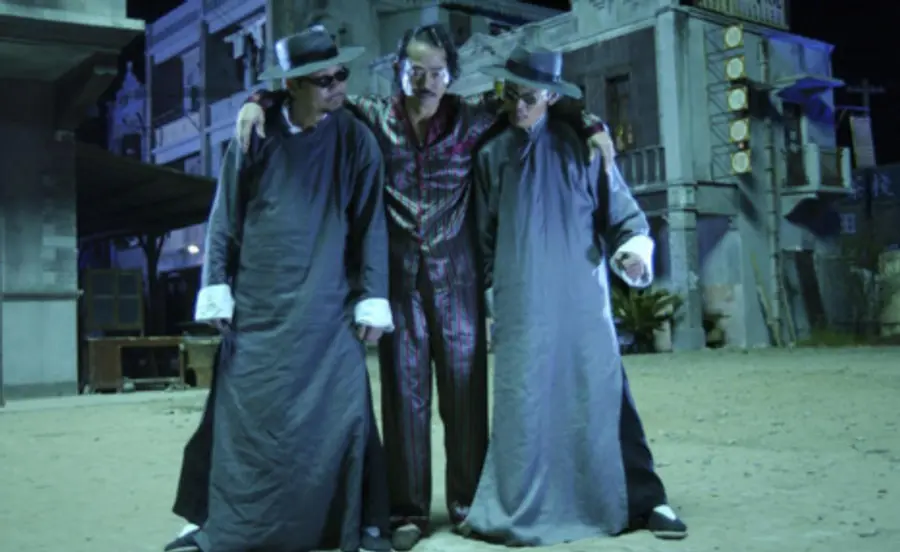
Three masters of Pigsty Alley,
a tribute to Shaw Brothers
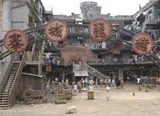
One of the film’s most moving scenes comes when three hidden masters in Pigsty Alley defeat the Axe Gang. The landlord and landlady, Yuen Wah and Yuen Qiu, stand by as the tailor, Chiu Chi-ling; the laborer, Xing Yu; and the bun shop owner, Dong Zhihua, fight a genuinely stirring battle. Chiu appears to be a shy, timid tailor, but when danger threatens Pigsty Alley, he unleashes the Hung Gar Iron Wire Fist. He previously appeared in small roles in Jackie Chan films such as 〈Drunken Master〉(1978) and 〈Heart of Dragon〉(1985). The defensive weapon he wears on his arm is the same one he used in 〈Drunken Master〉. Compared with the tailor and the bun shop owner, Xing is a powerfully built laborer. When the three join forces, he unleashes the dazzling Twelve-Route Tantui kicking technique. He once appeared in person as a Shaolin monk, demonstrating the art on the MBC program 〈Great Challenge〉, and later appeared in several action films, including 〈Flash Point〉(2007). Dong looks like a quiet, diligent man who runs a snack shop, but when danger threatens Pigsty Alley, he takes up a staff and performs the Eight Trigrams Staff technique. He appeared in Chang Cheh’s 〈The Shanghai Thirteen〉(1987), among other films. Chang hoped to make him a star like David Chiang, Ti Lung and Chen Kuan-tai, but that dream never came true.
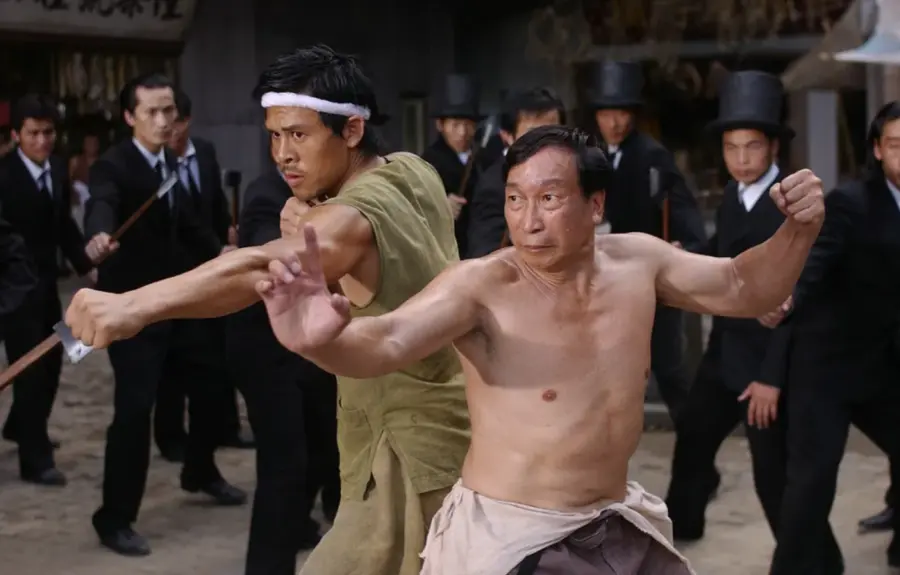
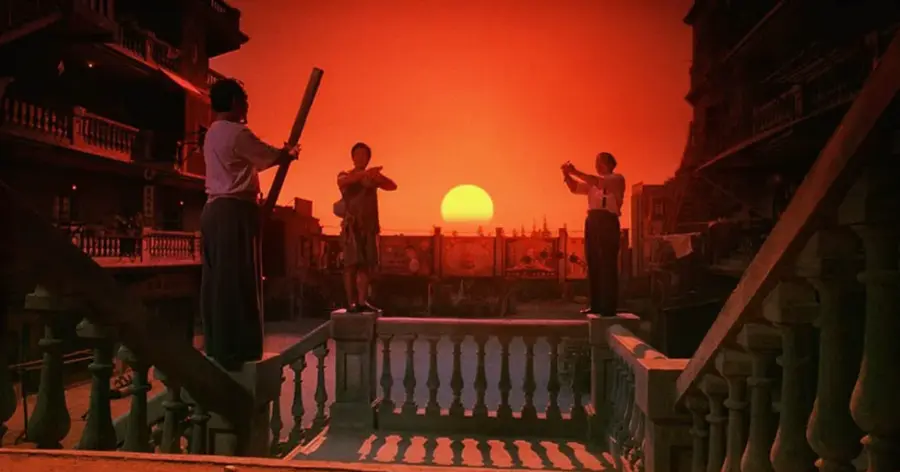
If Chinese martial arts are commonly summed up as “fists in the south, kicks in the north”—fists meaning hand techniques, kicks meaning footwork—and staff fighting is considered the most common weapon art, then these three protect Pigsty Alley with a trinity embodying the essence of Chinese martial arts. And in the final showdown, Chow delivers a monumental, magnificent full stop. Having traversed the films of Bruce Lee and Jin Yong, Chang Cheh and Lau Kar-leung, Chow finally offers his ultimate tribute to King Hu, a great master of Hong Kong wuxia cinema. The fallen Bruce Liang feigns surrender before attacking Chow, like Han Yingjie in 〈A Touch of Zen〉(1969). The sublime shot of the sun shining behind the monk Chiao Hung in 〈A Touch of Zen〉, evoking the peace of nirvana, unfolds behind Chow more than 30 years later. Then comes the Buddha’s soaring palm, the “Buddha’s Palm”—a sequence of profound affection that crosses the vast river of wuxia cinema and spans the history of Hong Kong film. And yet Chow is still Chow. As he leaps into the air in that final scene, his jump inevitably falls short; he lands lightly and gracefully on an eagle’s back, then delivers a laugh in the form of a “squawk.” In Chow’s world, where reality and the surreal collide, parody and homage coexist by the thinnest of margins, and action and comedy mirror each other and expand without limit, delightful cheap thrills have reached the heights of a master’s art.
With great power comes great responsibility
Meanwhile, the first great line in 〈Kung Fu Hustle〉 is Chow’s declaration: “The era of soccer is over.” At the start of the film, a ball kicked by a group of children flies toward Chow, who bursts it and delivers the line as if telling us to forget his previous film, 〈Shaolin Soccer〉(2001). Chow thus parodies himself, bringing his signature flair for parody to 〈Kung Fu Hustle〉 in full force. In another moment of parody, the bun shop owner—one of the masters who dies defending Pigsty Alley—leaves these words as his final message: “With great power comes great responsibility.” They are also the words spoken before his death by Ben Parker (Cliff Robertson), uncle to Peter Parker (Tobey Maguire), in 〈Spider-Man〉(2002). In Chow’s heart, all those countless masters from Shaw Brothers and Golden Harvest were superheroes who tried to protect Hong Kong.


댓글 (0)
댓글 작성
댓글을 작성하려면 로그인이 필요합니다.
로그인하기