



Cineplay and House Travel teamed up for a Hong Kong movie tour, their fifth trip. The core theme of this tour was the meeting of Hong Kong’s past and present through film. From John Woo’s 〈A Better Tomorrow〉 (1990), set in 1960s Hong Kong and starring Tony Leung Chiu-wai, to 〈The King of Comedy〉 (1999), which follows the daily life of a supporting actor in Seokopet village on Hong Kong’s quiet beach town—starring Chow Chun-shiu as he dreams of becoming a star—to 〈Crown of Thorns: The Walled City of Kowloon〉 (hereafter 〈Crown of Thorns〉, 2024), which recreates the chaotic lawless zone of the Kowloon Walled City that came to symbolize 1980s Hong Kong—there’s no other way to describe it than “Hong Kong Retro Movie Tour,” a trip that lets you feel the lingering nostalgia of old Hong Kong deep in your bones. It was also a journey that lets you sense a generational change in the Hong Kong film industry, from Leung to Chow Chun-shiu, and all the way to Lau Chun-kin. The article recounts the 2-night, 3-day trip from May 15 to 17, just as the heat in Hong Kong was starting to kick in.
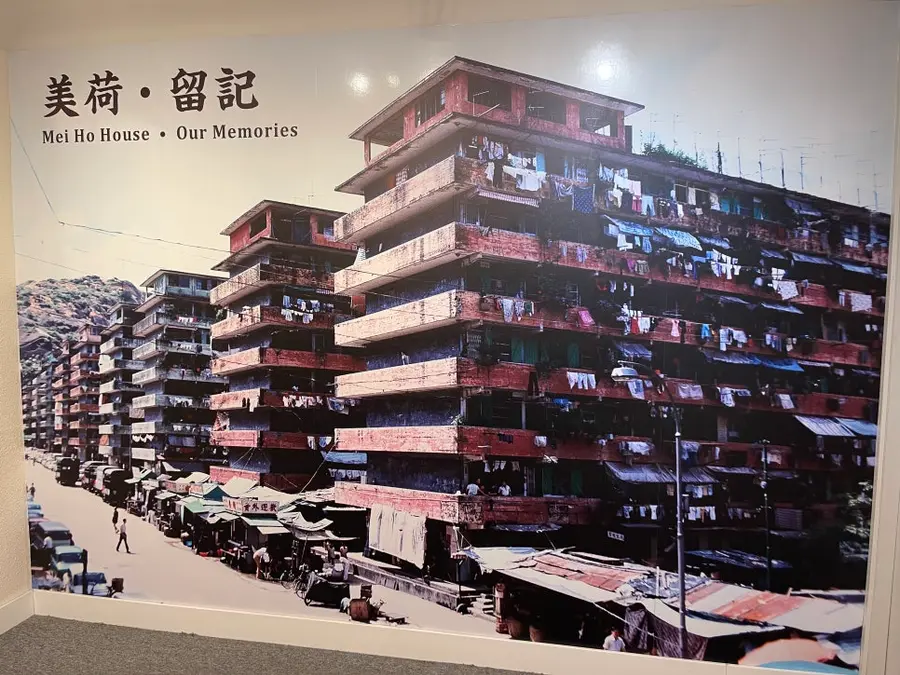
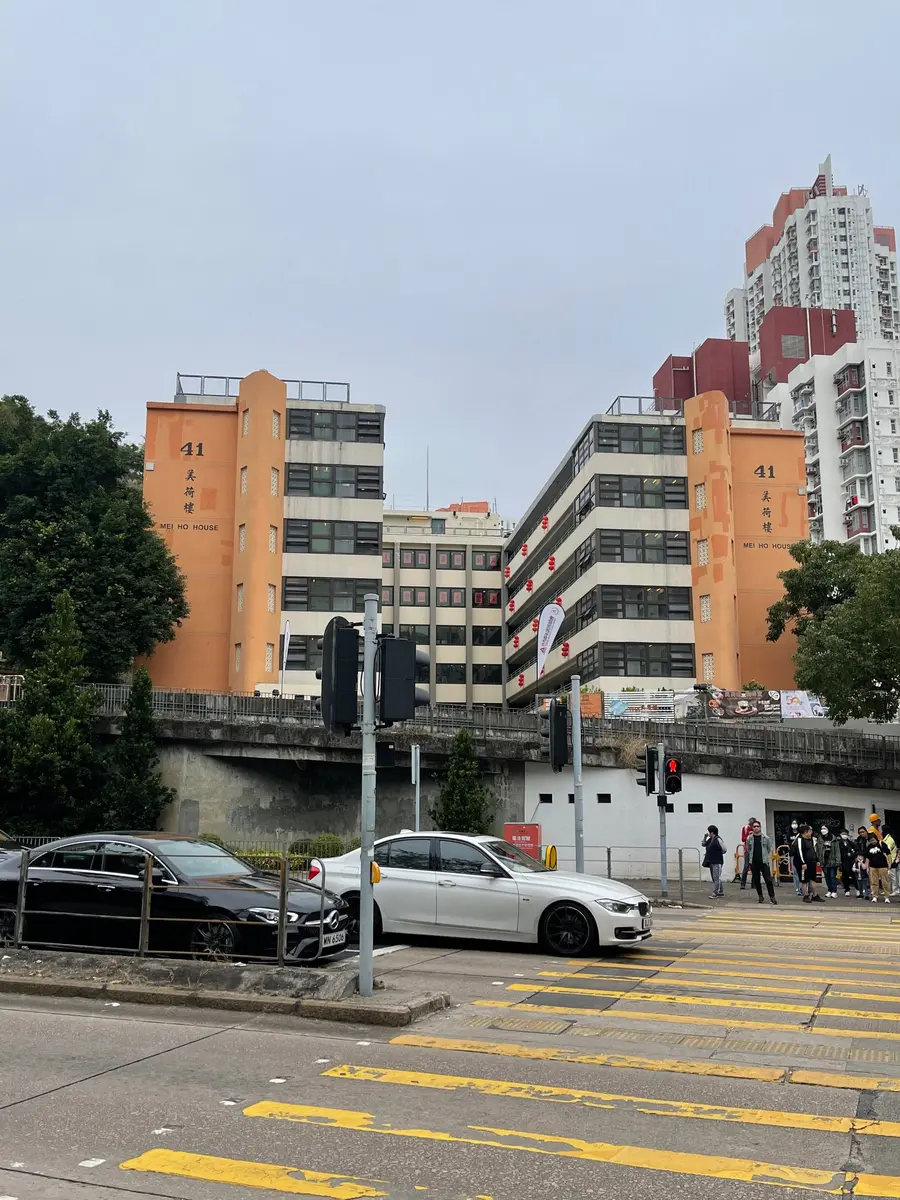
The moment I got swept up in the appeal of Kowloon Peninsula and San Shui Po, regret hit me—“Why did I stay away from the Kowloon Peninsula all this time?” This was the place where John Woo’s 〈A Better Tomorrow〉 begins in 1967, where Tony Leung Chiu-wai, Cheung Wah-yung, and Lee Tzu-yung were kids from the neighborhood, nurturing friendships as they ran around and played. Even now, when you travel in Hong Kong, you can often see scenes like this. In the film, what stood out was the way they hung laundry on balconies all over the place. The apartment where the three friends lived in the movie still survives as a single remaining building, now called the “Mei Ho House Youth Hostel” (YHA Mei Ho House Youth Hostel). It is the trace of the massive public housing built in 1954. As part of Hong Kong’s urban renewal project, they kept one building that retained an “H” shape when viewed from above, and turned it into a youth hostel. Because it is a corridor-style “H” structure apartment, there were no secrets among the friends. For Leung, who always wore a warm expression and worried about his friends, it was tough to watch Cheung Wah-yung at home with a face full of complaints, or to watch him get beaten by his father while shouting, “Where did someone like this even come from!”—but the trio could still see everything the other did all day long.
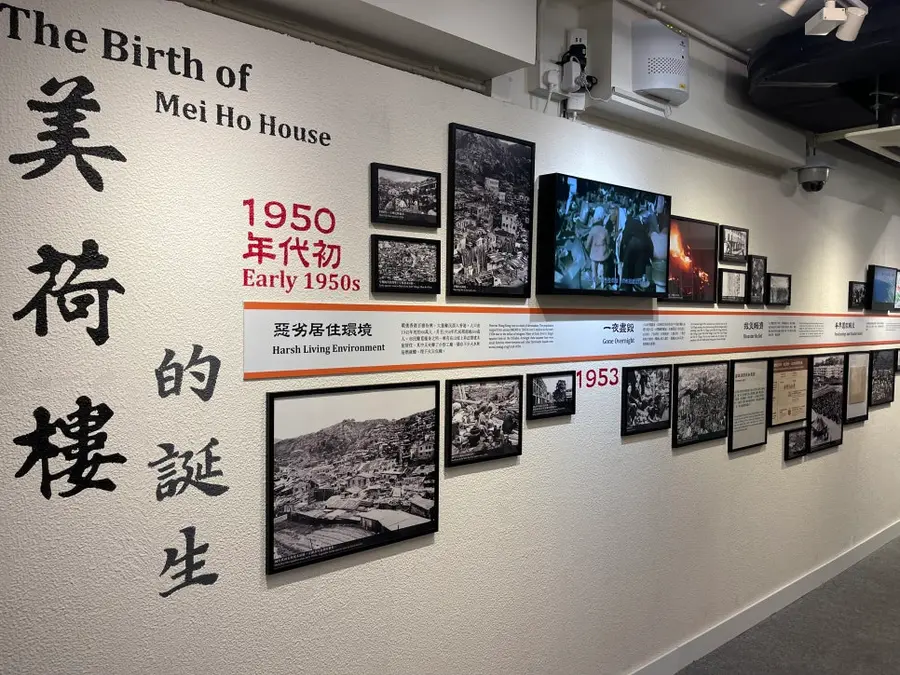
This is the history of Mei Ho House. In the 1950s, as countless immigrants poured into Hong Kong from China’s mainland, extensive shantytowns sprang up in San Shui Po and nearby Sekkipmei. Then in 1953, a catastrophe known as the “Sekkipmei Fire” struck. With more than 50,000 people suddenly left homeless and becoming refugees, the Hong Kong government built public housing in 1954 to accommodate them and improve living conditions at the same time. Viewed from above, the buildings are structurally shaped like “H” blocks, and dozens of apartment buildings were built in a modernist architectural style with continuous balconies. With a layout and construction design that could house the maximum number of people using the least space, the project could provide relatively inexpensive living quarters to the victims of the fire tragedy.
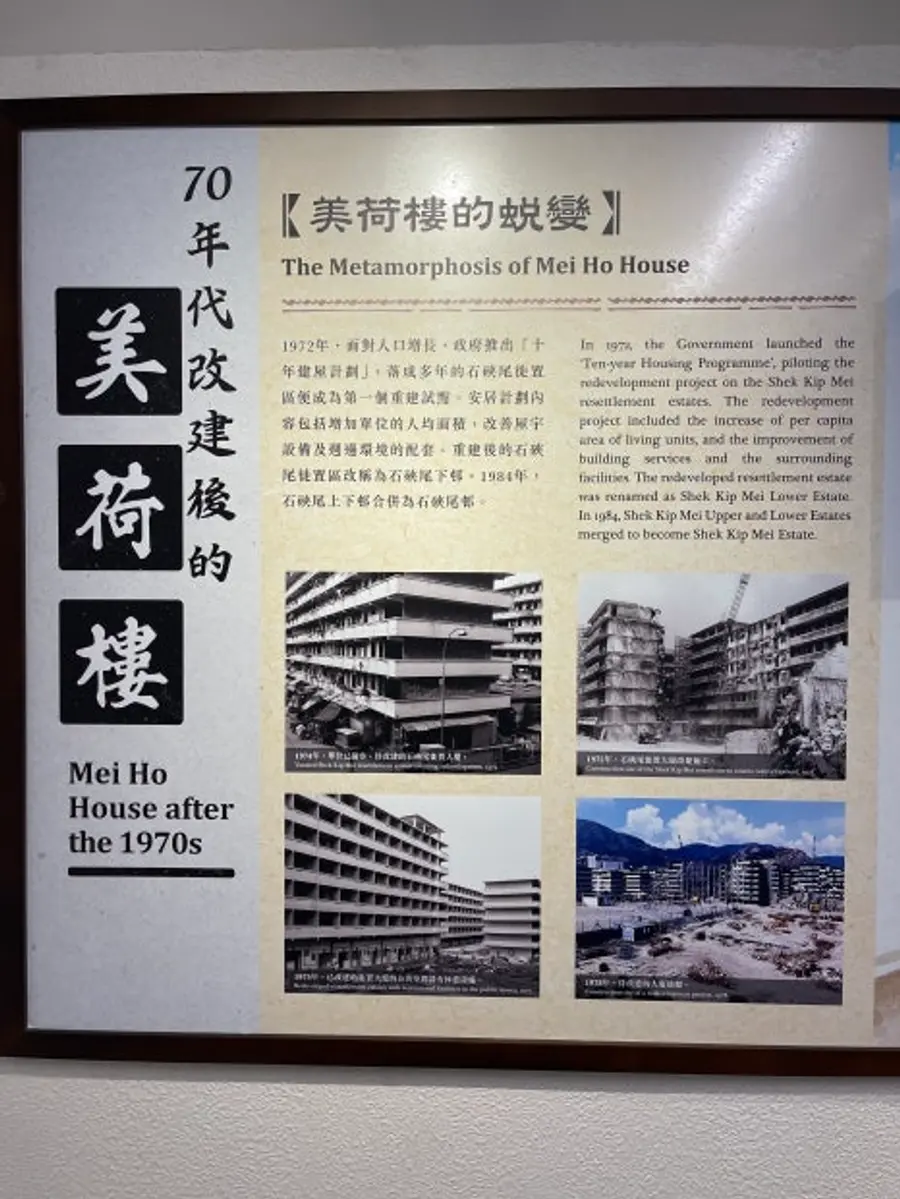
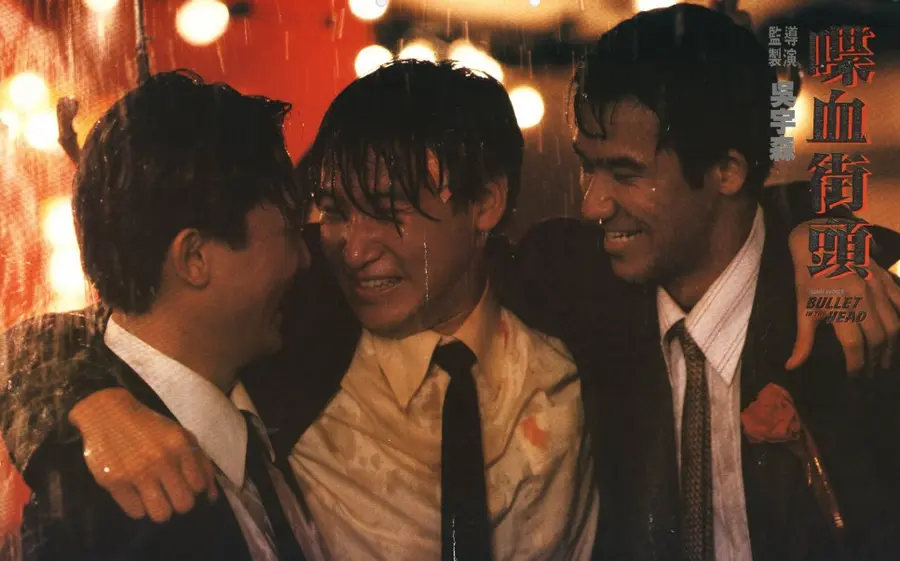
In Mei Ho House, there was also a young John Woo who was born in Guangzhou, China, in 1946. In 〈A Better Tomorrow〉, San Shui Po is essentially a second home where young Woo struggled with questions about the future and wandered around. In other words, 〈A Better Tomorrow〉 is a semi-autobiographical film in which Woo’s chaotic memories as a young man are carried in the body of actor Tony Leung Chiu-wai. On top of that, what makes Mei Ho House so appealing is that Garden Hill, which you reach by climbing up behind the building like hiking uphill, has become a kind of pilgrimage spot for Hong Kong residents to take their SNS validation photos. It may not be as hot as the most trending Kennedy Town pictures in Hong Kong these days, nor as consistently popular as Explosions Building photos, but you can still see nightscape shots from this spot on social media now and then. When I learned that Garden Hill—the back-mountain spot where Leung and Cheung Wah-yung fight day and night in the movie—was actually a very impressive place, it felt like a reveal.
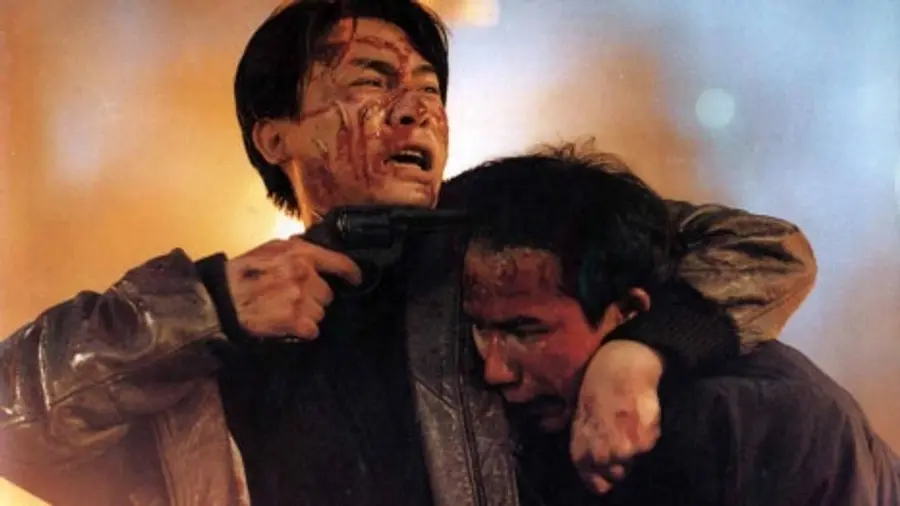
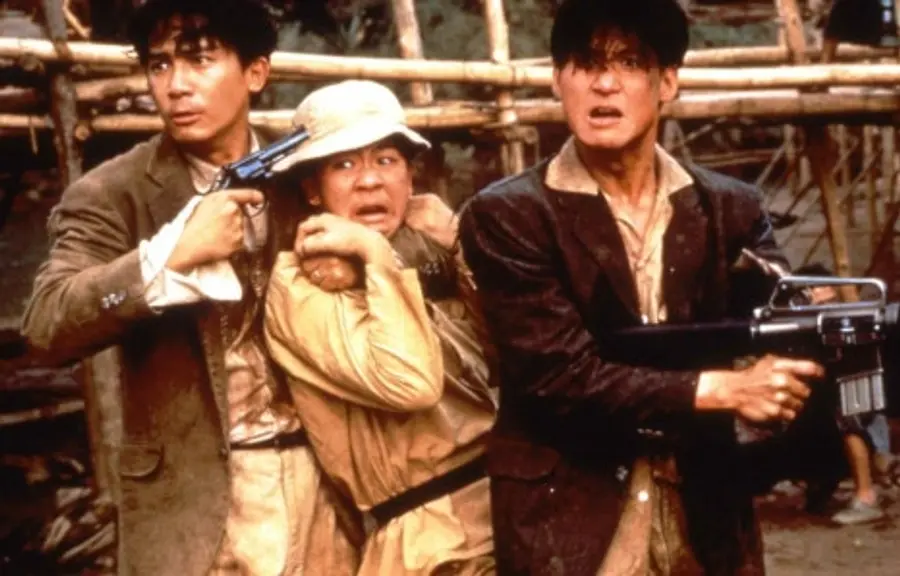
〈A Better Tomorrow〉 also has great significance as a documentary-style work that captures the surroundings of San Shui Po at the time—meaning, the scenery of the interior of the Kowloon Peninsula—very well. Not only does it carefully depict various places around the San Shui Po public housing, it also captures the look of the manufacturing factories nearby that were beginning to be demolished one by one by then. I’ve watched a truly large number of Hong Kong films up to that point, but seeing “factory smokestacks” was the first time I’d encountered them in 〈A Better Tomorrow〉. The San Shui Po area was an industrial district that thrived with the textile industry until the 1970s, and in the film, it is likely the textile factories where Leung’s girlfriend works, as well as the place where a strike breaks out. What struck me most while watching 〈A Better Tomorrow〉 at the time was that, along with the factory smokestacks, I saw workers’ “protests” in a Hong Kong film for the first time. The protest scenes in the movie reflect the anti-government demonstrations in Hong Kong in 1967, which are famously called the “1967 Riots” in Hong Kong history. At first, as depicted in the film, they began as a labor dispute at a factory in the Kowloon Peninsula, but they spread into large-scale protests against the oppression and dictatorship of the British colonial government, combining bureaucratic corruption with grievances over widening inequality between the rich and the poor. John Woo, too, was a young man who threw himself passionately into social movements at the time. With the British military and police continuing to crack down with excessive force, the protestors even made homemade bombs and stood their ground for a last stand. Although the clashes caused enormous property damage and loss of life that would be hard to recover from, the turbulence became a turning point for Hong Kong’s distinct identity that differentiated it from both Britain and China as the mood rapidly grew in the 1960s. It is fairly natural to connect that to the anti-China protests and the Umbrella Movement that took place about 50 years later.
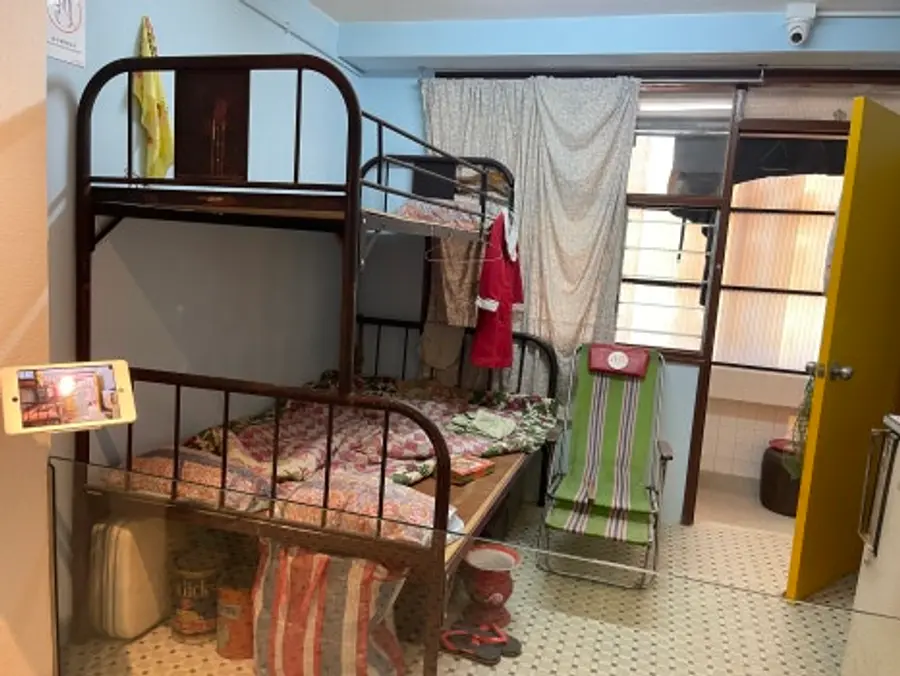
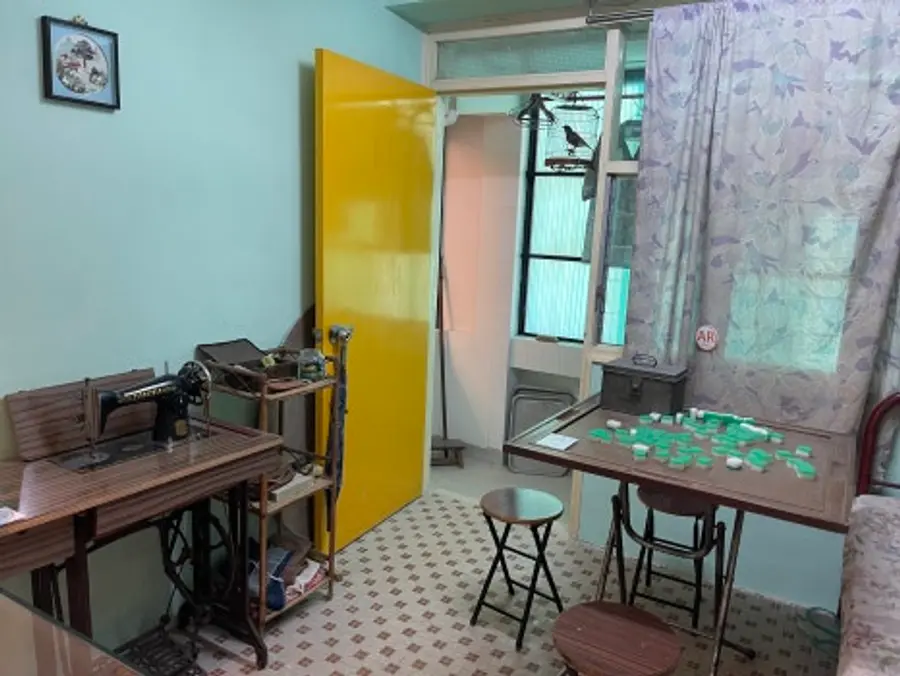
What I’m most interested in seeing at Mei Ho House right now is the museum. Several floors of exhibition space are filled with a rich setup that tells the history of the public housing from that time and recreates daily life as it was. You can learn about Hong Kong history properly just by walking through it all. Among them, the moment I saw a room reproduced with a small table and chairs without backrests right at the narrow entrance, tears welled up. Sitting there alone, Tony Leung Chiu-wai—who smoked a cigarette—met his friend Cheung Wah-yung, who was kicked out of the house after hearing someone through the window say, “Beg for a living for the rest of your life, you useless punk!” After that, he left the place and never came back. Cheung Wah-yung, who wanted to hand Tony Leung Chiu-wai some lump sum money before he got married, had no choice but to touch the “black money,” which left him seriously injured. Tony Leung Chiu-wai, unable to turn a blind eye to a friend he’d seen get bullied at home because of him and then even get hurt, took revenge. After carrying out a killing in an impulsive act, he left for Vietnam, which was in the thick of the war at the time, with Lee Tzu-yung, who said, “Let’s succeed later and come back riding in a Mercedes.” In that way, through the Vietnam War—at a time similar to the social chaos John Woo experienced in his youth—Woo is asking questions about the 1997 handover of Hong Kong to China’s mainland. Just as Vietnamese people who became refugees worried that future Hong Kong people might end up the same way, Hong Kong’s chivalry in action-first Hong Kong noir is placed into specific historical time. Or perhaps it reflects John Woo’s unwavering affection for Hong Kong.
▶ The Hong Kong Retro Movie Tour series continues in Part 2.


![[First Reaction] ‘Family Trip’ Cineplay Reporter Star Rating](https://cdn.www.cineplay.co.kr/w300/q75/article-images/2026-09-16/084269eb-f40e-4e00-a301-dfb9b6caf8e7.jpg)
댓글 (0)
댓글 작성
댓글을 작성하려면 로그인이 필요합니다.
로그인하기