



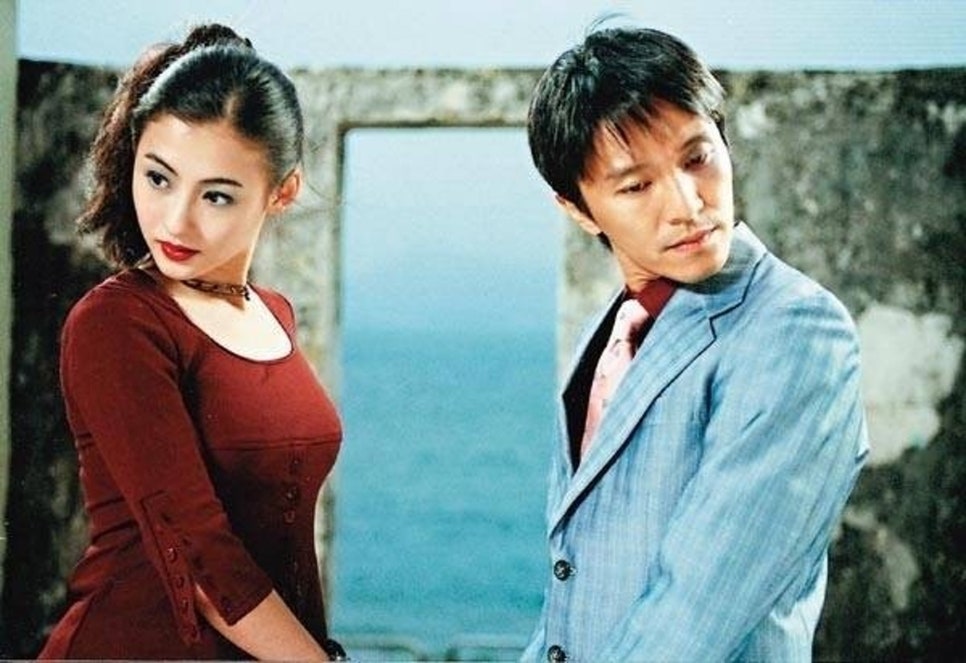
Among Hong Kong films, it seems there is none that so deeply absorbs the mood of a place as much as Comedy King. With the exception of the film sets and a nightclub or two, it was shot almost entirely at Sek O Beach, located at the far southeastern tip of Hong Kong Island. Sai (Stephen Chow) has a dream of becoming a big star, but at the actual filming locations he is stuck playing extras—barely more than a corpse role—without even a single line of dialogue. Of course, even a small part, he acts with complete sincerity, dreaming that someday he will become a great actor. Despite his difficult circumstances, he also teaches free acting classes at the village welfare hall. That is when Fiou (Carina Lau) who works at a nightclub comes with her fellow co-workers to take the acting class. It is because she thinks that if you act convincingly in front of customers, you can raise sales. Even though the acting class does not turn out as properly as expected, the people who struggle to live throughout the film are, only here at the village community center, strangely relaxed and peaceful. You can’t forget Seung-chul’s performance in a play with no audience, the shabby locals who come to watch him, the slack tree in the courtyard of the hall that has endured the years without falling, and the dazzling seaside scenery on the day Seung-chul and Carina Lau parted ways.
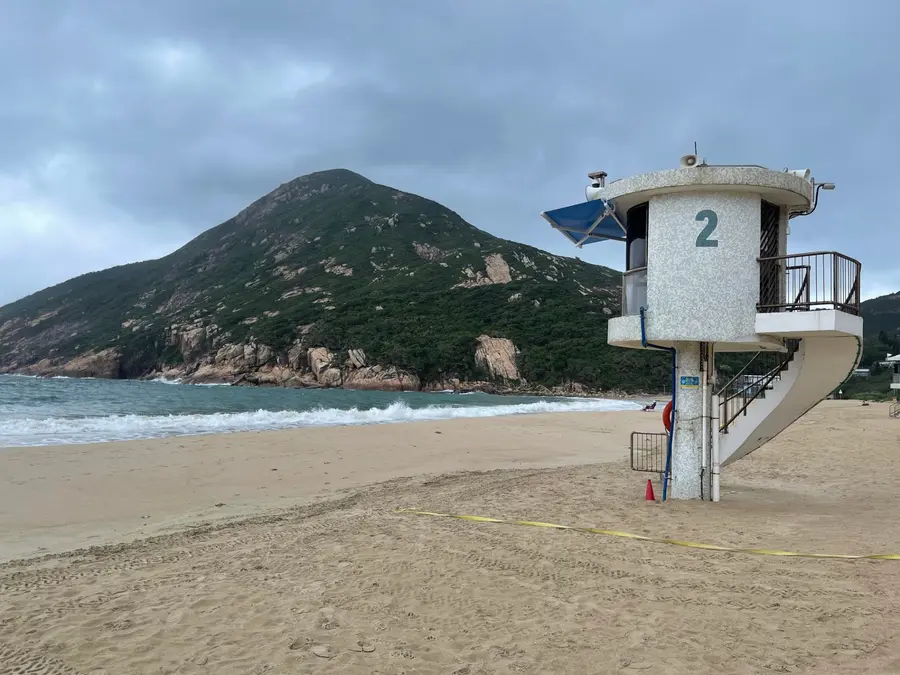
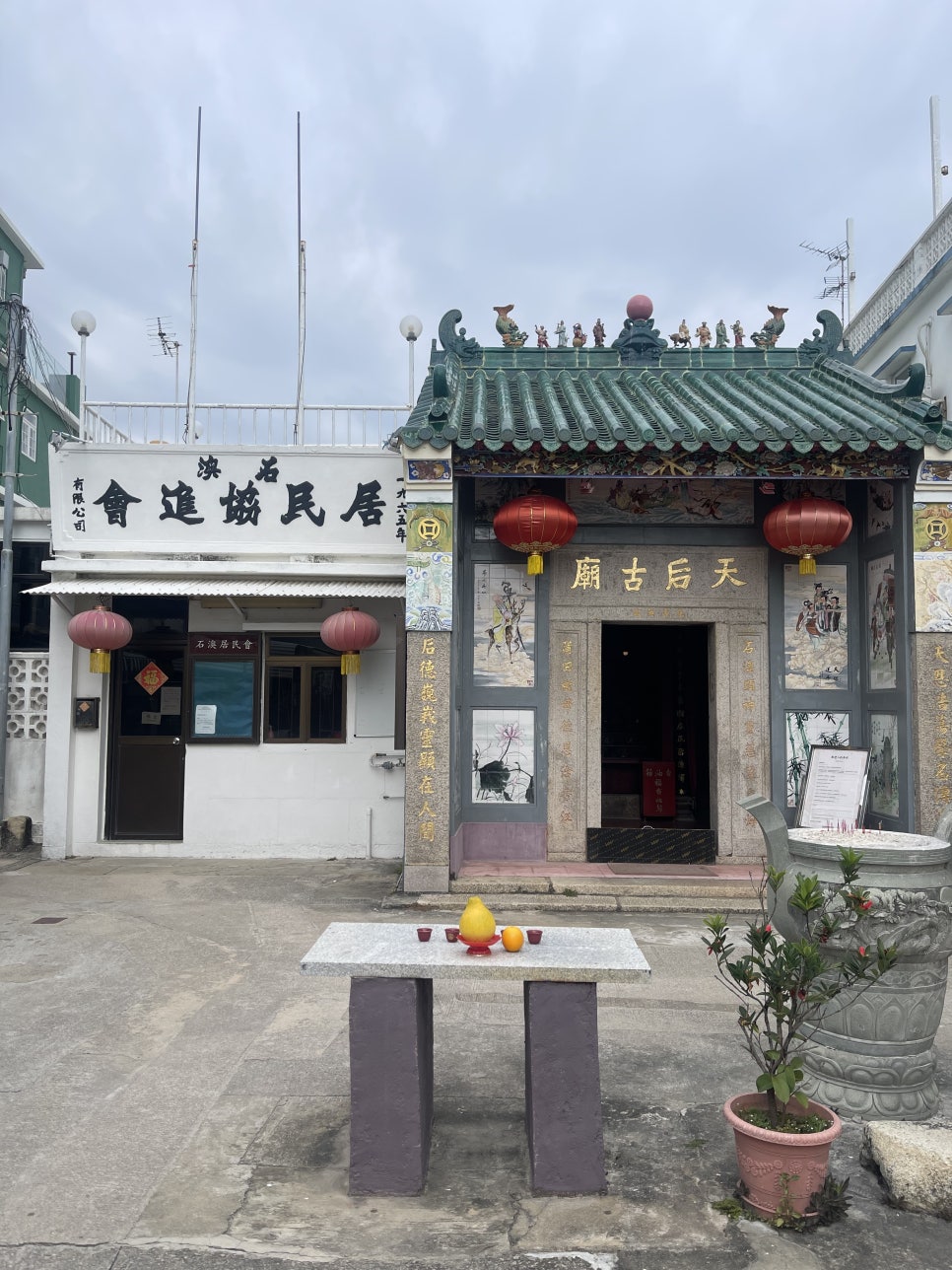
To get to Sek O Beach, take the MTR to Shau Kei Wan Station, exit at A3, then board bus No. 9 at the bus terminal and get off at Sek O Beach, the terminus. After getting off at the terminal and walking straight toward Sek O Beach, the wide parking lot greets you, and Sek O Beach shines unusually bright in white. From there, if you head in along Sek O Village Road, you will find modest houses in primary colors—orange and blue—welcoming you. If you turn your eyes to the left right away, there is a village shrine, the gathering place for the neighborhood kids, from Comedy King. I do not know how well Sai can fight, but he teaches self-defense moves with a serious expression that seems oddly unsuited for kids his age. Of course, the techniques Sai learned are never used—he just gets beaten up and beaten up.
As you look at the village community center at first glance, it feels as if it simply took the all-white and blue buildings of Greek Santorini and brought them here. That is why it was used to shoot numerous commercials and music videos, but another memorable work is Hong Kong Escape, the third installment of Saint Hunt—Hong Kong Escape (1989). It is the film of “Yuk Dae-hwa and Max Hot Gun,” a duo that once churned out so many movies together, as much as “Yuk Dae-hwa and Alan Tam.” Yuk Dae-hwa, who accidentally got involved in a Hong Kong underworld organization after crossing over from mainland China, dreams of escaping the endlessly dreary Hong Kong with his girlfriend and heading to Panama. In the end, that dream comes true, and in the last scene of Hong Kong Escape, the place set as Panama is right here. Along with a sign that reads “Yangjanggyeomjeom,” palm trees were added a few more to the community center courtyard, and Yuk Dae-hwa was greeting guests while wearing a stylish Hawaiian shirt. It really turns into a South American beach, flawlessly.
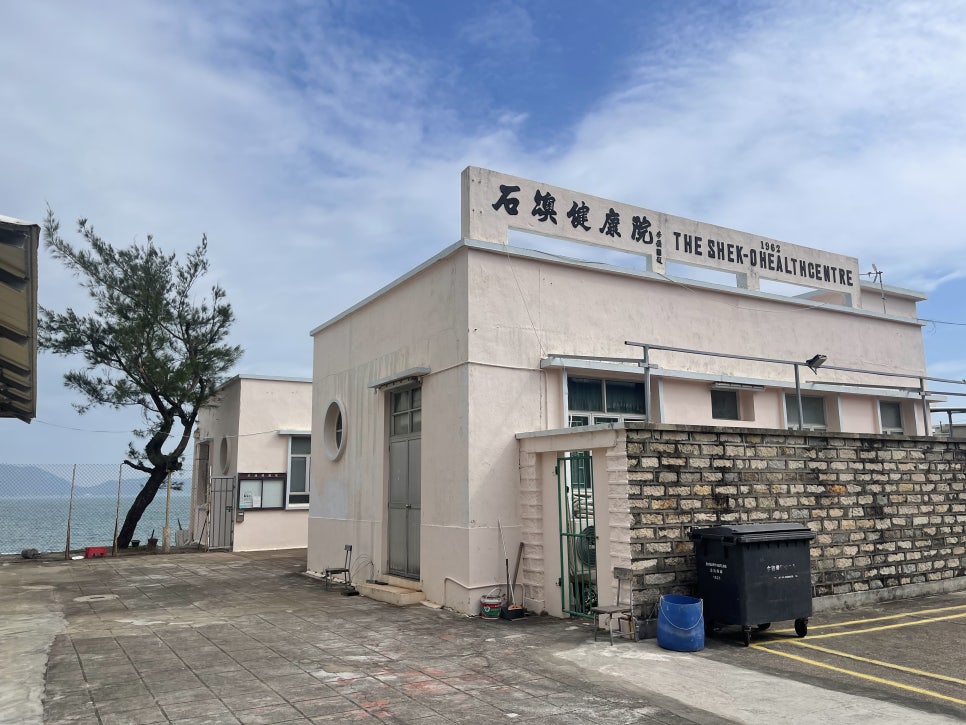
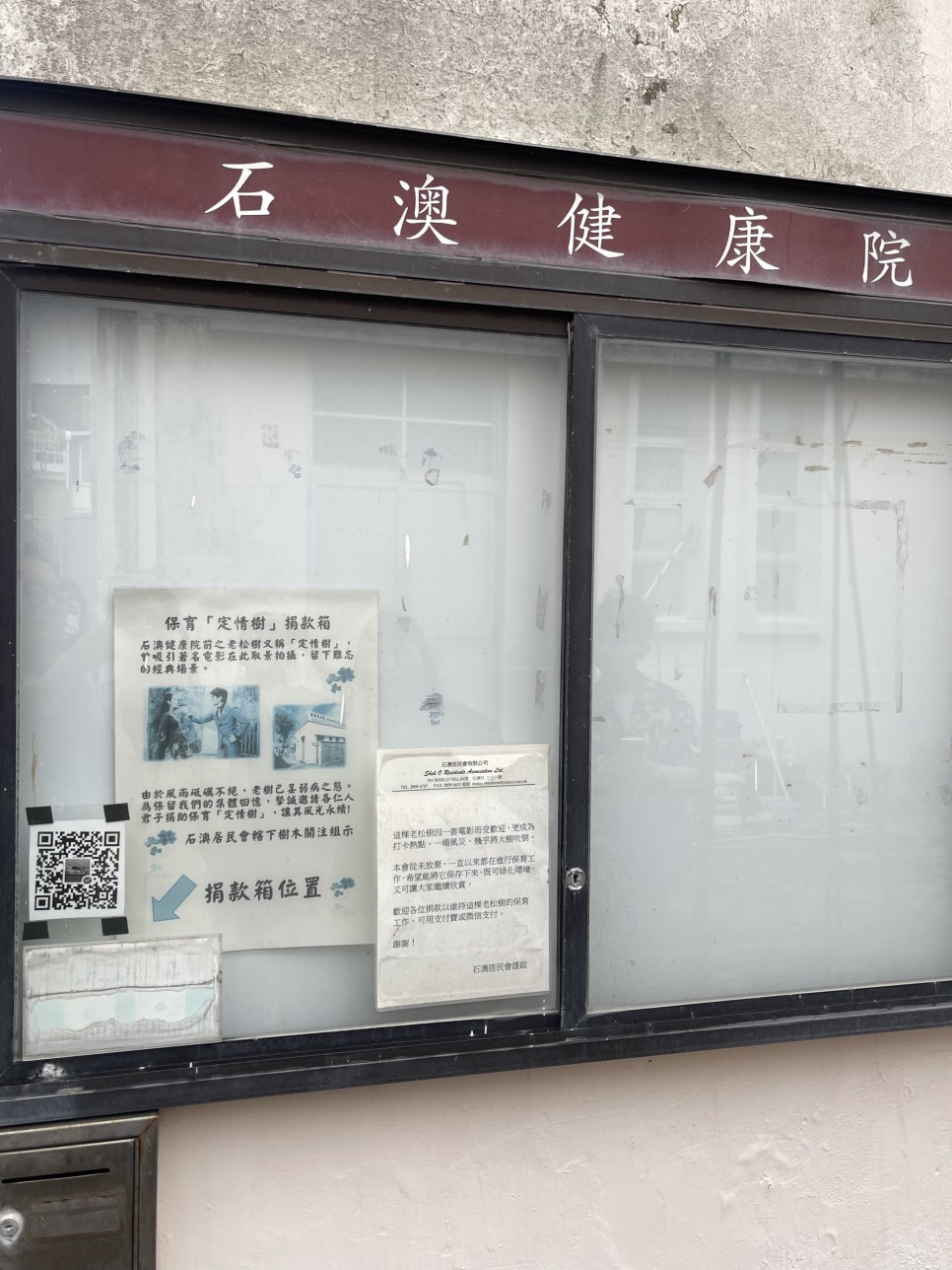
To get to the village community center, the main set in Comedy King, where Sai handled his lodging and meals, you should start from when you first get off at the Sek O bus terminal. Stand in a spot facing Sek O Beach, then look to the left for a large entrance labeled Sek O Health Institute (石澳健康院). You do not have to worry about missing it; it is a big stone archway. After passing through and going straight in, you will find a community center and courtyard that look exactly like the movie. It is the same sweet sight as the old tree where Sai and Carina Lau exchange a kiss. You can also see the scene exactly as in the poster—the moment Sai, standing with his butt pushed out and his hips cocked awkwardly, was posed with Carina Lau leaning with her chin lifted by pointing a finger under it. But maybe because it is an old tree, it droops. It could not stand as straight as it did in the movie angles, and that made my heart hurt. In fact, a few years ago, when a major typhoon hit Hong Kong, the tree ended up getting knocked down, nearly to the point of being pulled out. Thankfully, the tree’s life was saved with support beams, but whenever you come here it keeps leaning, and it is just heartbreaking to watch. This place also feels more lovable and full of charm not because they planted a tree when building the village community center, but because the building was designed to avoid harming the tree that was already there. You can tell when you look at the courtyard that circles around that tree. In any case, like a scene from the film, I hope you will try taking a stylish photo by leaning against the tree.
The village community center looks, at first, as if it borrowed the all-white and blue buildings of Greek Santorini. That is why it was also used to shoot a lot of commercials and music videos. Another standout work is Hong Kong Escape (1989), the third installment of Sheng Hang Jiqing Bing. It was the film pairing of “Yuk Dae-hwa and Max Hot Gun,” a duo that once filmed as many movies together as “Yuk Dae-hwa and Alan Tam.” Yuk Dae-hwa, who had accidentally entered the foothold of a dark alley organization after crossing from mainland China, dreams of escaping the monotonous Hong Kong with his girlfriend and heading to Panama. Eventually, that dream comes true. In the final scene of Hong Kong Escape, the location staged as Panama is right here. Along with a sign reading “Yangjangjeomjeom,” they installed a few more palm trees in the community center courtyard, and Yuk Dae-hwa was welcoming guests while wearing a splendid Hawaiian shirt. It completely transforms into a South American beach—so convincing it is hard to believe.
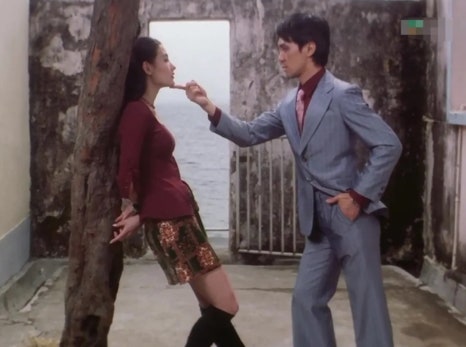
Here, Sai gathered local elders and little kids and staged a theater play of “Thunderstorm” from “Zou,” who is called the “Shakespeare of China,” and also summarized and put on stage “The Big Boss,” the movie where Bruce Lee boldly fights Japanese men, as a new version of the play of his own. In the filming locations of the movie, he is only an extra who cannot even get a single line and struggles just to get a bento lunch, but at the village community center he becomes the top performer. As he teaches acting and acts here in the courtyard, he also gets closer to Carina Lau. Sadly, the tall, rectangular entrance that used to be seen between Sai and Carina Lau right behind the tree is gone now, but the sandy beach across the way remains. However, because he thinks there is no way Carina Lau would love someone who has nothing, Sai cannot step up. Carina Lau, saddened by the fact that Sai does not understand her feelings, hides her disappointment and leaves with an effortfully bright face, descending the steps of that entrance. The man who had been hesitating for a long time about whether to confess finally finds the courage. He shouts toward her as she walks far away: “I’ll take care of you and feed you!”
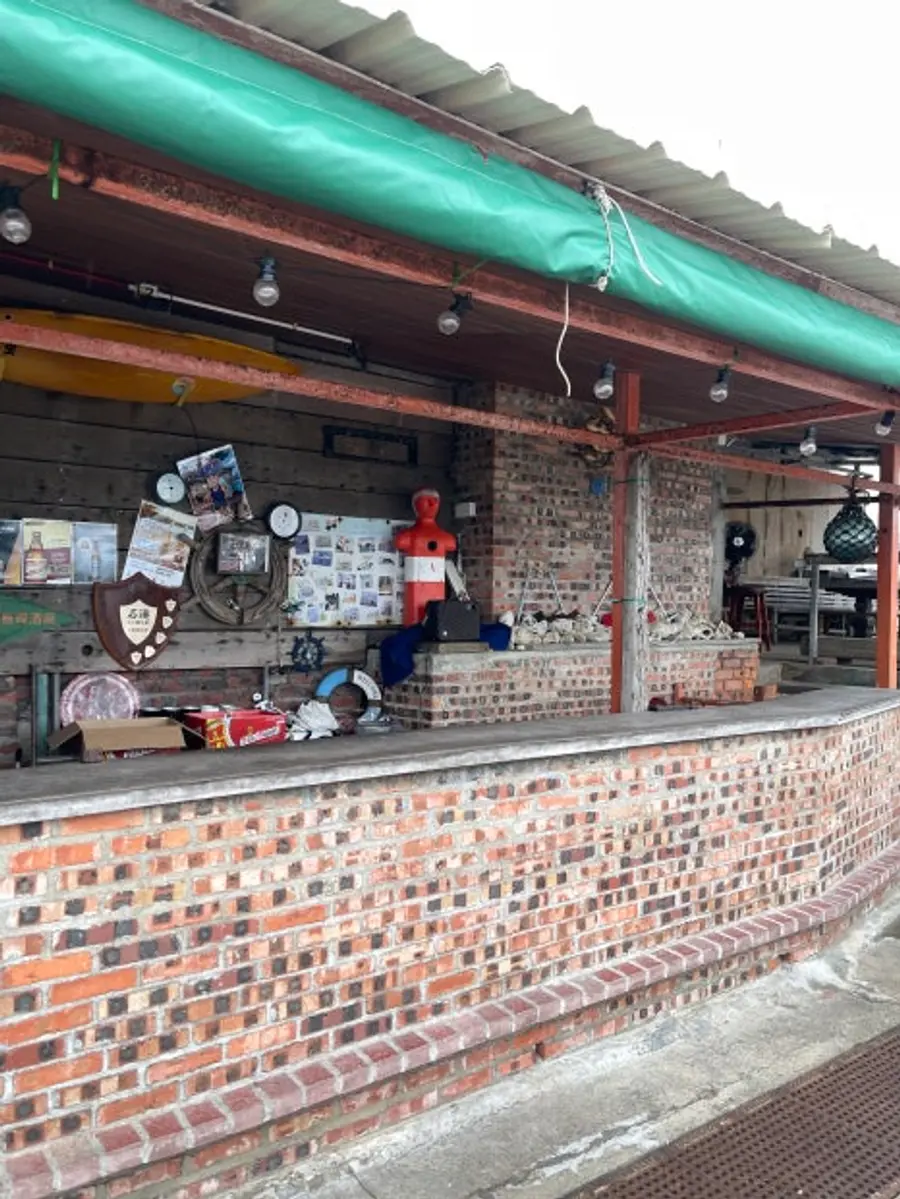
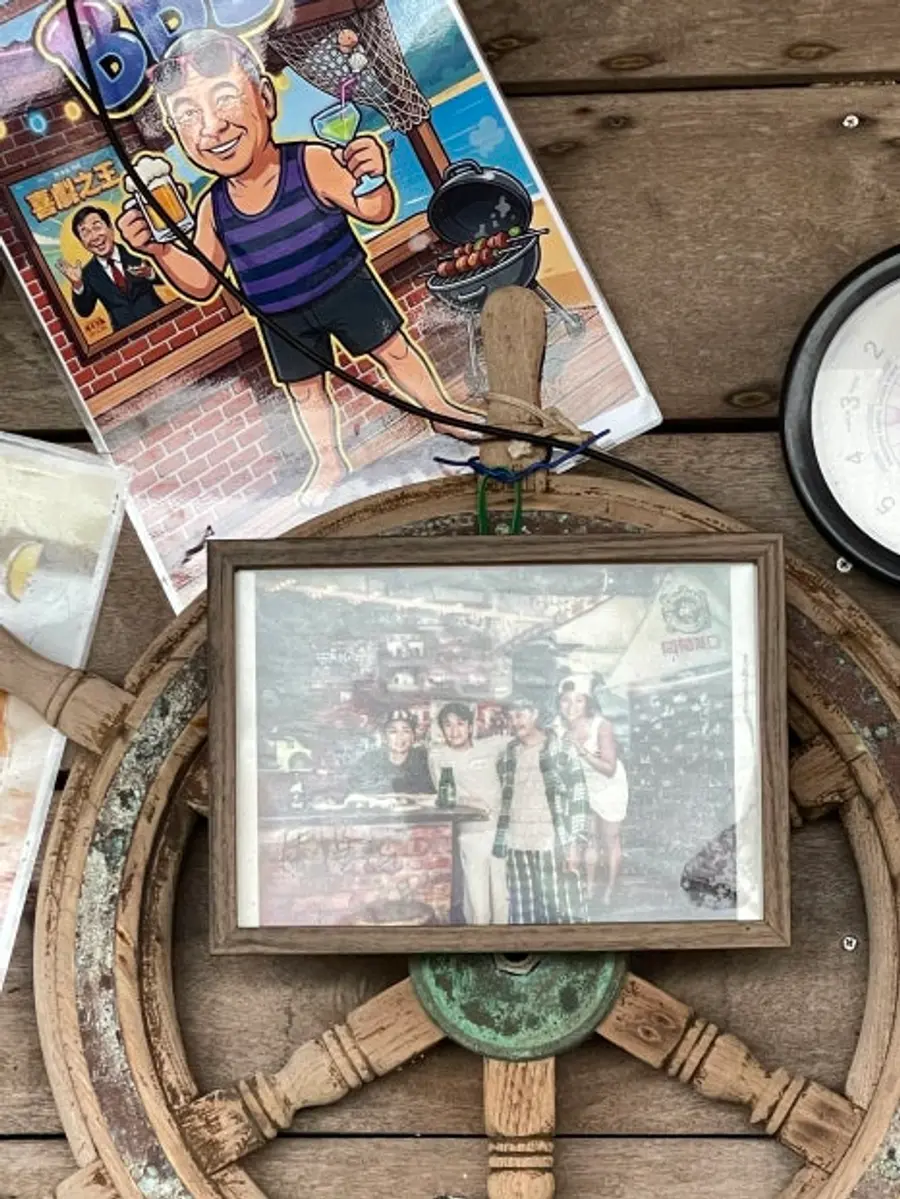
Now the entrance is gone, so you have to walk around to get there, but if you head all the way to the sandy beach across, there is an outdoor cafe where the hoodlums in the movie take money from people. It is more of a bar than a cafe, selling drinks in a form so simple it is almost nothing. During filming, the owner and Sai are shown together in a photo, and signed papers are literally stuck all over the place. It is a wall that tells you the owner’s style as it is. Of course, now it is a bit disappointing because the storefront has changed, including that wall, and it does not look exactly like it did when the traces of filming were left as they were. Still, it had been left behind and shut for a while like it had gone out of business—until now, when it reopened as “Ben’s Back Beach Bar,” maintaining almost the same look as before, and emerged as a new attraction on Sek O Beach. Every time you visit, you get used to the feeling of being left alone because only overly grand new buildings seem to appear, and the film’s mood feels like it is fading. That is why it is impossible not to feel how welcome this bar is when it opened again.
▶ The Hong Kong Retro Movie Tour article continues in part 3.


![[First Reaction] ‘Family Trip’ Cineplay Reporter Star Rating](https://cdn.www.cineplay.co.kr/w300/q75/article-images/2026-09-16/084269eb-f40e-4e00-a301-dfb9b6caf8e7.jpg)
댓글 (0)
댓글 작성
댓글을 작성하려면 로그인이 필요합니다.
로그인하기