



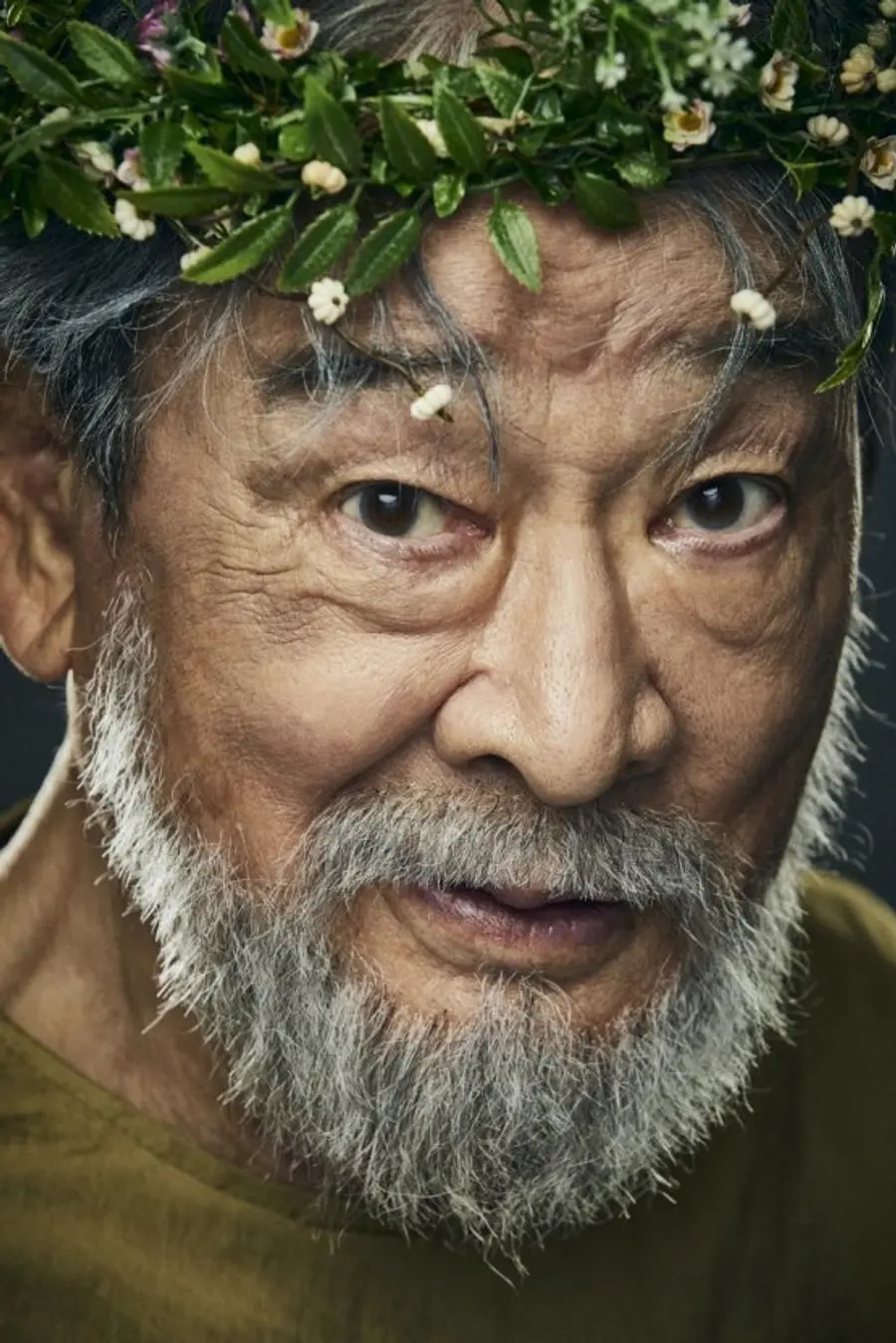
“O poor and naked souls who are suffering from this harsh storm somewhere. How are you enduring this fierce storm, clutching your hungry belly without a room to lay your head, dressed in rags under a hole-ridden window? I have been too indifferent to you all this time. Rich people, experience the pain of the poor yourself. And share your abundance with them and practice the justice of heaven.”(〈King Lear〉)
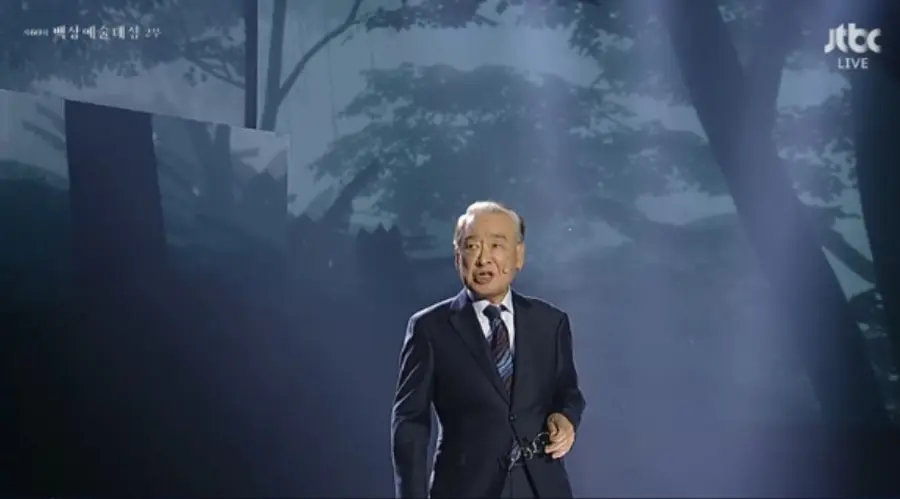
If you understand, this week is not Joo Seong-cheol's 'Locker' but 'Character Box'. It is to contain a commemoration that cannot be overlooked. It is about the actor Lee Soon-jae, who passed away on November 25th. When I think of him, the 60th Baeksang Arts Awards ceremony from last year comes to mind first. At the ceremony, he presented a commemorative stage for about 10 minutes on the theme of 'What is Popular Culture and Art?'. "I am the reception number 1 who came because an old actor is needed. I am 90 years old this year, and I have been in the industry for 69 years. I debuted in 1956 with the play 〈Beyond the Horizon〉 and have acted in 175 dramas, 150 films, and less than 100 plays, but I can't remember all the numbers," he introduced while acting out the situation of auditioning.
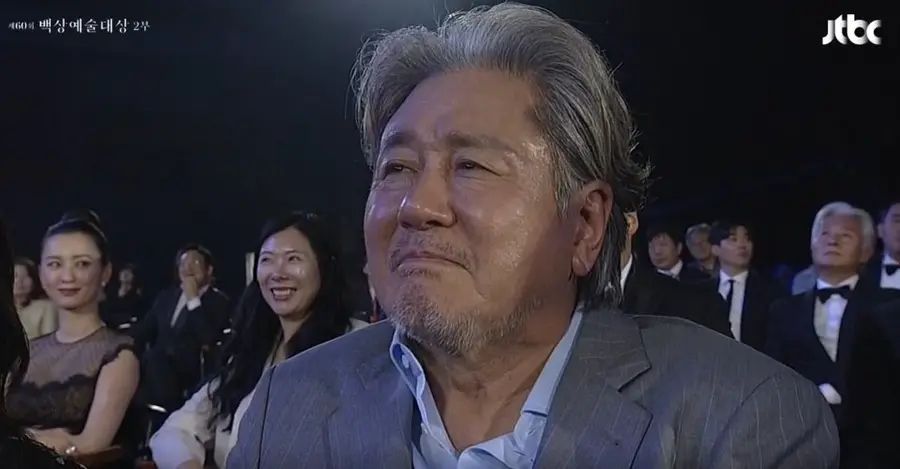
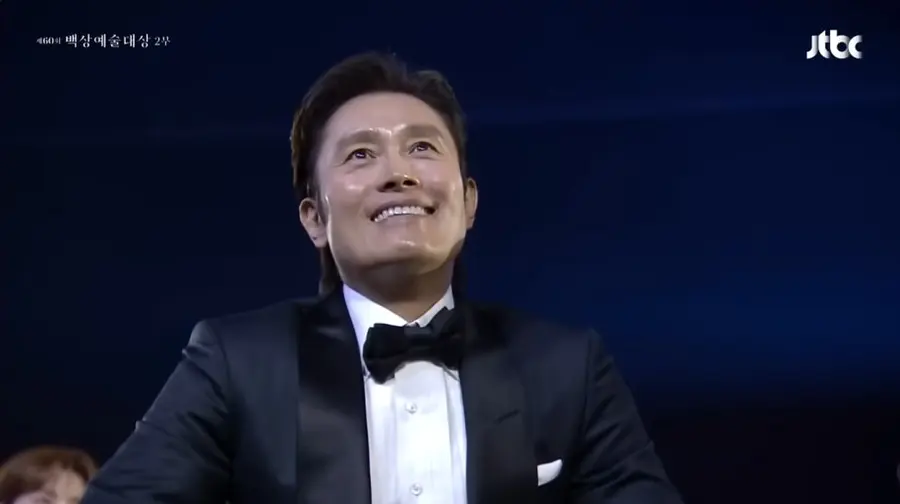
When asked if there is an actor he wants to act with, he replied, “I want to work with all the great actors who are here today,” mentioning Choi Min-sik first. “I really enjoyed the movie 〈The Funeral〉. When can we do such a work together? Whether I play the role of a mountain spirit or a ghost, I would love to do it together,” he said. As soon as he finished speaking, Choi Min-sik stood up, bowed to Lee Soon-jae, and showed his respect. He also said to actor Lee Byung-hun, “We need to do action, but at this age, I can't fight, and it would be nice to shoot a Korean version of 〈The Godfather〉,” adding, “I think it would fit well if I play the role of Marlon Brando and Lee Byung-hun plays Al Pacino,” and laughed.
Regarding the qualities of an actor, he emphasized, “How can you act without memorizing the script? You must memorize the script perfectly to perform properly. You need to infuse your soul into the lines, but if you can't memorize them, can your soul be infused? If you lack confidence in memorizing lines, you should quit being an actor. That is a principle.” He added, “You must always challenge yourself with new works and roles. Studying and contemplating to create something new is what an actor does. That is how new roles are created,” and stated, “Many actors who thought acting was very easy and those who thought this is enough have disappeared. Only those who have worked hard remain. There is no completion in acting. It is the fate of an actor to contemplate, strive, and challenge towards completion.”
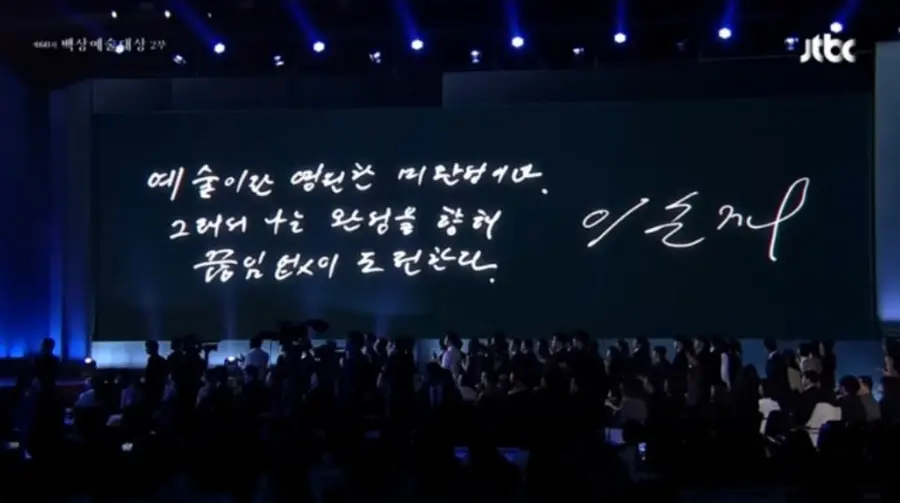
Finally, when asked, 'What is the reason you still challenge yourself in acting?' he replied, “A lifetime is not enough. I always challenge myself with roles that are never the same. You can be good at acting, but there is no completion. It is the fate of all actors and comedians.” When asked, 'What kind of actor do you want to be?' he said, “I haven't won many awards, so I am not an award-winning actor, but I would appreciate it if you think of me as 'a hardworking actor'.” He then demonstrated the acting mentioned at the beginning, 〈King Lear〉.
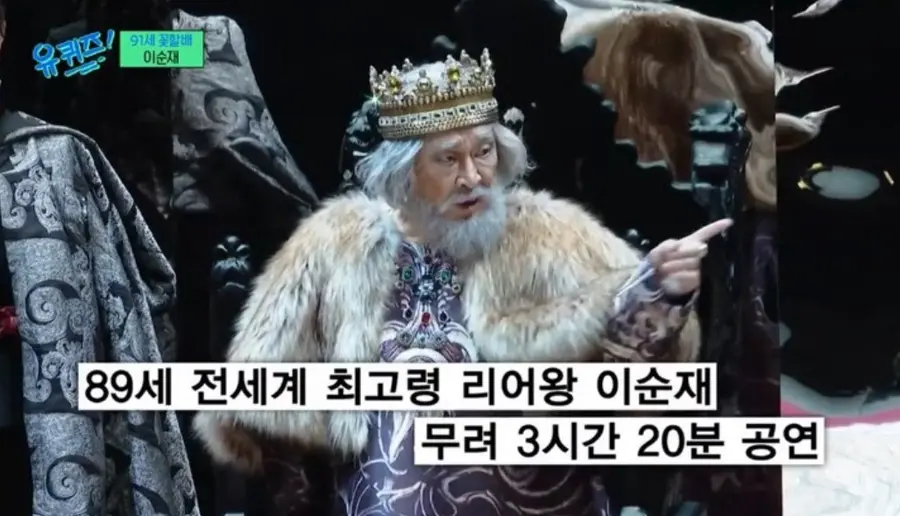
“I took a risk in my old age. I performed 〈King Lear〉 alone for 3 hours and 20 minutes, one of Shakespeare's four great tragedies. I did it twice, and while doing it, I felt a lot. When a person is at the highest position, they cannot understand the people at the bottom. Moreover, under the past feudal monarchy, they didn't care if a few people died. But when you fall to that bottom, you feel it for the first time. I gave power and everything to my daughters. I was chased away by those daughters and faced the storm in this wilderness, seeing and feeling the situation. I will perform an important line once.” When he finished acting with the line from 〈King Lear〉, almost everyone present at the Baeksang Arts Awards ceremony was in tears. After finishing his performance, Lee Soon-jae thanked the audience and, perhaps as an ad-lib, said to the judges, “I must be cast,” and exited.
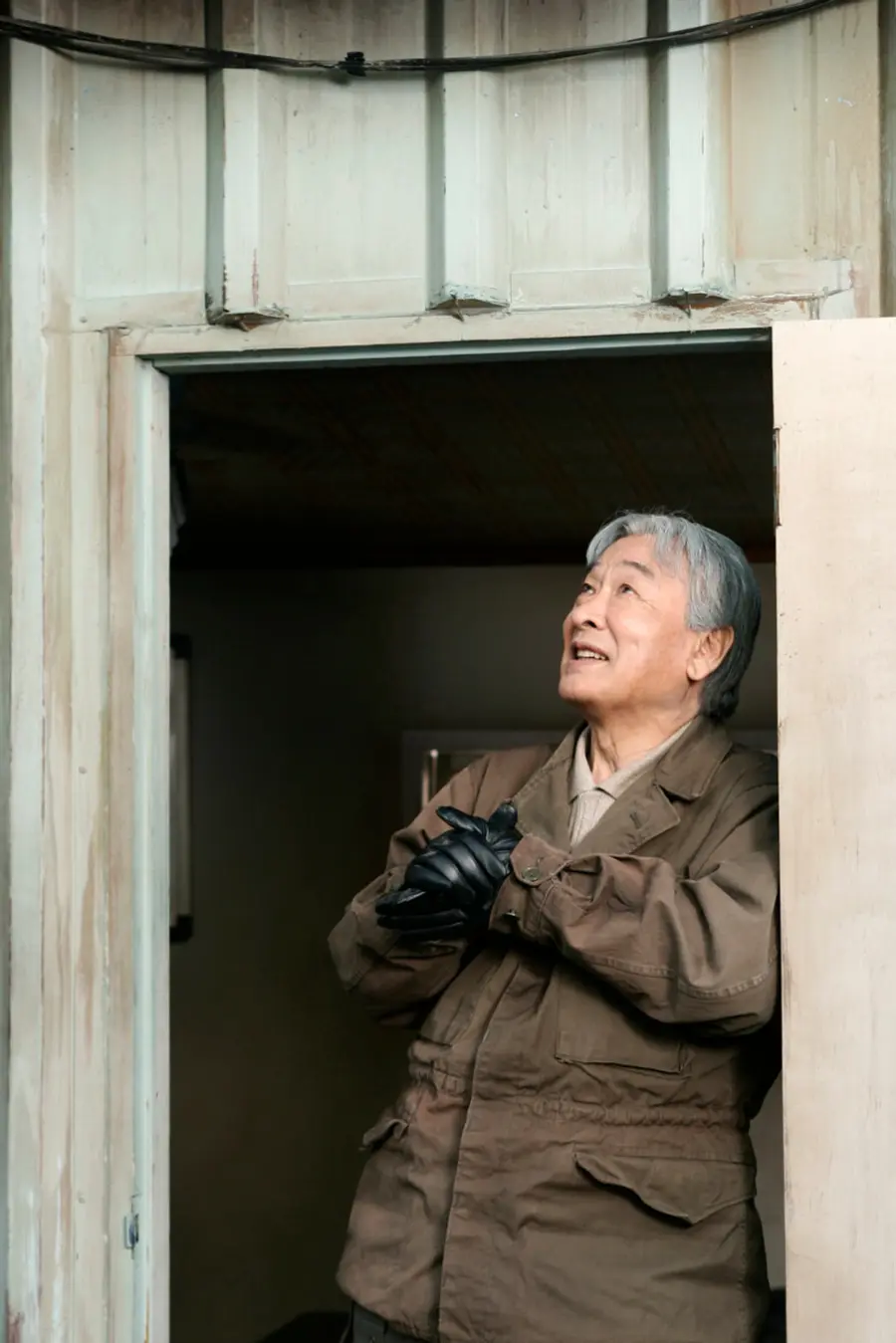
Actor Lee Soon-jae once invited me to have a meal after an interview, and we went to a Chinese restaurant. I thought he would manage his diet, but I remember he slurped down a bright red jjambbong. He originally wanted to be more successful as a movie actor and actually appeared in quite a few films, but at some point, he became a great actor more familiar with TV. Speaking of that thirst, he mentioned the Japanese actor Nakadai Tatsuya. He is famous for being an actor in Akira Kurosawa's films, such as the Palme d'Or-winning 〈Kagemusha〉 (1980) and 〈Ran〉 (1985), but he was shocked by Nakadai Tatsuya's performance in Masaki Kobayashi's 〈The Human Condition〉 (1959). Based on Junpei Gomikawa's novel of the same name, 〈The Human Condition〉 is a six-part epic depicting a man's struggle to maintain his humanity during war, with a total running time of nearly 10 hours.
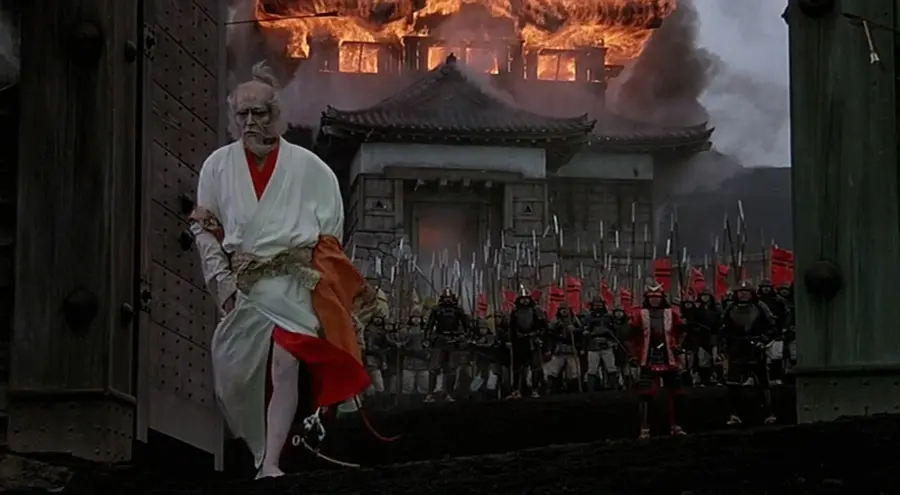
Nakadai Tatsuya is a living legend of Japanese cinema. In the documentary 〈Portrait of Akira Kurosawa〉 (1985), filmed on the set of 〈Ran〉, Chris Marker could not help but admire him as he delivered an enormous amount of poetic lines in just one take. Born in Tokyo in 1932, he worked with Akira Kurosawa on five films, including 〈Kagemusha〉 and 〈Ran〉, but also left a clear mark working with the greatest Japanese directors of his time, such as Masaki Kobayashi, Kon Ichikawa, and Mikio Naruse. Adding to the list directors like Hiroshi Teshigahara, Kihachi Okamoto, Hideo Gosha, Kei Kumai, Keisuke Kinoshita, and Masahiro Shinoda, he appeared in films of all the great Japanese directors, each with different characters. Since they all showcased distinct personalities, it is truly a rare case compared to any actors of the same era in Japanese cinema.
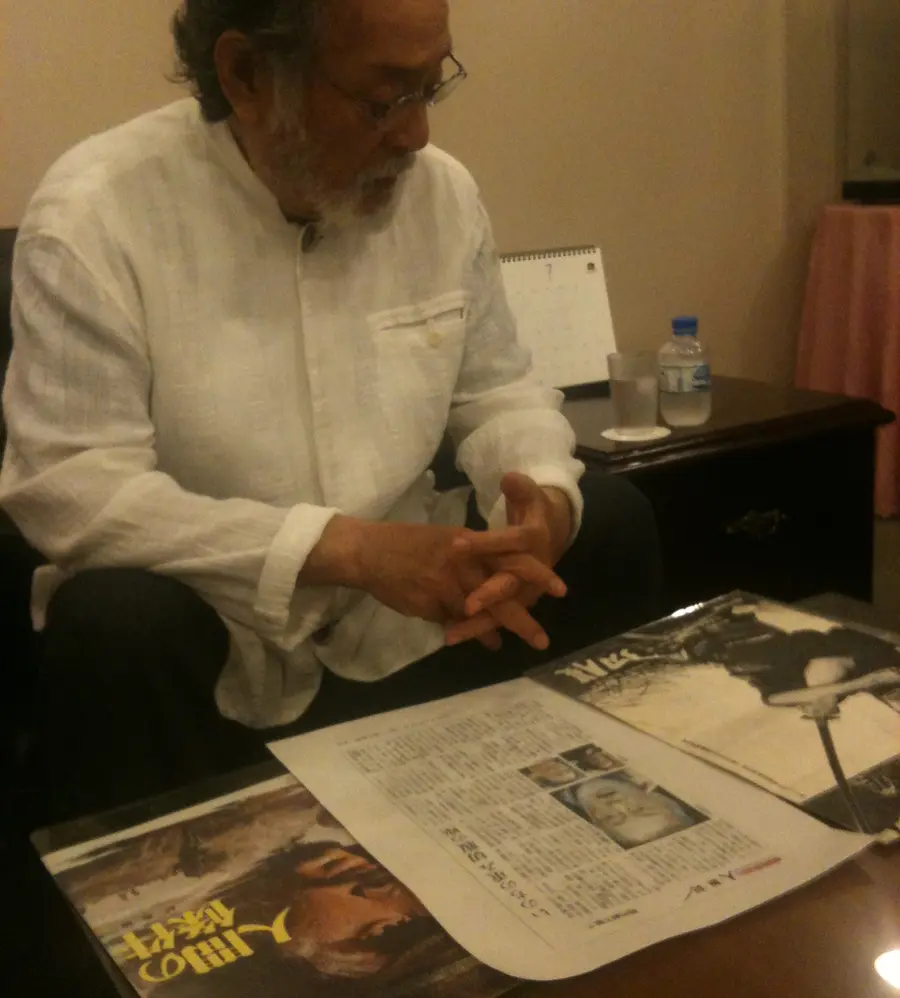
Nakadai Tatsuya visited Korea in 2010 for the 'Special Exhibition Commemorating the 100th Anniversary of Akira Kurosawa's Birth' held at the Korean Film Archive. It was a great honor to interview him at that time. He brought materials from 〈The Human Condition〉 that actor Lee Soon-jae praised, and we talked for a long time, showing his affection for it. The following year, in 2011, he visited Korea for three consecutive years through the '3K, Three Great Japanese Masters Exhibition' and the 'Special Exhibition of Nakadai Tatsuya' commemorating his 60th anniversary as an actor. When I interviewed actor Lee Soon-jae, I heard that he liked Nakadai Tatsuya during the release of 〈I Love You〉 directed by Choo Chang-min, based on the original work by Kang Pool in 2011. Since then, every time he visited Korea, I collaborated with the programmer Mo Eun-young from the film archive to promote a 'Special Dialogue between Lee Soon-jae and Nakadai Tatsuya', but it was truly a regret that it could not be realized due to various circumstances. Thus, in the month of November, two great actors representing Korea and Japan passed away.
![[Joo Seong-cheol's Locker] The Black Speaker of 'Sirat' and the Monolith of '2001: A Space Odyssey'](https://cdn.www.cineplay.co.kr/w400/q75/article-images/2026-02-23/01816f3a-b433-4072-887b-e760357e6cc7.jpg)
![[Joo Seong-cheol's Locker] The 'Canned Cart Camera' that Changed the History of World Cinema with 'Nouvelle Vague'](https://cdn.www.cineplay.co.kr/w400/q75/article-images/2026-01-27/563f1a4c-20b8-460b-8523-f31511911bd5.jpg)
![[Joo Sung-cheol's Locker] Ahn Sung-ki is Born, I am Ahn Sung-ki](https://cdn.www.cineplay.co.kr/w400/q75/article-images/2026-01-13/362be897-34af-4524-9a57-6b9935666a0a.jpg)
![[Jusungcheol’s Locker] Odyssey’s one-eyed giant Cyclops and Ray Harryhausen’s “The Seventh Voyage of Sinbad”](https://cdn.www.cineplay.co.kr/w400/q75/article-images/2026-08-10/5faf400e-cf0b-466c-a3d7-31a8bbb38075.jpg)
![[Joo Seong-cheol’s Locker] See ‘Hope’ Again Through the Driver-Grade Cap Joo Seong-cheol Wears While Racing Across Seong-gi Bridge in ‘The Yellow Sea’ and ‘Goksung’](https://cdn.www.cineplay.co.kr/w400/q75/article-images/2026-07-28/7bf74e36-337d-4fd0-8cec-b890f5604345.jpg)
![[Joo Sung-cheol’s Locker] Watching “Marty Supreme,” Recalling Yoon Nam-gyu’s Penholder Table Tennis Racket](https://cdn.www.cineplay.co.kr/w400/q75/article-images/2026-06-29/0dc02383-0dc9-4ea1-9de5-f1eaffbeb9b9.jpg)
![[Joo Seong-cheol's Locker] The Aesthetics of Jongmyo That Captivated Masters of Martial Arts from Ho Kim-jun to John Woo, Jackie Chan, and Sammo Hung](https://cdn.www.cineplay.co.kr/w400/q75/article-images/2025-12-16/4d8670a7-ef95-4635-8d0c-34313f13dd52.jpg)
![[Joo Seong-cheol's Locker] When Trees Comfort Trees, the Cello of 'The Moment the Bell Rings' and 'Can't Help It'](https://cdn.www.cineplay.co.kr/w400/q75/article-images/2025-11-18/52034c54-93dc-4b4c-ac9f-5f9b7946fb23.jpg)
![[Joo Seong-cheol's Locker] What Beer Did Sergio (Benicio Del Toro) Always Carry in 'One Battle After Another'?](https://cdn.www.cineplay.co.kr/w400/q75/article-images/2025-11-04/0794fe08-e847-46a1-ba4c-445f814803a8.jpg)
![[Chu Sung-cheol’s Lockers] Who Spat on Leslie Cheung in “Farewell My Concubine”?](https://cdn.www.cineplay.co.kr/w400/q75/article-images/2026-04-06/7b608cd9-af6c-4c1d-8e87-38c2d2619d55.jpg)
![[Joo Seong-cheol’s Locker] Do You Know the Origin of Woody in “Toy Story”?](https://cdn.www.cineplay.co.kr/w400/q75/article-images/2026-06-16/eb2c5055-d2de-4464-b9e2-eceeca8c7759.jpg)
![[Joo Seong-cheol’s Lockers] Lee Cronin’s The Mummy and Murderous People Season 2 — and a Scorpion Jacket That Feels Like the Rise of Drive](https://cdn.www.cineplay.co.kr/w400/q75/article-images/2026-04-20/1df79cf4-44ef-48e4-a6b4-46f6e35c4eb5.jpg)
![[Joo Seong-cheol's Locker] Tony Leung Sometimes Wants to Hold an Ashtray.](https://cdn.www.cineplay.co.kr/w400/q75/article-images/2026-02-09/8b9ac9f0-6899-4ce2-a562-5594a5b06d61.jpg)
![[Joo Sung-chul's Locker] What Are the Improvised Explosive Devices (IEDs) in 'Warfare' and 'The Hurt Locker'?](https://cdn.www.cineplay.co.kr/w400/q75/article-images/2026-08-24/ae200e60-2be9-478e-8ab4-72a860903979.jpg)
![[Joo Seong-cheol’s Locker] Zombie Things That Don’t Flinch Even When Shot: Korea’s First Zombie Film, “Kwe-si” (1981)](https://cdn.www.cineplay.co.kr/w400/q75/article-images/2026-06-01/26c56ce7-1ddb-46bd-ae67-f71a1ba9e276.jpg)
![[Joo Seong-cheol’s Locker] David’s Stone That Took Down Goliath, “David” All the Way Through](https://cdn.www.cineplay.co.kr/w400/q75/article-images/2026-07-13/524bb041-0e4e-4f59-824b-21d2f7df60a9.jpg)
![[Joo Sung-chul's Locker] If it's hard to visit Cheongnyeongpo of Deposed King Danjong, head to Geumseongdang of Prince Geumseong!](https://cdn.www.cineplay.co.kr/w400/q75/article-images/2026-03-10/7ddd3634-6a13-4eef-870c-e4e6dbcdac04.jpg)
![[Joo Seong-cheol’s Lockers] The Great Dancer Turned Film Director Summoned by “Michael”: Bob Fosse’s “All That Jazz”](https://cdn.www.cineplay.co.kr/w400/q75/article-images/2026-05-18/922af142-be9f-4f1c-98d1-4a7a6667943c.jpg)




![[Photo&] Actor Lee Soon-jae's Funeral Service Held](https://cdn.www.cineplay.co.kr/w160/q75/article-images/2025-11-27/b105cbfe-ea76-48a5-8a42-eef4a41cd83a.jpg)


![[Photo &] Yoon Je-moon's Comedy 'Matryoshka', A Stage Full of Laughter](https://cdn.www.cineplay.co.kr/w160/q75/article-images/2025-12-01/7d0b6856-dc5b-40e8-a167-3ac1b88bdd2b.jpg)
![[Photo] Lee Byung-hun Showcases Hollywood Presence at Gotham Awards](https://cdn.www.cineplay.co.kr/w160/q75/article-images/2025-12-02/62cba627-c4b8-4340-85b6-97c89a415aef.jpg)
![[Photo &] Masterpiece 'Railway Man' Returns to the Screen After 25 Years](https://cdn.www.cineplay.co.kr/w160/q75/article-images/2025-12-02/d3409b26-3103-4c4b-ad0e-532fde8b88fa.jpg)
![[Sungchan Eul's Comic Book] Would You Like to Eat Delicious Carnivorous Plant Dishes? 'Delicious in Dungeon'](https://cdn.www.cineplay.co.kr/w160/q75/article-images/2025-12-04/55a977fd-e0d5-4edf-b057-3a64158372e2.jpg)
![[Photo&] 'Korea's Elizabeth Taylor', 'Original Femme Fatale' Actress Kim Ji-mi Passes Away at 85](https://cdn.www.cineplay.co.kr/w160/q75/article-images/2025-12-10/7f6f814c-afc2-4750-b977-5d8ac25f358d.jpg)
![[Photo&] NYT](https://cdn.www.cineplay.co.kr/w160/q75/article-images/2025-12-13/11cd340f-e80c-46b9-bc4f-49cfbcf57e47.jpg)
댓글 (0)
댓글 작성
댓글을 작성하려면 로그인이 필요합니다.
로그인하기