



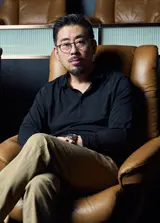
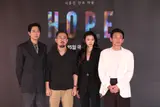
Park Chan-wook’s 〈The Handmaiden〉 and Na Hong-jin’s 〈Goksung〉 were released in 2016, on June 1 and May 12, respectively, in the same year. Coincidentally, both films were invited to the Cannes Film Festival that year—Park Chan-wook’s to the competition section and Na Hong-jin’s to the non-competition section. They also drew 4.29 million viewers and 6.87 million viewers, respectively, at the box office. That’s why, at the time, I had held a talk session with both directors, each one from my former full-time workplace. It is widely known that Na Hong-jin asked Park Chan-wook for advice on the completed script while preparing 〈Goksung〉. But on the day of the interview, Na Hong-jin even brought Park Chan-wook’s meticulously written notes and turned them into a framed piece. The paper only contained notes and no signature, so it was brought specifically “because I can’t prove that Park Chan-wook wrote it,” in order to get a signature after all.
From the perspective of production design, the conversation started with the ‘props,’ since both directors were clearly the kind with deep interest in the objects inside their films. Park Chan-wook showed the biggest interest in a ‘picture of a Japanese person’—attached to the home of an outsider (Kuninmura Jun)—whose identity was unknown. He even asked whether the photo was shot specifically for the movie or made separately, saying, “It left the most unforgettable image in 〈Goksung〉.” That question about the objects in the movie was the first question. Na Hong-jin then said, “I bought it—I think the actual photo was taken by a famous Japanese photographer.” He added, “I also saw that photo and felt a special kind of something just like the director, and I think I brought it in as is and used it.” The object, more than being merely ‘a prop,’ felt even stranger because it sat in the narrative context of 〈Goksung〉—a character presumed to be Japanese, but referred to simply as the ‘outsider’ with no known name.
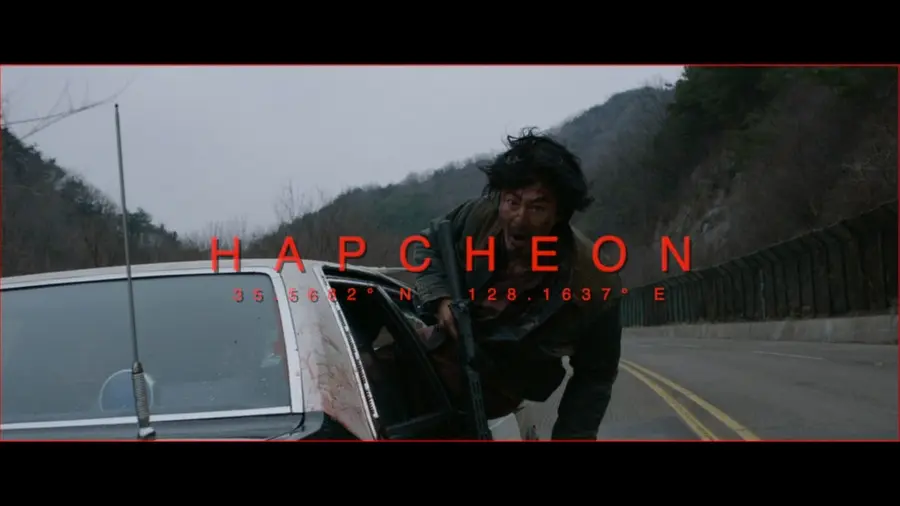
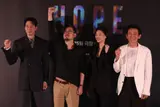
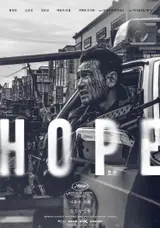
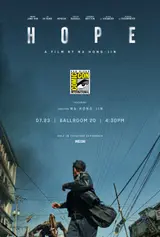
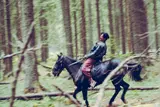
Na Hong-jin’s new work 〈Hope〉 is no exception when it comes to the film’s objects. First, the ‘Seong-gi’ played by actor Jo In-sung races across Seong-gi Bridge. Seong-gi Bridge, located in Seong-gi-ri, Gayang-myeon, Hapcheon-gun, Gyeongnam, was a bridge that had been on the old 88 Olympic Expressway. At the time it was completed in 1984, it stood about as high as a 20-story apartment would be, at 58 meters. It was the tallest bridge in Asia, as well as in Korea. In Chinese characters, it is ‘Seong-gi’ (城基). Maybe it was found after scouting for a closed school that could accommodate long and winding action scenes, so perhaps they discovered Seong-gi Bridge and named it ‘Seong-gi.’ In any case, if we take the narrative context into account like in 〈Goksung〉’s photos, saying the situation is that people and horses race across a bridge that’s closest to outer space—would that be too far-fetched of an interpretation?

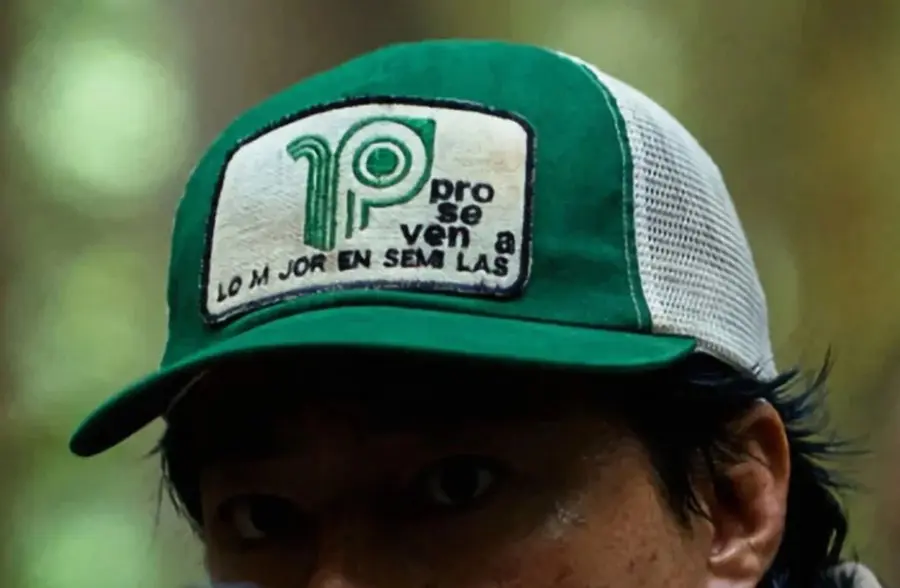
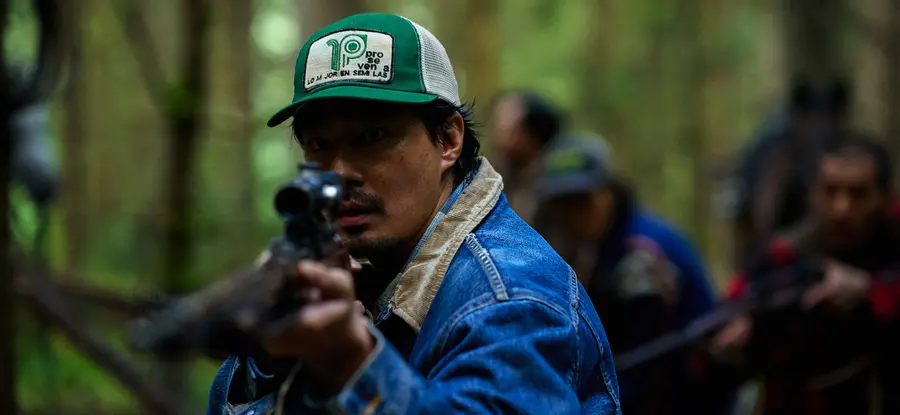
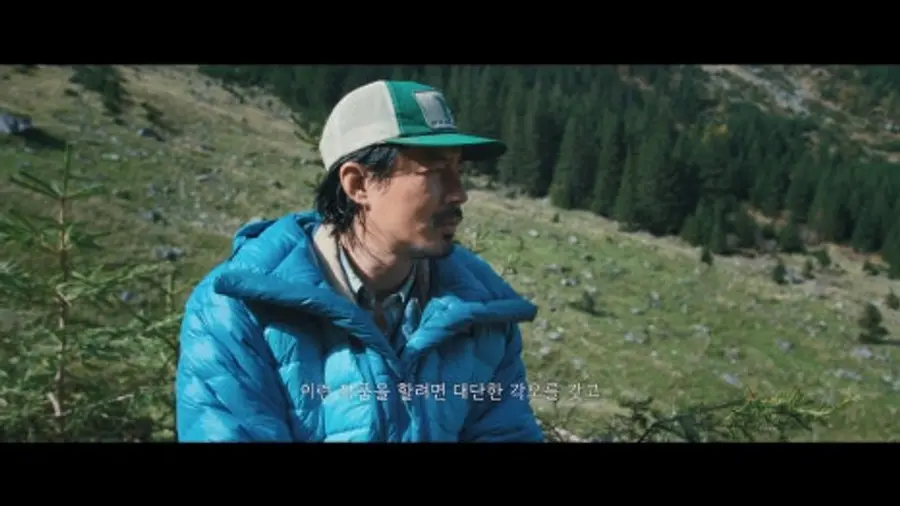
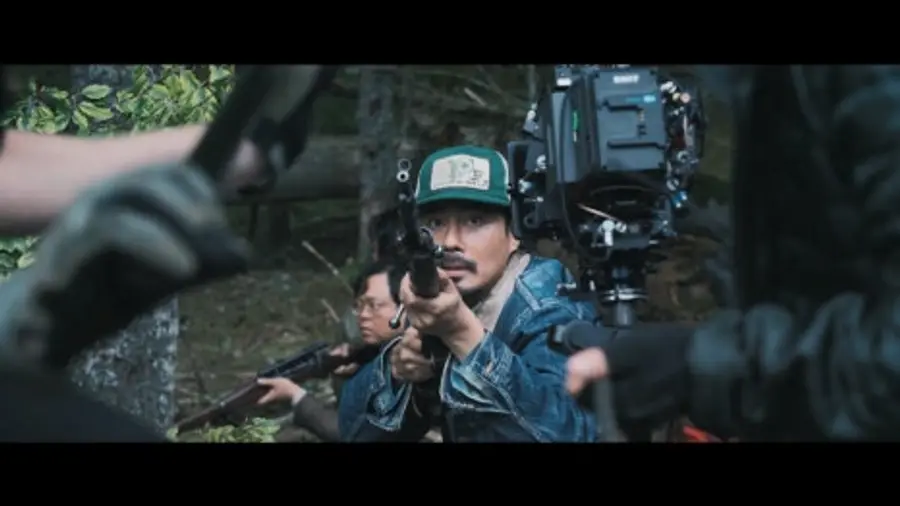
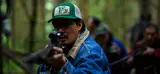
What has drawn the most attention recently is the logo on the green trucker cap worn by Seong-gi (Jo In-sung). The letters on the cap—‘pro se ven a,’ ‘LO M JOR EN SEM LAS’—are said to represent the name of a corn and seed company in Venezuela, ‘Prosevenca.’ If you combine the missing letters, you get the phrase ‘lo mejor en semillas,’ which is said to mean ‘the best seeds’ or ‘the best seed’ in Spanish. While the ‘Jo In-sung alien theory’ spreads among the audience about Seong-gi, who survived countless moments of near-death—being hit over and over, getting knocked down, and passing through innumerable life-or-death trials—Na Hong-jin also said that the immortal-like existence of Seong-gi was “a character that shows humanity’s fierce will to survive.” So it is fitting, in a way, that they effectively crafted a subtitle for Seong-gi as ‘the best seeds.’ Putting the alien Maveiyo in front of him, he’s there challenging him with just a single dagger, shouting, “I’ll show you what happens if you mess with a person from Earth!”—and that makes him the best seed for humanity.
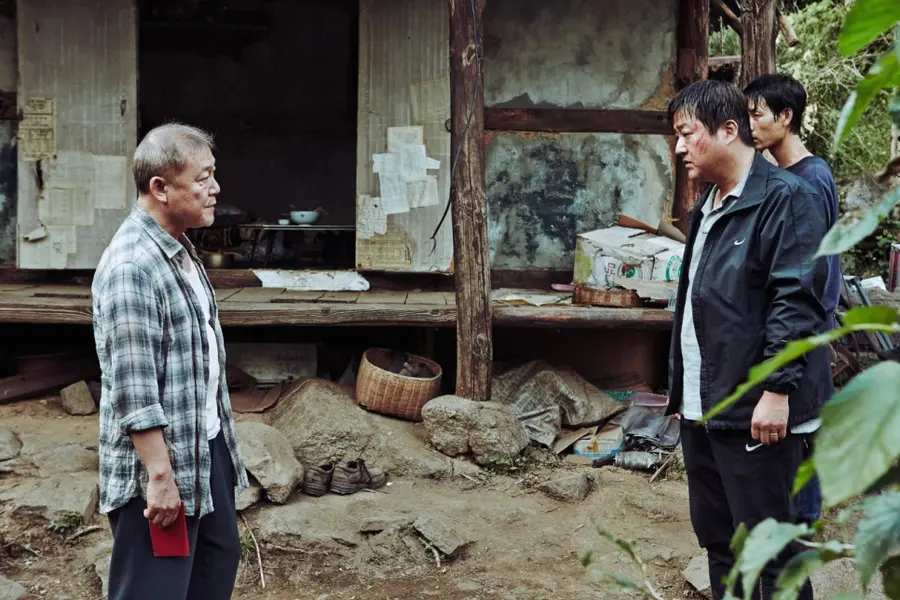
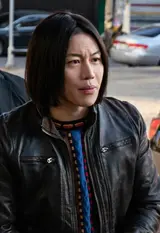
Returning to the talk between the two directors, Park Chan-wook said that the most captivating point in 〈Goksung〉 was not the ‘presence’ of an object, but its ‘absence.’ “One of the people who laughed the most while watching 〈Goksung〉 was me,” he said, adding that he even “laughed so much while watching it with my wife that people around us noticed and kept checking.” Among those, the scene he singled out as the best was the moment when Detective Jong-gu (Kwack Do-won) meets his neighborhood friend Deoki (Jeon Bae-soo). To verify the truth of rumors about the outsider, he goes to find Deoki, who runs a health center. Deoki is the person who saw the outsider in the deep mountainside area, dressed in the outfit of a hun-do-si while biting into a carcass of a deer. When the scene reaches the moment where he says he’ll show evidence and opens the refrigerator, there is nothing inside—unlike the character Ho-pe’s cabbage (Eum Moon-seok) in 〈Hope〉, who insists, “It’s in our house!” The evidence, then, is that because he fell down the slope and encountered the outsider and couldn’t do any work, there were no crops at all that day. On the scene where, in effect, “evidence is no evidence,” Park Chan-wook’s evaluation was, “It summarizes the entire film 〈Goksung〉. It can look like a running joke—evidence of no evidence, and explaining through absence—but it had more meaning than that.”
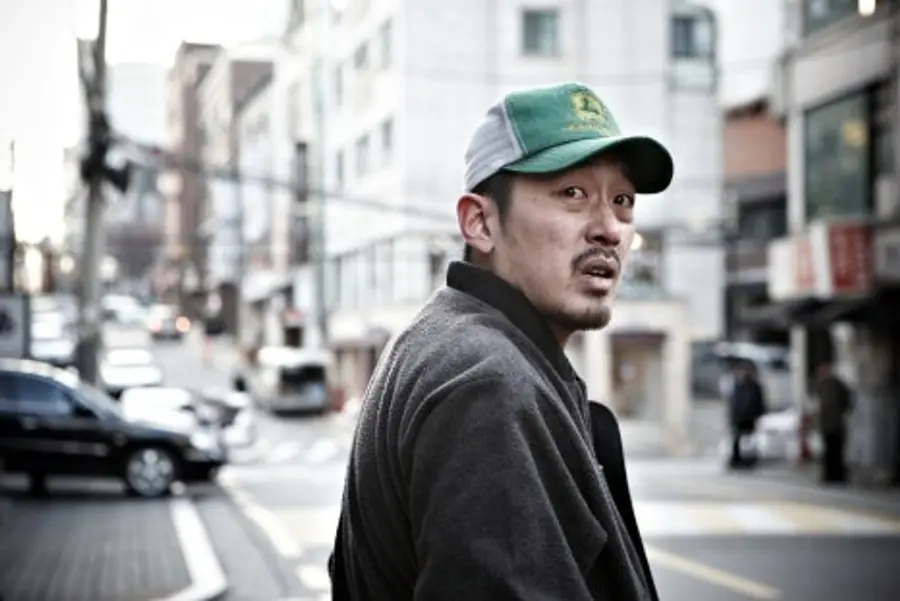
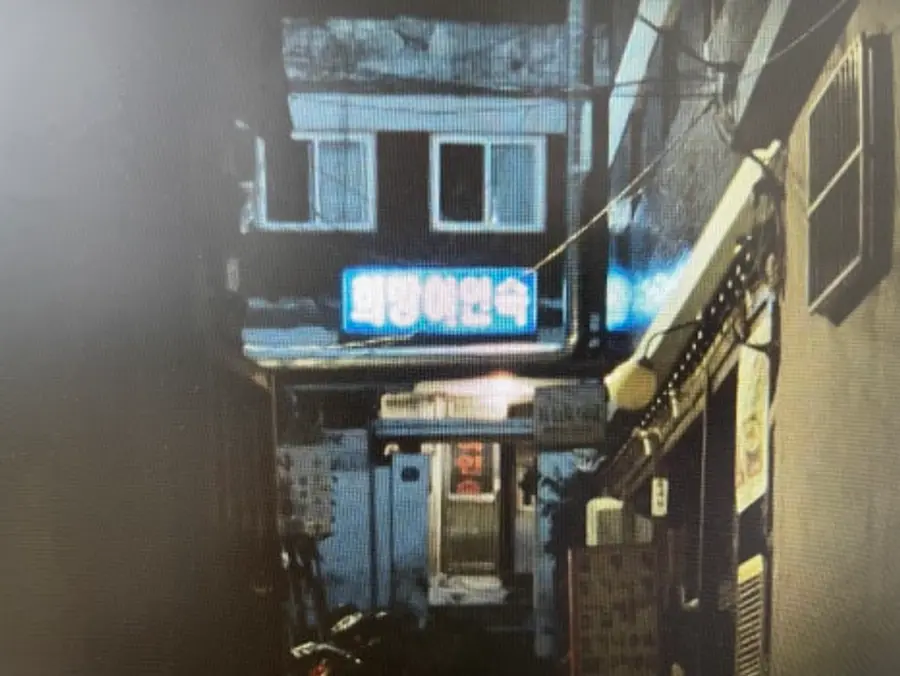
When you think about the ‘objects’ in Na Hong-jin’s films, Deoki’s empty refrigerator inevitably comes to mind. Thanks to that, I recently rewatched 〈Goksung〉 and 〈The Yellow Sea〉. Coincidentally, that hat resembles the John Deere trucker cap that Gu-nam (Ha Jeong-woo) wore in 〈The Yellow Sea〉(2010). In that film, Gu-nam—also known for being ‘the best seed’—got around only by bus and on foot across the country. The hat, complete with a beard, made him look similar in various ways to Gu-nam and Seong-gi. If you think it through, Deoki from 〈Goksung〉 was also not exactly someone who just died after getting struck by lightning. Though his story was overshadowed by Seong-gi’s fierce vitality, it’s also strange that Beom-seok (Hwang Jung-min)—who got hit hard and flown away by an alien Maveiyo—survived too. As I’m thinking that Na Hong-jin’s films seem to feature ‘superhumans’ nonstop, right around then there is a scene in 〈The Yellow Sea〉 where Gu-nam, who has been downhearted, thinking his wife may have died, stays at a cheap inn with a face full of despair—the name of that inn was ‘Hope.’ And that’s how, in 〈The Yellow Sea〉 as well, he meets ‘Hope’ (HOPE).
Beginning with the excessive attribution of meaning to objects in movies—Joo Seong-cheol’s Locker—an actor’s usage manual aiming to ‘rise to the top’—Kim Ji-yeon’s Jewel Case—an in-house room for listening to movie music that moved my heart—Choo A-young’s Music Box—and even purchase logs from a subculture odds-and-ends shopper—Sung-chan Eol’s Comic Book—Cineplay reporters are set to launch a biweekly series with their own tastes and perspectives.
![[Joo Seong-cheol's Locker] The Black Speaker of 'Sirat' and the Monolith of '2001: A Space Odyssey'](https://cdn.www.cineplay.co.kr/w400/q75/article-images/2026-02-23/01816f3a-b433-4072-887b-e760357e6cc7.jpg)
![[Joo Seong-cheol's Locker] The 'Canned Cart Camera' that Changed the History of World Cinema with 'Nouvelle Vague'](https://cdn.www.cineplay.co.kr/w400/q75/article-images/2026-01-27/563f1a4c-20b8-460b-8523-f31511911bd5.jpg)
![[Joo Sung-cheol's Locker] Ahn Sung-ki is Born, I am Ahn Sung-ki](https://cdn.www.cineplay.co.kr/w400/q75/article-images/2026-01-13/362be897-34af-4524-9a57-6b9935666a0a.jpg)
![[Jusungcheol’s Locker] Odyssey’s one-eyed giant Cyclops and Ray Harryhausen’s “The Seventh Voyage of Sinbad”](https://cdn.www.cineplay.co.kr/w400/q75/article-images/2026-08-10/5faf400e-cf0b-466c-a3d7-31a8bbb38075.jpg)
![[Joo Sung-cheol’s Locker] Watching “Marty Supreme,” Recalling Yoon Nam-gyu’s Penholder Table Tennis Racket](https://cdn.www.cineplay.co.kr/w400/q75/article-images/2026-06-29/0dc02383-0dc9-4ea1-9de5-f1eaffbeb9b9.jpg)
![[Joo Seong-cheol's Locker] The Aesthetics of Jongmyo That Captivated Masters of Martial Arts from Ho Kim-jun to John Woo, Jackie Chan, and Sammo Hung](https://cdn.www.cineplay.co.kr/w400/q75/article-images/2025-12-16/4d8670a7-ef95-4635-8d0c-34313f13dd52.jpg)
![[Joo Seong-cheol's Locker] The King Lear of Korea and Japan, Lee Soon-jae and Nakadai Tatsuya, Two Masters Rest](https://cdn.www.cineplay.co.kr/w400/q75/article-images/2025-12-01/3e753af3-e8d5-41df-83cf-00e9ddfdaae7.jpg)
![[Joo Seong-cheol's Locker] When Trees Comfort Trees, the Cello of 'The Moment the Bell Rings' and 'Can't Help It'](https://cdn.www.cineplay.co.kr/w400/q75/article-images/2025-11-18/52034c54-93dc-4b4c-ac9f-5f9b7946fb23.jpg)
![[Joo Seong-cheol's Locker] What Beer Did Sergio (Benicio Del Toro) Always Carry in 'One Battle After Another'?](https://cdn.www.cineplay.co.kr/w400/q75/article-images/2025-11-04/0794fe08-e847-46a1-ba4c-445f814803a8.jpg)
![[Joo Seong-cheol’s Locker] Do You Know the Origin of Woody in “Toy Story”?](https://cdn.www.cineplay.co.kr/w400/q75/article-images/2026-06-16/eb2c5055-d2de-4464-b9e2-eceeca8c7759.jpg)
![[Joo Sung-chul’s Locker] The Still-Enchanting Mambo Dance in the 4K Re-release of *Days of Being Wild*—Leslie Cheung and the Mirror](https://cdn.www.cineplay.co.kr/w400/q75/article-images/2026-10-20/5aada822-27d2-4109-bf79-e39610f84941.jpg)
![[Chu Sung-cheol’s Lockers] Who Spat on Leslie Cheung in “Farewell My Concubine”?](https://cdn.www.cineplay.co.kr/w400/q75/article-images/2026-04-06/7b608cd9-af6c-4c1d-8e87-38c2d2619d55.jpg)
![[Joo Seong-cheol's Locker] Tony Leung Sometimes Wants to Hold an Ashtray.](https://cdn.www.cineplay.co.kr/w400/q75/article-images/2026-02-09/8b9ac9f0-6899-4ce2-a562-5594a5b06d61.jpg)
![[Joo Sung-chul's Locker] What Are the Improvised Explosive Devices (IEDs) in 'Warfare' and 'The Hurt Locker'?](https://cdn.www.cineplay.co.kr/w400/q75/article-images/2026-08-24/ae200e60-2be9-478e-8ab4-72a860903979.jpg)
![[Joo Seong-cheol’s Locker] Zombie Things That Don’t Flinch Even When Shot: Korea’s First Zombie Film, “Kwe-si” (1981)](https://cdn.www.cineplay.co.kr/w400/q75/article-images/2026-06-01/26c56ce7-1ddb-46bd-ae67-f71a1ba9e276.jpg)
![[Joo Seong-cheol’s Locker] David’s Stone That Took Down Goliath, “David” All the Way Through](https://cdn.www.cineplay.co.kr/w400/q75/article-images/2026-07-13/524bb041-0e4e-4f59-824b-21d2f7df60a9.jpg)
![[Joo Sung-chul's Locker] If it's hard to visit Cheongnyeongpo of Deposed King Danjong, head to Geumseongdang of Prince Geumseong!](https://cdn.www.cineplay.co.kr/w400/q75/article-images/2026-03-10/7ddd3634-6a13-4eef-870c-e4e6dbcdac04.jpg)
![[Joo Seong-cheol’s Lockers] The Great Dancer Turned Film Director Summoned by “Michael”: Bob Fosse’s “All That Jazz”](https://cdn.www.cineplay.co.kr/w400/q75/article-images/2026-05-18/922af142-be9f-4f1c-98d1-4a7a6667943c.jpg)
![[Joo Seong-cheol’s Lockers] Lee Cronin’s The Mummy and Murderous People Season 2 — and a Scorpion Jacket That Feels Like the Rise of Drive](https://cdn.www.cineplay.co.kr/w400/q75/article-images/2026-04-20/1df79cf4-44ef-48e4-a6b4-46f6e35c4eb5.jpg)





![[Interview] Jo In-sung on ‘Hope’: Taking a bold leap for a cinematic thrill only humans can deliver, Part 2](https://cdn.www.cineplay.co.kr/w160/q75/article-images/2026-07-11/bac22af0-1ed0-4d1f-bdc1-74dddcefe4a7.jpg)








![[Chu A-young's Music Box] How Don Hertzfeldt's 'It's Such a Beautiful Day' and Smetana's 'Vltava' Capture Life's Beauty](https://cdn.www.cineplay.co.kr/w160/q75/article-images/2026-07-30/8e4453b0-0238-49d6-9947-8e664799fe0f.png)
![[Sung Chan-yeol’s Comics] In 〈He and the Moon〉, a Big Family Feels Both Close and Far Away](https://cdn.www.cineplay.co.kr/w160/q75/article-images/2026-07-31/0d80acc1-5060-4484-9569-e7a45d0c6b45.jpg)
댓글 (0)
댓글 작성
댓글을 작성하려면 로그인이 필요합니다.
로그인하기