



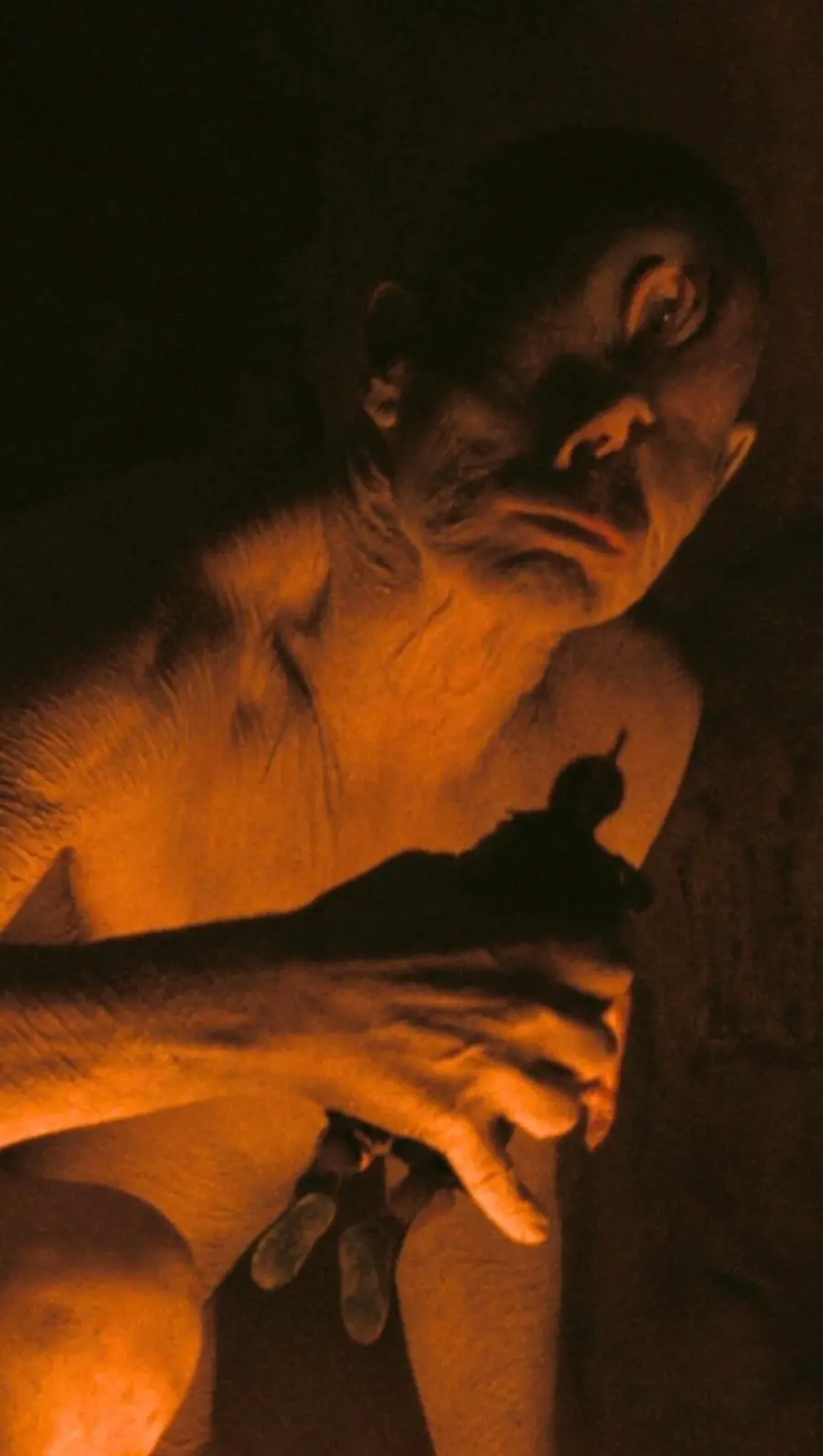
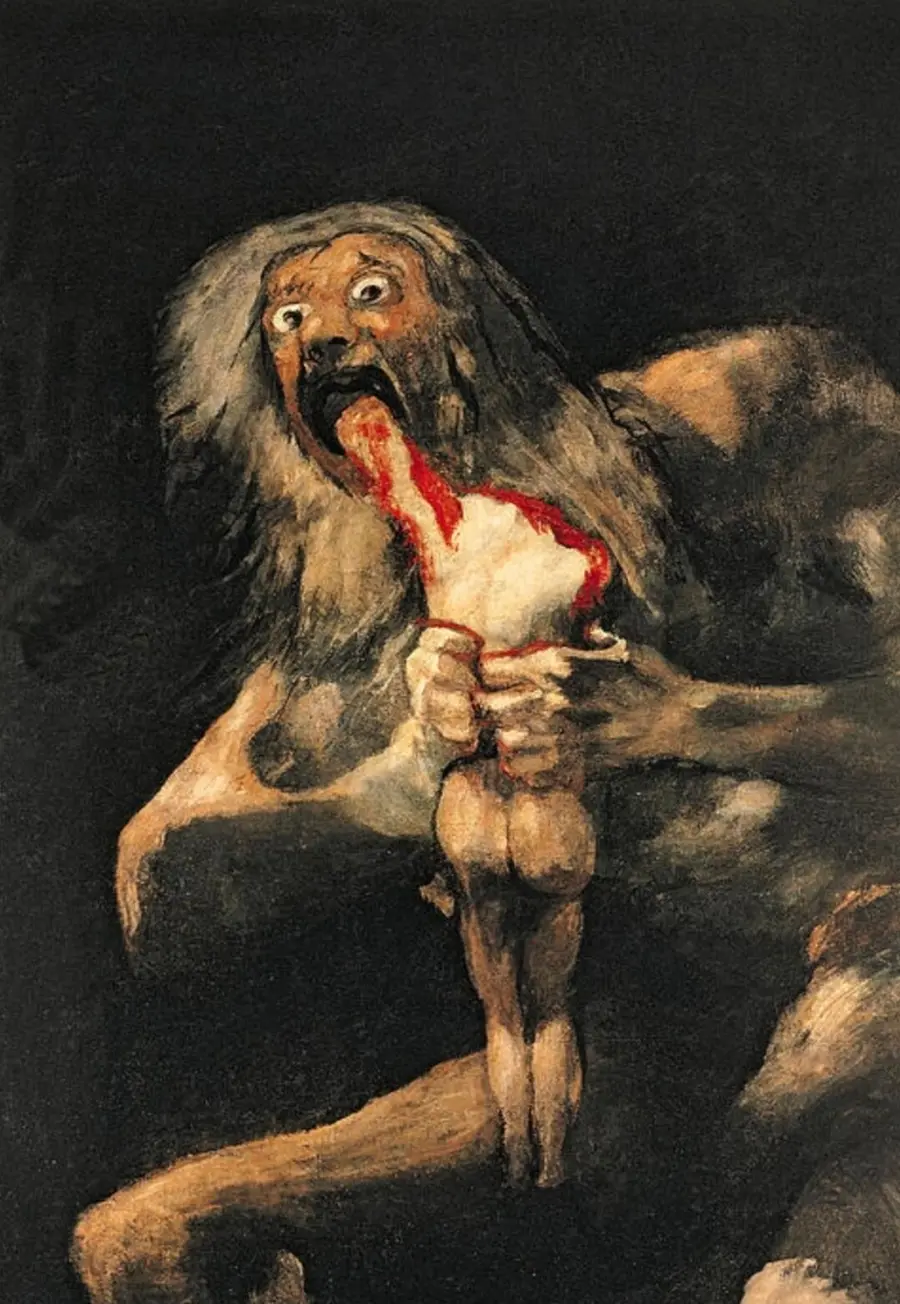
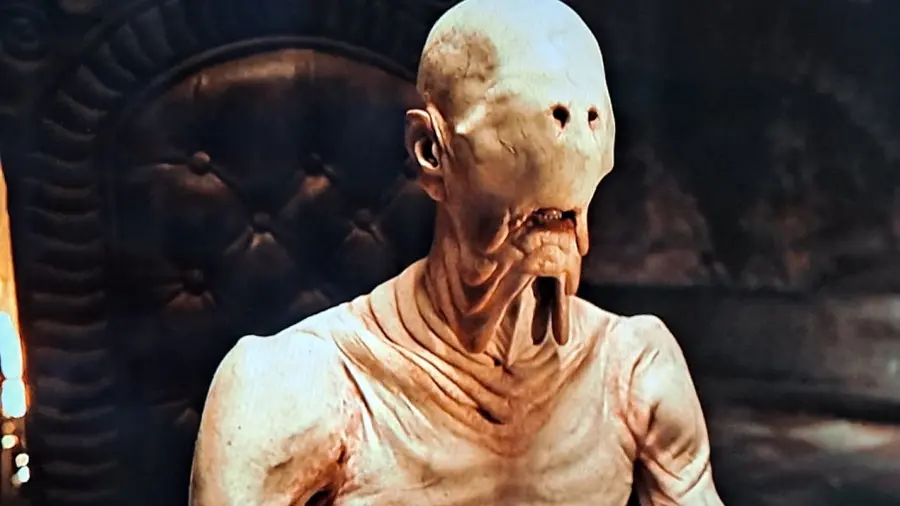
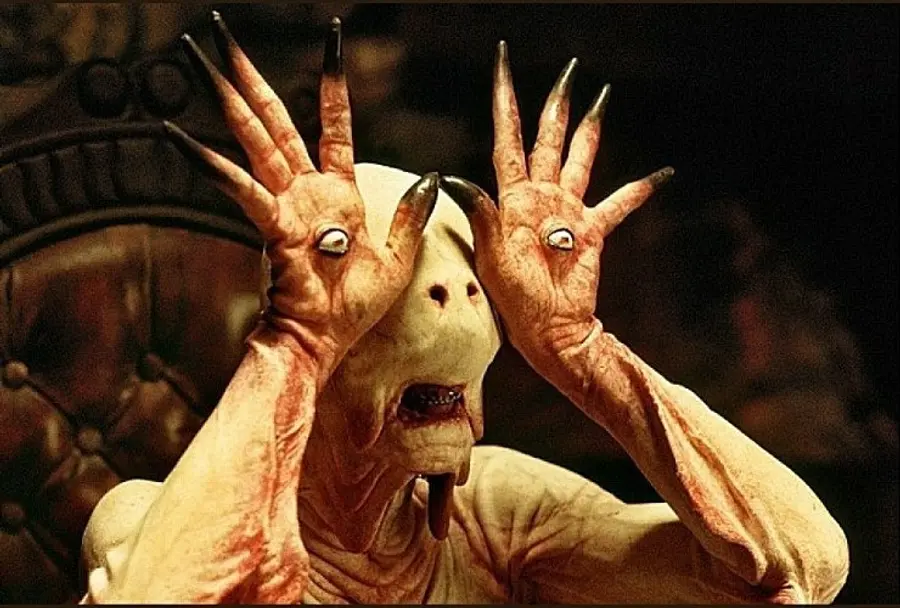
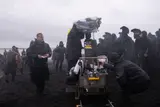
One of the most striking scenes in 〈Odyssey〉 is the one-eyed giant Cyclops that Odysseus (Matt Damon) and his group encounter in a cave they enter after chasing a ram. With his enormous body blocking the cave like a huge boulder, he devours the humans inside two at a time each day, then sleeps. In multiple interviews, Christopher Nolan has said the character was influenced by Francisco Goya’s painting “Saturn Devouring His Son,” and also by Guillermo del Toro’s 〈Pan’s Labyrinth: The Faun and the Three Keys〉(2006), in which he creates a monster that has a face but no eyes, taking the Cyclops as a motif. In any case, the remarkable thing is that, like the Trojan Horse in the film, the Cyclops is also a “thing” made directly by its creators. The production team didn’t just go to the Nestor Cave in Greece to shoot; it also hand-built a movable animatronic about 60 feet (about 18 meters) tall—an actual model robot.
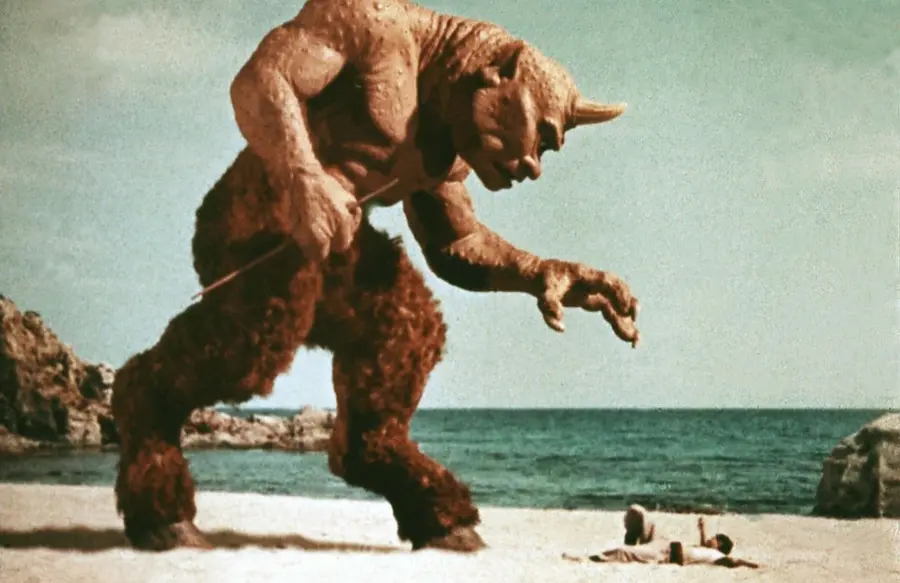
Another “thing” that comes to mind while looking at the Cyclops is the one-eyed giant Cyclops that appears in 〈The Seventh Voyage of Sinbad〉(1958). The film was released in South Korea under the title 〈Sinbad’s Voyage〉 and was also shown on TV. You might wonder how the same name shows up in different ways in Homer’s 「Odyssey」 and the anonymous Middle Eastern tale 「One Thousand and One Nights」, but in fact, the two are the same character. Cyclops (Cyclops) generally refers to the one-eyed giant race that appears in Greek mythology. The word comes from the Greek “kyklos” (round) and “ops” (eye), meaning “one who has a round eye.”
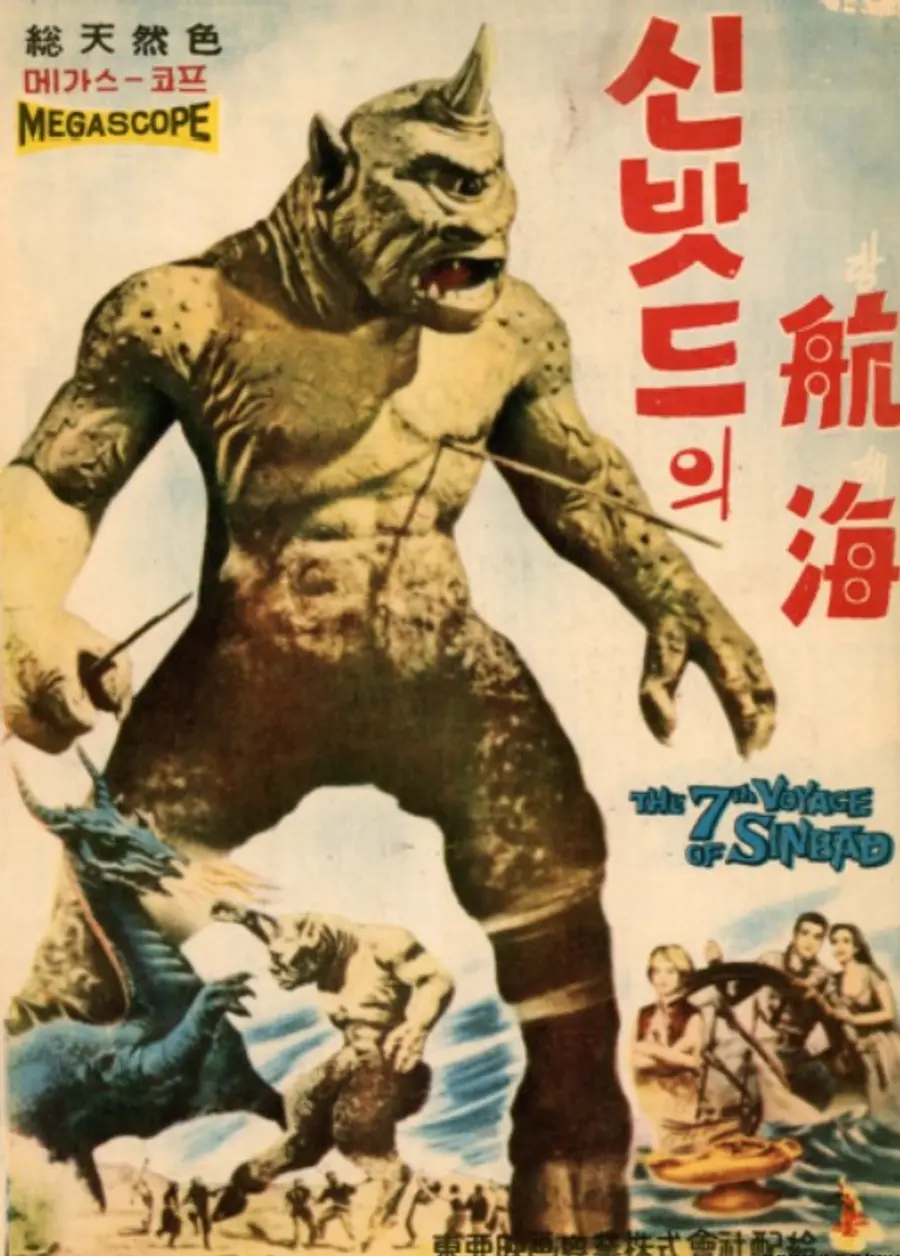
You can think of it as a work of fiction that reinterprets the Greek Cyclops tradition and brings it into the world of 「One Thousand and One Nights」. The features—eating humans as a one-eyed giant, and living in caves or remote islands—are almost identical to those of Polyphemus among the one-eyed Cyclops species in 「Odyssey」. The difference, however, is that Polyphemus in 「Odyssey」 can speak and is a shepherd who tends sheep; he traps Odysseus’ group in a cave and eats them. By contrast, the Cyclops in 〈The Seventh Voyage of Sinbad〉 is less like a shepherd and more like a pure cannibal monster.
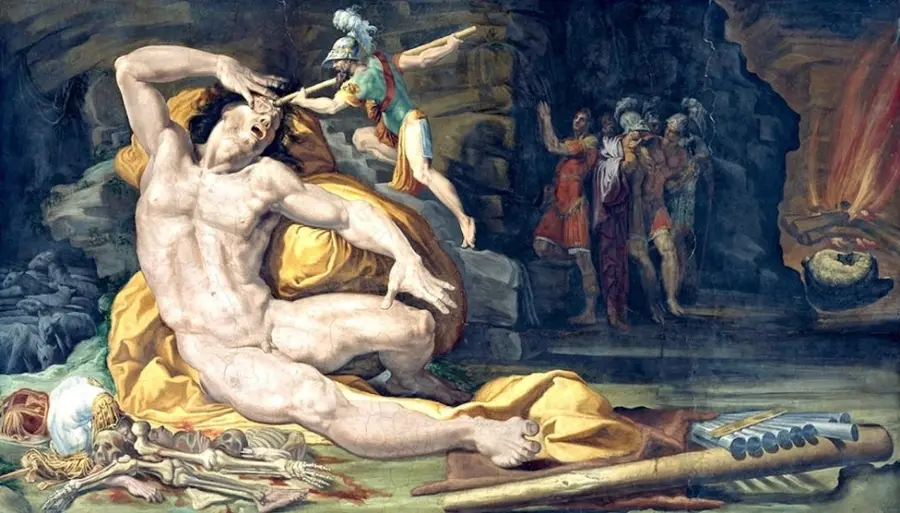
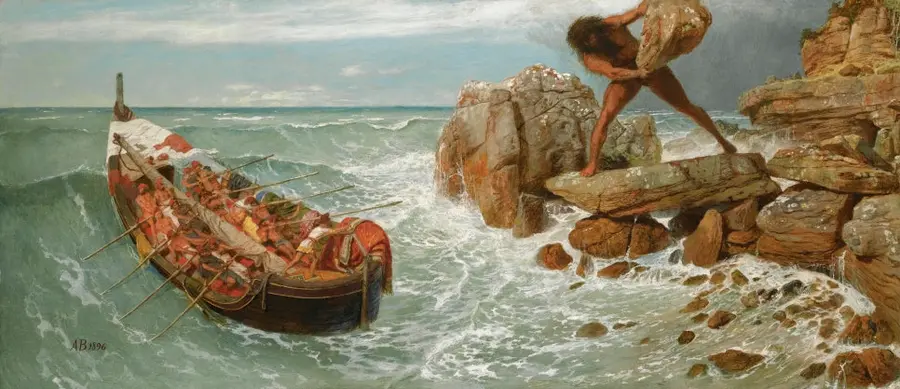
Polyphemus in 〈Odyssey〉 is closer to an in-between form between 「Odyssey」 and 〈The Seventh Voyage of Sinbad〉. In the original 「Odyssey」, Odysseus goes to the cave, hoping that the monster will recognize his presence and treat him as a guest. In the film 〈Odyssey〉, it’s closer to 〈The Seventh Voyage of Sinbad〉—a mysterious monster they happen to come across by chance. That’s why calling it Polyphemus, as a single character, feels a bit awkward. In the original story, when they meet the group for the first time, he asks, “Wanderers, who are you?” In the film, by contrast, after they attempt escape, time passes, and once his eyes are wounded, he mentions “Father Poseidon” and howls—then, only late, he realizes, “Oh—so you can talk?” Also, in countless works of world art history paintings depicting Odysseus and Polyphemus—such as Arnold Böcklin’s “Odysseus and Polyphemus” or Pellegrino Tibaldi’s “Blind Polyphemus”—Polyphemus is mostly shown with hair, and is essentially depicted as human-like, enough to exchange conversation with Odysseus as he drinks the wine Odysseus offers.
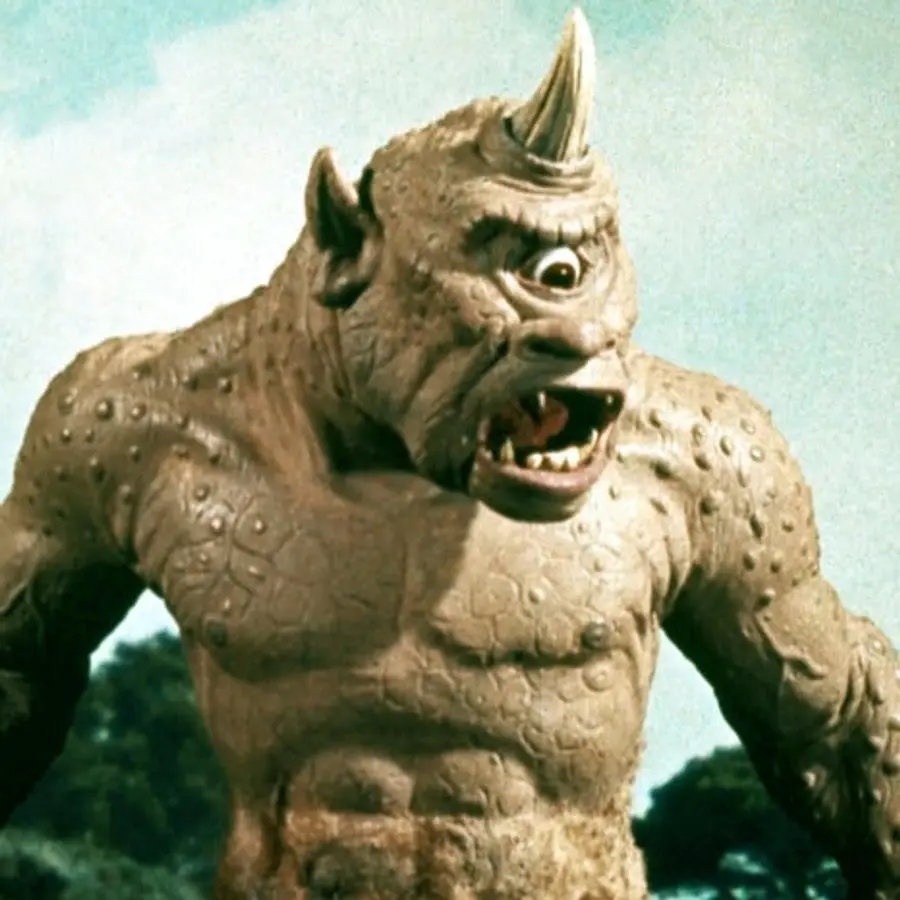
Christopher Nolan’s Cyclops is close to taking the monster from 〈The Seventh Voyage of Sinbad〉 almost as-is. The person who should appear here is “the father of special effects”—no, “the Homer of special effects,” Ray Harryhausen. In the days before computer graphics, he was the master of “stop motion,” a special-effects technique in which an object that doesn’t move is filmed frame by frame, creating the illusion that it moves continuously. He participated in 〈The Beast from 20,000 Fathoms〉(1953), 〈It Came from Beneath the Sea〉(1955), 〈20 Million Miles to Earth〉(1957), and then with 〈The Seventh Voyage of Sinbad〉 as a starting point, continuing through the 〈Sinbad〉 series—〈The Golden Voyage of Sinbad〉(1973) and 〈Sinbad and the Eye of the Tiger〉(1977)—as well as 〈Jason and the Argonauts〉(1963), which was the pinnacle of stop-motion technique. In particular, the skeleton soldier battle scene from 〈Jason and the Argonauts〉, released in South Korea under the title 〈The Golden Voyage of Jason and the Argonauts〉, remains one of the most momentous stop-motion scenes in film history—it’s hard to call it anything other than iconic even now.
There is no end to the tributes paid by younger filmmakers who grew up watching Ray Harryhausen’s movies—Steven Spielberg, George Lucas, Peter Jackson, Tim Burton, John Lasseter, Guillermo del Toro, and more. Christopher Nolan was one of the “Hollywood kids” who admitted he was captivated by his films. Tom Hanks, introduced Ray Harryhausen, who won a special award at the 1992 Academy Awards, said, “Some people name 〈Citizen Kane〉 or 〈Casablanca〉 as the greatest movie ever made. But for me, the best film is 〈Jason and the Argonauts〉.” About two decades later, when Ray Harryhausen died in 2013, his close friend, the SF writer Ray Bradbury, mourned him, saying, “Harryhausen was unique as a technologist, an artist, and a dreamer. He breathed life into the imaginary things he created.”
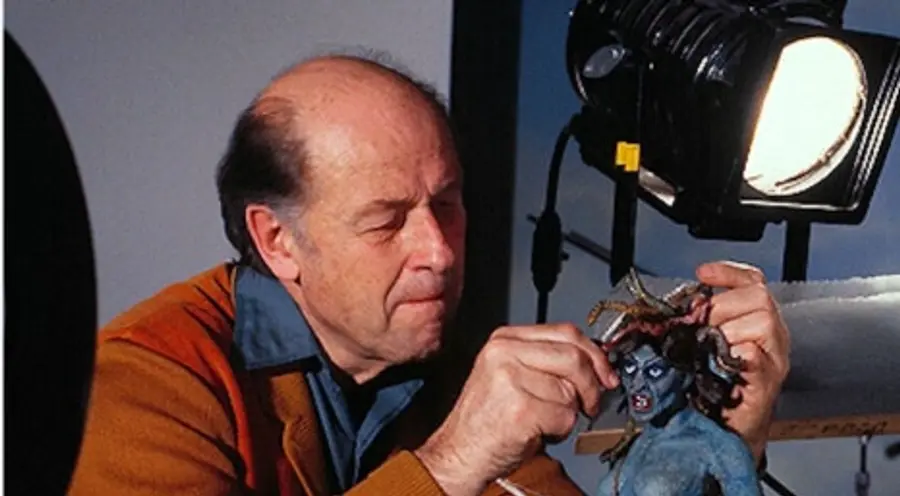
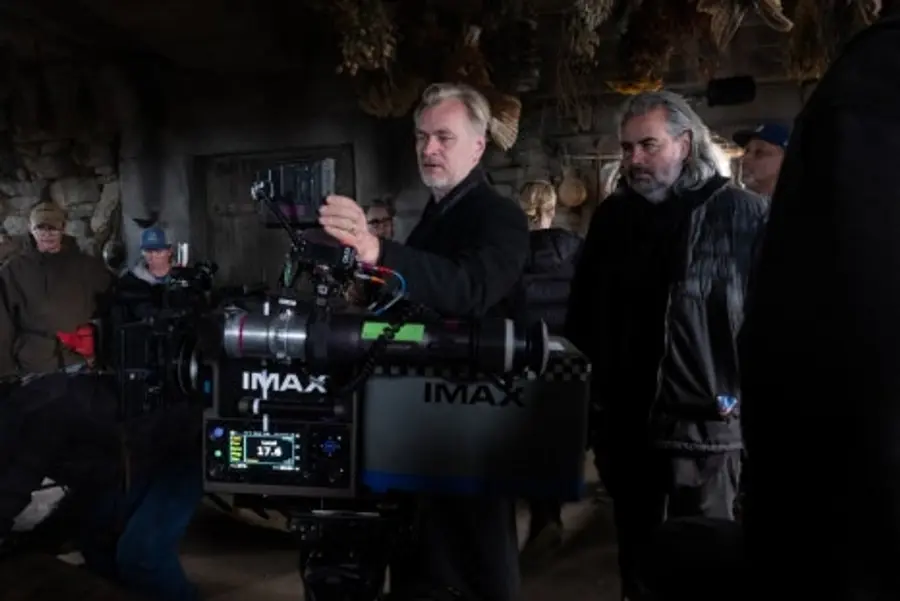
What’s surprising about the Cyclops in 〈The Seventh Voyage of Sinbad〉 is that Ray Harryhausen applied his own design regardless of what the Cyclops looked like in the many paintings where it appears. Amazingly, he combined the familiar one-eyed giant Cyclops race image with another “half-human, half-beast” race image from Greek mythology—the satyr. By adding the satyr’s distinctive horns and goat-leg form, he completed a completely new one-eyed giant—no, a wholly new one-eyed monster design. Unlike 「Odysseus」, the Cyclops from 「One Thousand and One Nights」 is a monster that, after skewering and grilling the people trapped in a cave on spits, chases the escaping humans all the way to the beach. Turning Ray Harryhausen’s doll-like Cyclops into the animatronics of a large-scale IMAX film—this was a dream that Christopher Nolan, who grew up watching his films, has longed to one day realize with 〈Odyssey〉.
Starting with “Jusungcheol’s Locker,” an in-depth obsession with the objects inside movies—then “Ji-yeon’s Jewel Box,” an actor’s user guide expecting even better results, “Chu-a-young’s Music Box” where I savor the film scores that moved my heart, and all the way to “Sungchan’s Comic Books,” a purchase log by a subculture clutter collector—Cineplay reporters launch a biweekly series with their own tastes and viewpoints.
![[Joo Seong-cheol's Locker] The Black Speaker of 'Sirat' and the Monolith of '2001: A Space Odyssey'](https://cdn.www.cineplay.co.kr/w400/q75/article-images/2026-02-23/01816f3a-b433-4072-887b-e760357e6cc7.jpg)
![[Joo Seong-cheol's Locker] The 'Canned Cart Camera' that Changed the History of World Cinema with 'Nouvelle Vague'](https://cdn.www.cineplay.co.kr/w400/q75/article-images/2026-01-27/563f1a4c-20b8-460b-8523-f31511911bd5.jpg)
![[Joo Sung-cheol's Locker] Ahn Sung-ki is Born, I am Ahn Sung-ki](https://cdn.www.cineplay.co.kr/w400/q75/article-images/2026-01-13/362be897-34af-4524-9a57-6b9935666a0a.jpg)
![[Joo Seong-cheol’s Locker] See ‘Hope’ Again Through the Driver-Grade Cap Joo Seong-cheol Wears While Racing Across Seong-gi Bridge in ‘The Yellow Sea’ and ‘Goksung’](https://cdn.www.cineplay.co.kr/w400/q75/article-images/2026-07-28/7bf74e36-337d-4fd0-8cec-b890f5604345.jpg)
![[Joo Sung-cheol’s Locker] Watching “Marty Supreme,” Recalling Yoon Nam-gyu’s Penholder Table Tennis Racket](https://cdn.www.cineplay.co.kr/w400/q75/article-images/2026-06-29/0dc02383-0dc9-4ea1-9de5-f1eaffbeb9b9.jpg)
![[Joo Seong-cheol's Locker] The Aesthetics of Jongmyo That Captivated Masters of Martial Arts from Ho Kim-jun to John Woo, Jackie Chan, and Sammo Hung](https://cdn.www.cineplay.co.kr/w400/q75/article-images/2025-12-16/4d8670a7-ef95-4635-8d0c-34313f13dd52.jpg)
![[Joo Seong-cheol's Locker] The King Lear of Korea and Japan, Lee Soon-jae and Nakadai Tatsuya, Two Masters Rest](https://cdn.www.cineplay.co.kr/w400/q75/article-images/2025-12-01/3e753af3-e8d5-41df-83cf-00e9ddfdaae7.jpg)
![[Joo Seong-cheol's Locker] When Trees Comfort Trees, the Cello of 'The Moment the Bell Rings' and 'Can't Help It'](https://cdn.www.cineplay.co.kr/w400/q75/article-images/2025-11-18/52034c54-93dc-4b4c-ac9f-5f9b7946fb23.jpg)
![[Joo Seong-cheol's Locker] What Beer Did Sergio (Benicio Del Toro) Always Carry in 'One Battle After Another'?](https://cdn.www.cineplay.co.kr/w400/q75/article-images/2025-11-04/0794fe08-e847-46a1-ba4c-445f814803a8.jpg)
![[Chu Sung-cheol’s Lockers] Who Spat on Leslie Cheung in “Farewell My Concubine”?](https://cdn.www.cineplay.co.kr/w400/q75/article-images/2026-04-06/7b608cd9-af6c-4c1d-8e87-38c2d2619d55.jpg)
![[Joo Seong-cheol’s Locker] Do You Know the Origin of Woody in “Toy Story”?](https://cdn.www.cineplay.co.kr/w400/q75/article-images/2026-06-16/eb2c5055-d2de-4464-b9e2-eceeca8c7759.jpg)
![[Joo Seong-cheol’s Lockers] Lee Cronin’s The Mummy and Murderous People Season 2 — and a Scorpion Jacket That Feels Like the Rise of Drive](https://cdn.www.cineplay.co.kr/w400/q75/article-images/2026-04-20/1df79cf4-44ef-48e4-a6b4-46f6e35c4eb5.jpg)
![[Joo Seong-cheol's Locker] Tony Leung Sometimes Wants to Hold an Ashtray.](https://cdn.www.cineplay.co.kr/w400/q75/article-images/2026-02-09/8b9ac9f0-6899-4ce2-a562-5594a5b06d61.jpg)
![[Joo Sung-chul's Locker] What Are the Improvised Explosive Devices (IEDs) in 'Warfare' and 'The Hurt Locker'?](https://cdn.www.cineplay.co.kr/w400/q75/article-images/2026-08-24/ae200e60-2be9-478e-8ab4-72a860903979.jpg)
![[Joo Seong-cheol’s Locker] Zombie Things That Don’t Flinch Even When Shot: Korea’s First Zombie Film, “Kwe-si” (1981)](https://cdn.www.cineplay.co.kr/w400/q75/article-images/2026-06-01/26c56ce7-1ddb-46bd-ae67-f71a1ba9e276.jpg)
![[Joo Seong-cheol’s Locker] David’s Stone That Took Down Goliath, “David” All the Way Through](https://cdn.www.cineplay.co.kr/w400/q75/article-images/2026-07-13/524bb041-0e4e-4f59-824b-21d2f7df60a9.jpg)
![[Joo Sung-chul's Locker] If it's hard to visit Cheongnyeongpo of Deposed King Danjong, head to Geumseongdang of Prince Geumseong!](https://cdn.www.cineplay.co.kr/w400/q75/article-images/2026-03-10/7ddd3634-6a13-4eef-870c-e4e6dbcdac04.jpg)
![[Joo Seong-cheol’s Lockers] The Great Dancer Turned Film Director Summoned by “Michael”: Bob Fosse’s “All That Jazz”](https://cdn.www.cineplay.co.kr/w400/q75/article-images/2026-05-18/922af142-be9f-4f1c-98d1-4a7a6667943c.jpg)














![[Photo &] “Odyssey” Dumps CGI, Builds a 10m Trojan Horse and Drinks in 640km of Film—A 10m Trojan Horse and an 18m One-Eyed Monster](https://cdn.www.cineplay.co.kr/w160/q75/article-images/2026-08-10/e6b0c5e9-e6a6-4800-b8cc-30108fe66960.jpg)

댓글 (0)
댓글 작성
댓글을 작성하려면 로그인이 필요합니다.
로그인하기