




<span>The Odyssey</span> has completely taken over the summer theater scene, surpassing 900,000 tickets sold ahead of the Liberation Day holiday. According to the Integrated Computer System of the Korean Film Council, <span>The Odyssey</span> exceeded 900,000 tickets sold as of 6:40 a.m. Against the backdrop of audiences turning their attention to the cinematic blockbuster that proved the value of the big-screen experience, the production has also shared intriguing behind-the-scenes details that are said to be driving repeat viewings—sparking fresh buzz.
#1. The massive whirlpool that Odysseus and the sailors encounter on their way home,
brought to life by jet skis from stunt performers!
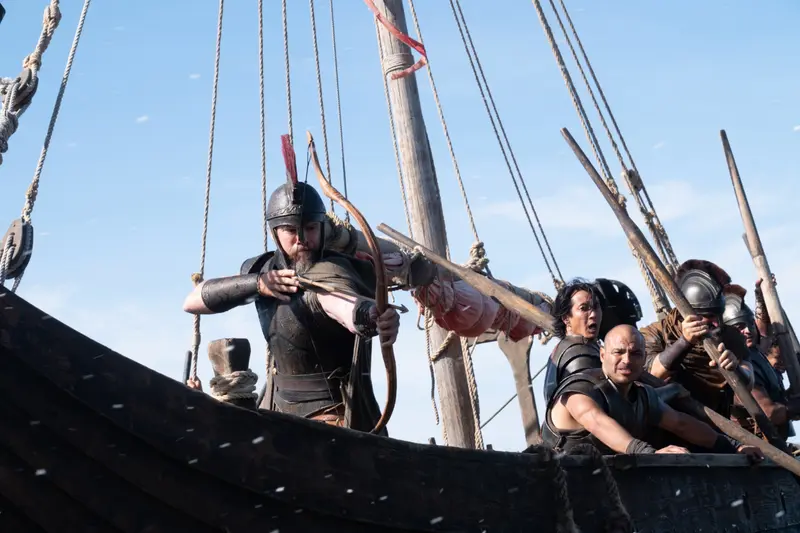
The first set of behind-the-scenes details shows how the massive whirlpool that Odysseus and the sailors face on their journey back was created. The massive whirlpool made by the sea monster Karibrys was, surprisingly, realized using jet skis. Real stunt performers rode jet skis and rotated in a circle to create heavy splashes and spray. Then, CG was added only at the center of the whirlpool to depict even the movement of water particles in vivid, realistic fashion. The overwhelming scene—finished by perfectly combining real filming with minimal CG—has been capturing viewers’ attention.
#2. “Every scene was completed with real filming”
The chilling masterpiece scene of Circe, made with a pig animatronic
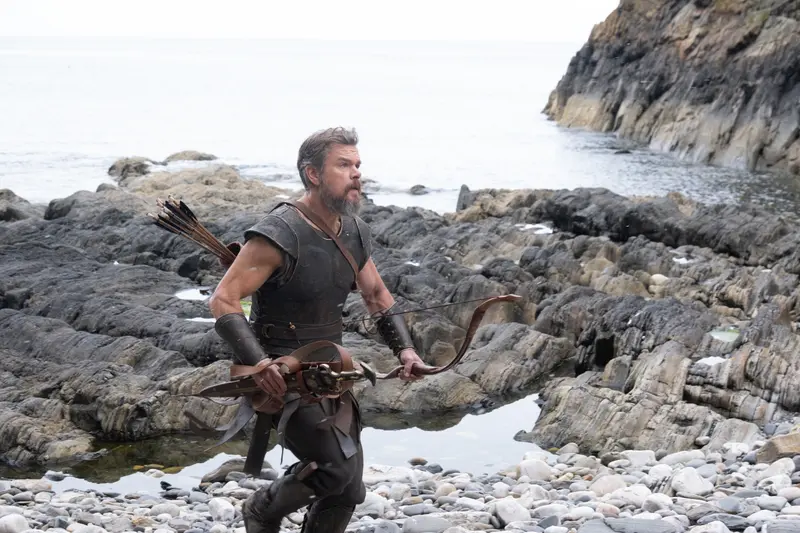
The second behind-the-scenes story centers on the witch Circe scene that hit many viewers hard. Soldiers who come to find “Circe” to obtain food are transformed from humans into pigs by her magic, and it’s said this scene, too, was created not with CG but by fabricating real models. Using pig animatronics made of rubber material that performers can move and manipulate firsthand, along with meticulous editing and camera angles, the film completes a chilling yet vivid transformation sequence. Playing Circe, Samantha Morton told “Every scene was completed with real filming,” and added, “That’s the magic of cinema. In movies, there has always been magical technology that tricks audiences in beautiful ways.”
#3. John Reguzajamo, who played Eumaeos—did he actually block his vision?
A once-in-a-generation performance powered by special lens work!
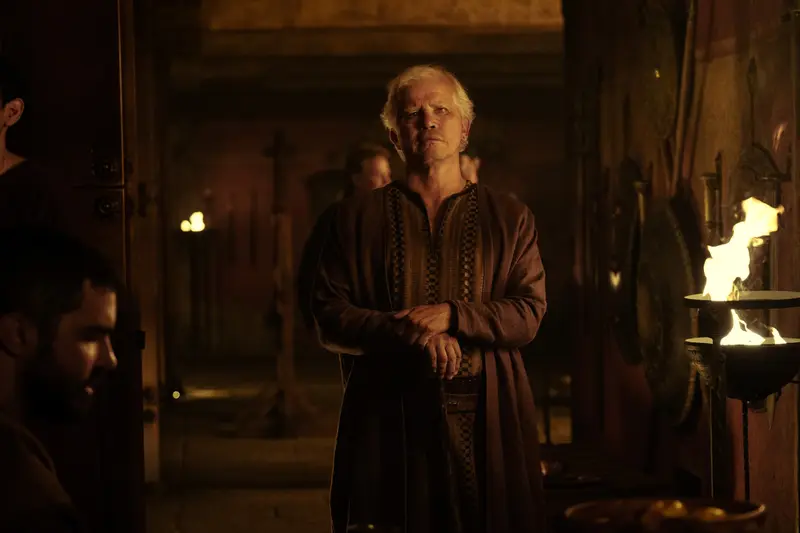
Third comes the character behind Eumaeos, a loyalist of Odysseus and the pig caretaker. To perfectly bring to life “Eumaeos,” who appears as blind in the work, John Reguzajamo was reportedly filmed while wearing specially made contact lenses. The lenses he wore blocked his pupils completely, cutting off his line of sight, and Reguzajamo reportedly continued filming while his visual information was blocked for between 12 and 14 hours a day. He didn’t just stop at replicating the look; he threw himself fully into the role to express the loneliness and depth embodied by the character.
#4. What’s the backstory behind getting buried in sand while wearing an oxygen tank?
The hidden secret behind Odysseus’ face-to-face encounter with the dead!
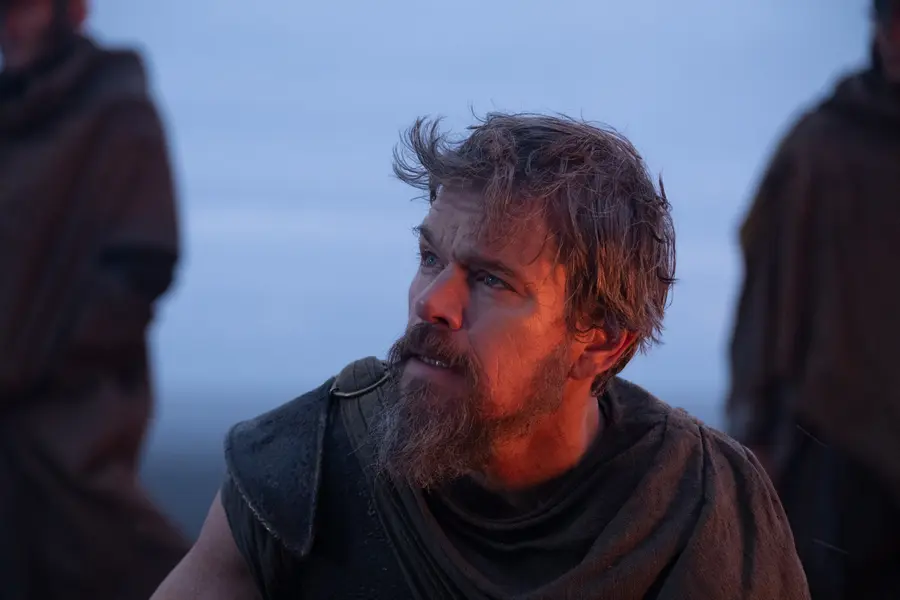
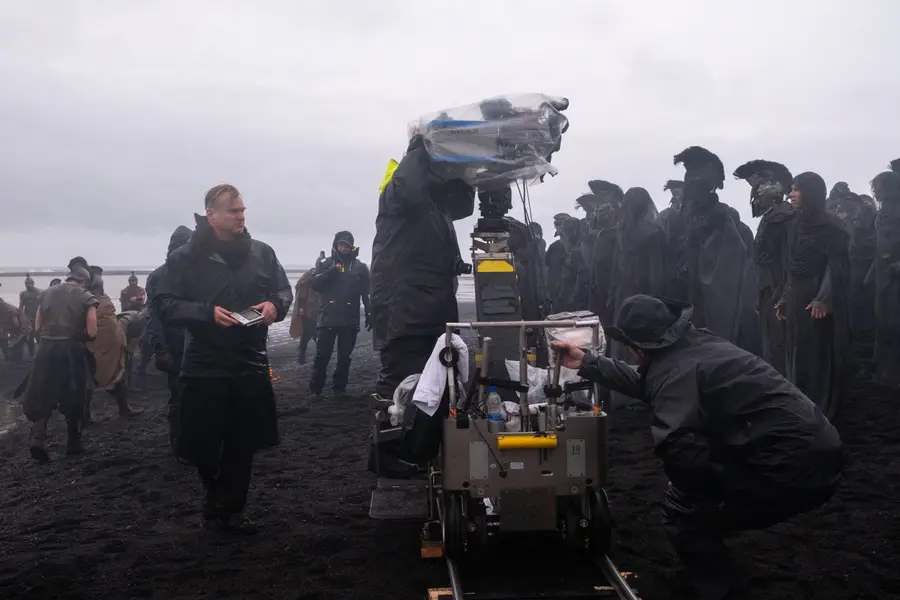
The fourth piece of behind-the-scenes information is about the filming behind a sequence in which Odysseus faces the dead. In a scene where Odysseus talks with the dead, the dead buried in the ground emerge one by one onto the surface, delivering intense tension. To film this scene, it’s said the actors entered the sand while wearing oxygen tanks, which has raised eyebrows.
#5. From the one-eyed giant “Cyclops”
to the Silver Soldier—brought to life with real filming, not CG!
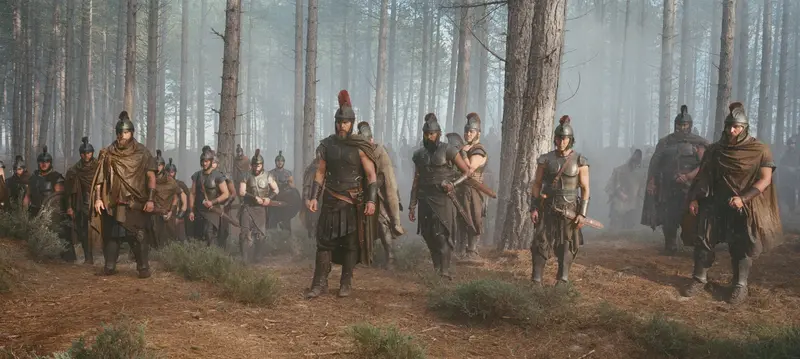
The fifth installment covers the behind-the-scenes details of creating everything from the one-eyed giant “Cyclops” to the Silver Soldier and the Lystryugoness tribe through real filming—without relying on CG. The one-eyed giant “Cyclops,” which sent audiences into fear, surprised them by being built as a massive real structure reaching a height of 18 meters, contrary to expectations that it would be made with CG. Here, too, the Silver Soldier and the Lystryugoness tribe were completed by enlisting tall stunt performers over 2 meters rather than using CG. In particular, to establish a contrast with the Lystryugoness tribe, “Odysseus” and his soldiers were shot using perspective with short-stature stunt performers, creating an overwhelming scale as if they were truly facing a giant tribe. The filming approach that actively used real size and physicality delivers an even more vivid, immersive cinematic experience for viewers.
#6. From the massive Trojan horse of 10.7M
A Troy set built across 3,100 pyeong
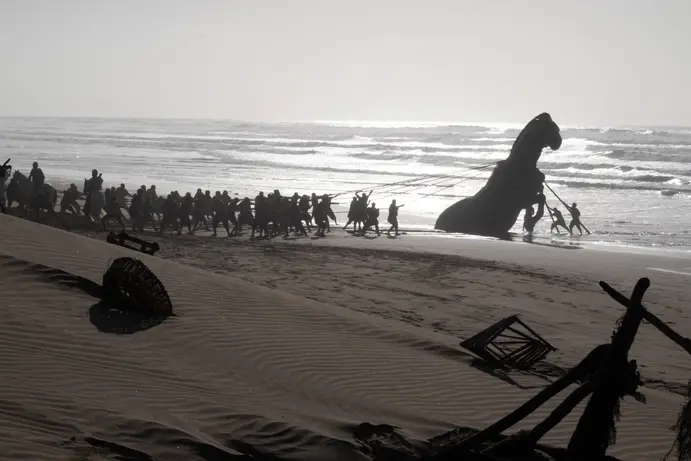
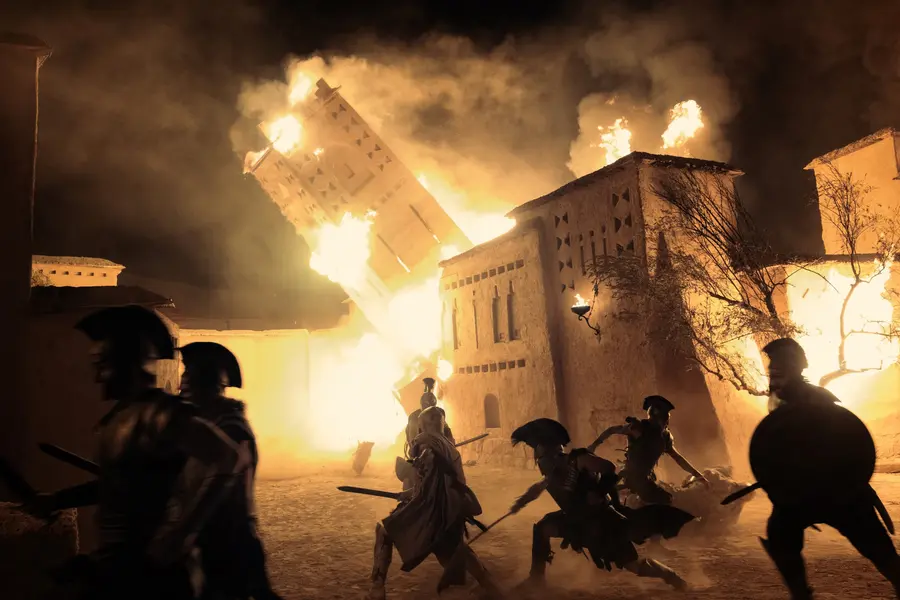
Sixth is the production behind the Troy set that recreated the massive Trojan horse and an entire city. To give viewers a realistic feel, the Trojan horse was built at roughly a 10.7m scale instead of being excessively large, and to capture the look of it being dragged, it was filmed by hanging ropes without wheels. The actors also shot inside the real Trojan horse, further boosting the immersion of the scenes. In addition, the Troy city itself was directly built as a large set spanning 3,100 pyeong. From a massive Athena temple to stone stairways and the city gates, real objects were fabricated to maximize realism. To complete a city that feels alive, the production added details such as moving olive trees into place using cranes. In particular, since some buildings actually had to be burned, the set was constructed with enough distance from the existing structures. The production also put careful effort into various elements to achieve a realistic recreation, including timing the destruction so that the tower of the set would collapse in real life precisely at the moment Matt Damon turns his head back.

![[Chuseok Holiday Box Office] Yoo Hae-jin and Park Hae-il's 'Assassins' and 'Tazza 4' knock out 'The Odyssey,' draw 130,000 on opening day for No. 1](https://cdn.www.cineplay.co.kr/w300/q75/article-images/2026-09-26/9f21ef55-2288-4c72-b030-b8b00587e464.jpg)







![[Jusungcheol’s Locker] Odyssey’s one-eyed giant Cyclops and Ray Harryhausen’s “The Seventh Voyage of Sinbad”](https://cdn.www.cineplay.co.kr/w160/q75/article-images/2026-08-10/63259fce-5d62-4885-abf6-e0bf0fb38423.jpg)

댓글 (0)
댓글 작성
댓글을 작성하려면 로그인이 필요합니다.
로그인하기