



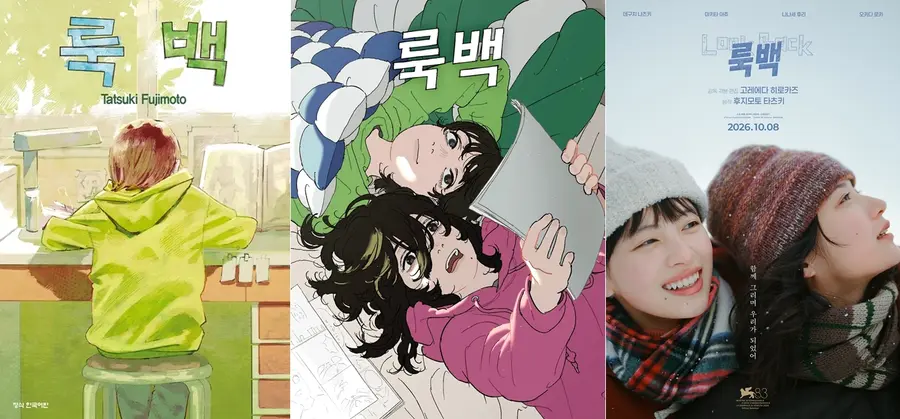
Few titles have moved across media this quickly. Fujimoto Tatsuki’s 2021 one-shot 「Look Back」 became an anime in 2024 and has now returned as a live-action film in 2026, with Kore-eda Hirokazu taking charge of the screenplay and directing. The adaptation received a great deal of attention as one of the year’s most-anticipated releases. The short manga—about 140 pages—also ranked No. 1 in the "This Manga Is Amazing!" men's division.
On September 27, 〈Look Back〉 was screened for the press and distributors in South Korea. Having read the original short manga and seen the animation, I found that the film takes over the contents of the two existing works as they are, then traces the story’s emotions in a slightly different direction suited to the medium of film. The movie runs about 40 minutes longer than the animation; below, I compare it with the earlier versions to see what the film supplements.
'Our' world, the 'us' of the world
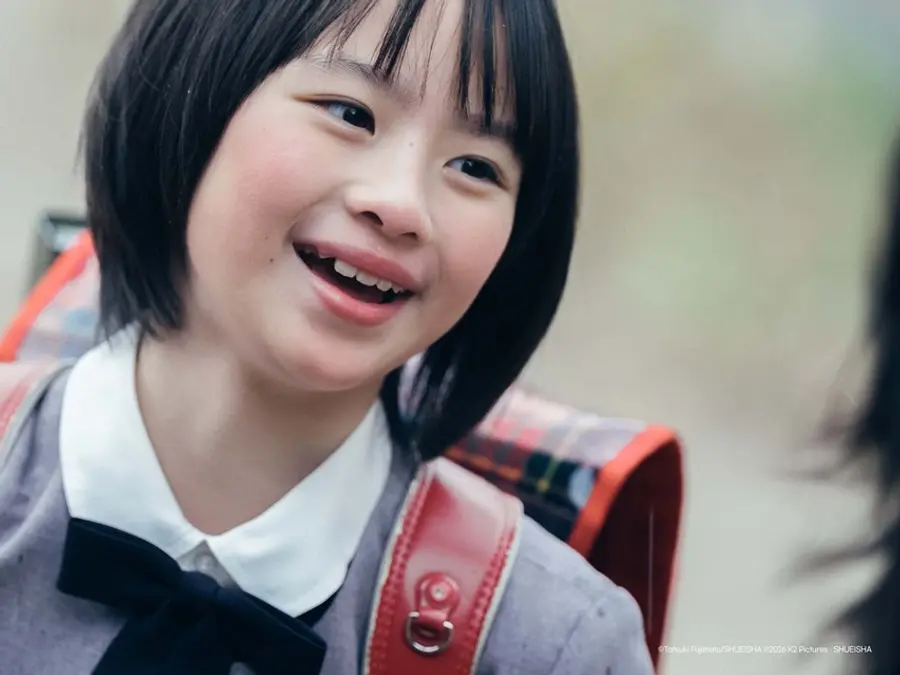
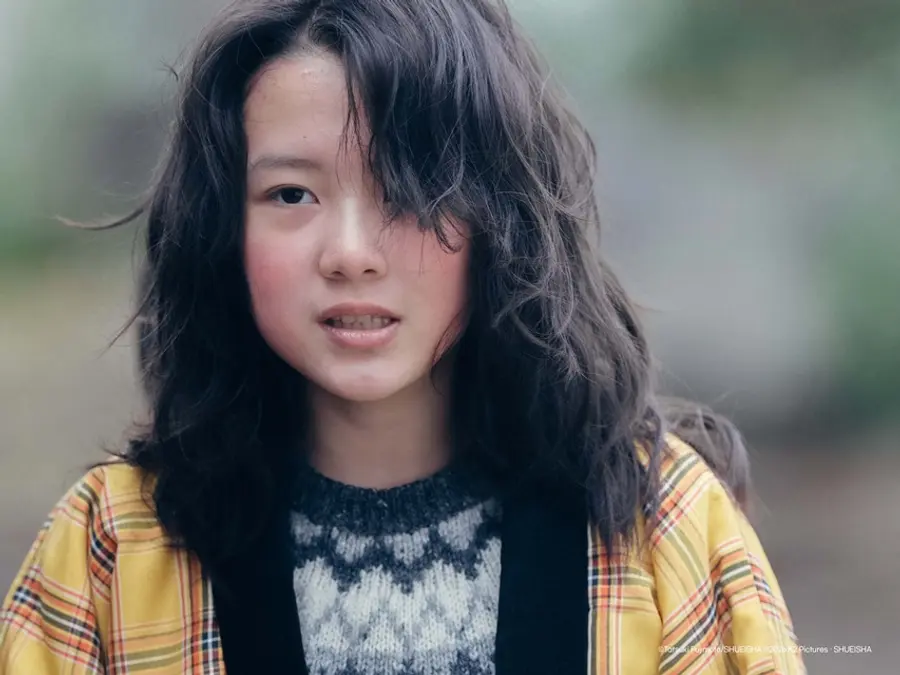
Fujino Ayumu, the elementary-school manga artist at the center of Fujimoto Tatsuki's 「Look Back」, meets Kyomoto, a truant classmate who draws far better than Ayumu does. At roughly 140 pages, the short manga won widespread popularity for its portrayal of the two youths' mutual admiration, how their friendship changes as they grow, and the inner life of characters pursuing creative work.
Contrary to expectations, the live-action film 〈Look Back〉 takes over the contents of the existing two works as they are rather than adding major new incidents or episodes. Even so, the extra 40 minutes allow the movie to render many scenes with greater detail than the earlier works. Chief among the differences is the portrayal of people around Fujino. In the original works, after the opening Fujino appears in nearly every scene either alone or with Kyomoto. For characters this young, both protagonists have almost no depiction of family life: at most Fujino's older sister mentions their parents, and the family appears only as background in Fujino's daily routine. The film fills in that gap. Fujino's mother often brings snacks and sometimes simply watches Fujino draw. Her father also slips in, teasingly offering items that might help as material.
Beyond that, the film includes Fujino's teacher and the student in charge of the school shop praising Fujino's manga, giving her small but tangible encouragement. Those additions do not cause major plot shifts, but they create a basis for why Fujino's devotion to manga persisted even before meeting Kyomoto. Kyomoto, too, is shown to have a wider world—the film notes a grandmother—so although Kyomoto often appears alone on screen, the film subtly indicates Kyomoto exists within a broader social context. The editor, played by Japan star Suda Masaki, has more dialogue here not merely because of Suda Masaki's star power but because the dialogue fits this broader direction. Where manga and animation can work through omission, film stands out for its ability to capture characters alongside the full texture of their surroundings. By filling out those relationships and rendering the characters’ world in fuller visual and sonic detail, 〈Look Back〉 creates a broader sensory experience.
※ The following contains spoilers about the endings of the original work and the live-action film.
From fine art to animation
One changed depiction involving Kyomoto appears in the scene where Kyomoto decides to enter art college. In the original, the art book Kyomoto studies is titled "The World of Background Art," but in the film it is replaced with an art book by Studio Ghibli background artist Oga Kazuo. That detail ties directly into the film's late sequences. In Kyomoto's room Fujino witnesses the body of work Kyomoto has produced to date. Those studies are Kyomoto’s reinterpretations of the time shared with Fujino, and they clearly show those moments were warm and full of joy. This echoes the original moment when Fujino discovers and reads Fujino's own manga in Kyomoto's room, but the film diverges in tone: while both versions imply Kyomoto is reminiscing about the time with Fujino, the movie emphasizes that Kyomoto expresses those memories in a personal way, suggesting artistic growth after their separation.
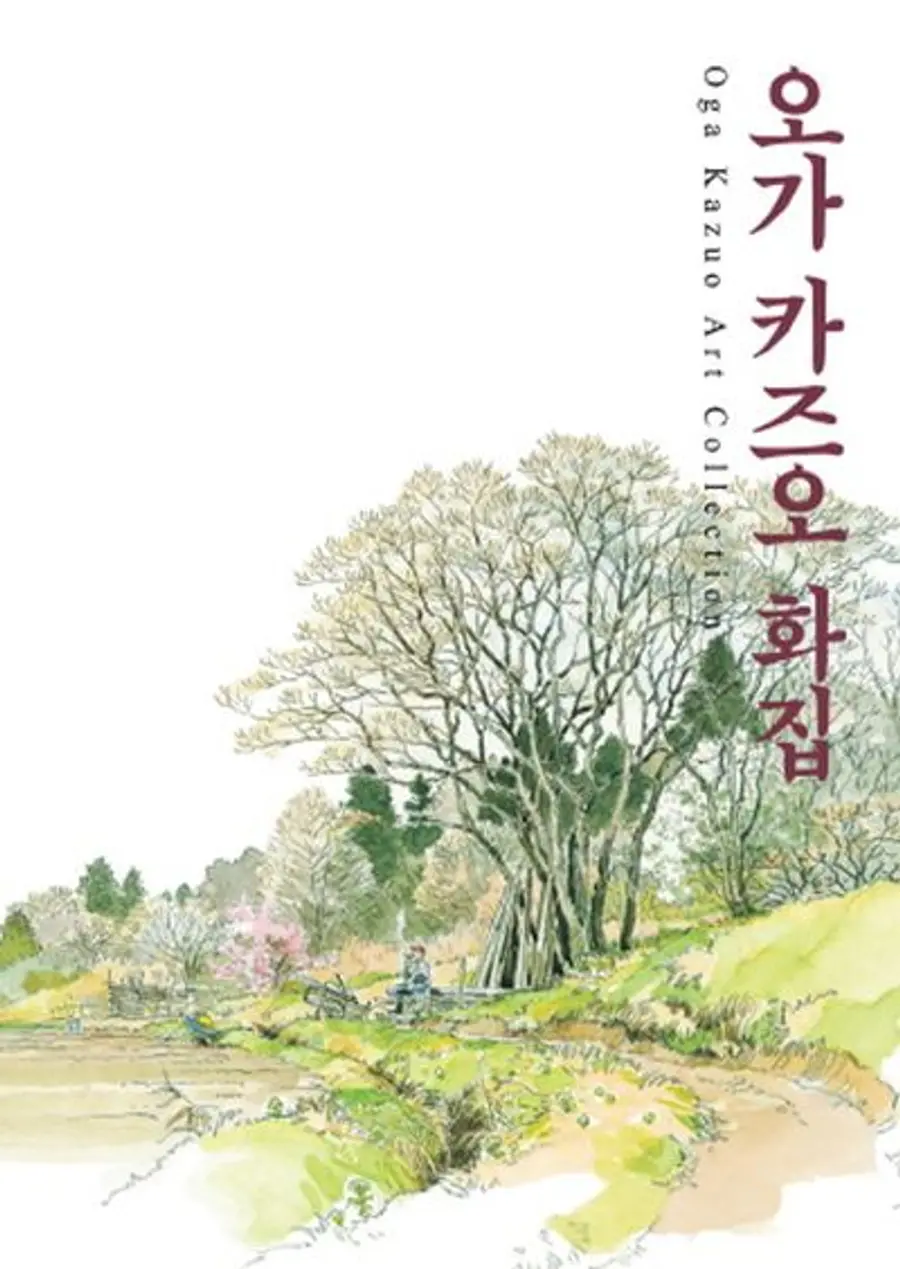
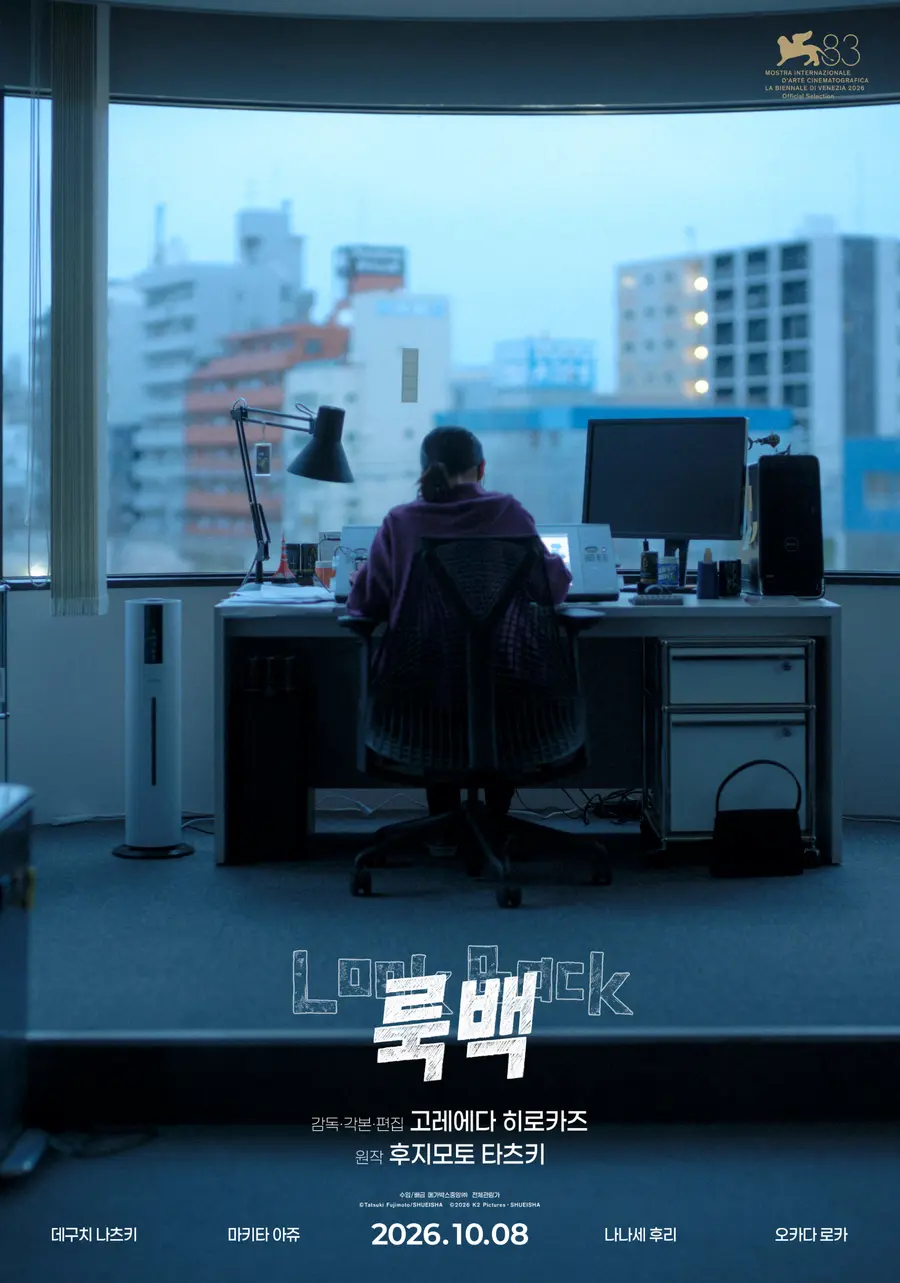
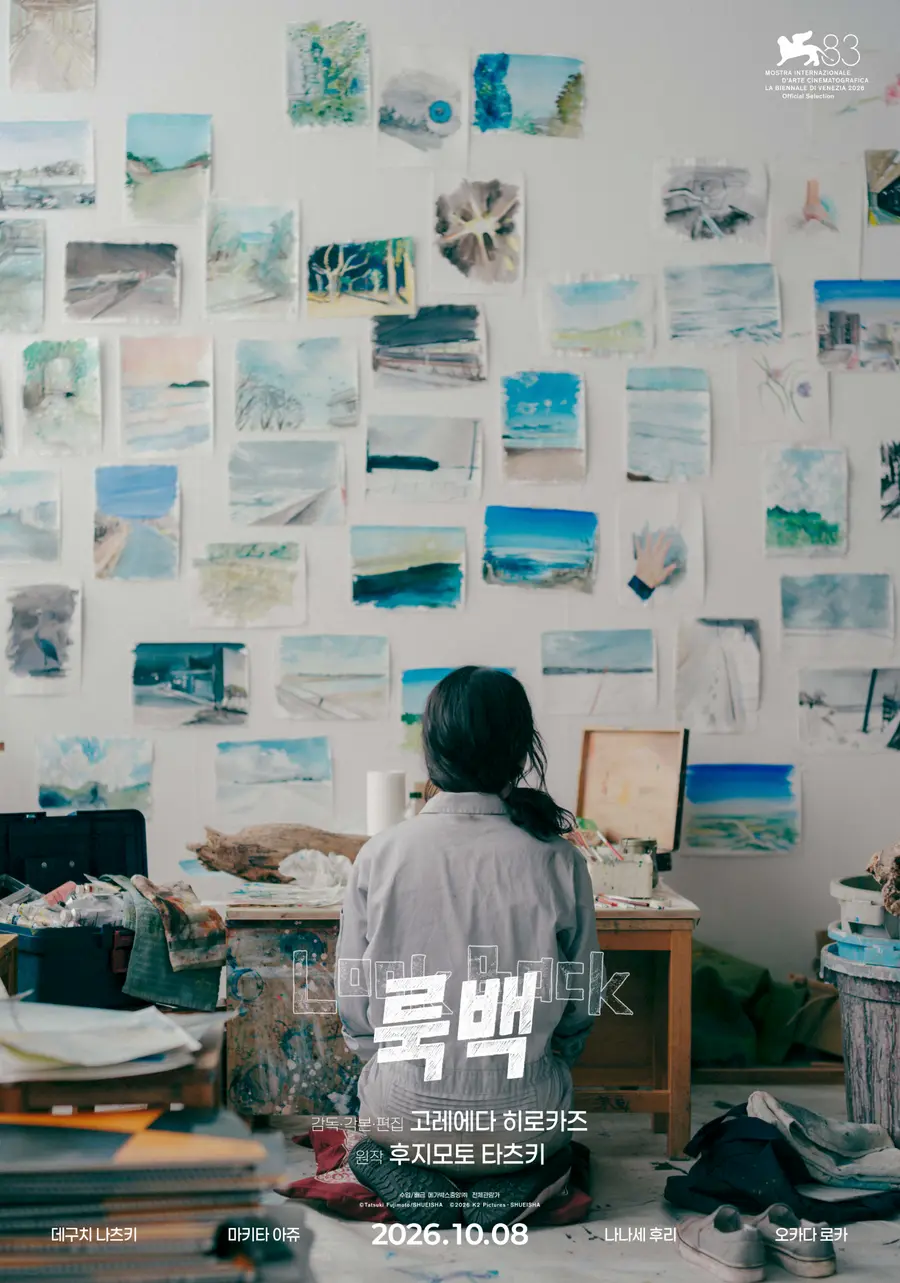
This also connects to the earlier scenes in which Fujino takes and sends various photographs to Kyomoto. The photos Fujino gives Kyomoto freeze fleeting moments. Kyomoto, receiving them, reflects those spaces and the frozen moments in Kyomoto's manga. But animation (and film) cannot freeze time; they must let time flow. If manga and photography are records of moments, animation and film are the aesthetics of flowing time. The reality that you can never again hold the departed Kyomoto is something that must be accepted with the latter mindset rather than the former. After seeing the traces of time Kyomoto left behind, Fujino returns to her desk and draws. Kore-eda Hirokazu’s decision, in adapting the story to live action, to explicitly invoke Studio Ghibli—the world's most famous animation studio—fits that context. Beautiful times pass, which is why you also need to know how to let them go. Particularly, the choice to build an animated montage out of what Kyomoto himself drew, rather than a simple recollection montage, emphasizes the value of processing that time and moving forward. The film suggests how Kore-eda’s long engagement with memory, time and relationships informs this adaptation.



![[First reactions] 'Look Back' Cineplay reporters' star ratings](https://cdn.www.cineplay.co.kr/w160/q75/article-images/2026-09-29/b2da4bff-488e-47cf-9d62-26e995321f7e.jpg)

댓글 (0)
댓글 작성
댓글을 작성하려면 로그인이 필요합니다.
로그인하기