


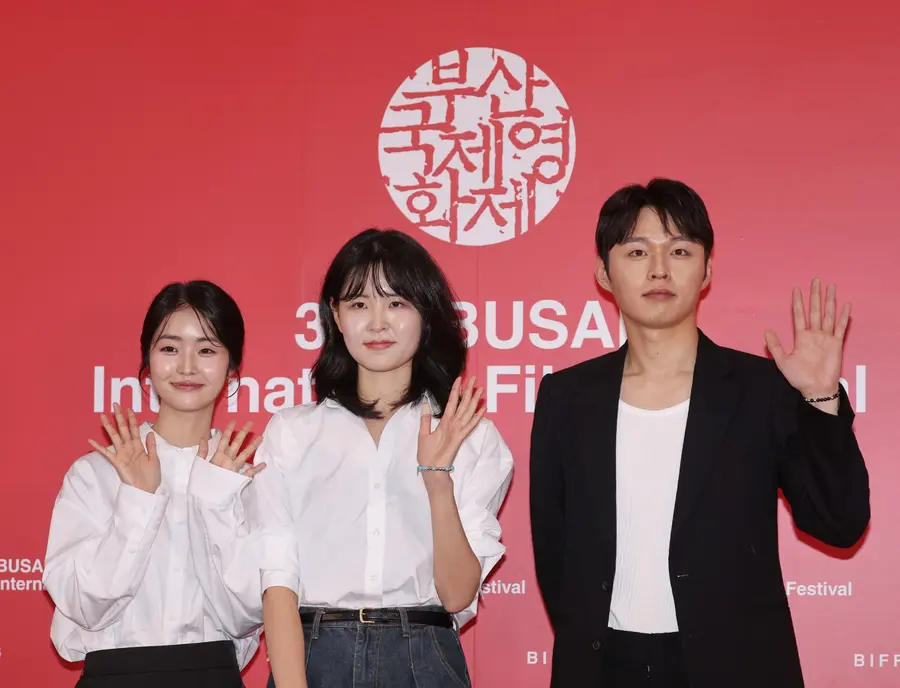
Chilling insight drawn from experience, on the line between escape and confrontation
Selected for the competition section of the 31st Busan International Film Festival (BIFF), That Day’s Tae-joo is a finely crafted work that sharply captures the anxiety of modern people trapped by others’ scrutiny and gossip. Twenty-eight-year-old newcomer director Im Ha-yeon drew on her own painful experience of being talked about behind her back to portray, with striking intensity, the protagonist’s struggle to escape the cycle of rumors.
In a city cloaked in deepening dusk, Tae-joo (played by Park Han-sol), a graduate student in Korean literature, wears a faintly tense expression at what appears to be a convivial drinking gathering. When the other guests step away, he overhears cutting gossip about himself and flees the scene as if being pursued. The film delicately strikes at the violence of language that permeates everyday life and the isolation it inflicts on individuals.
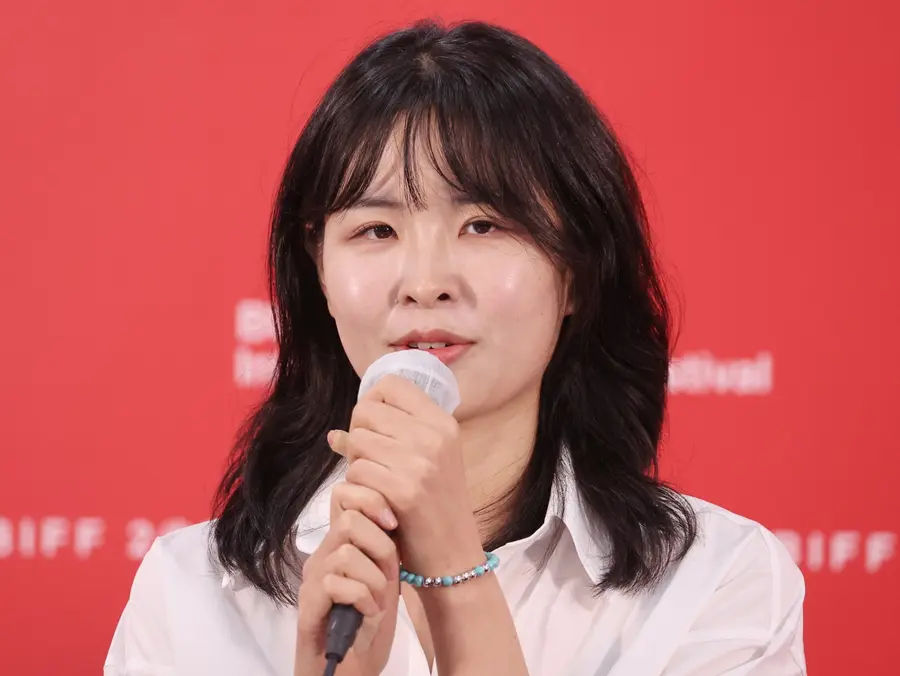
An aesthetic shaped by philosophical reflection, magical realism brought to life
Even the guesthouse Tae-joo chooses as a refuge — and his chance encounter there with Man-hyeok (played by Kim Woo-gyeom), a street magician — cannot fully save him from the swamp of rumor. Director Im Ha-yeon said, “I took up the megaphone after looking back on the painful period when I was once the subject of rumors and on my own contradiction of enjoying other people’s stories.” Her provocative question about the direction individuals should take in an age of overflowing words runs through the film.
After double-majoring in philosophy and film studies and honing his directing skills at the Korean Academy of Film Arts, he chose Namhae as the setting for the story. The stark scenery of Namhae, reached only after traveling through Gangneung and Sokcho, serves as the perfect canvas for intensifying the characters’ inner wandering. The production team painstakingly selected locations to capture the film’s magical moments, when everyday life and fantasy intersect.

A cross-generational ensemble with a commanding presence on screen
The actors’ explosive chemistry, set against Namhae’s spectacular scenery, delivers an overwhelming sense of immersion. Park Han-sol, who plays the title role, emphasized the power of the setting, saying, “After intense rehearsals, I had an extraordinary experience of becoming fully one with the character only when I reached the sea.” The ever-changing face of nature forms a striking harmony with Tae-joo’s turbulent emotional arc.
The addition of veteran actress Ye Soo-jung as Lee Hwa, a novelist, gives the film a firm center of gravity. Though her role is not extensive, she exerts a profound influence at every turning point in the story and modulates the dramatic tension. The director expressed deep admiration, saying, “The singular aura and dignity she radiated were like a blessing that raised the stature of the film to another level.”
The aesthetics of shifting attitudes through repeated time, a cineaste drawing attention from foreign media
The most powerful weapon in That Day’s Tae-joo is its original narrative structure, which replays Tae-joo’s day with variations. Foreign media have praised the butterfly effect created by subtle changes in attitude, saying it recalls the work of master filmmaker Hong Sang-soo. The film stands out for the boldness of a newcomer who has established her own cinematic grammar rather than simply paying homage.
Even amid the flood of praise, director Im Ha-yeon remained humble, saying, “It is an honor simply to be mentioned alongside a director I have long admired.” With its solid text, exceptional mise-en-scène and powerful performances forming a triumvirate, the film is poised to make a weighty impact on South Korea’s independent film scene. The global film community is watching closely to see what comes next for this promising rough diamond discovered by the Busan International Film Festival.

![[On Location at BIFF] “It Started With My Experience of Being Talked About Behind My Back” — 28-Year-Old Newcomer’s That Day’s Tae-joo Explores the Truth Behind a Busan Film Festival Rumor](https://cdn.www.cineplay.co.kr/w300/q75/article-images/2026-10-11/cd04a9b2-6b0a-4cab-ba9a-4200dea4aa8f.jpg)
![[Busan International Film Festival] Grand opening draws Michelle Yeoh, Hyun Bin and other stars as 93 world premieres are unveiled](https://cdn.www.cineplay.co.kr/w160/q75/article-images/2026-10-07/604fc059-c33f-4cd2-bd17-672eb66f4839.jpg)
![[Inside the Busan International Film Festival] “AI Can’t Replace Actors”: Fan Bingbing Returns for First Press Conference in 3 Years, Pays Tribute to ‘Possible Love’ Performances](https://cdn.www.cineplay.co.kr/w160/q75/article-images/2026-10-07/3c91b5d2-2467-48ed-8e78-39a032ddd31d.jpg)
![[At the Busan International Film Festival] Michelle Yeoh returns to Busan after 15 years, a proud symbol of Asian cinema after breaking through the “minority” barrier](https://cdn.www.cineplay.co.kr/w160/q75/article-images/2026-10-07/7973cb7b-dcfd-4cc6-ac97-0073760bf0c8.jpg)
![[On the Ground at BIFF] “Art Is Art”: Zhang Yimou Breaks Silence on Historical Controversy Over “Assassins”; Top Asian Film to Be Named on 15th](https://cdn.www.cineplay.co.kr/w160/q75/article-images/2026-10-07/f584a4c5-b837-42c6-8521-5de6f88d4fc3.jpg)
![[Busan International Film Festival (BIFF)] Maggie Gyllenhaal's 'Flesh Impact' ... Monroe's truth awakened after 100 years:](https://cdn.www.cineplay.co.kr/w160/q75/article-images/2026-10-08/cc063719-e22f-4207-ac3e-49ca73930baf.jpg)
![[2026 BIFF] Ann Hui wins Camellia Award, Michelle Yeoh named Asia Filmmaker of the Year as 31st Busan International Film Festival opens](https://cdn.www.cineplay.co.kr/w160/q75/article-images/2026-10-08/75f5d0ee-beed-4664-a904-287cf2aac2c6.jpg)
![[At BIFF] ‘Dora’ brings Kim Do-yeon to tears during news conference; Jung Ju-ri’s 20-year project](https://cdn.www.cineplay.co.kr/w160/q75/article-images/2026-10-09/2a6aa6ca-e801-472b-a3c8-4edf48f479ba.jpg)
![[BIFF On Location] ‘Shaving’ Marks Show Kasamatsu’s First Korean Film Challenge: “We Create 100% Miracles on Set”](https://cdn.www.cineplay.co.kr/w160/q75/article-images/2026-10-09/b32d81a4-d0af-4983-9750-6ca673a709a2.jpg)
![[On the Ground at BIFF] “It Wasn’t Your Birth Mother’s Fault”: ‘Home Sick’ Director Sørensen’s First Confession Reveals Truth Behind 56 Falsified Adoptions](https://cdn.www.cineplay.co.kr/w160/q75/article-images/2026-10-10/605d92f4-eca1-4b36-bc99-d8acf2fc9e1d.jpg)
![[Busan International Film Festival (BIFF)] Yeon Sang-ho on his AI thriller ‘Paradise Lost,’ made for 500 million won in 14 shooting days: “I make a living thanks to the three awards”](https://cdn.www.cineplay.co.kr/w160/q75/article-images/2026-10-10/751bd4c9-c58e-4a16-b7f8-e48157c55723.jpg)
댓글 (0)
댓글 작성
댓글을 작성하려면 로그인이 필요합니다.
로그인하기